
The pace of change in SaaS website design is accelerating, shaping how brands grow and engage audiences in 2026. As trends shift and user expectations rise, a standout saas website is now a vital competitive advantage.
This article uncovers 10 inspiring saas website ideas that can elevate your brand, fuel conversions, and help you rise above the competition. We will explore cutting-edge design concepts, interactive features, and proven best practices inspired by the top SaaS performers.
In a landscape where every detail matters, mastering your saas website can build trust, boost authority, and drive measurable results. Are you ready to discover the strategies that set leading brands apart?
Key Elements of High-Impact SaaS Websites in 2026
The foundation of a high-impact saas website in 2026 relies on a blend of user-focused design, compelling storytelling, trust signals, and conversion science. As competition intensifies, these elements have become essential for brands aiming to stand out and drive measurable results.
The Shift Toward User-Centric Design
User-centric design has become the cornerstone of every successful saas website. Visitors expect clear navigation, logical page structures, and effortless journeys from landing to conversion. Competitors like Webflow highlight intuitive layouts, while brands such as Lattice use customizable notification bars to enhance interactivity and guide user actions.
Responsive design is now non-negotiable, ensuring accessibility across all devices. In fact, 70% of SaaS buyers rank ease of use as a top factor when choosing a platform. This direct link between user experience and conversion rates means brands must prioritize simplicity and clarity. For a deeper look at current trends shaping user-centric saas website design, see SaaS website design trends 2026.
Visual Storytelling and Brand Differentiation
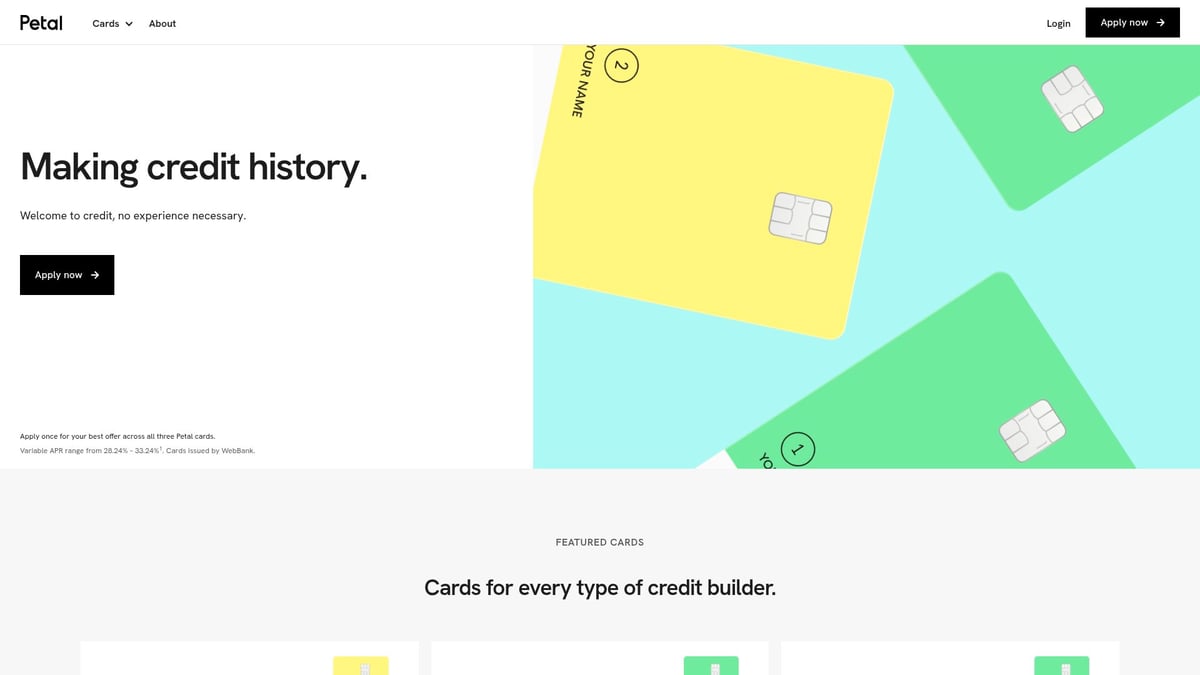
A modern saas website leverages bold visuals, custom illustrations, and subtle animations to tell a unique brand story. For example, Petal uses animated graphics and approachable messaging to connect with users emotionally. A distinct visual identity helps brands stand out in a crowded digital landscape.
Color psychology and micro-interactions play a critical role in reinforcing value propositions. However, visuals must support—not distract from—primary calls to action. When thoughtfully applied, these elements make the saas website memorable and foster a strong first impression.
Building Trust with Social Proof and Transparency
Trust is the currency of digital business, and a saas website must showcase credibility at every touchpoint. Testimonials, case studies, and client logos, as seen on Proof and Kajabi, reassure prospects. Transparent pricing and integration lists, like those featured by Dropbox Sign, further build trust.
Statistics reveal that 84% of visitors trust online reviews as much as personal recommendations. By embedding social proof, a saas website reduces buyer hesitation and accelerates decision-making. These trust signals are vital for nurturing leads into loyal customers.
Conversion-Driven Content and CTAs
The most effective saas website pairs benefit-driven headlines with persuasive calls to action. Dropbox Sign’s “Get contracts signed 80% faster” is a prime example of messaging that speaks directly to user needs. Visible, actionable CTAs should be strategically placed and tailored to the visitor’s journey.
Content must address pain points, offer clear solutions, and guide users toward the next step. When a saas website delivers the right message at the right time, it not only increases engagement but also drives conversions. This conversion-focused approach is the engine behind sustainable growth.
10 Inspiring SaaS Website Ideas to Elevate Your Brand in 2026
Finding the right saas website concept can be a game-changer for your brand in 2026. Whether you are revamping your site or launching a new digital product, innovative ideas are essential for standing out. Below, we explore ten saas website examples that demonstrate leading-edge design, feature-rich platforms, and strategic branding. For even more creative direction, you can visit SaaS Website Ideas and Inspiration.
1. Distributional
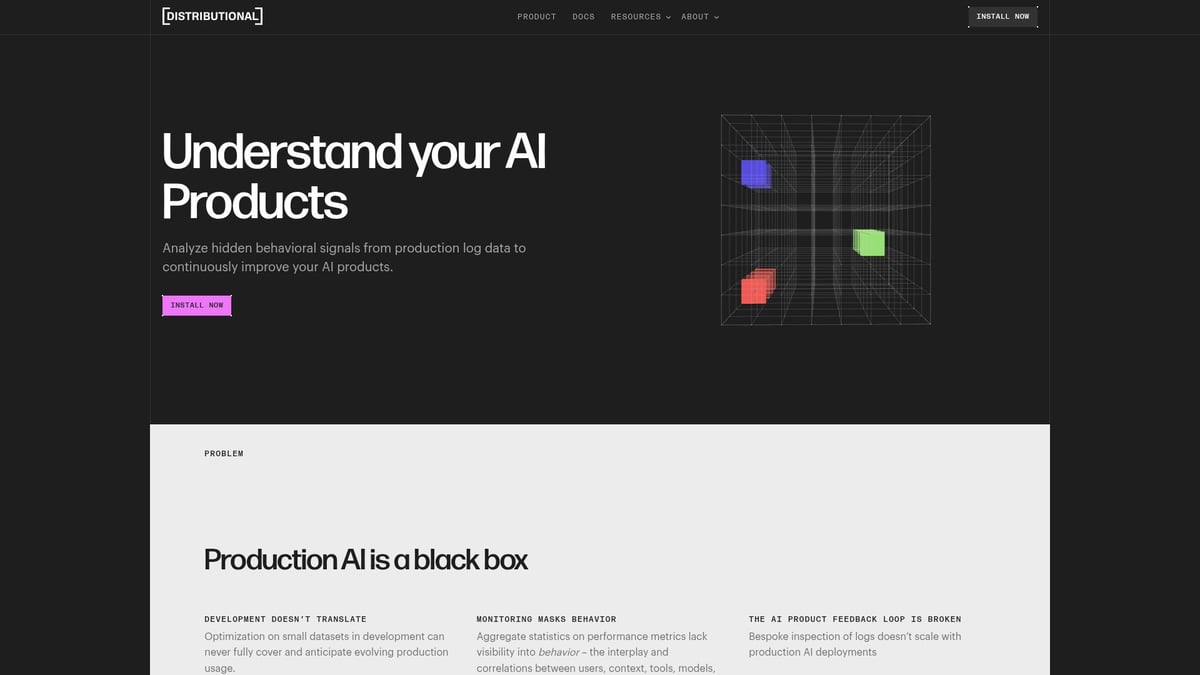
Distributional sets a new bar for the modern saas website, offering enterprise-grade AI deployment tools with robust analytics and seamless integrations. Pricing is custom, tailored to each business's needs, making it accessible for organizations with specific requirements.
Core Features:
- AI deployment automation
- Advanced analytics dashboard
- Integration with major platforms
Key Benefits:
- Simplifies AI adoption for enterprises
- Clearly communicates complex value
- Supports secure, scalable growth
Target Audience: Enterprises seeking secure, scalable AI solutions.
Pros:
- Clean visual hierarchy
- Strong, confident messaging
- Solutions directly address pain points
Cons:
- May be overwhelming for entry-level users
Example Highlight: The "Deploy AI with confidence" headline, paired with engaging grid animations, builds immediate trust.
Unique Selling Point: Demystifies AI for business users, making Distributional a role model for any saas website focused on advanced tech.
2. Kajabi
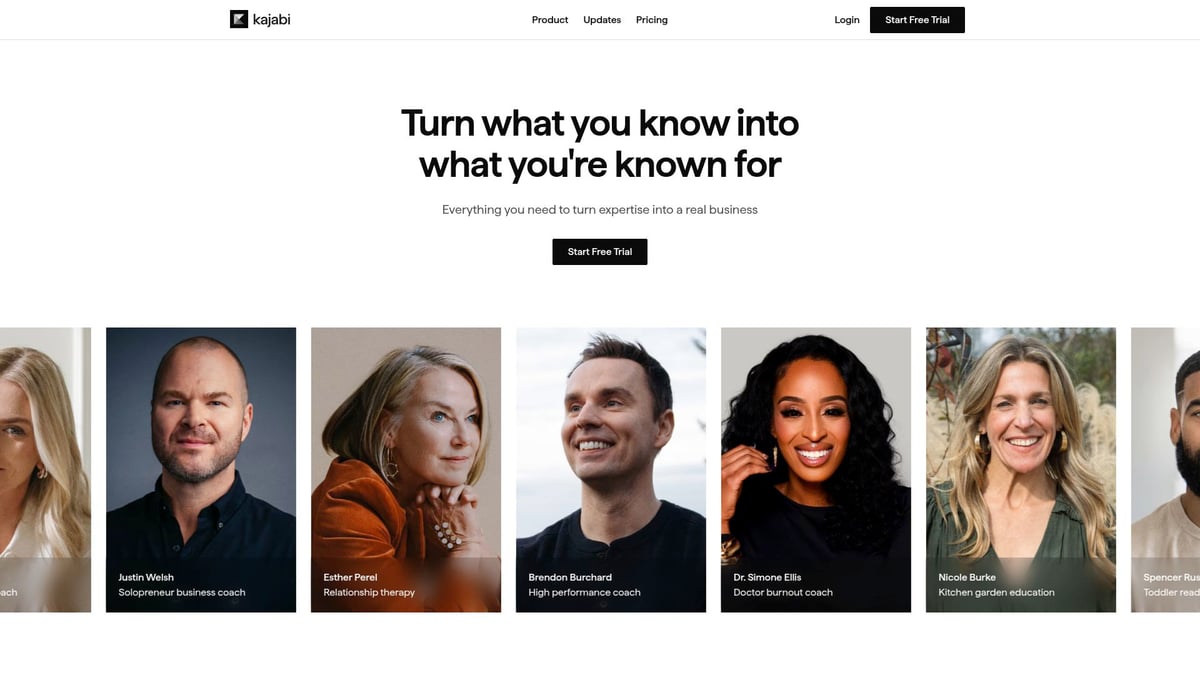
Kajabi exemplifies the all-in-one saas website for digital entrepreneurs. With pricing starting at $149/month, it brings together course creation, email marketing, analytics, and a website builder under one intuitive platform.
Core Features:
- Drag-and-drop course builder
- Email marketing automation
- Built-in analytics suite
Key Benefits:
- Streamlines digital product launches
- Reduces tech stack complexity
Target Audience: Coaches, course creators, content marketers.
Pros:
- Highly engaging UI
- Five-star user ratings
- Real testimonials front and center
Cons:
- Higher entry price for startups
Example Highlight: Animated UI cards and stats-based graphics keep users engaged throughout the site.
Unique Selling Point: Combines essential tools in one platform, making it an efficient saas website for creators.
3. Petal
Petal’s saas website focuses on transparency and accessibility in financial services. There are no annual fees and pricing terms are clearly explained, appealing to users who value simplicity.
Core Features:
- Credit-building tools
- User dashboards
- Financial education resources
Key Benefits:
- Helps users understand and build credit
- Clear, approachable product options
Target Audience: Consumers new to credit or seeking improvement.
Pros:
- Approachable design
- Transparent pricing
- Strong social proof
Cons:
- Service limited to US market
Example Highlight: Animated credit card graphics and concise value messaging stand out.
Unique Selling Point: Accessibility and honesty set this saas website apart in fintech.
4. Appcues
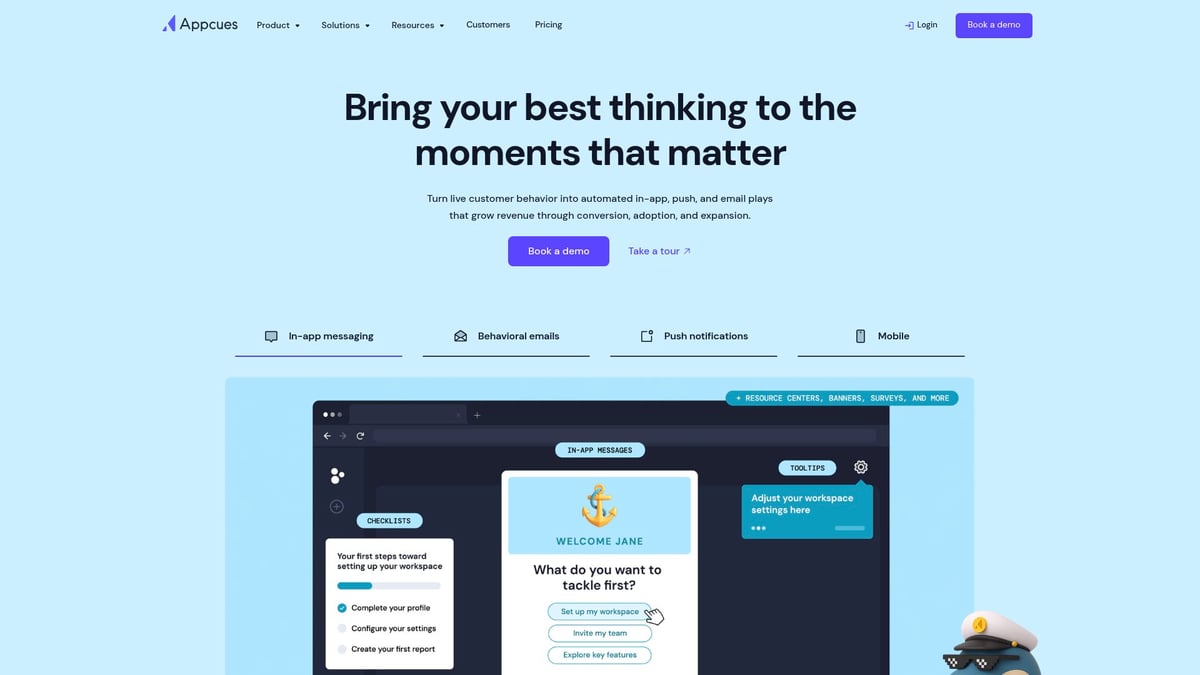
Appcues is a saas website built for onboarding excellence, starting at $299/month. It offers user onboarding, product tours, in-app messaging, and analytics to improve product adoption.
Core Features:
- Interactive onboarding flows
- Product tours for new features
- In-app messaging
Key Benefits:
- Boosts user activation
- Reduces churn rates
Target Audience: SaaS product teams, UX designers.
Pros:
- Stats-driven landing pages
- Clear use case suggestions
- Strong social proof
Cons:
- Advanced features require technical setup
Example Highlight: Screenshots of notification and messaging interfaces demonstrate real product value.
Unique Selling Point: Fills the lifecycle gap with engagement tools, making it a model saas website for onboarding.
5. Proof
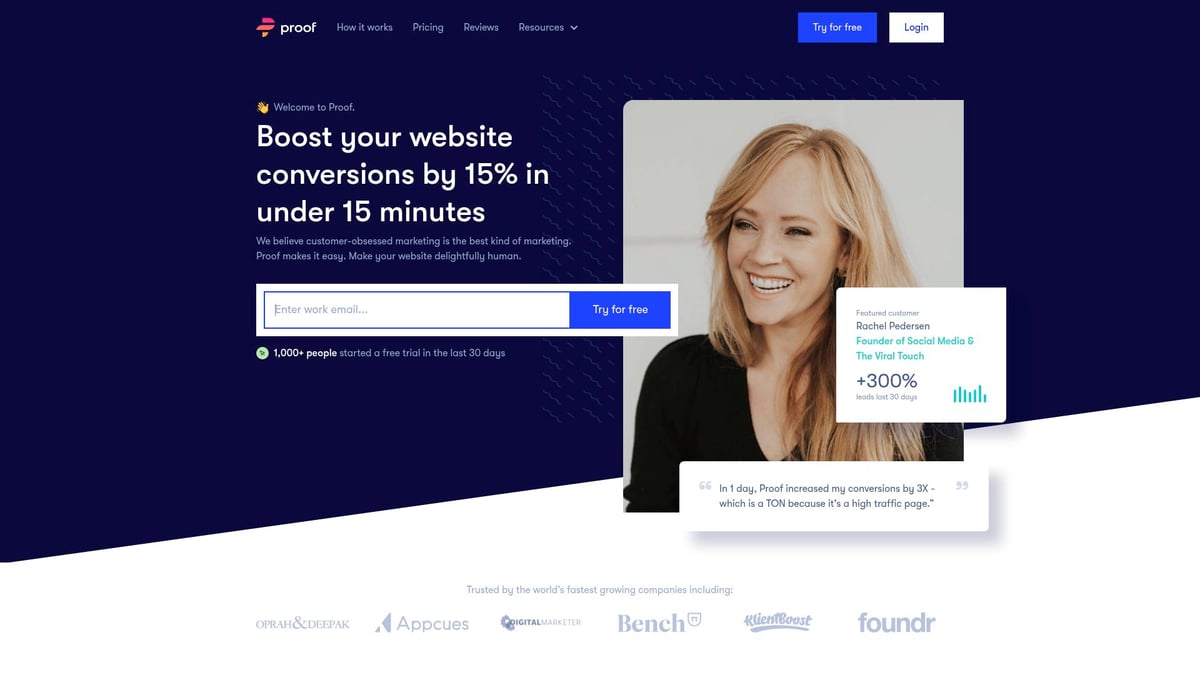
Proof’s saas website leverages social proof notifications, A/B testing, and analytics to boost conversions. Pricing starts at $29/month, making it accessible for a wide range of businesses.
Core Features:
- Real-time social proof popups
- Conversion analytics
- Easy A/B testing
Key Benefits:
- Builds instant credibility
- Increases conversion rates
Target Audience: Marketers, SaaS founders, eCommerce brands.
Pros:
- Prominent testimonials
- Conversion metrics visible
- Simple integration
Cons:
- Best results require higher site traffic
Example Highlight: "Boost your website conversions by 15% in under 15 minutes" headline immediately grabs attention.
Unique Selling Point: Delivers trust signals in real time, making this a standout saas website for conversion optimization.
6. Dropbox Sign
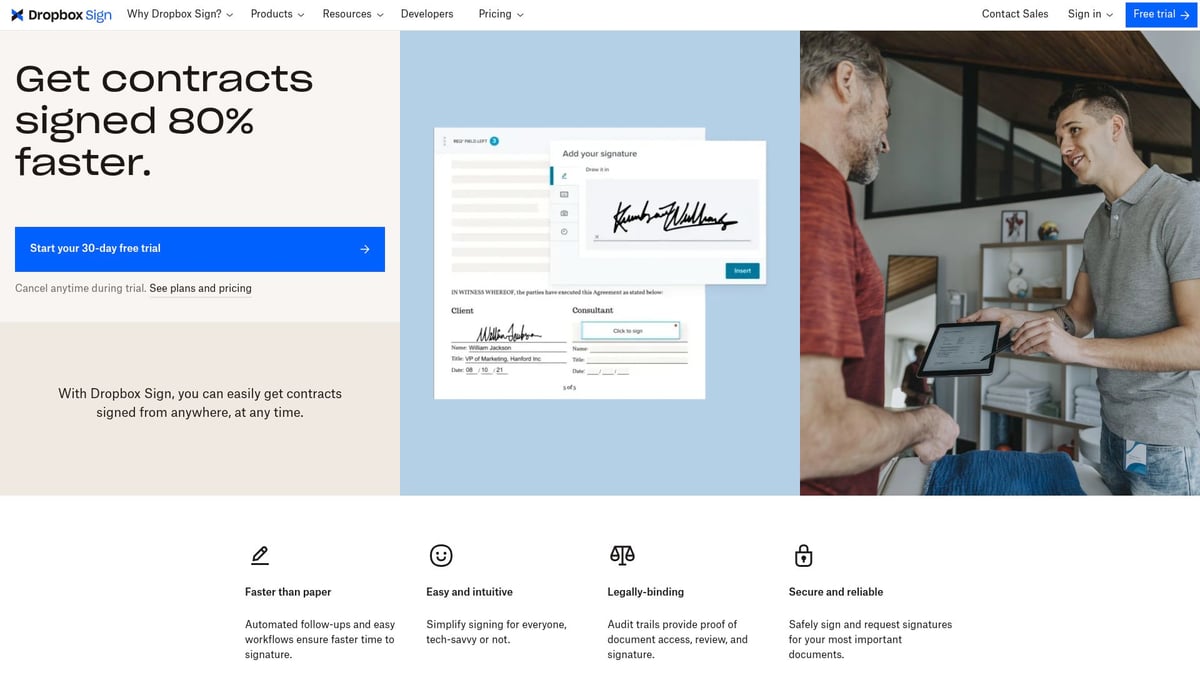
Dropbox Sign is a streamlined saas website for electronic signatures and document management. With a free trial and paid plans from $15/month, it serves both SMBs and large enterprises.
Core Features:
- Secure electronic signatures
- Document tracking and analytics
- Seamless integrations
Key Benefits:
- Accelerates contract workflows
- User-friendly interface
Target Audience: SMBs, enterprises, HR and legal teams.
Pros:
- Benefit-driven headlines
- Integration lists
- Case studies for credibility
Cons:
- Entry plans lack advanced features
Example Highlight: "Get contracts signed 80% faster" headline emphasizes clear ROI for users.
Unique Selling Point: End-to-end workflow integration sets this saas website apart for digital agreements.
7. Lattice
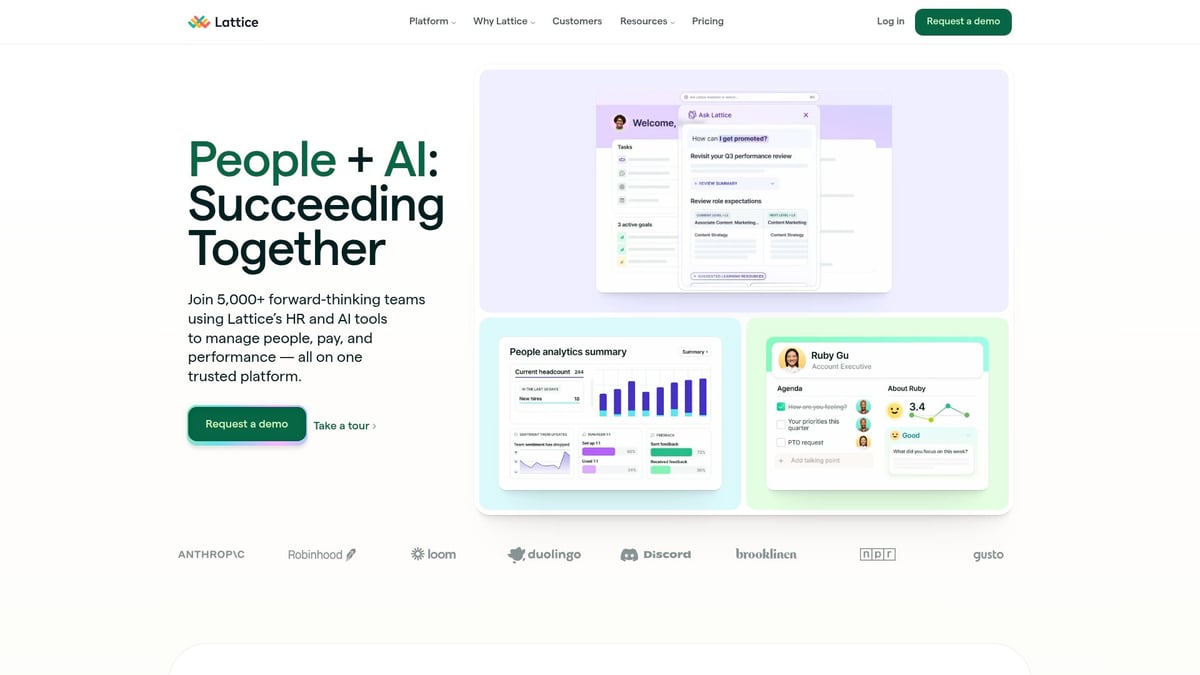
Lattice’s saas website is a comprehensive HR and people management platform, offering custom pricing based on modules and company size.
Core Features:
- Performance management
- Employee engagement analytics
- Custom notification bars
Key Benefits:
- Data-driven HR insights
- Enhances organizational culture
Target Audience: HR teams, managers, growing companies.
Pros:
- Customizable notifications
- Pastel color palette
- Client logos for social proof
Cons:
- Feature-rich platform requires onboarding
Example Highlight: Screenshots of the platform and demo request options make the saas website approachable and informative.
Unique Selling Point: Offers a holistic approach to HR in one platform.
8. Memberstack
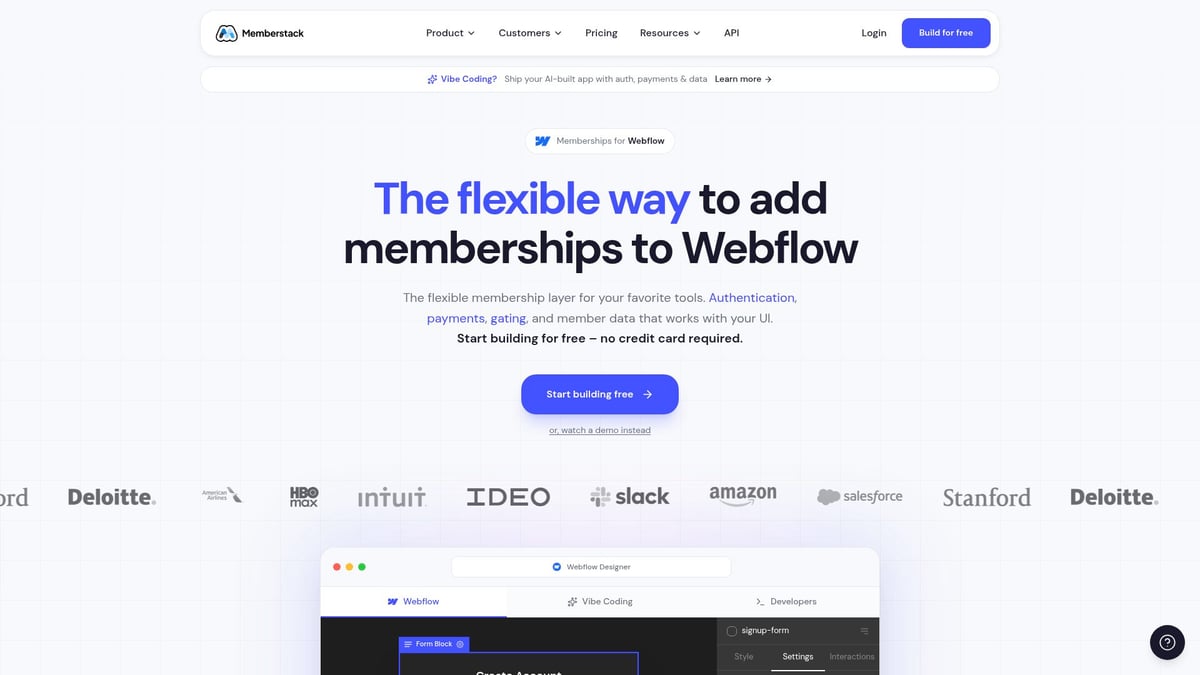
Memberstack is a saas website tailored for membership management, offering a free tier and paid plans starting at $29/month.
Core Features:
- Membership management
- Gated content control
- Payment processing
Key Benefits:
- Enables paywalls and user access control
- Seamless integration with Webflow
Target Audience: Webflow users, SaaS startups, content creators.
Pros:
- Clear messaging
- Effective CTA buttons
- Client logo lists
Cons:
- Best suited to Webflow ecosystem
Example Highlight: Flexbox-style header and outlined CTAs provide a modern, interactive feel.
Unique Selling Point: Effortless membership integration for Webflow sites, showcasing how a focused saas website can serve a niche market.
9. Sereno – AI Psychological Support Mobile App
Sereno’s saas website introduces AI-driven psychological support, though its primary focus is mobile. Pricing is available on request.

Core Features:
- AI mood tracking
- Emotional support chat
- Mobile-first experience
Key Benefits:
- Accessible mental wellness tools
- User-friendly, creative UI
Target Audience: Individuals seeking mental health support, healthcare providers.
Pros:
- Modern mobile app UI
- Creative, emotional visuals
Cons:
- Limited web presence
Example Highlight: Emotional UI and mood tracker features are showcased throughout the saas website.
Unique Selling Point: AI-powered mental wellness, setting a new standard for health-focused saas website design.
10. LoopAI – CRM Dashboard for B2B SaaS
LoopAI is a forward-thinking saas website, offering AI-assisted CRM dashboards and project management for B2B providers. Pricing is custom, based on a demo.

Core Features:
- AI-powered CRM
- Client and project dashboards
- Workflow automation
Key Benefits:
- Streamlines client management
- Increases productivity with AI insights
Target Audience: B2B SaaS providers, sales teams, project managers.
Pros:
- Clean dashboard design
- Focus on productivity
- Advanced AI features
Cons:
- Onboarding required for full adoption
Example Highlight: CRM dashboard visuals and workflow automation tools are front and center.
Unique Selling Point: AI-powered CRM efficiency, demonstrating how a modern saas website can drive business growth.
Best Practices for Implementing These SaaS Website Ideas
Implementing an effective saas website in 2026 means more than just following trends. It is about blending innovation, usability, and trust to create a digital experience that inspires action. The following best practices can help your brand maximize the impact of your saas website, ensuring it stands out in a competitive market.
Integrating Visual and Functional Trends
A modern saas website must balance striking visuals with practical, frictionless functionality. Start by incorporating animated UI cards, interactive graphics, and bold brand colors, similar to what Kajabi and Petal showcase. However, ensure these elements serve a clear purpose and do not distract from the main goals.
- Use micro-interactions to provide feedback and guide users.
- Maintain a logical page structure for easy navigation.
- Highlight CTAs through visual contrast and strategic placement.
For actionable advice on combining design and performance, explore SaaS Landing Page Best Practices. By marrying aesthetics with usability, your saas website can deliver both memorable first impressions and seamless journeys.
Prioritizing Accessibility and Inclusivity
Making your saas website accessible is essential for reaching the widest possible audience. Responsive layouts ensure your site looks and functions well on any device, from desktops to smartphones. Add alt text to images and ensure all interactive elements are keyboard-friendly.
Consider these accessibility strategies:
- Use high-contrast colors for readability.
- Provide clear labels and instructions for forms.
- Test navigation with screen readers and assistive technologies.
With over 61 million adults in the US living with a disability, accessibility is not just a compliance measure, it is a way to build brand trust and loyalty. An inclusive saas website opens doors for more users and sets your brand apart.
Leveraging Data for Personalization
Personalization is a game changer for any saas website. Leveraging analytics allows you to tailor content, CTAs, and user flows based on real behavior and preferences. For example, Lattice’s notification bars deliver targeted messages that resonate with specific user segments.
- Segment content by user type or activity.
- Use dynamic CTAs that adapt to user interactions.
- Analyze user data to refine messaging and design.
To see how AI is transforming personalization, read about AI-powered personalization in web design. Personalization not only increases engagement but also drives higher conversions for your saas website.
Continuous Testing and Iteration
A high-performing saas website is never static. Regular A/B testing of layouts, CTAs, and content helps you understand what resonates most with visitors. Use feedback from analytics and real users to guide improvements.
- Test new features or design changes on small user groups.
- Monitor conversion rates and adjust accordingly.
- Foster a culture of experimentation within your team.
Iterative updates keep your saas website aligned with evolving user expectations and industry standards. Consistent refinement leads to sustained growth and ongoing competitive advantage.
Future Trends in SaaS Website Design for 2026 and Beyond
The future of saas website design is rapidly evolving, setting new standards for innovation and user experience. As we look ahead to 2026 and beyond, several trends are shaping how brands engage, convert, and retain customers online. From AI-driven personalization to deeper ecosystem integration, these advances are redefining what a successful saas website looks like.
AI-Driven Personalization and Automation
AI-powered personalization will be a cornerstone of the modern saas website. By leveraging machine learning, these platforms can tailor content, recommendations, and onboarding flows to each individual user. For example, tools like Distributional use AI to simplify deployment, while Sereno offers adaptive support based on user mood.
Key benefits include:
- Personalized onboarding experiences
- Intelligent chatbots for instant support
- Automated content recommendations
This approach not only streamlines workflows but also increases customer satisfaction. Drawing inspiration from Inspiring SaaS Website Examples, brands that prioritize AI integration are poised to deliver more relevant and dynamic experiences for every visitor.
Enhanced Interactive Product Demos
The demand for hands-on experiences is driving saas website innovation. Interactive demos, live tours, and embedded walkthrough videos offer prospects a real taste of the product before they commit. Platforms like Appcues and Dropbox Sign have set the standard with guided product tours and visual tool showcases.
Research shows that interactive demos can boost conversion rates by up to 30 percent. For more insights, check out recent website conversion rate statistics 2026 to benchmark your own performance.
Key features to consider:
- Clickable walkthroughs
- Real-time demo environments
- Integrated explainer videos
Letting users explore features firsthand builds trust and confidence in your saas website offering.
Deeper Integration with Ecosystems and APIs
Modern saas website strategies emphasize seamless integration with external tools and platforms. Whether connecting with CRMs, payment processors, or other SaaS solutions, interoperability is now a baseline expectation. Dropbox Sign and Memberstack exemplify this by prominently displaying integration options and compatibility details.
Consider these integration essentials:
- Comprehensive API documentation
- Visual integration catalogs
- Transparent compatibility lists
A well-integrated saas website not only enhances user convenience but also drives higher adoption rates among enterprise clients.
Focus on Community and User Education
Community-driven growth is transforming the saas website landscape. Brands are investing in forums, knowledge bases, and educational resources to empower users and foster loyalty. Kajabi, for instance, supports creators with robust learning communities and in-depth training materials.
Key advantages include:
- Peer-to-peer support forums
- Expert-led webinars and tutorials
- Resource libraries for ongoing education
By centering education and collaboration, your saas website can increase retention, lower churn, and establish a reputation for customer-centric excellence.