
By 2032, the SaaS market is projected to surpass $1 trillion worldwide, growing at an impressive annual rate of 18 to 20 percent. SaaS has become the default model for delivering scalable and cost-effective software, empowering businesses of all sizes to innovate faster than ever.
This expert guide provides a clear, step-by-step roadmap to build a saas product in 2026, tailored to the latest industry trends and technologies. You will discover proven strategies for market validation, product planning, architecture selection, tech stack choices, cost management, and future-proofing.
Ready to gain actionable insights and position your next SaaS venture for success? Follow each section closely to turn your vision into a thriving product.
Understanding the SaaS Model in 2026
Software as a Service (SaaS) has reshaped how organizations build a saas product and deliver value in today's digital marketplace. In 2026, SaaS stands as the dominant model, offering businesses the flexibility and scalability needed to stay ahead. Understanding the current SaaS landscape is essential before you build a saas product that meets market expectations.
Defining SaaS for the Modern Era
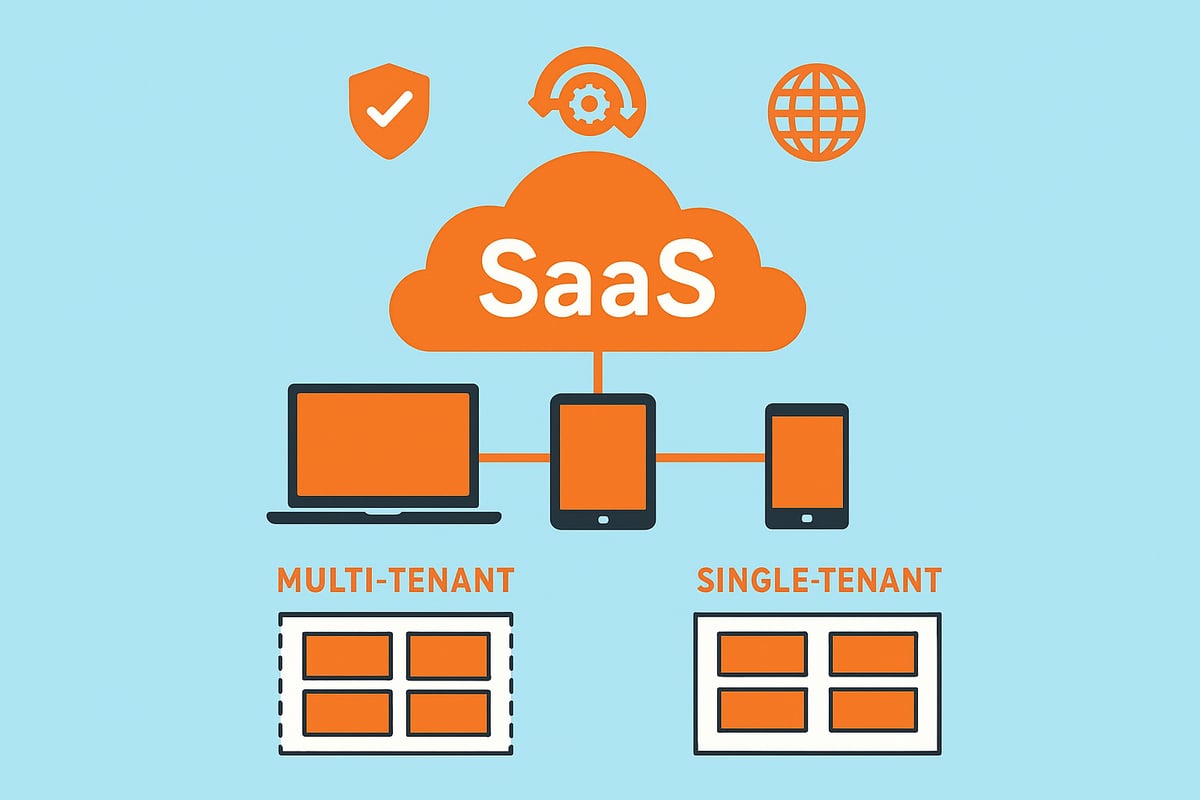
SaaS, or Software as a Service, refers to cloud-delivered software accessed via a web browser or application, typically using a subscription model. Unlike traditional on-premise or legacy software, SaaS eliminates the need for costly hardware, manual updates, and complex installations. Instead, users access their solutions remotely, ensuring convenience and efficiency.
The advantages of SaaS are clear. Accessibility means teams can collaborate from anywhere, while automatic updates guarantee everyone uses the latest features. Cost-effectiveness is a key driver, as companies can avoid upfront infrastructure expenses and pay only for what they use. The global reach of SaaS allows businesses of any size to scale their operations rapidly.
SaaS adoption rates continue to surge. By 2032, the global SaaS market is projected to exceed $1 trillion, and verticals such as CRM, e-commerce, and collaboration tools are seeing particularly strong growth. Leading examples include Zoom for video conferencing, Slack for team communication, HubSpot for marketing automation, and Shopify for e-commerce.
Since 2025, digital transformation has accelerated, with organizations shifting to cloud-first strategies. This shift empowers businesses to innovate and build a saas product that can scale and adapt quickly to evolving customer needs.
SaaS Architecture: Multi-Tenant vs Single-Tenant
When you build a saas product, choosing the right architecture is crucial. Two primary models dominate: multi-tenant and single-tenant.
- Multi-tenant architecture: A single application instance serves multiple customers, with data kept separate for each tenant. This model is cost-effective and easy to scale. Startups and SMBs often prefer multi-tenancy for its resource efficiency.
- Single-tenant architecture: Each customer gets a dedicated application and database. This approach offers higher security and customization, making it popular in regulated industries like healthcare and finance.
| Architecture | Cost | Scalability | Security | Customization | Best For | Example |
|---|---|---|---|---|---|---|
| Multi-tenant | Low | High | Good | Limited | Startups, SaaS apps | Slack, Shopify |
| Single-tenant | Higher | Moderate | Excellent | High | Finance, Healthcare | Private CRMs |
In 2026, many organizations evaluate hybrid or modular approaches to balance flexibility and compliance. For a detailed guide on architectural decisions, see Choosing your SaaS architecture, which dives into real-world considerations for modern SaaS products.
Key Benefits and Use Cases of SaaS
The SaaS model offers recurring income and predictable revenue, making it attractive for founders planning to build a saas product. Low initial costs and minimal infrastructure needs lower the barrier to entry.
Scalability is built in, as cloud resources can expand with user growth. Users benefit from automatic updates, reducing their maintenance burden and ensuring security remains robust through centralized management.
Common use cases include:
- CRM platforms (e.g., HubSpot)
- ERP solutions (e.g., SAP Business One)
- Project management tools (e.g., Jira)
- E-commerce platforms (e.g., Shopify)
- Collaboration and communication (e.g., Slack)
For any organization aiming to build a saas product in 2026, these advantages and use cases highlight why SaaS continues to lead the way in digital transformation.
Step 1: Validating Your SaaS Idea and Market Fit
Validating your SaaS idea is the essential first step if you want to build a saas product that stands out in 2026. The SaaS landscape is more competitive than ever, and skipping validation can lead to costly missteps. By focusing on user needs and rigorous research, you set the stage for a product that solves real problems and attracts lasting customers.
Importance of SaaS Idea Validation in 2026
Before you build a saas product, validate your idea to avoid wasted resources and increase your odds of success. Industry data shows that most unvalidated SaaS startups struggle to gain traction or fail within the first two years. This underscores how crucial it is to test assumptions before investing in development.
Market validation helps you identify whether there is a real demand for your solution. It ensures you are solving a genuine pain point, not just building a saas product based on assumptions. With rapid innovation and new entrants in SaaS, differentiation is now a prerequisite, not a luxury.
Validation also reveals where your concept fits in the crowded market. It enables you to iterate early, pivot if needed, and ultimately craft a better product. In 2026, founders who invest in validation are far more likely to achieve product-market fit and scalable growth.
Market Research and Competitive Analysis
Solid market research is the backbone when you build a saas product that will last. Start by analyzing industry trends, such as the rise of AI integration, automation, and vertical SaaS tailored for specific sectors. Study the competitive landscape to spot gaps and opportunities.
Use a mix of research tools:
- Surveys and interviews to capture direct user feedback
- Online forums and review sites to uncover pain points
- Competitive analysis grids to compare features and pricing
A thorough review of current players helps you identify your unique value proposition. For actionable strategies, refer to SaaS validation strategies to structure your research and ensure your approach is data-driven. By grounding your idea in real market needs, you avoid costly guesswork and set a strong foundation to build a saas product that resonates.
Defining Target Audience and Personas
To build a saas product for 2026, you must know exactly who you are building for. Create detailed user personas that capture your ideal customers’ demographics, job roles, industries, and specific pain points. These personas help you prioritize features and tailor your messaging.
Effective persona development involves:
- Collecting user data from surveys or analytics
- Mapping out daily challenges and workflows
- Identifying what solutions users currently use and where they fall short
With well-defined personas, your product planning and marketing become more targeted. This ensures you allocate resources wisely and focus on features your audience truly values. In a saturated SaaS market, understanding your users is a critical differentiator.
Why SaaS Validation is Essential for Founders
Platforms like SaaS Validation are becoming indispensable for anyone looking to build a saas product with confidence. These resources offer structured guides, frameworks, and market research tools tailored for SaaS founders. They provide actionable templates, reducing guesswork and helping you validate ideas before major investments.
Benefits of using validation platforms:
- Access to proven frameworks and step-by-step workflows
- Tools for gathering and analyzing user feedback
- Examples of successful SaaS launches that started with robust validation
Leveraging these resources minimizes wasted time and money. Whether you are a founder, product manager, or part of a growth-focused team, validation is key to achieving product-market fit in 2026. By starting with strong validation, you set your SaaS journey up for sustainable success.
Step 2: Planning and Designing Your SaaS Product
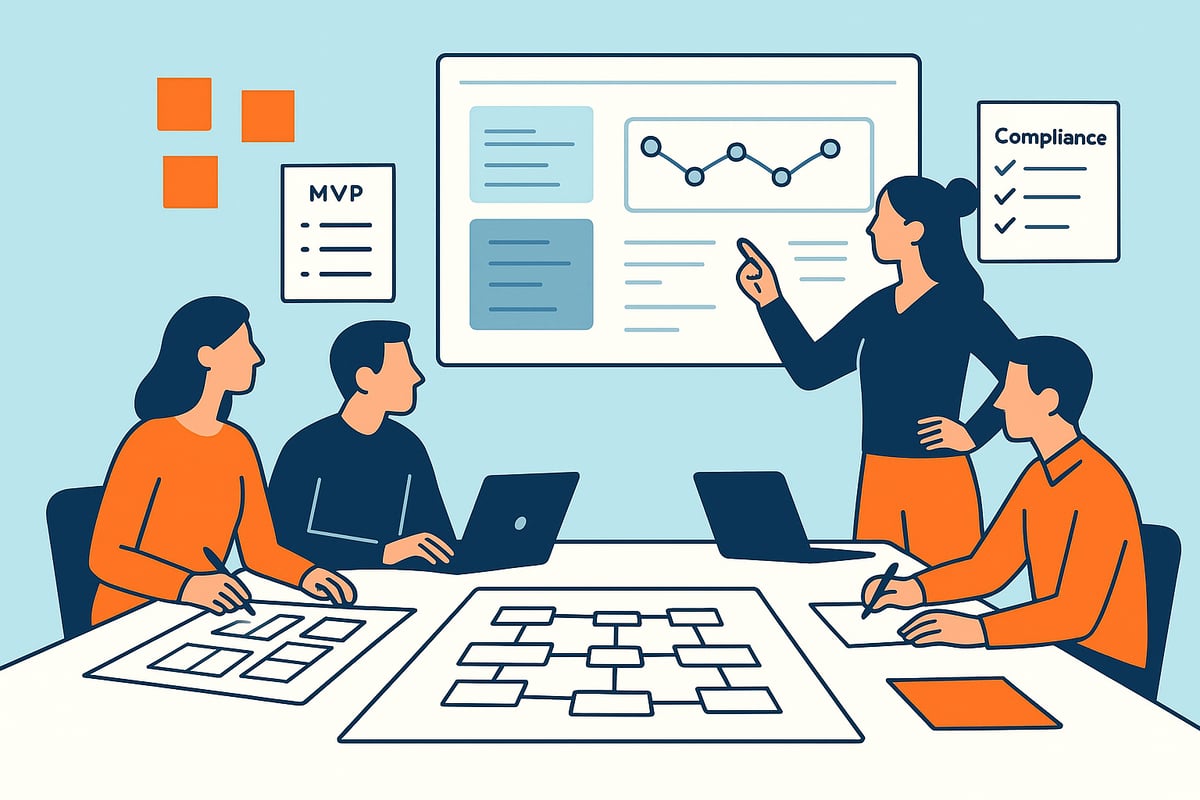
Strategic planning is at the heart of every successful attempt to build a saas product. Exceptional SaaS solutions start with a clear vision, strong business fundamentals, and a focus on user needs. In this section, we break down each stage of planning and design, ensuring you set your product up for success from day one.
Shaping the Product Concept and Business Plan
To build a saas product that resonates in 2026, begin by crafting a sharp problem statement. Define what user pain points your solution addresses. Outline a compelling value proposition, making it clear why your SaaS is the right choice.
Detail your target market, specifying industries, company sizes, and user roles. Develop a go-to-market strategy, including digital channels and partnerships. Your business plan should cover revenue models, such as subscription, tiered, or freemium pricing, and include realistic growth projections.
A well-structured plan ensures you allocate resources wisely and set measurable goals as you build a saas product.
Feature Selection and Prioritization
Feature selection is a balancing act when you build a saas product. Start by listing all potential features, then apply frameworks like MoSCoW (Must have, Should have, Could have, Won’t have), RICE (Reach, Impact, Confidence, Effort), or Kano to prioritize.
- Use competitor analysis to spot gaps and opportunities.
- Align features with user needs and business goals.
- Focus on differentiators that set your SaaS apart.
Prioritize foundational elements, such as security, scalability, and intuitive user experience. This approach helps avoid feature bloat and ensures you deliver maximum value early.
Mapping the User Journey and Experience
User experience is central when you build a saas product. Map out typical user flows, from onboarding to daily use, to identify friction points. Design responsive, accessible interfaces that work seamlessly across devices.
- Invest in wireframes and clickable prototypes to gather feedback.
- Create onboarding processes that reduce learning curves.
- Use customer personas to tailor design choices.
A strong UX/UI increases adoption and retention, keeping users engaged and satisfied with your SaaS solution.
Compliance, Security, and Global Considerations
Security and compliance are non-negotiable as you build a saas product for a global audience. Address regulations like GDPR, CCPA, or newer privacy laws anticipated by 2026. Plan for internationalization, localization, and support for multiple currencies.
- Implement authentication, encryption, and access controls.
- Regularly update security protocols to address evolving threats.
- Prepare for audits and maintain transparent data practices.
Building compliance and security into your design from the start avoids costly fixes and builds user trust.
Building Your MVP (Minimum Viable Product)
Launching a successful SaaS begins with an MVP. Define the smallest set of features needed to test your assumptions with real users. This approach lets you gather feedback quickly, validate product-market fit, and iterate efficiently.
Set up rapid feedback loops and use analytics to refine your offering. For a step-by-step approach, explore Planning your SaaS MVP to guide your MVP process and ensure every iteration brings you closer to a scalable, market-ready solution.
A focused MVP strategy reduces risk and maximizes learning as you build a saas product for the future.
Step 3: Choosing the Right SaaS Architecture and Tech Stack
Choosing the right architecture and technology stack is a critical step when you build a saas product. Your choices will impact scalability, security, and how quickly you can adapt to market changes.
Selecting the Best Architecture for 2026
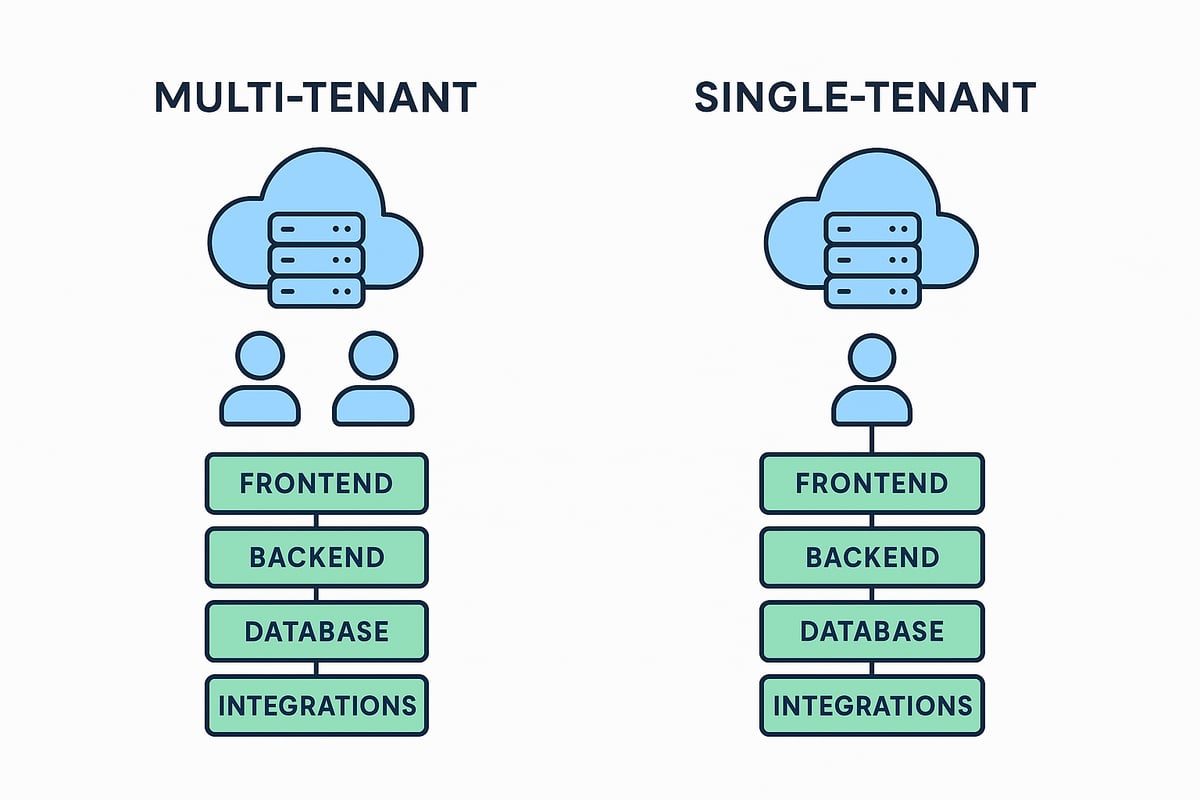
To build a saas product that thrives in 2026, you must choose the right architecture. Multi-tenant architecture allows multiple customers to share a single application while keeping data separate. This model is cost-effective and easy to scale, making it popular with startups and fast-growing companies.
Single-tenant architecture gives each customer their own dedicated application and database. This approach offers enhanced security and customization, which appeals to regulated industries like healthcare and finance. However, it often comes with higher costs and more complex maintenance.
| Feature | Multi-Tenant | Single-Tenant |
|---|---|---|
| Cost | Lower | Higher |
| Scalability | High | Moderate |
| Customization | Limited | Extensive |
| Security | Good | Enhanced |
| Industry Fit | Startups, SaaS | Healthcare, Finance |
Hybrid and modular architectures are also gaining traction, offering flexibility for teams aiming to build a saas product that adapts to changing needs.
Frontend and Backend Technologies
The choice of frontend and backend frameworks is foundational when you build a saas product. React, Angular, and Vue continue to lead for frontend development, offering strong community support and rapid updates.
For backend, Node.js, Django, Ruby on Rails, and Laravel remain top choices. Node.js is valued for its scalability, while Django offers robust security features. Serverless and microservices architectures are becoming the norm, reducing operational overhead and increasing flexibility.
To stay ahead, explore top SaaS development frameworks for 2026 and match the stack to your product’s needs and team expertise.
Database and Data Management
Selecting the right database is vital as you build a saas product. For structured data, PostgreSQL and MySQL are proven and reliable. If your application requires high flexibility, consider NoSQL options like MongoDB or DynamoDB.
Data security, backup, and disaster recovery should be planned from day one. Real-time analytics and seamless integration with business intelligence tools are essential for modern SaaS products. Always ensure your data strategy supports growth and compliance.
Cloud Hosting, DevOps, and CI/CD
Reliable cloud hosting is the backbone when you build a saas product. AWS, Google Cloud, and Azure lead the market, each offering robust features and global reach. Containerization with Docker and orchestration via Kubernetes simplify deployment and scaling.
Implement CI/CD pipelines using tools like GitHub Actions or CircleCI to automate builds, tests, and releases. This approach enables faster iterations and higher code quality, which are essential in today’s fast-paced SaaS landscape.
Integrations, Payments, and Analytics
A modern SaaS product must offer seamless integrations. Use authentication solutions such as Auth0 or Okta for secure user management. For payments, Stripe and PayPal provide reliable APIs and compliance support.
Analytics platforms like Datadog, Sentry, or Mixpanel help you monitor performance and understand user behavior. Integrating these tools early enables you to make data-driven decisions and optimize the user experience as you build a saas product.
Security and Compliance by Design
Security is not optional when you build a saas product in 2026. Embed encryption, access controls, and monitoring from the start. Prepare for evolving privacy regulations, and design your system for easy compliance updates.
Adopt best practices such as regular vulnerability assessments and automated security testing. Prioritize transparent data handling and obtain necessary certifications to build trust with your users.
Step 4: Building, Testing, and Launching Your SaaS Product
Turning your vision into reality starts with assembling the right team and following a disciplined process. To build a saas product that stands out in 2026, you need a strategic approach to development, quality assurance, deployment, and continuous improvement.
Assembling Your Development Team
Begin by identifying the key roles essential to build a saas product: product manager, frontend and backend developers, UX/UI designers, QA engineers, DevOps specialists, and customer support.
You can structure your team in several ways:
- In-house: Offers control and quick communication, suitable for startups with core expertise.
- Outsourcing: Reduces costs and provides access to global talent. Learn more about SaaS development best practices for insights on managing distributed teams.
- Hybrid: Combines internal leadership with external specialists for flexibility.
Adopting agile methodologies is crucial. Agile enables iterative releases, rapid feedback, and adaptability, which are key when you build a saas product for a fast-moving market.
Development Process: From MVP to Full Product
Start with a Minimum Viable Product (MVP) to validate assumptions and gather user feedback early. Use short sprints, each with clear milestones and deliverables, to incrementally add features.
A typical agile SaaS development process includes:
Sprint Planning -> Development -> Code Review -> Testing -> Deployment -> Feedback
Continuous integration and deployment (CI/CD) pipelines help automate builds and releases. This approach ensures that every time you build a saas product, you maintain code quality and can scale quickly.
Focus on maintainability, scalability, and security from day one.
Testing and Quality Assurance
Testing is integral to deliver a robust SaaS product. Include these types of testing in your workflow:
- Unit testing: Verify individual components.
- Integration testing: Ensure modules interact correctly.
- End-to-end testing: Simulate real user scenarios.
- Security testing: Protect user data and privacy.
- Performance testing: Confirm reliability under load.
Automated testing frameworks can accelerate this phase. Beta testing with early adopters uncovers usability issues and provides real-world insights. Each step you take to build a saas product should prioritize reliability.
Deployment and Go-to-Market Strategy
Deploy your SaaS product using a staged approach:
- Alpha: Internal team tests core functionality.
- Beta: Invite select users for broader feedback.
- General Availability: Full public launch.
Leverage cloud platforms for scalable deployment and auto-scaling. Plan marketing campaigns and user onboarding initiatives to drive adoption. When you build a saas product, a smooth go-to-market strategy increases your chance of early traction.
Post-Launch Monitoring and Iteration
After launch, set up analytics to track user engagement, retention, and churn rates. Address bugs quickly and listen to user feedback for new feature ideas.
Establish feedback loops to keep improving your product. The journey to build a saas product does not end at launch, it requires ongoing attention to quality and user satisfaction.
Step 5: Managing Costs, Pricing, and Scaling for 2026
Managing costs, pricing, and scaling is essential if you want to successfully build a saas product in 2026. With growing competition and evolving technologies, careful planning can help ensure profitability and sustainable growth.
Understanding and Estimating SaaS Development Costs
When you build a saas product, the first step is to break down the total cost. Costs include team salaries, feature development, infrastructure, design, integrations, and ongoing support. For an MVP, budgets often range from $50,000 to $250,000, while full-featured SaaS solutions can exceed $1 million.
Ongoing costs cover cloud hosting, maintenance, customer support, and marketing. For a detailed approach to controlling expenses and planning for growth, consider resources like SaaS development cost management. Accurate estimates early on help prevent overspending and keep your project sustainable.
Pricing Models and Revenue Strategies
Choosing the right pricing model is crucial when you build a saas product. Common models include subscription-based, tiered, per-user, and freemium. Each has distinct advantages and challenges:
| Model | Pros | Cons |
|---|---|---|
| Subscription | Predictable revenue | May limit rapid user growth |
| Tiered | Appeals to all segments | Complex setup |
| Per-user | Scales with adoption | Can deter large teams |
| Freemium | Fast user growth | Monetization can be harder |
Successful SaaS companies like HubSpot and Shopify have proven the value of aligning pricing with customer needs and market expectations.
Planning for Scalability and Growth
To build a saas product that thrives, infrastructure planning is vital. Invest in modular design, load balancing, and auto-scaling cloud resources. These strategies allow your platform to handle rapid user growth without performance issues.
When entering new markets, consider local regulations, payment systems, and enterprise feature requirements. Proactive planning ensures you can scale efficiently and meet global demand.
Budgeting for Continuous Improvement
Continuous improvement is key if you want to build a saas product that lasts. Allocate budget for regular updates, security patches, and customer support. Marketing and onboarding efforts should also be part of your ongoing investment.
Analytics play a crucial role in guiding where to direct resources. Use data insights to prioritize feature development and enhance user satisfaction over time.
Avoiding Common SaaS Pitfalls
Even experienced teams can stumble when they build a saas product. Watch out for these common pitfalls:
- Underestimating hidden costs like compliance and integrations
- Overbuilding before validating the market
- Neglecting user feedback and failing to iterate
By staying vigilant and learning from industry best practices, you can minimize risks and position your SaaS for long-term success.
Future-Proofing Your SaaS Product: Trends and Innovations for 2026
The race to build a saas product that stands the test of time is more competitive than ever. As the SaaS market is projected to reach $1.13 trillion by 2032, founders must look ahead, not just at current demands but at emerging trends and innovations shaping the next decade. Let’s explore how to ensure your solution thrives in 2026 and beyond.
Embracing Emerging Technologies
Staying ahead means integrating cutting-edge tech as you build a saas product. AI and machine learning are now essential, powering automation, personalized experiences, and predictive analytics. API-first architectures allow for seamless integrations, while no-code and low-code platforms empower rapid feature delivery and let customers tailor workflows.
- AI automates support, forecasts trends, and personalizes UX.
- API-first design ensures flexible ecosystem growth.
- No-code tools let non-developers customize and extend your product.
By embracing these innovations, you future-proof your offering and foster continuous improvement.
Security and Compliance in a Changing Landscape
Security is a top priority when you build a saas product, especially as global data privacy laws evolve. Anticipate new regulations by investing in advanced security measures like zero trust frameworks, continuous monitoring, and proactive threat detection.
Transparency in your data practices builds trust with users and regulators. Certifications and regular compliance updates will help your product stay ahead of legal changes, reducing risk and increasing credibility.
Enhancing User Experience and Accessibility
Exceptional user experience is vital as you build a saas product for 2026. Focus on mobile-first interfaces, ensuring omnichannel access across devices and platforms. Prioritize accessibility by following WCAG guidelines and designing for users with diverse needs.
Personalization, powered by AI, adapts the interface and content to individual preferences. These enhancements drive adoption, retention, and user satisfaction, positioning your SaaS for lasting success.
Sustainable and Responsible SaaS Development
Sustainability is now a key consideration for anyone looking to build a saas product. Optimize your application for energy efficiency and choose green cloud providers. Responsible AI use is essential, ensuring your algorithms are fair, ethical, and explainable.
Consider the social impact of your product, from inclusive design to support for remote and underrepresented users. These actions not only reduce environmental footprint but also appeal to conscious customers.
Preparing for Global Expansion
Scaling globally is a natural progression as you build a saas product. Plan for internationalization and localization early, supporting multiple languages and currencies. Ensure compliance with local regulations and payment systems to avoid costly setbacks.
Learn from SaaS products that have successfully entered new markets by adapting their onboarding, support, and marketing. Flexibility and local relevance are key to global growth.
Monitoring SaaS Trends and Continuous Learning
The journey to build a saas product does not end at launch. Stay updated with industry reports, SaaS communities, and major events to spot new trends. Foster a culture of experimentation, encouraging your team to test new ideas and adapt quickly.
Use analytics and customer feedback to guide product evolution. Continuous learning and agile adaptation keep your SaaS relevant and competitive in a rapidly changing world.