
The SaaS industry is experiencing explosive growth, with forecasts predicting a $908 billion market size by 2030 and a potential $1.25 trillion by 2034. As businesses rapidly shift toward digital solutions, the demand for innovative SaaS products continues to soar.
This evolving landscape is fueled by emerging technologies, shifting business needs, and the rise of niche markets. For aspiring founders, these trends create prime opportunities to launch solutions that address real-world challenges.
In this article, we uncover 15 best saas ideas for 2026. You will discover actionable insights, up-to-date market data, and proven validation strategies to help turn your SaaS vision into a thriving business.
Why 2026 Is the Perfect Year to Launch a SaaS Startup
The SaaS industry is entering a golden era, creating fertile ground for launching the best saas ideas. The market is not only expanding rapidly but also evolving through new technologies and shifting business needs. For founders, understanding why 2026 is an optimal launch window is essential.
SaaS Market Growth and Trends
The SaaS market continues to surge, with projections estimating it could reach $1,131.52 billion by 2032. This explosive growth is fueled by advancements in AI, automation, and robust cloud infrastructure. Industry analysts project the market could expand to $1.25 trillion by 2034 as cloud adoption reaches new industries and geographies.
Over the last three years, startups have thrived by leveraging these trends. The remote work boom and digital transformation have increased demand for industry-specific SaaS solutions, opening new niche markets for the best saas ideas. Data shows that 99% of SaaS businesses generate less than $10M annually, highlighting significant opportunities for new entrants. With more venture capital and angel investment flowing in, 2026 stands out as a pivotal year for innovative founders.
Key Challenges and How to Overcome Them
While the landscape is promising for the best saas ideas, new founders face notable challenges. Competition is fierce, customer acquisition costs are rising, and churn remains a concern. Achieving product-market fit and prioritizing user-centric design are crucial for long-term success.
To minimize upfront costs and technical risks, founders can leverage no-code or low-code platforms for rapid prototyping. Micro SaaS models are thriving by targeting underserved verticals, offering focused solutions with recurring revenue. The most successful saas ideas are those that go deep on a specific pain point rather than trying to serve everyone.
Rising Competition and the Need for Differentiation
As the SaaS market expands, differentiation becomes the deciding factor. Startups that win in 2026 will be those targeting vertical SaaS — platforms tailored for niche industries or specialized business functions. This approach enables deeper market penetration and higher customer loyalty, as products are built to address the distinct challenges of a specific sector rather than offering generic solutions. According to CB Insights, 42% of startups fail because there is no market need for their product — which is exactly what niche focus prevents.
Validation: The Most Critical Step Before Building
Validating your concept is essential before investing in the best saas ideas. Early validation helps avoid costly missteps and ensures you are solving a real pain point. Proven methods include surveys, landing pages, waitlists, and MVPs.
Many successful SaaS founders have pivoted after receiving early feedback, saving significant resources. Tools and resources can streamline validation, helping you understand your target audience and refine your offering. The most important step is to deeply understand the pain points and motivations of your potential users.
Validate Your SaaS Idea with SaaS Validation
SaaS Validation offers a comprehensive resource for aspiring founders working on the best saas ideas. It enables entrepreneurs to test and refine their concepts before committing to full-scale development.
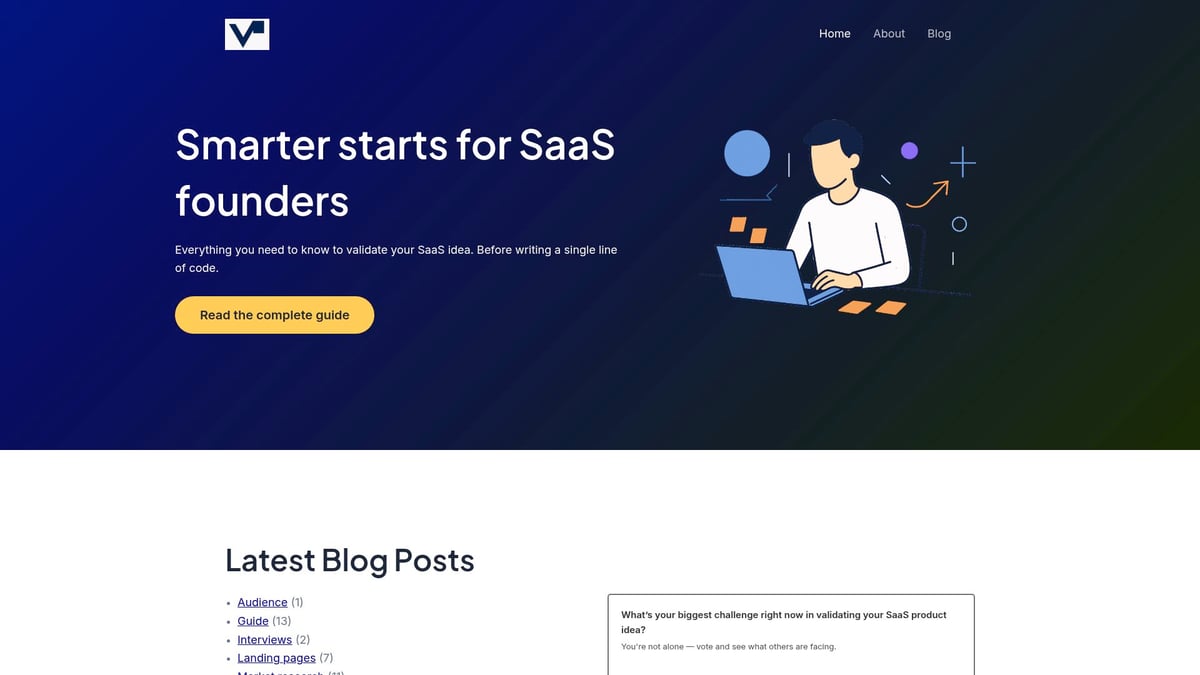
Key features include expert guides, actionable strategies, industry insights, and a supportive community. Using SaaS Validation minimizes risk, saves time, and increases the likelihood of SaaS success. The platform is ideal for founders, early-stage startups, product managers, and investors seeking to validate and launch high-potential products.
15 Best SaaS Ideas to Launch in 2026 for Maximum Growth
The rapid evolution of the SaaS landscape is creating fertile ground for founders to innovate. To help you identify the best saas ideas with the highest potential, here are fifteen standout opportunities for 2026. Each is designed to tap into emerging trends, solve real problems, and offer scalable, recurring revenue models. For a broader overview, explore this curated list of top SaaS business ideas to complement your research.

1. AI-Powered Resume & Career Optimization Platform
The job market is evolving, and candidates need advanced tools to stand out. An AI-powered resume and career optimization platform offers intelligent resume building, keyword optimization, cover letter generation, and ATS compatibility checks.
What sets this apart is AI-driven personalization. The platform analyzes job descriptions, tailors resumes, and provides real-time feedback. Integration with major job boards and personalized career advice further boost its value.
Target users include job seekers, career coaches, and recruiters. Benefits are substantial: increased interview rates, time savings, and the ability to adapt to new hiring trends. Monetization works through affordable monthly subscriptions ($9–$19).
The surge in AI resume tools in 2024 and 2025 has shown the demand for such solutions. According to the AI hiring software market size and share report, this sector is projected to grow rapidly, reinforcing its potential as one of the best saas ideas for 2026.
Pros: Highly scalable; recurring revenue; high and sustained demand.
Cons: Ongoing AI model updates required; competitive space with established players.
Use Case: A recent graduate uses the platform to tailor applications for each role, improving interview success rates in a crowded, automated hiring environment.
2. Automated Social Media Thread & Content Scheduler
Content creators and marketers are seeking saas ideas to automate their workflow. An automated social media thread and content scheduler allows users to plan, schedule, and publish threads across X, LinkedIn, and Threads from a single dashboard.
Key features include AI-powered content suggestions, viral templates, and an analytics dashboard. Collaboration tools enable teams to work efficiently, while automation ensures a consistent online presence.
The target audience spans influencers, startups, agencies, and solo marketers. Monetization typically follows a freemium model, with paid plans ranging from $5 to $20 per month. Its low entry barrier and high retention rates make it attractive for bootstrapped founders.
Pros: Easy onboarding; high user loyalty; scalable freemium model.
Cons: Dependence on social platform APIs that can change without notice; need to keep pace with competitor features.
Use Case: A marketing agency manages multiple client accounts, automating content scheduling and performance tracking across platforms — cutting weekly admin time in half.
3. Vertical CRM for Freelancers & Solopreneurs
Freelancers and solopreneurs are underserved by generic CRMs, making vertical solutions one of the best saas ideas for niche markets. A tailored CRM offers lead tracking, invoicing, project deadlines, and client communication in a simple, mobile-first interface.
Unique selling points include industry-specific templates and streamlined workflows. The platform helps users manage clients, track payments, and reduce administrative burden without the complexity of enterprise tools.
The primary audience is freelancers, consultants, coaches, and micro-agencies. Subscriptions typically range from $15 to $40 monthly. Micro SaaS CRMs have consistently outperformed generic solutions in niche markets, proving the value of specialization.
Pros: High customer loyalty; minimal churn; strong word-of-mouth in tightly-knit communities.
Cons: Continuous development needed to retain users; niche market limits scale ceiling.
Use Case: A freelance designer tracks projects, invoices, and client communications from a single dashboard, eliminating spreadsheets and missed follow-ups.
4. E-commerce Analytics & Insights Dashboard for Small Sellers
Small e-commerce businesses need actionable insights, which makes analytics dashboards one of the best saas ideas for 2026. This platform unifies data from Shopify, Etsy, Amazon, and WooCommerce, presenting trends and competitor benchmarks in visual dashboards.
Key features include easy integration and inventory optimization tools. Sellers gain data-driven decision-making power, improving sales and managing stock more efficiently. As more micro brands emerge, the demand for consolidated analytics grows.
The target audience is small store owners, side hustlers, and boutique brands. Monetization is via paid subscriptions ($19–$49 per month). The rise of micro brands on major platforms underscores the market need.
Pros: High-value insights that directly tie to revenue; scalable to thousands of users.
Cons: Data privacy considerations; reliance on third-party marketplace APIs.
Use Case: An Etsy seller uses the dashboard to identify top-performing products, adjust listings based on competitor pricing, and improve conversion rates without guesswork.
5. AI-Powered Customer Support Automation for SMBs
Delivering 24/7 support is a challenge for SMBs, making customer support automation one of the best saas ideas for the coming years. A platform combining chatbots, helpdesk ticketing, sentiment analysis, and multilingual support empowers businesses to scale service without hiring more staff.
The platform’s quick setup, integration with Shopify or WordPress, and self-improving AI offer strong differentiators. Businesses benefit from reduced operational costs, improved customer satisfaction, and round-the-clock support availability.
Pricing is typically tiered based on support volume ($29–$99/month). The rapid adoption of AI chatbots by SMBs has validated the demand, with no signs of slowdown.
Pros: Reduces manual workload significantly; scales with business growth automatically.
Cons: Requires regular AI training; risk of impersonal interactions for complex customer issues.
Use Case: An online retailer automates FAQ responses and order tracking, freeing support staff to handle only high-value, complex issues.
6. Automated LinkedIn Outreach & Lead Generation Tool
B2B sales teams and recruiters need efficient outreach, making LinkedIn automation one of the best saas ideas for 2026. This tool automates personalized messaging, follow-ups, response tracking, and analytics, while ensuring compliance with LinkedIn’s usage policies.
High deliverability, CRM integration, and built-in compliance controls set it apart. The result is higher response rates, time savings, and scalable lead generation for teams of any size.
The audience includes recruiters, sales teams, and marketers. Monetization is through monthly subscriptions ($19–$49). The market for LinkedIn automation tools has grown steadily, especially as remote sales processes become standard.
Pros: High ROI; measurable pipeline outcomes; works for both recruiting and sales.
Cons: Platform policy restrictions require careful implementation; risk of account flagging if misused.
Use Case: A SaaS sales rep automates personalized outreach and demo booking sequences, increasing booked meetings without manual follow-up effort.
7. Remote Team Collaboration & Async Communication Suite
Remote work is a permanent fixture, making async collaboration one of the best saas ideas for modern teams. This suite offers async video updates, task management, shared docs, timezone coordination, and engagement analytics — all tailored for distributed teams.
Integration with Slack and Teams, along with a focus on async workflows and team sentiment tracking, differentiates it from generic project management tools. Benefits include reduced meeting fatigue, improved productivity, and stronger remote culture.
The target audience is remote-first companies, digital agencies, and distributed teams. Monetization follows a per-user/month model ($6–$15). As remote work trends persist, demand continues to rise and the market remains underdeveloped for mid-sized teams.
Pros: Broad market appeal; high retention once embedded in team workflows.
Cons: Competes with established players like Loom; requires strong UX to displace existing tools.
Use Case: A global startup coordinates projects across time zones, reducing synchronous meetings and improving outcomes through structured async updates.
8. AI-Driven Content Optimization Platform
AI-driven content optimization platforms are redefining how marketers approach SEO and digital publishing. These saas ideas leverage automated keyword research, real-time content scoring, and competitor benchmarking to streamline content workflows at scale.
Core features include CMS integration, multilingual support, and actionable SEO recommendations generated in real time. Content teams can optimize existing articles and plan new ones with data-backed confidence rather than guesswork.
Target audience: content marketers, SEO agencies, and digital publishers. Pricing typically ranges from $49–$199/month depending on the number of projects and users. Surfer SEO’s rapid growth illustrates the market’s appetite for AI-powered content solutions.
Pros: Directly boosts organic traffic; reduces manual research time; scales well for agency teams.
Cons: Needs frequent updates as search algorithms evolve; heavily contested market segment.
Use Case: A content agency runs all client articles through the optimizer before publishing, consistently improving rankings without adding headcount.
9. Vertical SaaS for Small Landlords
Micro-landlords managing one to ten properties are massively underserved by generic property management software built for large portfolios. A vertical SaaS for small landlords offers rent reminders, maintenance scheduling, digital lease storage, and automated tenant screening — in an interface designed for non-technical users.
Unique selling points include simplicity, affordability, and features that match exactly what independent landlords need — not what enterprise property managers need. Financial API integrations for tenant screening remove a major administrative burden.
Target audience: independent landlords, accidental landlords, and small property managers. Monthly plans can start as low as $10–$20 per unit. Reddit discussions in landlord communities reveal widespread frustration with current tools, proving genuine demand.
Pros: Reduces missed payments; improves maintenance tracking; ensures document retention without complexity.
Cons: Not suited for larger portfolios; limited upsell potential within the niche.
Use Case: A landlord managing three apartments automates rent collection reminders and stores all leases digitally, eliminating the paper filing system that cost them a security deposit dispute.
10. Subscription Management & Automated Billing SaaS
Subscription management platforms are essential saas ideas for any digital business running recurring revenue models. These solutions handle recurring billing, invoicing, tax calculations, revenue recognition, and dunning — all automated and compliant.
Advanced analytics, multi-currency support, and revenue recovery workflows give businesses the tools they need to reduce churn and grow globally. As more companies adopt subscription models, the infrastructure layer becomes increasingly valuable.
Target audience: SaaS companies, e-commerce subscription businesses, and digital service providers. Pricing is typically usage-based or a small percentage of revenue processed. Chargebee’s rapid adoption demonstrates consistent and growing demand.
Pros: Reduces revenue leakage from failed payments; automates compliance across jurisdictions; strong retention once integrated.
Cons: Competitive space with established players; deep payment integration complexity.
Use Case: A B2B SaaS company replaces manual billing spreadsheets with an automated platform, recovering 12% in previously lost revenue through smart dunning flows.
11. Creator Affiliate Link & Sponsorship Tracker
Content creators running affiliate programs and sponsorship deals lack purpose-built tools to manage them. A creator affiliate link and sponsorship tracker monitors all affiliate links in real time, alerts users to broken links, tracks sponsorship deal status and payment timelines, and integrates with major social platforms.
The creator economy is growing rapidly, and the pain point is real — broken affiliate links alone cost creators significant monthly income that they never notice until it is too late. This makes it a high-urgency problem with clear willingness to pay.
Target audience: content creators, influencers, affiliate marketers, and creator-focused agencies. Monetization via monthly subscription ($15–$40/month). Reddit creator communities surface this problem repeatedly.
Pros: Directly recovers lost revenue for users; strong retention as it becomes part of daily publishing workflow.
Cons: Niche market ceiling; requires ongoing maintenance as social platform APIs evolve.
Use Case: A YouTuber discovers that 20% of affiliate links in their back catalog are broken. After using the tracker for one month, they recover those links and see an immediate revenue lift.
12. AI-Powered Legal Document Automation
Legal services are evolving, and AI-powered document automation is at the forefront of the transformation. These platforms automate contract drafting, perform real-time compliance checks, manage e-signatures, check for conflicts, and flag risk clauses — reducing the time lawyers spend on routine document work by up to 80%.
What makes this one of the strongest saas ideas in the legal vertical is the combination of cost reduction and risk reduction in a highly regulated industry. Platforms like Clio (starting at $39/user/month) have demonstrated significant adoption, particularly among solo attorneys and small firms who cannot afford large legal teams.
Target audience: solo attorneys, small law firms, in-house legal teams at SMBs. Monetization is per-seat subscription with compliance update tiers. Forum discussions among legal professionals reveal persistent frustration with bloated, overpriced tools.
Pros: Reduces admin workload dramatically; speeds up contract cycles; accessible pricing for small firms.
Cons: Needs ongoing legal dataset updates; faces regulatory scrutiny in some jurisdictions; trust is hard to build quickly.
Use Case: A solo attorney automates standard NDA and service agreement drafts for clients, freeing two hours per day for billable work.
13. AI-Driven Personalized Learning Management System
Education and corporate training are undergoing a fundamental shift. AI-driven LMS platforms deliver personalized learning paths, adaptive content recommendations, and learner analytics that help organizations improve training outcomes without increasing instructor headcount.
Unlike traditional LMS platforms that deliver static course catalogs, these saas ideas use AI to adjust content difficulty, pacing, and format based on individual learner behavior. TalentLMS (starting at $69/month) illustrates the scale of adoption already underway.
Target audience: corporate L&D teams, educational institutions, and independent course creators. Monetization is per-learner or per-admin seat. Global remote work has dramatically increased demand for scalable, digital-first training solutions.
Pros: Measurably improves learning outcomes; scales easily; lower cost than instructor-led training.
Cons: May require integration with existing HR systems; initial content creation still requires human effort.
Use Case: A tech company onboards new engineers faster by delivering personalized learning tracks based on each hire’s existing skills, reducing ramp time by 30%.
14. Automated Financial Forecasting & Scenario Planning
Finance teams at growing companies spend enormous time building spreadsheet models that break under pressure. Automated financial forecasting SaaS eliminates that by delivering real-time financial modeling, scenario analysis, and automated reporting in visual dashboards that any stakeholder can understand.
These saas ideas are especially powerful for startups and SMBs that cannot afford a full-time CFO but need CFO-level financial visibility. Tools like FathomHQ (starting at $44/month) integrate directly with accounting software, keeping forecasts automatically up to date.
Target audience: CFOs, finance teams, startup founders, and SMB owners. Pricing scales with the number of connected entities. Fast-growing startups have adopted these tools to stay agile in rapidly changing markets.
Pros: Increases forecasting accuracy; saves significant analyst time; supports data-driven board conversations.
Cons: Learning curve for advanced scenario models; dependent on clean upstream accounting data.
Use Case: A Series A startup CFO runs three revenue scenarios before a board meeting — base, upside, and stress — in minutes instead of days, without rebuilding the model each time.
15. Sustainability & ESG Management SaaS
Sustainability reporting is no longer optional for enterprises — regulatory requirements in the EU, US, and beyond are mandating ESG disclosure. Sustainability and ESG management platforms automate carbon footprint tracking, supply chain ESG data collection, compliance dashboards, and stakeholder reporting.
This is one of the best saas ideas for founders targeting enterprise buyers with regulatory urgency. Platforms like Planeta (starting at $500/month) serve this market, but the space remains underdeveloped relative to the pace of incoming regulation.
Target audience: enterprise sustainability officers, ESG consultants, and mid-market companies facing reporting mandates. Premium pricing justified by compliance risk reduction. Global corporations are adopting these tools to meet shareholder and regulatory expectations.
Pros: Regulatory tailwinds create sustained demand; high ACV with enterprise buyers; builds deep data moats.
Cons: Enterprise sales cycles are long; reporting standards vary by jurisdiction and continue to evolve.
Use Case: A manufacturing company’s sustainability team replaces manual Excel-based carbon tracking with automated data collection from suppliers, cutting reporting preparation time from weeks to days.
How to Validate and Launch Your SaaS Idea Successfully in 2026
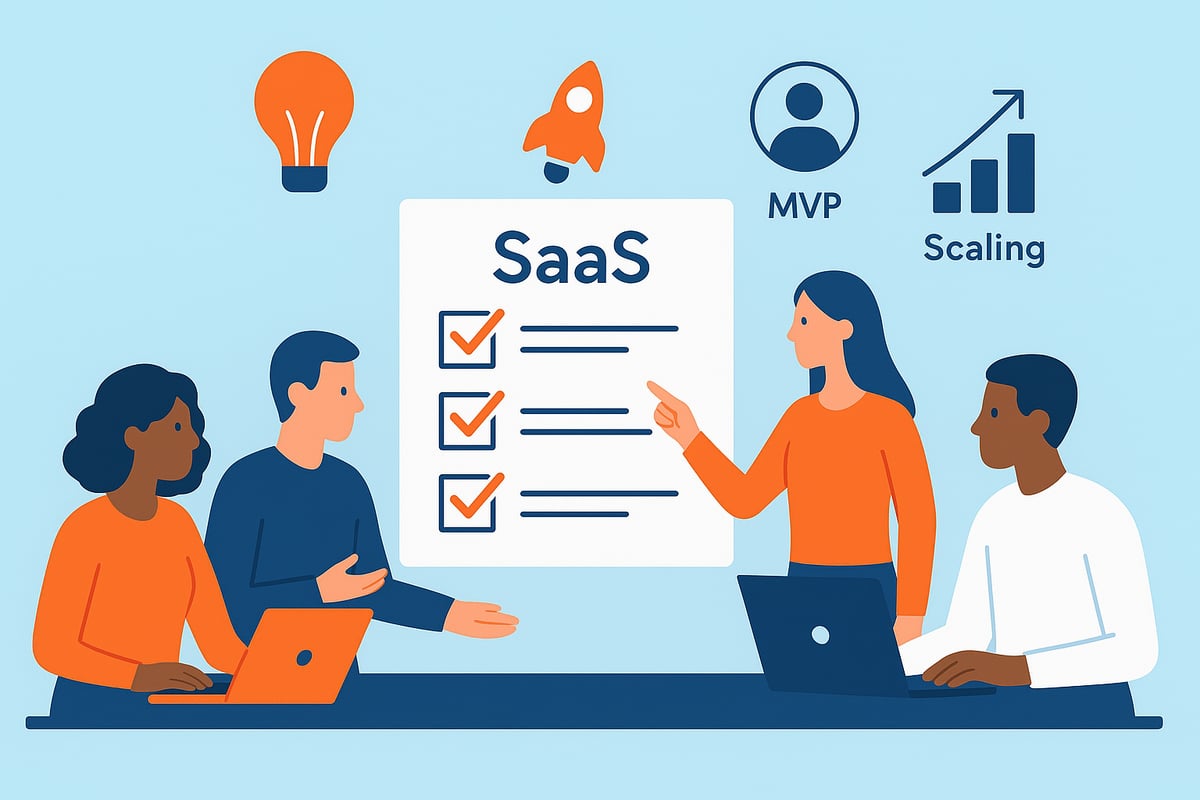
Validating and launching one of the best saas ideas in 2026 requires a thoughtful and strategic approach. Each step you take — from researching your target market to scaling your product — can determine your long-term success. Below, we break down the key phases every founder should follow for a successful SaaS launch.
Practical Steps for Validation
The foundation of any of the best saas ideas is strong validation. Start by identifying a high-value problem through targeted market research, user interviews, and exploring online forums where your target audience talks candidly about their pain points. Build a simple landing page or MVP to see if your idea resonates with real users.
Gather feedback using surveys and waitlists, and analyze competitor solutions to find your unique edge. For a detailed roadmap, consider resources like validating your SaaS idea, which provides proven frameworks to minimize risk and validate demand efficiently.
Practical validation tactics that work:
- Launch a landing page describing your SaaS and track email sign-ups before writing a line of code.
- Run small paid ad campaigns to measure click-through and sign-up rates as a proxy for demand.
- Offer pre-sales or early access pricing to test real willingness to pay.
- Run a pilot program with 5–10 target users and collect structured feedback weekly.
- Use surveys and brief customer interviews to understand which features matter most.
Building and Testing Your MVP
Once you have validated your concept, focus on developing an MVP that addresses a core user pain point. Use no-code or low-code tools to speed up prototyping and reduce initial costs — a crucial move for founders pursuing the best saas ideas on a limited budget.
Iterate rapidly based on user feedback and actual usage data. Measure key metrics such as activation, retention, and churn to understand what works and what needs improvement. Many successful SaaS founders have pivoted their products post-MVP testing, using data-driven insights to refine their offering rather than sticking with an assumption that turned out to be wrong.
Acquiring First Customers and Scaling
Securing your first users is critical for the best saas ideas to gain traction. Start by engaging in niche communities on Reddit, LinkedIn, or Facebook groups relevant to your solution. Offer freemium or discounted plans to encourage early adoption and collect the testimonials that build trust with later customers.
| Strategy | Primary Benefit |
|---|---|
| Community outreach (Reddit, LinkedIn) | Targeted feedback from real prospects |
| Freemium or discounted early plans | Quick user growth and initial data |
| Testimonials and case studies | Social proof that converts browsers to buyers |
| SEO and content marketing | Sustainable, compounding traffic over time |
Build credibility with testimonials and case studies, then invest in SEO, content marketing, and paid ads to scale. Retention strategies — excellent onboarding and responsive support — will help reduce churn and maximize long-term growth.
Common Pitfalls to Avoid
Many founders become attached to their saas ideas and overlook crucial feedback. Confirmation bias, skipping customer interviews, or building before testing are common traps that even experienced founders fall into. Remember: even the most promising concept can fail without real market need.
Avoid building in a vacuum. Validation is not a one-time event — it is an ongoing practice. Use agile methodologies to refine your SaaS based on user input and measurable results, and validate each new feature or pivot with real users before committing engineering resources.
Future-Proofing Your SaaS for 2026 and Beyond
To ensure your best saas ideas remain competitive, stay updated on emerging tech trends like AI, automation, and evolving security standards. Invest in customer success initiatives and automate support where possible to maintain quality at scale.
Regularly update your product based on user feedback and evolving industry needs. Building a strong community around your product will foster loyalty and drive the kind of word-of-mouth growth that paid acquisition cannot replicate.
Key Trends Shaping SaaS Success in 2026
The SaaS landscape is evolving at record speed. Staying ahead requires not just creativity, but a deep understanding of the trends shaping tomorrow’s most successful saas ideas. Here are the forces driving innovation and growth in 2026.
The Rise of Vertical SaaS and Industry-Specific Solutions
Industry-focused solutions are outpacing horizontal platforms, and this trend is only accelerating. Vertical SaaS targets the unique needs of sectors like healthcare, legal, and real estate, offering tailored features and compliance capabilities that generic tools simply cannot match. These niche-focused saas ideas command higher pricing and build deeper customer loyalty.
If you want to validate your vertical saas ideas, follow this vertical SaaS validation guide to reduce market risk and maximize product-market fit. Companies that specialize see faster adoption, less churn, and greater word-of-mouth within their target industry.
AI and Automation as Core Differentiators
AI is now a baseline expectation, not a bonus feature. Intelligent automation, predictive analytics, and AI-powered workflows are what separate competitive saas ideas from commoditized ones. Products that leverage AI experience higher retention and improved scalability because they deliver compounding value over time.
The AI boom driving IT spending in 2026 highlights how AI investment will fuel greater expectations. SaaS founders who embed smart automation from day one will find themselves ahead of the curve as these capabilities become table stakes.
The No-Code/Low-Code Revolution
No-code and low-code platforms are democratizing software development. These saas ideas empower non-technical users to create business tools, prototypes, and automated workflows — accelerating digital transformation across industries without requiring engineering resources.
With platforms like Zapier and Bubble gaining widespread adoption, the barrier to entry for new SaaS products is lower than ever. This trend enables rapid experimentation and reduces time-to-market, especially for startups and SMBs operating lean teams.
Security, Compliance, and Privacy at the Forefront
Data privacy and security are top priorities for every SaaS customer. New regulations and high-profile breaches have made built-in compliance and robust security features a non-negotiable part of modern saas ideas. SaaS products that offer GDPR, HIPAA, or industry-specific compliance controls are more attractive to businesses making purchasing decisions.
Privacy-first design — transparent data practices, consent management, and automated compliance reporting — is no longer a differentiator. It is an entry requirement for enterprise deals and is increasingly expected even by SMB buyers.
Subscription Models and Customer Retention
SaaS is synonymous with recurring revenue, but the real differentiator is smart retention strategy. Automated billing, dunning management, and advanced analytics help saas ideas reduce churn and increase lifetime value — the metrics that actually determine whether a SaaS business is healthy.
Personalized engagement and seamless onboarding experiences are now standard. Companies that build strong retention loops will consistently outperform those that focus only on acquisition while ignoring the leaky bucket underneath.
Sustainability and ESG as Business Essentials
Sustainability is no longer a peripheral concern — it is becoming a core business requirement. Stakeholders, regulators, and enterprise buyers increasingly expect software platforms to help them track carbon footprints, manage ESG compliance, and report on sustainability metrics. SaaS founders who build ESG capabilities into their platforms from the start are positioning for long-term enterprise relevance.
The regulatory tailwinds behind ESG reporting mandates mean that demand for these saas ideas will accelerate regardless of market conditions. Early movers in this space are building data moats that will be difficult for late entrants to replicate.
Data-Driven Decision Making and Continuous Validation
Continuous validation and data-driven iteration are critical to SaaS success. The best saas ideas are not launched and forgotten — they are refined through real-world user feedback, rapid prototyping, and analytics that reveal what users actually do versus what they say they want.
Founders who embrace data-driven product strategies avoid costly missteps and deliver solutions the market truly needs. Leveraging validation resources and tools from the start gives a significant competitive edge over founders who build on assumption.
Key Trends for SaaS Ideas in 2026: Summary
| Trend | Impact on SaaS Ideas |
|---|---|
| Vertical SaaS & Industry Focus | Higher pricing, deeper loyalty, faster adoption |
| AI & Automation | Improved retention, compounding value, scalability |
| No-Code / Low-Code | Lower entry barrier, faster launches, lean teams |
| Security & Compliance | Increased trust, enterprise deal-maker |
| Subscription & Retention | Predictable revenue, reduced churn |
| Sustainability & ESG | Regulatory tailwinds, enterprise relevance |
| Data-Driven Validation | Better product-market fit, lower build risk |