The SaaS industry is on the brink of explosive growth, with projections showing the market could surpass $1 trillion by 2032 and annual growth rates remaining between 18% and 20%. For entrepreneurs and innovators, 2025 will be a defining year packed with opportunity.
If you want to build a saas that stands out and scales, you need the right strategies, tools, and expert guidance tailored to this evolving landscape. This guide offers a proven blueprint, revealing each step required to turn your vision into a profitable, scalable SaaS product.
Ready to transform your idea into a thriving SaaS business? Follow along and unlock the path to SaaS success in 2025.
Understanding the SaaS Model in 2025
Software as a Service (SaaS) is transforming how businesses access and deliver technology. At its core, SaaS means providing software over the internet through a subscription model, accessible from any device. Unlike traditional software, SaaS offers built-in scalability, lower upfront costs, and a global reach from day one.
One of the biggest draws for founders who want to build a saas is the recurring revenue model. This predictability attracts investors and supports long-term growth. For startups, SaaS removes many barriers to entry, thanks to its subscription pricing and cloud infrastructure. Automatic updates and centralized security ensure that users always have the latest features and protections.
The market is booming. According to recent forecasts, the SaaS market is projected to surpass $1.13 trillion by 2032, with 18 to 20 percent annual growth rates (SaaS market projected to reach $1.13 trillion by 2032). Real-world examples like HubSpot for CRM, Shopify for e-commerce, and Google Drive for collaboration show the range and power of SaaS in action.
SaaS Architectures: Multi-Tenant vs. Single-Tenant
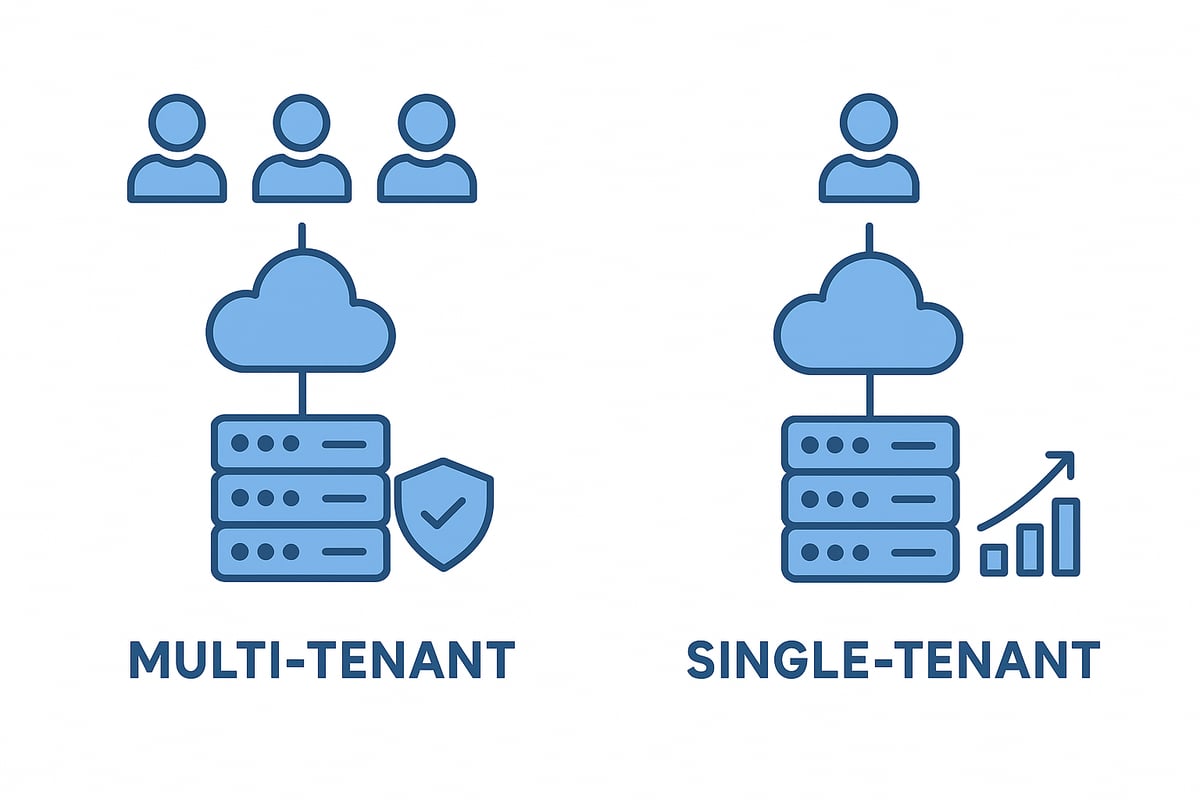
Choosing the right architecture is crucial when you build a saas. The two primary models are multi-tenant and single-tenant architectures.
Multi-tenant architecture means that a single instance of the application serves multiple customers. This approach enables fast scaling and cost efficiency, since resources are shared. Startups often choose multi-tenant setups to maximize speed and minimize infrastructure expenses.
Single-tenant architecture provides each customer with a dedicated instance and resources. This model enhances security and customization but comes with higher costs and more complex management. It is often preferred in regulated industries such as healthcare or finance, where data isolation is critical.
Here is a quick comparison:
| Architecture | Scalability | Security | Cost | Ideal For |
|---|---|---|---|---|
| Multi-Tenant | High | Shared | Lower | Startups, SaaS growth |
| Single-Tenant | Moderate | Dedicated | Higher | Regulated industries |
Selecting between these models depends on your target market, regulatory needs, and long-term vision for how you build a saas.
Key SaaS Trends for 2025
To successfully build a saas in 2025, founders must stay ahead of key industry trends. The integration of artificial intelligence and machine learning is becoming a standard, powering features like generative AI, automation, and advanced analytics.
Cloud-native development and serverless architectures are driving agility, allowing teams to deploy faster and scale on demand. With increasing data privacy concerns, security and compliance are top priorities, especially for SaaS products targeting global markets.
Vertical SaaS, which focuses on industry-specific solutions, is rising rapidly. This approach helps differentiate your product and creates defensible market niches. Seamless integrations and robust APIs are also essential, as users demand interoperability with their existing tools.
Staying current with these trends is vital if you want to build a saas that is scalable, secure, and ready for the future.
Step 1: Validate Your SaaS Idea
Validating your SaaS idea is the cornerstone of a successful journey to build a saas product. This step ensures you are solving a genuine problem with a viable solution. Many founders skip validation, risking wasted resources and missed opportunities. By focusing on early research and structured feedback, you set a strong foundation for sustainable growth. Let’s explore how to thoroughly validate before you build a saas platform.
Why Validation is Critical
Before you build a saas solution, ask yourself if there is a real need for your product. Validation helps you avoid the common pitfall of building something no one wants. Studies show that 70% of SaaS startups fail due to lack of market demand. By validating early, you increase your odds of success and protect your investment. This process is not just about gut feelings but about gathering data that proves your idea has traction. Treat validation as your insurance policy before you build a saas.
Market Research & Competitive Analysis
Market research is a vital step when you plan to build a saas business. Start by researching industry trends and identifying existing competitors. Analyze what current solutions offer and where they fall short. Look for underserved market segments or feature gaps. Use techniques such as SWOT analysis and customer reviews to uncover opportunities. For example, a deep dive into CRM tools may reveal missing features for specific industries. Effective research ensures you do not enter an oversaturated market as you build a saas.
Defining Your Target Audience & Pain Points
To successfully build a saas product, you must know who your users are and what problems they face. Use surveys, interviews, and persona development to pinpoint your audience. Ask potential customers about their daily challenges and current software frustrations. For instance, interviewing remote team leaders may reveal pain points in collaboration workflows. The insights you gain will shape your product’s direction and feature set. Always align your solution with real, validated needs as you build a saas.
Crafting a Unique Value Proposition (UVP)
Your UVP is what sets you apart when you build a saas offering. Use frameworks like the Value Proposition Canvas to clarify your differentiation. Clearly state the specific benefit your SaaS provides, such as “AI-driven onboarding for HR teams.” This clarity helps attract early interest and guides your messaging. A strong UVP answers why someone should choose your product over others. Remember, a compelling UVP is essential to stand out as you build a saas business.
Testing Demand with MVPs and Landing Pages
Before you fully build a saas platform, test demand with a minimum viable product (MVP) or a simple landing page. No-code tools like Webflow or Carrd let you quickly create pages to collect pre-signups or gauge interest. Run targeted ads or share the page with your network to validate messaging and features. For a step-by-step approach, see SaaS landing page validation for practical tips and examples. Early testing saves time and money before you scale to build a saas.
Data-Driven Validation Decisions
Set clear metrics to guide your decision to build a saas product. Decide upfront how many signups or positive responses you need to proceed. Use analytics and feedback to iterate on your idea and refine your MVP. Track which messages resonate and which features users care about most. By making data-driven choices, you reduce risk and increase your chances of product-market fit. This disciplined approach ensures you only move forward to build a saas with real evidence in hand.
Step 2: Plan and Design Your SaaS Product
Designing a SaaS product for 2025 requires more than just a compelling idea. Every decision, from defining features to securing data, shapes your path to market and long-term growth. Let’s break down the crucial steps to build a saas platform that stands out and scales.
Defining Core Features and MVP Scope
Start by mapping out your product’s essential features. Use frameworks like MoSCoW (Must have, Should have, Could have, Won't have), RICE (Reach, Impact, Confidence, Effort), or Kano to objectively prioritize.
- Must-have features: Core functionality users need from day one.
- Nice-to-have features: Enhancements that can wait until after launch.
- Example: Trello initially launched with just boards, lists, and cards, focusing on simplicity.
Prioritize ruthlessly to ensure your MVP solves the core problem. This focus helps you build a saas platform that launches quickly, adapts fast, and aligns with real user needs.
Mapping the User Journey & UX/UI Design
Visualize each step your users take, from onboarding to daily use. User flow diagrams are invaluable for identifying friction points and optimizing the customer experience.
Modern SaaS products invest heavily in intuitive UX and clean UI. Reference leading solutions like Figma, which differentiated itself through collaborative design features and ease of use.
Consider accessibility, device responsiveness, and clear navigation. By focusing on user journeys, you build a saas product that achieves high adoption and reduces churn.
Choosing the Right SaaS Model & Pricing Strategy
Selecting the optimal pricing model is critical for both growth and profitability. Common approaches include:
- Freemium: Attracts users with a free tier, monetizes with upgrades.
- Tiered subscription: Offers packages for different user segments.
- Pay-per-use: Charges based on actual consumption.
Analyze competitors like HubSpot, Zoho, and SEMrush for benchmarks. During validation, test pricing sensitivity and willingness to pay. The right pricing strategy helps you build a saas business that balances value and revenue.
Security, Compliance, and Scalability Considerations
From day one, plan for security and compliance. Address standards such as GDPR and SOC 2, and embed security best practices within your workflows.
- Use encryption for data at rest and in transit.
- Implement robust access controls and monitoring.
- Consider single-tenant architecture for regulated industries.
Scalability should be a core focus. For insights on how industry leaders plan for growth, see these best practices for scalable SaaS platforms. Proactive planning ensures you build a saas product that is both secure and ready for rapid expansion.
Prototyping and Rapid Iteration
Bring your vision to life quickly with wireframing and prototyping tools such as Figma or Adobe XD. Create clickable prototypes to gather early feedback from real users.
- Iterate rapidly based on user testing.
- Focus on usability and core workflows.
- Gather actionable insights before investing in full development.
This approach allows you to build a saas solution that evolves with user input, reducing costly rework and accelerating time to market.
Building for Integration and API Ecosystem
Interoperability is now a key differentiator. Plan your architecture so your SaaS tool can connect with popular platforms.
- Offer integrations with tools like Zapier, Slack, Salesforce.
- Use RESTful APIs for easy third-party connections.
- Design with modularity in mind for future expansion.
By focusing on integration, you build a saas platform that fits seamlessly into your customers’ existing workflows, increasing stickiness and value.
Assembling the Product Roadmap
A clear, actionable roadmap guides both your team and stakeholders. Set milestones for your MVP, beta, and full launch.
- Align development sprints with user feedback cycles.
- Prioritize features based on business impact and customer demand.
- Reference proven lifecycle diagrams to structure your process.
This disciplined approach ensures you build a saas product that grows strategically, adapts to feedback, and delivers measurable results.
Step 3: Select Technology Stack and Assemble Your Team
Selecting the right foundation is essential when you build a saas in 2025. Your technology stack and team shape your product’s scalability, security, and long-term success. Let’s break down the key decisions every founder must make at this stage.
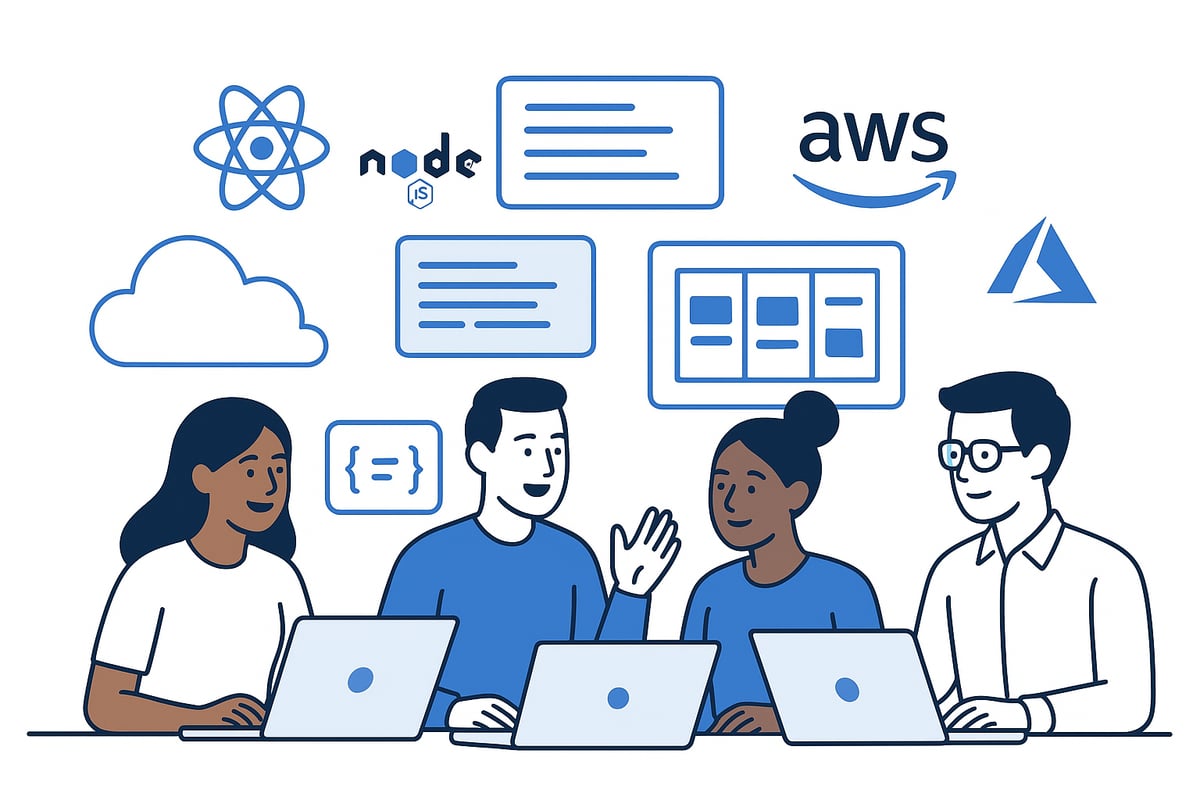
Choosing the Optimal Tech Stack for 2025
When you build a saas, your tech stack determines performance and flexibility. In 2025, cloud platforms like AWS, Azure, and Google Cloud remain dominant, each offering unique strengths in scalability and global availability.
For the backend, frameworks such as Node.js, Python, and Ruby on Rails provide robust support for SaaS applications. On the frontend, React and Vue.js lead for responsive, modern user interfaces. Database decisions matter too; PostgreSQL and MongoDB are top picks, with multi-tenant or single-tenant setups depending on your audience.
Consider Shopify, which uses Ruby on Rails for rapid iteration and reliable scaling. Choosing proven tools ensures your product evolves with market demands.
Leveraging No-Code/Low-Code Tools for MVPs
Speed and agility matter when you build a saas MVP. No-code and low-code platforms like Bubble, Webflow, or Zoho Creator let founders quickly prototype and launch without heavy engineering resources.
These tools offer visual interfaces and ready-made integrations, allowing for fast validation and iteration. Startups benefit from reduced costs and shorter time-to-market, freeing up resources for user research and feedback.
For example, many teams launch a no-code MVP to test core concepts before investing in a full development team. This approach helps validate demand and refine your vision early.
Building Your SaaS Dream Team
To build a saas successfully, you need the right mix of talent. Core roles include a Product Manager, skilled frontend and backend developers, a UI/UX designer, QA specialists, and DevOps engineers.
Remote and dedicated development teams offer flexibility and access to global expertise. Many founders leverage models like Syndicode’s dedicated team approach to scale efficiently and manage costs.
A strong team culture, clear communication, and shared goals drive better collaboration. Invest in talent that believes in your mission and adapts to fast-changing SaaS landscapes.
Collaboration and Agile Development Practices
Agile methodologies are vital when you build a saas. Break work into sprints, hold regular stand-ups, and conduct retrospectives to ensure continuous improvement.
Project management tools like Jira, Trello, or Asana help organize tasks and maintain transparency. These practices enable teams to respond quickly to feedback and pivot as new insights emerge.
Agile fosters a culture of learning and adaptability, essential for modern SaaS development. Encourage open communication and empower teams to suggest improvements at every stage.
Security, DevOps, and Continuous Integration
Building security into your workflow is critical as you build a saas. Start with DevOps practices for automated testing, deployment, and monitoring. Continuous integration and delivery pipelines streamline releases and reduce errors.
Proactive security measures, like regular audits and vulnerability scanning, protect user data. For deeper insights into secure CI/CD pipelines and DevSecOps, especially in SME environments, see DevSecOps challenges in SMEs.
Embedding these protocols early builds user trust and supports seamless scaling as your SaaS grows.
Budgeting and Cost Management
Careful budgeting ensures your ability to build a saas sustainably. Estimate costs for cloud hosting, development, support, and ongoing operations. Plan for variable expenses, including customer support and marketing.
Use modern cost estimation frameworks to forecast spending and manage cash flow. Prioritize investments that drive user growth and retention, adjusting as you gather real-world data.
Financial discipline and transparency set your SaaS on a path to profitability while supporting future innovation.
Step 4: Develop, Launch, and Iterate Your SaaS
Turning your validated concept into a live SaaS product is a transformative journey. To successfully build a saas that stands out in a competitive market, you need a structured approach. This stage is about bringing your vision to life, ensuring quality, and setting the stage for rapid, sustainable growth.
Building the MVP and Core Platform
Begin by translating your validated features into clear user stories and technical tasks. To build a saas efficiently, focus on creating a Minimum Viable Product (MVP) that delivers core value with minimal complexity. Use agile sprints to prioritize essential workflows, such as user onboarding or primary automation features.
For example, launching a basic workflow automation platform with only the top three requested actions allows you to test real-world demand quickly. Keep your MVP lean, functional, and ready for early feedback. This rapid approach helps you iterate and improve while minimizing upfront investment.
Testing, QA, and Security Hardening
Robust testing is non-negotiable when you build a saas. Implement a mix of automated unit tests, integration tests, and manual user flows to catch bugs before launch. Use continuous integration pipelines to ensure every update is thoroughly checked.
Security must be embedded from day one. Schedule regular vulnerability scans and penetration tests. For example, many SaaS leaders highlight frequent security updates as a core selling point, reassuring customers and building trust. Document your security protocols and compliance measures for transparency.
Beta Testing and Early User Feedback
Recruit beta users from your initial validation audience to build a saas that truly resonates. Offer early access in exchange for candid feedback. Use interviews, surveys, and analytics to gather insights on usability and feature gaps.
Iterate rapidly based on this feedback. For instance, Jira shaped its core project management features through iterative beta testing, responding to user pain points and requests. Engaging real users early ensures your product evolves in line with real-world needs.
Launch Strategy and Go-to-Market Execution
A successful launch is a milestone when you build a saas, but it is not the finish line. Plan phased rollouts, starting with a private beta, then public beta, before a full-scale launch. This controlled approach helps you manage risk and scale support.
Build anticipation with pre-launch marketing. Create a waitlist, host webinars, and share behind-the-scenes progress. Notion’s invite-only beta is a great example of driving exclusivity and demand. Track signups and user engagement to refine your messaging for the big day.
Customer Support, Documentation, and Onboarding
Exceptional support is essential when you build a saas that users love. Develop a self-service help center with FAQs, guides, and video tutorials. Implement live chat for quick resolutions and use onboarding flows to help users get started smoothly.
For example, Intercom’s onboarding guides reduce churn by making new users feel confident from day one. Clear documentation and responsive support foster trust and long-term loyalty among your customer base.
Monitoring, Analytics, and Continuous Improvement
Embed analytics tools to monitor user behavior, feature adoption, and engagement as you build a saas. Real-time dashboards reveal what is working and where users struggle. Use this data to prioritize updates, fix bugs, and roll out new features.
SaaS leaders track key metrics such as active users, feature usage, and customer satisfaction. Continuous improvement based on data ensures your product stays relevant and competitive in a fast-moving market.
Scaling Infrastructure and Performance Optimization
As your user base grows, scaling becomes critical when you build a saas. Use cloud infrastructure to handle demand spikes automatically. Automate backups, monitoring, and failover to minimize downtime.
Multi-tenant architecture enables cost-effective scaling for most SaaS startups. For example, rapid user growth can be accommodated without performance issues by optimizing resource allocation and load balancing. Prioritize speed and reliability to deliver a seamless user experience.
Managing SaaS Costs and Maximizing ROI
Financial discipline is key as you build a saas for long-term success. Track key metrics like CAC (customer acquisition cost), LTV (lifetime value), and churn rates. Use this data to inform decisions on pricing, upselling, and retention strategies.
| Metric | Definition | Why It Matters |
|---|---|---|
| CAC | Cost to acquire a customer | Helps optimize marketing spend |
| LTV | Revenue per customer over time | Guides pricing and feature investment |
| Churn Rate | % of customers lost monthly | Indicates product-market fit and satisfaction |
Maximize ROI by focusing on customer retention and expansion revenue. Regularly review costs and adjust strategies to ensure profitability.
Step 5: Growth, Expansion, and Future-Proofing Your SaaS
Scaling after you build a saas is where true longevity and profitability are forged. To ensure your product thrives in 2025 and beyond, you must master growth strategies, expand intelligently, and future-proof every aspect of your operation. This step-by-step approach empowers founders to grow confidently while adapting to the ever-evolving SaaS landscape.
Mastering SaaS Marketing and Customer Acquisition
Once you build a saas, effective marketing and acquisition are vital for scaling. Start with a multi-channel approach:
- Content marketing (blogs, guides, webinars)
- SEO for organic reach
- Paid ads (search, social)
- Referral and affiliate programs
Leverage customer testimonials and detailed case studies to build trust and credibility. Consider offering free tools or educational content to attract leads, similar to what SEMrush does. Continuously measure which channels deliver the best ROI and reallocate resources as needed. This data-driven focus will keep your user base growing after you build a saas.
Data-Driven Product Iteration and Feature Expansion
Growth requires constant refinement. After you build a saas, collect customer feedback through surveys, in-app prompts, and support tickets. Analyze user analytics and run A/B tests to determine which features drive engagement and reduce churn.
Prioritize updates that solve real pain points or unlock new value for your users. For example, Slack’s iterative approach keeps users engaged and loyal. Maintain a clear feedback loop between your product team and your customers to ensure every enhancement aligns with your vision to build a saas that stands out.
Building Strategic Integrations and Ecosystem Partnerships
To build a saas with broad appeal, integrations are key. Connect your platform with widely-used tools like Salesforce, Zapier, or Slack to increase stickiness and open new markets.
Forge ecosystem partnerships with complementary SaaS providers or agencies. These relationships can expand your reach, accelerate growth, and help you tap into new customer segments. Shopify’s app marketplace is a prime example of using integrations and partnerships as levers for exponential growth.
Internationalization and Compliance for Global Reach
Expanding globally is essential when you build a saas for scale. Localize your interface, pricing, and support for priority markets. Address region-specific regulations, such as GDPR in Europe or CCPA in California.
A table like the one below helps track compliance:
| Region | Regulation | Key Requirement |
|---|---|---|
| Europe | GDPR | Data consent, DSR |
| California | CCPA | Opt-out, data access |
| Canada | PIPEDA | Privacy management |
Invest in multilingual support and multi-currency payment options. Adapting your SaaS to diverse markets unlocks new revenue streams and strengthens your global brand.
Advanced Security, Privacy, and Trust Signals
Security is non-negotiable as you build a saas for sensitive industries. Achieve certifications such as SOC 2 or ISO 27001 to demonstrate your commitment to data protection.
Communicate your security practices clearly. Display trust badges, publish transparent privacy policies, and provide regular security updates. For SaaS in healthcare or finance, enhanced compliance and privacy features can become unique selling points that set your platform apart.
Leveraging AI, Automation, and Emerging Technologies
Staying ahead means adopting the latest innovations. Integrate AI and automation to personalize user experiences, automate workflows, and deliver actionable analytics. Features such as generative AI, chatbots, and predictive analytics are quickly becoming standard in leading SaaS platforms.
To understand how AI is shaping the future, explore this overview of AI integration in SaaS platforms. Early adoption ensures your product remains competitive as you build a saas ready for tomorrow’s demands.
Preparing for Future Trends and Market Shifts
The SaaS landscape shifts rapidly. Monitor trends like vertical SaaS for niche industries, the rise of low-code/no-code solutions, and the demand for robust remote collaboration features.
Design your roadmap to remain flexible. Build a saas that can pivot quickly to emerging needs or technologies. Encourage a culture of innovation so your team can respond rapidly to market changes and stay ahead of competitors.
Measuring and Optimizing SaaS Success Metrics
Data-driven growth is essential. Track these core metrics:
- MRR (Monthly Recurring Revenue)
- ARR (Annual Recurring Revenue)
- NPS (Net Promoter Score)
- CAC (Customer Acquisition Cost)
- LTV (Lifetime Value)
- Churn Rate
Benchmark your performance against industry leaders and set clear KPIs for growth, retention, and profitability. Use dashboards to visualize progress and inform strategic decisions. By monitoring these numbers, you will build a saas that not only grows but thrives in a competitive market.