
In the fast-moving world of SaaS, your saas page is often the first touchpoint with potential customers. Making a strong first impression can instantly boost trust or, if overlooked, push visitors away.
Design goes far beyond aesthetics—it is the foundation of how your audience perceives your brand. A standout saas page can be the difference between a fleeting glance and a lasting customer relationship.
This article dives into 8 inspiring SaaS page designs that set the standard for brand elevation in 2025. We will break down what makes these pages exceptional, highlight unique features, and offer practical ideas you can use.
Ready to transform your brand’s online presence? Let these industry-leading examples spark your next big redesign.
Why SaaS Page Design Matters in 2025
First impressions in the SaaS world are formed in seconds, and your saas page is the digital handshake that sets the tone for every user interaction. In 2025, with crowded markets and rising customer expectations, design is not just about aesthetics, but a strategic lever for growth and retention.
Modern SaaS customers expect seamless, intuitive, and visually engaging digital experiences. A saas page must deliver clarity, speed, and relevance from the first scroll. With the shift toward subscription-based models, users now have more choices than ever, making it critical for brands to create an immediate connection and reduce friction at every touchpoint.
Recent studies reveal that design quality directly impacts key business metrics. For example, research shows that well-designed SaaS pages can increase user trust and signup rates by over 30%. Engaging layouts, clear navigation, and persuasive visuals encourage visitors to explore deeper, while confusing or outdated designs drive them away. According to industry experts, 75% of users judge a company’s credibility based on its web design alone.
Branding is another pillar of differentiation. In a saturated SaaS market, a distinctive visual identity — from color schemes to typography — helps your saas page stand out. Consistent branding reinforces trust and recognition, while thoughtful design elements, like custom iconography or unique illustrations, communicate your product’s personality and value proposition at a glance.
Looking ahead to 2025, several trends are shaping the future of saas page design:
- AI integration: Smart content personalization and chatbots elevate user engagement.
- Hyper-personalization: Pages adapt in real time to user behavior and preferences.
- Accessibility: Inclusive design ensures everyone, regardless of ability, can use your product.
- Mobile-first approach: With mobile users outpacing desktop, responsive layouts are now non-negotiable.
- Lightning-fast load times: Slow sites lose visitors and damage SEO rankings.
SEO is tightly linked to modern design. Search engines now reward pages that meet Core Web Vitals, use structured data, and prioritize mobile responsiveness. A well-crafted saas page not only attracts visitors but also keeps them engaged, reducing bounce rates and improving overall search visibility. For a deeper dive into measurable outcomes, see this analysis on the impact of web design on SaaS conversion rates.
Several SaaS brands have fueled their growth with design-led strategies. Companies investing in user-centric saas page experiences consistently report higher conversion rates, longer customer lifecycles, and stronger word-of-mouth referrals. For instance, brands that prioritized accessibility and interactive demos saw increased engagement and broader market reach.
In summary, investing in your saas page is no longer optional. A modern, high-performing design is a critical driver of trust, differentiation, and growth. By staying ahead of trends and focusing on user experience, your brand can thrive in the competitive landscape of 2025.
Essential Elements of High-Converting SaaS Page Designs
First impressions matter, especially when visitors land on your saas page. To convert prospects into loyal customers, every element must work together to deliver clarity, trust, and seamless experiences. High-converting saas page designs share core features that set them apart, blending aesthetics with strategy to drive results.
Crafting a Compelling Value Proposition and Visual Storytelling
Your saas page only has seconds to communicate its unique value. A clear, concise value proposition above the fold lets visitors instantly understand what you offer and why it matters. Use bold headlines, supporting subtext, and a prominent CTA to guide attention.
Visual storytelling enhances engagement. Product screenshots, explainer videos, and subtle animations bring your solution to life. They help users visualize benefits and reduce cognitive load. For example, animated walkthroughs on a saas page can simplify complex features, making them more approachable.
- Place the value proposition front and center
- Use high-quality visuals to illustrate key features
- Leverage micro-animations to highlight important actions
Pairing a strong message with engaging visuals creates a memorable first encounter on your saas page.
Building Trust and Optimizing CTAs
Trust is the foundation of every successful saas page. Visitors look for social proof, such as testimonials, client logos, and security badges, to validate your credibility. Display these elements above the fold or near CTAs for maximum impact.
CTAs should be visually distinct, using contrasting colors and action-oriented microcopy. The best saas page designs place CTAs strategically throughout the page, guiding users at each stage of their journey. A/B testing button color, copy, and placement can uncover what resonates most with your audience.
- Showcase testimonials with photos or company names
- Add trust badges close to signup forms
- Use concise, benefit-focused CTA text (e.g., "Start Free Trial")
Building trust and optimizing CTAs ensures your saas page not only attracts but also converts visitors.
Streamlined Navigation, Interactivity, and Accessibility
Navigation must be intuitive, allowing users to explore your saas page without confusion. Logical information hierarchy, clear menus, and concise section headers improve the user journey. Avoid clutter and keep the experience streamlined.
Interactive elements, like calculators, product demos, or live chat, boost engagement and help users understand your offering. These features differentiate your saas page and provide hands-on value.
Accessibility is critical for reaching a global audience. Ensure your saas page meets WCAG standards with sufficient color contrast, alt text for images, and keyboard navigation support.
- Use sticky headers for easy section access
- Add interactive product tours or demos
- Design for screen readers and color-blind users
A streamlined, accessible saas page keeps visitors engaged and satisfied.
Real-World SaaS Page Examples and Actionable Takeaways
Many leading brands implement these elements for measurable gains. For instance, placing the value proposition above the fold and integrating video demos led to a 25% increase in signups for one SaaS company. Incorporating social proof and optimizing CTAs further improved conversion rates.
To dive deeper into proven tactics, explore SaaS landing page strategies for actionable frameworks and real-world examples.
By studying top-performing saas page designs and applying these lessons, you can boost trust, engagement, and conversions for your own brand.
8 Inspiring SaaS Page Designs to Elevate Your Brand in 2025
In the ever-evolving SaaS ecosystem, your saas page is often the first handshake with a potential customer. The difference between a bounce and a conversion can hinge on design choices that communicate trust, clarity, and value instantly.
For this list, we selected saas page examples that excel in innovation, visual appeal, user experience, and conversion focus. Each delivers a unique approach to engaging visitors and driving results. To see an extended gallery of industry-leading designs and dive deeper into what makes a standout saas page, you can explore the Best SaaS landing pages resource.
Below, we break down eight inspiring saas page designs setting benchmarks for 2025, highlighting their features, benefits, and lessons you can apply.
HeadshotPro
HeadshotPro’s saas page is a masterclass in conversion-focused design. Pricing starts at $29 per shoot, making professional, AI-generated headshots accessible to individuals and teams.
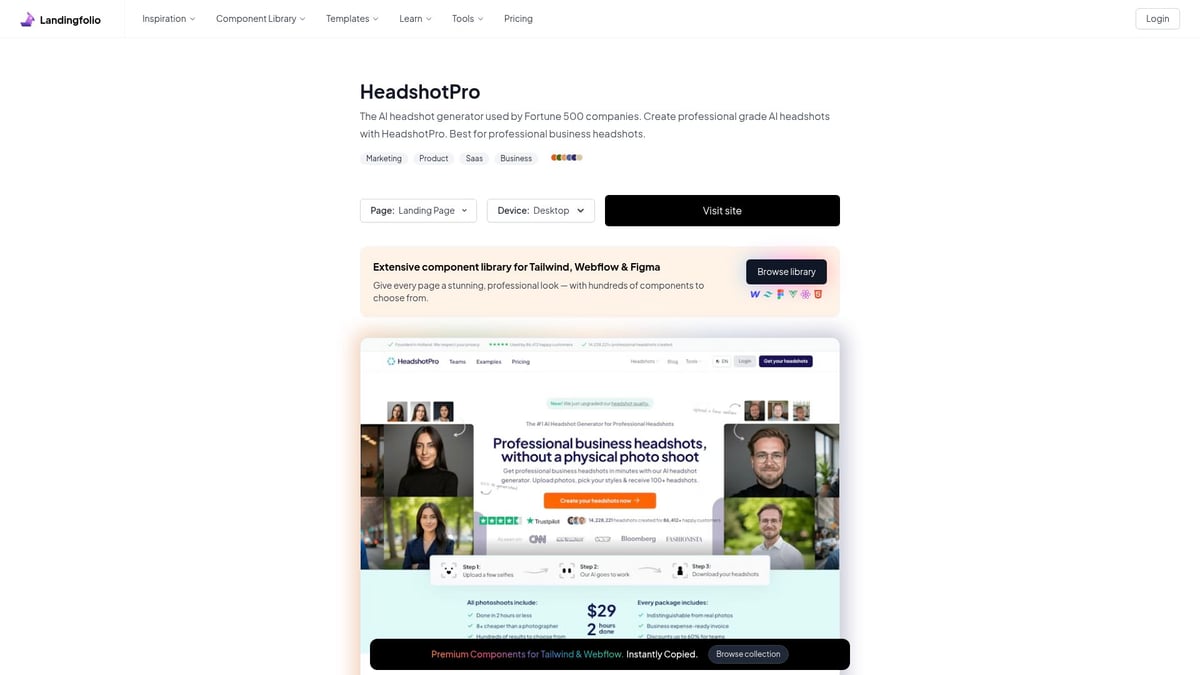
Key features include instant delivery, multiple style options, and seamless ordering. The saas page immediately conveys value with a clear headline and a CTA that stands out. Social proof is central, with testimonials and a before-and-after gallery that allows users to interactively compare results.
Targeted toward SaaS teams, HR professionals, and remote workers, HeadshotPro’s saas page is clean and intuitive. Pros include rapid onboarding and a frictionless user journey. The main con is limited customization for advanced users.
A unique design insight is the strategic placement of social proof and interactive galleries, which boost credibility and help convert hesitant visitors.
Rewind
Rewind’s saas page leverages bold visuals and a modern dark mode to capture attention. With tiered plans starting at $5 per month, it offers automated backups, one-click restore, and support for multiple SaaS platforms.
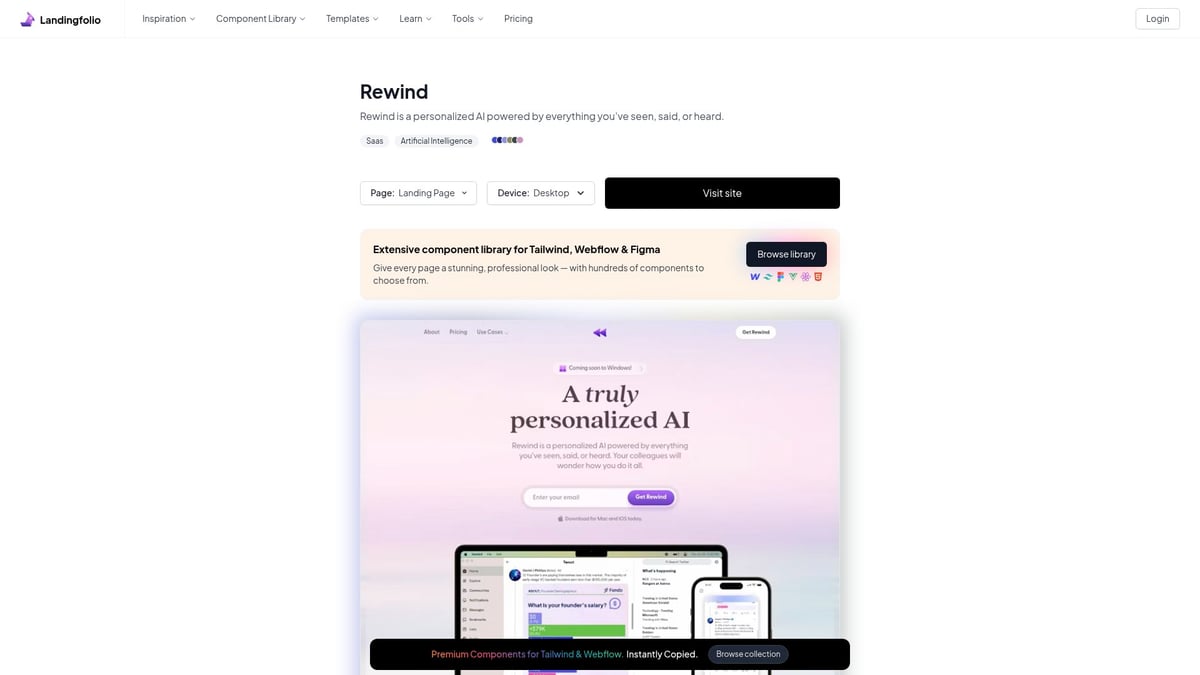
The saas page opens with an impactful hero section and animated product walkthrough, which demystifies the backup process. Pricing is transparent and easy to find, a major plus for decision-makers.
Target users include SaaS customers, IT admins, and ecommerce businesses. Pros: vibrant accent colors, clear pricing, and engaging walkthroughs. The primary drawback is a slightly dense information hierarchy that may overwhelm some visitors.
Rewind’s use of dark mode, paired with vibrant accents, illustrates how modern design trends can make a saas page both stylish and functional.
Breyta
Breyta’s saas page focuses on unifying customer data and workflow automation for B2B sales teams. Pricing is custom, based on team size, and the saas page highlights core features through concise copy and modular content blocks.
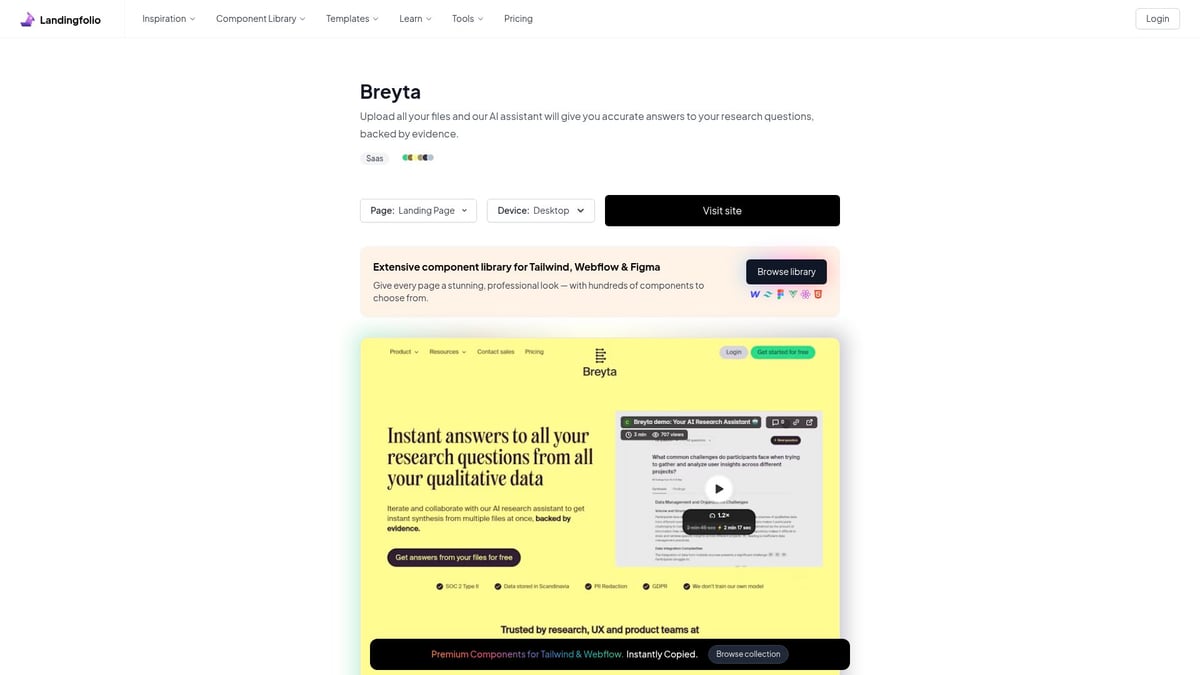
Key benefits include streamlined sales processes and increased productivity. The minimalist layout, intuitive navigation, and strong use of whitespace create a calming, professional impression.
Breyta targets B2B SaaS sales teams and revenue operations leaders. The pros are an uncluttered saas page, animated data flows, and logical content hierarchy. However, some users may need onboarding to fully leverage all features.
Animated data flows and modular sections make this saas page stand out, helping to visualize complex operations simply.
Perspective Funnels
Perspective Funnels delivers a mobile-first saas page builder with a free plan and paid options from $29 per month. The saas page uses playful illustrations, scroll-triggered animations, and interactive demos to keep users engaged.
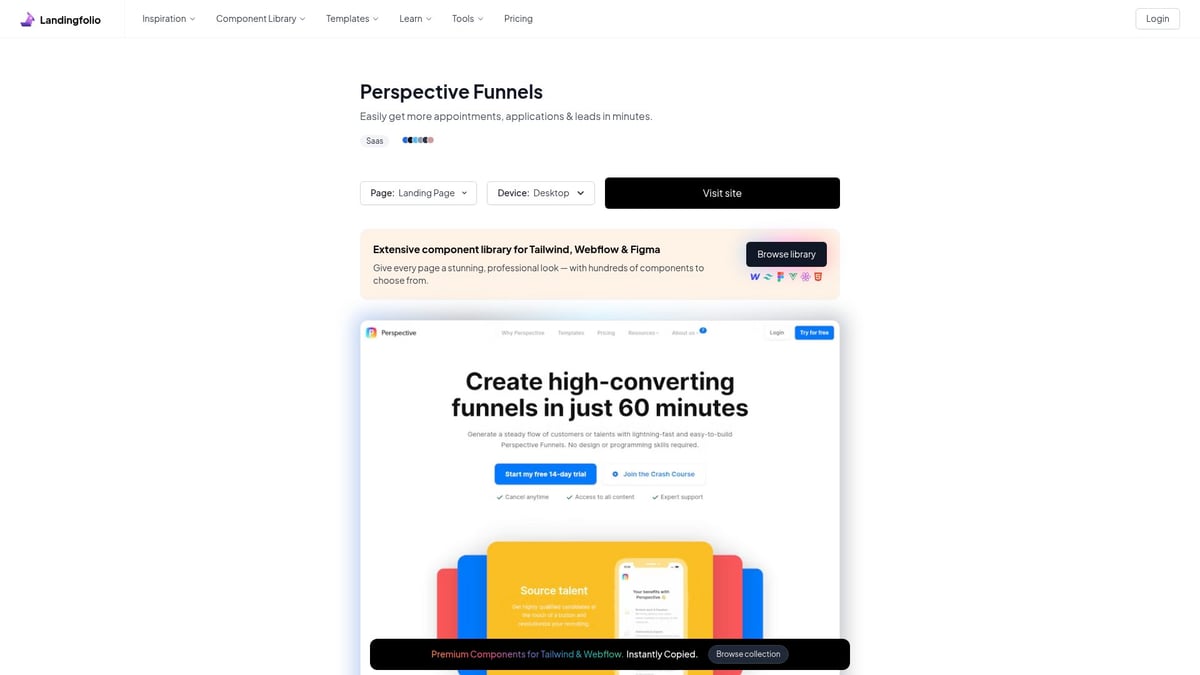
Core features include analytics, customizable templates, and rapid funnel creation. CTAs are clear and strategically placed, optimizing for mobile conversion rates.
The target audience is marketers, SaaS founders, and solopreneurs. Pros: engaging visuals, easy navigation, and high mobile performance. Cons: enterprise users may find customization options limited.
A unique design insight is the use of scroll-triggered animations and interactive elements, which make the saas page lively and memorable.
Workable
Workable’s saas page is designed to simplify recruiting for HR teams and SaaS startups. With a free trial and paid plans starting at $149 per month, the saas page uses a hero video and step-by-step visuals to guide users through the product.
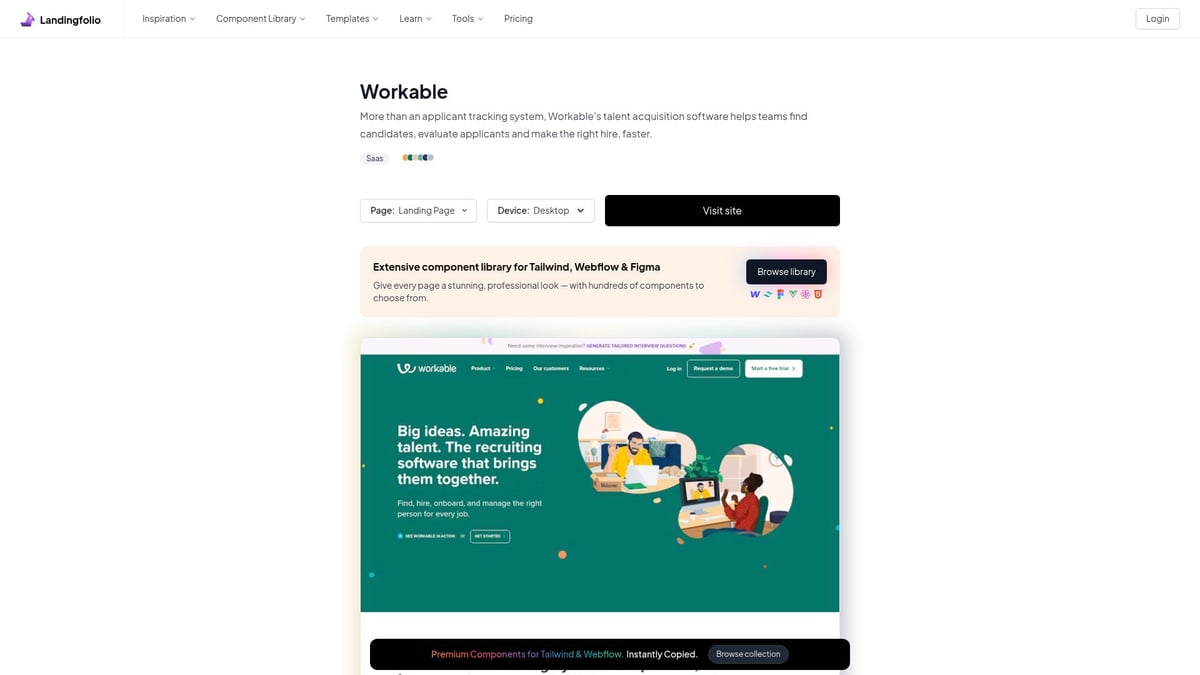
Key features include automated workflows, team collaboration tools, and a clear breakdown of functionalities. The saas page segments content using contrasting color blocks, making navigation intuitive.
Workable appeals to HR teams, startups, and SMEs. Pros are engaging visuals and easy onboarding, while the main con is that full pricing details require signup.
Their design insight lies in using color blocks to create clear content sections, helping users quickly find what they need on the saas page.
Specify
Specify’s saas page targets product teams and designers who manage complex design systems. Pricing is available via custom quotes, and the saas page emphasizes design tokens management, API integrations, and real-time updates.
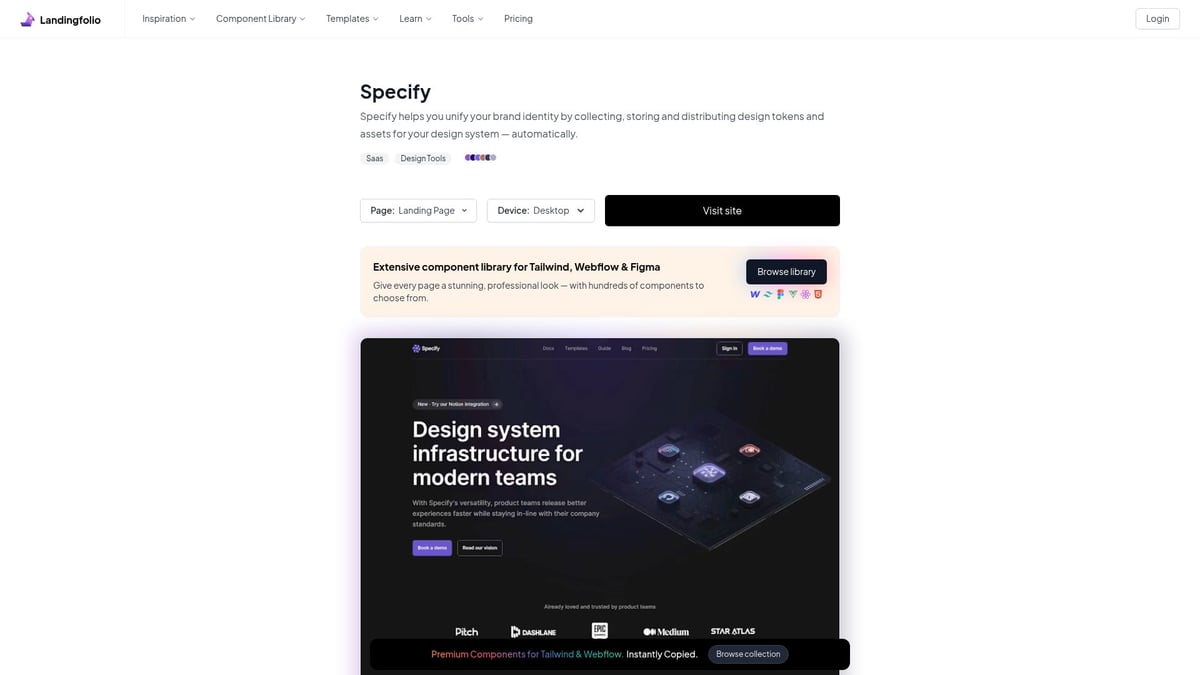
Vibrant illustrations and concise copy keep the saas page accessible, while interactive product previews help users understand technical concepts. The main benefits are brand consistency and centralized design management.
Specify’s audience includes SaaS companies with sophisticated design ops. Pros: animated explainer graphics and a clean layout. Cons: the niche focus may not suit early-stage startups.
The standout design feature is the use of animated graphics to explain technical ideas, making the saas page both educational and visually engaging.
Canvas
Canvas offers a visual collaboration platform with both free and paid plans. The saas page uses a bright color palette and modular card layouts to showcase real-time editing and integration features.
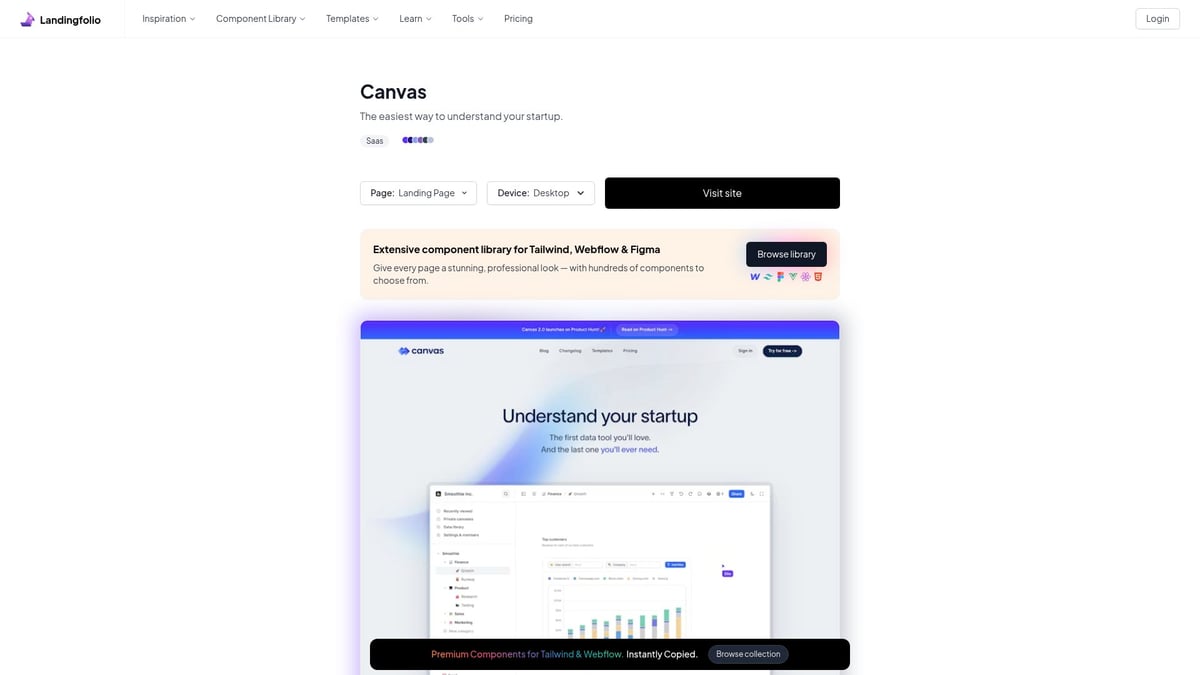
Teams, creative agencies, and remote workers are the primary audience. The saas page guides users through clear flows and engaging microinteractions, making onboarding smooth.
Pros include a friendly design and logical user journey. Cons: the depth of features may be overwhelming for newcomers.
Canvas’s modular card layout is a unique design insight, allowing users to scan features and benefits easily on the saas page.
SaaS Validation
SaaS Validation’s saas page provides free guides and resources to help founders validate SaaS ideas, conduct market research, and find landing page inspiration.
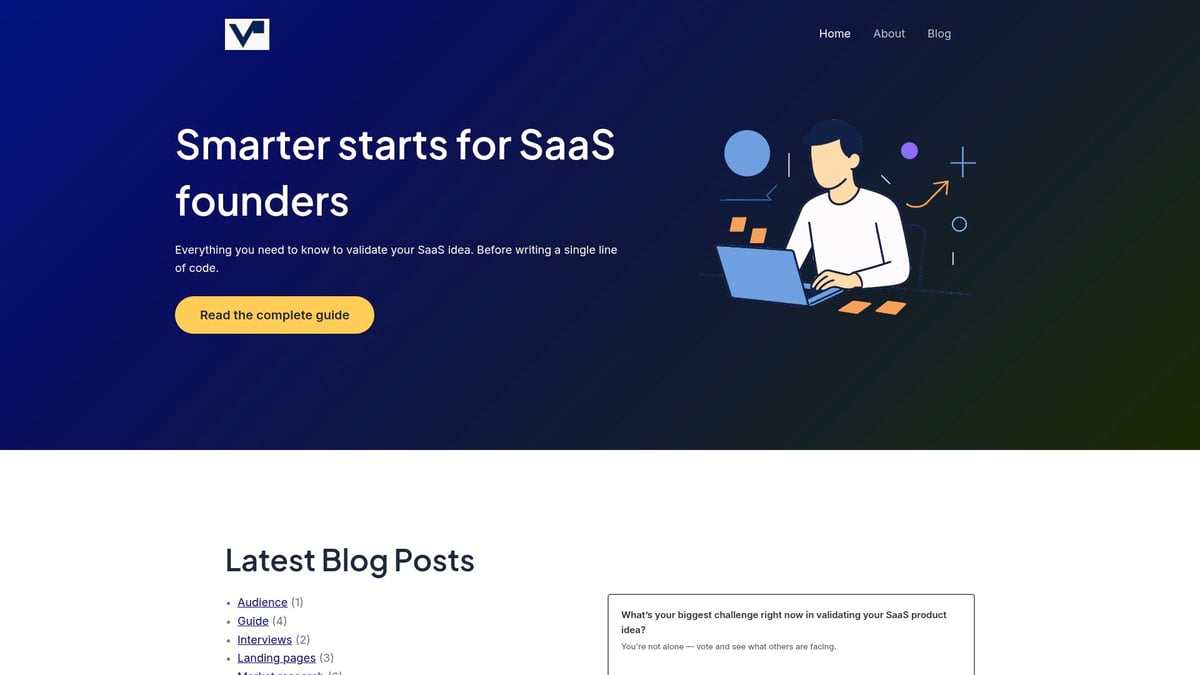
Core features include actionable frameworks, expert guides, and a community-driven approach. The saas page is tailored for aspiring founders, entrepreneurs, and product managers who want to reduce risk and save time.
Pros: comprehensive, up-to-date strategies and a focus on real-world examples. Cons: content is geared toward pre-development stages, not technical implementation.
The layout is content-focused, with clear CTAs and real-world saas page examples, making it easy for users to take actionable steps.
SaaS Page Comparison Table
| SaaS Page | Pricing | Key Feature | Target Audience | Unique Design Insight |
|---|---|---|---|---|
| HeadshotPro | From $29/shoot | AI Headshots | Teams, HR, Individuals | Social proof, interactive gallery |
| Rewind | From $5/month | Automated Backups | SaaS, IT, Ecommerce | Dark mode, vibrant accents |
| Breyta | Custom | Customer Data Platform | B2B Sales, Ops | Animated flows, modular content |
| PerspectiveFunnels | Free, from $29/mo | Mobile-first Page Builder | Marketers, Founders | Scroll-triggered animations |
| Workable | From $149/month | Recruiting Software | HR, Startups, SMEs | Color blocks, onboarding visuals |
| Specify | Custom | Design Token Management | Product Teams, Designers | Animated explainer graphics |
| Canvas | Free & Paid | Visual Collaboration | Teams, Agencies | Modular card layout |
| SaaS Validation | Free | Validation Frameworks | Founders, Managers | Content-focused, real-world ex. |
Each of these examples demonstrates that a high-performing saas page requires more than just aesthetics. Strategic design, clear messaging, and user-centric features are essential for driving conversions and building brand trust in 2025.
How to Apply These Design Lessons to Your SaaS Brand
Ready to transform your saas page into a high-converting asset? Applying the right design lessons can make a measurable impact on trust, engagement, and growth. By following a structured process, you can ensure your saas page stands out and delivers real results in 2025.
Conduct a Comprehensive Design Audit
Begin with a thorough review of your current saas page. Compare its layout, messaging, and visual hierarchy against the top-performing examples you admire. Identify gaps in clarity, navigation, and overall appeal.
Use checklists or frameworks to assess areas such as above-the-fold messaging, CTA prominence, page speed, and mobile responsiveness. For a data-driven approach, consider leveraging landing page validation techniques to gather early feedback and benchmark performance before a full redesign.
Prioritize User-Centric Design and Journey Mapping
Next, place your users at the center of every design decision. Map user journeys across your saas page, pinpointing moments where friction occurs or questions go unanswered. Remove unnecessary steps or confusion, ensuring navigation is effortless from entry point to conversion.
Craft messaging that speaks directly to user pain points and aspirations. For in-depth guidance on structuring your value proposition and microcopy, explore this SaaS design and copywriting guide. Prioritizing user-centricity increases both satisfaction and conversion rates.
Leverage A/B Testing for Continuous Optimization
Optimization is not a one-time event. Use A/B testing to experiment with different headlines, CTA placements, color schemes, and interactive elements on your saas page. Analyze which versions resonate best with your audience and drive more signups.
Adopt a mindset of ongoing improvement. Set clear hypotheses, monitor key metrics, and iterate based on what the data reveals. Even small changes can yield significant results over time, helping your saas page stay ahead of evolving user expectations.
Integrate Trust Signals, Modularity, and Social Proof
Establish credibility by weaving trust signals throughout your saas page. Prominently display testimonials, client logos, and security badges where visitors need reassurance. Use modular content sections to present information in digestible chunks, making your page both flexible and visually appealing.
Interactive elements, such as before/after galleries or product walkthroughs, further enhance engagement and trust. These features not only inform but also invite users to explore and interact with your offering.
Balance Aesthetics with Performance and Gather Feedback
Striking the right balance between visual appeal and technical performance is critical. Optimize your saas page for fast load times, accessibility, and SEO best practices. Compress images, implement structured data, and ensure compliance with Core Web Vitals for a seamless experience.
Finally, establish feedback loops by inviting user input through surveys, chat widgets, or usability tests. Act on insights to refine your saas page continually, ensuring it evolves alongside user needs and industry standards.
Real-World Impact: Design-Driven Growth
Consider a SaaS company that revamped its saas page by applying these principles. After auditing their design, clarifying their messaging, and introducing trust signals, they ran A/B tests to fine-tune every section. Within three months, they saw a 25% increase in conversions—proof that design-led strategies can deliver measurable business results.
By embracing these actionable steps, your saas page can become a powerful engine for growth, trust, and long-term success in 2025 and beyond.
Future Trends in SaaS Page Design for 2025 and Beyond
The future of SaaS page design is rapidly evolving as technology and user expectations shift. In 2025, staying ahead means embracing the latest innovations to provide seamless, engaging, and accessible experiences. What trends are shaping the next generation of SaaS page, and how can brands prepare for what's coming?
AI-Driven Personalization and Dynamic Content
Artificial intelligence is transforming the saas page experience by enabling real-time personalization for every visitor. AI algorithms analyze user data to deliver tailored content, adaptive layouts, and product recommendations that increase engagement and conversions.
As machine learning becomes more sophisticated, dynamic content blocks and predictive search will become standard features. For a deeper look at how AI is shaping web design, see AI and machine learning in web design.
Businesses that leverage these tools will see their saas page become a central driver of customer satisfaction and loyalty.
Engagement, Accessibility, and Emerging Design Innovations
User engagement is reaching new heights with micro-interactions, motion design, and interactive demos. Subtle animations and instant feedback guide users through the saas page, making complex features feel intuitive.
The adoption of dark mode and accessibility-first approaches ensures every user can interact with your brand, regardless of device or ability. Seamless onboarding flows and in-app experiences, linked directly from the saas page, help users get started quickly.
To explore more about these trends, check out the latest SaaS web design trends for 2025.
Predictions: The Next Evolution of SaaS Page
Looking ahead, expect voice search optimization and conversational UI elements to become increasingly common on the modern saas page. Sustainability and ethical design will play a larger role as brands seek to minimize their digital footprint.
As user expectations rise, your saas page will need to deliver not only speed and clarity but also a sense of trust and innovation. Embracing these trends will help your brand stand out and remain future-proof in a competitive landscape.