
The SaaS industry is projected to surpass $300 billion in 2025, making the stakes higher than ever for founders and operators. With competition intensifying and customer expectations shifting rapidly, a robust saas strategy is essential for lasting success.
This article delivers expert insights and actionable steps to help you thrive. Discover the latest SaaS trends, foundational pillars, and a step-by-step framework for building a winning approach. Learn from industry leaders and uncover new growth opportunities.
Ready to future-proof your business? Apply these strategies and position your company for SaaS success in 2025.
SaaS Market Trends and Challenges in 2025
The Software as a Service industry is entering a pivotal era. In 2025, global SaaS adoption is set to surpass $300 billion, reflecting an unprecedented acceleration across sectors. This surge, highlighted by the Global SaaS Market Outlook 2025, is driven by digital transformation and evolving business models. As organizations race to modernize, the stakes for an effective saas strategy have never been higher.
The Evolving SaaS Landscape
SaaS adoption is exploding across healthcare, finance, education, and other industries. The market is projected to exceed $300 billion by 2025, fueled by rapid digitalization and a shift to cloud-based solutions. This explosive growth brings fierce competition, with new entrants and established players innovating at breakneck speed.
Customers now expect seamless, value-rich experiences with each product. The demand for tailored solutions has led to a rise in vertical SaaS and micro-SaaS, allowing companies to address niche market needs more precisely. As businesses expand globally, they encounter localization challenges, including adapting products, support, and compliance for diverse regions.
To stay ahead, a modern saas strategy must anticipate these shifts. Leaders are increasingly focused on agility, customer-centricity, and platform extensibility to capture market share in this evolving environment.
Key Challenges Facing SaaS Leaders
With opportunity comes complexity. SaaS executives are under pressure to achieve and sustain product-market fit as user needs change rapidly. High churn rates threaten recurring revenue, making customer retention a top priority for any saas strategy.
Pricing models are evolving, with many shifting toward usage-based billing. This transition can strain forecasting and customer relationships. Data security, compliance, and privacy remain at the forefront, as customers scrutinize how their information is handled.
Attracting and retaining skilled talent is another hurdle, especially in a competitive tech labor market. The table below summarizes the top challenges:
| Challenge | Impact on SaaS Strategy |
|---|---|
| Product-market fit | Drives continuous innovation |
| High churn | Necessitates strong retention |
| Pricing pressures | Demands flexible models |
| Data security & compliance | Requires robust safeguards |
| Talent acquisition | Influences team capabilities |
Overcoming these obstacles requires a proactive and adaptable saas strategy tailored to the realities of 2025.
Opportunities for Growth
Despite the hurdles, new growth avenues are emerging. Leveraging AI and ML can drive smarter automation, personalized experiences, and advanced analytics, all of which are essential for a scalable saas strategy.
Building platform ecosystems through open APIs and integrations allows companies to expand their value proposition and foster developer communities. The remote work revolution continues, creating demand for solutions that support distributed teams and global collaboration.
Strategic partnerships and integrations offer routes to new markets. Responsible data monetization opens additional revenue streams, provided privacy remains a core value. By capitalizing on these opportunities, organizations can future-proof their saas strategy and position themselves for sustained success.
Core Pillars of a Winning SaaS Strategy
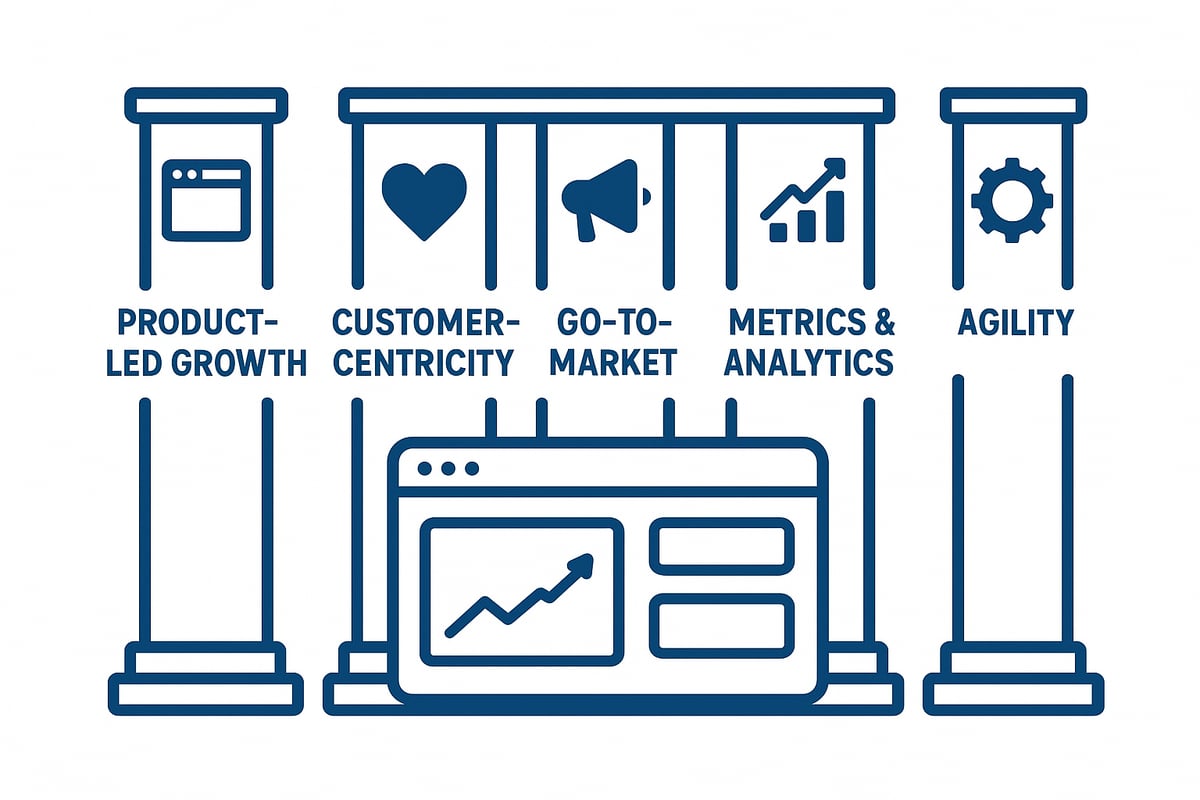
A successful saas strategy in 2025 requires more than just a great product idea. It demands a holistic approach, grounded in proven pillars that drive growth, retention, and adaptability. Let’s explore the core elements that set future-ready SaaS businesses apart.
Product-Led Growth (PLG) as the Foundation
At the heart of any modern saas strategy is product-led growth. In this model, the product experience itself drives acquisition, activation, and expansion. Users discover value quickly, often through a freemium or trial approach. Slack is a standout example, achieving viral adoption by empowering teams to onboard themselves.
PLG Principles:
- Frictionless onboarding
- In-app guidance
- Rapid value realization
Benefits:
- Lower customer acquisition cost
- Fast scaling
- High user engagement
However, PLG demands continuous iteration and deep user insights. For inspiration, explore Product-Led Growth Case Studies that showcase real-world success stories.
Customer-Centricity and Value Delivery
A robust saas strategy puts customer needs front and center. Understanding real pain points and jobs-to-be-done is essential. Leading SaaS teams use in-app surveys, NPS, and community engagement to capture ongoing feedback.
HubSpot exemplifies customer-centricity by providing educational resources and nurturing users through inbound marketing. Personalization and contextual experiences further differentiate top SaaS brands.
Tactics for Value Delivery:
- Regular user interviews
- Segmented user journeys
- Tailored onboarding content
By prioritizing customer outcomes, companies build lasting loyalty and advocacy.
Go-to-Market (GTM) Excellence
An effective saas strategy leverages a multi-channel GTM approach. Combining product-led, sales-led, content-led, and community-led tactics enables broader reach. Notion’s growth highlights the power of community, with user-generated templates fueling viral adoption.
Defining a clear Ideal Customer Profile (ICP) and precise segmentation is vital. Aligning marketing, sales, and product teams ensures unified messaging and seamless user experiences.
Key GTM Elements:
- Clear ICP definition
- Cross-team collaboration
- Scalable marketing assets
Continual refinement of GTM channels is necessary for sustainable growth.
Metrics, Analytics, and Data-Driven Decisions
Data is the backbone of any high-performing saas strategy. Leaders track a core set of metrics to guide decisions and optimize performance:
| Metric | Description |
|---|---|
| ARR | Annual Recurring Revenue |
| MRR | Monthly Recurring Revenue |
| CAC | Customer Acquisition Cost |
| LTV | Lifetime Value |
| NRR | Net Revenue Retention |
| Churn | Customer Loss Rate |
| Activation Rate | First Value Experience |
Using analytics platforms helps teams gain actionable insights. Loom, for instance, refines its product and marketing through viral loops and engagement tracking. Experimentation and A/B testing are routine for continuous improvement.
Agility and Adaptability
The final pillar of a winning saas strategy is agility. Rapid iteration cycles and lean experimentation are essential in fast-changing markets. Top SaaS companies quickly adapt to feedback and pivot as new opportunities emerge.
Building flexible tech stacks supports innovation, while staying alert to regulatory and technological shifts is critical. Embracing agility ensures resilience and readiness for whatever challenges the future holds.
Adaptability is not just a mindset, but a strategic advantage in the SaaS world.
Step-by-Step Guide: Building a Future-Proof SaaS Strategy for 2025
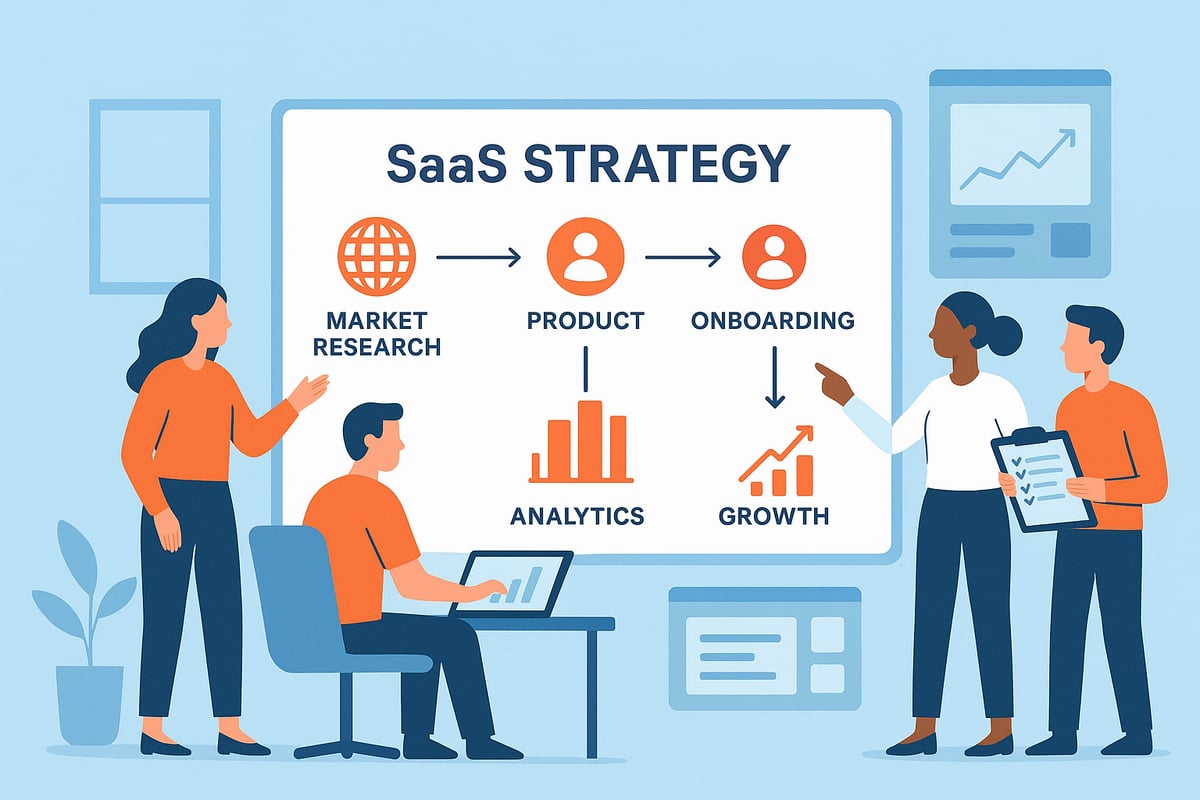
Staying ahead in 2025 requires a proactive, adaptable saas strategy. The following step-by-step framework will help founders and operators design a future-ready approach, from initial validation to continuous improvement.
Step 1: Market Research and Validation
A successful saas strategy starts with deep market understanding and rigorous validation. Identify your target segments through interviews, surveys, and analysis of competitors. Test assumptions with MVPs before significant investment.
Leverage qualitative and quantitative data to ensure genuine customer needs drive your solution. Pre-development validation reduces the risk of building products no one wants. For a detailed approach, review SaaS validation strategies for founders to align your process with proven frameworks.
Pipedrive’s early focus on real user pain points exemplifies how user-centric research leads to lasting product-market fit. Investing time in this foundational step strengthens your entire saas strategy.
Step 2: Defining Value Proposition and Differentiation
Crafting a compelling value proposition is central to any robust saas strategy. Start by mapping the competitive landscape to identify opportunities for differentiation. Use competitor analysis to find whitespace and clarify what sets your solution apart.
Describe your unique benefits in language that resonates with your ideal customer profile. Communicate outcomes, not just features. Zoom’s rise is a testament to the power of a clear, customer-centric UVP focused on reliability and ease of use.
A strong UVP attracts early adopters and guides messaging across your marketing channels, ensuring your saas strategy stands out in a crowded market.
Step 3: Product Strategy and Roadmap
An effective saas strategy aligns product development with user needs and business objectives. Prioritize features based on impact, using feedback loops and analytics to guide decisions.
Balance core functionality with innovative elements like AI-powered features or seamless integrations. Build for scalability and security from the outset, ensuring the tech stack can evolve with market demands.
Userpilot Analytics, for example, consolidated multiple tools into a single platform, offering users efficiency and clarity. A well-structured roadmap keeps teams focused and responsive, a hallmark of a successful saas strategy.
Step 4: Go-to-Market Planning
A strategic go-to-market plan is crucial for any saas strategy aiming for rapid adoption. Choose the right model: product-led, sales-led, or a hybrid tailored to your audience.
Develop high-converting assets such as landing pages, demo videos, and onboarding flows. Plan your launch by leveraging platforms like Product Hunt, hosting webinars, and collaborating with influencers.
Loom’s viral Product Hunt debut showcases the impact of a well-executed launch. Align marketing, sales, and product teams to maintain momentum and ensure your saas strategy achieves market traction.
Step 5: User Onboarding and Activation
A frictionless onboarding process is at the heart of an effective saas strategy. Design intuitive product tours and contextual help to guide users toward early success moments.
Monitor activation rates and collect feedback to refine the experience continuously. Use in-app guidance and tailored messaging to reduce confusion and drive engagement.
Slack’s seamless onboarding is a benchmark, enabling bottom-up adoption and strong user retention. Prioritizing activation ensures your saas strategy converts sign-ups into loyal customers.
Step 6: Growth, Retention, and Monetization
Sustaining growth requires an adaptive saas strategy focused on retention and monetization. Drive adoption with targeted prompts, educational content, and regular feature updates.
Implement strategies to reduce churn, such as proactive customer success and community building. Experiment with freemium, usage-based, or tiered pricing models to match evolving customer preferences.
HubSpot’s free CRM demonstrates how thoughtful monetization can fuel upsells and long-term loyalty. A data-driven approach to retention and growth keeps your saas strategy resilient and scalable.
Step 7: Analytics, Feedback, and Continuous Improvement
Continuous improvement is the backbone of a future-proof saas strategy. Set up robust analytics to track key metrics like activation, retention, and churn.
Use cohort analysis, heatmaps, and session replays to uncover user behavior insights. Run A/B tests to validate changes and optimize product, marketing, and support efforts.
Pipedrive’s iterative, data-driven enhancements have driven sustained growth and customer satisfaction. By embedding feedback and experimentation into your saas strategy, you ensure ongoing relevance and competitive advantage.
Expert Insights: What SaaS Leaders Recommend for 2025
In 2025, the most successful SaaS leaders are those who combine deep market understanding with bold, data-driven execution. Their insights demonstrate that a winning saas strategy is not just about technology, but about uniting people, processes, and vision to outpace the competition.
Below, we distill the core lessons, best practices, and actionable advice shared by the most respected voices in the industry. These expert insights offer practical guidance for any founder or operator determined to build and sustain SaaS success in the coming year.
Lessons from Top SaaS Companies
Top SaaS companies have carved their paths by focusing relentlessly on what matters most. Their playbooks reveal powerful lessons for shaping a resilient saas strategy:
| Company | Core Lesson | Strategic Focus |
|---|---|---|
| Slack | Prioritize seamless user experience and organic growth | Product-led growth |
| HubSpot | Invest in content and user education | Inbound marketing |
| Notion | Empower community creation and sharing | Community-led growth |
| Zoom | Relentless focus on quality and simplicity | Superior product delivery |
| Pipedrive | Solve real customer problems, design for end users | User-centric design |
Slack’s rise demonstrates the impact of a frictionless onboarding and viral adoption engine. HubSpot’s saas strategy revolves around nurturing trust through educational content, while Notion has made community engagement central to its expansion. Zoom’s commitment to reliability and ease of use sets a standard for product excellence. Pipedrive’s journey shows that solving tangible customer pain points is the foundation of long-term growth.
Each of these companies adapts its saas strategy to evolving market needs, using continuous feedback and rapid iteration as core principles.
Emerging Best Practices
The playbook for a future-ready saas strategy is evolving. Leading SaaS operators are adopting new best practices to stay ahead:
- Embrace hybrid go-to-market models to reach a wider audience and address diverse buyer journeys.
- Foster robust product communities for advocacy, feedback, and organic growth.
- Invest in AI and machine learning to unlock smarter automation and deliver tailored user experiences.
- Prioritize security and compliance, turning regulatory readiness into a true differentiator.
- Build agile, cross-functional teams that can quickly respond to market shifts and customer feedback.
For a deeper dive into how these trends are shaping the industry, review the latest SaaS Trends and Projections 2025, which highlights the critical role of innovation, AI integration, and evolving customer expectations in modern saas strategy.
By embedding these best practices, SaaS companies can future-proof their organizations and unlock sustainable competitive advantages.
Actionable Tips from Industry Experts
Industry experts agree that true saas strategy excellence requires discipline, agility, and customer obsession. Here are their top recommendations:
- Revisit your ideal customer profile (ICP) regularly and refine positioning as markets evolve.
- Use data-driven frameworks to prioritize product development and go-to-market initiatives.
- Encourage experimentation at every level, empowering teams to test, learn, and iterate rapidly.
- Maintain direct lines of communication with customers through interviews, surveys, and active community engagement.
A robust saas strategy is never static. It is shaped by ongoing learning, adaptation, and a willingness to pivot when new opportunities arise. By applying these expert tips, SaaS founders and leaders can build organizations that thrive in the face of uncertainty and continual change.
Emerging SaaS Opportunities and Strategic Playbooks for 2025
The year 2025 brings a wave of new opportunities for companies ready to adapt their saas strategy. As markets mature, winning teams will focus on innovation, specialization, and building resilience into every aspect of their business. Let us explore the most promising paths forward and how your organization can seize them.
Tapping into Vertical and Micro-SaaS Niches
A forward-thinking saas strategy in 2025 includes targeting underserved verticals and micro-markets. Instead of broad, generic solutions, focus shifts to highly specialized products for industries like healthcare, finance, or logistics. Vertical SaaS providers can command premium pricing and enjoy stronger customer loyalty.
Micro-SaaS, aimed at niche problems within larger markets, offers faster paths to product-market fit and less direct competition. For founders considering this approach, following proven Vertical SaaS market validation steps ensures ideas are tested and refined before scaling. This tailored approach is increasingly vital as SaaS markets fragment and mature.
AI, Automation, and Next-Gen Technology
Integrating AI and automation is at the core of a competitive saas strategy today. AI-powered analytics, chatbots, and workflow automation tools unlock new value for users by streamlining operations and personalizing experiences. In 2025, predictive analytics and machine learning will set leading products apart.
Companies that invest early in AI and next-gen tech can differentiate quickly, reduce operational costs, and enable smarter decision-making. Continuous experimentation with these technologies, combined with user feedback, helps refine offerings to meet evolving demands. The future belongs to those who embrace intelligent automation as a core pillar of their business.
Platform Ecosystems and Integrations
Building open platform ecosystems is now a critical component of any modern saas strategy. Customers increasingly expect seamless integrations with their favorite tools, from communication platforms to CRMs and beyond. By developing robust APIs and fostering a third-party developer community, SaaS companies can create sticky, interconnected experiences.
Open platforms encourage innovation and unlock new revenue streams through marketplaces and add-ons. The companies that prioritize extensibility and easy integration will be best positioned to ride the wave of digital transformation in 2025. This ecosystem mindset fosters both customer retention and organic growth.
Data Privacy, Security, and Compliance
Trust is non-negotiable in a winning saas strategy. As global regulations grow stricter and customers become more privacy-aware, companies that prioritize data protection gain a powerful advantage. Building transparent processes and earning relevant certifications signals reliability to users in regulated industries.
Turning compliance into a differentiator is not just about avoiding fines. It can be a unique selling point, as explained in Turn GDPR compliance into a SaaS advantage. By embedding security and compliance into the product roadmap, SaaS teams build long-term trust and open doors in new global markets.
Global Expansion Strategies
Expanding internationally is a cornerstone of a robust saas strategy for 2025. Localizing products, support, and marketing to fit regional expectations is no longer optional. SaaS companies must navigate payment systems, legal standards, and cultural preferences in each new market.
Early movers who invest in local partnerships and adapt their offerings for APAC, EMEA, or Latin America will see outsized returns. Success depends on balancing global consistency with local relevance, ensuring the product feels native to every user segment. Strategic global growth is essential for future-proofing revenue streams.
Community and Customer-Led Growth
Community-driven growth is an essential ingredient in a modern saas strategy. Engaged user communities fuel organic adoption, provide invaluable feedback, and co-create new use cases. SaaS leaders like Notion have demonstrated the power of nurturing a creator ecosystem for viral sharing.
Empowering users to share templates, provide support, and evangelize the product transforms customers into advocates. Building trust and loyalty through community engagement not only drives retention but also generates a steady pipeline of new users. In 2025, customer-led growth is a proven playbook for sustainable success.
SaaS Validation: The Essential First Step for SaaS Success
Before building any winning saas strategy, validation is the critical foundation that cannot be skipped. Many founders dive into product development, only to realize too late that their solution does not solve a real problem or meet market demand.
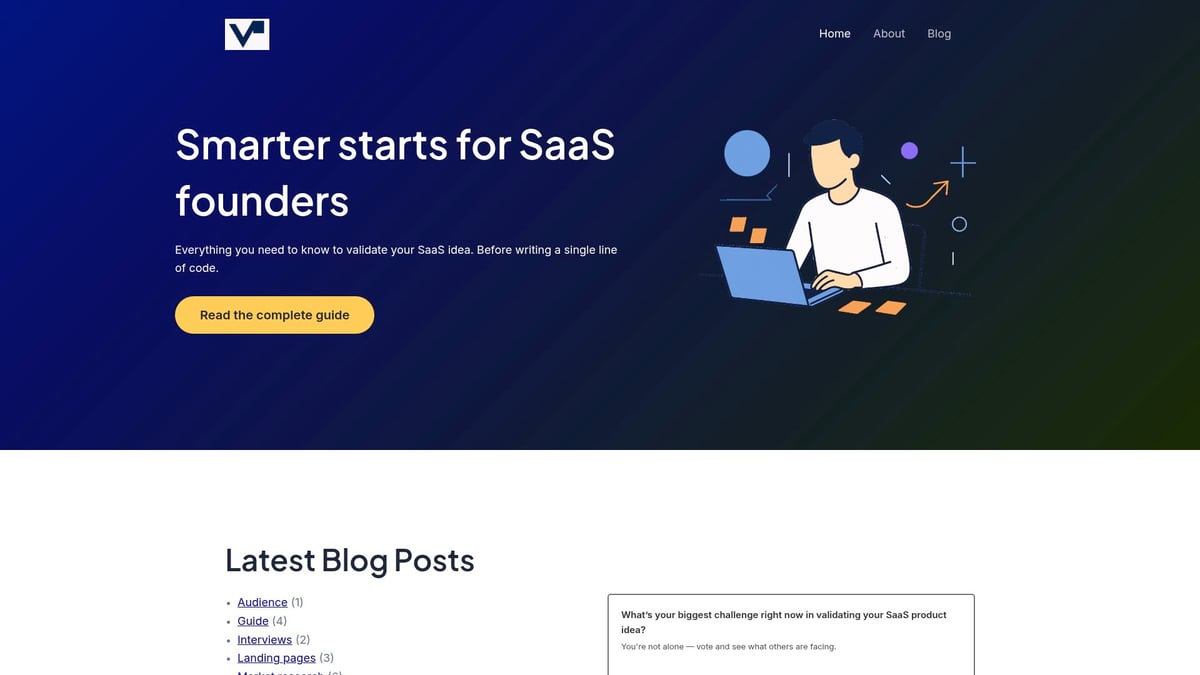
SaaS Validation provides founders with step-by-step guides, proven frameworks, and practical tools to test ideas efficiently. By validating early, you avoid costly missteps, align your product with genuine customer needs, and dramatically increase your chances of achieving product-market fit.
Access expert-driven research and join a supportive community focused on 2025’s challenges. For every founder serious about success, starting with validation is the smartest move.