
The SaaS industry is experiencing explosive growth as we approach 2025, with more than 34,500 companies competing globally. Content marketing is now proven to generate up to 400 percent more leads, raising the stakes for everyone involved.
To succeed in this dynamic landscape, mastering saas writing is essential. Effective strategies are needed to educate users, build trust, and drive conversions.
This guide delivers actionable advice and expert insights tailored for SaaS founders, marketers, and writers. Expect to learn proven frameworks, current best practices, and forward-thinking tips to boost your saas writing results.
Here’s what to expect:
- SaaS writing fundamentals and unique challenges
- The latest trends and evolving audience needs
- Step-by-step writing process for SaaS content
- Advanced strategies and SEO integration
- The best tools and resources for 2025
Leverage these insights to gain measurable results and stand out in the crowded SaaS marketplace.
Understanding SaaS Writing Fundamentals
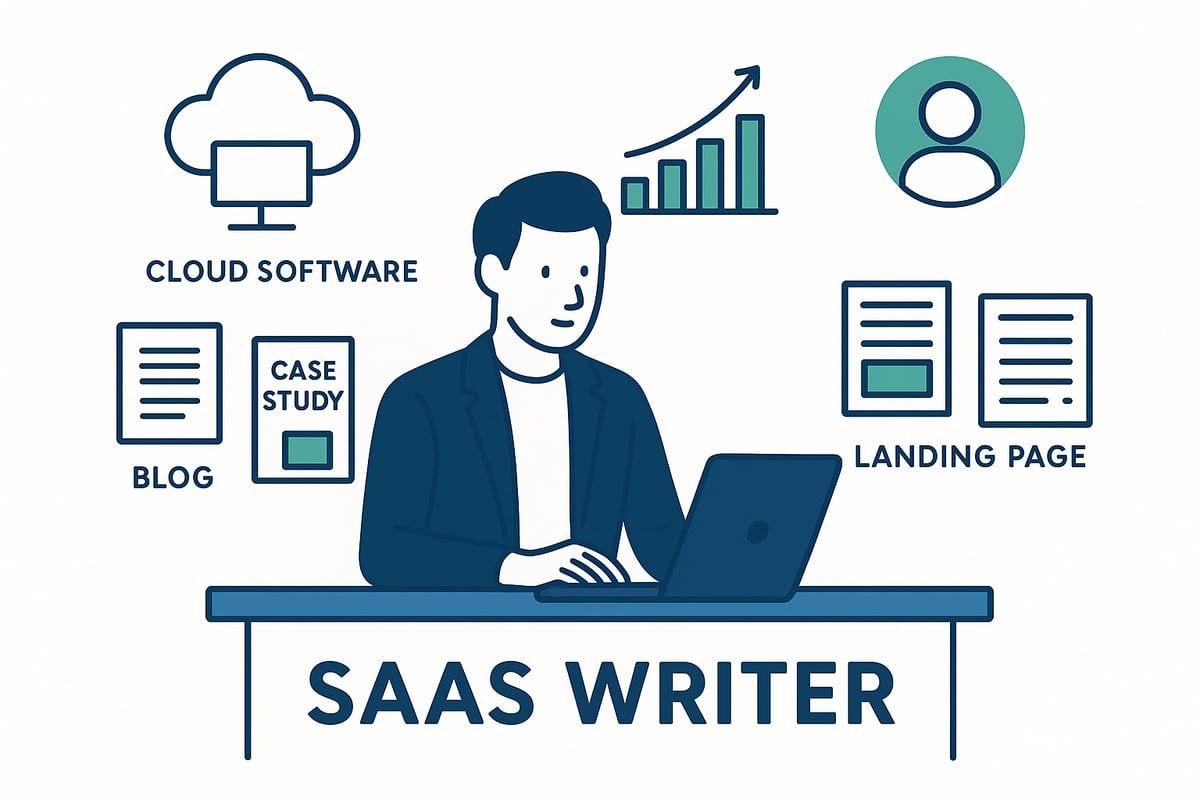
SaaS writing is a distinct discipline within content marketing. It goes beyond simply describing software features. Instead, it aims to educate users, demonstrate value, and drive conversions for cloud-based products. This foundation is what sets high-performing SaaS brands apart in a crowded market.
What Sets SaaS Writing Apart
SaaS writing is uniquely product-centric. Unlike general content writing, it must translate complex technical features into clear, benefit-driven language that resonates with both technical and non-technical audiences.
Writers are tasked with making advanced cloud software accessible, removing barriers to understanding for users at any stage of the customer journey. This means anticipating pain points, addressing objections, and providing actionable solutions in every piece of content.
For example, HubSpot’s blog is a powerhouse, with over 13,000 indexed articles, 1.4 million targeted keywords, and 3.5 million monthly visitors. Their approach to saas writing demonstrates how educational content can fuel organic traffic and brand growth.
A crucial aspect is aligning content with the SaaS sales funnel:
| Funnel Stage | Content Focus | Example Formats |
|---|---|---|
| ToFu | Awareness, education | How-to blogs, guides |
| MoFu | Consideration, comparison | Alternatives, vs. articles |
| BoFu | Conversion, decision | Case studies, product demos |
SaaS writing must support each stage, guiding prospects from discovery to decision with consistent, valuable information.
The Role of Authority and Trust
Building authority is at the heart of effective saas writing. SaaS buyers want to trust the brands they invest in. Every article, guide, or case study becomes a tool for establishing your company as an industry leader.
Credibility comes from using hard data, expert quotes, and real-world case studies. HubSpot’s high domain authority and search performance are directly tied to their commitment to trustworthy, transparent content.
Transparency and authenticity are non-negotiable. Writers should avoid hype and instead focus on honest, data-backed insights. For conversion-driven writing, referencing proven frameworks—such as those outlined in this guide to copywriting for product validation—can amplify trust and effectiveness.
In saas writing, authority is built over time through consistent quality and a willingness to address both strengths and limitations of your product.
Key SaaS Content Types
The best saas writing leverages a diverse mix of content formats to meet audience needs at every stage:
- Blog posts: how-to guides, tutorials, comparisons, alternatives
- Case studies and white papers: in-depth analysis and real results
- Landing pages and product copy: clear, persuasive messaging
- Email sequences and onboarding guides: nurture and educate users
- Social media and ad copy: drive engagement and awareness
Leading SaaS brands like OptinMonster excel by creating SEO-focused articles and actionable resources. Their strategic mix of content types ensures they reach decision makers, end users, and technical influencers alike.
Effective saas writing is not just about words on a page. It’s about building trust, educating your audience, and supporting every step of the customer journey.
SaaS Writing Trends and Audience Expectations for 2025
The pace of change in the SaaS industry is accelerating, and so are the expectations for saas writing. As content shapes buyer perceptions and drives strategic growth, understanding the latest trends is essential for SaaS brands that want to thrive in 2025. Let's explore how content formats, buyer behavior, SEO, and journalistic rigor are reshaping the landscape for modern saas writing.

Evolving Content Formats and Channels
The evolution of saas writing is marked by a shift toward more dynamic, engaging content formats. Long-form articles continue to dominate, but there is increasing demand for data-driven insights, multimedia integration, and interactive experiences.
Modern SaaS brands are investing in video explainers, product walkthroughs, and visually rich infographics to simplify complex concepts. Interactive tools such as ROI calculators or onboarding wizards are becoming staples in the content toolkit. Storytelling now centers on real customer journeys and product-led narratives, making content more relatable and memorable.
Authenticity is also a driving force. Polls, surveys, and user-generated content are used to reflect real-world experiences and build credibility. These formats help position saas writing as both authoritative and approachable, catering to diverse learning preferences.
Audience Behavior and Decision-Making
SaaS buyers are more discerning than ever, and their expectations for saas writing have risen accordingly. Decision-makers such as business owners, IT leads, and department managers demand in-depth, unbiased, and actionable information.
Effective content must address multiple buyer personas at different stages of the journey. Early-stage prospects seek educational guides, while mid-funnel readers compare features, pricing, and competitors. Bottom-funnel content, such as case studies and product comparisons, helps buyers validate their choices.
Comparison guides and "vs." articles are especially valuable for the middle of the funnel, as they provide clarity and reduce decision fatigue. The best saas writing anticipates objections, addresses pain points, and empowers buyers with relevant, trustworthy information.
SEO and Discoverability in 2025
SEO remains a critical pillar of saas writing, with SaaS companies investing heavily to secure organic visibility. As Google continues to refine its algorithms, content that demonstrates Experience, Expertise, Authoritativeness, and Trustworthiness (EEAT) will outperform generic articles.
Semantic SEO and topical authority are now essential. SaaS brands build comprehensive topic clusters, target high-intent keywords, and structure content for both users and search engines. According to SaaS market trends and statistics for 2025, SaaS companies are prioritizing SEO-driven content strategies to capture qualified leads and accelerate revenue growth.
To stay ahead, saas writing must incorporate structured data, FAQ sections, and optimized visuals. The focus is on discoverability and delivering measurable results that align with business objectives.
Data-Backed and Journalistic Approaches
Trust is the cornerstone of effective saas writing, and the trend toward data-backed, journalistic styles reflects this shift. Incorporating subject matter expert interviews, original research, and customer Q&A sessions enhances credibility and depth.
Writers are adopting journalistic techniques such as clear sourcing, fact-checking, and narrative storytelling. Social platforms, including LinkedIn and X, are valuable for gathering unique data through polls and surveys, which can be woven into articles to provide fresh perspectives.
By grounding content in real-world data and authentic voices, saas writing not only informs but also persuades. This approach positions SaaS brands as thought leaders and trusted advisors in a crowded marketplace.
The SaaS Writing Process: Step-by-Step Guide
Mastering the saas writing process is essential to crafting content that informs, persuades, and converts. By following a proven, step-by-step approach, writers can consistently produce high-impact SaaS content that stands out in a crowded market.

Step 1: Deep Product and Audience Research
Every effective saas writing project begins with immersive research. Start by experiencing the SaaS product firsthand. Use demos, request a trial, and review documentation to understand features in depth.
Next, map product benefits to real-world pain points. Identify how the software solves specific challenges for your audience. Develop detailed personas to clarify who you are writing for: decision makers, end users, or influencers.
For actionable persona development, leverage resources like Understanding Your SaaS Buyer Persona. This ensures your saas writing addresses the needs, motivations, and objections of your ideal readers.
Create a checklist:
- Test the product
- Analyze support forums and reviews
- Interview stakeholders or SMEs
- Outline key customer challenges
This foundation empowers you to write content that resonates and converts.
Step 2: Strategic Topic Selection and Planning
Choosing the right topics is critical for effective saas writing. Align each topic with a specific stage of the SaaS sales funnel: top (ToFu), middle (MoFu), or bottom (BoFu).
Use SEO tools to identify high-intent queries, such as “best [category] tools” or “X vs. Y” comparisons. Prioritize topics that answer common questions or address objections.
Consider using a table to organize topics:
| Funnel Stage | Example Topic | Search Intent |
|---|---|---|
| ToFu | How to automate billing | Educational |
| MoFu | [Tool] vs [Tool] | Comparison |
| BoFu | [Tool] pricing breakdown | Transactional |
Effective planning ensures your saas writing meets both audience needs and business goals.
Step 3: Structuring Content for Clarity and Conversion
Structure is the backbone of compelling saas writing. Begin with a clear introduction and thesis that set expectations. Use logical headings (H2, H3) and scannable formatting, such as bullet points and numbered lists.
Integrate calls-to-action (CTAs) at strategic points to guide readers. For example, after discussing a feature, invite users to sign up for a demo or download a guide.
Key elements for structure:
- Compelling intro with a hook
- Hierarchical headings for flow
- Short paragraphs and visual breaks
- CTAs tailored to funnel stage
A well-structured article makes your saas writing accessible and conversion-focused.
Step 4: Writing with Authority, Empathy, and Simplicity
Great saas writing balances expertise with readability. Avoid jargon overload by explaining technical concepts in plain language. Use analogies and real-world scenarios to clarify benefits.
Incorporate customer stories, testimonials, and expert quotes to build trust. For example, include a customer scenario highlighting how the product solved a specific problem.
Checklist for writing style:
- Use active voice for clarity
- Show empathy for user pain points
- Support claims with data and quotes
This approach establishes your authority and makes your saas writing relatable.
Step 5: Optimizing for SEO and Readability
SEO optimization is integral to successful saas writing. Focus on on-page elements: place keywords naturally in headings, meta tags, and throughout your content.
Use internal links to related resources, and add external links to authoritative sources. Format content for readability with short paragraphs, bullet points, and visuals.
SEO best practices:
- Use schema markup for guides and FAQs
- Add alt text to images
- Create comparison tables for clarity
By optimizing for both users and search engines, your saas writing drives discoverability and engagement.
Step 6: Editing, Fact-Checking, and Updating
The final step in the saas writing process is rigorous editing. Review content for clarity, accuracy, and tone. Double-check technical claims and statistics for correctness.
Regularly update evergreen articles, such as “best tools” lists, to maintain relevance. Fact-check all sources and ensure consistency in formatting and voice.
Editing checklist:
- Proofread for grammar and style
- Verify all data and claims
- Refresh outdated examples
This commitment to quality ensures your saas writing remains authoritative, accurate, and valuable.
Advanced SaaS Writing Strategies for Maximum Impact
Advanced saas writing is the key to outperforming competitors in a saturated market. To drive real results in 2025, writers must adopt strategies that showcase authority, foster trust, and deliver measurable value. Let’s explore the most impactful techniques to elevate your saas writing and make every piece count.
Leveraging Data and Original Research
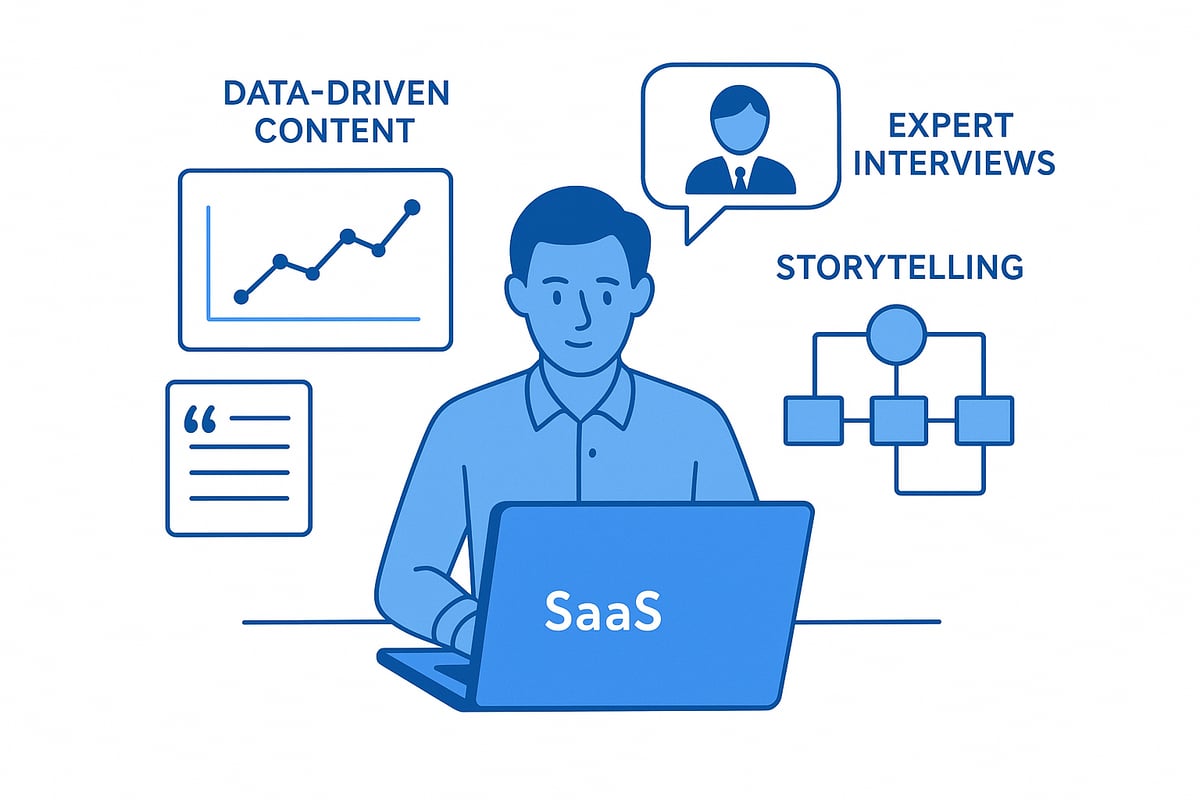
In saas writing, proprietary data and original research set your content apart. When you present unique survey findings or usage statistics, you attract backlinks and build topical authority. For example, analyzing anonymized product usage trends or running customer polls provides fresh insights competitors cannot replicate.
Original data also enhances trust. Citing your own research, rather than recycled stats, positions your brand as a thought leader. Consider embedding charts or infographics to visualize findings for easier consumption.
For a deeper dive into integrating data and research with modern SEO, visit SEO and Blogging in the AI Era.
Incorporating SME and Customer Voices
SaaS writing thrives when it features the perspectives of subject matter experts (SMEs) and customers. Interviewing product managers, engineers, or industry specialists yields authoritative quotes that enrich your content. These voices add credibility and answer nuanced questions your audience may have.
Customer feedback and Q&A are equally valuable. By including real user experiences, you address pain points directly and foster trust. GoDaddy, for instance, regularly features customer questions to deepen its blog content.
Prioritize these voices in saas writing to humanize your message and demonstrate expertise.
Product-Led Content and Storytelling
Product-led saas writing focuses on showing, not just telling. Tutorials, walkthroughs, and use-case articles help readers visualize how your solution solves real-world problems. This approach is particularly effective for onboarding and retention-focused pieces.
Highlighting customer success stories, especially those with measurable ROI, builds social proof. For example, case studies that detail how a client improved efficiency or revenue with your software are powerful conversion tools.
Story-driven saas writing connects emotionally, guiding prospects through the decision journey.
Journalistic and Narrative Techniques
Borrowing from journalism, advanced saas writing starts with engaging leads, builds arguments with solid evidence, and ends with a compelling call to action. Data, expert quotes, and polls collected from platforms like LinkedIn or X/Twitter support your claims and add depth.
Use narrative structures to maintain reader interest. Introduce a challenge, provide context, then reveal the solution—mirroring customer experiences. Social proof, such as testimonials and survey results, reinforces authority and trust.
These techniques keep your saas writing fresh, credible, and highly shareable.
Avoiding Common SaaS Writing Mistakes
Even the best strategies can be undermined by common pitfalls in saas writing. Avoid overwhelming readers with technical jargon or a sales-heavy tone, as this erodes engagement. Failing to address the customer journey or not answering key objections leaves gaps in your content.
Other frequent mistakes include:
| Mistake | Impact |
|---|---|
| Lack of data | Weakens credibility |
| Poor structure | Reduces readability |
| Outdated information | Harms trust and SEO |
Regularly review and update your saas writing to ensure accuracy and clarity. Always put the reader’s needs at the center for maximum impact.
Integrating SEO and Content Marketing for SaaS Growth
Integrating SEO with content marketing is a cornerstone of effective saas writing. As competition intensifies, SaaS brands need a cohesive approach to content that not only ranks but also converts and retains users.
Keyword Research and Topical Authority
The foundation of impactful saas writing is rigorous keyword research. Identifying high-value, low-competition keywords ensures your content targets real user intent and stands out in search results.
Build topical authority by creating interconnected content clusters around core SaaS topics. This approach signals expertise to search engines and helps readers navigate related information easily.
A strong example is HubSpot, which leverages extensive keyword targeting to generate compounding organic traffic. For advanced insights on optimizing SEO strategy within your saas writing, explore SEO in AI Search for SaaS.
On-Page and Technical SEO for SaaS Content
Effective saas writing incorporates on-page SEO tactics, such as optimizing headings, images, and internal links. Use schema markup and FAQ sections to enhance your content’s visibility in search engine results pages.
Structured data, comparison tables, and clear formatting make technical topics more accessible to readers and search engines alike. Maintain a logical hierarchy with H2 and H3 headings, and ensure each section delivers unique value.
Technical SEO elements are not optional for SaaS brands aiming for growth. By combining these with high-quality saas writing, you create a foundation for sustainable organic performance.
Content Distribution and Promotion
Creating outstanding saas writing is only half the battle; effective distribution ensures your content finds its audience. Use email marketing, social channels, and industry communities to amplify reach.
Repurpose blog posts into webinars, ebooks, or infographics to maximize ROI. SaaS brands often promote their content through LinkedIn and targeted email sequences, reaching decision makers where they are most active.
A multi-channel approach drives more engagement and positions your brand as a thought leader in the SaaS space.
Measuring and Iterating for Results
Continuous measurement is vital for optimizing saas writing and content marketing efforts. Track key metrics such as organic traffic, conversion rates, and user engagement to assess performance.
Leverage analytics tools to identify content gaps and new opportunities. Regular content audits help maintain relevance and authority, ensuring your SaaS content stays ahead of changing industry trends.
Iterative improvements, guided by real data, are essential for long-term SaaS growth through content.
Essential Tools and Resources for SaaS Writers in 2025
Equipping yourself with the right tools and resources is crucial for mastering saas writing in 2025. As the SaaS market continues to expand rapidly, writers must leverage advanced technology and up-to-date platforms to stay competitive and efficient.
Must-Have Writing and Research Tools
Every successful saas writing project starts with powerful writing and research tools. AI-powered writing assistants now help writers brainstorm ideas, draft content, and improve clarity at record speed. These tools can also enhance SEO, grammar, and readability.
For in-depth research and keyword analysis, platforms like Semrush and Ahrefs are industry standards. They reveal what your audience is searching for and how competitors perform. Plagiarism and grammar checkers such as Grammarly and Copyscape protect your content's originality and polish.
With the increasing AI integration in SaaS platforms, keeping up with the latest writing tech ensures your saas writing remains ahead of the curve.
Content Planning and Collaboration Platforms
Efficient saas writing requires seamless content planning and team collaboration. Editorial calendars help organize topics, deadlines, and publishing schedules. Tools like Notion and Trello streamline project management, making it easy to assign tasks and track progress.
Collaborative writing platforms, such as Google Docs, enable real-time feedback and version control. These solutions ensure that even remote teams stay aligned and productive. For larger teams, dedicated content management systems offer workflow automation and integration with publishing tools.
Staying organized and connected with your team makes the saas writing process much more agile and scalable.
Data Visualization and Design Tools
Clear visuals are essential for effective saas writing, especially when presenting complex data or product features. Infographic and chart creators like Canva and Piktochart transform raw data into engaging visuals that support your narrative.
For product screenshots and UI mockups, Figma is highly versatile. These tools allow writers to illustrate use cases and workflows, making content more digestible for readers.
Well-designed visuals not only break up text but also reinforce key messages, keeping your audience engaged throughout the saas writing journey.
Trend Monitoring and Inspiration Sources
Staying updated on industry trends is non-negotiable for top-tier saas writing. Subscribe to leading SaaS blogs, newsletters, and podcasts to get the latest insights directly from experts. Curated content libraries and databases of SaaS case studies offer real-world examples and inspiration.
The SaaS market projected to reach $428.78 billion in 2025 highlights the industry's accelerating growth, making it even more important to keep pace with new developments, customer needs, and emerging best practices.
Regular trend monitoring ensures your saas writing always addresses what matters most to your audience.
Continuous Learning and Community Engagement
To truly excel in saas writing, continuous learning is vital. Online courses and workshops on writing, SEO, and SaaS marketing help sharpen your skills. Engaging in SaaS-focused communities, forums, and social groups fosters peer support and knowledge exchange.
Participate in webinars, attend virtual conferences, and join writing challenges to stay motivated. By networking with other professionals, you gain fresh perspectives and stay inspired for every saas writing project.