
The SaaS industry is evolving rapidly as we approach 2025, bringing both explosive growth and increasing complexity. Organizations that manage saas face new challenges in scalability, efficiency, and staying ahead in a highly competitive market.
Mastering SaaS management is now essential for driving cost savings, optimizing operations, and delivering exceptional customer experiences. This guide is your essential resource for 2025, offering actionable steps, proven strategies, and expert insights to help you manage saas at scale.
Discover key trends, foundational principles, practical optimization steps, security best practices, and future-proofing tactics—all designed to empower your SaaS journey.
The 2025 SaaS Landscape: Trends, Challenges, and Opportunities
Navigating the SaaS landscape in 2025 requires a fresh perspective and a strategic approach. To manage saas successfully, leaders must stay ahead of emerging trends, anticipate challenges, and spot new opportunities for growth. The market is more dynamic than ever, and understanding these shifts is essential for companies aiming to thrive.
Key SaaS Trends Shaping 2025
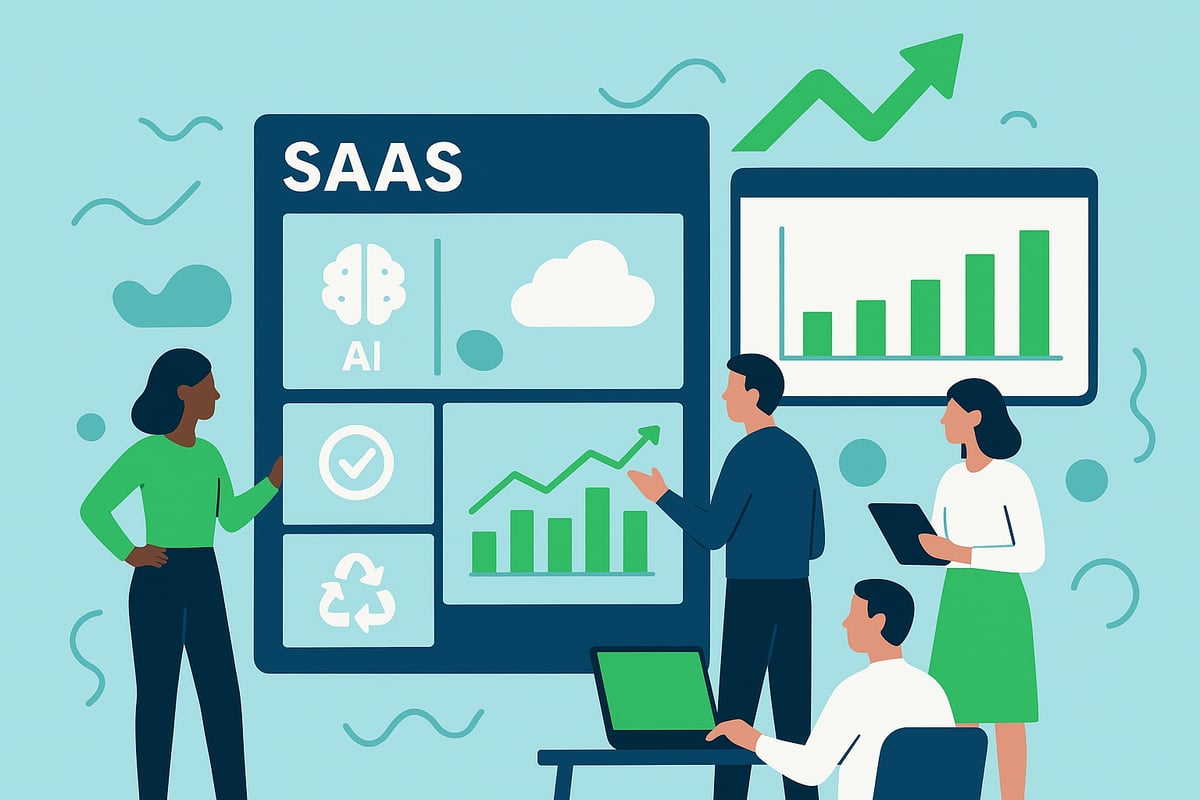
The SaaS industry is experiencing significant transformation as we approach 2025. To manage saas in this environment, leaders must recognize the following key trends:
- AI-powered SaaS solutions are becoming mainstream, automating tasks and delivering smarter insights.
- Vertical SaaS is expanding, with tailored platforms for healthcare, legal, and other niche sectors.
- Low-code and no-code platforms are democratizing app development, allowing teams to innovate faster.
- SaaS adoption in emerging markets is accelerating, opening up new customer bases.
- Sustainability and green SaaS initiatives are gaining traction, as customers demand responsible business practices.
According to the 2025 State of SaaS Report, AI-driven analytics platforms are seeing 35 percent year-over-year growth. Companies that proactively manage saas with these trends in mind position themselves for future success.
Major Challenges Facing SaaS Businesses
Despite the opportunities, SaaS companies face considerable hurdles in 2025. To manage saas at scale, organizations must address these key challenges:
- Customer acquisition costs are rising, making it harder to achieve sustainable growth.
- Managing multi-cloud and hybrid environments introduces complexity and operational risk.
- Retention is an ongoing struggle, especially as competition intensifies and switching barriers fall.
- Data privacy and regulatory compliance, with evolving frameworks like GDPR and CCPA, require constant vigilance.
A recent study found that 60 percent of SaaS companies cite churn as a top concern. Beyond retention, the need to manage saas across multiple platforms and jurisdictions adds another layer of difficulty. Security threats are also evolving, putting pressure on teams to enhance defenses while maintaining seamless user experiences.
Teams that manage saas effectively prioritize cross-functional alignment, regularly update compliance protocols, and invest in advanced security measures. Keeping pace with these challenges is critical for long-term viability.
Opportunities for Growth and Differentiation
While the challenges are real, 2025 brings remarkable opportunities for those able to manage saas with innovation and agility:
- Personalization powered by machine learning enables tailored user journeys and increased engagement.
- Open API ecosystems and seamless integrations allow products to deliver more value and reduce customer churn.
- Subscription model innovations, such as usage-based or tiered pricing, align revenue with customer needs.
- Sustainability initiatives, from green infrastructure to carbon neutrality, build trust and loyalty.
For example, SaaS companies that embrace green policies see 18 percent higher customer loyalty, according to IDC. By leveraging these opportunities, organizations can manage saas not just to survive, but to lead in a crowded market.
Building a Strong SaaS Management Foundation
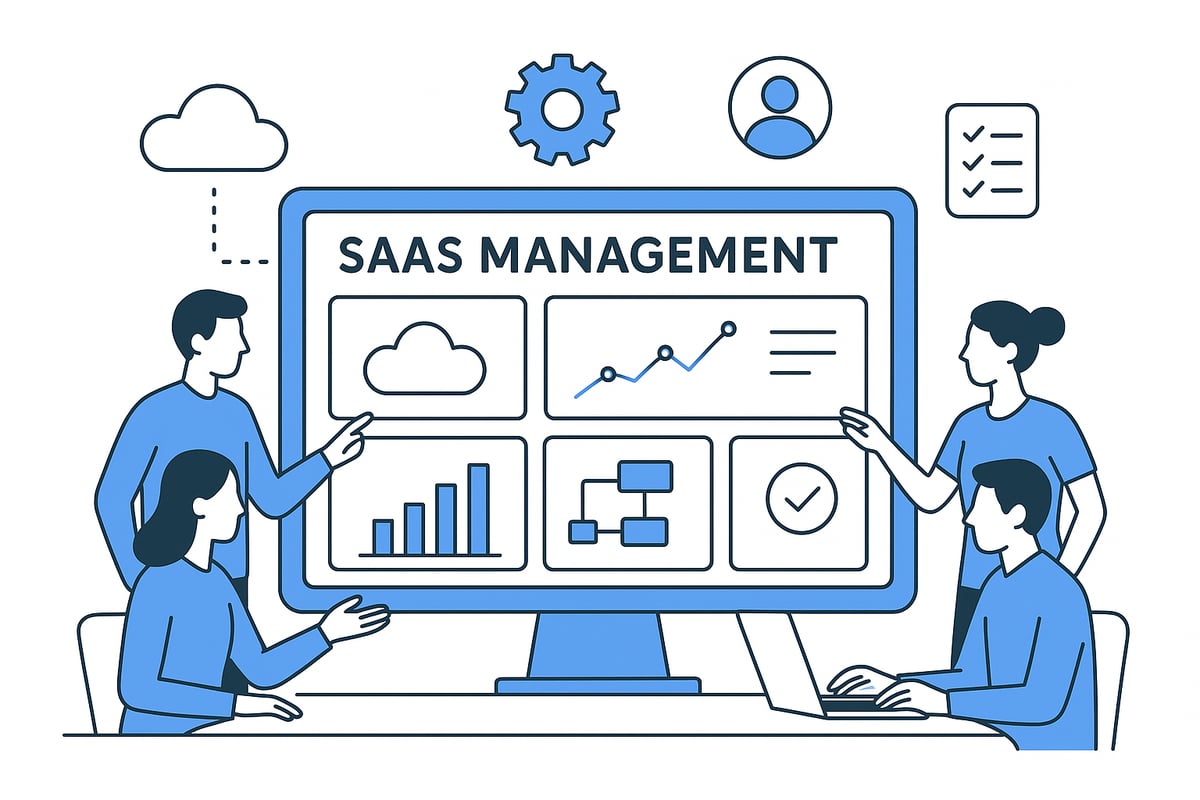
A solid foundation is the backbone for any company aiming to manage saas effectively in 2025. As SaaS businesses scale, clarity in management, organizational structure, and performance tracking becomes crucial. Without these, teams struggle to adapt and sustain growth. Let us explore the key pillars that help organizations manage saas with confidence and agility.
Core Principles of Effective SaaS Management
To manage saas well, start with a clear vision and ensure strong product-market fit. Teams that align around their mission tend to innovate faster and deliver more value to customers. Agile development practices, paired with continuous deployment, enable rapid adaptation to user feedback and market changes.
A customer-centric culture is also essential. Companies who prioritize user experience across all departments, from engineering to support, see higher satisfaction and retention. Data-driven decision making is another cornerstone. By using analytics to guide product, marketing, and operational choices, SaaS businesses can optimize resources and scale efficiently.
Fostering collaboration and open communication supports innovation. Encourage all teams to share insights and learn from customer interactions. When you manage saas with these principles, your foundation is set for sustainable growth.
Structuring Your SaaS Organization for Success
Effective organizational structure is key to manage saas at scale. Define clear roles across product, engineering, customer success, and operations. Role clarity eliminates overlap, accelerates onboarding, and ensures accountability.
Promote cross-functional collaboration by establishing regular syncs and shared goals. For remote or hybrid teams, leverage digital collaboration tools and set clear communication protocols. Leadership should empower teams by providing resources, fostering autonomy, and modeling transparency.
Onboarding processes are critical for new hires and users alike. Companies with structured onboarding see 25 percent faster ramp-up, according to SaaStr. For best practices, consider leveraging effective SaaS onboarding processes to streamline team and customer integration. This approach helps manage saas growth while maintaining high performance and morale.
Essential SaaS Metrics and KPIs to Track
Tracking the right metrics is vital as you manage saas operations. Focus on core revenue indicators like Monthly Recurring Revenue (MRR) and Annual Recurring Revenue (ARR). These metrics provide a clear view of business health and growth trends.
Customer Lifetime Value (CLTV) and Customer Acquisition Cost (CAC) help you assess profitability and marketing efficiency. Net Revenue Retention (NRR) and churn rates reveal how well you retain and expand customer relationships. Product usage analytics give insight into feature adoption and user engagement.
A sample KPI table:
| Metric | Purpose | Frequency |
|---|---|---|
| MRR/ARR | Revenue trends | Monthly/Annual |
| CLTV/CAC | Profitability | Quarterly |
| NRR/Churn | Retention | Monthly |
| Usage Analytics | Engagement | Ongoing |
By consistently tracking these KPIs, you can manage saas performance proactively, identify issues early, and drive continuous improvement.
Step-by-Step Guide to Optimizing SaaS Management in 2025
Navigating the path to manage saas effectively in 2025 requires a systematic, step-by-step approach. Each step in this guide is designed to address the critical areas that impact scalability, efficiency, and customer satisfaction. By focusing on these pillars, leaders can transform SaaS management into a competitive advantage.
Step 1: Streamlining Onboarding and User Experience
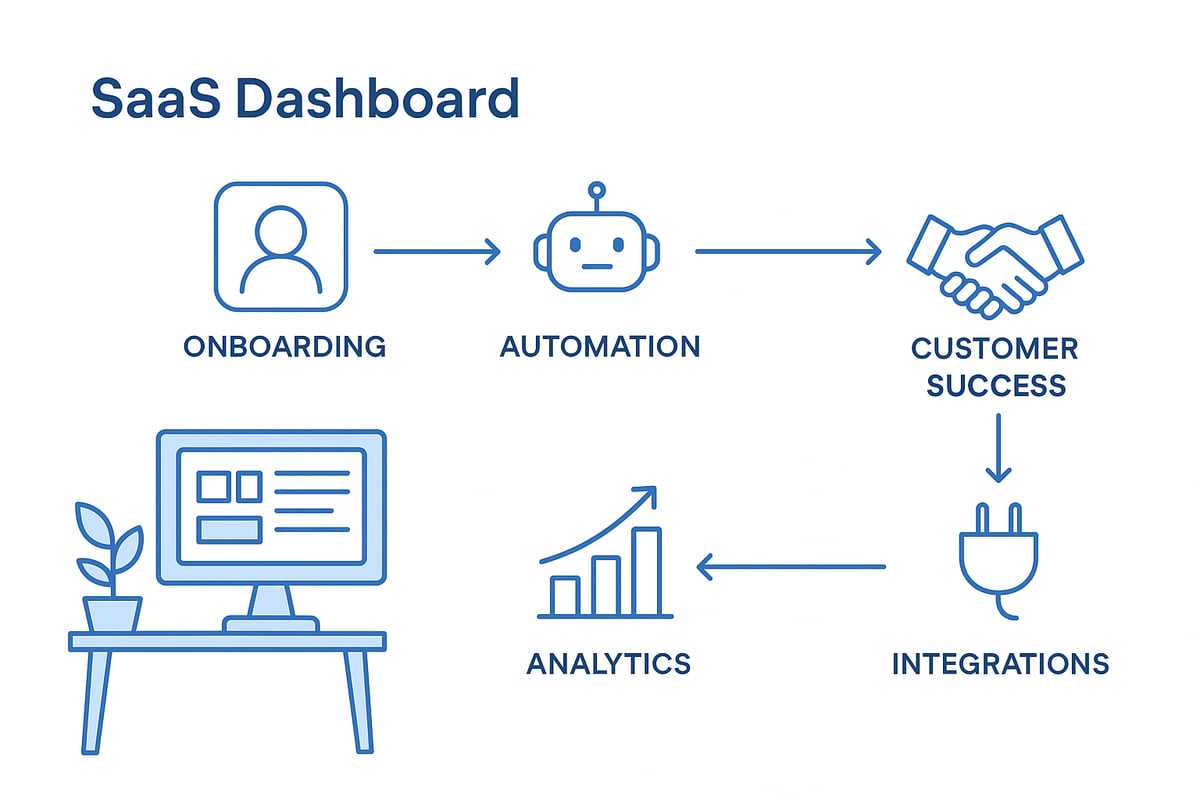
The journey to manage saas successfully begins with onboarding. A frictionless onboarding process is essential, as it sets the tone for the entire customer relationship. Studies show that 80% of users drop off when onboarding is confusing or slow.
To avoid this, SaaS teams should map out every touchpoint in the user journey. Use automated workflows to reduce manual steps. Interactive tutorials, tooltips, and in-app guidance help users get value fast.
Consider offering self-service resources, such as video walkthroughs or a knowledge base. These tools empower users to solve problems independently and improve retention. Personalized onboarding flows, tailored to different customer segments, can further enhance engagement.
Shorter time-to-value means users are more likely to stick around. Track onboarding metrics to identify bottlenecks and optimize the process. Some companies use onboarding checklists to ensure no steps are missed.
By prioritizing a smooth onboarding experience, you lay the foundation to manage saas retention and customer satisfaction. Remember, a great first impression drives long-term loyalty and reduces churn.
Step 2: Automating Operations and Scaling Efficiently
To manage saas at scale, automation is no longer optional. AI-driven tools now handle support tickets, billing, monitoring, and routine maintenance. This automation frees up valuable human resources, allowing teams to focus on strategic growth.
Choose scalable infrastructure, such as cloud-native or serverless platforms. These options allow seamless scaling as user demand fluctuates. Automation tools also help optimize cloud costs, ensuring that resources are allocated efficiently.
Implement continuous integration and deployment (CI/CD) pipelines to streamline releases and reduce downtime. Automated testing and monitoring ensure that updates do not disrupt the user experience.
Cost optimization is another benefit. Automated resource scaling prevents overspending, while AI-based analytics identify underutilized assets. This approach helps manage saas expenses and keeps the business agile.
Operational automation also improves service reliability. Proactive monitoring tools detect issues before they impact customers, ensuring high uptime and trust. Investing in these technologies future-proofs your SaaS as the market evolves.
Step 3: Enhancing Customer Success and Reducing Churn
Customer success is at the heart of every effort to manage saas for growth. As competition intensifies, proactive support and engagement are critical. Dedicated customer success teams monitor user health, identify risks, and intervene before problems escalate.
Adopt customer health scoring models to predict churn. These models use product usage, support interactions, and feedback to flag at-risk accounts. Personalized communication, such as tailored emails or webinars, helps keep users engaged.
Automated follow-ups and check-ins show customers that you value their success. Use feedback surveys to gather insights and continuously refine your service. SaaS businesses with robust customer success programs report a 30% reduction in churn.
Offer multiple support channels, including live chat, email, and community forums. Make it easy for customers to find help when they need it. Regular business reviews with key accounts strengthen relationships and uncover upsell opportunities.
By placing customer success at the core, you manage saas churn proactively and foster long-term loyalty. Satisfied customers become brand advocates and drive organic growth.
Step 4: Leveraging Data for Continuous Improvement
Data is the engine that powers efforts to manage saas performance. Real-time analytics dashboards provide instant visibility into product usage, customer behavior, and business health. Set up these dashboards to monitor key metrics and spot trends early.
A/B testing and feature flagging enable rapid iteration. By testing new features with small user segments, you minimize risk and gather actionable feedback. Use customer feedback loops to refine your product roadmap and prioritize updates that deliver real value.
Collecting qualitative insights is just as important as tracking numbers. Consider leveraging tools for SaaS validation interviews to gather in-depth user feedback and guide product improvements.
Encourage teams to review analytics regularly and share findings across departments. This culture of transparency ensures everyone is aligned on goals. Use retrospective meetings to evaluate what worked and what needs adjustment.
By embedding data-driven decision making into your workflow, you manage saas growth with confidence and agility. Continuous improvement keeps your product relevant and customer-centric.
Step 5: Managing Integrations and SaaS Ecosystems
The ability to manage saas integrations is a major differentiator in 2025. Open APIs and seamless connections with other platforms add value for your customers and expand your ecosystem.
Prioritize integration capabilities in your product roadmap. Offer clear documentation and developer support to make it easy for partners to build on your platform. Strong integrations reduce customer churn, as users can tailor solutions to their workflows.
Partnering with other SaaS providers unlocks new revenue streams and broadens your reach. Consider building a marketplace or directory of certified integrations. Businesses with robust integration strategies report up to 40% higher retention.
Use monitoring tools to track integration performance and quickly resolve issues. Automated alerts can notify your team of failures before they affect end users. Regularly review integration usage data to identify popular connections and potential gaps.
By cultivating an open, flexible ecosystem, you manage saas scalability and ensure your solution remains a cornerstone in your customers’ tech stacks.
Security, Compliance, and Risk Management in Modern SaaS
As you manage saas in 2025, security, compliance, and risk management are top priorities for sustainable growth. The sophistication of threats and evolving regulations mean every SaaS leader must be proactive. A strong approach protects your customers, your reputation, and your business continuity.
Navigating Evolving Security Threats
The threat landscape for those who manage saas is constantly shifting. Attackers are using advanced tactics, and SaaS platforms are popular targets. The most common risks include phishing, ransomware, and insider threats. Zero-trust frameworks are now essential, along with multi-factor authentication for all users.
Common SaaS Threats and Mitigations
| Threat | Description | Mitigation |
|---|---|---|
| Phishing | Deceptive emails to steal access | Security awareness, email filtering |
| Ransomware | Malware locking critical data | Regular backups, endpoint protection |
| Insider Threats | Employees misusing access | Least-privilege, activity monitoring |
| Credential Theft | Stolen user logins | MFA, password management tools |
According to the Verizon DBIR 2024, 70% of SaaS breaches involve credential compromise. To manage saas securely, implement regular security assessments and keep software updated. Proactive monitoring and rapid response plans are critical for minimizing damage when incidents occur.
Meeting Global Compliance Standards
Compliance is a non-negotiable for SaaS organizations. Regulations such as GDPR, CCPA, and SOC 2 are evolving, and 2025 brings new updates and stricter enforcement. Automated compliance monitoring and reporting can reduce manual workload and audit costs by up to 40%.
Staying compliant not only reduces risk but can also be a competitive advantage. For example, companies that turn GDPR compliance into a competitive advantage for your SaaS attract trust from global customers. Document every process, encrypt sensitive data, and ensure third-party vendors meet your standards.
When you manage saas, regularly review regulatory changes and update your policies. Schedule audits, maintain detailed records, and leverage legal and security expertise to stay ahead.
Building a Culture of Security Awareness
Technical controls are only part of the puzzle. Building a culture of security awareness across your organization is vital for those who manage saas effectively. Train every employee on security best practices, including recognizing phishing attempts and securing their devices.
Key steps for security culture:
- Schedule ongoing security training sessions.
- Run incident response tabletop exercises.
- Require strong passwords and MFA for all accounts.
- Conduct regular third-party security assessments.
- Encourage reporting of suspicious activity.
A prepared team can spot threats early, reducing the likelihood of breaches. As you manage saas, prioritize communication about new risks and lessons learned from incidents. Make security a shared responsibility, not just an IT concern.
Future-Proofing Your SaaS: Innovation, Adaptability, and Scalability
Future-proofing is essential for those who want to manage saas platforms efficiently as 2025 approaches. The SaaS landscape is evolving fast, demanding innovation, adaptability, and robust scalability strategies. Teams that proactively address these pillars will position themselves ahead of the curve.
Embracing Continuous Innovation
Continuous innovation is the heartbeat of any strategy to manage saas for long-term growth. In 2025, fostering a culture of experimentation and learning is non-negotiable. Leaders should encourage teams to test, iterate, and adopt new technologies that can deliver value.
A growing trend is the integration of AI and automation, unlocking new business models and smarter workflows. According to McKinsey, leading SaaS companies now allocate 20% of their budgets to innovation, prioritizing research and development for new features and technologies.
Key ways to drive innovation include:
- Setting aside dedicated time and resources for R&D
- Encouraging cross-functional collaboration for creative problem solving
- Adopting an agile mindset to quickly launch and refine new features
The rise of AI-native SaaS growth is transforming how companies experiment and scale, making it critical to stay informed and responsive to emerging trends.
Planning for Scalability and Global Growth
Scalability is a cornerstone for any organization aiming to manage saas operations in a dynamic market. Building modular architectures allows for seamless expansion as user demand grows. This approach ensures the platform can support new features and higher loads without disrupting performance.
Global growth requires thoughtful localization and compliance with regional regulations. Localizing products, from language to payment methods, unlocks access to international markets and boosts adoption. Managing multi-region deployments and respecting data sovereignty are also essential for trust and reliability.
Sustainability is becoming a differentiator as well. Companies investing in SaaS sustainability initiatives report higher customer loyalty and operational savings, making green infrastructure a smart move for future scalability.
Scalability Checklist:
- Modular, cloud-native architecture
- Multi-region support and data compliance
- Localization for user experience
- Investment in sustainable tech
Staying Ahead of the Competition
To manage saas successfully, organizations must remain vigilant in tracking industry shifts and competitor actions. Competitive intelligence involves more than monitoring product launches; it means understanding customer preferences and anticipating market needs.
Leveraging customer insights helps teams differentiate their offerings. Frequent feedback loops, user interviews, and data-driven product decisions ensure solutions remain relevant. Building robust partner and developer communities further strengthens your ecosystem, making it harder for competitors to catch up.
Stay proactive by:
- Monitoring SaaS trends and pricing models
- Regularly benchmarking against competitors
- Engaging with developer and integration partners
Ultimately, the ability to manage saas with adaptability, innovation, and global scalability will define tomorrow’s leaders. Teams that invest in these areas will not only survive but thrive as the SaaS industry continues to evolve.
The Role of SaaS Validation in Sustainable Growth
In a rapidly evolving digital market, the ability to manage saas growth sustainably depends on one critical factor: validation. Without robust validation processes, even the most well-funded SaaS ventures risk misalignment with true market needs. As competition intensifies, mastering validation is essential for any team aiming to build resilience, scale efficiently, and secure long-term success.
Why Validating SaaS Ideas is Critical
Validating your SaaS concept before scaling is essential to manage saas risk and ensure sustainable growth. Many founders invest heavily in development only to discover a lack of genuine demand. According to CB Insights, 42% of SaaS startups fail because there is no real market need for their solution.
Validation helps teams avoid costly missteps by focusing resources on problems customers actually want solved. This approach not only saves time and money but also builds confidence in your product's direction. By validating early, you can iterate quickly, adjust your roadmap, and position your SaaS for stronger market traction.
Ultimately, the discipline to manage saas validation reduces uncertainty and lays the groundwork for scalable operations. It transforms guesswork into informed decision-making, which is especially crucial as SaaS markets become more crowded and customer expectations rise.
Strategies for Effective SaaS Validation
To manage saas effectively, adopt a systematic approach to idea validation. Start by engaging potential users through interviews and surveys. These conversations uncover pain points and reveal whether your proposed solution resonates with the target audience.
Next, consider launching a minimum viable product (MVP) or a pilot program. An MVP allows you to gather real-world feedback with minimal investment. Track usage data and engagement to identify which features deliver the most value. Analytical tools can help you interpret these signals and decide where to focus development efforts.
Incorporate continuous feedback loops into your process. Regularly analyze user behavior, run A/B tests, and use data to refine your offering. This ensures your SaaS evolves in line with customer needs and changing market conditions, making it easier to manage saas growth and adaptation.
SaaS Validation: Empowering Founders with Proven Strategies
Founders seeking to manage saas growth at scale benefit greatly from dedicated validation resources. The SaaS validation strategies for founders page offers actionable guides tailored to different strengths and business models. These resources walk you through every stage, from initial idea testing to post-launch iteration.
Real-world success stories highlight how early validation leads to better customer alignment and higher retention rates. By leveraging structured validation tools, founders can reduce uncertainty, accelerate product-market fit, and ensure their manage saas journey is built on a solid foundation.
Early and ongoing validation is not just a startup phase—it is a continuous pillar of effective SaaS management. Teams that prioritize validation are better equipped to scale, adapt, and thrive in the face of changing technology and customer expectations.