
The SaaS industry is entering a new era, and in 2026, vertical saas is emerging as the driving force behind digital transformation for specialized sectors. With its rapid growth, businesses are seeing the value of solutions built precisely for their unique challenges.
This guide unpacks what sets vertical saas apart from horizontal alternatives, explores its evolution, and reveals how it is fundamentally reshaping the way industries operate. You will discover key benefits, real-world examples, the latest trends shaping the future of industry-focused technology — and a detailed look at what building AI-native vertical saas actually requires.
If you are looking for practical strategies, proven opportunities, and actionable insights to stay ahead in this competitive landscape, read on — your roadmap to success with vertical saas starts here.
Understanding Vertical SaaS: Definition and Evolution
The software landscape is changing quickly, and vertical saas is at the center of this transformation. Unlike horizontal SaaS platforms that serve general business needs, vertical saas solutions are built for the unique requirements of specific industries.
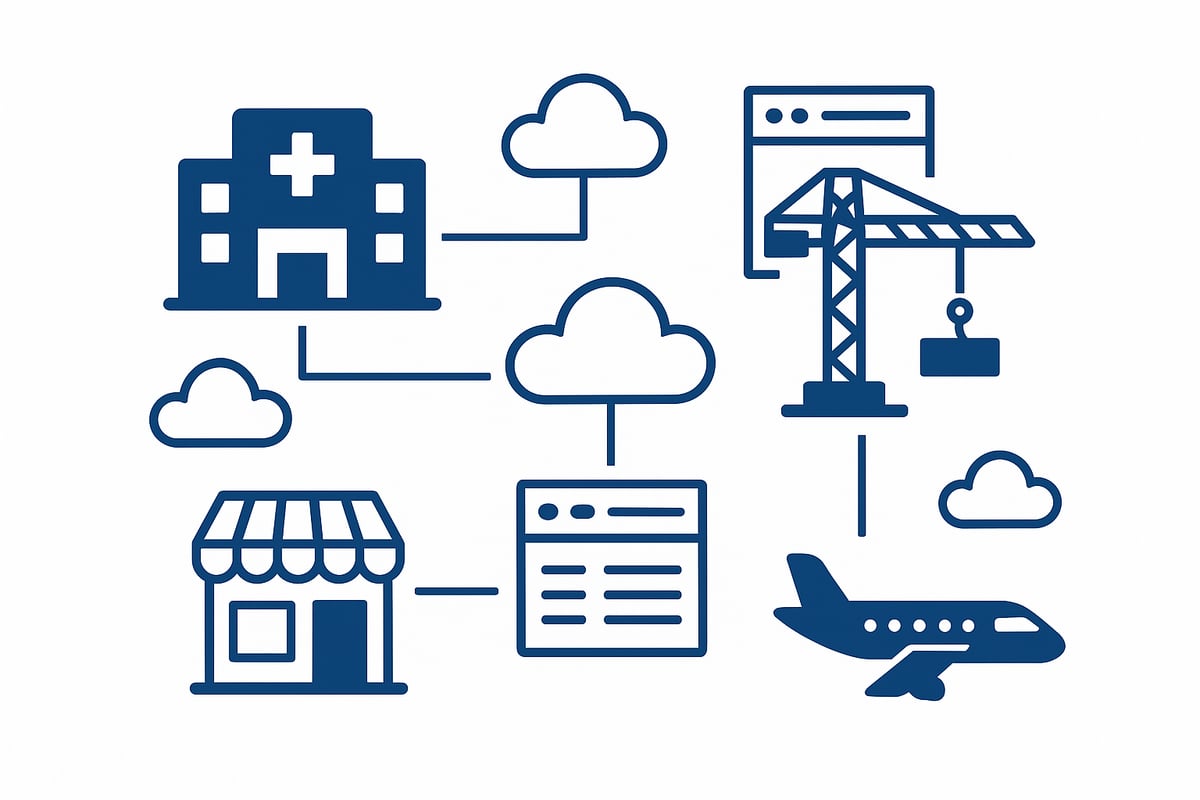
You can find vertical saas platforms in sectors like healthcare, construction, finance, retail, insurance, aerospace, real estate, logistics, and hospitality. Each one is designed from the ground up to address the workflows, regulations, and pain points of its chosen field.
What Is Vertical SaaS?
Vertical saas refers to Software as a Service products crafted for a particular industry or niche. Instead of offering generic tools, these platforms deliver deep domain expertise and workflows tailored to sector-specific needs. A hospital, for example, can use a vertical saas solution that understands HIPAA compliance and EHR integrations, while a construction firm might rely on a platform supporting project tracking and regulatory standards unique to building trades.
The evolution of vertical saas began with niche tools that solved isolated problems. As industries moved toward digital transformation, these solutions became mission-critical platforms. Today, vertical saas is driving operational efficiency and improved product-market fit across many sectors.
Growth in this area is remarkable. According to vertical SaaS market projected to reach $369.24 billion by 2033, vertical saas is expected to grow at a compound annual growth rate of 12.3 to 15.2 percent through 2034. This surge is fueled by industry demand for tailored, reliable, and scalable technology. A real-world example is Sera’s field service management platform, which integrates payment processing to meet the needs of home service businesses.
Key Characteristics of Vertical SaaS
Vertical saas products share several defining features. First, they offer built-in compliance and regulatory support — HIPAA for healthcare, PCI DSS for finance — ensuring businesses meet sector requirements from day one.
Second, these platforms provide customizable workflows and integrations that align with how each industry actually operates. High configurability combined with out-of-the-box readiness allows businesses to get started quickly, minimizing setup time and complexity.
Integration is another hallmark. Vertical saas often connects seamlessly with legacy systems and industry-standard tools, protecting prior technology investments and supporting smooth transitions. Finally, marketing and sales for vertical saas focus on a smaller, highly targeted audience — which leads to higher conversion rates and a better fit between product and customer.
Vertical SaaS vs. Horizontal SaaS: Critical Differences
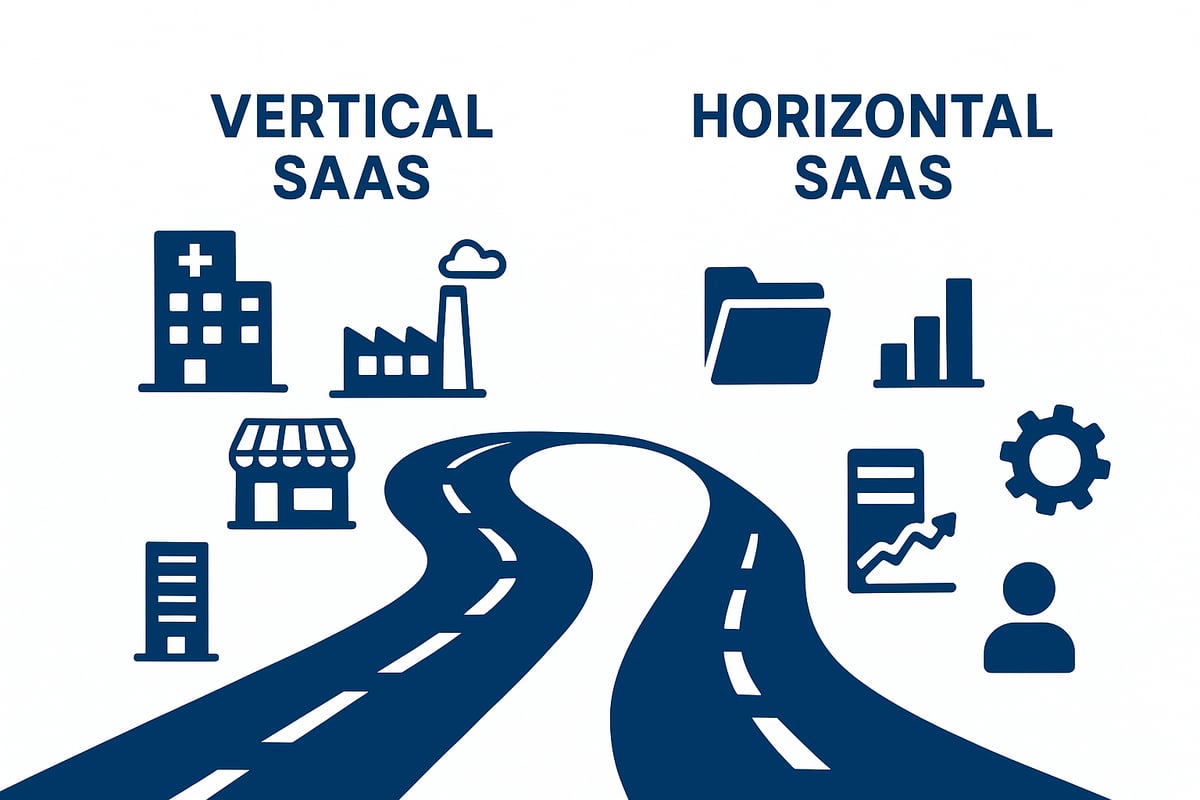
Understanding the contrast between vertical SaaS and horizontal SaaS is essential for any business evaluating software solutions in 2026. The differences extend far beyond the industries they serve, impacting everything from product design to customer relationships.
Target Audience and Market Approach
Vertical SaaS targets a clearly defined industry or niche — dental practices, construction companies, or hospitality providers. The audience is narrow, but the value proposition is highly relevant. This industry focus allows vertical SaaS providers to tailor marketing messages and sales efforts to specific pain points, improving conversion rates and reducing wasted spend.
In contrast, horizontal SaaS solutions aim to serve broad business functions like project management or CRM. Their appeal cuts across industries, leading to a larger but less targeted market — and typically higher customer acquisition costs and more generic messaging.
Functionality and Customization
A defining trait of vertical SaaS is deep, industry-driven functionality. These solutions come ready with workflows, integrations, and compliance features designed for their chosen sectors. A vertical SaaS built for healthcare will offer EHR integrations and HIPAA compliance out-of-the-box, reducing the need for extensive configuration.
Horizontal SaaS provides a broader feature set intended to fit a wide range of industries. While flexible, this approach may require significant customization to address specialized needs — slowing onboarding and decreasing satisfaction for users with specific workflow requirements.
Depth vs. Breadth
Vertical SaaS excels in depth, offering specialized tools that become mission-critical for users within a specific field. These platforms are built around the unique daily operations, regulations, and data flows of their target industry. The result is a solution that fits precisely — often replacing multiple niche tools with a single integrated platform.
Horizontal SaaS focuses on breadth. It offers a wide array of features that appeal to many types of businesses, but may lack the nuance required for complex, industry-specific workflows. This tradeoff between depth and breadth is a central consideration for any organization evaluating software in a regulated or specialized sector.
| Vertical SaaS | Horizontal SaaS | |
|---|---|---|
| Audience | Industry-specific | Cross-industry |
| Features | Deep, specialized | Broad, general |
| Customization | Minimal setup required | Often extensive |
| Retention | High | Variable |
Competitive Advantage and Customer Loyalty
The vertical SaaS approach creates a powerful competitive advantage. By embedding industry knowledge and regulatory expertise, these solutions offer insights and automation that generic platforms simply cannot match. This strategic differentiation leads to higher customer loyalty and increased upsell opportunities, as the software integrates deeply into daily workflows.
According to recent research, vertical SaaS companies now capture over 40% market share within their served industries — a testament to their growing dominance and stickiness compared to horizontal solutions.
Industry Examples and Data
Consider an ERP platform tailored for aerospace manufacturing. It delivers compliance management, supply chain tracking, and quality assurance features unique to the sector. A generic ERP may lack these specialized modules, requiring costly add-ons or manual workarounds that erode the efficiency gains the software was supposed to deliver.
Recent data shows that vertical SaaS revenue growth is outpacing traditional enterprise software, driven by superior product-market fit and customer retention. The tailored approach, combined with industry expertise, positions vertical SaaS providers as indispensable partners for modern businesses.
Key Benefits of Vertical SaaS in 2026
The rise of vertical saas in 2026 is transforming the way industries operate, compete, and grow. Unlike generic software, these solutions offer precise advantages tailored to specific sectors.
Deep Product-Market Fit and Faster Adoption
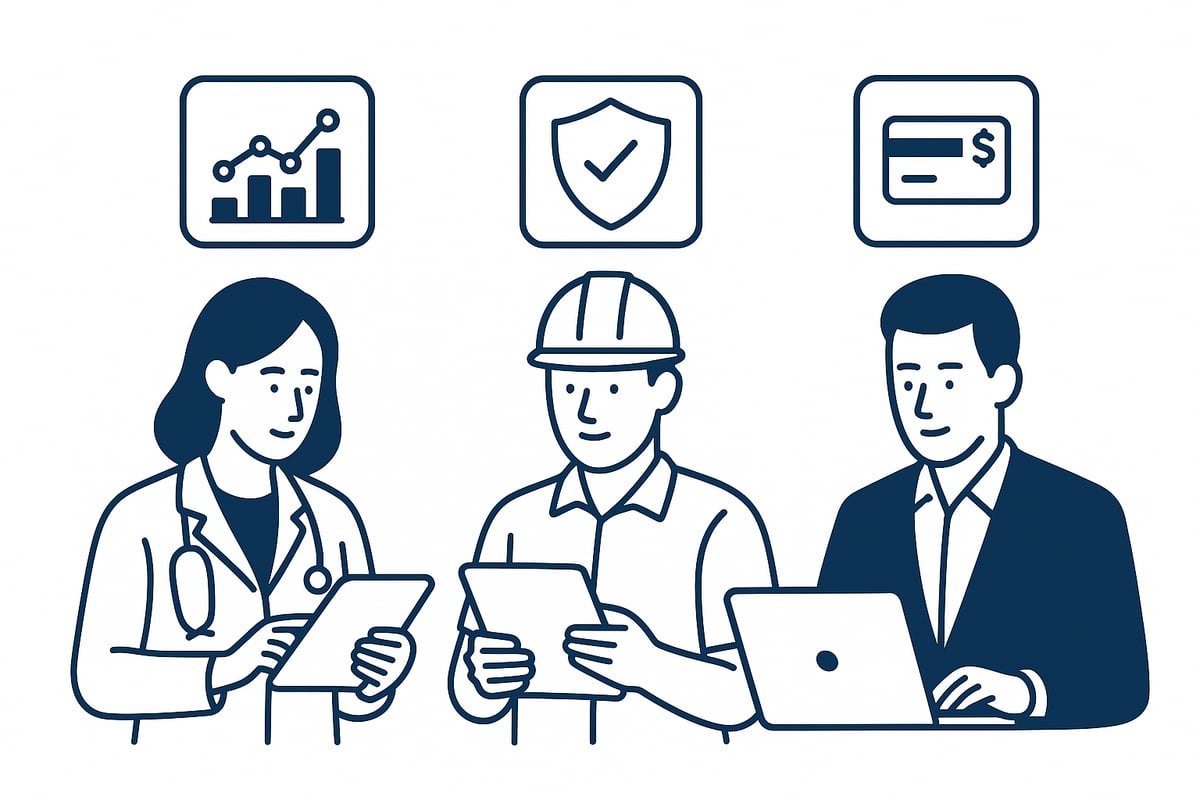
Vertical saas delivers unmatched alignment with industry workflows, making adoption smoother and faster. These platforms are designed for unique sector needs — healthcare platforms supporting EHR integrations, construction tools handling site compliance. The result is a higher product-market fit that allows businesses to onboard staff quickly without the hurdles seen with generic solutions.
- Addresses real pain points specific to the industry
- Incorporates industry regulations from day one
- Reduces training time for teams familiar with the domain
Leaner Go-to-Market Strategies
A key benefit of vertical saas is its focused approach to customer acquisition. With a well-defined target audience, marketing messages speak directly to industry pain points — tighter lead pools increase conversion rates, industry events and associations amplify credibility, and word-of-mouth spreads rapidly in specialized sectors. This lean strategy results in lower acquisition costs and higher ROI.
Operational Efficiency and Scalability
Vertical saas platforms streamline operations by offering out-of-the-box features tuned for industry workflows. Unlike horizontal tools, they require minimal customization and integrate seamlessly with existing systems. With scalability built into the architecture, vertical saas solutions can grow alongside their customers, adjusting to new requirements as industries evolve.
Enhanced Customer Retention and Expansion
Customer loyalty is a hallmark of vertical saas. Because these solutions become mission-critical, users are far less likely to switch providers. Deep integrations reduce operational friction, upsell opportunities with industry-specific modules are plentiful, and ongoing compliance updates deliver continuous value. Retention rates are significantly higher compared to horizontal tools.
Revenue Growth and Market Expansion
Vertical saas offers powerful revenue opportunities. Providers can expand into adjacent verticals or introduce new features tailored to evolving customer needs. Integrated payment processing, advanced analytics, and regulatory tools open new income streams. Research confirms that vertical SaaS revenue growth surpasses horizontal SaaS, underlining the financial advantages of industry-specific platforms.
Real-World Success Stories
Sera’s FSM platform for home services integrates payment processing tailored to field technicians, streamlining billing and compliance. Fishbowl’s inventory management software serves both manufacturing and e-commerce, expanding its impact through seamless integrations. These examples highlight how vertical saas providers generate lasting value, foster loyalty, and drive measurable outcomes for their clients.
Major Challenges Facing Vertical SaaS Providers
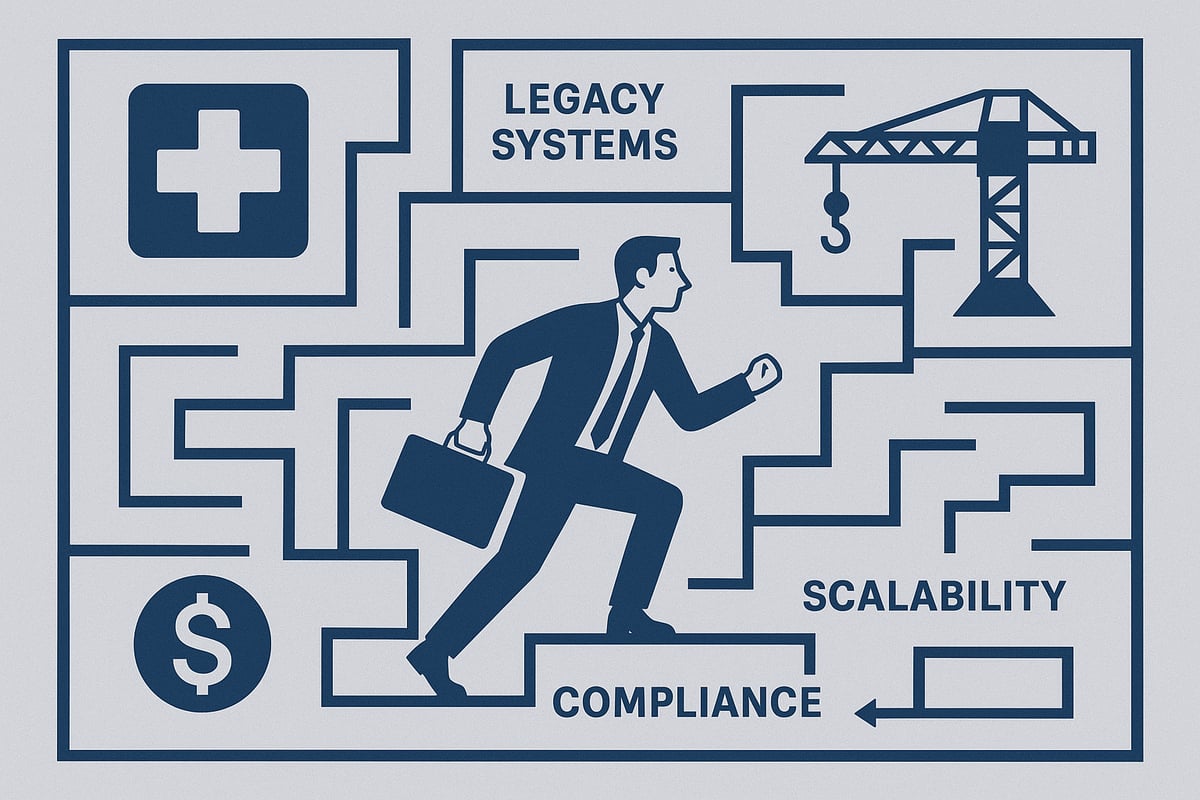
The rapid rise of vertical saas in 2026 presents significant opportunities, but it also brings a unique set of challenges. Understanding these obstacles is essential for sustainable growth and long-term success.
Competition from Legacy and Traditional Solutions
For many industries, legacy software and generic enterprise solutions have set long-standing standards. Vertical saas providers often face resistance from organizations comfortable with established workflows. Legacy vendors maintain strong brand recognition, switching costs and data migration concerns slow adoption, and some prospects perceive new vertical saas tools as a risk. Overcoming this inertia requires clear communication of tailored benefits and a robust migration strategy.
Limited Lead Pool and Market Size
Vertical saas companies operate within well-defined niches, which naturally limits the available customer base. The total addressable market is restricted by industry boundaries, qualified leads can be exhausted faster than expected, and expansion strategies may involve moving into adjacent verticals. Maintaining focus while scaling is a delicate balance unique to vertical saas.
High Expectations from SMB Customers
Small and medium-sized businesses now expect the polish and convenience of consumer-grade software, even from specialized vendors. For vertical saas providers, this means delivering seamless, integrated experiences without sacrificing industry-specific depth. SMBs demand intuitive interfaces and rapid onboarding, integrated payments and analytics are often required from day one, and churn risk is high if expectations are not met.
Regulatory and Compliance Complexity
Every industry brings its own regulatory landscape. Healthcare, finance, and insurance all require strict adherence to evolving standards — staying current with HIPAA or PCI DSS is essential, compliance failures can result in fines or reputational damage, and continuous updates and audits are necessary investments. For many providers, turning compliance into a competitive advantage is the differentiator. Explore how SaaS compliance as competitive advantage can set vertical saas solutions apart in regulated sectors.
Customization and Scalability Demands
Vertical saas clients often require customized workflows, integrations, and reporting to match their unique business needs. Deep customization can lead to technical debt, modular API-first architectures are increasingly vital, and balancing bespoke features with product stability is a persistent challenge. Successful vertical saas offerings prioritize flexibility while maintaining a strong foundation for future growth.
Solutions and Best Practices
Leading vertical saas providers embrace several strategies to overcome these challenges: differentiate with unique features, deep integrations, and superior customer service; build stickier platforms by embedding payments and value-added services; and form partnerships and ecosystem integrations to expand reach and deliver end-to-end solutions.
Trends and Innovations Shaping Vertical SaaS in 2026
The vertical saas market is advancing at an extraordinary pace, with 2026 set to be a pivotal year for industry-specific software innovation.
AI and Machine Learning Integration
Artificial intelligence is revolutionizing vertical saas by enabling predictive analytics, automation, and smarter decision-making tailored to each industry. Vendors now train AI models on sector-specific data, allowing for granular forecasting, risk assessment, and workflow automation. In insurance, AI-driven claims management platforms speed up approvals and flag anomalies in real time. In healthcare, machine learning enables patient risk scoring and personalized care recommendations.
A critical distinction is emerging between AI-assisted vertical saas (where AI helps users perform tasks) and AI-native vertical saas (where AI performs the tasks and humans review outputs). These two product types require fundamentally different design, pricing, and support approaches — explored in depth in the section below.
Embedded Payments and Financial Services
Seamless payment processing is becoming a core feature of modern vertical saas, turning software platforms into financial hubs. By embedding payments directly into industry workflows, vendors simplify billing, reduce friction, and open new revenue streams. Sera’s field service solution enables instant invoicing and faster approvals — embedded finance not only enhances customer experience but also boosts retention, as clients rely on vertical saas for mission-critical transactions.
API-First and Modular Architectures
API-first and modular designs are now standard for vertical saas platforms, enabling rapid integration with legacy systems and popular industry tools. This flexibility allows clients to customize their tech stacks without costly redevelopment. Manufacturers can integrate inventory, shipping, and compliance modules as required — and remove them as needs change. This approach increases adoption by ensuring platforms remain adaptable and future-proof.
Industry Cloud Platforms
Industry cloud platforms are rising, combining SaaS, PaaS, and analytics into cohesive solutions tailored for specific sectors. Healthcare clouds now integrate electronic health records, telehealth, and compliance modules, reducing the need for multiple vendors. Vertical saas providers are positioned as strategic partners, delivering holistic value that generic software cannot match.
Data Security and Compliance Automation
With growing regulatory demands, vertical saas must prioritize data security and automated compliance. Platforms are embedding privacy features and real-time compliance checks to address sector-specific requirements like HIPAA, PCI DSS, and GDPR. Automated alerts, audit trails, and encryption are now built-in — reducing risk for clients and turning compliance into a selling point rather than a burden.
Expansion into Adjacent Verticals
A major trend in 2026 is the expansion of vertical saas into related industries. Spa software providers moving into salons and wellness centers is one example — vendors leverage deep domain expertise to serve adjacent markets, increasing total addressable market without diluting product focus.
Market Consolidation and Partnerships
The vertical saas landscape is seeing heightened mergers, acquisitions, and strategic partnerships as vendors seek to offer end-to-end solutions. According to vertical SaaS M&A activity reaching its highest level since 1Q22, the market is attracting significant investment and partnership activity. These moves enable vertical saas providers to scale faster and deliver greater value to clients.
Growth Projections and Market Data
Vertical saas is projected to outpace horizontal alternatives, with growth rates between 12.3 and 15.2 percent CAGR through 2034, according to Cognitive Market Research. As vertical saas continues to evolve, its role as a catalyst for digital transformation and operational excellence will only strengthen — making it essential for businesses seeking a competitive edge.
Designing AI-Native Vertical SaaS: A Different Problem
The first generation of AI features in SaaS products was additive: existing workflows were preserved and an AI assistant was added alongside them. The user still performed the task; the AI offered suggestions or surfaced relevant information that the user could choose to act on. This produced a generation of products that are AI-assisted rather than AI-native — products that feel like what they are: existing software with a generative layer added on top.
Vertical saas built for AI-native workflows is a fundamentally different design problem. In an AI-native workflow, the AI performs the task and the human reviews the output — not assists with the task, not suggests how it should be done, but executes it and delivers a result that the human evaluates and approves or corrects. This inversion of the human-AI relationship changes the design requirements in every dimension: UX, pricing, and support.
AI-Assisted vs. AI-Native: Why the Distinction Matters for Market Position
A product that is AI-assisted can be built by adding features to an existing product architecture. A product that is AI-native requires a different architecture, a different interaction model, a different pricing structure, and a different support model. This means that an established horizontal SaaS platform adding AI features is not building the same product as a vertical AI-native startup building from scratch. The platform is adding an AI layer to a task-execution interface. The startup is building a review-and-approval interface on top of an AI execution layer.
These are different products for different buyers at different stages of AI adoption. The AI-assisted product serves buyers who are not yet ready to hand task execution to an AI. The AI-native product serves buyers who are ready to deploy AI for task execution and need the infrastructure to review outputs at volume. The market for the second product is currently smaller but growing faster — and the founders who design for it from the start will not be retrofitting an AI-assisted product later. They will have built the right interface for the workflow from the beginning.
What the Output-Review Model Requires from UX
In a task-execution workflow, the user is the primary actor. The interface is designed for efficient task performance: the right controls in the right places, a logical sequence of steps, clear feedback on progress. The user’s cognitive load is the primary UX concern because the user is doing the work.
In an output-review workflow, the AI is the primary actor. The user’s job is to evaluate what the AI produced and decide whether it is correct, needs adjustment, or needs to be regenerated. The interface must be designed for fast, accurate evaluation — a different design problem than fast, accurate task execution.
This requires UI patterns that do not exist in the standard SaaS design vocabulary:
- Confidence indicators calibrated to the specific type of error most likely in a given output type
- Comparison views that show the AI output alongside the source material it was derived from
- Inline correction tools that let the reviewer modify the output without leaving the review flow
- Escalation mechanisms that route low-confidence outputs to a slower, higher-attention review path
These are not features to be added to an existing interface. They require rethinking the primary interaction model from the assumption that the human is reviewing rather than doing.
Pricing AI-Native Vertical SaaS Correctly
Task-execution SaaS is priced on the number of people doing the task — per-seat pricing, because each seat represents a human performing work. Output-review vertical saas should be priced on the volume of outputs reviewed or outcomes produced, because the constraint on the customer’s value is no longer the number of human hours available. The AI has removed that constraint. The new constraint is the volume of outputs that can be reviewed and approved to a quality standard.
Per-seat pricing applied to an output-review workflow systematically undercharges high-volume customers and makes the pricing model illegible to buyers evaluating cost against value. A customer processing a thousand outputs per week with two reviewers is getting dramatically more value than a customer processing fifty outputs per week with the same two seats — per-seat pricing captures none of this difference.
The right pricing model for output-review vertical saas is typically volume-based, outcome-based, or a hybrid. “Per output reviewed” is the cleaner model because it ties revenue directly to value delivered, scales naturally with usage, and aligns vendor incentives with customer success: the vendor earns more when the customer reviews more outputs, which happens when AI output quality is high enough to work at volume. This alignment is not present in per-seat pricing.
Building the Right Support Model for AI-Native Workflows
Task-execution SaaS support is primarily about user error: “How do I do X?” The support model is documentation, help centers, and onboarding flows that teach users the product’s interaction patterns.
Output-review SaaS support is primarily about AI output quality. The support question is “the AI produced X, but the correct answer is Y — what went wrong and how do I prevent it?” This requires support staff who have domain knowledge about the AI’s failure modes, access to the specific input and context that produced the problematic output, and the ability to diagnose whether the failure was a model issue, a prompt issue, an input quality issue, or an edge case in the domain.
Most SaaS support teams are not equipped for this conversation because it was not historically required. Building an AI-native vertical saas product without investing in the support model it requires produces a product that handles AI failures poorly — and in an output-review workflow, AI failure is the primary support scenario.
Five Design Decisions to Make Before You Build
The design decisions that determine whether a vertical saas product is genuinely AI-native or merely AI-assisted are made early and are expensive to reverse:
- Decide whether the human is the primary actor or the reviewer before designing anything. Document the decision explicitly so every subsequent UX, pricing, and support decision is made consistently with it.
- Design the review interface before the generation interface. The generation interface is typically the simpler design problem. The review interface — where the human evaluates, corrects, and approves — is the primary workflow and where the product succeeds or fails in daily use.
- Set your pricing model based on the value unit that scales with customer outcomes — outputs reviewed, decisions made, documents processed, cases resolved. Test it with early customers by asking: “Does your cost from our product increase when you get more value from it?” If the answer is no, the pricing model is not capturing delivered value at scale.
- Hire support staff with domain knowledge before launching. An AI-native vertical saas product in legal document review requires support staff who understand legal documents well enough to diagnose AI errors. The domain knowledge is not optional — hiring it after launch in response to complaints is too late.
- Build an error taxonomy for your domain before launch. The AI errors that occur in your domain are predictable enough to categorize. Documenting error types before launch allows the support team to diagnose them faster, allows the product team to prioritize which errors to fix first, and allows customers to understand which outputs require closer review.
Actionable Strategies for SaaS Founders and Decision-Makers
Achieving growth and sustainability in the vertical saas ecosystem requires a blend of innovation, industry expertise, and tactical execution. The following guide explores proven approaches to help you validate, launch, and scale your vertical saas platform effectively.
Validating Vertical SaaS Ideas Before Development
Before building a vertical saas product, validation is essential. Start by conducting in-depth market research to understand industry pain points, compliance needs, and customer workflows. Engage with prospective users through interviews, surveys, and online communities to uncover real-world challenges.
For a step-by-step approach, consider following vertical SaaS validation steps, which outline how to rigorously test your idea before committing resources. Additionally, understanding why market research is crucial for SaaS can help you prioritize features that matter most to your target industry.
Building Deep Domain Expertise
Establishing credibility in vertical saas hinges on deep domain expertise. Recruit team members with firsthand experience in your target industry. Form advisory boards with sector veterans who can provide guidance on regulatory requirements and evolving trends. Stay engaged with industry associations, attend niche conferences, and monitor relevant publications — this commitment allows your vertical saas platform to anticipate changes and deliver features that resonate with decision-makers.
Designing for Integration and Customization
Integration is a cornerstone of vertical saas success. Your platform should connect seamlessly with legacy systems, ERPs, and industry-standard tools. Prioritize an API-first architecture to enable easy customization and future-proof scalability. Offer modular features that let clients tailor workflows to their unique processes, with templates and onboarding guides specific to your vertical. If you are building AI-native vertical saas, design the review interface first — before the generation interface — and decide explicitly whether the human is the primary actor or the reviewer before writing a single line of UX code.
Crafting Focused Go-to-Market Strategies
A well-defined go-to-market strategy is vital for vertical saas. Target niche marketing channels — industry publications, trade shows, sector-specific online forums. Develop thought leadership through whitepapers and case studies featuring early adopters. Leverage word-of-mouth within tight-knit industries, where referrals carry significant weight. By aligning messaging and sales efforts with the language and priorities of your chosen vertical, your platform stands out and attracts high-conversion leads.
Managing Customer Expectations and Reducing Churn
Meeting and exceeding customer expectations drives retention in vertical saas. Deliver a polished, consumer-grade user experience that feels intuitive and responsive. Integrate essential features — compliance tools, embedded payments — to provide a one-stop solution. Proactive onboarding and dedicated support ensure customers feel valued from day one. For AI-native vertical saas, ensure your support team has the domain knowledge to diagnose AI output errors, not just product usage questions.
Scaling and Expanding into New Verticals
Growth in vertical saas often comes from expanding into adjacent markets. Identify industries with similar workflows or compliance requirements and adapt your core platform to serve them while maintaining focus on your primary sector. Build reusable modules and integration points to streamline expansion. Monitor emerging trends — particularly the shift toward AI-native workflows — to spot early opportunities before the market is saturated.
Measuring Success and Iterating Rapidly
Continuous improvement is essential for vertical saas longevity. Track key metrics: adoption rates, customer retention, upsell and cross-sell performance, and Net Promoter Score. For AI-native products, also track AI output quality metrics — error rates by type, reviewer correction rates, and throughput per reviewer — as these directly determine whether your pricing model and support model are working. Encourage regular customer feedback and foster a culture of rapid iteration. This commitment to measurement and adaptation ensures your vertical saas platform remains competitive and relevant as the market evolves.