
In 2026, the SaaS customer landscape is more competitive than ever, with rising expectations and little room for error. Companies can no longer rely on basic support—customer success is now the key to sustainable growth and long-term retention.
This essential guide dives deep into the strategies, metrics, and technologies shaping SaaS customer success in 2026. You will discover how top brands leverage customer success to reduce churn, boost satisfaction, and maximize lifetime value.
Explore the evolution of SaaS customer success, uncover key trends, and gain actionable frameworks to future-proof your business. Ready to transform your approach? Start implementing these insights to secure your competitive advantage.
The Evolution and Importance of SaaS Customer Success
In 2026, the landscape for every saas customer is fundamentally different from just a few years ago. SaaS customer expectations have soared, and companies must rethink their approach to ensure lasting relationships. Understanding the evolution of saas customer success is now essential for driving growth, innovation, and loyalty.
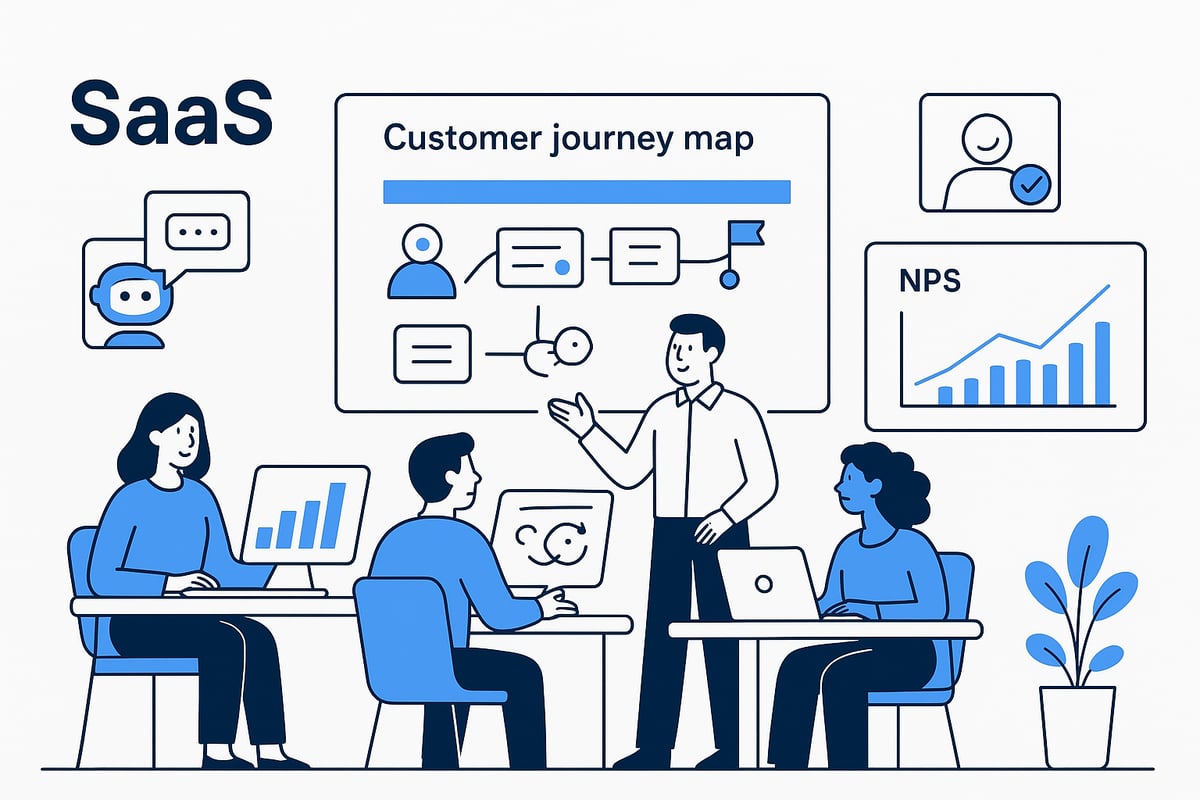
Defining SaaS Customer Success in 2026
SaaS customer success in 2026 is a distinct discipline, setting itself apart from traditional customer support or account management. While support focuses on resolving issues after they arise, saas customer success takes a proactive stance, anticipating needs and guiding users throughout the entire lifecycle.
| Traditional Support | Modern SaaS Customer Success |
|---|---|
| Reactive problem-solving | Proactive engagement |
| Isolated to issue resolution | Spans onboarding to advocacy |
| Limited product feedback | Drives product innovation |
This shift means the saas customer journey is now mapped from onboarding to renewal, with touchpoints designed for education, adoption, and advocacy. Teams invest heavily in customer education, using onboarding programs and in-app guidance to empower users from day one.
SaaS customer success is also recognized as a growth engine. By analyzing usage data, companies identify adoption gaps and proactively recommend features. This not only boosts retention, but also fuels upsell opportunities and higher customer lifetime value.
Moreover, feedback from the saas customer is fed directly into product development, creating a continuous improvement loop. According to Zendesk, over 70% of consumers will switch providers after multiple poor experiences, making this proactive stance vital.
Take Slack and Zendesk as examples. Their relentless focus on customer outcomes, education, and feedback has helped them build loyal, long-term user bases. The result is a culture where every saas customer feels heard, valued, and empowered.
Why Customer Success Is Mission-Critical for SaaS
The saas customer revenue model is built on subscriptions, making renewals and expansions the lifeblood of the business. This means that reducing churn is not just beneficial, but absolutely mission-critical. In crowded markets, delivering superior saas customer success becomes a true differentiator.
Key metrics such as Net Promoter Score (NPS), Customer Satisfaction (CSAT), and Customer Lifetime Value (CLTV) are directly influenced by the quality of saas customer success. Companies that excel here see improved retention, higher upsell rates, and a stronger reputation. For a deeper dive into these essential metrics, see Customer Success Metrics for SaaS.
Internally, a robust saas customer success program provides insights for product teams, aligns marketing with real user needs, and empowers sales with stories of customer wins. Product roadmaps are increasingly shaped by real saas customer feedback, and support tickets decrease as users become more confident.
Consider this: more than half of customers today base their purchasing decisions on expected service quality, according to Zendesk. SaaS companies that prioritize customer success are able to meet and exceed these expectations, turning every satisfied user into a potential advocate.
In essence, saas customer success is no longer just about keeping users happy—it is the foundation for sustainable growth, innovation, and competitive edge in the SaaS industry.
Key Trends Shaping SaaS Customer Success in 2026
SaaS customer success in 2026 is evolving rapidly, shaped by groundbreaking technologies and shifting user expectations. To stay ahead, leaders must understand the trends transforming how SaaS customer teams deliver value and drive loyalty.
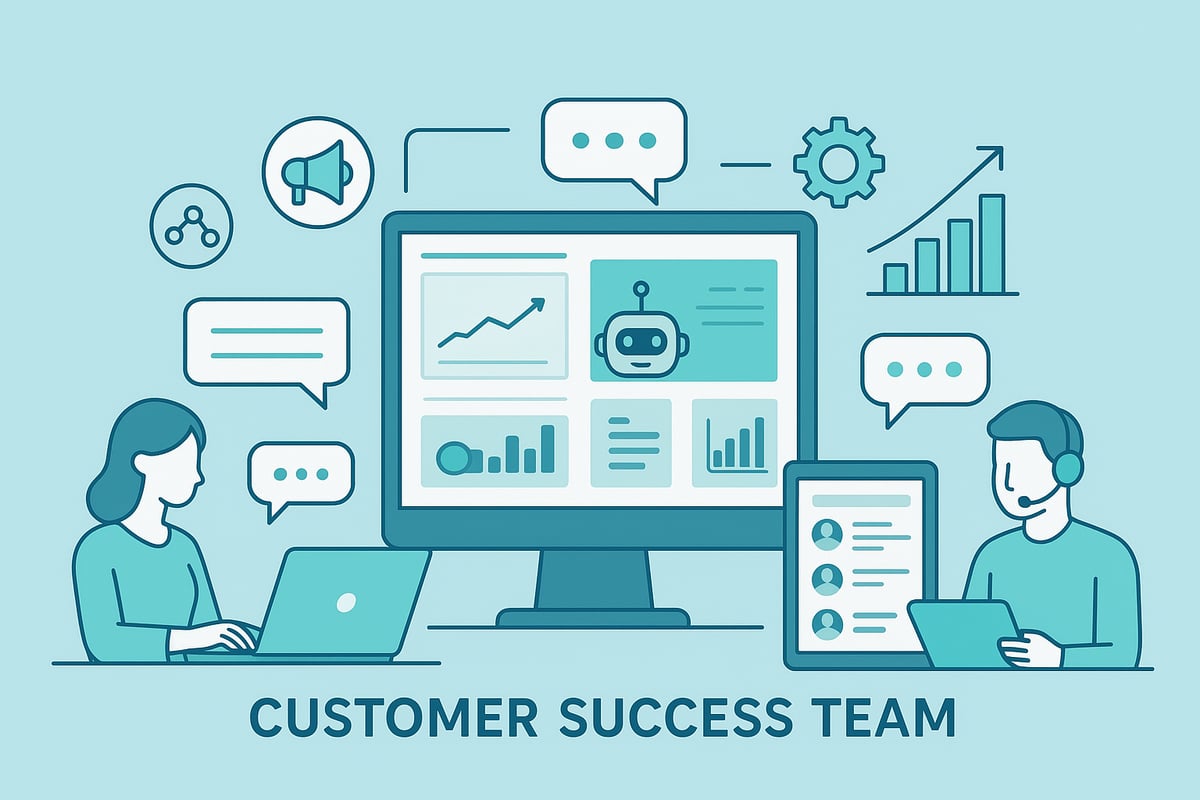
AI, Automation, and Personalization
AI is revolutionizing how SaaS customer success teams operate. In 2026, AI-powered chatbots and virtual success managers provide around-the-clock support, handling common questions and freeing human agents for complex cases. Automation is now central to onboarding, health scoring, and renewal workflows, reducing manual effort and ensuring consistency.
Generative AI assists agents with real-time, context-aware responses, enhancing the quality and speed of support. Personalization at scale is possible by integrating data from every touchpoint, allowing SaaS customer teams to tailor communications and recommendations for each user. For example, AI-driven product tours are boosting feature adoption rates across the industry. To learn more about how AI is shaping the future of SaaS customer operations, see AI in SaaS Industry 2026.
Omnichannel Engagement and Unified Data
Today’s SaaS customer expects seamless support, no matter where they reach out. Omnichannel engagement centralizes interactions across email, chat, social, and in-app messaging. This approach prevents duplicate tickets and ensures consistent experiences.
Unified customer profiles give agents full context, enabling them to resolve issues faster and with greater accuracy. According to Zendesk, 7 in 10 users expect agents to know their history and situation. SaaS customer teams leveraging omnichannel ticketing systems are seeing a reduction in missed or repeated issues, ultimately driving higher satisfaction and retention.
Proactive and Predictive Customer Success
The modern SaaS customer success strategy is proactive, not reactive. Predictive analytics help identify accounts at risk of churn before issues escalate. Teams can then intervene early, offering targeted support or resources.
Proactive outreach also includes notifying customers about bugs, updates, or helpful usage tips before they encounter problems. Automated health checks and usage alerts are becoming standard, helping SaaS customer teams improve retention and build trust through transparency and timely action.
Customer-Led Growth and Community Building
Customers today are more than users, they are partners in shaping SaaS offerings. SaaS customer success teams are empowering advocates and co-creators by establishing strong feedback loops and active user forums.
Building engaged communities allows users to support each other, share best practices, and contribute new ideas. These community insights help prioritize features and refine products. SaaS customer companies that tap into user advocacy see increased loyalty and organic growth, as satisfied customers become champions within their networks.
Scalability and Agility in Support Operations
As SaaS customer bases grow, scalability and agility are critical. Support models must adapt quickly to accommodate surges in demand, especially during product launches or rapid expansion phases.
Cloud-native tools provide the flexibility to scale operations without sacrificing quality. Agile support teams are trained to respond efficiently, ensuring that every SaaS customer receives timely, high-quality assistance. This adaptability is essential for maintaining satisfaction and competitive advantage as the market evolves.
Building a Modern SaaS Customer Success Framework
Building an effective saas customer success framework in 2026 means going far beyond traditional support. SaaS leaders must design holistic systems that guide users from onboarding to advocacy, ensure alignment across teams, and continuously adapt to user needs. A modern framework integrates the customer journey, data-driven health assessments, and real-time feedback, placing the saas customer at the center of every decision.
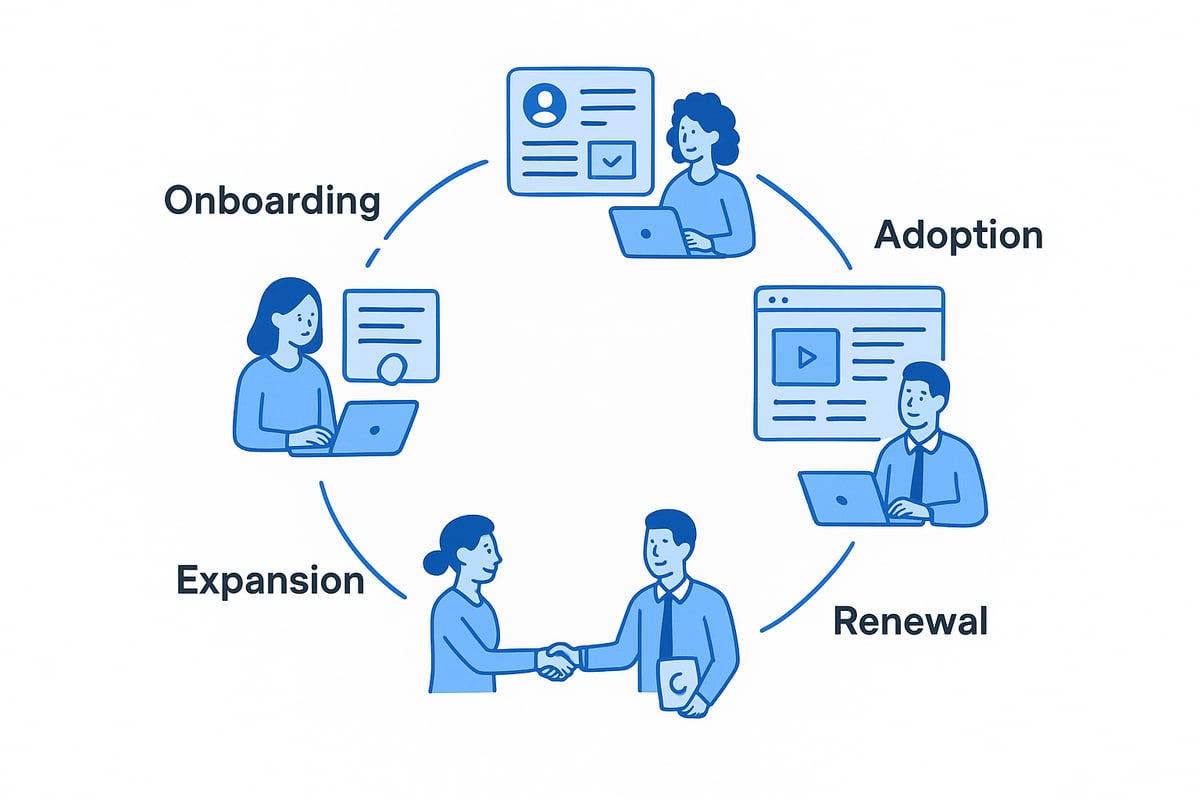
Mapping the Customer Journey and Lifecycle
A robust saas customer success framework starts with mapping the entire customer journey. This means identifying every key touchpoint, from initial onboarding and feature adoption through to expansion, renewal, and turning users into advocates. Visualizing this journey helps teams understand where users find value and where friction may occur.
Here is a simplified table of typical journey stages:
| Stage | Key Activities | Success Metrics |
|---|---|---|
| Onboarding | Guided setup, training | Time to value |
| Adoption | Usage milestones, engagement | Feature adoption |
| Expansion | Upsell, cross-sell | Expansion MRR |
| Renewal | Contract extension | Renewal rate |
| Advocacy | Referrals, testimonials | NPS, advocacy rate |
To optimize every touchpoint, leading companies leverage frameworks for SaaS products that align each journey stage with measurable outcomes. This approach ensures the saas customer receives consistent value and experiences fewer hurdles, directly impacting satisfaction and retention.
Cross-Functional Alignment and Breaking Down Silos
No saas customer success strategy thrives in isolation. True impact comes from aligning product, sales, marketing, and support teams around shared customer outcomes. Cross-functional alignment eliminates silos that often cause miscommunication, inconsistent messaging, or duplicated efforts.
Common signs of silos include:
- Inconsistent onboarding experiences
- Conflicting communications or promises
- Delayed response to customer issues
To break down these barriers, establish unified goals and KPIs across teams. Regular cross-departmental meetings and shared platforms ensure everyone is focused on the same saas customer outcomes. Integrated customer experience (CX) teams often outperform siloed organizations, delivering seamless journeys and higher retention rates.
Customer Health Scoring and Segmentation
Another vital component of a modern framework is customer health scoring. By defining and tracking health indicators like product usage, engagement frequency, support ticket volume, and NPS, SaaS companies can proactively address risks and opportunities.
Key health indicators include:
- Daily/weekly active usage
- Frequency of support interactions
- Customer satisfaction survey results (CSAT, NPS)
- Account expansion or contraction trends
Segmenting the saas customer base allows teams to personalize interventions. For example, high-value accounts at risk of churn may receive dedicated outreach, while power users might be nurtured for advocacy programs. Behavioral analytics help pinpoint upsell opportunities and identify customers needing extra support.
Feedback Loops and Continuous Improvement
Continuous improvement is at the heart of saas customer success. Modern frameworks encourage regular feedback collection through surveys, community forums, and direct interviews. This feedback closes the loop between customer needs and business decisions.
Effective feedback channels:
- In-app surveys and NPS polls
- User community forums
- One-on-one user interviews
Acting on feedback helps refine product features, support processes, and onboarding flows. Communicate these improvements back to the saas customer base to reinforce trust and demonstrate commitment to their success. Companies that iterate based on customer insights see measurable gains in loyalty, lower churn, and higher lifetime value.
A modern saas customer success framework is dynamic, data-driven, and deeply integrated into every part of the organization. By focusing on journey mapping, alignment, health scoring, and feedback, SaaS leaders can deliver lasting value and set the stage for growth.
Step-by-Step Guide to SaaS Customer Success in 2026
In 2026, leading saas customer teams rely on structured, actionable frameworks to deliver consistent value across the user journey. This step-by-step guide breaks down the strategies, tools, and best practices that modern SaaS companies use to drive retention, satisfaction, and growth. By following these steps, your organization can create a future-ready saas customer success program that adapts to evolving expectations.
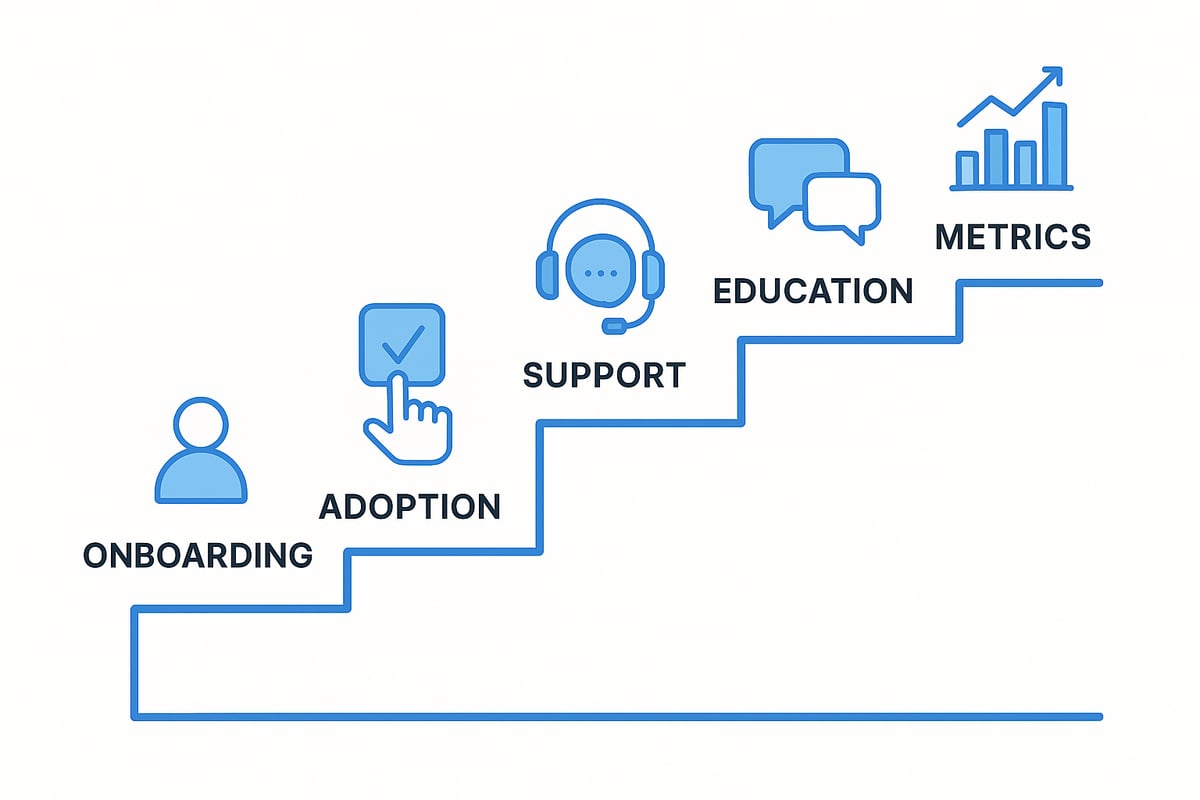
Step 1: Discover How Customers Engage With Your Product
Understanding real-world usage is the foundation of saas customer success. Begin by deploying behavioral analytics to monitor key actions, session replays, and navigation paths. Offer free trials or freemium models to observe how users interact without barriers.
- Use heatmaps to identify popular features
- Track drop-off points during onboarding
- Analyze feedback from trial users
This data helps your saas customer team personalize onboarding and recommend features that drive adoption. Companies leveraging session replay tools can rapidly spot friction points, enabling targeted improvements that boost satisfaction.
Step 2: Coordinate CX Across Departments to Break Down Silos
Silos can undermine the entire saas customer journey. Build cross-functional teams that include sales, product, support, and marketing. Standardize messaging and ensure that handoffs between departments are seamless.
- Hold regular cross-team alignment meetings
- Share unified goals and KPIs
- Implement a centralized CRM
For a deeper dive on aligning operations with retention and support, explore Managing SaaS growth. By fostering collaboration, your saas customer experience will be more consistent, driving higher loyalty and renewals.
Step 3: Design Efficient, Delightful Onboarding Processes
First impressions are critical for every saas customer. Automate onboarding checklists, guided tutorials, and milestone tracking to reduce time to value. Use in-app messaging and interactive tours to help users explore features at their own pace.
- Create role-based onboarding paths
- Send proactive tips and reminders
- Assign dedicated success managers for enterprise clients
Slack’s onboarding workflow is a great example, using interactive bots to engage new saas customer accounts and boost early engagement.
Step 4: Reduce Customer Friction and Build Delight Into Your Product
Eliminating barriers is essential for saas customer retention. Identify pain points by mapping the customer journey and collecting feedback. Proactively address known issues, communicate transparently about bugs or outages, and keep users informed.
- Offer a self-service knowledge base
- Push real-time notifications for fixes
- Surprise users with value-add features
Delightful touches such as personalized tips or bonus upgrades can turn a standard saas customer experience into a memorable one, increasing advocacy.
Step 5: Educate Customers and Drive Product Adoption
Education is a core pillar of saas customer success. Build comprehensive knowledge bases, host webinars, and offer role-specific training modules. Personalize learning paths based on user objectives and encourage peer-to-peer learning in community forums.
- Update educational content regularly
- Use interactive tutorials for new features
- Measure engagement with training resources
Well-educated saas customer users are more likely to adopt advanced features and remain loyal over the long term, reducing churn.
Step 6: Improve Customer Support and Success Touchpoints
Responsive support is crucial for a positive saas customer experience. Integrate AI-powered chatbots to handle common queries instantly and escalate complex issues seamlessly to human agents. Centralize all conversations and tickets to provide full context during support interactions.
- Enable omnichannel support (chat, email, in-app)
- Track first reply and resolution times
- Regularly review support transcripts
Zendesk’s omnichannel system is a model for providing streamlined, efficient support that empowers every saas customer touchpoint.
Step 7: Track Success Metrics Across the Customer Lifecycle
Measuring outcomes is the final step for every saas customer success strategy. Monitor key performance indicators such as CSAT, NPS, churn rate, and product adoption. Use real-time dashboards to analyze trends and spot areas for improvement.
| Metric | What It Measures | Why It Matters |
|---|---|---|
| CSAT | Satisfaction score | Gauges user happiness |
| NPS | Willingness to refer | Indicates loyalty |
| Churn Rate | Lost customers | Reveals retention gaps |
| Adoption Rate | Feature usage | Shows product value |
Regularly reviewing these metrics helps your saas customer team iterate, optimize, and ensure continuous improvement across the entire lifecycle.
Measuring and Optimizing SaaS Customer Success
To build a thriving SaaS customer operation in 2026, measurement and optimization are essential. Understanding which metrics matter, how to analyze them, and how to act on what you learn will set your business apart. By focusing on actionable data and continuous improvement, SaaS customer teams can maximize retention and drive sustainable growth.
Essential Metrics for SaaS Customer Success
Tracking the right metrics is the foundation of any effective SaaS customer strategy. The most impactful teams monitor a blend of quantitative and qualitative indicators, ensuring a holistic view of customer health. Key metrics include:
- Customer Satisfaction Score (CSAT): Direct feedback on customer support experiences.
- Net Promoter Score (NPS): Measures willingness to recommend your service.
- Customer Effort Score (CES): Evaluates ease of resolving issues.
- Churn Rate: The percentage of customers who cancel during a period.
- Expansion Monthly Recurring Revenue (MRR): Revenue growth from existing customers.
- Product Adoption Rate: Tracks how quickly users embrace new features.
Each metric tells part of the story, but together they reveal the full picture of SaaS customer success. For a deeper dive into which metrics truly drive growth, see this Customer Success Metrics Framework.
Relating these numbers to business outcomes is crucial. High CSAT and NPS scores often correlate with higher retention and advocacy. Monitoring churn and expansion MRR can highlight areas for upsell or reveal risk. By prioritizing these metrics, SaaS customer teams can proactively address challenges and seize new opportunities.
Leveraging Data and Analytics for Continuous Improvement
Data-driven decision-making is at the heart of modern SaaS customer success. Real-time dashboards give teams instant visibility into support trends and engagement patterns. By regularly reviewing these insights, organizations can quickly identify bottlenecks and areas for improvement.
Cohort analysis is a powerful tool for understanding how different groups of users behave over time. By segmenting customers by signup date, plan type, or usage pattern, SaaS customer teams can pinpoint which segments are most likely to churn or expand.
A/B testing is another essential practice. By experimenting with variations in onboarding, support processes, or communication, teams can determine what resonates best. For example, testing two different onboarding flows can reveal which one leads to higher product adoption.
As the SaaS customer landscape becomes more complex, advanced analytics help uncover hidden trends. Companies that leverage these tools can continuously refine their approach, driving better outcomes for both customers and the business.
Gathering and Acting on Customer Feedback
Listening to customers is vital for SaaS customer success. Regular feedback collection through surveys, NPS polls, and in-app forms provides both quantitative and qualitative insights. These touchpoints reveal not only satisfaction levels but also unmet needs and pain points.
Analyzing feedback allows teams to spot recurring issues and prioritize improvements. For instance, if multiple users mention a confusing feature, product teams can address it quickly. Acting on this input also closes the feedback loop, showing customers their voices matter.
Many SaaS customer leaders communicate updates based on user suggestions, which boosts trust and satisfaction. This proactive approach reduces churn and turns users into advocates. Timely feedback and transparent communication create a culture of continuous improvement.
Scaling Customer Success Operations
As SaaS customer bases grow, scaling operations without sacrificing quality becomes a top priority. Automation plays a key role in handling routine tasks, freeing human agents for complex or high-impact cases. AI-powered chatbots, automated onboarding, and smart ticket routing streamline support and boost efficiency.
Investing in training and upskilling ensures teams stay ahead of evolving customer needs. Scalable processes and flexible team structures help organizations respond quickly to growth surges or new product launches.
Leading SaaS customer teams often draw inspiration from industry best practices. For further insights, explore SaaS founder best practices for strategies that drive satisfaction and loyalty at scale.
Agile support models, combined with strong communication and accountability, enable SaaS customer operations to maintain high standards as the business expands. With the right foundation, teams can deliver consistent value to every customer.
Future-Proofing Your SaaS Customer Success Strategy
In 2026, the pace of innovation and shifting user demands require every saas customer team to rethink their approach. Future-proofing is no longer optional, but essential for companies determined to stay ahead. By embracing new technologies, nurturing customer-first mindsets, and building resilient teams, organizations can ensure their saas customer strategy thrives, no matter what the market brings.
Embracing Emerging Technologies and Best Practices
Staying ahead in saas customer success means actively exploring AI, machine learning, and predictive analytics. These technologies enable teams to anticipate user needs, automate routine tasks, and deliver hyper-personalized experiences at scale.
Adopting cloud-native, modular platforms allows for rapid adaptation as requirements change. With flexible infrastructure, companies can launch new features and support channels quickly, keeping pace with evolving expectations.
Leaders who consistently monitor best practices and adapt to new tools empower their saas customer teams to deliver results that drive loyalty and growth.
Fostering a Customer-First Culture Across the Organization
A thriving saas customer strategy is only possible when every department embodies a customer-first mindset. This cultural shift starts with leadership and extends to hiring, training, and recognition programs that reward customer-centric behaviors.
Companies can align incentives so teams are measured not just on sales, but on customer outcomes and satisfaction. This alignment ensures that the entire organization supports the long-term success of each saas customer, leading to higher retention and advocacy rates.
Teams that prioritize open feedback and cross-functional collaboration consistently outperform those with siloed approaches.
Building Resilient, Adaptive Success Teams
The modern saas customer landscape demands teams that can pivot quickly in response to new challenges. Continuous learning is key—encouraging staff to upskill and experiment with emerging tools helps maintain agility.
Resilient teams foster a culture of iteration, using regular retrospectives to refine processes and address bottlenecks. When market shifts occur, these teams are prepared to adjust their approach, ensuring uninterrupted support for every saas customer.
Organizations investing in adaptability are better positioned to weather disruptions and capitalize on new opportunities.
Integrating Community and Advocacy Programs
Community-driven strategies are now central to saas customer success. By empowering users as advocates, companies build vibrant communities that foster peer support, product ideation, and loyalty.
User-generated content, forums, and ambassador programs transform top customers into partners in growth. These initiatives also provide valuable insights into real-world usage, helping teams prioritize features that matter most to the saas customer.
Investing in advocacy not only boosts satisfaction but also drives organic growth through referrals and shared success stories.
Setting the Stage for Long-Term Growth
Sustainable growth hinges on aligning saas customer success with overall business strategy and objectives. Leaders must invest in scalable infrastructure, regularly update success frameworks, and measure progress against clear OKRs.
Staying informed about industry shifts, such as those outlined in SaaS Trends 2026, positions companies to anticipate changes and innovate ahead of competitors.
By treating saas customer success as a strategic pillar, organizations create a foundation for lasting value, advocacy, and market leadership.