The SaaS landscape is evolving at lightning speed, making the choice of a framework saas platform more critical than ever for scaling and staying innovative in 2026.
In this article, we spotlight the top 8 framework saas platforms set to redefine the industry. We will examine their standout features, business advantages, and the best scenarios to deploy each.
Expect in-depth comparisons, transparent pricing details, and expert insights. Founders, CTOs, and product managers will gain the clarity needed to select the right framework saas for long-term growth.
What Makes a Great Framework SaaS Platform in 2026?
The foundation of every successful SaaS product is the underlying framework saas platform. As we move toward 2026, the definition of “great” is evolving rapidly. Founders and CTOs are seeking platforms that not only power today’s operations but also support tomorrow’s growth. Understanding what sets the top framework saas options apart will help you make a decision that stands the test of time.
Key Criteria for Evaluation
Selecting a framework saas platform means balancing performance, security, flexibility, and cost. The best choices in 2026 excel in these key areas:
| Criterion | Why It Matters |
|---|---|
| Scalability | Supports user growth and multi-tenancy |
| Security & Compliance | Protects data, meets industry standards |
| Integration | Connects with APIs, tools, and cloud services |
| Developer Experience | Offers docs, community, and usability |
| Customization | Adapts to vertical SaaS and unique needs |
| Cost-Effectiveness | Transparent pricing, fits budgets |
| Performance & Uptime | Ensures reliability and real-world results |
Scalability is crucial for any framework saas, as your platform must keep pace with business expansion. For deeper insights into this topic, see this resource on scaling your SaaS business. Evaluating these criteria helps you choose a framework saas that aligns with both your current goals and future ambitions.
Emerging Trends Shaping SaaS Frameworks
The framework saas landscape is experiencing major shifts. Here are trends influencing platform choices in 2026:
- AI-powered features and built-in automation are now standard.
- Low-code and no-code capabilities let non-developers build quickly.
- Microservices and serverless designs boost agility and flexibility.
- Native analytics and observability provide actionable insights.
- Seamless migration options ease transitions between platforms.
These trends mean a framework saas must deliver not just core functionality but also innovation. Modern platforms are expected to empower teams with tools that adapt to evolving business models and user expectations.
Challenges to Consider When Choosing a Framework
Despite the benefits, selecting the right framework saas comes with challenges:
- Risk of vendor lock-in and difficulty migrating later.
- Balancing rapid deployment with long-term maintainability.
- Managing technical debt as frameworks evolve.
- Navigating compliance with data privacy regulations like GDPR or CCPA.
- Ensuring extensibility to support future features or verticals.
A framework saas should address these obstacles directly, offering robust support, clear migration paths, and compliance-ready modules. Consider these factors carefully to avoid costly missteps.
Examples of SaaS Success with Leading Frameworks
Success stories highlight the power of the right framework saas:
- A fintech company scaled to over one million users by leveraging a modern, scalable framework saas for multi-tenancy and compliance.
- Healthcare SaaS startups achieved rapid deployment by choosing platforms with built-in regulatory modules.
- According to Belitsoft, 70 percent of SaaS startups cite framework saas selection as a top factor for MVP success.
- CTOs frequently report that investing in a flexible and well-supported framework saas accelerates innovation and reduces technical risk.
Learning from these examples can guide your framework saas decision, ensuring your platform supports sustainable growth and resilience.
8 Best Framework SaaS Platforms to Watch in 2026
Selecting the right framework saas platform can accelerate your product’s time-to-market and support your scaling ambitions. As the SaaS landscape matures, founders and product leaders are searching for robust solutions that combine security, flexibility, and developer efficiency.
Below is a quick comparison table to help you visualize the landscape before diving into each platform’s details.
| Platform | Language/Stack | Pricing | Best For | Core Benefit |
|---|---|---|---|---|
| Frontegg | Node.js, React | Free tier, Enterprise | B2B SaaS, Compliance-heavy | Rapid CIAM integration |
| Laravel Spark | PHP/Laravel | Subscription | Startups, Laravel Devs | Fast MVP with billing |
| Nodewood | Node.js, Vue.js | One-time, Support | Custom SaaS, JS Teams | Full code ownership |
| SaaS Pegasus | Python/Django | One-time, Add-ons | Django Teams, Startups | Secure, scalable launch |
| Bullet Train | Ruby on Rails | Subscription, OSS | Rails Devs, Niche SaaS | Open-source scaffolding |
| Vue SaaS Boilerplate | Vue.js (Frontend) | Free, Premium | UI-focused SaaS, Vue Devs | Modular, modern frontend |
| SaaS Boilerplate by Apptension | React, Node.js | Custom, Scaleups | Agencies, Scaleups | End-to-end, scalable foundation |
| React SaaS Boilerplate | React (Frontend) | One-time | React Devs, UI/UX SaaS | Fast, modular MVPs |
Frontegg
Frontegg leads the framework saas market with a comprehensive suite of tools for authentication, authorization, and user management. Its tiered pricing model, including a generous free plan, makes it accessible for both startups and enterprises. The platform’s standout features include multi-tenancy, admin portals, analytics, SSO, SCIM, and an AI-powered security suite.
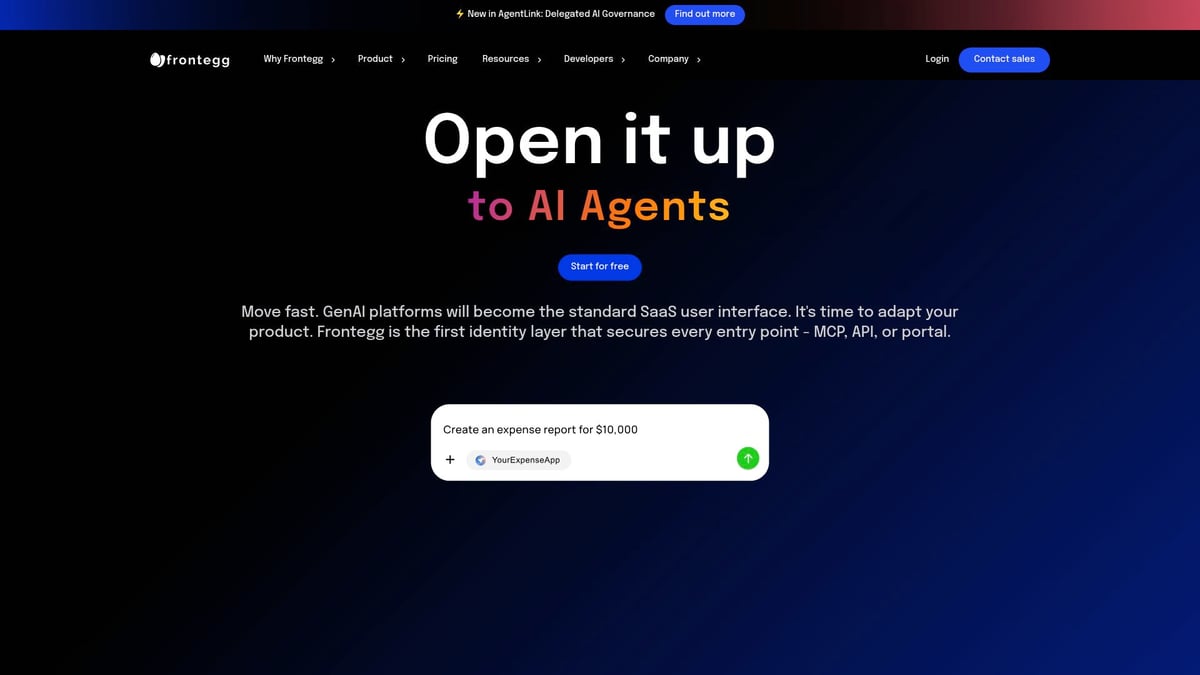
For SaaS founders and product teams, Frontegg offers rapid enterprise-grade CIAM (Customer Identity and Access Management) integration. This means you can launch new products faster without sacrificing compliance or security. The robust documentation and developer support further enhance the framework saas experience.
Frontegg excels in sectors like B2B SaaS, healthcare, fintech, and e-commerce. Its modern UI and plug-and-play integrations save engineering time, while its strong security posture ensures data protection. However, for very simple MVPs, the platform might be more feature-rich than necessary, and some advanced capabilities require a paid plan.
Laravel Spark
Laravel Spark is a popular framework saas solution built for PHP and Laravel developers. With subscription-based per-project licensing, it remains cost-effective for startups. The platform provides essential SaaS features such as billing, subscriptions, team management, invoicing, notifications, and authentication.
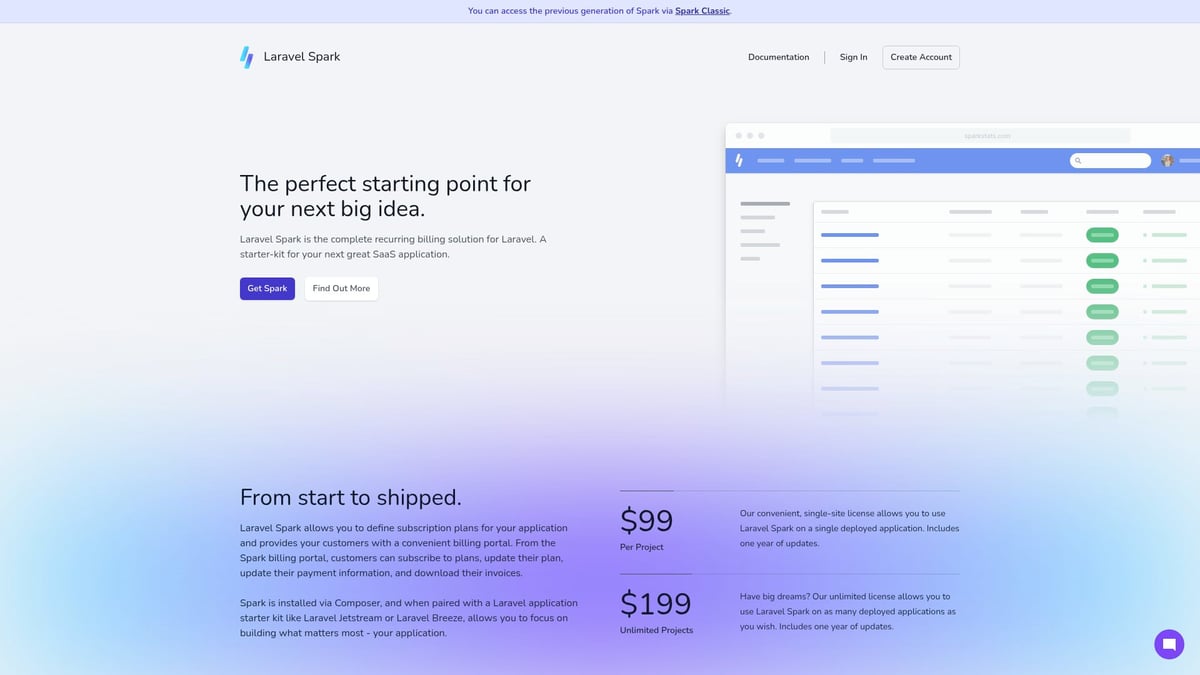
Because Spark sits atop Laravel, developers can leverage familiar tools and patterns to accelerate MVP development. Tight integrations with Stripe and Paddle simplify payment processing, making Spark a strong contender for membership platforms and small business SaaS.
Laravel Spark’s active community, robust security, and fast setup make it attractive for early-stage founders. However, its PHP-centric approach means it is less suitable for teams using other stacks. Deep customization may require additional development effort, but the framework saas benefits for Laravel shops are clear.
Nodewood
Nodewood is a full-stack JavaScript framework saas boilerplate combining Node.js for the backend and Vue.js for the frontend. It stands out for its one-time license fee, allowing you to own your codebase outright with no vendor lock-in. Optional support subscriptions are available for teams needing ongoing assistance.

Core features include authentication, billing, and user management, all designed for rapid prototyping and custom SaaS builds. Nodewood is ideal for technical founders and developers who prefer flexibility and full control over their product.
The platform’s modern stack and active updates appeal to startups seeking a fast launch. The main trade-offs are a smaller community and fewer out-of-the-box features compared to larger platforms. Still, if you value autonomy, Nodewood’s framework saas approach is hard to beat.
SaaS Pegasus
SaaS Pegasus offers a Django-based framework saas solution tailored for Python developers. Its pricing is flexible, with tiered options and one-time purchase, plus optional add-ons for extra functionality. Pegasus focuses on speed, security, and scalability, integrating with Stripe, Sentry, and more.
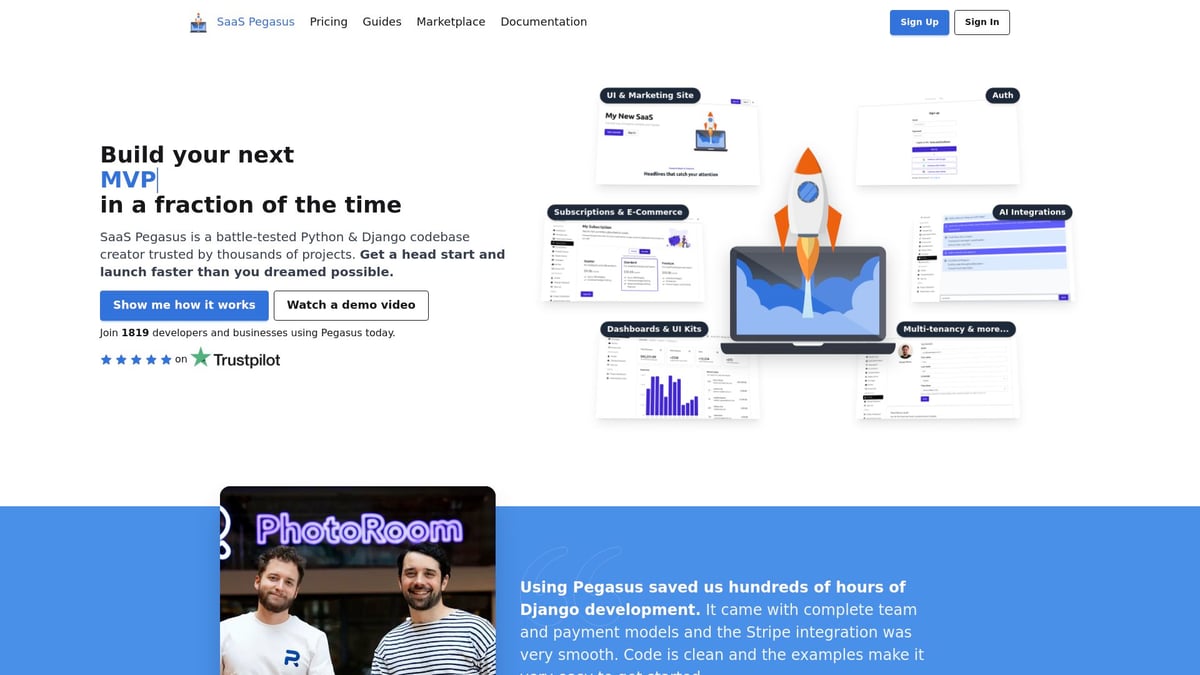
Key features include user authentication, team management, billing, analytics, and multi-tenancy. SaaS Pegasus is a favorite among startups and teams looking for best-practice architecture and rapid deployment in industries like analytics and internal tools.
The platform’s strong documentation and baked-in security make it easy to get started. Since it’s Python/Django only, teams without Django experience may face a learning curve. Customization is powerful but requires Django expertise, positioning Pegasus as a framework saas leader for Python-first teams.
Bullet Train
Bullet Train is a Ruby on Rails-based framework saas platform with both subscription and open-source licensing models. Its open-source core, paired with multi-tenancy, billing, user roles, and notifications, enables rapid scaffolding for new SaaS products.
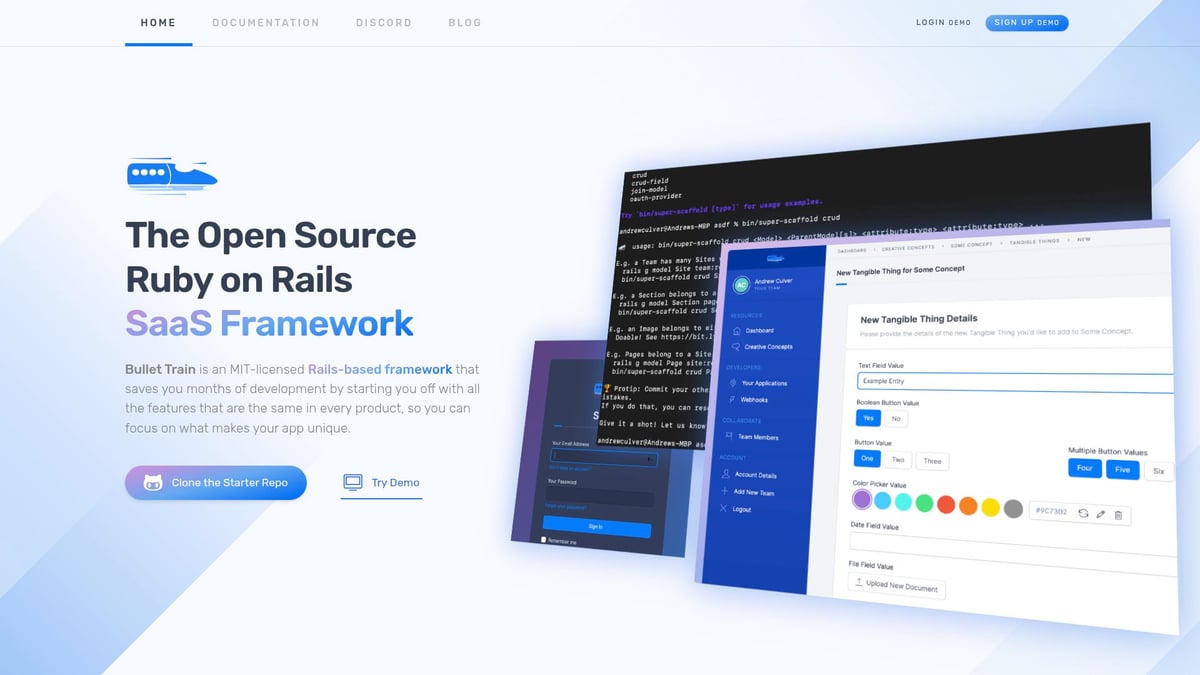
Rails developers appreciate Bullet Train’s flexibility and access to a vibrant community. The platform is well-suited for SaaS MVPs, internal business apps, and niche vertical solutions. Its customizable, open-source nature means you can tailor your framework saas foundation as your business evolves.
While Bullet Train excels for Rails teams, it requires Ruby expertise. The platform’s commitment to open source fosters innovation and collaboration, making it a strong pick for founders who want both structure and freedom.
Vue SaaS Boilerplate
Vue SaaS Boilerplate targets frontend-focused teams with a lightweight framework saas approach. Offering both free and premium versions, the platform provides a modern Vue.js frontend, authentication, payments, admin dashboard, and API integration.
The modular design enables fast UI development and easy customization, allowing SaaS startups to create visually appealing dashboards and portals. Vue.js enthusiasts benefit from a strong ecosystem and the ability to iterate quickly.
While Vue SaaS Boilerplate excels at frontend tasks, it requires backend integration for a complete product. For teams prioritizing user interface and rapid prototyping, this framework saas solution is a compelling starting point.
SaaS Boilerplate by Apptension
SaaS Boilerplate by Apptension is designed for startups and agencies needing a robust, scalable framework saas foundation. Built with React and Node.js, it supports multi-tenancy, billing, authentication, and notifications. Pricing is tailored for scaleups and requires direct inquiry.
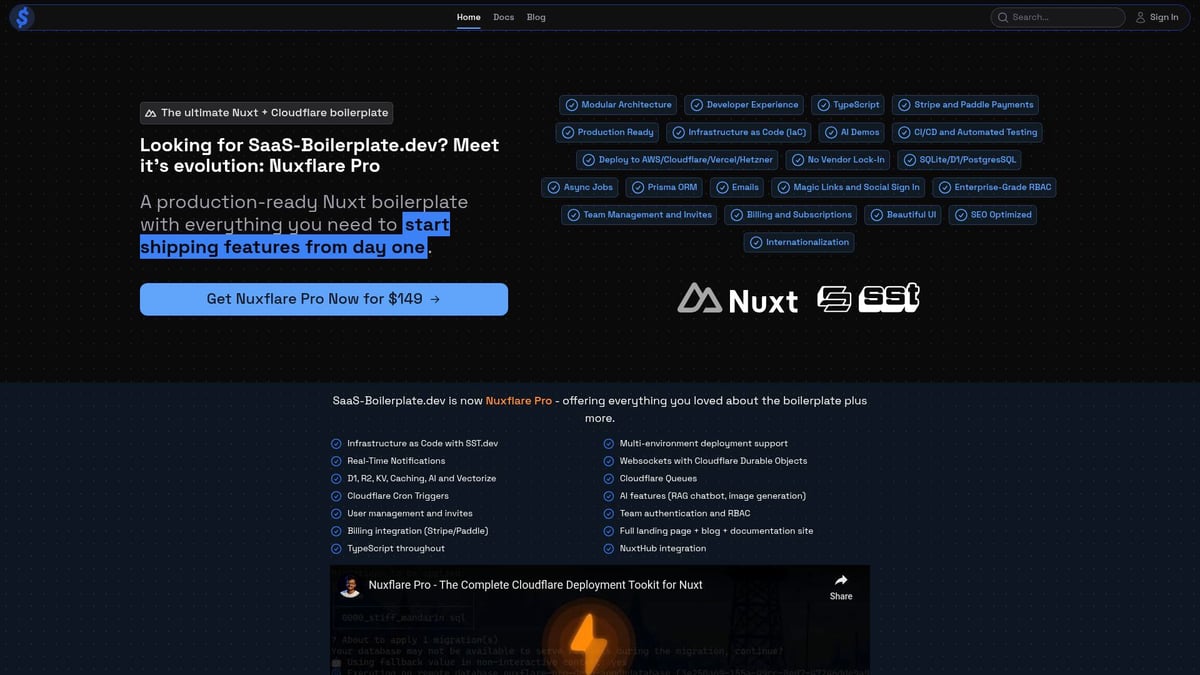
What sets Apptension’s offering apart is its end-to-end architecture, enabling rapid scaling and customization. Agencies building multiple products or startups anticipating growth benefit from the platform’s modern best practices and ongoing updates.
Customization may require experienced developers, and premium pricing reflects its enterprise-grade capabilities. For ambitious teams, this framework saas boilerplate offers a future-proof launchpad.
React SaaS Boilerplate
React SaaS Boilerplate provides a streamlined framework saas solution for React developers. With a one-time purchase and lifetime updates, it’s ideal for founders who want fast, modular MVPs with minimal overhead.
Core features include a modern React frontend, Stripe billing, authentication, team management, and analytics. The platform’s clean codebase and responsive design enable rapid UI/UX development for SaaS dashboards, analytics tools, and collaborative apps.
React SaaS Boilerplate focuses on frontend, so backend pairing is essential for complex solutions. Still, for teams prioritizing user experience and modularity, this framework saas option delivers speed and flexibility.
If you’re building a SaaS MVP and need guidance on choosing the right framework saas for validation and prototyping, explore proven SaaS MVP validation strategies to increase your chances of success.
How to Choose the Right Framework SaaS Platform for Your Business
Selecting the best framework saas platform can make or break your product’s trajectory. To ensure your SaaS is built for scale, security, and future growth, you must evaluate several core factors. This section breaks down a practical approach, helping you align technology, budget, compliance, and extensibility with your business goals.
Assessing Your Technical Stack and Team Expertise
Before choosing a framework saas platform, examine your team’s core strengths. Matching the platform’s primary language with your developers’ skills reduces onboarding friction and accelerates delivery. For example, if your team is proficient in Python, opting for a Django-based solution like SaaS Pegasus ensures a smoother integration.
Consider the following checklist:
- What programming languages and frameworks does your team already use?
- How active and helpful is the platform’s developer community?
- Is the documentation clear and up to date?
- Are there existing templates or code samples that speed up development?
By aligning your framework saas choice with your team’s expertise, you minimize ramp-up time and maximize productivity.
Budgeting and Pricing Considerations
Understanding the true cost of a framework saas platform goes beyond sticker price. Compare upfront licensing fees with ongoing subscription models, and factor in potential hidden expenses, such as add-ons or scaling costs. Open-source platforms may cut initial costs, but premium support or advanced modules can add up as your user base grows.
Key budgeting questions include:
- What is the total cost of ownership over 1–3 years?
- Which features are included for free, and which require upgrades?
- How does pricing scale as you add more customers or features?
- Is there a free trial or a freemium option for testing?
On average, SaaS businesses allocate 10–15 percent of revenue to platform infrastructure, so choose a framework saas model that fits your growth plans.
Evaluating Security, Compliance, and Scalability Needs
Security and compliance are non-negotiable when selecting a framework saas solution, especially for regulated industries. Ensure your platform supports critical standards like SOC 2, GDPR, or HIPAA. Look for built-in features such as single sign-on, audit logs, and role-based access controls.
Plan for scalability as well:
- Does the platform offer multi-tenancy and global deployment?
- Is horizontal scaling straightforward for traffic spikes?
- Are automated backups and disaster recovery included?
For more details on aligning your SaaS with privacy laws, see this GDPR compliance for SaaS platforms guide. Prioritizing these aspects in your framework saas evaluation safeguards your business and customer data.
Integration Ecosystem and Extensibility
Your framework saas platform should easily connect with the tools your business relies on. Review available APIs, webhooks, and plugin systems to ensure seamless integration with payment gateways, analytics, and CRMs. Migration flexibility is also vital if you anticipate switching frameworks as your product evolves.
Factors to consider:
- Are there pre-built integrations for your must-have services?
- Is the API well documented and stable?
- Can you extend or customize modules to fit niche workflows?
- How easy is it to migrate data in or out of the platform?
A robust integration ecosystem ensures your framework saas can evolve with your business, supporting innovation and adaptability.
Future of Framework SaaS Platforms: Trends and Predictions for 2026
The framework saas landscape is entering a transformative era, led by new technologies and evolving business requirements. As we look toward 2026, several trends stand out, promising to reshape how SaaS products are built, scaled, and maintained. Understanding these shifts is crucial for founders, CTOs, and product managers aiming to future-proof their solutions.
AI and Automation Embedded in Frameworks
Artificial intelligence is becoming a core component of framework saas platforms. AI-driven onboarding, predictive analytics, and automated support are now standard features. For example, platforms like Frontegg are leading with AI Security Suites that proactively defend against threats.
The integration of AI not only improves user experience but also enables smarter business decisions. According to AI Integration in SaaS Platforms, the next generation of framework saas products will rely on embedded automation for greater efficiency and security. By 2026, it is predicted that 60 percent of new framework saas tools will offer AI-powered modules as a default.
Rise of Vertical SaaS and Industry-Specific Frameworks
Framework saas platforms are no longer one-size-fits-all. There is rapid growth in vertical SaaS, with solutions tailored for healthcare, fintech, and education. These platforms are designed with industry-specific compliance, workflows, and integrations in mind.
Vertical SaaS allows businesses to go to market faster and address regulatory requirements directly out of the box. Industry experts predict the vertical SaaS market will reach $157 billion by 2026, highlighting the importance of choosing a framework saas solution that aligns with your sector’s needs. This trend is explored further in resources like the Vertical SaaS validation guide for those considering industry-focused approaches.
Low-Code and No-Code Expansion
Another major trend is the democratization of app development through low-code and no-code framework saas platforms. These environments empower non-technical users to create and iterate on SaaS products with minimal coding knowledge.
This shift reduces time-to-market and lowers development costs, making SaaS more accessible to startups and business teams alike. Recent Low-Code/No-Code SaaS Adoption Statistics show significant growth in adoption rates, reflecting the demand for flexible, user-friendly framework saas tools. Expect further improvements in visual builders and integration options in the coming years.
Enhanced Developer Experience and Community-Driven Innovation
In 2026, developer experience will be a decisive factor for framework saas adoption. Platforms are investing heavily in comprehensive documentation, robust support forums, and reusable templates. Open-source models, such as Bullet Train, foster community collaboration and rapid feature development.
A strong developer community ensures faster troubleshooting, continuous innovation, and a library of best practices. As framework saas platforms evolve, expect even more resources designed to streamline onboarding and empower technical teams to build, launch, and scale efficiently.
Key Features to Look for in a Modern Framework SaaS Platform
Selecting the right framework saas platform means understanding which features truly drive growth, reliability, and scalability. Let us break down the most essential elements that define a modern solution.
Essential Built-In Modules
A strong framework saas foundation includes critical modules out of the box. Look for platforms offering:
- User authentication and access control
- Subscription and billing management
- Team roles and collaboration tools
- Analytics dashboards and reporting
- Notification and messaging systems
These modules save months of development time and help you launch faster. For example, Laravel Spark provides a comprehensive billing suite that handles complex workflows seamlessly. By choosing a framework saas with robust built-in modules, you reduce technical debt and focus on what makes your product unique.
Security and Compliance Tooling
Security is non-negotiable for any framework saas. Leading platforms deliver:
- Single sign-on (SSO) and multi-factor authentication
- Audit logs and activity tracking
- Compliance certifications such as SOC 2, GDPR, or HIPAA
- Data privacy controls and encryption
With data regulations evolving, a framework saas must simplify compliance. Frontegg’s compliance-ready modules, for instance, empower teams to meet industry standards confidently. Investing in these features early helps safeguard your business and customers, reducing risk as you scale.
Customization and Branding Flexibility
Your framework saas should provide the flexibility to tailor both user experience and branding. Seek platforms that support:
- White-labeling and theme customization
- API extensibility for unique integrations
- Custom domains and client-specific branding
- Modular architecture for easy feature updates
Full code ownership, like Nodewood offers, lets you adapt your product for any vertical or client need. As highlighted in the SaaS Trends and Predictions for 2026, the ability to rapidly customize is key for staying competitive in a dynamic market. Prioritizing flexibility ensures your framework saas grows with your brand.
Performance, Monitoring, and Support
Operational excellence is vital for any framework saas. Evaluate platforms for:
- Real-time monitoring and automated backups
- Uptime SLAs and robust incident response
- Access to responsive technical support
- Active developer and user communities
For example, SaaS Pegasus integrates directly with Sentry for error tracking and monitoring, helping teams maintain reliability. A framework saas that delivers strong support and performance tools will empower your team to respond quickly to challenges and deliver a seamless experience for users.