
Launching a saas mvp in 2025 is both an exciting opportunity and a significant challenge. The landscape offers more tools and resources than ever, yet competition is fierce.
Many founders spend months and thousands of dollars building products that never find a market. How can you avoid this costly mistake? The answer lies in understanding the right process from idea to launch.
This guide will break down every stage of the saas mvp journey. You will learn how to validate your concept, prioritize features, design efficiently, and go to market with confidence.
By following these proven steps, you will reduce risk, shorten your time to launch, and give your SaaS a strong foundation for growth. Ready to build a product users actually want? Let’s explore the latest strategies and practical advice for taking your saas mvp from concept to launch in 2025.
Step 1: Validating Your SaaS Idea in 2025
Launching a saas mvp without validation is like setting sail without a map. Many founders rush into development, only to realize too late that their product is not solving a real need. Let us break down the essential steps to ensure your idea stands on solid ground.
The High Cost of Skipping Validation
Skipping idea validation is a common and costly mistake. According to DevSquad, most SaaS startups fail because there is no real market need for their product. This results in wasted time, money, and energy.
Before you invest in building your saas mvp, you must prove a genuine problem exists. A simple way to start is by interviewing 5 to 10 target users. Ask about their daily pain points and current workarounds. This early stage research saves countless hours later in the process.
User Research & Customer Conversations
Effective user research is the cornerstone of a successful saas mvp. Conduct interviews with potential users, but avoid pitching your idea during these conversations. Focus on understanding their workflows, frustrations, and what solutions they currently use.
Key questions include:
- What is the most challenging part of your workflow?
- What tools do you use today, and what do you dislike about them?
- How much would you pay for a solution that solves this problem?
Extract insights about what is broken, what workarounds exist, and the willingness to pay. For a detailed approach, review this guide on using interviews to validate your SaaS MVP.
Market Sizing and Opportunity Assessment
Understanding your market size helps you shape your saas mvp strategy. Use tools like LinkedIn Sales Navigator and Crunchbase to estimate your total addressable market. Are you targeting a niche audience or a broad vertical?
A larger market may justify a broader feature set, while a niche may call for a focused solution. Assessing this early allows you to prioritize features and position your saas mvp for the right audience.
Early Validation Techniques: Landing Pages & Prototypes
Test your idea before writing any code. Launch a simple landing page describing your saas mvp value proposition and collect email signups. This helps you gauge real interest and build an early audience.
Prototypes are another powerful tool. Share interactive mockups with users to collect feedback. Running product discovery workshops can further align your assumptions and clarify priorities. These early signals guide your next steps.
Iterative Validation: A Continuous Process
Validation is not a one-time event, but a cycle. Start with your idea, then move to a prototype, and finally develop your saas mvp. At each stage, collect feedback and adjust your approach.
Use feedback loops to reduce risk. Each iteration helps you refine your concept, improve your product, and increase your chances of success. This continuous improvement mindset is key in today's competitive landscape.
Common Pitfalls and How to Avoid Them
Many founders fall into predictable traps when building a saas mvp:
- Relying too much on personal assumptions instead of real user data
- Misjudging the size or demand of the market
- Ignoring negative feedback during early validation
Avoid these mistakes by grounding every decision in evidence and remaining open to critical feedback.
How SaaS Validation Empowers Founders
SaaS Validation offers step-by-step guides, market research resources, and validation tools to help you ensure your saas mvp is built on real demand. By leveraging expert insights and actionable frameworks, you reduce risk and increase your odds of launching a SaaS product that truly resonates with users.
Step 2: Product Discovery—Defining What to Build and Why
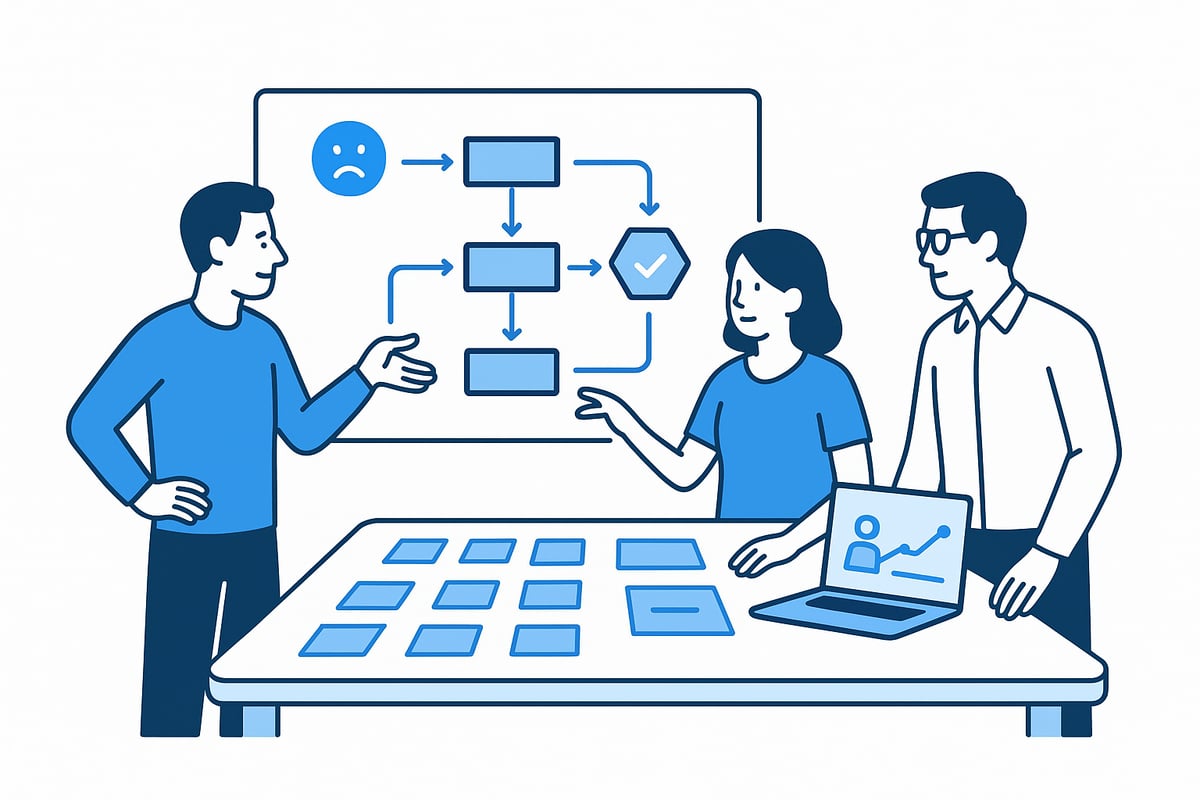
Product discovery is the critical phase where your team defines what to build and why, ensuring your saas mvp addresses genuine user needs. Unlike making a list of features, effective discovery focuses on understanding the outcomes that matter most to your users. By mapping out the user journey, you reveal the core use cases that should anchor your initial product scope. This approach reduces guesswork and sets a strong foundation for the rest of your saas mvp process.
Involving Cross-Functional Teams Early
Bringing together product, design, engineering, and strategy from the start is essential for a successful saas mvp. Early collaboration ensures that technical feasibility, user experience, and business goals all align. Many teams use a 30-day discovery sprint to clarify assumptions, test ideas, and set priorities. This process builds buy-in across disciplines and accelerates problem-solving, helping prevent costly misalignment later.
Aligning Product with Business Model
Your go-to-market approach greatly influences the scope of your saas mvp. For self-serve SaaS, onboarding and activation features are vital since users must see value immediately. For sales-assisted products, admin controls and integrations may take priority. By aligning product features with your business model, you ensure your MVP supports your revenue strategy from day one. This step keeps your team focused on what drives actual customer adoption.
Outcome-Driven Thinking
Focusing on outcomes rather than features is key for saas mvp success. Ask probing questions: What workflow frustrates users most? What happens if this problem is not solved? Are users willing to pay for a solution? Use journey mapping and discovery frameworks to visualize pain points and possible solutions. This user-centric mindset uncovers the "job to be done" and guides your team toward building features that truly matter.
Avoiding Discovery Pitfalls
One of the most common mistakes in saas mvp discovery is relying on internal opinions instead of real user evidence. Always validate assumptions through interviews and observable data. Another pitfall is launching without clear success metrics, making it impossible to measure progress. By defining what success looks like early, you can pivot quickly if your initial direction misses the mark.
Real-World Example
Consider a SaaS startup that began with a broad feature set but, after a focused discovery workshop, narrowed its saas mvp to just the top two customer workflows. This decision saved months of development time and allowed the team to launch faster. Early user feedback confirmed that these workflows addressed the most urgent pain points, proving the value of disciplined discovery before building.
Deliverables of Effective Product Discovery
At the end of product discovery, your team should have a validated prototype, a feasible roadmap, and a clear go-to-market plan. These deliverables reduce future rework and keep everyone aligned. To refine your roadmap and feature set, leverage resources like SaaS feature prioritization frameworks, which offer structured methods to decide what belongs in your MVP. By focusing on evidence and alignment, you give your saas mvp the best chance for success.
Step 3: Defining Your Minimum Sellable Product (MSP)
Launching a successful saas mvp in 2025 requires more than building a basic prototype. It means delivering a minimum sellable product, or MSP, that real users are willing to buy and use from day one. Understanding this distinction is critical for founders who want to avoid the common trap of shipping a product that fails to gain traction.
The True Meaning of MVP in SaaS
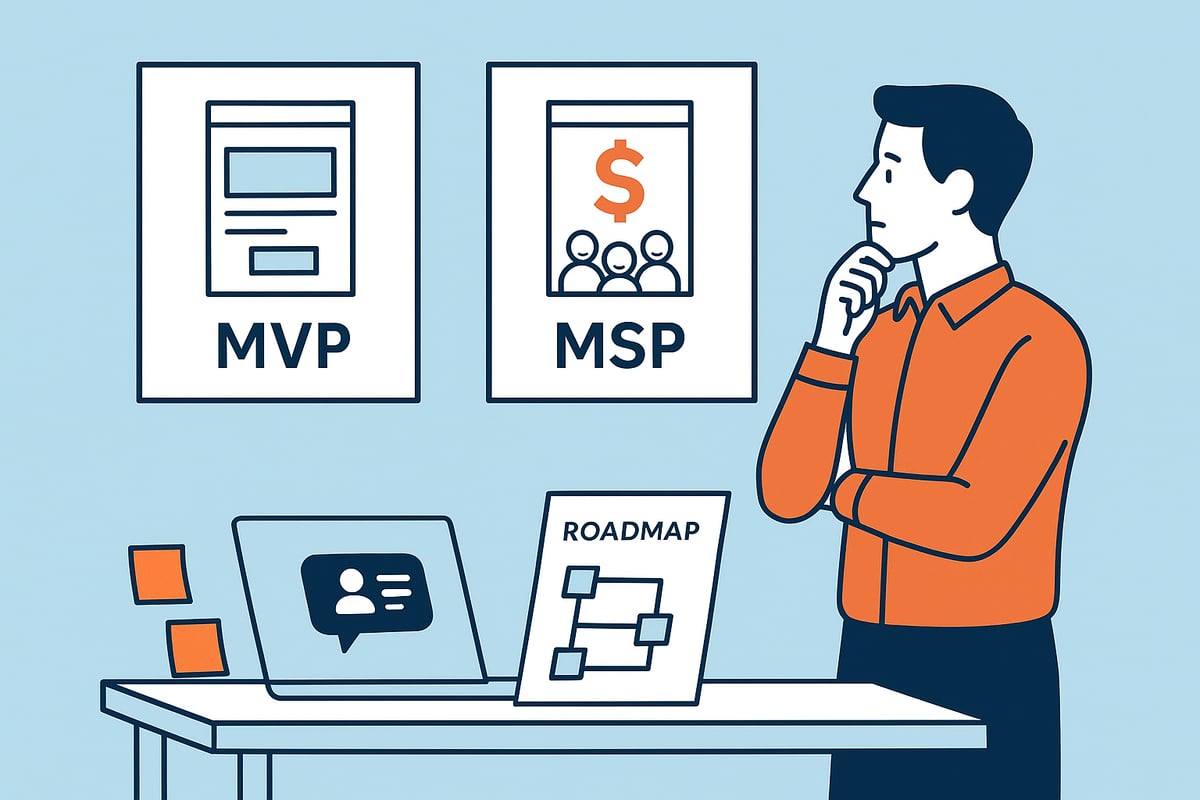
In the saas mvp world, the term “minimum viable product” is often misunderstood. Many teams launch demos or proof-of-concepts that never attract paying customers. The MSP, by contrast, is your first real product—functional, valuable, and market-ready. While your MSP should be streamlined, it must solve a real problem and deliver a clear outcome that users care about. The shift from MVP to MSP is not just a naming exercise, it’s about focusing on sellability and immediate value.
Focusing on Your Core Value Proposition
To define your saas mvp as an MSP, distill your idea to its core promise. Ask yourself: what is the single most important job your product must accomplish for users? This clarity helps you avoid feature creep and ensures your initial build resonates with your target audience. Mapping the user journey and identifying pain points can reveal the essential workflow that must be solved. If your product delivers this one job exceptionally well, early adopters are far more likely to pay for it.
Prioritizing User Experience (UX)
User experience is often the deciding factor in the early success of a saas mvp. Modern users form opinions about software in seconds. Even if your backend is basic, your front-end must look polished and inspire confidence. A frictionless, intuitive interface can dramatically increase conversion rates and retention. For deeper insights on why UX is so critical to your saas mvp’s adoption, see this User Experience Design resource, which highlights how users judge products almost instantly.
Avoiding Over-Engineering
It’s tempting to overbuild your saas mvp with advanced features or a scalable backend before you have users. This often leads to wasted resources and delayed launches. Instead, focus on workflows and features needed for your first 10 paying customers. Use lightweight solutions and only invest in complex infrastructure once you have real demand. This approach keeps your MSP lean, flexible, and aligned with actual customer needs.
Feature Prioritization Frameworks
A disciplined approach to feature selection is essential for a focused saas mvp. Frameworks like Now/Next/Later, MoSCoW, RICE, and Kano help teams prioritize what to build now, what can wait, and what to drop. For example, the MoSCoW method classifies features as Must, Should, Could, or Won’t have. These tools keep the scope manageable and ensure your MSP addresses the most critical user outcomes first. Regularly revisiting your prioritization framework helps maintain momentum and clarity.
Real-World Applications & Managing Stakeholder Expectations
The scope of your MSP often depends on your market. Vertical saas mvp products, targeting a specific industry, may require specialized features, while horizontal MVPs can start with broader functionality. Communicate your decisions transparently to investors and your team. Use clear roadmaps to show what’s included at launch and what will come later. This alignment reduces friction, manages expectations, and ensures everyone is focused on delivering a sellable product that solves a real problem.
Step 4: Prototyping and Early User Feedback
Launching a saas mvp without prototyping is like building a bridge without a blueprint. Prototyping transforms abstract ideas into interactive models, helping founders and teams visualize workflows, spot usability issues, and validate assumptions before investing in code. By embracing this iterative approach, you ensure your saas mvp is built on user insights, not guesswork. This stage is crucial for reducing risk, saving development time, and creating a product that resonates with your audience.
The Role of Prototyping in SaaS MVP Development
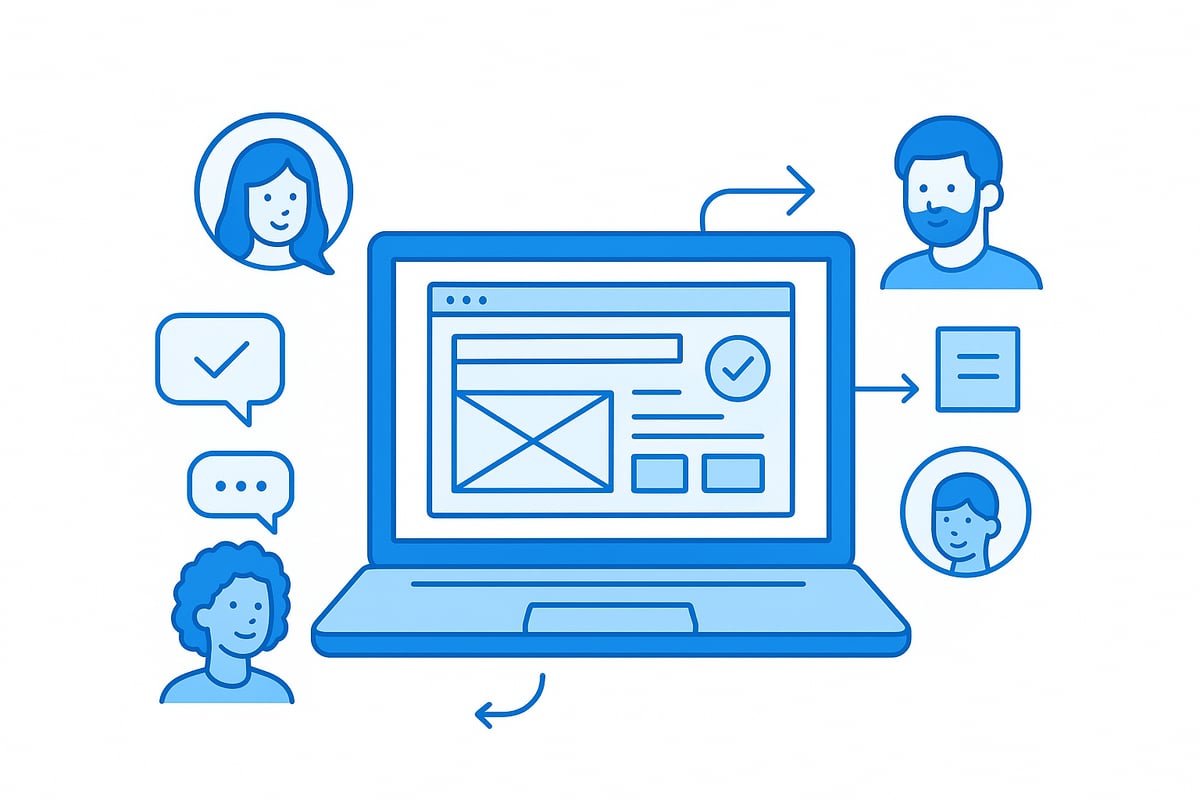
Prototyping is the foundation of a successful saas mvp. High-fidelity prototypes, built with tools like Figma or Adobe XD, allow teams to simulate real user journeys and interface interactions. These clickable models reveal design flaws, workflow bottlenecks, and user confusion before any code is written. By sharing prototypes early, you can gather actionable feedback from prospective users, ensuring your saas mvp aligns with market needs and expectations.
Building a Realistic, Interactive Prototype
A convincing prototype should accurately reflect your intended user experience. Use Figma to create clickable screens that mirror your product’s navigation, layout, and key workflows. Focus on the primary use case your saas mvp must solve from day one. Ensure that visual elements, button placements, and interactions feel intuitive. This attention to detail helps users provide honest, meaningful feedback and sets realistic expectations for the final product.
User Testing and Feedback Collection
Recruit a small group of target users, ideally those you interviewed during earlier research, to interact with your prototype. Ask them to complete core tasks and observe their behavior closely. Watch for moments of hesitation, confusion, or delight. Encourage users to verbalize their thoughts as they navigate your saas mvp prototype. The goal is to uncover friction points, gauge value perception, and identify features that truly matter.
Iterative Improvement Before Coding
Iterating on your prototype is significantly faster and less expensive than making changes to a live product. Use feedback from user testing to refine navigation flows, streamline user journeys, and eliminate unnecessary steps. Each round of iteration brings your saas mvp closer to product-market fit. By identifying and addressing issues at the prototype stage, you avoid technical debt and costly rework down the line.
Techniques for Effective User Testing
Effective user testing of your saas mvp prototype requires structure and objectivity. Avoid leading questions and let users explore naturally. Document their actions, note where they get stuck, and capture their candid reactions. Use screen recordings and time-on-task metrics for quantitative insights. After each session, summarize key findings and prioritize actionable improvements. This data-driven approach ensures your saas mvp evolves based on real user needs and behaviors.
Common Prototype Pitfalls
Even experienced teams can fall into common traps during prototyping. Mistaking positive feedback for genuine product-market fit is a frequent error. Early users may be polite or optimistic, so seek critical feedback and probe for concerns. Ignoring usability issues flagged by testers can lead to costly problems after launch. Stay vigilant, and treat every piece of feedback as an opportunity to improve your saas mvp.
Example: Pivot Based on Prototype Feedback
Consider a SaaS team that built a prototype to streamline onboarding for their saas mvp. During testing, users consistently struggled with a multi-step setup process. By listening to this feedback, the team simplified the flow into a single screen, dramatically improving user satisfaction. This pivot, made before development began, saved months of engineering effort and positioned the saas mvp for a successful launch.
Step 5: Feature Prioritization and MVP Roadmapping
Prioritizing features is the backbone of a successful saas mvp. Without a clear framework, you risk wasting time on features that do not drive early adoption or revenue. By breaking down this process, you can ensure your team builds what matters most and avoids unnecessary complexity.
The “Jobs to Be Done” Approach
Every feature in your saas mvp should serve a clear purpose. The “Jobs to Be Done” framework helps map each feature to the core problem your user is hiring your product to solve. Start by asking, “What is the single most important job our user needs done?” This focus allows you to strip away non-essential features.
Use interviews and discovery sessions to validate these core jobs. If a proposed feature does not directly address the primary workflow, consider leaving it out of your initial saas mvp. This approach keeps your development lean and user-focused.
Structured Prioritization Methods
Once you have a list of candidate features, structured frameworks bring objectivity to your decision-making. Popular methods include:
- MoSCoW: Must, Should, Could, Won’t
- RICE: Reach, Impact, Confidence, Effort
- Kano Model: Basic, Performance, Excitement
Score each potential saas mvp feature using these models. For example, the RICE method quantifies value and effort, making trade-offs clearer. Explore how AI-Driven Idea Validation can enhance prioritization by analyzing user intent and market data.
Avoiding Feature Bloat
Feature bloat is a common trap for saas mvp teams. Overbuilding dilutes your value proposition and delays launch. Focus on delivering the primary workflow exceptionally well. Ask, “If we launch with only these features, can users achieve their main goal?”
Early validation through landing pages, as discussed in Landing page validation strategies, helps confirm demand before expanding your feature set. Stay disciplined and avoid adding “nice-to-have” features until after launch.
Building the MVP Roadmap
A clear roadmap visualizes your saas mvp journey. Use the Now/Next/Later framework to organize features:
- Now: Essential for launch
- Next: Planned for post-launch
- Later: Future possibilities
Outcome-based roadmaps align priorities with user value. Share these with your team to maintain focus. By mapping features visually, you help everyone understand the saas mvp’s immediate and longer-term direction.
Stakeholder Alignment and Communication
Effective feature prioritization requires buy-in from all stakeholders. Involve your team in scoring and roadmap discussions. Use visual roadmaps to communicate which features make the first cut and why.
Transparent decision-making builds trust with investors and early adopters. When everyone understands the rationale behind your saas mvp scope, the entire process runs more smoothly.
Real-World Example
Consider a startup that launched its saas mvp with just three core features. By focusing on the most urgent user need, they gained rapid traction. Competitors who built larger, more complex products struggled to iterate quickly.
This example shows that a lean saas mvp can outperform overbuilt competitors, especially when paired with fast feedback loops and agile development.
Key Metrics to Guide Prioritization
Feature decisions should be data-driven. Use metrics from prototype testing, landing page signups, and user interviews to inform your saas mvp roadmap. For example, high signup rates on a feature-specific landing page signal strong demand.
Track user engagement and feedback to refine priorities after launch. Data-driven iteration ensures your saas mvp evolves with real user needs, not assumptions.
Step 6: Building, Testing, and Launching Your SaaS MVP
Launching your saas mvp is where your idea becomes reality. This stage transforms validation and discovery into a tangible product ready for users. To maximize your chances of success, approach each step with a clear plan, the right tools, and a focus on speed, quality, and learning.
Choosing the Right Tech Stack for Your MVP
Selecting the right technology for your saas mvp is crucial. The stack should allow rapid development, support AI tools, and be familiar to your team. Frameworks like React, Next.js, and Firebase are widely used because they balance speed and scalability. Many founders now leverage AI-powered IDEs such as Cursor, Gemini, and Lovable to accelerate coding and reduce repetitive work.
If your team lacks deep coding expertise, consider Low-Code and No-Code Platforms to build your saas mvp quickly. These platforms enable rapid prototyping and deployment, making them ideal for early-stage products.
Setting Up Your Development Environment
Your development environment should streamline collaboration and support both guided and one-shot app generation. One-shot tools like Lovable, Bolt, and Replit generate full applications from prompts, offering instant results. Guided approaches, on the other hand, let you build your saas mvp step by step with AI assistance, providing more control and customization.
Evaluate the pros and cons of each approach:
| Approach | Speed | Control | Best For |
|---|---|---|---|
| One-Shot | Fast | Low | Prototypes, demos |
| Guided | Medium | High | Production MVPs |
Choose the method that aligns with your team's workflow and the complexity of your saas mvp.
Building the App Structure and UI
Start by generating the app skeleton, either manually or with AI assistance. Focus on clean, responsive layouts that offer intuitive navigation. Use design tools like Figma to map out your interface before coding. AI prompts can help create components, menus, and landing pages quickly for your saas mvp.
Adopt a modular approach so components can be reused and updated efficiently. Prioritize the user journey and ensure your UI instills trust from the first interaction.
Implementing Core Functionality
With your UI in place, turn to the main workflows your saas mvp must deliver. Implement features such as authentication, data fetching, and any core algorithms. Backend-as-a-service solutions like Firebase and Supabase are excellent for rapid MVP development, letting you focus on delivering value rather than managing infrastructure.
For example, if your saas mvp is a restaurant recommendation tool, integrate real data APIs and use AI-generated code to streamline development.
Data Management and Integration
Begin with mock data to validate flows, then connect to real APIs or databases as your saas mvp matures. Define simple data models and endpoints that match your user stories. Always secure API keys and sensitive credentials, even in early versions.
Data integration should be seamless, supporting the essential features without overcomplicating the system. As your saas mvp gains users, you can enhance data handling and analytics.
Testing, Debugging, and Iteration
Comprehensive testing is non-negotiable for a successful saas mvp launch. Systematically test all user flows, edge cases, and integrations. AI tools can help identify bugs and suggest fixes, speeding up the process significantly.
Invite alpha or beta testers from your target audience to try the product. Use their feedback to prioritize final improvements. Iterative testing ensures your saas mvp is reliable and ready for real users.
Preparing for Launch: Deployment and Early Traction
Deploy your saas mvp using platforms like Vercel or Netlify, which offer fast, scalable hosting. Once live, share your product with early adopters through landing pages and email lists. Collect actionable feedback on usability, performance, and value.
To build early traction, engage users through onboarding guides and prompt support. Monitor user activity to spot friction points and opportunities to improve your saas mvp.
Post-Launch Iteration and Roadmap
After launch, use real user data to guide the next development steps. Balance quick fixes with strategic upgrades, ensuring your saas mvp continues to meet evolving needs. Maintain a transparent product roadmap to communicate upcoming features and improvements.
Iterate based on user feedback, analytics, and market trends. A continuous improvement mindset will help your saas mvp stay competitive and relevant.
Common Launch Pitfalls and How to Avoid Them
Many teams delay launch in pursuit of perfection. Launching your saas mvp too late can mean missing market opportunities. Focus on delivering core value, then iterate. Another common pitfall is neglecting post-launch support and onboarding, which can hurt retention.
Adopting Agile and DevOps Practices helps teams remain flexible and responsive. These methodologies foster rapid iteration, automated testing, and efficient deployment, all essential for successful saas mvp development.
Metrics to Track After Launch
Track key metrics to measure the success of your saas mvp:
- User activation rates
- Retention and churn
- Volume and sentiment of user feedback
- Conversion from free to paid plans
Use these insights to prioritize features, fix issues, and drive growth. A data-driven approach ensures your saas mvp evolves into a sustainable, valuable product.