
Online education is changing at lightning speed, and course saas platforms are leading this digital revolution. As more learners and educators turn to cloud-based tools, the demand for powerful, flexible solutions has never been higher.
In this article, we spotlight seven course saas platforms that are set to shape online learning in 2026. You will discover key features, pricing, unique advantages, and the ideal users for each platform.
Whether you are an educator, entrepreneur, or organization, this comprehensive comparison will help you choose the perfect solution to elevate your learning initiatives.
Why Course SaaS Platforms Are Revolutionizing Online Learning
The online learning landscape is undergoing a dramatic transformation as course saas solutions become the backbone of modern education. These platforms are changing how content is delivered, accessed, and experienced. Let's explore the core reasons behind this revolution and what it means for educators, businesses, and learners alike.
The Shift to SaaS in Education
Education is embracing the cloud, and course saas platforms are leading this shift. Institutions and individual creators now enjoy flexibility and scalability that traditional systems simply cannot match. With cloud-based tools, launching microlearning modules and self-paced courses has never been easier.
These platforms offer cost-effective alternatives to legacy LMS solutions. For example, microlearning is now used by 94% of organizations leveraging eLearning, highlighting the widespread impact of course saas adoption (Microlearning accounts for about 94% of organizations using eLearning). The global eLearning market is projected to soar in the coming years, powered by these agile, cloud-first solutions.
Core Features Defining Top Course SaaS Platforms
What sets leading course saas platforms apart? Their robust feature sets make online learning seamless and engaging.
- Drag-and-drop course builders and customizable templates
- Integrated video hosting, quizzes, and assignments
- Advanced analytics and learner progress tracking
- Secure payment gateways and subscription management
- Responsive design for optimal mobile access
These features empower creators to launch, manage, and scale their content efficiently. The course saas approach makes it possible to deliver high-quality educational experiences without technical barriers, ensuring that both instructors and learners benefit from streamlined workflows.
Benefits for Educators, Businesses, and Learners
The advantages of adopting a course saas platform are extensive for all stakeholders. Educators and businesses can create and launch courses quickly, reducing time to market and increasing opportunities for innovation.
Students benefit from interactive tools that boost engagement, such as quizzes and gamification elements. For organizations, course saas solutions unlock new monetization models and enable effortless scalability as user bases grow. Enhanced analytics provide actionable insights, driving higher course completion rates and better learning outcomes.
Key Trends for 2026: AI, Personalization, and Community
Looking ahead, course saas platforms are embracing cutting-edge trends to future-proof online education. AI-driven learning paths and personalized feedback are becoming standard, adapting content to each learner's unique needs.
Community features, including forums and live sessions, foster collaboration and belonging. Seamless integration with CRM and marketing tools enables a holistic approach to learner engagement. With 73% of organizations planning to increase EdTech investments by 2026, course saas platforms are set to remain at the forefront of digital learning innovation.
7 Top Course SaaS Platforms to Elevate Online Learning in 2026
Choosing the right course saas platform can be a turning point for online educators and organizations. Each solution brings unique strengths, tailored to different audiences and business models. Below, we break down the seven leading course saas platforms redefining online learning in 2026. Compare their features, pricing, and advantages to find your perfect match.
| Platform | Pricing | Key Features | Target Audience | Unique Strength |
|---|---|---|---|---|
| Thinkific | Free, from $49 | Drag-and-drop, live lessons, analytics | Entrepreneurs, SMBs | Customization |
| Kajabi | From $149 | All-in-one, automation, pipelines | Established creators | Integrated marketing |
| Teachable | Free, from $39 | Course builder, payments, affiliates | Instructors, schools | User-friendly |
| LearnWorlds | From $29 | Interactive video, SCORM, eCommerce | Trainers, enterprises | Engagement tools |
| Podia | Free, from $33 | Courses, webinars, community | Creators, coaches | Simplicity |
| TalentLMS | Free, from $69 | Certifications, reporting, HR tools | Corporates, HR | Team management |
| LearnDash | From $199/year | WordPress, gamification, add-ons | WP users, universities | Deep customization |
Thinkific
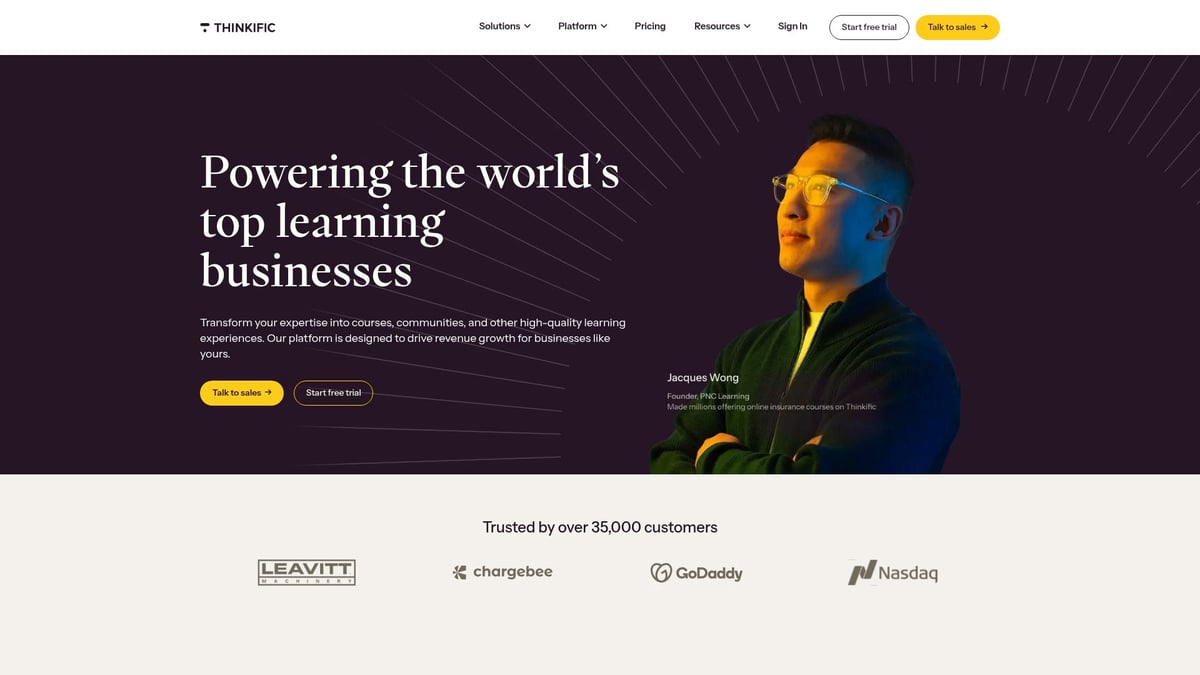
Thinkific stands out as a flexible, user-friendly course saas platform designed for entrepreneurs and growing businesses. Its drag-and-drop course builder makes it simple to craft engaging lessons using multimedia, quizzes, and live sessions.
Key Features:
- Drag-and-drop course builder
- Multimedia support (video, audio, PDFs)
- Quizzes, assignments, certificates
- Advanced analytics and progress tracking
Unique Selling Points:
- White-labeling options for branding
- Robust integrations with Shopify, Zapier, Mailchimp, and more
- Highly customizable design and structure
Thinkific offers a free plan, with paid options starting at $49 per month. This course saas solution supports both solo creators and teams, allowing users to scale their content catalogs easily.
Pros:
- Intuitive interface for fast course creation
- Scalable for multiple courses and students
- Strong community support and resources
Cons:
- Some advanced features require higher-tier plans
- Built-in marketing tools are limited
Example: Over 50,000 course creators worldwide trust Thinkific to deliver impactful online learning experiences. For those prioritizing customization and ease of use, this course saas platform is a leading contender.
Kajabi
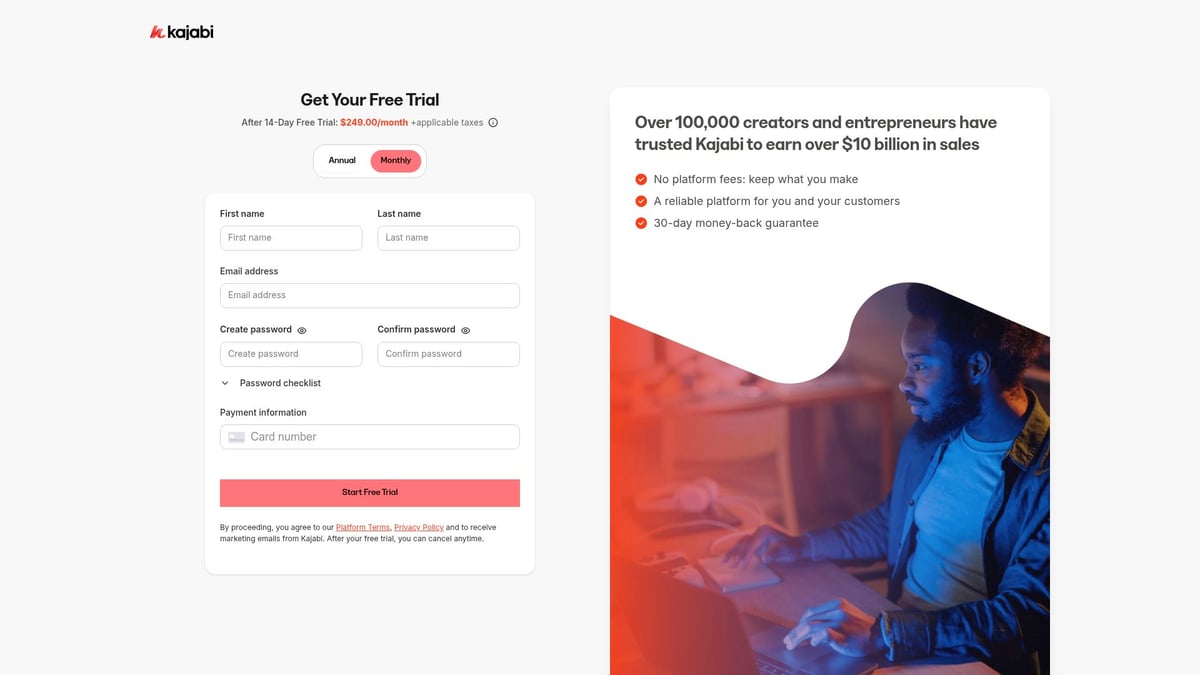
Kajabi is an all-in-one course saas platform that combines course creation, website building, email marketing, and automation. Its seamless integration of sales funnels and marketing tools makes it ideal for creators ready to scale their digital products.
Key Features:
- Integrated website builder and blog
- Course hosting with multimedia support
- Email marketing, sales funnels, automation
- Built-in analytics and reporting
Unique Selling Points:
- Customizable sales pipelines for product launches
- Mobile app for learners on the go
- Strong automation capabilities
Pricing starts at $149 per month, including a 14-day free trial. Kajabi is designed for established educators and businesses that need robust marketing and sales infrastructure within their course saas platform.
Pros:
- Comprehensive features in a single platform
- Excellent automation and workflow tools
- Strong analytics for growth tracking
Cons:
- Higher price point compared to competitors
- Steeper learning curve for beginners
Example: Kajabi creators have generated over $4 billion in sales, highlighting the platform's effectiveness for scaling online education businesses. For advanced marketers and businesses, this course saas platform offers unmatched integration and automation.
Teachable
Teachable is a popular course saas platform known for its simplicity and global reach. It caters to individual instructors, small businesses, and educational institutions seeking an easy yet powerful solution.

Key Features:
- Intuitive course builder with video hosting
- Quizzes, certificates, and assignments
- Built-in payment processing (multiple currencies)
- Affiliate marketing and tax handling
Unique Selling Points:
- User-friendly interface for quick onboarding
- Flexible pricing models for courses and bundles
- Customizable sales pages
Teachable offers a free plan, with paid options starting at $39 per month. It enables creators to monetize their expertise with minimal friction, making it a go-to course saas choice for new instructors.
Pros:
- Simple setup and onboarding
- Strong support and knowledge base
- Easy to manage payments and taxes
Cons:
- Transaction fees apply on lower-tier plans
- Limited site customization options
Example: With over 100,000 instructors and 37 million students, Teachable has proven its reliability and scalability as a course saas provider for diverse audiences.
LearnWorlds
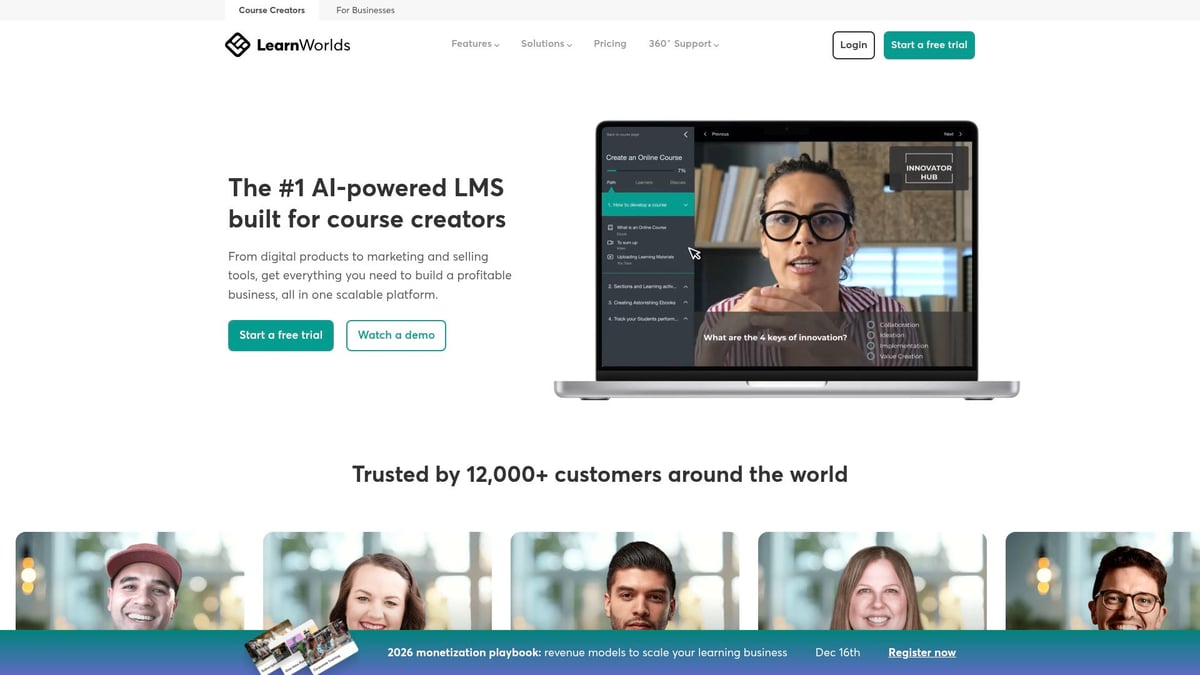
LearnWorlds focuses on interactive, engaging online learning experiences. This course saas platform is built for professional trainers, academies, and enterprises that demand advanced features and branding.
Key Features:
- Interactive video and advanced quizzes
- SCORM compliance for enterprise needs
- Branded mobile apps for iOS and Android
- eCommerce tools for selling courses and bundles
Unique Selling Points:
- Social learning features and built-in community spaces
- Highly interactive content creation tools
- Strong white-labeling and branding options
LearnWorlds starts at $29 per month, including a 30-day free trial. It is ideal for organizations that prioritize learner engagement and interactivity in their course saas strategy.
Pros:
- Rich multimedia and interactive content support
- Excellent engagement and retention tools
- Robust white-labeling for brand consistency
Cons:
- Some advanced features require higher plans
- Initial setup can be complex for beginners
Example: Trusted by leading brands like Babbel and Stanford University, LearnWorlds empowers organizations to deliver dynamic online education through a versatile course saas platform.
Podia
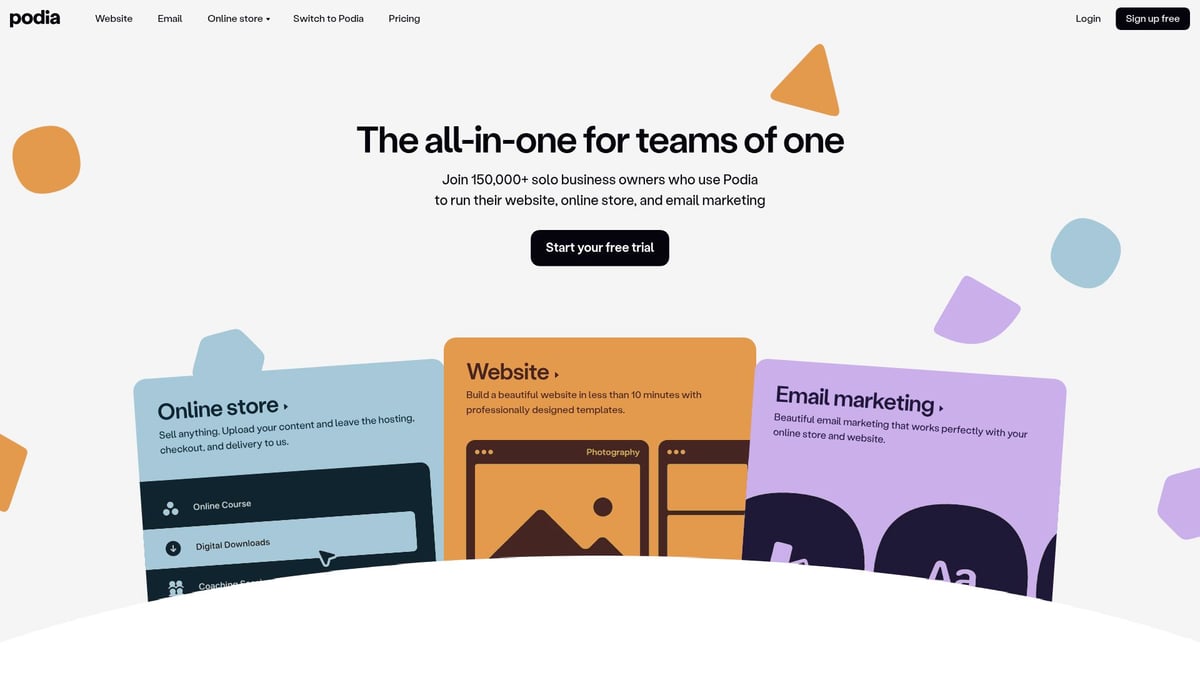
Podia is a unified course saas platform tailored for creators, coaches, and small businesses who want simplicity without sacrificing functionality. It brings courses, webinars, digital downloads, and community features together in one place.
Key Features:
- Host online courses, webinars, and digital downloads
- Built-in email marketing and messaging
- Community features for student engagement
- No transaction fees on paid plans
Unique Selling Points:
- Unified dashboard for content, sales, and community
- Simple, transparent pricing
- Easy-to-use interface for non-technical users
Podia offers a free plan and paid plans starting at $33 per month. It is perfect for creators who want to launch and grow without dealing with complex technical setups or hidden fees in their course saas journey.
Pros:
- No transaction fees, even on lower tiers
- Responsive customer support
- Streamlined workflow from creation to sales
Cons:
- Limited advanced customization
- Fewer third-party integrations compared to some competitors
Example: Over 150,000 creators use Podia to monetize their knowledge and foster online communities, making it a standout course saas solution for simplicity and direct engagement.
TalentLMS
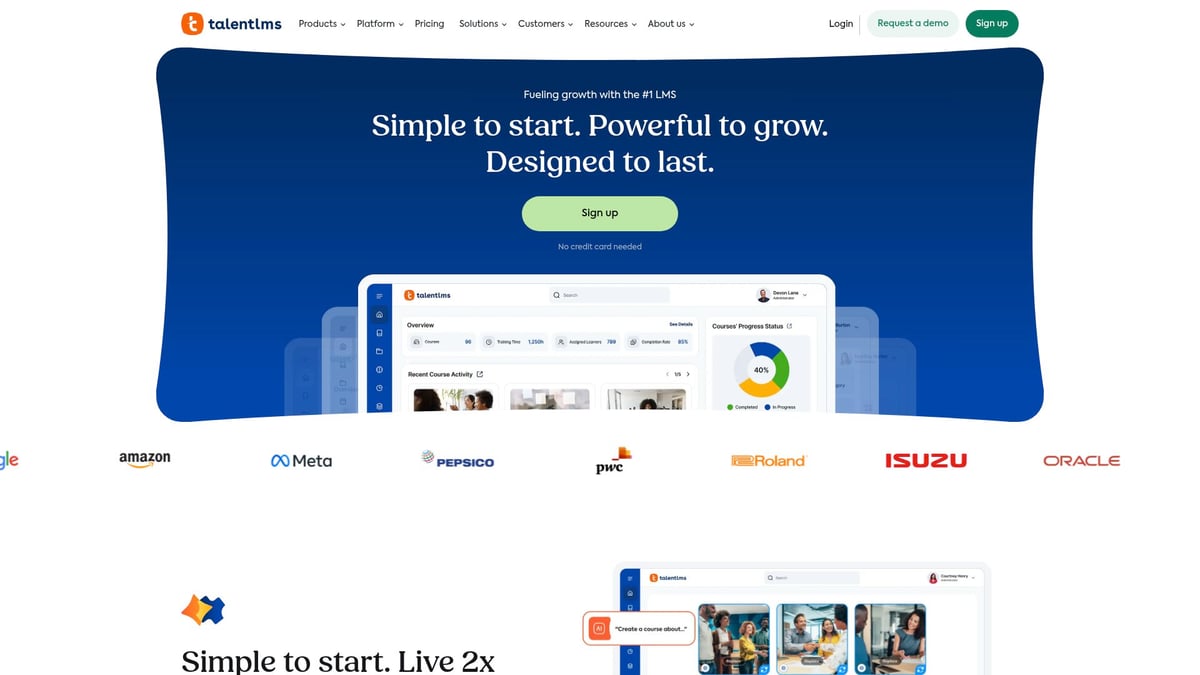
TalentLMS is designed for corporate training, HR departments, and compliance-focused organizations. This course saas platform excels in user management, reporting, and scalability for teams.
Key Features:
- Customizable courses and certifications
- Multi-language support for global teams
- Advanced reporting and analytics
- Integrations with HR and business tools
Unique Selling Points:
- Scalable for small teams or large enterprises
- Robust user management and learning paths
- Compliance training features
TalentLMS offers a free plan for up to 5 users, with paid plans starting at $69 per month. Its course saas infrastructure is made for businesses needing structured, trackable employee learning.
Pros:
- Easy onboarding for large groups
- Strong reporting and analytics
- Integrates with HR systems and tools
Cons:
- Less focus on marketing and sales tools
- Interface is functional but less modern than some competitors
Example: Companies like Deliveroo and OYO use TalentLMS for employee training, leveraging the platform's scalability. For organizations seeking to scale training and education with SaaS, TalentLMS is a proven course saas solution.
LearnDash
LearnDash is a WordPress plugin offering full control and deep customization for online courses. It is ideal for universities, organizations, and advanced users who need flexibility in their course saas deployment.
Key Features:
- Advanced course builder with drip-feed content
- Quizzes, certificates, and assignments
- Robust gamification and group management
- Extensive add-ons and integrations
Unique Selling Points:
- No ongoing SaaS fees, just an annual license
- Deep integration with WooCommerce and membership plugins
- Control over hosting, data, and branding
LearnDash starts at $199 per year and requires WordPress hosting. It suits those who want to own their platform and tailor every aspect of their course saas experience.
Pros:
- No monthly SaaS fees
- Highly customizable with WordPress ecosystem
- Active user and developer community
Cons:
- Requires technical setup and maintenance
- Users must manage plugin updates and hosting
Example: LearnDash powers eLearning for major universities and Fortune 500 companies. For organizations demanding full control, this course saas platform offers unmatched flexibility and depth.
How to Choose the Right Course SaaS Platform for Your Needs
Selecting the best course saas platform is a pivotal decision for any online educator, business, or organization. To make the right choice, it is essential to approach the selection process methodically, focusing on your unique goals, required features, and long-term growth.
Assessing Your Goals and Audience
Begin by clarifying your primary objectives for using a course saas solution. Are you aiming to monetize your expertise, deliver employee training, foster a thriving community, or offer professional certification? Defining your end goal will guide your platform selection.
Next, consider your target audience. Analyze their age group, technological proficiency, and preferred learning methods. For example, a course saas platform designed for professional certification will differ from one intended for casual learning communities.
To ensure your course saas aligns with your vision, explore SaaS course validation strategies before investing significant time and resources.
Evaluating Features and Scalability
Identify the must-have features your course saas platform should offer. These often include video hosting, interactive quizzes, robust analytics, and mobile access. Make a checklist of non-negotiable capabilities.
Scalability is vital for growth. Assess user caps, course limits, and integration options. A scalable course saas platform can handle an expanding user base and content library without compromising performance.
Consider a scenario where an organization grows from 100 to 10,000 users. The right course saas ensures seamless scaling and continued learner satisfaction.
Budget, Pricing Models, and ROI
A course saas investment should align with your financial resources and anticipated returns. Compare free, subscription-based, and one-time payment models for each platform.
| Model | Upfront Cost | Ongoing Fees | Typical Use Case |
|---|---|---|---|
| Free | $0 | Transaction | Starters, hobbyists |
| Subscription | $30–$200/mo | Yes | Growing businesses |
| One-Time | $199+ | No | WordPress power users |
Account for transaction fees, add-ons, and support levels. On average, course creators spend $50–$200 per month on course saas tools. Evaluate return on investment by weighing costs against expected revenue and growth.
Support, Community, and Integrations
Strong onboarding and responsive customer support are crucial when adopting a course saas platform. Look for providers with active user communities, as peer advice can be invaluable.
An ideal course saas integrates seamlessly with marketing, CRM, and automation tools, streamlining your business operations. The right platform not only supports your current needs but also positions you for future expansion and innovation.
Future-Proofing Your Online Learning Business in 2026
The future of online learning is rapidly evolving, and course saas solutions are leading the way for educators and organizations. To remain competitive in 2026 and beyond, it is essential to adopt tools and strategies that align with new technologies and learner expectations. Let’s explore how to future-proof your course saas business by embracing innovation, building strong communities, leveraging analytics, and staying ahead with smart integrations.
Embracing AI, Personalization, and Automation
Artificial intelligence and automation are transforming the course saas landscape. AI-powered content recommendations, adaptive learning paths, and automated feedback are now standard features in leading platforms. These capabilities allow personalized experiences for every learner, boosting engagement and helping creators deliver targeted outcomes.
For instance, platforms using AI-driven personalization have reported student engagement increases of up to 60 percent, as detailed in AI-driven personalization increases student engagement by up to 60%. Automation also streamlines grading, feedback, and learner journeys, giving educators more time to focus on content quality. When choosing a course saas, prioritize solutions that integrate AI and adaptive learning for a truly future-proof approach.
Building Community and Engagement
Community is at the heart of effective online learning. Modern course saas platforms are integrating forums, live sessions, and cohort-based learning to foster deeper connections. These features encourage collaboration, peer support, and ongoing motivation among learners.
Gamification and rewards systems are also on the rise, helping to drive participation and boost retention. Studies have shown that strong community features can increase student retention rates by as much as 30 percent. When evaluating course saas options, look for platforms that offer robust community-building tools to keep learners engaged and returning for more.
Leveraging Analytics for Growth
Data-driven decision making is a hallmark of successful course saas businesses. Advanced analytics provide insights into learner behavior, course completion rates, and content effectiveness. This information is invaluable for identifying trends, optimizing course material, and making informed improvements.
For example, by analyzing drop-off points and engagement metrics, educators can adjust their approach to reduce churn and increase sales. Selecting a course saas that offers deep analytics and reporting features empowers creators to track growth and achieve measurable results. Analytics not only enhance the learning experience but also drive business success.
Staying Ahead with Integrations and Partnerships
To remain at the forefront of online education, course saas platforms must offer seamless integration with CRM systems, marketing automation, and other EdTech tools. These connections enable smooth operations, from marketing to student support and sales.
Forward-thinking platforms are also preparing for emerging trends such as VR/AR, microlearning, and global expansion. The adoption of immersive technologies is accelerating, with VR/AR in eLearning expected to grow at a CAGR of 16–30%. By partnering with other tech providers and embracing new content formats, your course saas business can capture new markets and stay relevant in a fast-changing landscape.