
In 2026, the explosive rise of the saas vertical is transforming how specialized industries operate and innovate. Organizations are turning to tailored SaaS solutions that address unique sector needs, driving efficiency and regulatory compliance at unprecedented speed.
This guide explores how the saas vertical delivers measurable results, from increased adoption rates to improved ROI across healthcare, finance, logistics, and more. Discover the key differences between vertical and horizontal SaaS, the latest trends, and actionable strategies to help you navigate this rapidly evolving landscape.
Unlock your industry’s potential by leveraging the expert insights found in this guide.
Understanding Vertical SaaS: Definition, Scope, and Market Trends
Vertical SaaS is transforming the way organizations operate by offering specialized solutions tailored to industry-specific needs. As digital transformation accelerates, understanding the nuances of saas vertical platforms is essential for leaders aiming to drive targeted success in 2026.
What is Vertical SaaS?
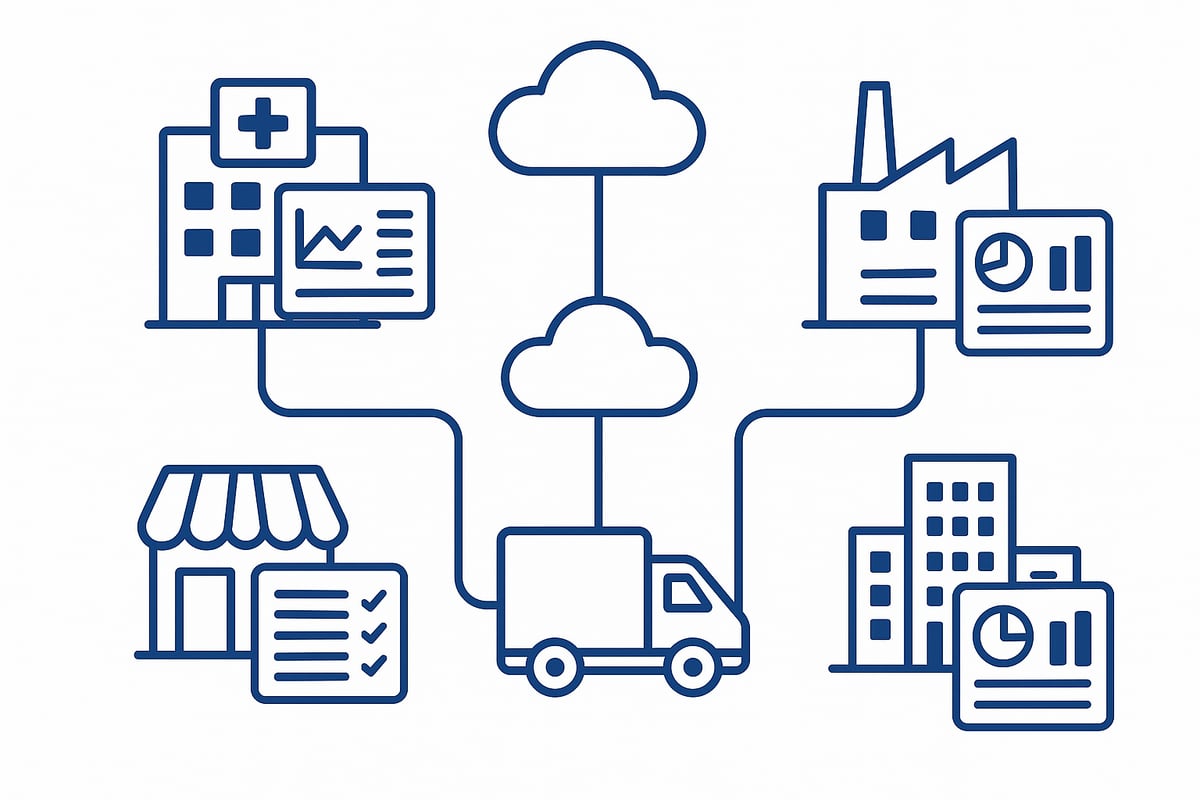
Saas vertical refers to Software as a Service solutions built for the unique requirements of specific industries. Unlike horizontal SaaS, which targets broad business functions, saas vertical platforms focus on niche sectors such as healthcare, retail, manufacturing, construction, insurance, logistics, hospitality, and the public sector.
Key characteristics include:
- Custom workflows designed for industry processes
- Built-in compliance features for sector regulations
- Integrations with industry-standard tools
A comparison table clarifies the distinction:
| Feature | Vertical SaaS | Horizontal SaaS |
|---|---|---|
| Focus | Industry-specific | Broad, cross-sector |
| Customization | High | Moderate |
| Compliance | Built-in | Generic |
By 2026, saas vertical solutions are projected to outpace the growth of horizontal offerings in several industries.
Market Growth and Trends for 2026
The market for saas vertical platforms is experiencing a surge, driven by the demand for specialized cloud solutions. Organizations across sectors are adopting industry clouds to address unique operational and compliance requirements. Venture capital investment in saas vertical startups continues to rise, fueling innovation in emerging sectors like aerospace, food and beverage, and automotive.
Verticalization is becoming a top priority as businesses seek tailored solutions that generic clouds cannot deliver. According to recent studies, vertical SaaS market projected to reach $720.44 billion by 2028, with adoption rates expected to hit record highs in the coming years.
This shift underscores why understanding the saas vertical landscape is critical for future-ready organizations.
Key Benefits of Vertical SaaS
Saas vertical solutions offer key advantages that drive business performance. Enhanced customer retention and loyalty stem from tailored features that address real industry pain points. Streamlined compliance and regulatory management reduce operational risk, while faster onboarding and higher user adoption rates accelerate ROI.
Additional benefits include:
- Improved upsell and cross-sell opportunities for vendors
- Industry-specific add-ons that increase platform value
For example, a healthcare-focused saas vertical platform can enable HIPAA compliance out of the box, simplifying regulatory hurdles for providers.
By leveraging these benefits, organizations can achieve a strategic edge in their respective markets.
Core Challenges and Considerations
Building a successful saas vertical product requires deep industry expertise to ensure solutions fit real-world workflows. Striking a balance between customization and scalability is a common challenge, as is navigating complex regulatory environments across different verticals.
Integration with legacy systems remains a significant consideration. Vendors must ensure seamless workflow alignment without disrupting critical operations.
For instance, adapting a saas vertical solution for highly regulated sectors like finance or healthcare demands robust security and compliance measures, as well as flexible integration capabilities.
Addressing these challenges is vital for long-term success and sustainable growth in the vertical SaaS market.
Vertical SaaS vs. Horizontal SaaS: Strategic Comparison
The landscape of SaaS vertical solutions is rapidly evolving, prompting organizations to weigh the strategic differences between vertical and horizontal SaaS. Understanding these differences is crucial for making informed decisions in 2026.
Target Audience and Market Size
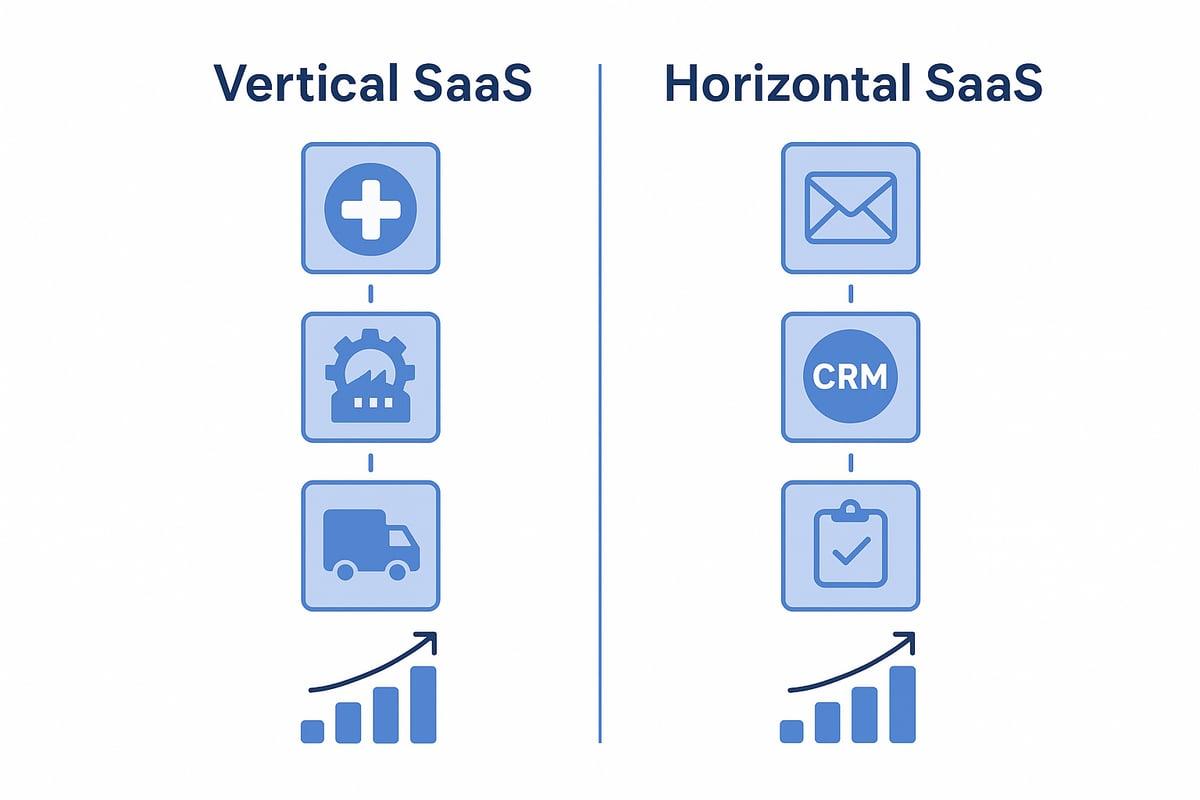
When comparing vertical SaaS and horizontal SaaS, the primary distinction lies in their target audiences and market potential. Vertical SaaS targets specific industries, offering solutions tailored to unique sector needs. This approach results in a smaller total addressable market but yields higher conversion rates due to deep alignment with customer pain points.
Horizontal SaaS, on the other hand, aims for a broad market, addressing common business functions across sectors. This broadness increases competition but also expands reach.
| Type | Audience Focus | Market Size | Example |
|---|---|---|---|
| Vertical SaaS | Industry-specific | Smaller, focused | Real estate CRM |
| Horizontal SaaS | Broad, cross-sector | Larger, generalized | General-purpose CRM |
Recent data confirms that saas vertical providers see higher average conversion rates, as their value propositions resonate more directly with industry buyers. For those seeking to validate their own saas vertical idea, resources like the Vertical SaaS validation guide offer actionable frameworks to assess market fit.
Differentiation, Marketing, and Positioning
SaaS vertical solutions stand out through niche marketing and industry-specific messaging. By leveraging domain expertise, these platforms create a strong brand presence and answer the critical “what’s in it for me?” question for buyers. For example, an insurance-focused saas vertical can highlight regulatory expertise and customized workflows in its positioning.
In contrast, horizontal SaaS relies on broader, feature-based marketing. This generic approach often makes differentiation harder, as many platforms compete on similar functionalities.
- Vertical SaaS: Emphasizes sector challenges and compliance.
- Horizontal SaaS: Competes on features and usability.
Focusing on a saas vertical provides a clear edge in crowded markets, making it easier for buyers to see the direct relevance to their daily operations.
Customer Acquisition and Retention
Acquiring customers in a saas vertical space is generally more efficient due to targeted outreach and strong alignment with industry workflows. Lower acquisition costs and higher retention rates are typical, as vertical SaaS integrates deeply into customer processes.
Vendors benefit from upsell and cross-sell opportunities, offering industry-specific modules or add-ons. For instance, a manufacturing ERP saas vertical can introduce supply chain management as an upsell, further embedding itself into client operations.
- Lower acquisition costs through precise targeting
- Higher retention from workflow integration
- Upsell opportunities with industry add-ons
These factors contribute to the robust growth seen in saas vertical adoption, as vendors capture more value from each customer.
Integration and Workflow Alignment
One of the defining strengths of a saas vertical solution is its seamless fit with industry workflows. Vertical SaaS platforms are designed to integrate natively with sector-specific processes, reducing the need for extensive customization.
Horizontal SaaS, in contrast, often requires significant adaptation to meet niche requirements, leading to longer deployment times and increased complexity.
| Solution Type | Workflow Fit | Integration Effort | Example |
|---|---|---|---|
| Vertical SaaS | Seamless, industry-fit | Minimal | Logistics SaaS integrating with TMS |
| Horizontal SaaS | Generic, adaptable | High | Customizing for industry needs |
In 2026, integration-readiness is a core purchasing criterion, giving a well-designed saas vertical a distinct competitive advantage.
Industry Deep Dives: Where Vertical SaaS is Winning in 2026
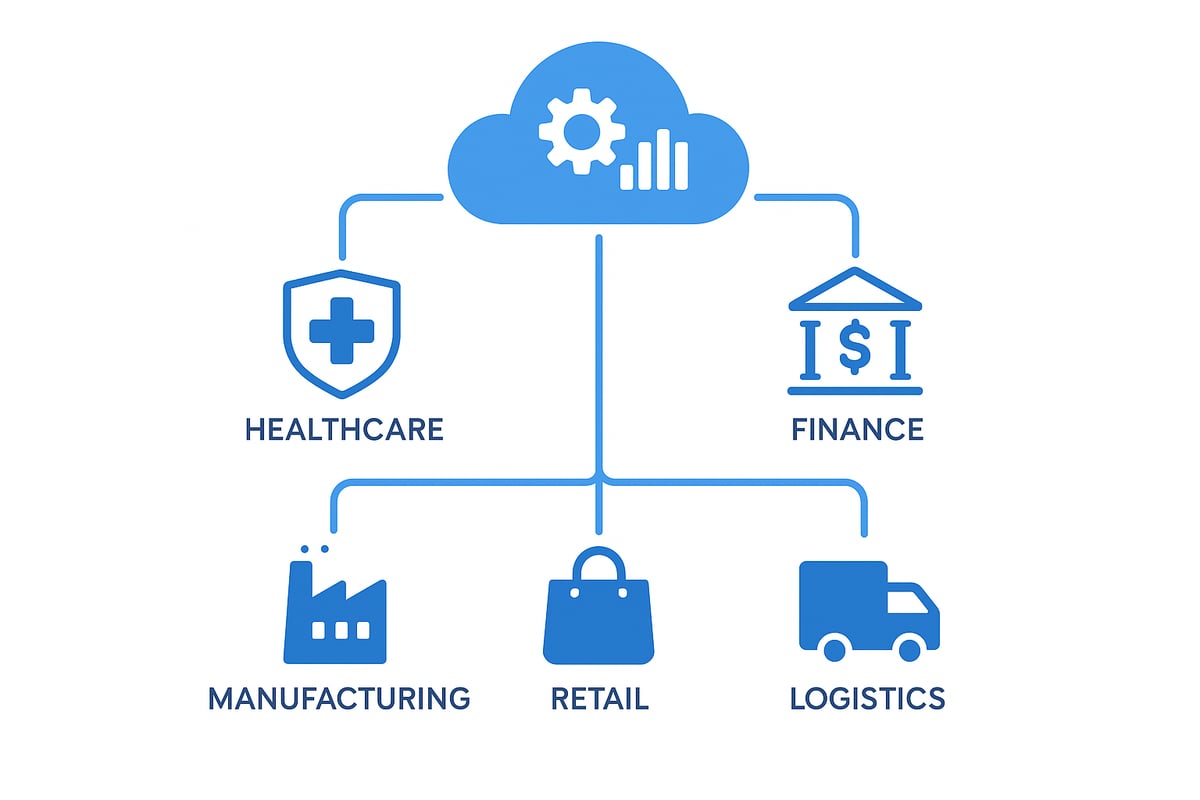
The rapid evolution of saas vertical solutions is transforming entire industries in 2026. Each sector is experiencing unique gains as platforms deliver tailored workflows, compliance, and automation. Let's explore how six key industries are leveraging saas vertical innovation to achieve measurable results.
Healthcare
The healthcare industry is witnessing a surge in saas vertical adoption, driven by the need for secure, compliant, and integrated platforms. Telehealth solutions now offer on-demand diagnostics and real-time chronic condition management. Automated compliance with regulations like HIPAA is a standard feature. Predictive analytics are optimizing patient care, enabling providers to intervene earlier and improve outcomes. According to recent Vertical SaaS companies saw revenue growth of over 20% in 2024, healthcare saas vertical platforms have experienced a 30% year-over-year increase in adoption as hospitals and clinics prioritize digital transformation.
Financial Services & Insurance
For financial services, the saas vertical approach streamlines claims management and policy administration. Automated risk assessment tools and compliance tracking are simplifying regulatory burdens. Insurers are creating personalized experiences for policyholders, using data-driven insights to improve service. Digital transformation in claims processing has become the norm, with platforms supporting end-to-end workflows. The financial services saas vertical market is projected to grow by 18% in 2026, reflecting ongoing demand for industry-specific automation and security. Companies benefit from faster processing, better compliance, and enhanced customer loyalty.
Manufacturing & Aerospace
Manufacturers and aerospace organizations are embracing saas vertical platforms to meet complex operational needs. ERP solutions designed for engineer-to-order (ETO) processes are shortening deployment cycles by 25%. Advanced contract management and supply chain optimization features are tailored to government and commercial buyers alike. Aerospace firms are leveraging saas vertical tools to streamline procurement and enhance aftermarket service delivery. These platforms integrate with legacy systems, ensuring seamless data flow and compliance. The result is greater efficiency, improved quality control, and accelerated time-to-value for industry leaders.
Retail & Hospitality
In retail and hospitality, saas vertical solutions are personalizing customer journeys and boosting retention. Inventory management platforms are now specifically tailored to retail workflows, supporting real-time visibility and demand forecasting. Integrated marketing and loyalty program modules help brands increase repeat purchases and maximize ROI. The saas vertical approach enables seamless collaboration across teams, from front-line staff to management. With a 15% higher customer retention rate, retail organizations are seeing measurable business impact. Hospitality brands benefit from unified systems that enhance guest experiences and streamline operations.
Real Estate & Construction
The real estate and construction industries are capitalizing on saas vertical CRMs for property portfolio management and deal tracking. Collaboration tools enable smoother contract negotiations and project close-outs. Data management platforms help with targeted marketing and progress monitoring, ensuring stakeholders stay informed. Real estate firms using saas vertical solutions report improved sales pipeline efficiency and faster deal cycles. Construction companies are rapidly adopting digital tools, with adoption rates expected to double by 2026. This shift is driving better project outcomes and increased transparency across the sector.
Logistics & Public Sector
Logistics and public sector organizations are turning to saas vertical platforms for transportation, fleet, and route optimization. Compliance tracking tools are designed for government procurement standards, ensuring transparency and accountability. Integration with public sector systems enables real-time data sharing and reporting. Logistics firms are using these solutions to reduce operational costs by 12% while improving delivery reliability. Public sector adoption of saas vertical tools has risen by 20% since 2024, reflecting an industry-wide push for greater efficiency and digital modernization.
The Role of AI and Automation in Vertical SaaS
Artificial intelligence and automation are rapidly transforming the saas vertical landscape in 2026. These technologies are not just enhancing efficiency but also enabling industry-specific innovation that delivers measurable value. As companies in every sector seek a competitive edge, AI and automation have become essential tools for tailoring solutions to unique industry needs.
AI-Driven Personalization and Analytics
AI-driven personalization is a defining feature of the modern saas vertical. Industry-specific SaaS platforms leverage advanced analytics to predict user needs, automate customer service, and optimize claims or risk management.
For example, healthcare saas vertical providers use AI to identify early signs of disease by analyzing patient data in real-time. This capability translates into improved outcomes and operational efficiency. Notably, 60% of vertical SaaS platforms now integrate AI features, reflecting a trend echoed in recent studies on AI-driven SaaS solutions expected to grow at a CAGR of 23% from 2023 to 2028. As AI becomes more prevalent, saas vertical adoption rates are poised to accelerate across industries.
Industry-Specific Machine Learning Models
A key advantage of the saas vertical approach is the use of machine learning models trained on sector-specific datasets. These models drive higher accuracy in forecasting, inventory management, and regulatory compliance.
In retail, for instance, saas vertical solutions employ machine learning to predict demand fluctuations, ensuring optimal stock levels and reducing waste. The ability to harness industry data enables continuous refinement of AI models, giving organizations a clear performance edge. Ultimately, the saas vertical strategy makes it possible to deliver highly relevant recommendations that generic SaaS tools cannot match.
Automation of Regulatory Compliance
Regulatory compliance is a major challenge in every saas vertical, particularly for sectors like finance and healthcare. Automation tools now monitor and report compliance in real time, reducing manual effort by 40%.
Financial services saas vertical platforms, for example, can automate KYC and AML checks, generating alerts for any compliance breaches. This proactive approach not only streamlines audits but also helps organizations avoid costly penalties. By embedding compliance automation into daily workflows, the saas vertical model ensures that businesses stay ahead of ever-changing regulations.
Embedding AI into Client Workflows
The integration of AI into client workflows is transforming how organizations operate in every saas vertical. AI-powered tools are seamlessly embedded within industry platforms, supporting smarter decision-making and greater operational efficiency.
In manufacturing, saas vertical providers deploy AI for real-time quality control, flagging anomalies before they become costly issues. This integration fosters rapid adoption, as users experience immediate, relevant benefits. As AI adoption grows, it becomes a clear differentiator for saas vertical vendors aiming to lead their industries in 2026.
Navigating Implementation Challenges and Best Practices
Implementing a successful saas vertical solution requires more than technical expertise. Organizations must navigate industry complexity, regulatory barriers, and evolving user expectations. Below, we break down the best practices and common challenges across four critical areas for 2026.
Industry Expertise and Customization
Deep domain knowledge is the cornerstone of any high-performing saas vertical. Teams must immerse themselves in industry specifics, gathering insights through advisory boards, customer interviews, and strategic partnerships.
- Collaborate with subject matter experts.
- Join industry associations for up-to-date trends.
- Leverage co-development with leading clients.
For example, many SaaS vendors partner with established industry leaders to co-create tailored features. This approach ensures that solutions address genuine pain points and foster strong adoption. Customization is not optional in the saas vertical space—it is essential for long-term product relevance and user satisfaction. For founders, adopting proven SaaS validation strategies can accelerate product-market fit and reduce costly missteps.
Scalability and Integration
Scalability is a top concern for saas vertical providers. Modular architecture enables flexible growth, while robust API frameworks ensure seamless integration with legacy platforms.
- Design systems for easy expansion and upgrades.
- Prioritize open APIs for interoperability.
- Test integrations with commonly used industry tools.
A standout example is logistics-focused SaaS platforms, which enable API-based integrations with transportation management systems. This capability not only meets client expectations but also supports future innovation. In 2026, 70% of buyers list integration readiness as a deciding factor when evaluating saas vertical solutions.
Regulatory and Data Security Considerations
Navigating complex regulatory environments is especially challenging for saas vertical applications. Each sector—healthcare, finance, public sector—demands strict compliance and robust data protection.
- Build security features into the core product design.
- Automate compliance monitoring and reporting.
- Provide audit trails for transparency.
Healthcare SaaS, for instance, often includes built-in audit trails to support HIPAA compliance. Compliance failures remain a leading concern for SaaS buyers. Turning regulatory requirements into an advantage is possible by following best practices outlined in Turn GDPR compliance into advantage, which can set a saas vertical apart in highly regulated markets.
User Adoption and Change Management
User adoption is where many saas vertical projects succeed or fail. Effective onboarding, continuous training, and proactive support are vital for overcoming resistance to change.
- Offer in-app guidance and contextual help.
- Tailor onboarding to unique industry workflows.
- Gather feedback early and iterate quickly.
For example, manufacturing SaaS vendors often provide step-by-step in-app tutorials to ensure smooth transitions. A user-centric design approach increases adoption rates by up to 25%, making it a non-negotiable element for any saas vertical aiming for sustainable growth.
How SaaS Validation Empowers Vertical SaaS Founders
Launching a saas vertical demands more than a great idea. SaaS Validation provides founders with proven frameworks to test and refine vertical SaaS concepts before committing resources, minimizing risk and maximizing industry fit.
Through step-by-step guides, founders learn to assess market demand, design MVPs, and address regulatory requirements unique to each sector. Actionable insights on niche market needs and understanding your SaaS buyer persona ensure solutions truly resonate with target users.
The platform offers community-driven polls and benchmarks, helping founders identify common challenges in their chosen saas vertical. Free tools and expert frameworks streamline the validation process, supporting entrepreneurs and product managers as they build for long-term success in 2026.