The digital landscape is evolving rapidly, and businesses face unprecedented competition for attention online. High-converting landing pages now deliver some of the highest ROI in digital marketing, driving measurable results and shaping future growth.
In 2026, mastering the art of creating landing pages is essential for business expansion, SaaS validation, and effective lead generation. This guide explores the latest landing page trends, a proven step-by-step creation process, optimization strategies, conversion-focused design principles, and future-proofing tactics. Discover how adopting these strategies can give you a decisive edge in a crowded market and start transforming your results today.
The Essential Role of Landing Pages in 2026
Landing pages have transformed into the backbone of digital marketing strategy. As online competition heats up in 2026, creating landing pages has become a decisive factor in driving business growth and capturing qualified leads. The evolution of these pages reflects broader shifts in technology and consumer expectations, making it crucial for companies to adapt and innovate.
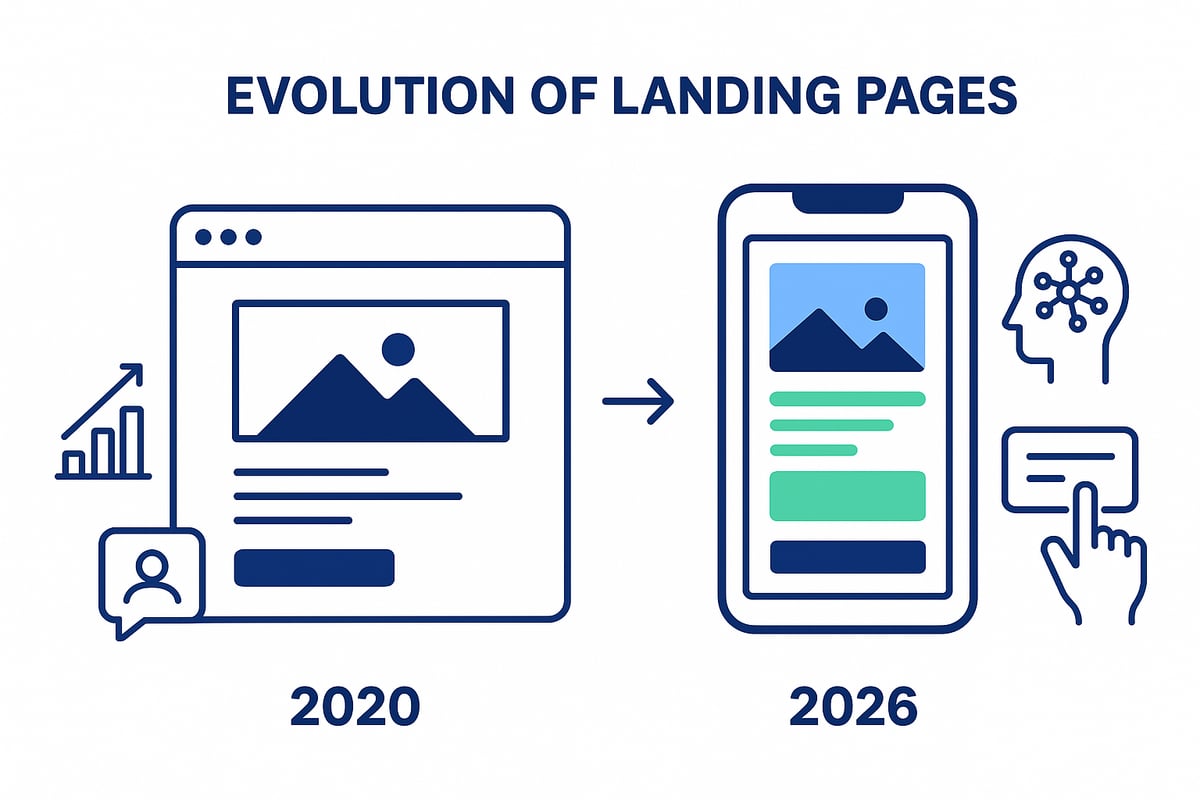
The Evolution of Landing Pages: 2020-2026
Between 2020 and 2026, creating landing pages has shifted from static, single-message layouts to dynamic, deeply personalized experiences. Modern landing pages now use AI and automation to tailor content for each visitor, drawing on advanced user behavior analytics.
Interactive elements have surged in popularity. Features like smart content blocks, live chat, and personalized product recommendations are now standard. According to HubSpot, 74% of marketers report that landing page personalization increases conversions.
This evolution means creating landing pages is no longer a simple design task. It is a strategic process that relies on real-time data and adaptability to meet users' rising expectations.
Why Landing Pages Matter More Than Ever
In 2026, the digital landscape is crowded, and attention spans are shorter than ever. Creating landing pages that engage and convert is essential for standing out, especially for SaaS validation, product launches, and campaign success.
Companies leveraging multiple targeted landing pages see a clear advantage. For instance, businesses with 10 or more landing pages generate 55% more leads, according to HubSpot. The central role of landing pages in digital marketing ROI cannot be overstated.
For inspiration and proven results, explore some of the Best SaaS landing page examples to understand what sets high-converting pages apart in 2026.
Key Purposes and Types of Landing Pages in 2026
Creating landing pages now serves a wide array of strategic purposes beyond basic lead capture. Common uses include:
- SaaS product validation and MVP demand testing
- Event registration and webinar signups
- Waitlists for upcoming launches
- Hyper-targeted onboarding flows
- Micro-segmented offers for specific audiences
A growing trend is micro-segmentation, where each audience segment gets a tailored message. SaaS founders, for example, rely on creating landing pages to validate MVP concepts before investing in full-scale development. MarketingSherpa reports that 68% of B2B businesses use landing pages for lead generation.
Common Pitfalls and Missed Opportunities
Despite their importance, many still overlook key aspects when creating landing pages. Common pitfalls include:
- Generic, uninspired designs
- Slow load times that frustrate users
- Poor mobile optimization, leading to lost traffic
- Ignoring data-driven personalization opportunities
- Skipping essential A/B testing
The consequence? High bounce rates and missed conversions due to irrelevant messaging or sluggish performance. Avoiding these missteps is vital for success in 2026, making creating landing pages a disciplined, data-driven process rather than a one-time design task.
Step-by-Step Guide: Creating High-Converting Landing Pages
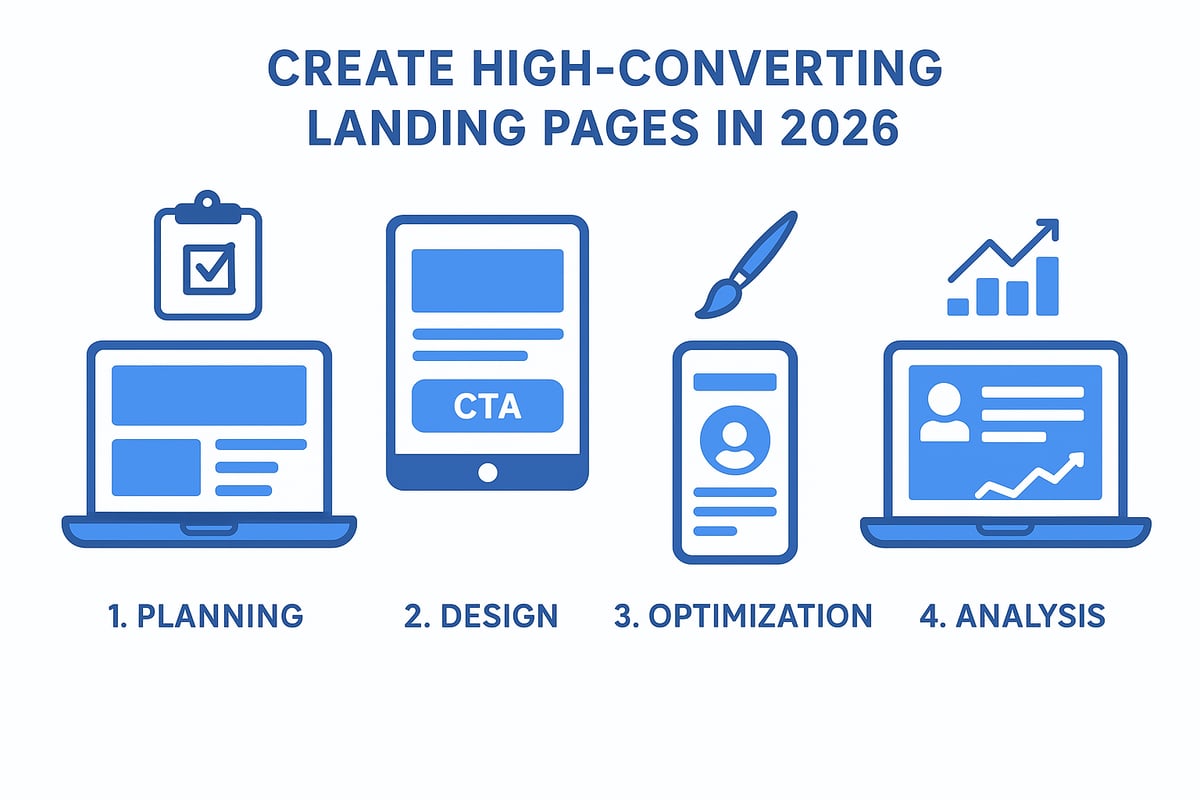
Launching a successful digital campaign in 2026 starts with creating landing pages that truly convert. This step-by-step guide is designed to walk you through every stage, ensuring your landing pages deliver measurable results. Each step focuses on a critical aspect of the process, from strategy to optimization, so you can drive more leads, validate SaaS products, and maximize ROI.
Step 1: Define Your Objective and Audience
Every successful campaign begins by clearly defining what you want to achieve with your landing page. Are you focused on lead generation, SaaS validation, direct sales, or event signups? Clarifying your primary objective is the cornerstone of creating landing pages that resonate.
Leverage advanced 2026 data tools to build detailed buyer personas. Identify demographics, pain points, and online behaviors. For example, targeting early SaaS adopters requires a different approach than reaching enterprise buyers. Use segmentation to tailor your messaging and offers.
Research shows that personalized calls-to-action convert 202% better. By aligning your landing page content with audience expectations, you can dramatically boost engagement. For SaaS founders, tools for validating with landing pages provide a reliable way to test ideas and measure demand before investing in full development.
Remember, clarity about your audience and objectives is vital for creating landing pages that perform in a competitive digital landscape.
Step 2: Craft Compelling, Value-Focused Messaging
The next step in creating landing pages that convert is to develop messaging that communicates value instantly. Start with a headline that clearly addresses your audience’s needs, followed by subheadings and concise, benefit-driven copy.
Incorporate social proof wherever possible. Authentic testimonials, customer logos, and relevant data points help build credibility. For example, a SaaS landing page featuring a founder’s endorsement or a well-known client testimonial can increase trust and drive conversions.
Use bullet points to highlight key benefits:
- Immediate problem-solving
- Unique features or offers
- Risk-free guarantees
Value-driven messaging is not just about what you offer, but why it matters. When creating landing pages, ensure every word reinforces your value proposition and aligns with your audience’s motivations.
Step 3: Design for User Experience and Mobile Optimization
User experience is paramount when creating landing pages for 2026. Responsive, mobile-first design is now the standard. Your landing page should look and perform seamlessly on smartphones, tablets, and desktops.
Prioritize fast load times. Use frameworks like AMP or other lightweight solutions to ensure speed. According to Google, 53% of mobile users abandon sites that take longer than three seconds to load. Optimize images, minimize scripts, and streamline every element for performance.
Navigation should be intuitive. Limit distractions, keep forms short, and make your calls-to-action prominent. Accessibility compliance is also critical. Use readable fonts, sufficient color contrast, and alt text for all images to ensure every visitor can interact with your page.
By focusing on these aspects, you are creating landing pages that not only attract visitors but also guide them smoothly to conversion.
Step 4: Integrate Conversion Elements Strategically
To maximize results, it is essential to place conversion elements deliberately when creating landing pages. Start with a strong call-to-action (CTA) above the fold, making it visible as soon as visitors arrive. Sticky bars or exit-intent popups can capture attention at key moments, while chatbots and interactive forms increase engagement.
Think about form design. Fewer fields typically mean higher conversion rates. For SaaS waitlists or lead magnets, a simple email field often outperforms lengthy forms. Use multi-step forms if you need to qualify leads without overwhelming users.
Interactive signup elements, such as progress bars or micro-animations, can also improve the user experience and drive more completions. Always ensure that your conversion elements are easy to find and use.
Step 5: Leverage Visuals, Video, and Interactive Content
Dynamic content is a cornerstone for creating landing pages that engage and convert in 2026. Incorporate explainer videos, product demos, and animated graphics to showcase your offer. Videos, in particular, can boost conversions by up to 86%.
Interactive features such as calculators, quizzes, or dynamic testimonials keep visitors engaged. For instance, a SaaS tool demo embedded on your landing page can increase engagement by 34%. Visuals should be clear, relevant, and optimized for quick loading.
When designing your landing page, ensure that visuals support your messaging and do not distract from your main goal. Use images and videos to simplify complex information and guide users toward your CTA.
Step 6: Implement Analytics, A/B Testing, and Iteration
The final step in creating landing pages that achieve high conversion rates is a commitment to ongoing analysis and improvement. Set up tracking tools like GA4 or Hotjar to monitor user behavior, conversion rates, and engagement metrics.
A/B test different elements, such as headlines, layouts, CTAs, and offers. Small changes can have a significant impact on performance. For example, testing two versions of your value proposition can reveal which resonates most with your audience.
Continuous iteration keeps your landing pages competitive. Use data insights to refine messaging, adjust visuals, and optimize forms. Remember, the digital landscape evolves rapidly, and regular updates are essential for sustained success.
Conversion-Focused Design Principles for 2026
Designing for conversions in 2026 means more than just attractive visuals. Creating landing pages that convert requires a blend of modern aesthetics, trust signals, adaptive personalization, and inclusivity. Each principle below is essential for maximizing user engagement and driving results.
Simplicity and Clarity in Layout
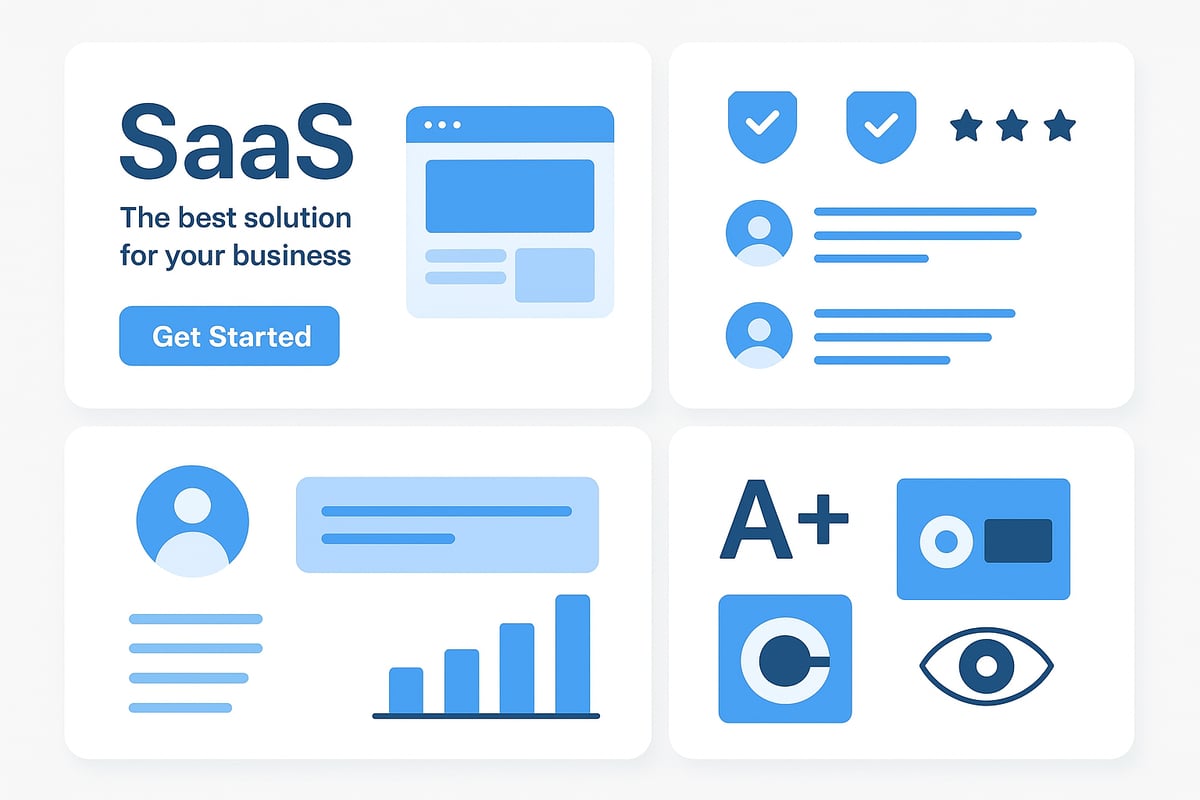
In 2026, simplicity remains the cornerstone of creating landing pages that perform. Visitors expect intuitive layouts that guide them seamlessly toward your call to action. Clutter-free interfaces with strategic white space and a clear visual hierarchy make information easy to digest.
A minimalist approach, using a single bold CTA and concise messaging, helps users focus on the value proposition. Consider a SaaS landing page with a prominent headline, a brief benefits list, and one action button. This format reduces distractions and boosts conversion rates.
Key tips for clarity:
- Limit on-screen elements to essentials.
- Use large, legible fonts and contrasting colors.
- Present content in short sections or bullet points.
By emphasizing clarity, you make creating landing pages an efficient process that leads to higher engagement and conversions.
Trust-Building Elements and Social Proof
Trust is a critical driver in creating landing pages that convert. Users look for clear signs that your offer is legitimate and secure. Displaying testimonials, security badges, and third-party endorsements builds instant credibility.
Incorporate user reviews, certifications, and recognizable partner logos near your CTA. Real data, such as customer ratings or usage stats, adds authenticity. According to VWO, trust signals can increase conversion rates by up to 42%.
For SaaS companies, transparent privacy policies and compliance with regulations are vital. Including a brief statement or linking to a resource on GDPR compliance for SaaS landing pages reassures visitors about data security.
Ultimately, building trust is foundational for creating landing pages that drive results.
Personalization and Dynamic Content
Personalization has transformed the process of creating landing pages. In 2026, users expect content tailored to their interests and behaviors. AI-powered tools enable dynamic text and visuals that adapt in real time to each visitor.
For example, greeting users by name, showing relevant product features, or adjusting offers based on previous interactions can significantly boost engagement. Dynamic content blocks, such as personalized SaaS onboarding messages, make users feel understood and valued.
Benefits of dynamic content:
- Improves relevance and conversion rates.
- Increases time on page and reduces bounce rates.
- Supports micro-segmentation for niche audiences.
By integrating personalization, creating landing pages becomes a more strategic way to nurture leads and foster loyalty.
Accessibility and Inclusivity
Accessibility is now a non-negotiable aspect of creating landing pages. Ensuring that your design is usable by everyone, including individuals with disabilities, expands your audience and demonstrates social responsibility.
Key considerations include:
- Using readable fonts and sufficient color contrast.
- Adding descriptive alt text for images.
- Designing forms that are easy to navigate with assistive technologies.
For instance, inclusive forms with clear labels and accessible navigation reduce friction for all users. Making these adjustments not only complies with ADA guidelines but also improves overall user satisfaction.
Prioritizing accessibility ensures that creating landing pages results in broader reach and lower bounce rates.
Optimization Strategies: Maximizing Landing Page Performance
Optimizing your landing pages is essential for maximizing conversions and staying ahead in the digital landscape. In 2026, creating landing pages that perform at the highest level requires a holistic approach, balancing speed, technical precision, SEO, data-driven decisions, and continuous improvement.
Speed and Technical Optimization
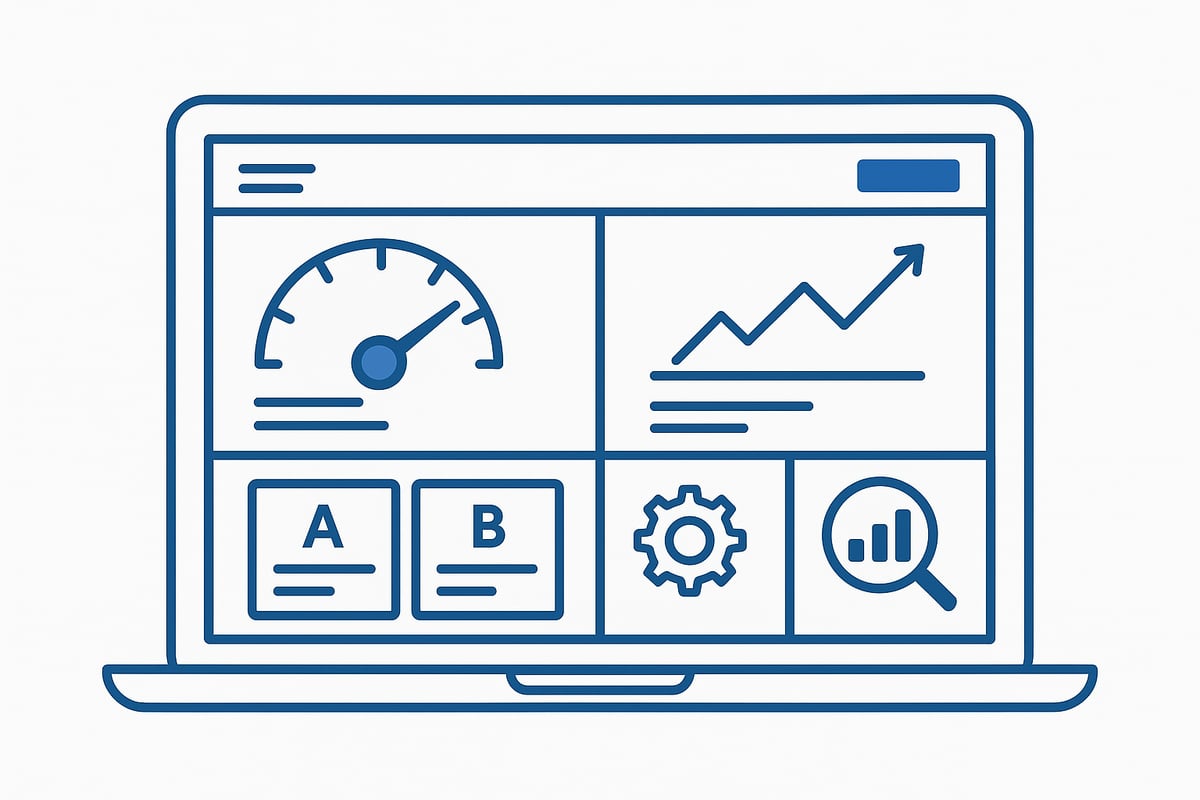
Page speed is a non-negotiable factor in creating landing pages that convert. Every second counts, as even a one-second delay can reduce conversions by 7 percent according to Akamai. Compress all images, minimize scripts, and use a content delivery network for global reach.
A quick comparison table:
| Optimization | Impact on Speed | Conversion Effect |
|---|---|---|
| Image Compression | High | Higher conversions |
| CDN Usage | High | Shorter load times |
| Script Minimization | Moderate | Lower bounce rates |
Aim for a sub-two-second load time. Tools like Google PageSpeed Insights help identify bottlenecks. In 2026, creating landing pages that load quickly on all devices increases engagement and reduces bounce rates.
SEO Best Practices for Landing Pages
Effective SEO is foundational for creating landing pages that attract qualified traffic. Start with in-depth keyword research, targeting long-tail phrases relevant to your offer. Use descriptive meta tags, structured data schema, and internal links to strengthen your site’s architecture.
For actionable tips, refer to this Landing page SEO strategies guide, which covers the essentials for optimizing landing pages in the AI era.
Don’t forget to optimize headings, alt text, and page URLs. In 2026, well-optimized pages are more discoverable, ensuring your creating landing pages efforts yield maximum ROI.
Advanced A/B and Multivariate Testing
Testing is critical for refining your landing page strategy. With advanced A/B and multivariate testing, you can compare headlines, images, CTAs, and offers simultaneously. Tools like Google Optimize, Optimizely, and VWO make it easy to run experiments and measure results.
For example, a SaaS company might test two call-to-action button colors and three headline variations, tracking which combination boosts conversions. Creating landing pages with this data-driven approach ensures you’re always improving based on real user behavior.
Use test results to refine not just one element, but your entire value proposition.
Integrating Analytics and Data-Driven Decisions
Integrating analytics is non-negotiable for creating landing pages that deliver results. Set up conversion tracking using GA4, and use heatmaps from tools like Hotjar to visualize user interactions. Funnel analysis helps pinpoint where users drop off.
Example code for event tracking:
gtag('event', 'conversion', {
  'send_to': 'AW-XXXX/XXXXXXXXXX',
  'value': 1.0,
  'currency': 'USD'
});
Regularly review data to adjust messaging, offers, and layout. This iterative process ensures your creating landing pages strategy is always aligned with user needs and business goals.
Ongoing Maintenance and Iteration
Creating landing pages is not a one-time effort. Regularly update content, visuals, and offers to keep pages relevant. Monitor competitor landing pages and industry trends for new ideas.
Maintenance checklist:
- Refresh testimonials and case studies
- Update design elements for modern appeal
- Test new lead magnets and CTAs
Continuous optimization is the key to long-term success in 2026. By staying proactive, you ensure your creating landing pages strategy remains effective and future-ready.
Future-Proofing Your Landing Pages: Trends for 2026 and Beyond
As we look ahead, creating landing pages that stand the test of time requires a proactive approach to emerging trends. Businesses must adapt to rapid technological changes, evolving user expectations, and increasing privacy concerns. The following future-proofing strategies will help ensure your landing pages remain effective and competitive in 2026 and beyond.
AI-Powered Personalization and Automation
AI is fundamentally reshaping how brands are creating landing pages. By harnessing real-time data, AI can deliver personalized content, recommendations, and chatbot interactions that match user behavior and preferences. This automation not only streamlines the user journey but also boosts engagement and conversion rates.
For a deep dive into the latest advancements, see AI-powered personalization in landing pages, which highlights how machine learning is driving smarter user experiences. As AI adoption accelerates, expect dynamic content blocks, predictive lead scoring, and automated testing to become standard in creating landing pages.
Voice and Visual Search Optimization
Voice and visual search are quickly transforming how users interact with digital content. Optimizing for voice means structuring content in a conversational tone and targeting natural language queries. For visual search, use high-quality images with descriptive alt text and schema markup.
In 2026, creating landing pages that respond to “Hey Siri” or Google Lens will become a key differentiator. Early adopters who optimize for these technologies will gain increased visibility and organic traffic. Consistently updating your landing page SEO for these trends ensures your business stays ahead of the curve.
Privacy, Security, and Trust Signals
With rising concerns about data privacy, building trust is more critical than ever when creating landing pages. Transparent privacy policies, GDPR compliance, and clear data usage explanations are now standard expectations. Displaying security badges and third-party certifications reassures visitors their information is safe.
Incorporate trust signals throughout your landing pages, such as SSL certificates and visible privacy statements. This approach not only protects your users but also reduces bounce rates and increases conversions, making privacy a competitive advantage in the digital landscape.
Integrating with SaaS Validation and MVP Launches
For SaaS founders and innovators, creating landing pages is a proven method for validating ideas before full-scale development. Use these pages to collect early signups, feedback, and gauge market demand for your MVP. Interactive forms and micro-surveys can help refine your product offering based on real user responses.
By integrating analytics and rapid iteration, you can minimize risk and maximize learning. In 2026, successful SaaS launches will rely on agile landing page strategies to test, validate, and adapt quickly to user needs.
Case Studies: Landing Page Success Stories in 2026
The impact of creating landing pages is best illustrated through real-world success stories. In 2026, businesses across industries are leveraging tailored landing page strategies to achieve impressive results. The following case studies show how innovative approaches to creating landing pages are driving growth, improving lead quality, and boosting conversions.
SaaS Startup: Validating Product-Market Fit
SaaS founders in 2026 are creating landing pages to validate demand before investing in full-scale development. By launching a simple page highlighting their MVP and collecting early signups, they quickly gauge market interest. One SaaS startup used targeted ads and a concise value proposition, resulting in a 60% opt-in rate from early adopters. This approach not only built a feedback loop with prospects but also minimized risk and resource waste.
Recent landing page conversion statistics 2025 confirm the effectiveness of this strategy, showing SaaS validation pages consistently outperform generic websites. Creating landing pages for validation is now a standard step for successful SaaS launches.
E-Commerce: Boosting Sales with Dynamic Content
E-commerce brands are creating landing pages that personalize offers in real time, responding to visitor behavior and preferences. In one case, a retailer implemented dynamic product recommendations and limited-time discounts on its landing page. This resulted in a 30% increase in average order value and higher conversion rates.
The secret lies in integrating user data and dynamic content blocks, which make each visitor feel uniquely targeted. This approach to creating landing pages has become a best practice for forward-thinking e-commerce teams aiming to capture more value from every session.
Online Education: Increasing Course Signups
Online education providers have seen remarkable improvements by creating landing pages optimized for trust and engagement. One course platform revamped its landing page to feature student testimonials, explainer videos, and a countdown timer for early-bird pricing. These elements, combined with streamlined forms, led to a 45% increase in course signups within a single campaign.
The key to success was removing friction and adding social proof, making the process of creating landing pages central to their enrollment strategy. This case demonstrates how thoughtful design and persuasive content can transform results in the education sector.
B2B Services: Maximizing Lead Quality
B2B companies in 2026 are creating landing pages with advanced segmentation and multi-step forms to qualify leads more effectively. A consulting firm redesigned its service landing page to include industry-specific messaging and a short pre-qualification survey. This resulted in a 25% jump in high-quality leads and a more efficient sales process.
Referencing the Landing page conversion benchmarks report, industry leaders now benchmark their results and continuously improve their approach. For B2B, creating landing pages tailored to different segments is vital for attracting and converting the right clients.