The SaaS industry is set to surpass $700 billion by 2030, making it one of the world’s fastest-growing markets. With this explosive momentum, there has never been a better time to explore fresh saas business ideas for 2025.
This article unveils nine innovative concepts, each designed for long-term profitability and scalability. You will discover emerging trends, untapped markets, and actionable inspiration for aspiring SaaS founders.
Choosing the right niche is essential for success. Ready to find your next breakthrough? Dive in and explore the opportunities that could shape your future in SaaS.
Why SaaS Remains the Ultimate Business Model in 2025
The SaaS industry is experiencing unprecedented momentum, with the global market projected to surpass $700 billion by 2030. This explosive growth is fueling a surge in new saas business ideas, attracting founders and investors alike. According to Global SaaS Market Projections, SaaS adoption is set to accelerate as more organizations shift to cloud-based solutions.
What makes SaaS so compelling? The answer lies in its unique advantages. Recurring revenue streams ensure predictable cash flow and long-term profitability. Scalability is built in, allowing companies to serve thousands of customers with minimal incremental cost. For those exploring saas business ideas, the low upfront investment compared to traditional software makes entry feasible, even for small teams.
SaaS also thrives by supporting major business trends. Remote work has become the norm, and SaaS platforms enable teams to collaborate from anywhere. Automation is another driving force, with SaaS products streamlining operations and reducing manual tasks. The rise of no-code and low-code tools empowers non-technical founders to bring their saas business ideas to life, democratizing innovation and lowering barriers for entry.
Success stories abound in the SaaS world. Companies like Zoom and Slack have scaled rapidly, riding the wave of digital transformation. Their growth underscores the potential for new saas business ideas to capture market share quickly. However, competition is fierce and customer churn is an ongoing concern. Innovative features, continuous improvement, and a focus on customer success help mitigate these risks and set strong SaaS businesses apart.
Investors continue to prioritize SaaS startups, drawn by their growth potential and robust financial metrics. The combination of high margins, sticky customer relationships, and proven scalability makes saas business ideas especially attractive in today’s market. As digital transformation accelerates, SaaS remains the ultimate business model for founders seeking long-term success.
9 Brilliant SaaS Business Ideas to Launch in 2025
The SaaS landscape is evolving rapidly, with fresh opportunities emerging each year. Below, you’ll find a curated selection of nine innovative saas business ideas for 2025. These concepts draw from current market trends, gaps in competition, and real-world founder success stories. The list is shuffled to maximize uniqueness, and each idea is packed with actionable inspiration for aspiring SaaS founders. Whether you’re a serial entrepreneur or just getting started, these saas business ideas offer a springboard for scalable, profitable ventures.
1. AI-Powered Content Personalization Platform
Imagine a SaaS solution that leverages artificial intelligence to deliver hyper-personalized content across digital touchpoints. This type of platform analyzes user behavior in real time, enabling businesses to present dynamic content blocks tailored to each visitor.
Core features include real-time user segmentation, advanced analytics dashboards, A/B testing modules, and seamless integration with popular website builders and email platforms. These functionalities empower businesses to boost engagement rates and drive conversions.
The primary users for this SaaS are e-commerce stores, publishers, marketers, and other SaaS companies aiming to optimize user experiences. Subscription pricing typically ranges from $49 per month for small teams to $299 per month for enterprise clients.
Pros of pursuing such saas business ideas include high demand, scalability, and broad applicability across industries. However, founders must invest in ongoing AI model training and ensure strict data privacy compliance. For inspiration, consider Dynamic Yield, which was acquired by McDonald’s for over $300 million, proving the market’s appetite for personalization at scale.
2. Vertical SaaS for Remote Healthcare Teams
Healthcare is rapidly digitizing, creating space for vertical saas business ideas that address specific industry pain points. An all-in-one workflow management platform for telehealth and remote medical practices can transform operations for small clinics and startups.
Key features would include patient scheduling, secure messaging, billing automation, and compliance tracking for regulations like HIPAA and GDPR. Telemedicine integration is essential, allowing providers to manage virtual appointments efficiently.
Benefits are substantial: streamlined operations, reduced administrative workload, and improved patient satisfaction. Pricing typically falls between $99 and $499 per month, depending on team size and feature needs.
Pros for this SaaS model include a surge in telehealth adoption and a high willingness to pay among healthcare professionals. The main challenges are complex regulatory requirements and integration with existing medical systems. Doxy.me’s 600 percent user growth during the pandemic is a testament to the demand for such specialized saas business ideas.
3. SaaS Validation & Pre-Launch Testing Platform SaaS Validation
Before investing heavily in development, founders need to validate their saas business ideas effectively. A dedicated platform for SaaS validation and pre-launch testing guides users through market research, MVP testing, and customer discovery.
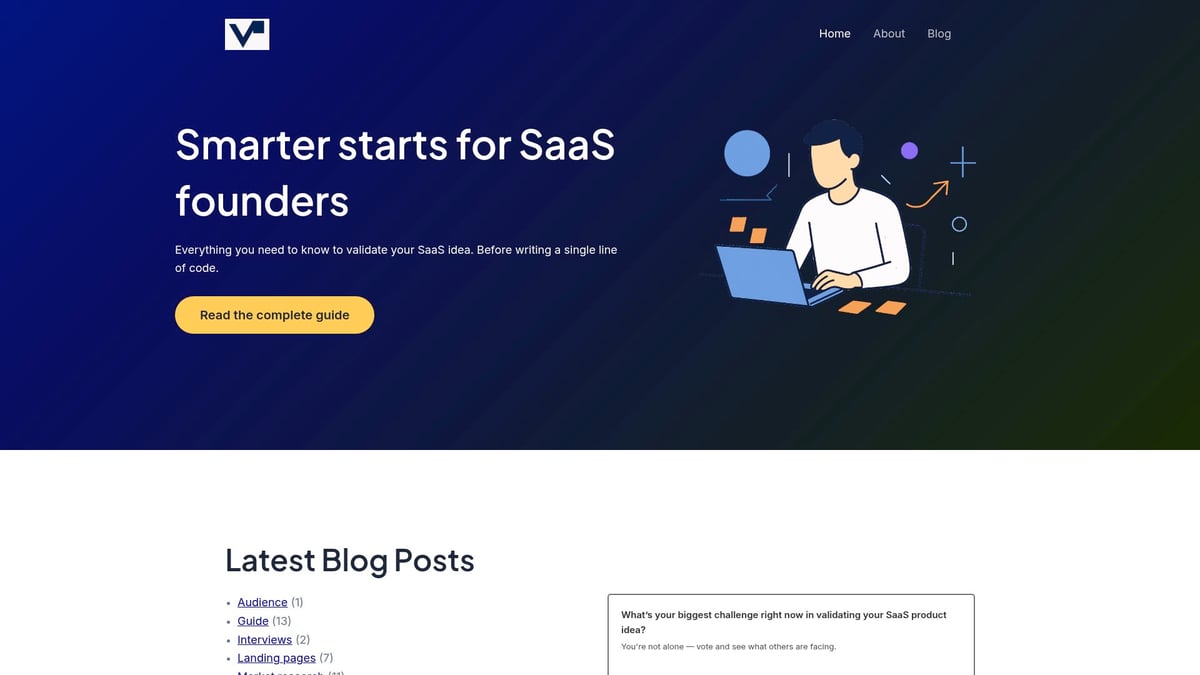
Core features include step-by-step validation frameworks, market analysis tools, resource guides, and a supportive community. This approach saves founders time and money, increases launch success rates, and reduces the risk of building products nobody wants.
The ideal audience is aspiring SaaS founders, early-stage entrepreneurs, and product managers. The platform offers core content for free, with optional affiliate tools for deeper research.
What sets this solution apart is its community-driven model and transparency regarding affiliate recommendations. One of the most effective strategies is to leverage SaaS validation strategies for founders, ensuring that saas business ideas are rigorously tested before launch. The primary challenge is motivating founders to actively engage in the validation process, but the payoff is a significantly higher chance of product-market fit.
4. Automated Compliance Management for SMBs
Regulatory compliance is a top concern for small and midsize businesses, making it a fertile ground for new saas business ideas. Automated compliance management platforms simplify tasks such as policy creation, audit logging, and real-time compliance tracking for frameworks like GDPR, CCPA, and SOC 2.
Key features include policy templates, automated reminders, and detailed audit trails. These tools help SMBs reduce legal risks and stay up to date with evolving regulations.
Target users are businesses in finance, healthcare, technology, and e-commerce. Pricing generally ranges from $59 to $399 per month, depending on industry complexity and compliance needs.
Pros of this SaaS category include evergreen demand and a sticky product that becomes integral to daily operations. The primary challenge is keeping up with frequent regulatory changes. Drata’s rapid growth and $2 billion valuation highlight the immense market potential for compliance-focused saas business ideas.
5. Micro-SaaS for Influencer Campaign Tracking
The influencer marketing ecosystem is booming, and brands need smart tools to track and optimize campaigns. Micro-SaaS solutions focused on influencer campaign tracking offer a specialized approach, making them standout saas business ideas for 2025.
Essential features include influencer discovery, campaign ROI analytics, payment tracking, and fraud detection. These tools streamline workflows for agencies, e-commerce brands, and influencer managers.
Benefits are clear: brands save time, improve transparency, and maximize ROI on influencer spending. Pricing typically falls between $29 and $149 per month, based on campaign volume and features.
Pros include a fast-growing market and low competition in the micro-SaaS space. The main challenge is maintaining up-to-date integrations with changing social platform APIs. Upfluence’s $50 million in funding underscores the demand for influencer-focused saas business ideas.
6. Subscription Analytics & Churn Prediction Platform
Recurring revenue models are at the heart of many saas business ideas, but managing churn is a constant struggle. A subscription analytics and churn prediction platform uses machine learning to help businesses track key metrics and retain customers more effectively.
Features like cohort analysis, MRR/ARR tracking, churn prediction, and actionable retention insights empower teams to make data-driven decisions. Automated alerts keep stakeholders informed of changes in customer behavior.
The target audience includes SaaS startups, membership sites, and subscription box companies. Pricing is typically $39 to $299 per month, depending on company size.
Pros are the essential nature of these tools for subscription businesses and the potential for high lifetime value. The main challenge is accurate data integration and continuous improvement of machine learning models. ChartMogul and Baremetrics are prominent examples of successful analytics-focused saas business ideas.
7. Automated Video Editing SaaS for Marketers
Video content dominates digital marketing, creating demand for saas business ideas that streamline video production. Automated video editing platforms use AI to help marketers create professional-quality videos quickly and affordably.
Core features include auto-captioning, a template library, brand presets, and social media integrations. These tools reduce the time and cost required for video content creation.
The audience includes agencies, SMBs, content creators, and social media marketers. Subscription plans range from $19 to $129 per month, based on export limits and advanced features.
Pros are a massive addressable market and growing demand for video solutions. The key challenge is developing a user-friendly interface and robust AI to differentiate from competitors. Companies like InVideo and Veed.io illustrate the viability of video-focused saas business ideas.
8. ESG (Environmental, Social, Governance) Reporting SaaS
ESG compliance is becoming a priority for companies worldwide, opening new avenues for impactful saas business ideas. An ESG reporting platform automates data collection, reporting, and benchmarking, helping organizations meet regulatory and investor expectations.
Key features include seamless data integrations, customizable reports, compliance tools, and peer benchmarking. These platforms simplify the complex process of ESG reporting and enhance brand reputation.
The main users are public companies, startups, and investment firms. Pricing ranges from $99 to $499 per month, depending on reporting needs and company size.
Pros include surging interest in ESG investing and strong regulatory drivers. The main challenge is collecting accurate data, especially for smaller firms. Novisto and Workiva demonstrate the scalability and impact of ESG-focused saas business ideas.
9. AI-Driven Customer Support Knowledge Base
Efficient customer support is crucial for SaaS growth, making AI-powered knowledge bases a compelling addition to the list of saas business ideas. These platforms build and maintain dynamic, searchable knowledge repositories that support both customers and agents.
Core features include automated content suggestions, chatbot integrations, real-time search, and detailed analytics. This reduces support ticket volume, improves customer satisfaction, and empowers users to self-serve.
Target customers are SaaS companies, e-commerce brands, and customer service teams. Pricing generally starts at $49 and can reach $399 per month, based on team size and feature set.
Pros are the growing need for efficient support tools and strong recurring usage. The main challenge is maintaining high-quality natural language processing and regularly updating content. Intercom and Zendesk provide real-world examples of AI-driven support saas business ideas.
How to Validate Your SaaS Idea Before Building
Validating saas business ideas before writing a single line of code can mean the difference between success and costly failure. According to CB Insights, over 42% of startups fail because there is no real market need for their product. This underscores why validation is essential for anyone considering new saas business ideas.
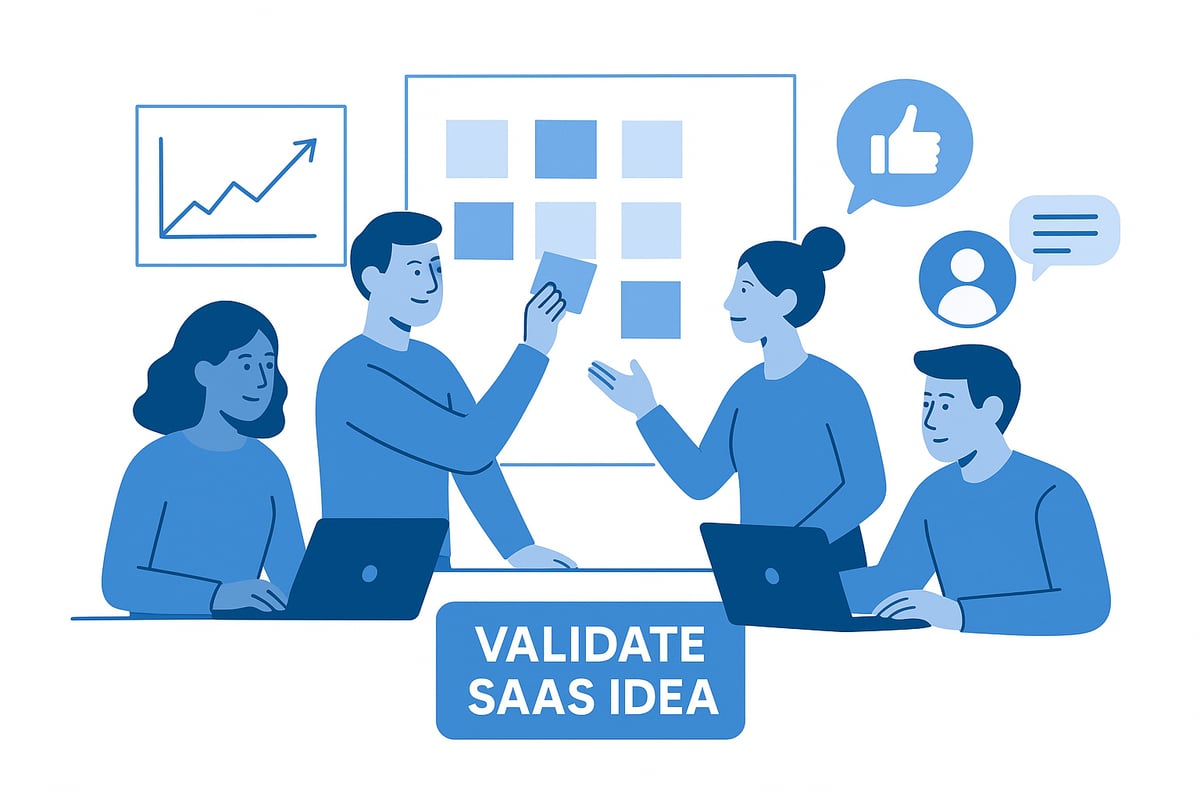
The Key Steps to Validating SaaS Business Ideas
A thorough validation process reduces risk and maximizes your ROI. Here are the essential steps every founder should follow:
- Market Research: Identify customer pain points, market size, and willingness to pay. This step is crucial, as highlighted in Market research for SaaS ideas.
- Competitor Analysis: Study direct and indirect competitors to uncover gaps and opportunities.
- Customer Interviews: Talk to potential users to test assumptions and refine your saas business ideas.
- MVP Testing: Build a minimum viable product or prototype. Use early feedback to validate or pivot quickly.
Each step builds confidence that your solution addresses a real need and can succeed in a competitive market.
Tools, Resources, and Next Steps
Several tools and frameworks can accelerate the validation process for saas business ideas:
- Landing Pages: Quickly gauge interest and collect emails.
- Surveys: Gather quantitative data on customer needs.
- Pre-sales: Secure commitments before launching.
- Validation Tools: Explore curated solutions and guides, such as those found in Tools for validating SaaS ideas.
Case studies show that founders who invest in validation often pivot early, saving capital and time. Start with problem discovery, not solution building. By validating your saas business ideas methodically, you avoid costly mistakes and set a solid foundation for growth.
Key Trends Shaping SaaS Success in 2025
The SaaS landscape is evolving rapidly, with new trends shaping the future of software innovation. As we look ahead to 2025, understanding these shifts is essential for anyone exploring saas business ideas. Leading research confirms that SaaS adoption, investment, and valuations are being driven by technology breakthroughs and changing customer expectations. For a comprehensive overview of these developments, explore the latest SaaS Industry Trends and Insights.

The Rise of AI, ML, and Automation
Artificial intelligence and machine learning are at the heart of modern saas business ideas. In 2025, AI-driven platforms are not only automating repetitive tasks but also enabling advanced personalization and predictive analytics. Businesses are leveraging automation to improve efficiency, reduce costs, and deliver smarter user experiences.
AI is also transforming how SaaS products are valued in the market. As noted in AI’s Impact on SaaS Valuations, companies that effectively harness AI capabilities can command higher investor interest and stand out in a crowded field.
No-code, Low-code, and API-first SaaS
Accessibility is a defining trait of next-generation saas business ideas. The rise of no-code and low-code development platforms is democratizing software creation, allowing non-technical founders to build and launch products more efficiently. Gartner predicts that by 2025, 70% of new SaaS applications will be developed using these tools.
API-first design is another critical trend, enabling seamless integration with other platforms and services. This approach empowers SaaS companies to offer more flexibility and scalability, catering to the growing demand for interconnected digital ecosystems.
Data Security, Compliance, and Ethical AI
With the expansion of saas business ideas comes a heightened focus on data security and regulatory compliance. Customers and regulators are demanding robust privacy protections, transparent data usage, and adherence to standards like GDPR and CCPA. Ethical AI is also a top concern, requiring SaaS founders to build responsible algorithms and ensure fairness in automated decisions.
Cybersecurity is now a core value proposition for SaaS providers, and companies that prioritize secure architectures are better positioned to earn trust and win new business in 2025.
Micro-SaaS, Seamless UX, and Niche Opportunities
The SaaS market is fragmenting into micro-SaaS and highly targeted solutions, opening new doors for innovative saas business ideas. These focused platforms address specific pain points for underserved industries or user segments, offering personalized value and rapid deployment.
Customer demand for seamless user experiences and automation remains strong. Startups that deliver intuitive interfaces, frictionless onboarding, and actionable insights are thriving. By targeting niche markets and refining UX, founders can differentiate their offerings and build loyal customer bases.