
Artificial intelligence is reshaping industries at a rapid pace. With this transformation, trust and reliability in AI systems have never been more important. High-profile failures have led to costly consequences, making ai validation a mission-critical priority for organizations.
Regulators and stakeholders are examining AI systems with increasing scrutiny. Businesses now face not only technical risks but also financial and reputational stakes if their AI fails to perform as intended.
Robust validation practices are essential for safeguarding both operations and reputation. By implementing proven validation strategies, organizations can future-proof their AI initiatives and maintain a competitive edge.
Understanding AI Validation: Concepts, Importance, and 2025 Trends
AI validation is the backbone of trustworthy artificial intelligence. As models become more integral to business and society, understanding how to validate them is essential for risk management and compliance.
Defining AI Validation in Modern Contexts
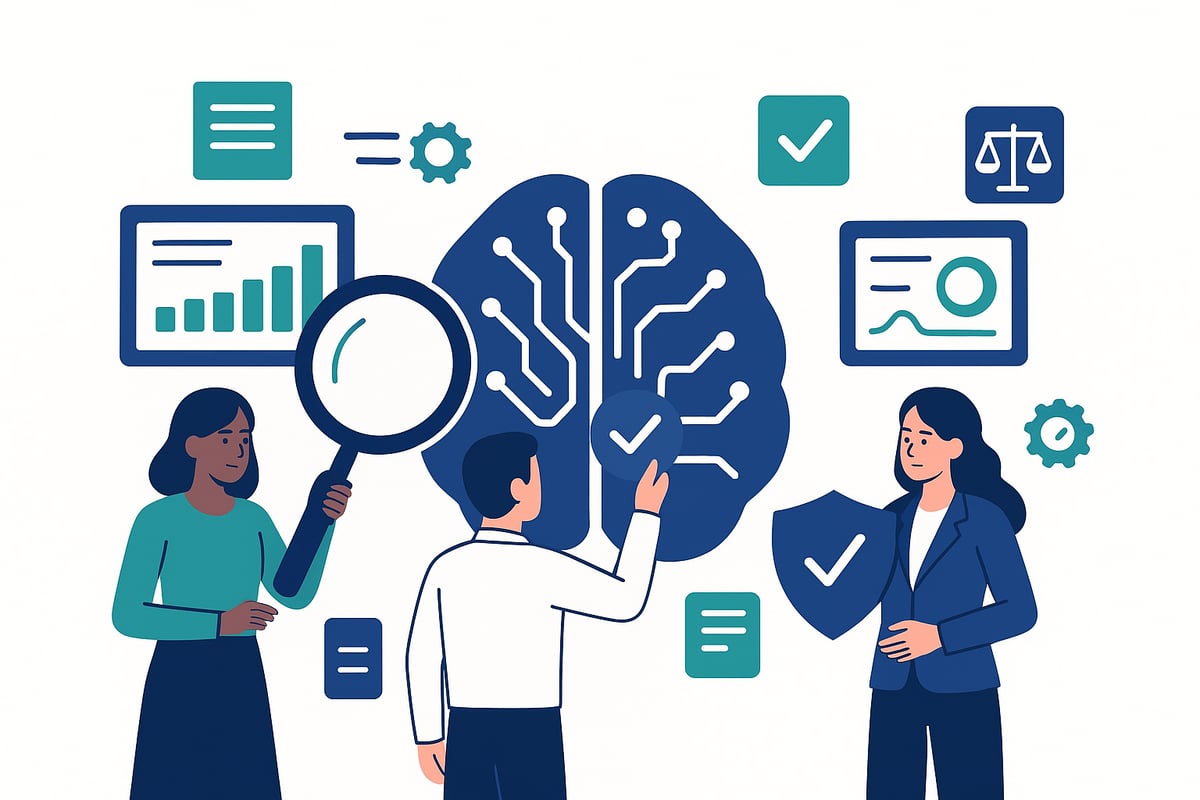
At its core, ai validation is the process of ensuring that an AI system meets its intended purpose safely, reliably, and ethically. Unlike verification, which checks if the system was built correctly, validation asks if the right system was built for the task.
In 2025, ai validation spans multiple domains. For machine learning models, it focuses on accuracy, data integrity, and robustness. For large language models (LLMs) and autonomous systems, it extends to context awareness, safety, and alignment with user intent.
Two primary approaches exist:
| Approach | Focus | Example Use Case |
|---|---|---|
| Model-centric | Individual model performance | ML classifier accuracy |
| System-centric | End-to-end system behavior | Autonomous vehicle safety |
International standards like ISO/IEC 22989 and ISO/IEC 24029 provide foundational definitions and processes for ai validation. Competitor research also highlights the importance of aligning with these frameworks to ensure consistency and reliability across industries.
Why AI Validation is Mission-Critical in 2025
The complexity and autonomy of AI models are rapidly increasing. New risks emerge as systems make high-stakes decisions in finance, healthcare, and critical infrastructure. Incidents such as prompt injection attacks, data poisoning, and model hallucinations have demonstrated the potential for severe damage.
Regulatory bodies are responding. The EU Artificial Intelligence Act overview sets mandatory requirements for transparency, risk management, and conformity assessment. In the United States, executive orders and NIST guidelines demand rigorous ai validation to protect consumers and organizations.
Failing to prioritize ai validation can lead to financial loss, reputational harm, and compliance penalties. As stakeholders and regulators increase scrutiny, robust validation becomes a cornerstone of sustainable AI adoption.
Key Trends and Innovations in AI Validation
Several innovations are shaping ai validation in 2025. Automated red-teaming and adversarial testing tools now probe models for vulnerabilities at scale. Integration of validation into CI/CD pipelines allows organizations to catch issues early and often.
Leading companies are deploying proprietary AI systems to detect weaknesses and generate guardrails dynamically. Continuous validation and post-deployment monitoring are becoming standard, offering real-time insights into model performance and risks.
There is also a growing emphasis on explainability, fairness, and bias detection. These trends ensure that ai validation is not just a technical checkpoint, but a holistic, ongoing process that supports ethical and reliable AI outcomes.
AI Validation Threat Landscape: Vulnerabilities, Risks, and Attack Vectors
As AI validation becomes a top priority for organizations, understanding the threat landscape is essential. AI-powered systems face a unique array of vulnerabilities, with risks that can undermine trust, disrupt operations, and expose sensitive data. In 2025, security teams must focus on both well-known and emerging threats to maintain robust ai validation practices.
Core Categories of AI Failures and Vulnerabilities
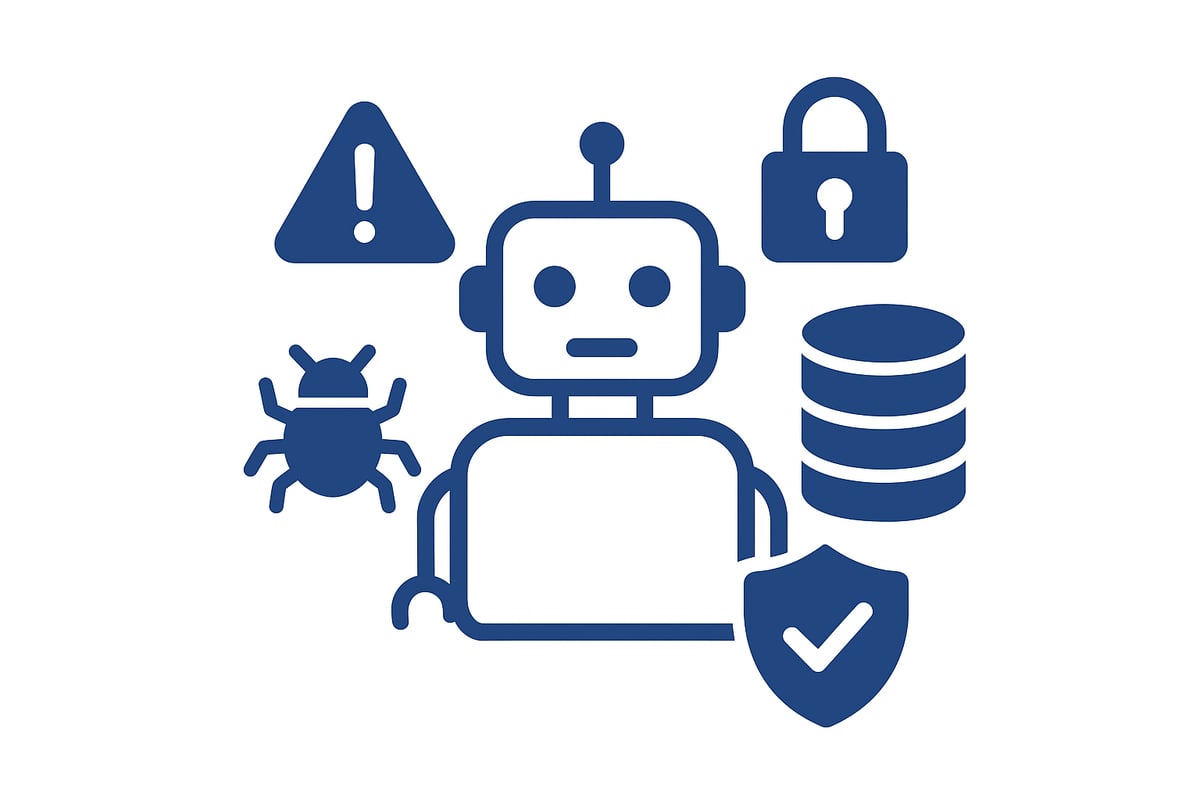
AI validation efforts must begin with a clear understanding of where systems are most exposed. Failures in AI models are typically grouped into four core categories:
| Failure Category | Description | Example Threats |
|---|---|---|
| Abuse failures | Harmful or malicious outputs | Toxicity, bias, hate speech |
| Privacy failures | Unintended information disclosure | PII leakage, data loss |
| Integrity failures | Incorrect or inconsistent outputs | Hallucination, off-policy |
| Availability failures | Disruption of service or system overload | Denial of service, high cost |
Abuse failures occur when AI models generate outputs that are toxic, biased, or otherwise harmful. Privacy failures involve the leakage of personally identifiable information or proprietary data, often through model inversion or extraction attacks. Integrity failures, such as hallucinations or factual inconsistencies, can lead to serious decision-making errors. Availability failures threaten the reliability of AI services, potentially causing downtime or excessive resource consumption. Each of these categories must be addressed as part of a comprehensive ai validation strategy.
Common Attack Vectors and Real-World Examples
Attackers continue to exploit weaknesses in AI systems, often targeting the validation process itself. Key attack vectors include:
- Prompt injection, where malicious inputs manipulate model outputs.
- Data poisoning, which corrupts training data to alter model behavior.
- Model theft, involving the extraction or replication of proprietary models.
- Insecure output handling, allowing harmful content to reach users.
- Plug-in design flaws, which introduce vulnerabilities through third-party integrations.
Recent years have seen several high-profile incidents. In 2023, attackers used prompt injection to bypass content filters in large language models. Data poisoning campaigns have targeted autonomous vehicles, causing misclassification of road signs. Model theft cases have resulted in leaked intellectual property, while plug-in vulnerabilities have exposed sensitive information in deployed AI applications. These real-world events highlight the necessity of robust ai validation to stay ahead of evolving threats.
Mapping Risks to Industry Standards and Taxonomies
To effectively manage these risks, organizations must map vulnerabilities to recognized frameworks. The MITRE ATLAS and OWASP AI Security frameworks provide detailed taxonomies for categorizing AI-specific threats. For example, the OWASP Top 10 for LLM Applications highlights prompt injection and insecure output handling as critical risks, while MITRE ATLAS offers a structured approach to threat modeling in AI contexts.
Regulatory requirements are also shaping how ai validation is approached. New laws, such as the Transparency in Frontier Artificial Intelligence Act, now mandate risk assessment and transparency for advanced AI models. Statistical data from recent industry reports indicates that integrity and privacy failures are the most frequently observed in production AI systems, making alignment with these standards a business imperative.
By systematically mapping risks to industry standards, organizations can ensure that ai validation remains effective, compliant, and resilient in the face of emerging challenges.
The AI Validation Process: Step-by-Step Best Practices for 2025
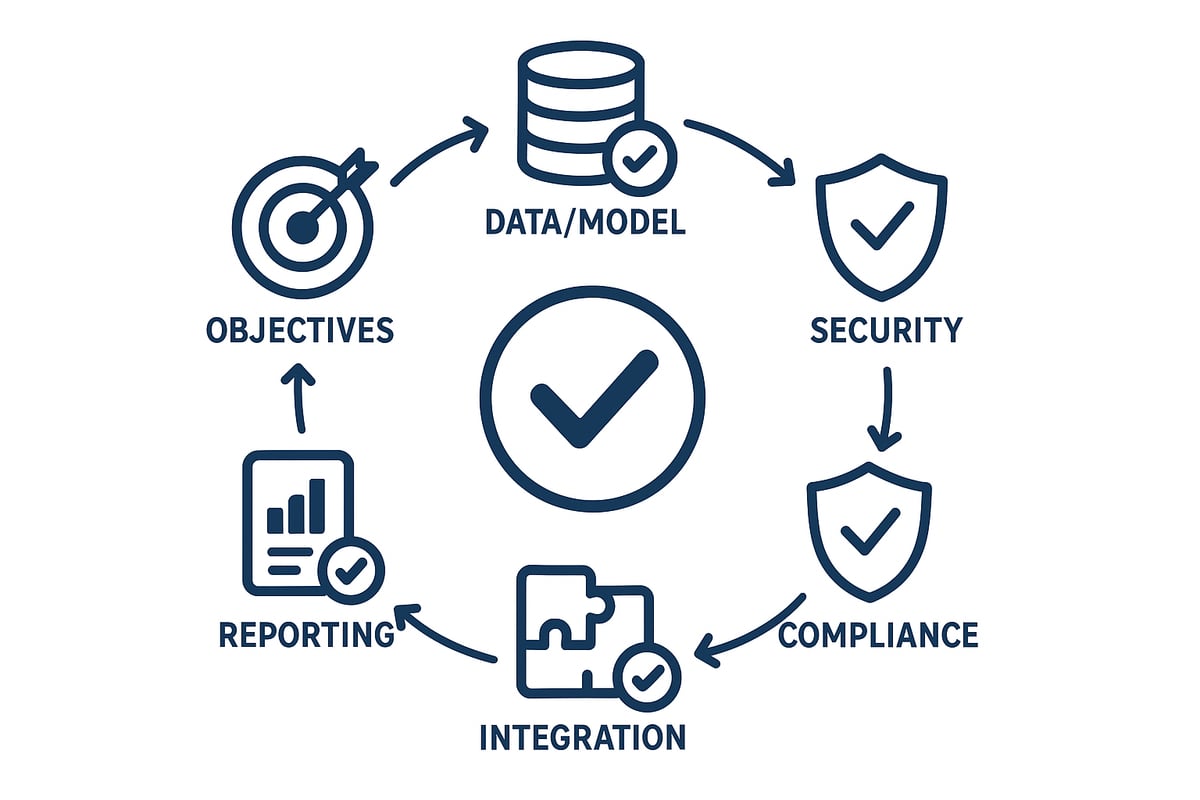
Effective ai validation is a structured journey that guides organizations from initial planning to reliable, compliant deployment. Adopting a systematic, step-by-step process ensures models are trustworthy, secure, and aligned with fast-evolving standards. Below, we outline the essential stages for robust ai validation in 2025.
Step 1: Defining Validation Objectives and Scope
Start every ai validation initiative by clarifying what you aim to achieve. Align objectives with your organization’s business goals, specific regulatory requirements, and risk tolerance. Consider which standards, such as NIST AI Risk Management Framework or the EU AI Act, are most relevant to your context.
Define the scope of validation early. Will you assess only the model, or include data pipelines and the surrounding system? Scope may include:
- Model performance and robustness
- Data integrity and representativeness
- Full system behavior and integration points
A well-defined scope ensures that ai validation activities are focused and measurable, setting a strong foundation for subsequent steps.
Step 2: Data and Model Assessment
High-quality data is fundamental for trustworthy ai validation. Begin by evaluating data sources for completeness, accuracy, and potential bias. Assess whether the data is representative of real-world scenarios your model will face.
Model-centric validation focuses on performance, robustness, and explainability. Employ automated tools for scanning data and models, identifying issues such as data drift or hidden bias early. For a comprehensive overview of proven solutions, you can explore tools that help conduct validation interviews to streamline this assessment phase.
Key assessment actions:
- Analyze data distributions and outliers
- Test model accuracy and fairness
- Document findings for transparency
This step anchors ai validation in evidence, ensuring models are built on solid ground.
Step 3: Security and Safety Testing
Security is a core pillar of ai validation, especially as attack techniques rapidly evolve. Implement algorithmic red-teaming to automatically generate adversarial inputs. Simulate attacks like prompt injection, data leakage, and denial of service to uncover vulnerabilities before deployment.
Recommended testing measures:
- Automated adversarial testing
- Vulnerability scans for prompt injection and data leakage
- Stress tests for denial of service resilience
By embedding these checks into your ai validation process, you proactively protect your models and users from emerging threats.
Step 4: Regulatory and Industry Compliance Checks
Compliance is non-negotiable in modern ai validation. Map your validation outcomes to frameworks like the OWASP LLM Top 10, NIST guidance, and the EU AI Act. This step ensures your models adhere to mandatory requirements and industry best practices.
Action items for compliance:
- Create model cards and audit trails for accountability
- Automate compliance reporting for efficiency
- Regularly review alignment with updated standards
Use comparison tables to track your model’s compliance status across frameworks. This approach makes regulatory adherence transparent and defensible.
Step 5: Integration into Development and Deployment Workflows
Seamlessly integrating ai validation into development and deployment pipelines accelerates feedback and minimizes risk. Embed validation triggers within CI/CD workflows using APIs or SDKs, so every new release is automatically assessed.
Developer enablement is key:
- Provide clear documentation on validation steps
- Offer training on using validation tools
- Foster collaboration between data science, security, and compliance teams
Continuous integration ensures ai validation is not an afterthought but an ongoing practice.
Step 6: Reporting and Communication
Clear communication bridges technical findings and business decisions. Translate ai validation results into stakeholder-friendly reports, using dashboards and automated model cards for ongoing visibility.
Best practices for reporting include:
- Summarizing validation outcomes in non-technical terms
- Scheduling regular updates for stakeholders
- Implementing automated alerts for new vulnerabilities
Effective reporting closes the ai validation loop, enabling continuous improvement and risk mitigation.
Continuous AI Validation: Monitoring, Updates, and Post-Deployment Assurance
Continuous ai validation is essential as AI systems increasingly adapt to new data, environments, and threats. Static validation is no longer sufficient. AI models in production face ongoing risks—unexpected data drift, evolving user behavior, and adversarial attacks. Without continuous ai validation, organizations risk missing critical failures that could harm operations or customers.
Competitor studies reveal that only a minority of organizations report robust, post-deployment ai validation. This gap highlights the need for systematic monitoring and assurance. As AI becomes more embedded in business processes, the ability to detect issues after deployment is paramount.
The Need for Ongoing Validation
AI systems must respond to dynamic environments, making continuous ai validation a necessity. When models encounter new data patterns or adversarial inputs, their behavior can shift unexpectedly. This adaptability, while powerful, introduces risks that only ongoing monitoring can address.
Many organizations still rely on one-time validation before deployment. Recent competitor research shows that less than 30 percent of enterprises conduct regular post-deployment checks. This leaves significant gaps in risk coverage, especially as regulatory scrutiny increases.
Continuous ai validation ensures that models remain trustworthy throughout their lifecycle. By detecting concept drift, performance degradation, or emerging vulnerabilities, teams can act quickly to mitigate harm. This proactive approach is now a business imperative for AI-driven enterprises.
Methods for Continuous Validation
Several methods enable effective continuous ai validation. Failure monitors track system outputs for anomalies, such as unexpected predictions or outlier behaviors. Safety channels and redundancy mechanisms, like ensemble models or voting systems, can provide fail-safes if a model deviates from expected norms.
Input and output restrictions help prevent unwanted data from entering or leaving the system. Anomaly detection algorithms can flag suspicious activity in real time. Automated test suites run predefined scenarios to validate model integrity after updates or environmental changes.
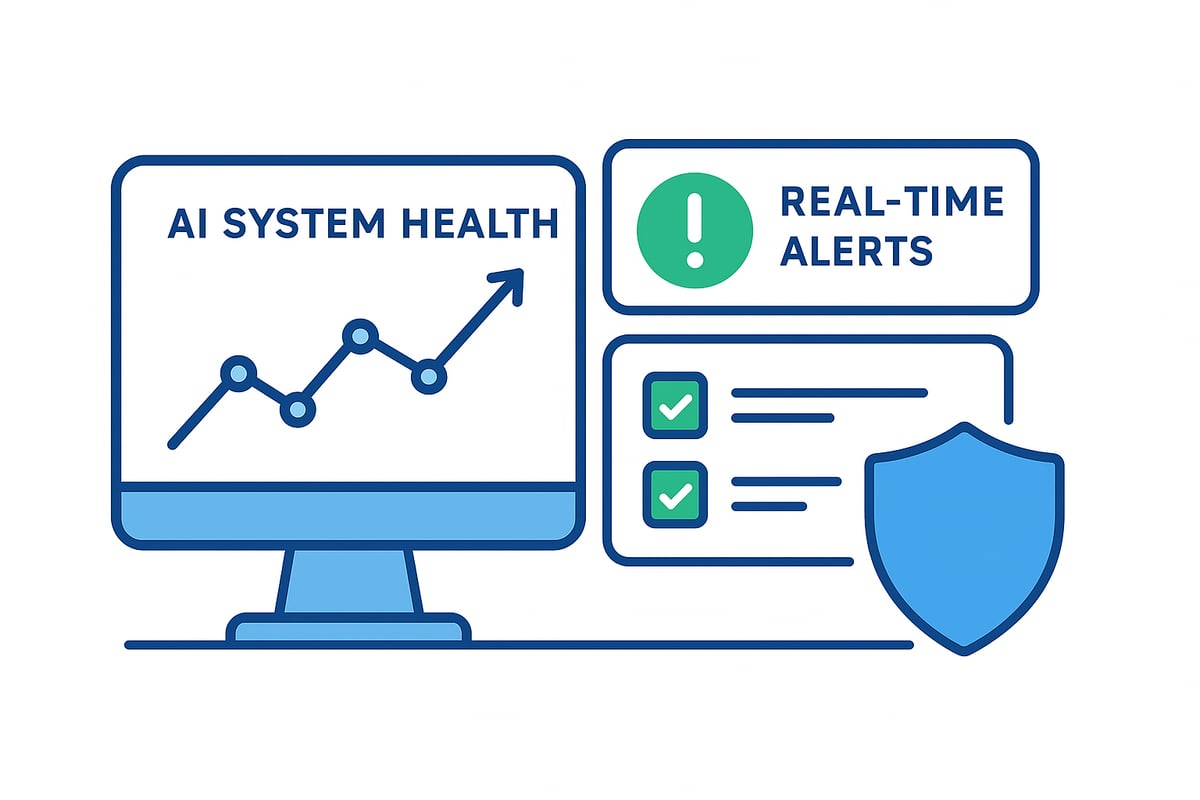
Real-time alerting systems notify teams of issues as soon as they arise. Combined, these methods create a resilient framework for ai validation, reducing the risk of unnoticed failures in production.
Best Practices for Maintaining AI Trustworthiness
To maintain trustworthiness, organizations should implement ai validation as an ongoing process. Schedule regular validation cycles to assess model performance and check for vulnerabilities. Patch management is critical—new threats emerge constantly, so models and their environments must be updated promptly.
A recent case study highlights the impact of continuous ai validation in production. One enterprise reduced AI-related incidents by 40 percent after introducing automated monitoring and rapid patch deployment. This demonstrates the tangible benefits of proactive assurance.
Best practices also include creating clear documentation, training staff on validation procedures, and fostering a culture of accountability. By embedding validation into daily operations, organizations can safeguard both their reputation and their bottom line.
Tools and Platforms Supporting Continuous Validation
A range of platforms now support automated continuous ai validation. Leading solutions provide integration with monitoring and incident response systems, enabling seamless oversight from development to deployment. These tools often feature dashboards, real-time alerts, and automated compliance checks.
Adoption rates are rising as regulatory requirements tighten. According to recent literature reviews, over 60 percent of large enterprises plan to implement continuous validation tools by 2025. For organizations tracking regulatory changes, resources like the Global AI regulatory update March 2025 offer valuable insights into compliance strategies and emerging standards for ai validation.
Selecting the right toolset is crucial. Look for platforms that support integration with your tech stack, automate reporting, and provide transparent audit trails. As AI systems become more complex, robust validation platforms will be essential for maintaining operational resilience.
Regulatory, Ethical, and Industry Standards in AI Validation
The landscape of AI validation is rapidly evolving as organizations face mounting regulatory, ethical, and industry-driven expectations. Understanding these frameworks is crucial for anyone deploying or overseeing AI systems. In this section, we explore the primary regulatory guidelines, industry standards, ethical imperatives, and forward-looking strategies that define the current and future state of AI validation.
Overview of Major Regulatory Frameworks
AI validation is now shaped by comprehensive regulations designed to improve trust and safety. In the United States, Executive Orders have mandated AI red-teaming and secure development practices, emphasizing rigorous testing before deployment. The National Institute of Standards and Technology (NIST) has published detailed guidance for generative AI, outlining expectations for risk management and technical controls. Across the Atlantic, the EU AI Act introduces mandatory requirements and conformity assessments, compelling organizations to embed validation into their development lifecycles. These frameworks collectively elevate the importance of proactive AI validation for compliance and risk mitigation.
Industry Standards and Taxonomies
Industry standards offer practical tools for implementing effective AI validation. The OWASP Top 10 for LLM Applications provides a focused list of the most critical security risks facing language models today. MITRE ATLAS delivers a robust framework for threat modeling and aligning validation with adversarial tactics. Recent studies show a rising percentage of organizations aligning their validation processes with these industry standards. To further enhance governance, the Five-layer AI governance framework offers a structured approach, integrating regulation, certification, and best practices for end-to-end AI validation.
Ethical Considerations in AI Validation
Ethical AI validation is essential for promoting fairness, transparency, and accountability in automated systems. Organizations must address bias and discrimination risks by systematically evaluating models for unintended impacts. This involves not only technical checks but also organizational processes that ensure explainability and responsible AI outcomes. For example, validation practices now include fairness audits and transparency reports to demonstrate ethical compliance. By prioritizing these ethical dimensions, AI validation helps build systems that serve all users equitably and foster long-term stakeholder trust.
Preparing for 2025 and Beyond
Looking ahead, organizations must anticipate ongoing regulatory changes and adapt their AI validation strategies accordingly. Building a culture of compliance and ethics within AI teams is critical for sustainable success. This includes staying informed about emerging standards, updating validation processes, and fostering multidisciplinary collaboration. As highlighted in resources like SEO in AI search for SaaS validation, aligning operational practices with evolving requirements ensures readiness for the challenges and opportunities of 2025 and beyond. Proactive preparation positions organizations to lead in responsible AI adoption.
Future Directions and Expert Insights: What’s Next for AI Validation?
As the field of ai validation evolves, organizations must look beyond today’s practices to prepare for tomorrow’s risks and opportunities. The future is shaped by innovative technologies, expert insights, and proactive strategies that ensure AI systems remain trustworthy and robust.
Emerging Technologies and Approaches in AI Validation
The next wave of ai validation is driven by rapid advances in automation, adversarial testing, and explainability. New tools are streamlining red-teaming, allowing organizations to simulate real-world attacks with minimal manual effort. Automated adversarial AI can now detect subtle vulnerabilities that traditional methods might miss.
Explainability and interpretability have become central to validation, especially as foundation models and retrieval-augmented generation (RAG) systems gain traction. These tools help teams understand and communicate model decisions, a critical need for high-stakes deployments.
Industry leaders now integrate validation directly into development pipelines, making continuous assurance a default. To explore how these innovations are transforming broader AI applications, see this SEO and blogging in the AI era guide, which highlights best practices for robust AI-driven workflows.
Expert Perspectives on AI Validation Challenges
Despite significant progress, experts highlight persistent gaps in ai validation. Industry and academic leaders agree that continuous validation is often lacking, leaving production systems vulnerable to evolving threats.
Recent literature points to challenges in scaling validation for complex, multi-component AI systems. Experts call for better collaboration between data science, security, and compliance teams. They also stress the need for more transparent reporting and real-time monitoring frameworks.
One recurring recommendation is to invest in validation-first cultures, where every phase of the AI lifecycle is subject to rigorous checks. This approach helps organizations stay ahead of regulatory and security demands.
Strategic Recommendations for Organizations
To future-proof your ai validation strategy, consider these actionable steps:
| Recommendation | Description |
|---|---|
| Cross-functional Teams | Align data, security, and compliance roles |
| Automate Validation | Use CI/CD and real-time monitoring |
| Invest in Training | Upskill teams on latest threats |
| Leverage AI Tools | Adopt platforms for automated scanning |
Organizations that integrate ai validation into every workflow reduce risk and increase resilience. For SaaS companies, leveraging AI marketing tools for SaaS founders offers practical examples of how validation supports both growth and compliance.
Preparing for New Risks and Opportunities
The landscape of ai validation is constantly shifting. Novel vulnerabilities, such as advanced prompt injection and model theft, require organizations to remain vigilant. Monitoring for new attack vectors and employing AI to validate other AI systems is quickly becoming the new frontier.
Staying current with emerging trends ensures your validation methods do not become obsolete. Regularly reviewing adoption data and updating best practices will position your organization at the forefront of AI assurance.