
The landscape of saas advertising is set for a major shift in 2025 as competition intensifies, digital platforms evolve rapidly, and user expectations continue to rise. With the SaaS market expanding at an unprecedented pace, standing out through smart advertising has become more critical than ever.
For beginners, navigating saas advertising can feel overwhelming due to limited budgets, a dizzying array of channels, and the challenge of picking the right platform. The stakes are high, but the right approach makes all the difference.
This guide delivers practical, up-to-date advice tailored for 2025’s digital environment. You will learn the fundamentals of saas advertising, how to set up your first campaigns, choose the best channels, optimize your performance, and stay ahead of industry trends.
Understanding SaaS Advertising Fundamentals
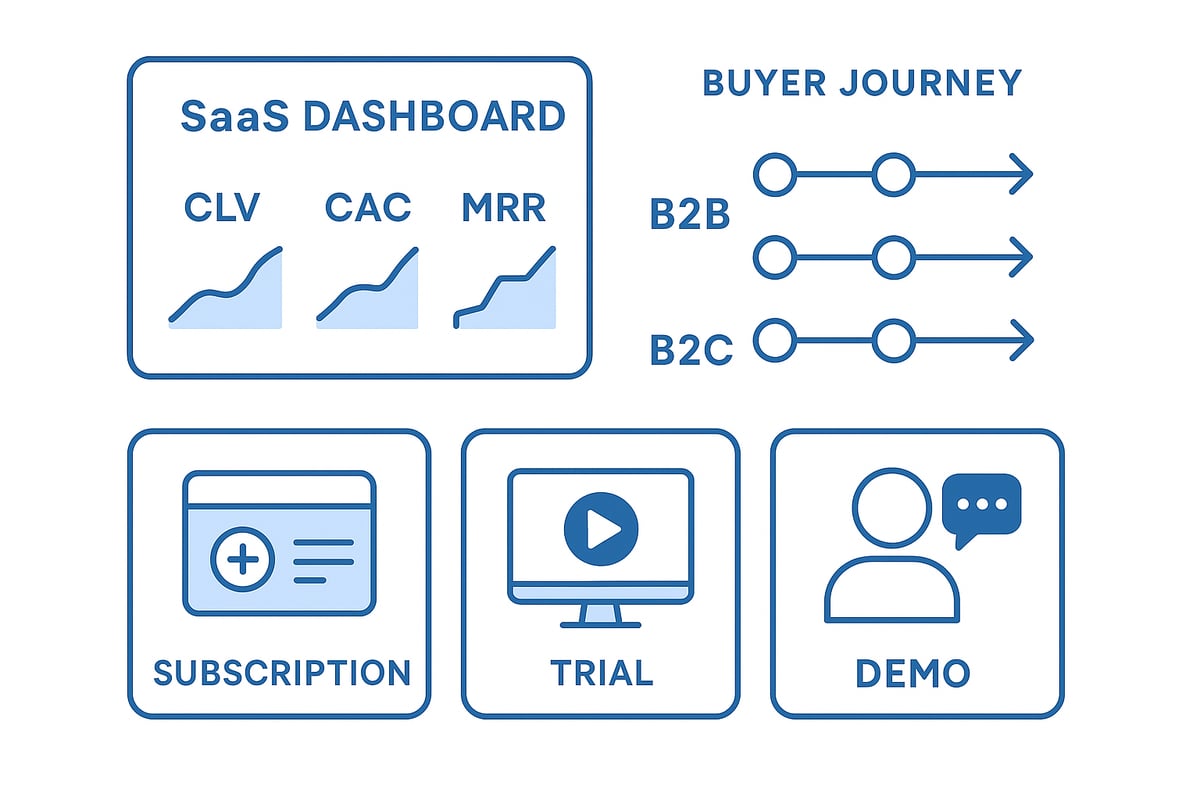
SaaS advertising is distinct from traditional digital marketing because it revolves around long-term customer relationships and recurring revenue. Unlike one-off purchases, the focus is on maximizing customer lifetime value and ensuring that users understand the ongoing benefits of the software. B2B SaaS advertising often targets decision-makers with complex needs and longer sales cycles, while B2C approaches may prioritize simplicity and mass appeal. In both cases, educating prospects about product value is crucial. For example, B2B SaaS ads might highlight integration capabilities, whereas B2C SaaS campaigns could emphasize ease of use and instant results.
What Makes SaaS Advertising Unique?
What sets saas advertising apart is its emphasis on subscription-based models and the critical role of customer lifetime value. SaaS companies must nurture leads over extended sales cycles, especially in the B2B space, where decisions involve multiple stakeholders. Educating potential users about the software’s specific benefits is essential, as buyers may not immediately understand how a solution fits their workflows. B2C saas advertising, in contrast, often leverages emotional triggers and quick-win messaging to drive signups. Both require strategies that move prospects from awareness to retention, but the educational component is especially vital for SaaS brands.
Key Advertising Goals for SaaS in 2025
The primary objectives of saas advertising in 2025 are lead generation, nurturing, and driving conversions through the sales funnel. Reducing churn is another top priority, with retargeting campaigns aimed at re-engaging trial users and existing customers. Building brand authority in niche markets is also key, especially as competition intensifies. According to SaaS Marketing Statistics 2025, 70% of SaaS businesses now prioritize lead generation as their main advertising goal. By focusing on these targets, SaaS companies can create more sustainable growth and improve customer retention.
The SaaS Buyer’s Journey
The saas advertising process must align closely with the buyer’s journey, which includes awareness, consideration, decision, and retention stages. Each phase requires tailored ad creatives: awareness campaigns introduce the brand, consideration ads highlight features, decision-stage ads offer demos or trials, and retention ads encourage upgrades or referrals. For instance, a CRM SaaS provider might use educational content to raise awareness, then retarget interested leads with demo offers during the decision phase. By mapping ads to each stage, SaaS marketers can guide prospects smoothly toward conversion and long-term loyalty.
Essential Metrics to Track
Tracking the right metrics is fundamental for saas advertising success. Key indicators include cost per lead (CPL), customer acquisition cost (CAC), customer lifetime value (CLV), and monthly or annual recurring revenue (MRR/ARR). Monitoring free trial signups and activation rates is equally important, as these often predict paid conversions.
| Metric | SaaS Benchmark |
|---|---|
| CAC | $200–$1,000 per customer |
| CLV | 3–5x CAC |
| Free Trial Rate | 5–15% of site visitors |
| Activation | 20–40% of trials |
By benchmarking these figures, SaaS teams can optimize campaigns and make data-driven decisions.
Laying the Groundwork: Audience, Messaging, and Budget
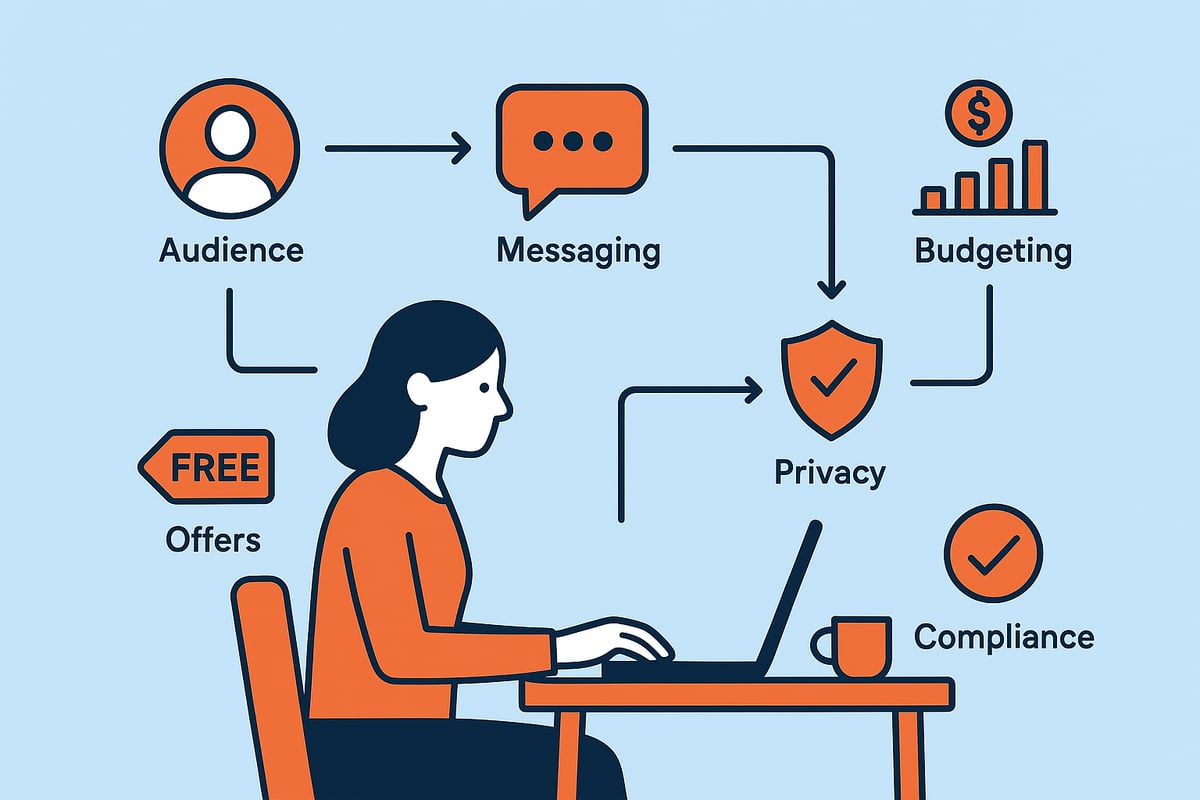
Before launching any saas advertising campaign, it is crucial to establish strong foundations. This means understanding your audience, crafting messaging that resonates, setting a realistic budget, selecting the right offer, and ensuring compliance with data privacy regulations. By mastering these essentials, you can build campaigns that stand out and convert in today's competitive SaaS market.
Identifying Your Ideal Customer Profile (ICP)
Defining your ideal customer is the cornerstone of successful saas advertising. Start by developing detailed buyer personas, considering firmographics like company size, industry, and decision-maker roles. Map out the pain points your software solves and prioritize the needs of your target audience.
Use research tools such as LinkedIn, G2, and Google Analytics to gather actionable insights. Segmenting your audience by factors like industry or company size allows for more precise targeting, improving your campaign's effectiveness. For a step-by-step guide to developing personas, explore Understanding SaaS buyer personas to ensure your saas advertising reaches the right people.
Crafting Compelling Messaging for SaaS
Your messaging in saas advertising should speak directly to the specific pain points of your audience. Highlight the ROI your software delivers, and use language that resonates with your buyers’ challenges. Incorporate testimonials, case studies, and social proof to build trust and credibility.
Effective messaging frameworks for saas advertising often focus on clarity, value, and immediate relevance. Test different headlines and calls to action to see what drives engagement. Leveraging customer stories can transform abstract features into tangible benefits, making your offer more persuasive.
Budgeting for SaaS Ad Campaigns
Setting a realistic budget is vital for both startups and scale-ups engaging in saas advertising. Begin by assessing your available resources and business goals. Allocate spending across channels such as paid search, social, and display, depending on where your audience spends the most time.
SaaS companies typically invest 10 to 40 percent of their revenue in marketing efforts. Establish clear budget limits for each channel and monitor performance closely. This disciplined approach to budgeting in saas advertising helps maximize ROI and avoids overspending on underperforming platforms.
Choosing the Right Offer: Free Trials, Freemium, Demos
The offer you promote in your saas advertising can dramatically impact conversion rates. Free trials, freemium models, and live demos each have unique advantages and drawbacks. Free trials often encourage quick signups, while demos allow for more personalized education.
A/B testing different offers is essential to determine what resonates best with your audience. Track conversion rates for each offer type and adjust your strategy accordingly. The right offer, paired with compelling messaging, can be the difference between a stalled campaign and one that delivers results.
Compliance and Privacy Considerations
With increasingly strict privacy regulations, compliance is a critical part of saas advertising. Laws like GDPR and CCPA affect how you collect and use customer data. Ensure that your ad campaigns include clear consent mechanisms and respect user preferences.
Data privacy impacts both targeting and tracking, so work closely with your legal and technical teams. Implement robust consent management tools to maintain trust and meet regulatory requirements. Proactively addressing compliance in your saas advertising builds credibility and helps avoid costly penalties.
Selecting and Mastering Top SaaS Advertising Channels
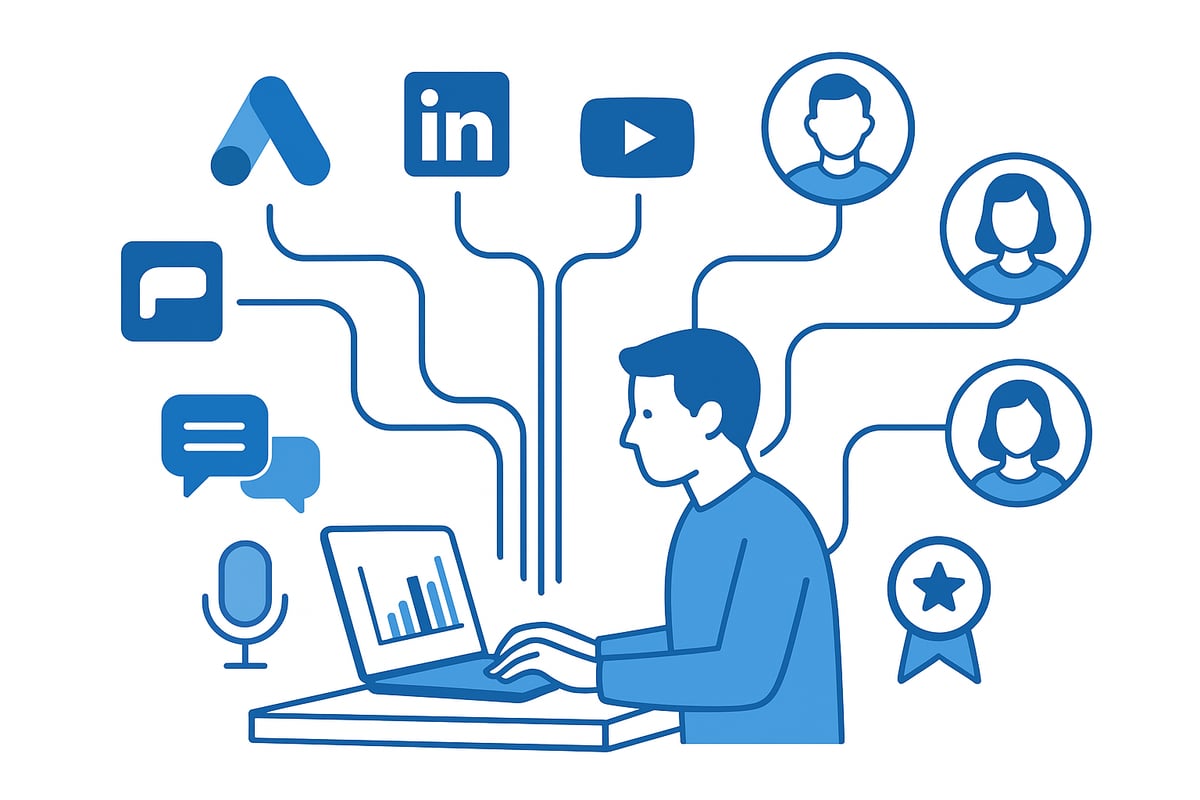
Choosing the right channels for your saas advertising strategy can make or break campaign performance in 2025. With more platforms and formats than ever before, it is essential to master the unique strengths and tactics of each channel to reach your target audience effectively.
Paid Search (Google Ads, Bing Ads)
Paid search remains a cornerstone of saas advertising, especially for capturing high-intent prospects. Start by identifying both branded and non-branded keywords relevant to your solution. Branded keywords help defend your territory, while non-branded terms expand reach to users researching solutions.
Craft concise, benefit-driven ad copy focused on pain points and outcomes. Highlight offers like free trials or product demos. Consider using ad extensions to showcase features, testimonials, or pricing. Regularly review search term reports to refine negative keyword lists and optimize spending. Paid search allows precise targeting and measurable ROI, making it ideal for scaling campaigns as your SaaS business grows.
Paid Social (LinkedIn, Facebook, Twitter/X)
Paid social channels play a vital role in saas advertising, enabling precise targeting based on job title, industry, and company size. LinkedIn is especially valuable for B2B SaaS, offering advanced filters and Lead Gen Forms that simplify data collection. Experiment with carousel ads, sponsored content, and message ads to engage prospects at different funnel stages.
Facebook and Twitter/X can be effective for both B2B and B2C SaaS, especially when combined with custom audiences and lookalike targeting. Use retargeting to re-engage visitors who showed interest but did not convert. Always align creative messaging with the platform’s audience expectations for maximum impact.
Programmatic and Display Advertising
Programmatic advertising automates media buying, allowing you to reach SaaS buyers across thousands of sites. Use display ads for broad awareness and retargeting campaigns to re-engage site visitors and trial users. Dynamic creative optimization customizes ad content in real-time based on viewer behavior.
A key data point for saas advertising is that 92% of first-time SaaS site visitors do not convert, so retargeting is crucial. Leverage contextual and behavioral targeting to improve relevance. Track view-through conversions to understand the full impact of your display campaigns, and adjust bids based on performance data.
Video and YouTube Advertising
Video has become essential in saas advertising for educating and converting prospects. Use short explainer videos to simplify complex product features and demonstrate real-world use cases. YouTube offers advanced targeting, including by topic, intent, and remarketing lists.
Best practices include adding captions, strong CTAs, and clear value propositions early in the video. Onboarding video ad campaigns can boost activation rates by guiding new users through setup steps. Monitor metrics like view rate, click-through rate, and post-view conversions to optimize creative and targeting strategies.
Influencer and Partner Marketing
Influencer and partner marketing have gained traction in saas advertising, building trust and expanding reach. Engage industry influencers to review your platform, participate in webinars, or create sponsored content. Their endorsement can drive credibility and generate high-quality leads.
Co-marketing with integration partners can expose your SaaS to complementary audiences. Promote joint webinars, case studies, or integration demos. For example, a CRM SaaS might team up with an email marketing tool for a combined campaign, leveraging both brands’ networks for greater impact.
Emerging Channels: Podcasts, Communities, and Review Sites
Emerging channels are reshaping the saas advertising landscape. Advertising on SaaS-focused podcasts or sponsoring episodes can position your brand as a thought leader. Review platforms like Capterra and G2 offer high-intent visibility, with sponsored listings or display ads influencing decision makers.
Active participation in niche online communities, such as Reddit threads or SaaS-focused Slack groups, enables authentic engagement. Sponsored posts in SaaS founder groups can spark conversations and drive qualified traffic. Test these channels to discover new pockets of demand and stay ahead of competitors.
Step-by-Step: Launching Your First SaaS Ad Campaign
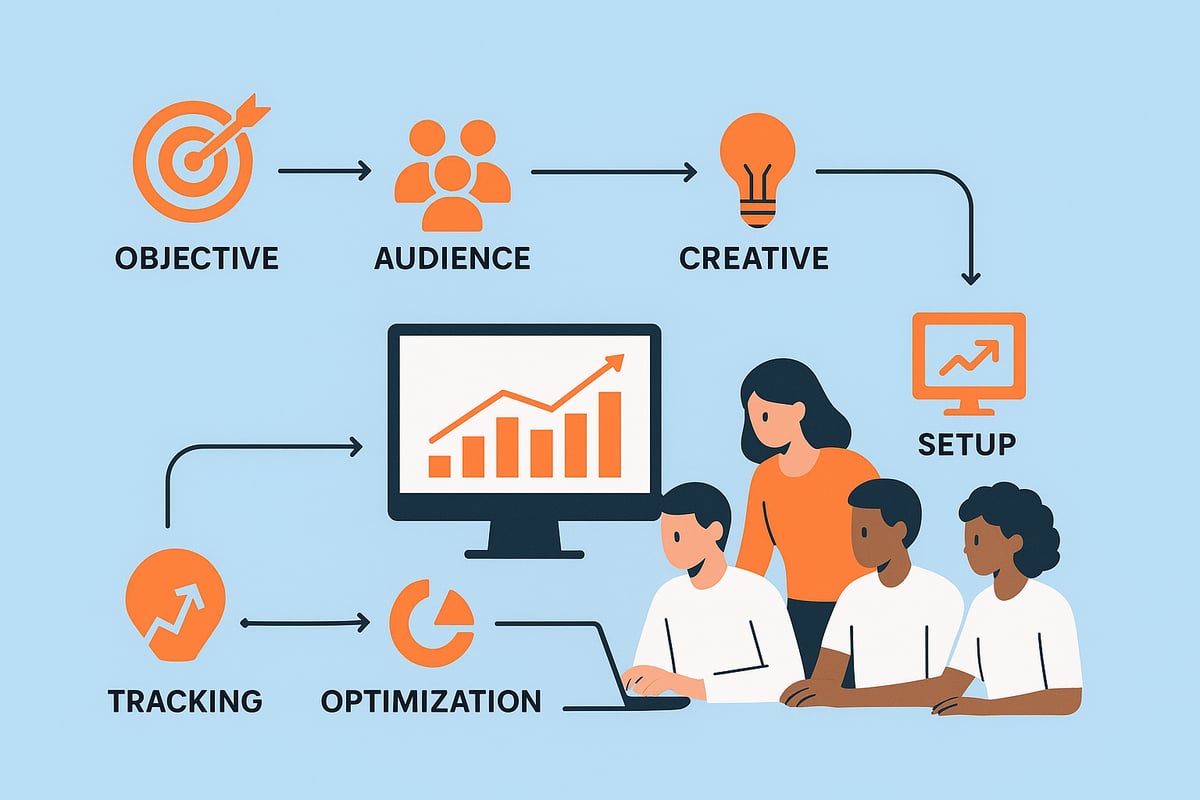
Embarking on your first saas advertising campaign can feel overwhelming, but breaking the process into clear, actionable steps helps ensure a smooth launch. Each stage, from setting objectives to scaling, is essential for building a successful foundation. Here is a comprehensive, step-by-step approach tailored for beginners entering the dynamic world of saas advertising in 2025.
Step 1: Define Clear Objectives and KPIs
Start your saas advertising campaign by establishing precise objectives. Use the SMART framework—specific, measurable, achievable, relevant, time-bound—to clarify your goals. For example, aim to increase free trial signups by 20 percent in Q1 or reduce customer acquisition cost by 15 percent over six months.
Define key performance indicators (KPIs) that align with your business goals. Common KPIs for saas advertising include cost per lead, conversion rate, and customer lifetime value. Document these metrics before launching, so you can measure progress and optimize effectively throughout the campaign.
Step 2: Audience Segmentation and Targeting
Successful saas advertising relies on reaching the right audience. Begin by building detailed buyer personas based on firmographics such as industry, company size, and job title. Use tools like LinkedIn and Google Analytics to identify high-intent segments.
Segment your audience into groups, such as decision-makers versus end-users, or by company verticals. Leverage lookalike audiences and intent signals to expand reach while maintaining relevance. Effective targeting ensures your ads resonate, boosting engagement and conversion rates.
Step 3: Creative Development and Offer Selection
Compelling creative is the heart of effective saas advertising. Design ad visuals and copy tailored to each stage of the buyer journey, from awareness to decision. Test multiple creative variations, including headlines, images, and calls to action.
Selecting the right offer—free trial, demo, or freemium—can dramatically impact results. A/B test different offers to determine which drives the most conversions. For expert guidance on building high-impact messaging, see Messaging that creates buyer intent.
Step 4: Campaign Setup and Launch
Structuring your saas advertising campaigns correctly sets the stage for success. Organize campaigns by objective, product line, or audience segment for clarity. Within each campaign, create tightly themed ad groups to improve relevance.
Set appropriate bids and daily budgets based on your overall marketing plan. Schedule ads to run during peak hours for your target audience. Launch your campaigns across selected channels—such as paid search, social, or display—to maximize initial exposure.
Step 5: Tracking, Analytics, and Attribution
Robust tracking is vital for saas advertising success. Set up conversion tracking with platforms like Google Analytics or HubSpot to monitor free trial signups, demo requests, and paid subscriptions.
Implement multi-touch attribution models to understand how different channels contribute to conversions. Track metrics such as trial-to-paid conversion rate and customer acquisition cost. Accurate analytics provide the insights needed to refine campaigns and optimize spend.
Step 6: Optimization and Iteration
Continuous optimization is a hallmark of effective saas advertising. Regularly review performance data, identifying which ads, channels, and offers deliver the best results. Use split testing to compare headlines, images, and calls to action.
Adjust bids, budgets, and targeting based on data-driven insights. Industry research shows that ongoing optimization can increase saas advertising ROI by up to 30 percent. Make incremental improvements each week to maximize your marketing investment.
Step 7: Scaling Successful Campaigns
Once you have identified winning ads and channels, it is time to scale your saas advertising efforts. Gradually increase budgets on top-performing campaigns, monitoring performance to avoid diminishing returns.
Expand reach by testing new audience segments and additional platforms. Document lessons learned and replicate successful strategies across other products or regions. Scaling effectively transforms small wins into significant, sustainable growth for your SaaS business.
Advanced Strategies and Trends in SaaS Advertising for 2025
Navigating the cutting edge of saas advertising in 2025 requires more than a basic understanding of platforms and budgets. To outperform in an increasingly competitive landscape, marketers must embrace emerging technologies, data-driven personalization, and privacy-first strategies. Let’s explore the advanced tactics and trends shaping the future of saas advertising.
AI and Automation in SaaS Advertising
Artificial intelligence is transforming saas advertising by automating audience targeting, bid management, and creative testing. AI-powered platforms can analyze vast datasets in real time, identifying high-value segments and optimizing campaigns faster than traditional methods. Early-stage SaaS founders are increasingly leveraging AI marketing tools for SaaS to reduce manual work and improve ROI.
With AI, marketers can run predictive analytics, optimize ads based on user behavior, and dynamically allocate budgets to top-performing campaigns. As a result, saas advertising becomes more efficient, scalable, and responsive to changing market conditions.
Personalization and Dynamic Content
Personalization is no longer optional in saas advertising. Modern buyers expect tailored experiences at every touchpoint. Using dynamic content and data-driven insights, marketers can deliver relevant messages to users based on their role, industry, or behavior.
Dynamic landing pages and adaptive ad creatives can significantly increase engagement and conversion rates. For example, a SaaS company might show different onboarding ads to IT managers and finance leads, boosting relevance. This level of personalization ensures saas advertising resonates with each targeted segment, driving higher returns.
Account-Based Marketing (ABM) for SaaS
Account-based marketing (ABM) is gaining traction in saas advertising, especially for enterprise-focused products. ABM allows teams to target high-value accounts with tailored ad campaigns, aligning messaging with each account’s unique pain points and priorities.
Integrating ABM with paid media strategies enables marketers to coordinate touchpoints across channels and stages of the buyer’s journey. A well-executed ABM campaign in saas advertising can shorten sales cycles, increase deal sizes, and improve overall conversion rates, making it a key trend to watch in 2025.
Privacy-First Advertising and Cookieless Tracking
With growing data privacy regulations and the phaseout of third-party cookies, privacy-first approaches are essential in saas advertising. Marketers must adapt by prioritizing first-party data and implementing consent management solutions. Staying compliant with frameworks like GDPR and CCPA is non-negotiable.
For SaaS brands looking to turn privacy into a competitive advantage, adopting strategies from GDPR compliance for SaaS ads can help protect user data and build trust. Embracing server-side tracking and transparent data practices will future-proof campaigns as privacy standards evolve.
Leveraging Data and Analytics for Predictive Campaigns
Advanced analytics are at the heart of modern saas advertising. Predictive analytics tools can forecast campaign results, optimize targeting, and help allocate budgets more effectively. By integrating CRM and ad platform data, marketers gain a holistic view of the customer lifecycle.
Using these insights, teams can anticipate churn, identify upsell opportunities, and personalize outreach. As predictive analytics adoption continues to rise, saas advertising strategies become more proactive, allowing marketers to stay ahead of competitors and maximize ROI.
Staying Ahead: Experimenting with New Platforms and Formats
Innovation is crucial for success in saas advertising. Marketers should regularly test new ad formats such as interactive content, augmented reality (AR), or virtual reality (VR) experiences. Early adoption of emerging channels, like niche SaaS podcasts or community platforms, can unlock untapped audiences.
Documenting experiments and sharing learnings across teams cultivates a culture of innovation. By staying agile and open to new opportunities, saas advertising professionals can capitalize on trends before they become mainstream, ensuring continuous growth and relevance.
Measuring Success and Continuous Improvement
In saas advertising, consistent measurement and a mindset of ongoing improvement are essential for long-term growth. You need to know what is working, where users drop off, and how to adapt quickly. Let us break down the steps to ensure your campaigns stay effective and evolve with your business needs.
Setting Up Effective Reporting Dashboards
Building effective reporting dashboards is the backbone of measuring saas advertising results. Start by selecting KPIs that align with your goals, such as cost per lead, customer acquisition cost, and trial-to-paid conversion rate.
Popular tools like Google Data Studio and Tableau allow you to visualize campaign performance in real time. Set up dashboards for both weekly and monthly reporting to spot trends early and make timely adjustments. For example, a weekly dashboard might track active campaigns and spend, while a monthly view highlights CLV and churn rates.
A simple dashboard structure could look like this:
| Metric | Weekly Review | Monthly Review |
|---|---|---|
| CPL | ✓ | ✓ |
| CAC | ✓ | ✓ |
| MRR/ARR | ✓ | |
| Activation Rate | ✓ | ✓ |
With clear dashboards, you gain confidence that your saas advertising investments are driving business outcomes.
Analyzing Campaign Performance and User Behavior
Delving into user behavior is vital for optimizing saas advertising. Use journey analytics to see where prospects engage or disengage, and leverage tools like heatmaps or session recordings to spot friction points on your landing pages.
Understanding retention and churn is also critical. According to SaaS Churn and Retention Statistics, tracking these metrics helps you gauge campaign impact on customer lifecycle and recurring revenue. If trial users are not converting, analyze which ad creatives or offers attract the most engaged leads.
Ask yourself: Are users bouncing after clicking your ad, or do they drop off during onboarding? Use this data to iterate on messaging, offers, and user flows, ensuring your saas advertising delivers sustained results.
Attribution Models for SaaS Advertising
Attribution modeling is key to understanding which touchpoints in your saas advertising journey contribute most to conversions. There are several models to consider:
- First-touch: Credits the first interaction for the conversion.
- Last-touch: Attributes conversion to the final interaction.
- Multi-touch: Distributes credit across all relevant touchpoints.
For most saas advertising strategies, multi-touch attribution provides a clearer picture, especially with longer sales cycles. Choosing the right model helps you allocate budget more effectively and avoid over-investing in underperforming channels.
Always revisit your attribution model as your campaigns mature, ensuring it reflects actual buyer journeys in your saas advertising funnel.
Learning from Competitor Analysis
Studying your competitors is a powerful way to refine your saas advertising approach. Use tools like SEMrush or Adbeat to uncover which channels, creatives, and messaging are driving results for industry leaders.
Benchmark your own KPIs against these insights to spot gaps or new opportunities. For instance, if a competitor is achieving lower CAC with a certain ad format, consider testing a similar approach. Reverse-engineering successful campaigns can reveal shortcuts to growth.
Competitor analysis should be a regular part of your saas advertising routine, keeping you agile and informed about market shifts.
Building a Culture of Experimentation
A culture of experimentation fuels innovation in saas advertising. Encourage your team to test new ideas, document learnings, and share results across departments.
- Run regular A/B tests on headlines, visuals, and CTAs.
- Experiment with different offers or landing page layouts.
- Track outcomes and adjust quickly based on data.
Companies that prioritize experimentation in saas advertising often grow twice as fast as those that do not. Make experimentation part of your workflow to unlock ongoing performance gains.
Common Pitfalls and How to Avoid Them
Even experienced teams encounter pitfalls in saas advertising. Common issues include overspending on untested channels, ignoring customer feedback, and relying on vanity metrics.
To avoid these mistakes:
- Start with small budgets and scale based on proven results.
- Incorporate user feedback into ad messaging and creative development.
- Focus on metrics that drive business outcomes, not just impressions or clicks.
Learning from failed campaigns is just as valuable as celebrating wins. By staying vigilant, you ensure your saas advertising remains focused and effective.