The SaaS landscape is experiencing explosive growth as we approach 2026, reshaping how businesses operate and innovate. Staying ahead in this environment means understanding every critical saas concept.
Today, SaaS is the backbone of digital transformation for organizations of all sizes, driving efficiency and agility. Mastering each essential saas concept is vital for leaders who want to remain competitive and foster innovation.
Use this guide as your definitive resource to navigate the evolving SaaS world. We will break down the evolution of SaaS, foundational concepts, emerging trends, validation strategies, and future-proofing tactics every founder, investor, and tech leader needs for 2026.
The Evolution of SaaS: 2020-2026
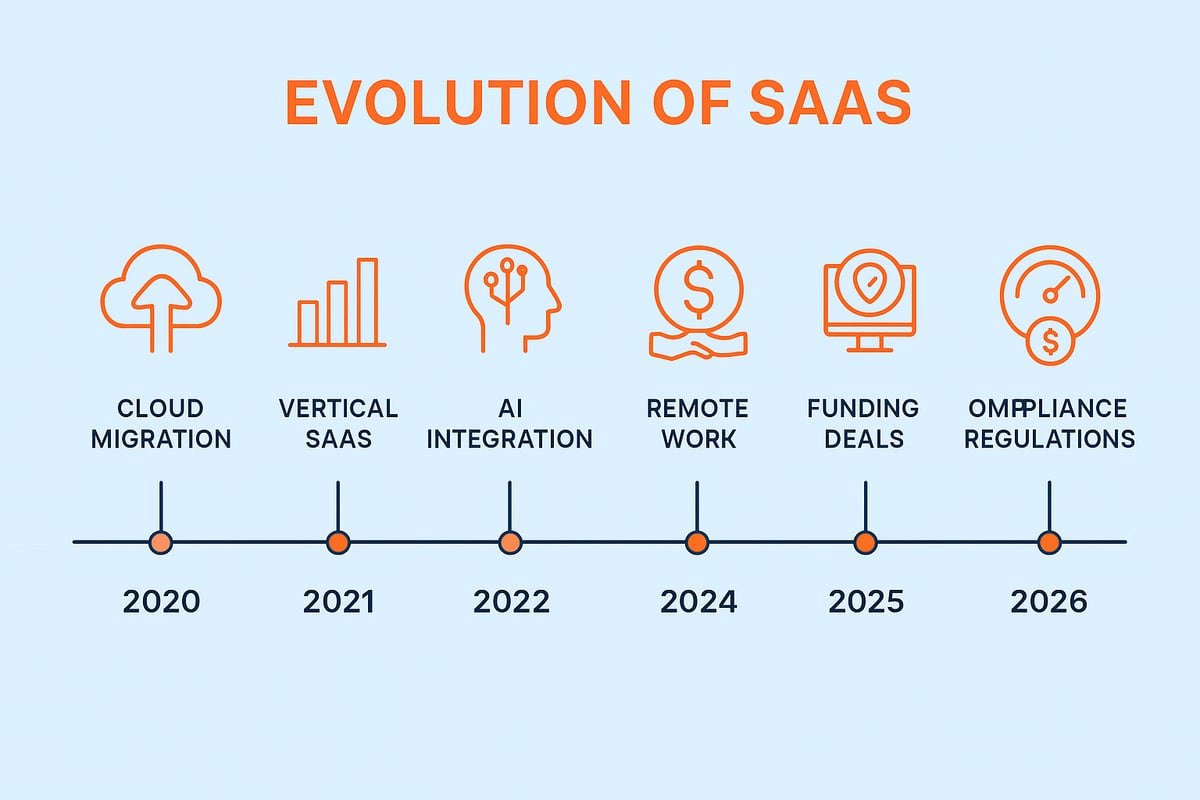
The period from 2020 to 2026 has seen the SaaS industry transform at an unprecedented pace. Understanding each fundamental saas concept is essential for anyone navigating this dynamic landscape. Let’s break down the key milestones, user shifts, technological advances, and business model innovations that define this era.
Major Milestones in SaaS Development
Between 2020 and 2026, SaaS shifted dramatically from on-premise software to cloud-native platforms. Industry leaders like Salesforce expanded into new verticals, while vertical SaaS solutions gained momentum across sectors. According to SaaS market statistics and trends, the market is set to surpass $307 billion by 2026. Each new saas concept, from multi-tenancy to microservices, has set the stage for this explosive growth.
- Cloud-native architecture became the norm.
- Vertical SaaS solutions grew rapidly.
- Migrations to SaaS platforms accelerated digital transformation.
Changes in User Expectations and Experience
User demands have evolved significantly. Today, seamless integrations, personalized experiences, and robust security are non-negotiable. Companies like Zoom rapidly improved their security posture in response to the changing landscape. As each saas concept matures, users expect more intuitive interfaces and compliance with global standards.
- Seamless integration with existing tools
- Personalization of workflows
- Enhanced privacy and security controls
Impact of Remote Work and Globalization
The rise of remote work has cemented SaaS as a core enabler of distributed teams and digital workplaces. Slack, for example, became essential for real-time collaboration across continents. The globalization of the workforce has made localization and regional compliance a critical saas concept for modern platforms.
- SaaS platforms support remote teams
- Global collaboration tools
- Localization features for new markets
Proliferation of AI and Automation in SaaS
AI-driven features have become standard within SaaS, powering predictive analytics, chatbots, and intelligent automation. HubSpot’s marketing automation suite exemplifies how AI transforms user engagement and operational efficiency. The integration of advanced AI into each saas concept is now a key differentiator in the market.
- Predictive analytics for smarter insights
- Automated workflows and customer support
- AI-powered personalization engines
Key Acquisition and Funding Trends
The SaaS sector has seen a surge in startup funding and high-profile acquisitions. Notably, Microsoft’s $19.7 billion acquisition of Nuance signaled the value investors place on innovative saas concept portfolios. Mergers and acquisitions are shaping the competitive landscape and driving rapid innovation.
- Increased venture capital for SaaS startups
- Strategic mergers and acquisitions
- High valuations for category leaders
Regulatory and Compliance Shifts
Stricter data privacy laws such as GDPR and CCPA have forced SaaS providers to adapt quickly. Compliance is now a foundational saas concept, with platforms offering customizable features for international customers. The ability to navigate shifting regulations has become a critical business advantage.
- GDPR and CCPA compliance features
- Regular security audits and certifications
- Tools for global privacy management
SaaS Monetization Model Innovations
Monetization strategies have evolved with the adoption of usage-based pricing and flexible billing. Twilio’s pay-as-you-go approach exemplifies how innovative saas concept monetization can unlock new market segments. Hybrid models now allow providers to cater to diverse customer needs while optimizing revenue.
- Usage-based and hybrid pricing structures
- Flexible billing for scaling businesses
- Value-driven sales approaches
Core SaaS Concepts Every Leader Must Understand
Understanding the core saas concept is essential for anyone aiming to lead in the rapidly evolving SaaS sector. Leaders must grasp the underlying models, metrics, and strategies that drive sustainable growth and innovation. In this section, we break down the foundational pillars that define successful SaaS operations and leadership.
SaaS Architecture and Delivery Models
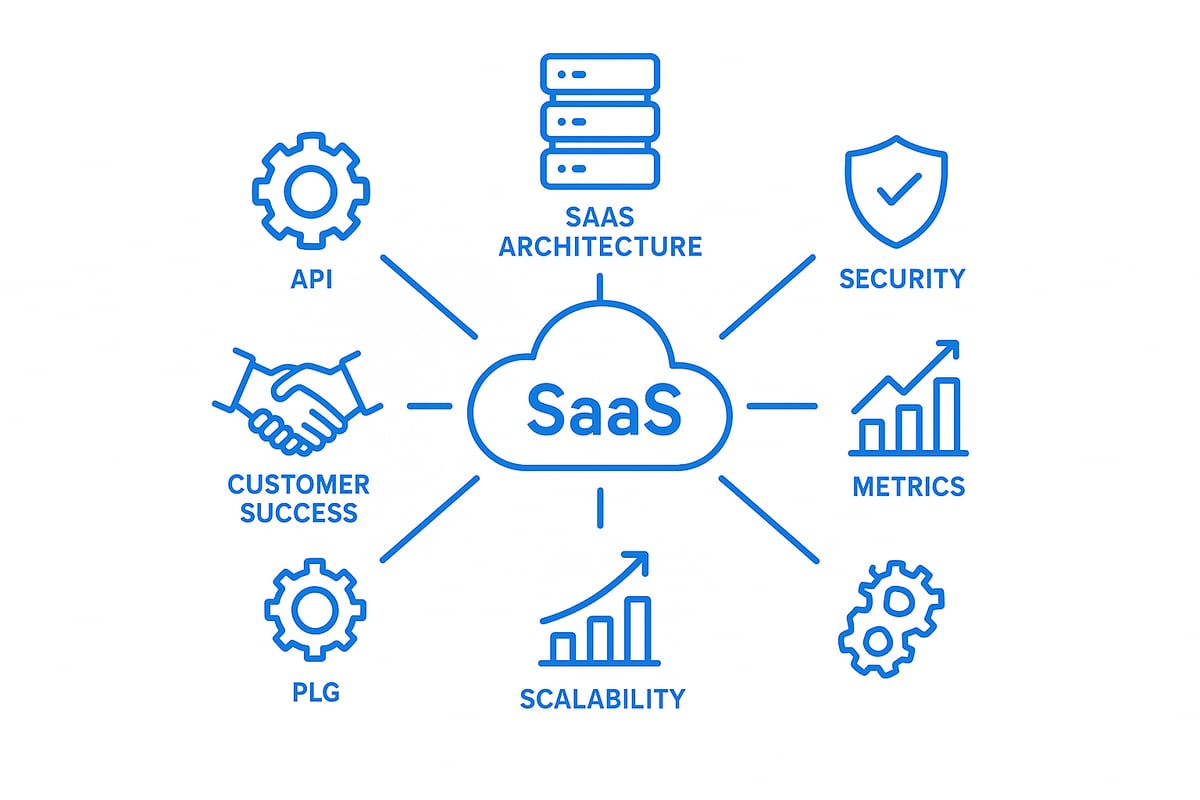
A fundamental saas concept is understanding how modern SaaS solutions are architected and delivered. Leaders must know the difference between multi-tenancy, where multiple customers share the same infrastructure, and single-tenancy, where each customer has a dedicated environment. Microservices and containerization have become standard, allowing for flexibility and faster deployment. Serverless approaches further streamline scalability and cost efficiency.
Shopify, for instance, leverages a scalable architecture to handle massive transaction volumes. For a deeper dive into these technical foundations, see this guide on Understanding SaaS architecture.
Subscription Economics and Metrics
Another vital saas concept centers on mastering SaaS economics and key performance metrics. Leaders track Monthly Recurring Revenue (MRR), Annual Recurring Revenue (ARR), Customer Acquisition Cost (CAC), and Lifetime Value (LTV). Churn rate and net dollar retention are also crucial indicators of business health.
| Metric | Description | Industry Benchmark |
|---|---|---|
| MRR | Monthly recurring revenue | Varies by segment |
| ARR | Annual recurring revenue | Growing 10-20%+ |
| Churn Rate | % customers lost annually | 5-7% typical |
Tracking these metrics enables leaders to make informed decisions and optimize financial performance.
Customer Success and Lifecycle Management
A critical saas concept for longevity is customer lifecycle management. This involves effective onboarding, driving engagement, and nurturing retention. Expansion strategies, such as upselling and cross-selling, fuel sustained growth.
Customer Success teams play a pivotal role in reducing churn and boosting satisfaction. Gainsight’s platform, for example, empowers teams to proactively address customer needs, ensuring a seamless journey from onboarding to renewal.
Security, Compliance, and Data Privacy
Every leader must prioritize security and compliance as a core saas concept. Encryption standards, such as SOC 2 and ISO 27001 certifications, are no longer optional—they are expected by enterprise customers. Implementing best practices, like regular vulnerability assessments and secure coding, builds trust and resilience.
The impact of a data breach can be devastating, both financially and reputationally. Proactive measures protect sensitive data and ensure ongoing compliance with evolving regulations.
Product-Led Growth (PLG) Strategies
PLG is emerging as a defining saas concept for modern SaaS companies. By focusing on product experience, companies drive organic growth through freemium offerings, free trials, and viral loops.
Dropbox’s referral program is a standout example, where users are incentivized to invite others, fueling exponential adoption. PLG empowers users to discover value independently, accelerating acquisition and retention.
API Ecosystems and Integrations
API ecosystems are a strategic saas concept that enables extensibility and platform growth. Open APIs allow customers and partners to build integrations, expanding the core product’s capabilities.
SaaS marketplaces further enhance value by offering prebuilt connections. Zapier exemplifies an integration-first approach, connecting thousands of apps and empowering users to create custom workflows effortlessly.
Scalability and Performance Considerations
Ensuring scalability is a foundational saas concept for operational excellence. Auto-scaling infrastructure adapts to fluctuating demand, while global Content Delivery Networks (CDNs) ensure fast and reliable access worldwide.
Meeting Service Level Agreements (SLAs) like 99.9% uptime is critical for customer trust. Leaders who prioritize performance and reliability position their SaaS businesses for long-term success.
Emerging SaaS Trends in 2026
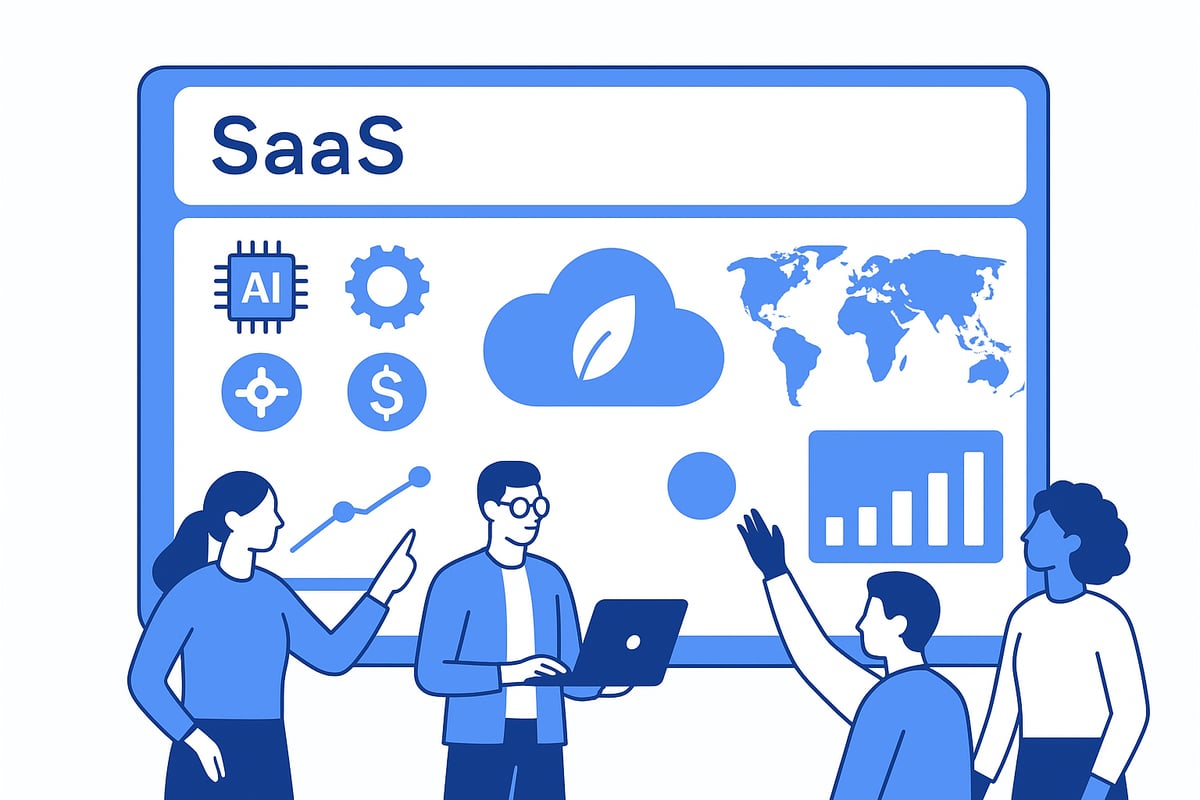
The pace of change in the SaaS world is accelerating as 2026 approaches. New trends are reshaping what it means to master any saas concept, from AI-driven experiences to global expansion. Let us explore the most influential developments every leader should track.
AI-Driven SaaS and Hyper-Personalization
Artificial intelligence is now central to the modern saas concept. SaaS applications increasingly deploy machine learning to automate tasks, deliver predictive analytics, and offer tailored recommendations.
For example, Notion’s AI-powered content suggestions optimize workflows for each user. AI-driven SaaS also enhances security, identifies risks, and personalizes onboarding, making platforms smarter with every interaction.
Key benefits include:
- Automated customer support via chatbots
- Real-time insights and forecasts
- Personalized user journeys
AI is no longer optional but a core expectation in the evolving saas concept landscape.
Low-Code/No-Code SaaS Platforms
Low-code and no-code platforms are democratizing the saas concept by allowing non-technical users to build custom workflows and applications. These platforms speed up innovation and reduce development costs.
Airtable exemplifies this trend, enabling teams to design complex solutions with simple drag-and-drop tools. As businesses demand agility, low-code/no-code SaaS empowers faster product launches and rapid iteration.
Key advantages:
- Faster time-to-market
- Lower barriers for experimentation
- Increased team autonomy
This shift in the saas concept is transforming how businesses approach software creation.
Industry-Specific (Vertical) SaaS Expansion
Vertical SaaS is emerging as a defining saas concept for 2026, catering to the unique needs of sectors like healthcare, finance, and education. Unlike horizontal solutions, vertical SaaS offers deep specialization, compliance, and tailored workflows.
According to recent analyses, vertical SaaS is projected to outpace horizontal growth. For a deeper dive into this trend and its impact, see the Emerging vertical SaaS solutions resource.
Why vertical SaaS matters:
- Streamlined regulatory compliance
- Industry-focused integrations
- Accelerated adoption in niche markets
This saas concept is unlocking new value for organizations seeking sector-specific innovation.
Sustainability and Green SaaS Initiatives
Sustainability is becoming integral to the modern saas concept. Providers are investing in eco-friendly data centers and carbon-neutral operations to meet environmental goals.
Google Cloud, for example, champions renewable energy in its infrastructure. Customers are now factoring sustainability into vendor selection, making green SaaS a competitive differentiator.
Key green initiatives:
- Carbon offsetting
- Energy-efficient hardware
- Transparent sustainability reporting
As the world prioritizes climate action, sustainability will shape every future saas concept.
SaaS Security Innovations
Security remains a top priority for any saas concept in 2026. Innovations such as zero-trust architectures and continuous authentication are responding to growing cyber threats.
Providers are deploying advanced encryption, proactive monitoring, and automated threat detection. These measures protect sensitive data and build user trust.
Security trends to watch:
- Zero-trust access models
- AI-powered anomaly detection
- Compliance with evolving global regulations
The saas concept is evolving to deliver not just functionality but also robust protection.
The Rise of Usage-Based and Hybrid Pricing
Another crucial saas concept is the shift from traditional seat-based pricing to usage-based and hybrid models. Companies like Snowflake lead this trend, billing customers based on actual consumption.
This flexibility aligns costs with value, making SaaS more accessible to startups and enterprises alike.
Benefits of usage-based pricing:
- Greater transparency
- Cost alignment with usage
- Easier scalability for customers
The saas concept of adaptive pricing is driving broader adoption and satisfaction.
Globalization and Localization of SaaS Offerings
SaaS providers are expanding globally, tailoring their offerings for diverse markets. The saas concept now includes multi-language interfaces, multi-currency billing, and regional compliance to meet local needs.
Localization features:
- Language and cultural adaptation
- Support for various payment methods
- Adherence to regional regulations
Globalization ensures that the saas concept remains relevant and accessible to users worldwide.
Validating SaaS Ideas in a Competitive 2026 Market
Succeeding with a new saas concept in 2026 demands more than just technical prowess or a compelling vision. The market is crowded, investor expectations are higher, and the risk of failure from misaligned solutions is real. Validating your saas concept early is now a strategic necessity, not just a nice-to-have. Let’s break down the pathways to ensuring your next idea stands out and secures its place in the evolving SaaS ecosystem.
The Importance of Market Validation
Launching a new saas concept without proper validation can be costly. High failure rates for SaaS startups often trace back to skipping this critical step. Case studies reveal that even innovative products can falter if they do not address a genuine need or lack market fit. Understanding the pain points of your target audience and ensuring your saas concept directly solves them shields you from expensive missteps. Founders must validate before investing heavily in development or marketing.
Modern Validation Techniques and Tools
Today’s founders have access to a suite of modern tools for validating any saas concept. These include customer interviews, landing page MVPs, and waitlists that gauge real interest before launch. Leveraging analytics and feedback loops allows for rapid iteration and evidence-based refinement. For actionable frameworks, explore SaaS validation strategies for founders, which outline step-by-step approaches tailored to founder strengths. Using these methods increases your chance of finding product-market fit.
Building a Pre-Launch Audience
A strong pre-launch audience can make or break a saas concept in 2026. Building a community through social media, content marketing, and early access programs creates buzz and drives organic interest. Beta launches offer real-world feedback, while waitlists generate urgency and social proof. Engaged early users often become advocates, helping your saas concept gain momentum and credibility even before the official release.
Leveraging Data-Driven Validation
Modern validation is incomplete without a data-driven approach. Techniques like A/B testing, cohort analysis, and user behavior tracking provide concrete evidence on what resonates with your audience. SaaS startups using data-driven validation methods typically see up to 30 percent higher launch success rates. Regularly analyzing this data helps refine your saas concept, making it more appealing and resilient in a competitive landscape.
Competitive Analysis and Differentiation
Thorough competitive analysis is vital for any saas concept. SWOT analysis and market mapping help identify gaps and opportunities. By understanding your competitors and clearly defining your unique value proposition, you position your saas concept for differentiation. This groundwork is essential for carving out a sustainable niche and avoiding the pitfalls of crowded markets.
How SaaS Validation Empowers Founders
SaaS Validation offers a comprehensive resource hub for founders looking to validate their saas concept before building. With step-by-step guides, expert frameworks, and real-world examples, the platform equips founders to avoid costly mistakes. Community insights and practical templates support every stage of validation, making it easier to test and iterate on your saas concept with confidence. Validating before coding or seeking investment conserves resources and maximizes your likelihood of success.
Funding and Go-to-Market Readiness
Aligning validation milestones with fundraising and go-to-market strategies is crucial in 2026. Investors increasingly look for evidence of traction and market fit before backing a saas concept. Startups that demonstrate validated demand and a clear path to market are more likely to secure seed funding and scale effectively. By prioritizing validation, you lay the groundwork for long-term growth.
Future-Proofing Your SaaS Business for 2026 and Beyond
Successfully future-proofing your business requires more than just following trends. As the saas concept evolves, leaders must anticipate change, adapt operations, and strengthen foundations to remain competitive in 2026 and beyond. Let’s break down the strategies every SaaS founder and executive should master to thrive in a rapidly shifting landscape.
Adapting to Rapid Technological Change
The pace of innovation is relentless. To future-proof your saas concept, continuous learning and upskilling are essential. Encourage teams to stay current with emerging technologies like AI, blockchain, and quantum computing.
Consider how AI-driven SaaS platforms for analytics, automation, and personalization are reshaping the market. Integrating these advancements early can provide a competitive edge. Invest in regular training sessions, attend industry conferences, and foster a culture of curiosity.
Building Resilient and Scalable Infrastructures
A robust infrastructure is at the heart of every successful saas concept. Opt for cloud-native, multi-cloud, or edge computing strategies to maximize uptime and resilience. Disaster recovery and business continuity planning are no longer optional—they are critical.
According to the SaaS market projected to reach $340.75 billion in 2026, scalability is non-negotiable. Use auto-scaling, global CDNs, and regular infrastructure audits to ensure smooth growth, regardless of demand spikes.
Prioritizing Customer-Centric Product Development
Customer needs evolve rapidly, and your saas concept must adapt in step. Adopt agile methodologies and iterative product releases to respond to changing requirements.
Gather feedback through surveys, user interviews, and in-app analytics. Act quickly on insights to deliver value and build lasting loyalty. Place the customer at the center of every product decision.
Investing in Security and Compliance
Security remains a top priority for any modern saas concept. Implement proactive measures like regular audits, penetration testing, and staff training. Keep up-to-date with evolving global regulations, including GDPR and CCPA.
Achieve certifications such as SOC 2 or ISO 27001 to boost credibility. A single data breach can damage reputation and erode trust, so invest in robust encryption and incident response planning.
Embracing Diversity, Equity, and Inclusion (DEI)
Inclusive teams drive innovation. Prioritize DEI initiatives within your saas concept to attract top talent and foster creativity. Encourage diverse hiring, offer mentorship programs, and create an environment where all voices are heard.
Diversity is not just a social responsibility—it is a competitive advantage. Studies show that diverse teams outperform homogeneous ones in problem-solving and innovation.
Expanding Globally with Localization Strategies
Global expansion is a natural progression for a growing saas concept. Tailor your products to new markets by supporting multiple languages, currencies, and regional compliance requirements.
Research local user behaviors and legal frameworks before entering new markets. Collaborate with regional experts to avoid missteps and ensure a smooth rollout.
Measuring Success with Advanced Analytics
Modern analytics are essential for tracking the health of your saas concept. Use real-time dashboards, predictive analytics, and cohort analysis to guide strategic decisions.
Integrate insights from AI-driven platforms to uncover trends and automate reporting. Establish KPIs that reflect customer success, product engagement, and financial growth to stay ahead.
Building Strong Partner and Integration Ecosystems
No saas concept thrives in isolation. Build strategic alliances with other SaaS providers, technology partners, and integration platforms.
Develop open APIs and participate in co-marketing opportunities to expand your reach. A thriving ecosystem drives user adoption, fosters innovation, and opens new revenue streams.