
The tech saas landscape is undergoing a dramatic transformation as we move into 2026. SaaS is fueling a new era of innovation, enabling businesses to scale efficiently and adapt to rapid change across every sector.
This essential guide takes you through the most influential SaaS trends, strategies, and categories that are shaping the future of technology. You will uncover key market shifts, actionable adoption strategies, and the biggest opportunities for growth.
Whether you are a founder, tech leader, or innovator, understanding these developments will empower you to stay ahead in a fast-changing market. Use this guide to make informed decisions and position your business for lasting success.
The State of SaaS in 2026: Market Overview and Growth Drivers
The tech saas sector is experiencing unprecedented momentum in 2026, with market expansion fueled by digital transformation and widespread cloud adoption. Businesses across the globe are accelerating their shift from legacy, on-premises infrastructure to scalable cloud-based solutions, unlocking new efficiencies and opportunities. This rapid growth is not limited to traditional tech industries; sectors like manufacturing, education, and logistics are now embracing tech saas, broadening its impact and reach.
Market Size and Growth Projections
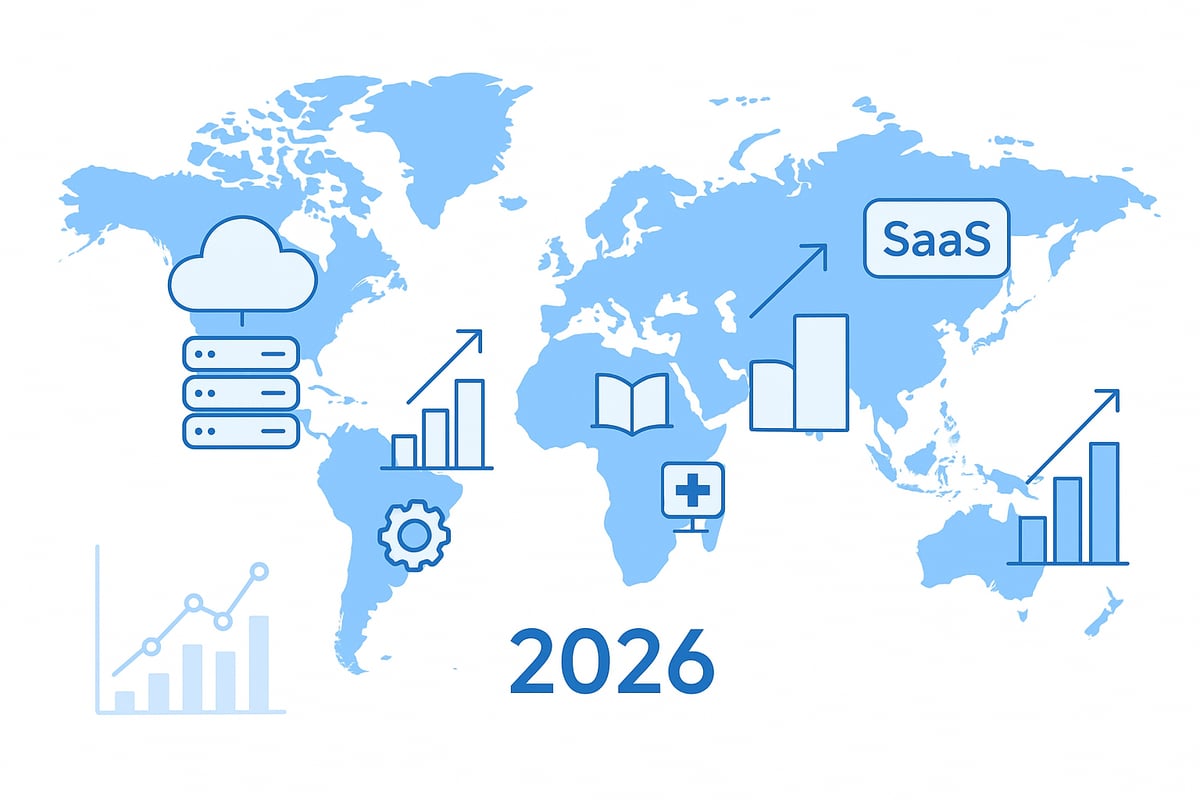
In 2026, the global tech saas market is projected to surpass $300 billion, with a strong CAGR that continues to outperform other tech segments. North America, APAC, and Europe remain the primary growth engines, each contributing significant market share due to their robust digital economies and early cloud adoption.
| Region | Market Share (%) | CAGR (2022-2026) |
|---|---|---|
| North America | 40 | 16 |
| APAC | 30 | 18 |
| Europe | 25 | 15 |
The shift from on-premises to cloud-based solutions is accelerating, with nearly 80% of enterprises expected to run most workloads in the cloud by year-end. Non-traditional sectors, such as manufacturing and education, are investing heavily in tech saas to modernize operations and remain competitive. For deeper statistics and trend analysis, the SaaS Market Statistics and Trends page offers valuable insights into current and projected growth.
Major Industry Shifts and Influences
Several transformative forces are shaping the tech saas ecosystem in 2026. The widespread adoption of remote and hybrid work models has made cloud-based collaboration and productivity tools indispensable. Organizations now demand seamless integration and interoperability between different SaaS products to streamline workflows and maximize ROI.
Key industry shifts include:
- Rapid emergence of vertical SaaS tailored for sectors like HealthTech, EdTech, and FinTech
- Heightened focus on integration, open APIs, and ecosystem-driven partnerships
- Economic pressures driving demand for scalable, cost-effective solutions
- Increasing regulatory and compliance requirements, especially in data-sensitive industries
These factors are influencing how tech saas providers build, market, and differentiate their offerings. Companies that prioritize industry-specific solutions, strong security, and compliance frameworks are gaining a competitive edge.
Emerging SaaS Business Models
Tech saas companies are innovating with their business models to capture market share and respond to evolving customer needs. Subscription pricing remains dominant, but usage-based models are gaining traction, especially among organizations seeking flexibility and cost alignment with actual consumption.
Freemium and product-led growth strategies are on the rise, allowing users to experience value before committing to paid tiers. Micro-SaaS solutions, which target niche problems with laser focus, are proliferating, lowering barriers to entry for new startups. Market leaders like Salesforce and Microsoft are evolving their pricing and product strategies to stay ahead in a dynamic environment.
As competition intensifies, tech saas providers must stay agile, experiment with monetization tactics, and continually refine their value propositions to ensure sustained growth.
Key SaaS Trends Shaping 2026
The tech saas landscape in 2026 is rapidly evolving, driven by innovation and changing business needs. To remain competitive, organizations must understand the trends defining this sector. From artificial intelligence to sustainability, these developments are reshaping how software is built, deployed, and adopted.
AI-Driven Automation and Personalization
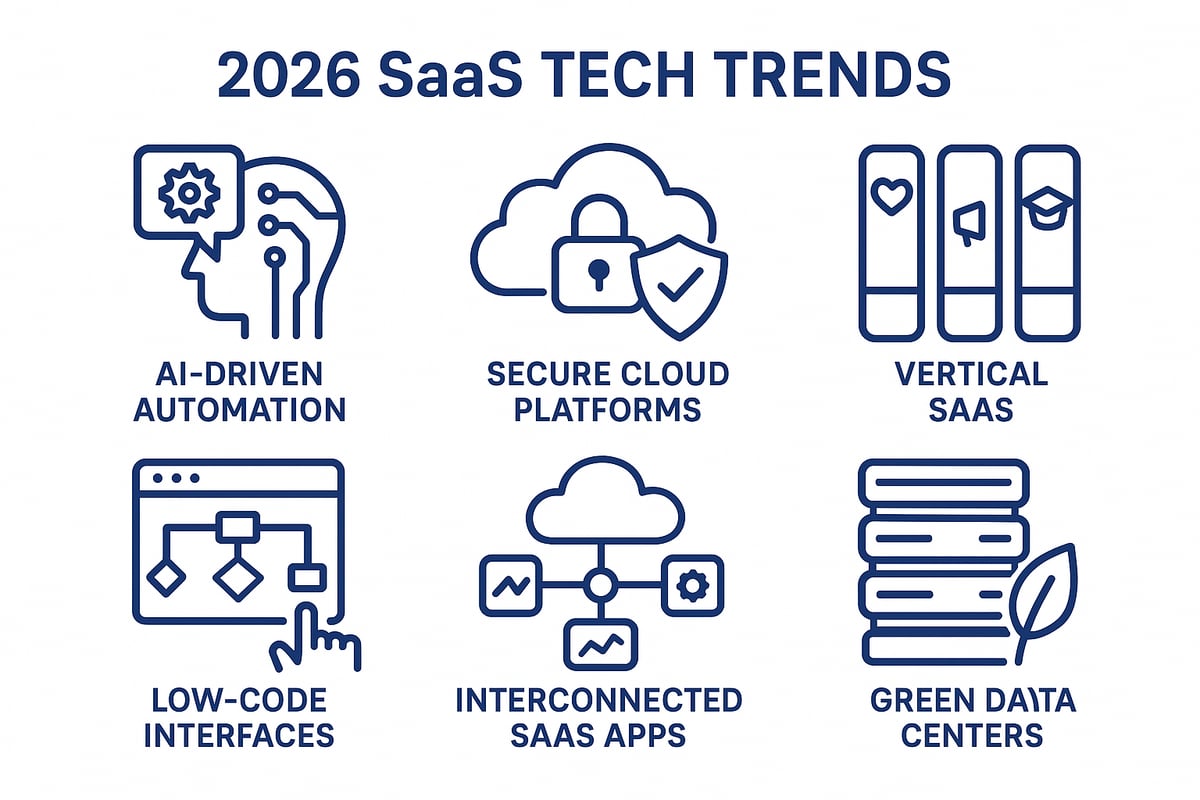
AI and machine learning are now foundational within tech saas, powering a new wave of automation and personalized experiences. In 2026, more SaaS tools are embedding AI to streamline workflows, enhance customer support, and deliver data-driven recommendations.
Key use cases include:
- Intelligent chatbots for instant customer service
- Predictive analytics to anticipate user needs
- Automated document processing and task management
By integrating AI, tech saas platforms help organizations boost productivity and make faster decisions. Industry data projects that over 70% of SaaS products will feature AI components by 2026. For a deeper exploration on this topic, see AI in SaaS Platforms.
The demand for smarter, self-learning tech saas tools will only grow, making AI a strategic priority for SaaS vendors and customers alike.
Security and Privacy Innovations
Security and privacy have become top priorities for tech saas providers and users. In 2026, the adoption of zero trust security models is accelerating, requiring verification at every access point. Enhanced encryption and privacy-first architectures are standard, especially where sensitive data is involved.
For example, HealthTech SaaS platforms must comply with strict regulations like GDPR and HIPAA. These platforms now offer:
- Advanced encryption for patient records
- Automated compliance reporting
- Robust user authentication
Vendor risk management is also increasingly important, as organizations rely on multiple tech saas vendors. Companies that prioritize security and demonstrate compliance can differentiate themselves in a crowded market.
Vertical SaaS and Industry-Specific Solutions
Tech saas is moving beyond generic solutions, with vertical SaaS targeting specialized industries such as marketing, healthcare, education, and finance. These tailored platforms address unique workflows, compliance needs, and data requirements.
Benefits of vertical tech saas include:
- Faster onboarding for industry users
- Built-in regulatory features
- Custom analytics for niche sectors
A case in point is HealthTech SaaS, which streamlines patient care coordination and improves data management. Growth projections for vertical SaaS are strong, as businesses recognize the value of solutions made for their field.
Low-Code/No-Code Platforms and Citizen Development
Low-code and no-code platforms are democratizing software creation in the tech saas sphere. These tools enable non-developers to build applications and automate processes, speeding up innovation and reducing IT bottlenecks.
Organizations benefit from:
- Faster deployment of custom workflows
- Empowered business teams
- Reduced development costs
Examples include productivity apps, internal dashboards, and workflow automation. By 2026, low-code/no-code will represent a significant share of the tech saas market, making software development more accessible across all industries.
SaaS Ecosystem Expansion and Integrations
The tech saas ecosystem is expanding through API-first development and seamless integration. Businesses need their SaaS tools to work together, driving demand for open APIs and robust partner networks.
Key trends include:
- SaaS marketplaces for discovering and connecting new tools
- Deep integrations between HR, finance, and productivity platforms
- Flexible data sharing and interoperability
Learning Management Systems, for example, now integrate with HR and payroll solutions to offer unified employee experiences. This focus on integration helps organizations maximize the value of their tech saas investments.
Sustainability and Green SaaS
Sustainability is now a critical factor in tech saas purchasing decisions. Providers are investing in carbon-neutral data centers and energy-efficient architectures to minimize environmental impact.
Customers increasingly demand transparency, seeking SaaS vendors who report on their sustainability metrics. Notable efforts include:
- Renewable energy-powered data hosting
- Efficient code and infrastructure design
- Public sustainability reporting
Tech saas leaders who champion green practices can attract environmentally conscious clients and set new standards for the industry.
Winning SaaS Strategies for 2026: Adoption, Differentiation, and Growth
Achieving sustainable growth in tech saas requires a blend of innovation, customer focus, and operational excellence. As competition intensifies in 2026, the most successful SaaS companies will be those that prioritize user needs, adopt agile go-to-market strategies, and build resilient, secure platforms. The following strategies offer actionable insights for founders and leaders aiming to differentiate and scale their tech saas business.
Customer-Centric Product Development
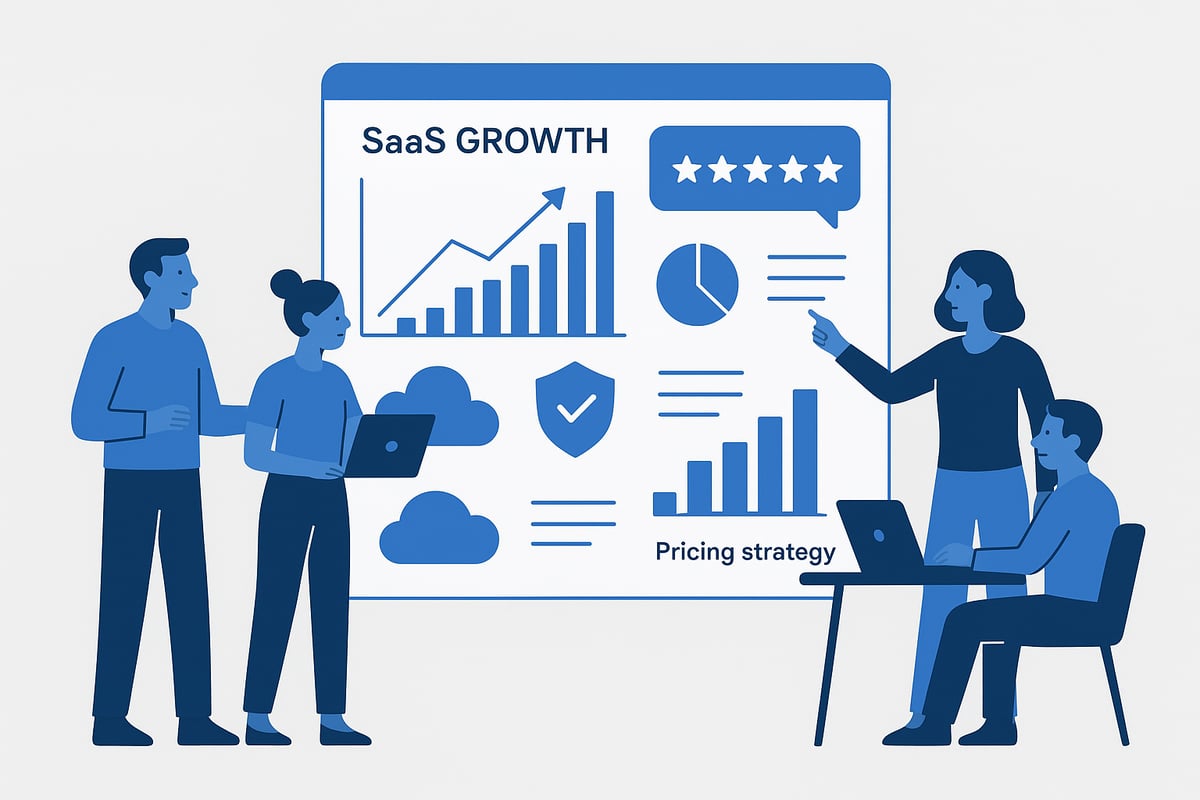
Putting customers at the heart of tech saas product development is more critical than ever. Leading SaaS companies gather continuous user feedback through surveys, interviews, and in-app analytics. This real-time data guides rapid iteration, driving improvements that align with evolving customer needs.
Design thinking and a focus on user experience (UX) help increase retention. Teams use prototyping and usability testing to refine workflows and interfaces. By measuring engagement metrics, tech saas firms can prioritize features that deliver the most value.
Product roadmaps are now living documents, shaped by customer insights. Analytics tools enable data-driven decisions, reducing guesswork and accelerating innovation. This customer-centric approach builds trust, lowers churn, and sets a foundation for lasting success in tech saas.
Go-to-Market and Growth Models
In 2026, go-to-market strategies for tech saas are more dynamic and data-driven. Product-led growth (PLG) empowers users to try core features before committing, creating organic adoption and viral loops. Many companies blend PLG with sales-led or hybrid models to maximize reach across different customer segments.
Community-driven marketing is gaining traction. SaaS brands nurture user communities through forums, webinars, and advocacy programs. This creates a feedback loop that fuels both product development and word-of-mouth growth in tech saas.
Freemium and free trial strategies remain effective. They lower the barrier to entry and provide a risk-free way for prospects to experience value. The most successful tech saas organizations use a mix of these models, adapting quickly to market shifts and user preferences.
Pricing and Monetization Tactics
Pricing strategy is a key differentiator in the tech saas landscape. Companies are moving beyond simple subscriptions to offer tiered, usage-based, and value-based pricing. This flexibility allows customers to pay for what they need, improving satisfaction and conversion rates.
A/B testing and experimentation are standard practices. SaaS firms regularly test different pricing models, onboarding flows, and packaging to optimize revenue. For example, MarTech SaaS providers often adjust offerings for SMBs versus enterprises, tailoring features and support levels.
| Pricing Model | Description | Best For |
|---|---|---|
| Subscription | Fixed recurring fee | Predictable revenue |
| Usage-Based | Pay per use or feature | Variable consumption |
| Tiered | Multiple feature bundles | Diverse user needs |
| Value-Based | Price tied to delivered value | High-impact solutions |
By aligning pricing with customer value and usage patterns, tech saas businesses can unlock new growth opportunities.
Security and Compliance as Differentiators
Security and compliance are no longer optional for tech saas providers. Embedding robust security into the core value proposition builds trust with clients, especially in regulated industries like healthcare and finance. Certifications, such as SOC 2 and ISO 27001, as well as regular third-party audits, serve as essential trust signals.
HealthTech SaaS platforms, for instance, prioritize HIPAA compliance to protect sensitive patient data. Proactive vendor risk management and privacy-by-design principles are now standard. For more on how to leverage compliance as a competitive edge, explore this guide on SaaS Security and GDPR Compliance.
By making security and compliance central to their strategy, tech saas companies differentiate themselves in a crowded market and reassure customers their data is safe.
Building Resilient SaaS Architectures
Reliability is a must-have for tech saas, with customers expecting near-perfect uptime and seamless performance. Multi-cloud and edge computing strategies help ensure redundancy, scalability, and fast response times. Disaster recovery planning and robust backup systems are critical for business continuity.
DevOps and continuous delivery practices enable rapid, reliable deployment of new features and updates. Automated monitoring tools detect issues early, reducing downtime. These technical investments allow tech saas companies to scale confidently and respond quickly to changing market demands.
By prioritizing resilience, SaaS providers build trust and loyalty, securing their place as mission-critical partners for clients.
Talent, Culture, and Remote Teams
Attracting and retaining top talent is a strategic priority for tech saas organizations. In the era of distributed workforces, companies invest in collaborative tools, inclusive cultures, and flexible policies to support global teams.
Diversity and agility are key drivers of innovation. SaaS leaders foster environments where ideas are welcomed, and cross-functional teams can experiment rapidly. Data shows that remote adoption rates in tech saas continue to rise, expanding the talent pool and enabling around-the-clock development cycles.
Strong culture and remote-friendly practices not only boost productivity but also help retain high performers, fueling long-term growth for tech saas businesses.
SaaS Category Deep-Dive: Specialized Markets and Opportunities
The tech saas landscape in 2026 is more diverse than ever, with specialized markets offering tailored solutions to unique industry challenges. Each vertical brings distinct opportunities for growth, innovation, and competitive advantage. Understanding these categories equips decision-makers to spot trends and seize new opportunities.
MarTech: Marketing Technology SaaS
MarTech is a dynamic segment of tech saas, empowering marketing teams to automate, optimize, and measure campaign performance. These platforms streamline tasks, personalize outreach, and generate actionable insights.
- Popular categories: CRM, marketing automation, analytics, social media management.
- Example platforms: HubSpot, Marketo, Salesforce Marketing Cloud.
- Market size: Projected to surpass $182 billion globally by 2026.
- Job opportunities: Surge in demand for digital marketers and data analysts.
MarTech tech saas enables organizations to refine targeting and maximize ROI, making it indispensable for modern marketing strategies.
HealthTech: Healthcare SaaS
HealthTech continues to revolutionize healthcare delivery and patient engagement through tech saas. Secure, cloud-based platforms improve efficiency, compliance, and outcomes.
- Key solutions: Electronic Medical Records (EMR), telemedicine, wearable device integration.
- Example: PGx Advisor supports personalized medicine and pharmacogenomics.
- Compliance focus: HIPAA, GDPR, data encryption.
- Impact: Enhanced patient care, streamlined workflows, and data-driven decision-making.
HealthTech tech saas platforms are central to digital transformation in healthcare, driving both innovation and regulatory alignment.
Business Productivity and Collaboration SaaS
Business productivity and collaboration tech saas tools are vital for remote and hybrid teams. They facilitate communication, project management, and knowledge sharing.
- Leading platforms: Slack, Microsoft Teams, Google Workspace, Asana.
- Benefits: Real-time collaboration, document management, workflow automation.
- Use cases: Onboarding, cross-department coordination, virtual meetings.
By leveraging tech saas in this space, organizations unlock higher efficiency and foster a culture of seamless teamwork.
Learning Management Systems (LMS) and EdTech
LMS and EdTech tech saas solutions are transforming education and corporate training. These platforms provide scalable, customizable learning experiences for diverse audiences.
- Features: Course authoring, progress tracking, compliance reporting.
- Top platforms: Moodle, Canvas, TalentLMS.
- Applications: Employee onboarding, certification, continuing education.
As online learning expands, tech saas in EdTech supports skill development and organizational growth through accessible, data-driven education.
Other Emerging Verticals
Beyond the mainstream, tech saas is gaining traction in FinTech, LegalTech, PropTech, and micro-SaaS niches. These sectors address specialized needs with innovative, agile solutions.
- FinTech: Payment processing, risk management, personal finance.
- LegalTech: Document automation, case management, e-discovery.
- PropTech: Property management, smart building integrations.
The rise of micro-SaaS, often targeting highly specific workflows, demonstrates the growing appetite for industry-specific and niche SaaS solutions. As tech saas expands into new markets, entrepreneurs can capitalize on gaps and unmet needs for sustainable growth.
SaaS Validation: Laying the Foundation for Successful Products
Launching a successful tech saas product in 2026 starts with one essential task: validation. With fierce competition and rapid innovation, skipping this step can lead to wasted resources and missed opportunities. For tech saas founders, validating your idea early helps ensure you solve real customer pain points and reach product-market fit faster.
The SaaS Validation Process
Effective validation for tech saas solutions involves a structured approach:
| Step | Description |
|---|---|
| Market Research | Analyze industry trends and competitors. |
| Identify Customer Pain | Engage with target users to uncover real challenges. |
| Build an MVP | Develop a lean product to test assumptions. |
| Test Willingness to Pay | Validate demand through pricing experiments. |
Resources such as the Vertical SaaS Validation Steps guide offer actionable frameworks for founders exploring niche or industry-specific tech saas opportunities.
Why Validation Matters for Tech SaaS
Skipping validation is a leading cause of failure for tech saas startups. Data shows that over 40% of failed SaaS ventures cite lack of market need as the primary reason. By validating before a full build, founders avoid overengineering features, save capital, and reduce risk.
Tools and Real-World Support
Today’s founders have access to expert interviews, curated tool lists, and community-driven insights to streamline validation. Platforms like SaaS Validation empower tech saas teams to pivot quickly and refine their product based on real market feedback.
Early adopters who validate their tech saas ideas often achieve stronger market traction and more sustainable growth. For anyone launching or scaling a tech saas solution in 2026, robust validation is the best foundation for success.
Future Outlook: Challenges and Opportunities in the SaaS Landscape
The road ahead for tech saas is both inspiring and demanding. As the industry matures, businesses face significant challenges that require strategic foresight. Market saturation is rising, making it harder for new entrants to stand out. Increased competition means established players must innovate rapidly to retain their customer base.
Regulatory pressures continue to evolve, especially around data privacy and compliance. SaaS providers must keep pace with region-specific regulations to avoid costly missteps. Continuous compliance is now a cornerstone of staying competitive and building trust with customers.
The integration of artificial intelligence is reshaping the future of tech saas, driving automation and smarter products. As highlighted in AI integration in SaaS platforms, the rapid adoption of generative AI is transforming workflows, unlocking new efficiencies, and altering cost structures. Companies leveraging AI and automation will be better positioned to innovate and scale.
Emerging markets present substantial growth opportunities, especially as cloud adoption accelerates worldwide. According to Global SaaS market growth projections, the global SaaS industry is poised for robust expansion through 2035, with new sectors and geographies driving demand for specialized solutions.
Looking toward 2030, the pace of SaaS innovation is expected to intensify. Disruption will come from new business models, evolving user expectations, and advances in low-code development. To prepare, organizations must invest in upskilling teams, fostering adaptability, and refining their tech saas strategies to thrive in a dynamic landscape.