The AI SaaS revolution is accelerating, fundamentally transforming how software is built and how businesses operate in 2026. For founders, entrepreneurs, and tech leaders, understanding ai saas is no longer optional—it’s essential for staying ahead in a rapidly shifting market.
This guide unpacks the evolving world of AI-powered SaaS, delivering actionable insights and future-proof strategies. You’ll explore the history, benefits, challenges, must-have features, leading platforms, practical implementation steps, and the key trends shaping the future. Use this guide to make informed decisions and thrive in the AI SaaS era.
The Evolution of AI SaaS: From 2020 to 2026
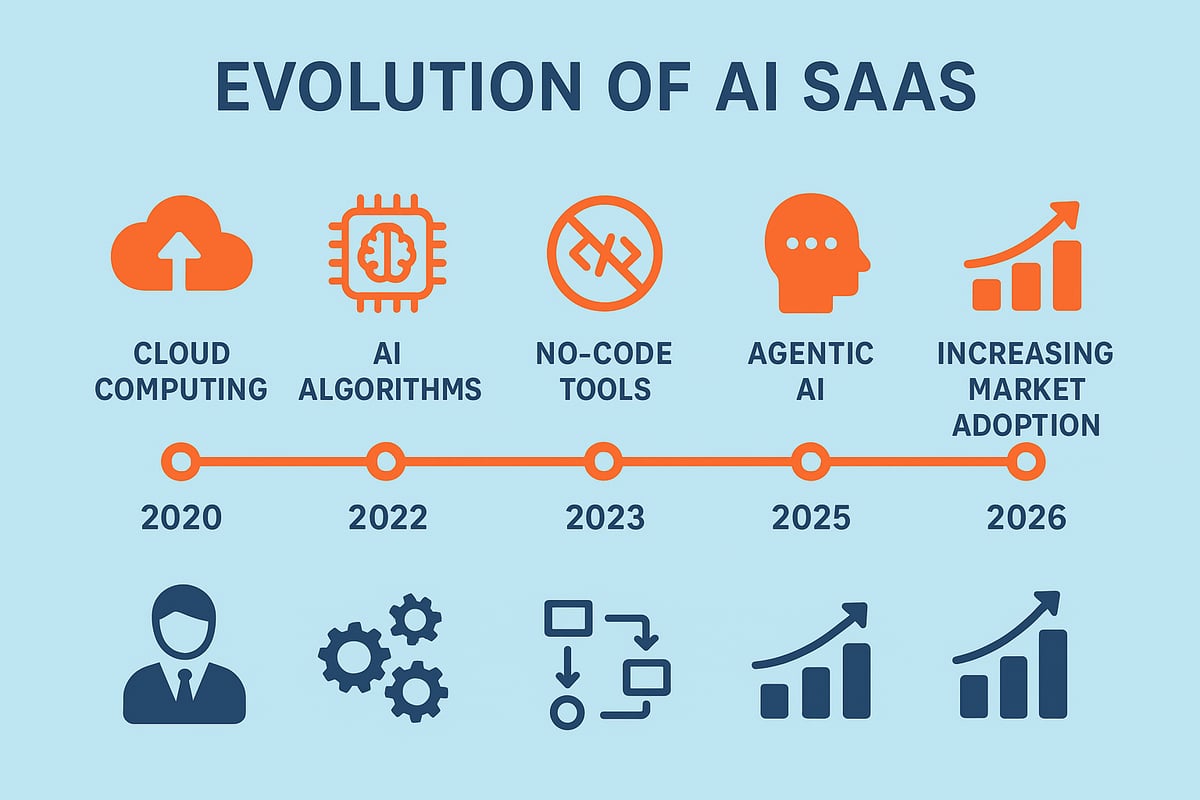
Artificial intelligence has rapidly transformed the SaaS landscape between 2020 and 2026, turning once-static platforms into agile, intelligent systems. The rise of ai saas has redefined how businesses operate, develop, and deploy software. This evolution is marked by pivotal milestones, market growth, and a fundamental shift in user expectations.
Key Milestones in AI SaaS Development
The journey of ai saas began with the growing adoption of cloud-based software in 2020. Early SaaS solutions leveraged basic automation, but the integration of advanced AI algorithms soon accelerated innovation. By 2022, breakthroughs in machine learning and cloud computing enabled SaaS platforms to offer predictive analytics and real-time insights.
Agentic AI emerged as a game-changer around 2024, highlighted in Bain's 2025 report. This technology empowered SaaS systems to act autonomously, handling complex workflows without manual oversight. The popularity of no-code and low-code ai saas builders, such as Bolt.new and ChatGPT-4o, allowed users to create robust SaaS apps in under five hours. These platforms democratized development, enabling even non-technical founders to bring new solutions to market rapidly.
Venture capital funding surged, and M&A activity increased as investors recognized the potential of ai saas startups. The shift from manual development to AI-assisted and AI-generated applications shortened time-to-market and lowered barriers to entry. For example, entrepreneurs could now launch a full-featured SaaS product in a single afternoon, using AI-powered tools to handle everything from coding to deployment.
Market Growth and Adoption Statistics
The ai saas market experienced explosive growth from 2020 to 2026. According to AI SaaS market growth projections, the global market size is expected to reach unprecedented levels by 2026, reflecting both rising demand and technological advancements. Adoption rates among SMBs and enterprises soared as organizations sought to leverage AI for competitive advantage.
Key industries driving ai saas adoption included healthcare, finance, and e-commerce. Healthcare providers used AI SaaS for predictive diagnostics, while financial institutions streamlined risk management and compliance. E-commerce platforms adopted AI-driven personalization engines to enhance customer experience. Survey data revealed that over 70% of enterprises had integrated at least one AI-powered SaaS solution by 2025, with SMBs quickly closing the gap.
This rapid adoption was fueled by the flexibility, scalability, and cost-effectiveness of ai saas platforms. The market's upward trajectory attracted new entrants and spurred innovation across verticals, further solidifying AI's central role in the SaaS ecosystem.
Changing User Expectations and Business Models
As ai saas matured, user expectations evolved significantly. Businesses now demand personalized, intelligent, and automated SaaS solutions that adapt to their unique workflows. The rise of agentic AI means users expect software to proactively solve problems and optimize processes without constant supervision.
New business models emerged, including usage-based pricing and AI-as-a-service subscriptions. These models offer greater flexibility and align costs with actual usage, making ai saas accessible to a broader range of organizations. Traditional SaaS vendors faced pressure to innovate or risk being outpaced by AI-native platforms.
AI-driven rapid prototyping and development have become the norm, reducing time-to-market and enabling continuous iteration. As a result, founders and tech leaders can launch, test, and scale products faster than ever before. The evolution of ai saas from 2020 to 2026 marks a paradigm shift, setting the stage for even more disruptive innovation in the years ahead.
Core Benefits and Challenges of AI SaaS in 2026
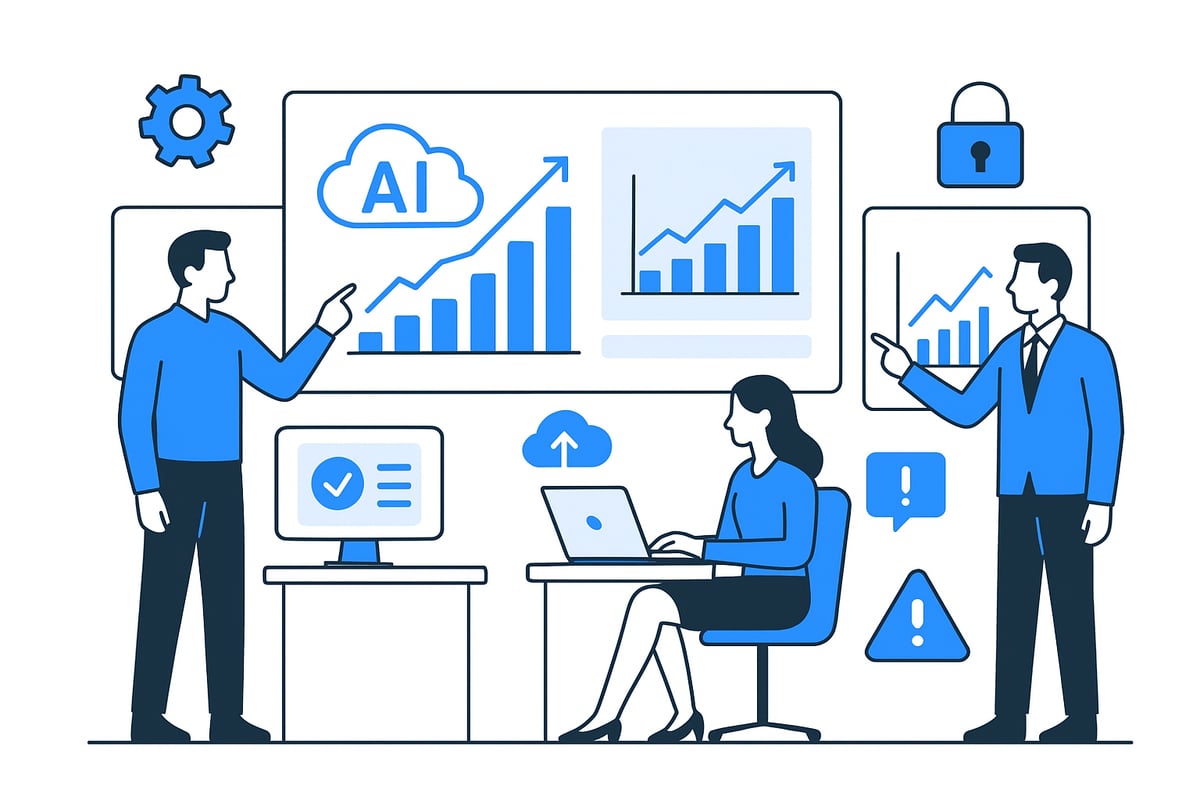
AI SaaS is reshaping how organizations operate, offering powerful advantages while presenting new complexities. In 2026, the impact of ai saas is felt across every industry, from startups to global enterprises. Understanding both the transformative benefits and the inherent challenges is essential for anyone considering or already leveraging ai saas solutions.
Transformative Benefits for Businesses
The adoption of ai saas platforms brings a wave of automation and efficiency. Workflows that once required manual input are now streamlined, freeing teams to focus on higher-value tasks. Predictive analytics and real-time insights empower leaders to make smarter decisions, improving outcomes in marketing, sales, and operations.
Cost savings are another significant advantage. By optimizing resource allocation and reducing manual labor, ai saas helps businesses operate leaner. This democratization of software creation enables even non-technical founders to build and launch functional apps quickly. For example, entrepreneurs now create full-featured SaaS applications in just hours using AI-driven platforms, a process that previously took weeks or months.
Scalability and flexibility are also key. AI SaaS platforms adjust seamlessly to changing business demands, whether scaling up usage or adapting to new markets. Personalization is no longer a luxury, as AI algorithms tailor user experiences based on behavior and preferences. For a deeper look at these advantages, explore AI-powered SaaS solutions, which highlights practical use cases and business impact.
Key Challenges and Risks
Despite the promise of ai saas, several challenges must be addressed. Data privacy, security, and compliance are top concerns, especially as sensitive information is processed by advanced AI models. Ensuring the reliability and explainability of these models is critical, particularly for mission-critical applications where errors can be costly.
Vendor lock-in and interoperability issues can arise when businesses depend heavily on a single ai saas provider. Managing AI hallucinations, where models generate inaccurate outputs, requires robust quality control mechanisms. Cost unpredictability is another risk, as token-based and compute-intensive ai saas platforms may lead to fluctuating expenses.
A growing skills gap is evident, with organizations needing expertise in prompt engineering and AI literacy. For instance, users of AI builders like ChatGPT-4o and Bolt.new often face hurdles in validating and refining outputs, highlighting the ongoing need for human oversight and technical skill development.
Perspectives from Industry Leaders
Industry leaders recognize both the disruptive potential and the obstacles of ai saas. Insights from Bain’s Agentic AI report indicate that agentic solutions are altering traditional SaaS models, shifting the focus from manual development to AI-orchestrated workflows. Founders of successful ai saas startups emphasize the value of rapid prototyping and the ability to iterate quickly in response to user feedback.
Analysts predict that overcoming challenges such as explainability, security, and cost management will be central to maximizing the value of ai saas by 2026. They recommend ongoing investment in team training, a proactive approach to compliance, and leveraging AI-driven analytics for continuous improvement. As the ai saas landscape evolves, adaptability and a commitment to responsible innovation will define long-term success.
Essential Features of Next-Gen AI SaaS Platforms
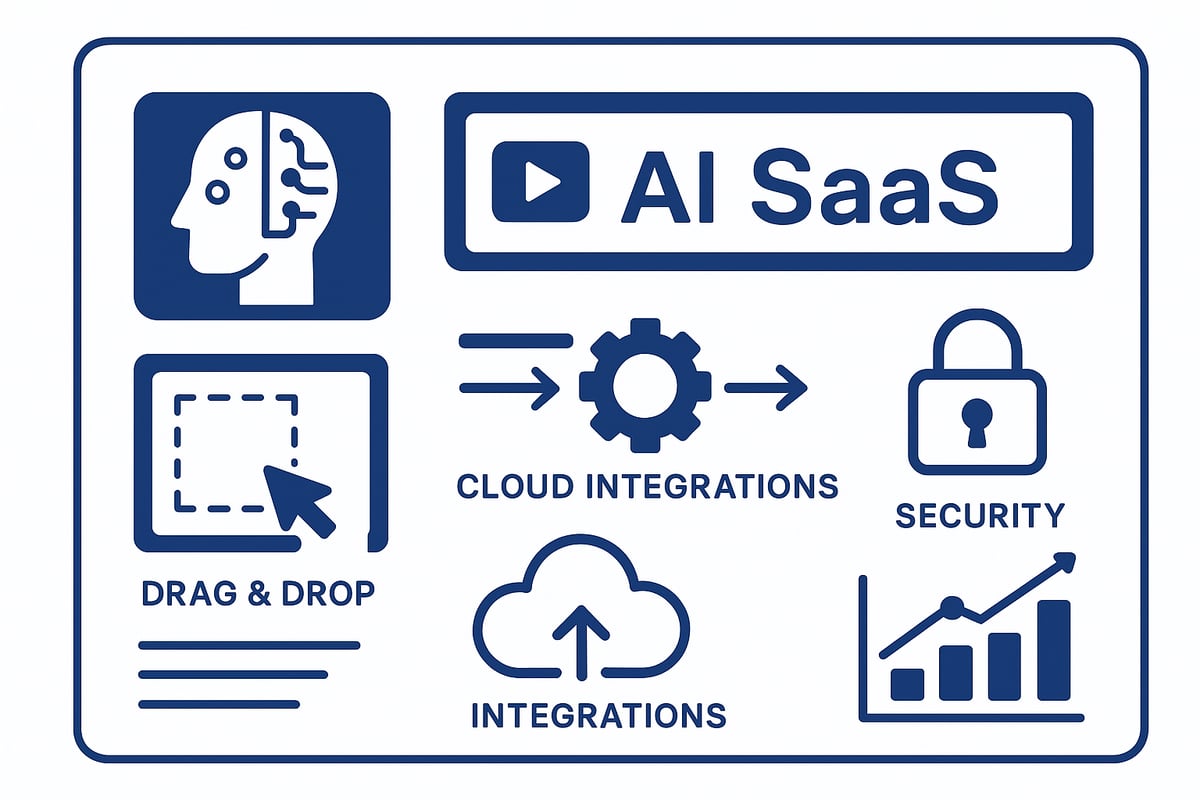
Next-gen ai saas platforms are redefining how businesses build, deploy, and scale software in 2026. These solutions blend advanced AI with user-first design, delivering automation, integration, and security at a level never seen before.
Intelligent Automation and Agentic Capabilities
Modern ai saas platforms leverage autonomous AI agents to handle complex, multi-step workflows. These agents can analyze data, make decisions, and execute tasks with minimal human input. Context-aware learning allows the software to adapt as business needs evolve.
Key features include:
- AI agents that automate repetitive and strategic processes.
- Adaptive systems that learn from real-time data.
- Integration with process automation tools for end-to-end workflows.
With these capabilities, organizations achieve new levels of speed and operational efficiency.
No-Code/Low-Code AI Development
Building advanced ai saas applications no longer requires deep coding expertise. Visual builders and drag-and-drop interfaces empower users to prototype and launch apps in record time. AI-powered code generation reduces manual effort and accelerates development cycles.
Platforms like Bolt.new enable users to create SaaS applications in under five hours. For a broader overview of rapid prototyping and automation, explore No-code and low-code SaaS tools.
This democratization allows entrepreneurs and teams of any skill level to bring their ideas to life.
Advanced Integration and API Ecosystems
A core strength of ai saas is seamless integration with other business systems. Modern platforms offer robust API ecosystems, enabling connections to third-party services like Stripe, Twilio, and Sendgrid.
Notable integration features:
- Prebuilt connectors for quick setup.
- AI-driven API management to optimize data flow.
- Support for multi-cloud and hybrid deployments.
These integrations ensure that SaaS solutions fit perfectly into existing workflows and can scale as organizations grow.
Personalization and User Experience
Personalized experiences are central to ai saas platforms. AI algorithms analyze user behavior, providing tailored recommendations and dynamic interface adjustments. This creates a more engaging and effective user journey.
Features include:
- Real-time feedback for continuous improvement.
- Adaptive UI/UX that responds to individual preferences.
- Scalable customization across user segments.
As a result, businesses can deliver value that feels unique to every customer.
Security, Compliance, and Trust
Security is non-negotiable in ai saas. Built-in encryption, compliance automation, and real-time monitoring safeguard sensitive data. AI-powered anomaly detection identifies threats early, while transparent governance ensures regulatory requirements are met.
Key security aspects:
- End-to-end data encryption.
- Automated compliance checks and audit trails.
- AI-driven threat prevention and monitoring.
These measures build trust with users and simplify complex compliance landscapes.
Scalability and Cost Efficiency
Next-gen ai saas platforms are designed for elastic scaling and smart cost management. Predictive resource allocation ensures optimal performance without overspending. Usage-based and token-based pricing models give businesses greater flexibility.
Scalability features:
- Automatic infrastructure scaling for fluctuating workloads.
- AI-powered forecasting of resource needs.
- Transparent cost tracking and optimization.
This allows companies to adapt quickly to market changes while keeping budgets in check.
Collaboration and Team Productivity
Collaboration tools embedded in ai saas platforms transform how teams work. AI agents can automate documentation, testing, and deployment, reducing manual overhead. Distributed teams benefit from seamless project management and real-time communication.
Productivity enhancements include:
- Automated pipelines for faster releases.
- AI-enabled collaboration spaces for remote teams.
- Streamlined SaaS development lifecycle from idea to launch.
By harnessing these features, organizations foster innovation and deliver products faster than ever.
Leading AI SaaS Platforms and Tools to Watch in 2026
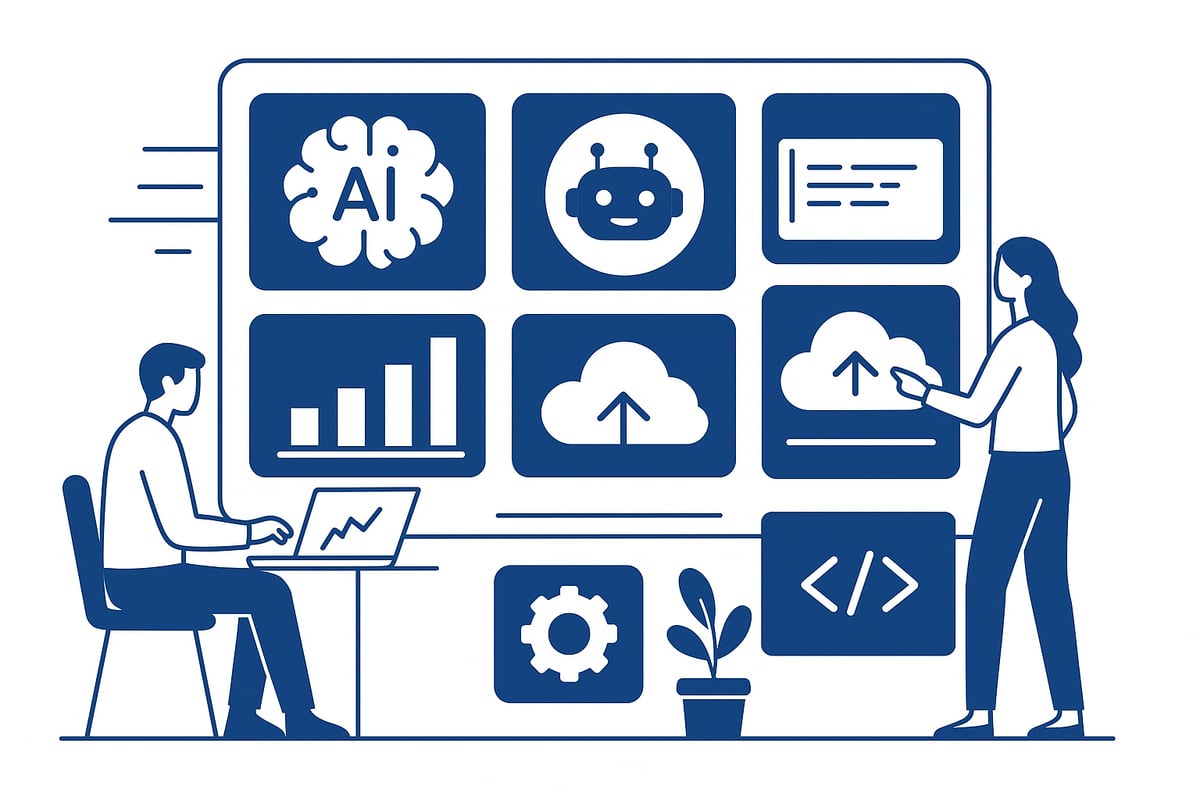
Artificial intelligence is at the heart of the ai saas movement in 2026. The competitive landscape is evolving fast, with both established and emerging platforms shaping how businesses harness AI. Understanding the key players, their features, and their unique strengths is essential for founders and tech leaders navigating this dynamic market.
Overview of the Competitive Landscape
The ai saas sector is highly segmented. Vertical solutions target industries like healthcare and finance, while horizontal platforms offer tools for a broad range of business functions. Established players are being challenged by nimble startups introducing disruptive features and rapid deployment capabilities.
Evaluating ai saas platforms requires considering usability, scalability, integration options, and ecosystem support. For a deeper look at how these trends are influencing the industry, see AI in SaaS market trends.
Notable AI SaaS Platforms (Factual Examples Only)
Some platforms stand out in the ai saas arena. Bolt.new, recognized for its no-code capabilities, enables users to create SaaS applications in under five hours. ChatGPT-4o offers AI-powered code generation and problem-solving, streamlining development for technical and non-technical users alike.
Other notable tools, highlighted in recent industry reports, focus on automation, analytics, and integration. Each brings a unique approach to solving business challenges with AI.
Feature Comparison and Differentiators
Comparing leading ai saas platforms can help businesses make informed choices. The table below summarizes key differentiators:
| Platform | Development Speed | AI Integration | Pricing Model | Extensibility |
|---|---|---|---|---|
| Bolt.new | Very fast | High | Usage-based | Strong |
| ChatGPT-4o | Fast | Advanced | Token-based | Moderate |
Speed of app creation, depth of AI features, and flexible pricing models are top considerations. Integration with third-party tools and scalability also play a significant role in platform selection.
Real-World Use Cases and Success Stories
Entrepreneurs are leveraging ai saas tools to build full-featured apps in just hours. Businesses automate customer support, marketing, and operations, transforming productivity and reducing costs.
In healthcare, ai saas solutions streamline patient data management and diagnostics. E-commerce companies use AI to personalize shopping experiences, while finance firms implement predictive analytics for risk assessment.
Industry Analyst and User Reviews
Industry analysts recognize ai saas as a catalyst for digital transformation. Bain’s 2025 report highlights how agentic AI is redefining SaaS, with users praising the flexibility and speed of modern platforms.
User testimonials point to high satisfaction with rapid prototyping and automation features. Analysts predict continued growth and innovation, urging founders to stay agile as the ai saas landscape evolves.
Step-by-Step Guide: Implementing AI SaaS in Your Business
Embarking on your ai saas journey requires a clear plan and structured approach. This step-by-step guide walks you through every stage, from assessing your needs to measuring the impact, ensuring you maximize value and minimize risk with ai saas adoption.
Step 1: Assess Business Needs and Readiness
Begin by identifying which processes in your organization can benefit most from ai saas integration. Evaluate current pain points, such as manual workflows or data silos, and map out where automation could drive efficiency.
Examine your existing data infrastructure to ensure compatibility with ai saas platforms. Assess your team's readiness, focusing on digital skills, prompt engineering familiarity, and openness to new technologies.
A readiness checklist can help:
- Are your data sources accessible and clean?
- Does your team understand basic AI concepts?
- Is there executive support for transformation?
A thorough assessment at this stage lays the foundation for successful ai saas implementation.
Step 2: Select the Right AI SaaS Platform
Next, define clear selection criteria for your ai saas platform. Prioritize scalability, integration capabilities, security, and vendor support. Compare leading platforms using a features checklist—consider options like Bolt.new or ChatGPT-4o for rapid deployment and robust AI features.
Evaluate pricing models, including usage-based and token-based plans, to match your budget and expected growth. Seek platforms with strong customer support, active development, and a vibrant ecosystem for integrations.
Request demos, explore customer reviews, and involve stakeholders in the decision process. The right ai saas platform will align with your goals and scale with your ambitions.
Step 3: Validate Your AI SaaS Solution
Before full-scale rollout, conduct pilot tests of your chosen ai saas solution. Select a small group of real users and target specific use cases to evaluate performance.
Gather feedback on usability, speed, and accuracy. Monitor AI-driven outputs for reliability and transparency. Use metrics such as time savings, error reduction, and user satisfaction to assess value.
Iterate quickly based on feedback, refining features to better fit your workflow. Pilot validation ensures your ai saas investment delivers measurable results before wider adoption.
Step 4: Integrate and Automate Workflows
Seamlessly connect your ai saas platform to existing business systems, such as CRM, ERP, or analytics tools. Use prebuilt connectors or APIs to streamline integration and minimize manual effort.
Automate repetitive tasks and decision processes, freeing up your team for higher-value work. Ensure all data transfers and automations comply with privacy and security standards.
Test integrations thoroughly to confirm stability and performance. Proper AI-driven automation transforms productivity and accelerates your digital transformation journey with ai saas.
Step 5: Train Teams and Foster Adoption
Effective ai saas adoption relies on a well-prepared workforce. Offer targeted training on prompt engineering, platform navigation, and interpreting AI outputs.
Establish best practices for monitoring AI-driven processes and troubleshooting potential issues. Encourage a culture of experimentation—allow teams to explore new features and suggest improvements.
Support ongoing learning with access to resources, peer mentoring, and regular knowledge-sharing sessions. Investing in your people ensures lasting value from your ai saas initiatives.
Step 6: Measure Impact and Optimize
Track key business metrics to evaluate the return on your ai saas deployment. Monitor productivity gains, cost savings, and user engagement to understand real impact.
Leverage built-in AI analytics to uncover new opportunities for automation and enhancement. Regularly review and iterate on your solution, scaling successful use cases across the organization.
Optimization is an ongoing process. Use insights to refine workflows, train AI models, and adapt to evolving business needs, ensuring continuous improvement with ai saas.
Common Pitfalls and How to Avoid Them
Avoiding common pitfalls is crucial for sustainable ai saas success. Underestimating the need for change management or user onboarding can stall adoption. Over-reliance on AI outputs without thorough validation may introduce errors into critical workflows.
Data privacy and compliance requirements should never be overlooked. For a deeper dive into these challenges, explore Challenges in AI-enabled SaaS platforms, which highlights real-world issues like algorithmic bias and security.
By planning for these obstacles, you can steer your ai saas journey toward long-term growth and resilience.
The Future of AI SaaS: Trends and Predictions for 2026 and Beyond
The future of ai saas is rapidly unfolding, bringing a new era of intelligent software and business automation. As we look ahead to 2026 and beyond, several trends and predictions stand out. From agentic AI to evolving business models, the landscape is transforming at an unprecedented pace. Let us explore the key forces shaping this revolution.
Agentic AI and Autonomous SaaS Applications
Agentic AI is becoming a cornerstone of the ai saas revolution. By 2026, software will not just automate tasks but act on behalf of users, making decisions, managing workflows, and optimizing processes in real time. Bain’s 2025 report highlights how agentic AI is leading to the rise of autonomous SaaS applications, shifting the focus from user-driven interactions to proactive, self-improving systems.
This means businesses will rely on software that anticipates needs, adapts to context, and learns from every interaction. The concept of Agent Experience (AX) is gaining traction, emphasizing seamless collaboration between human users and intelligent agents. As agentic AI matures, expect SaaS products to become more intuitive, reducing manual intervention and unlocking new levels of productivity.
Hyper-Personalization and Vertical AI SaaS
Hyper-personalization is redefining user expectations in ai saas. Advanced machine learning and real-time data enable platforms to deliver tailored experiences at scale. Industry-specific, or vertical, ai saas solutions are gaining momentum, especially in healthcare, legal, and education sectors.
These platforms go beyond generic features, embedding domain knowledge and compliance out of the box. Deep learning models power recommendations, automate complex workflows, and ensure regulatory alignment. Businesses adopting vertical ai saas benefit from faster deployment, reduced customization costs, and higher user satisfaction. The trend toward hyper-personalization ensures that every interaction is relevant and context-aware, driving engagement and loyalty.
AI SaaS Market Dynamics and Investment Trends
The ai saas market is experiencing robust growth, driven by enterprise adoption and evolving customer needs. Market analysts predict that by 2026, global spending on ai saas solutions will reach new highs. According to AI investment trends in 2026, companies are increasing budgets for AI-driven software, with a focus on automation, analytics, and security.
| Year | Projected Market Size (USD) | VC Investment Growth |
|---|---|---|
| 2024 | $110B | 25% |
| 2025 | $145B | 28% |
| 2026 | $190B | 30% |
Venture capital and M&A activity are accelerating, fueling innovation and consolidation. Subscription models are evolving to include AI-as-a-service, enabling flexible, usage-based pricing. As investment surges, competition intensifies, making differentiation crucial for founders and SaaS vendors.
New Roles and Skills in the AI SaaS Era
The rise of ai saas is reshaping the workforce. New roles, such as AI engineer managers and prompt specialists, are emerging to orchestrate AI workflows and ensure optimal outcomes. Founders are shifting from coding to managing AI-driven processes, leveraging no-code tools and agentic platforms.
A key trend is the democratization of software creation. Non-technical founders can now build, deploy, and scale SaaS products with minimal coding. Teams need to develop AI literacy, focusing on prompt engineering, data stewardship, and ethical oversight. The changing nature of entrepreneurship means success in ai saas increasingly depends on the ability to harness AI agents and adapt to new business models.
Regulatory and Ethical Considerations
As ai saas adoption accelerates, regulatory and ethical challenges come to the forefront. Data privacy laws and AI governance frameworks are evolving to address concerns around transparency, explainability, and responsible AI. Providers must ensure compliance with regional and industry-specific requirements.
Transparency is critical for building trust. Automated decision-making must be auditable, and users need visibility into how AI models operate. According to Data privacy concerns in AI SaaS, safeguarding sensitive data and ensuring compliance are ongoing priorities for SaaS founders. Industry initiatives aim to standardize practices, reduce risk, and promote ethical AI deployment.
Opportunities and Threats for SaaS Founders
The ai saas boom offers unprecedented opportunities. Barriers to entry are lower than ever, empowering non-technical entrepreneurs to launch innovative products quickly. However, this democratization also leads to increased competition and the risk of commoditization.
To succeed, founders must focus on differentiation, leveraging unique data, vertical expertise, or proprietary algorithms. Building trust, ensuring compliance, and delivering measurable value are essential. The threat of vendor lock-in and interoperability issues remains, requiring thoughtful platform selection and architecture. Long-term success in ai saas will depend on agility, innovation, and a commitment to continuous improvement.
Real-World Predictions and Analyst Insights
Industry analysts, including Bain, predict that ai saas will become the backbone of digital business by 2026. Key takeaways for founders and investors include prioritizing agentic capabilities, embracing vertical solutions, and investing in team upskilling.
Analysts forecast sustained growth, with ai saas platforms driving automation, personalization, and new business models. Recommendations for staying ahead include fostering a culture of experimentation, monitoring regulatory developments, and aligning AI strategies with organizational goals. The future is bright for those ready to seize the opportunities and navigate the challenges of the ai saas revolution.