
In 2025, the pace of change is faster than ever, making this a defining moment for innovation and progress. With technology, markets, and user needs evolving rapidly, those who master creating an idea will shape the future.
This guide is designed to unlock your creative potential. Whether you are an entrepreneur, creative thinker, or forward-looking professional, you will find proven frameworks, actionable strategies, and real-world examples to transform concepts into reality.
Explore the psychology behind breakthrough ideas, discover modern tools, and follow a practical roadmap for ideation, validation, and implementation. Now is the time to act and turn your next big idea into lasting impact.
The Psychology and Science Behind Great Ideas
Understanding the psychology and science behind creating an idea is crucial in 2025’s fast-changing landscape. As digital transformation accelerates, the way we approach idea generation is evolving. Let’s explore how creativity is defined today, the obstacles we face, and the environments and collaborative methods that drive breakthrough innovation.
Understanding Creativity in 2025
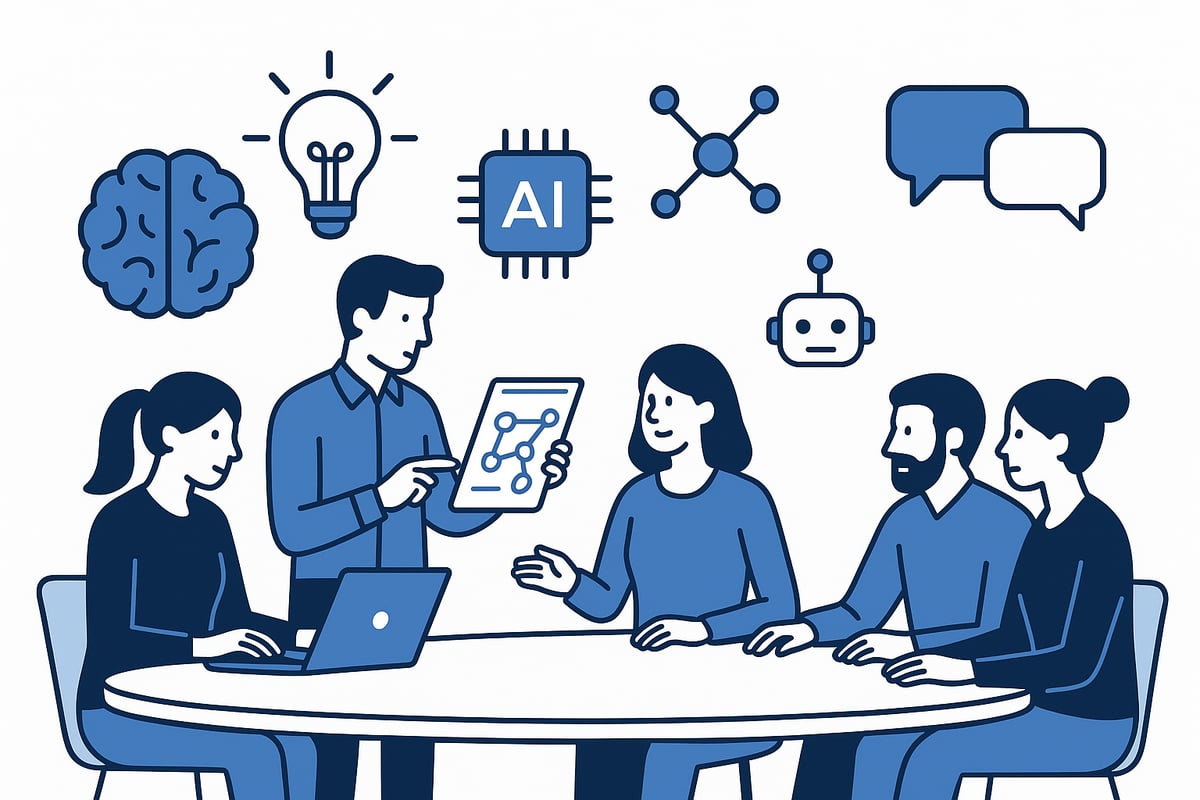
Creativity in 2025 is both an art and a science. Researchers like Mihaly Csikszentmihalyi and Teresa Amabile define creativity as the ability to produce work that is both novel and valuable. Today, organizations measure creative output using a mix of qualitative feedback and quantitative innovation metrics.
Digital transformation and AI are reshaping how we approach creating an idea. Hybrid human-AI brainstorming is now common in tech startups, accelerating the pace of ideation. According to McKinsey, 72% of companies report increased innovation through cross-functional teams, highlighting the impact of diverse perspectives.
Recent studies, such as this systematic review on AI’s impact on creativity, show that AI tools can enhance human ideation by providing new perspectives and automating routine tasks. As a result, creating an idea is becoming more collaborative and data-driven than ever before.
Barriers to Creativity and How to Overcome Them
Despite more tools and resources, barriers to creating an idea persist. Common mental blocks include fear of failure, perfectionism, and information overload. These obstacles can stall innovation and limit creative output.
To overcome them, experts recommend strategies like mindfulness, cognitive reframing, and structured downtime. For instance, Google’s “20% time” policy encourages employees to pursue side projects, fostering innovation outside regular duties.
A recent Adobe study found that 60% of employees cite lack of time as the main barrier to innovation. By intentionally carving out space for reflection and experimentation, individuals and teams can create an environment more conducive to creating an idea.
The Role of Environment and Culture
The environment, both physical and digital, plays a pivotal role in creating an idea. Open office designs can encourage spontaneous collaboration, while remote tools enable global connections and flexibility.
Psychological safety and diversity are also essential. Teams that feel safe to share unconventional thoughts generate more innovative solutions. Digital platforms, like Slack or Miro, help bridge gaps between in-person and remote contributors.
Data from BCG shows that diverse teams are 35% more likely to outperform their peers. Building a culture that values inclusion and open communication is foundational for consistently creating an idea that stands out.
Harnessing Collaboration and Networking
Collaboration multiplies the impact of creating an idea. Brainstorming techniques such as SCAMPER, mind mapping, and design thinking promote structured creativity. Tools like open innovation platforms and online communities connect global talent pools.
For example, Innocentive enables organizations to crowdsource solutions from a worldwide network of experts. This approach accelerates idea refinement and validation, turning abstract thoughts into actionable innovations.
Ultimately, harnessing collaboration elevates every stage of creating an idea, making the process more robust and resilient to change.
Step 1: Identifying Opportunities and Problems Worth Solving
In 2025, creating an idea that truly matters starts with a clear-eyed look at the world’s needs. Before you can innovate, you must first identify gaps, pain points, and untapped opportunities. This step is the foundation of every successful venture, and it requires a blend of market analysis, empathy, data, and creative thinking.

Market Analysis and Trend Spotting
Effective market analysis is essential for creating an idea that stands out in a crowded space. Entrepreneurs use methods like SWOT, PESTLE, and competitor benchmarking to map the landscape and pinpoint where innovation is needed.
Consumers are shifting priorities, as seen in the rise of eco-friendly SaaS tools in 2024. In fact, 64% of consumers now prefer sustainable brands (Nielsen, 2023). To dig deeper, why market research is crucial for idea validation is a resource that reveals how systematic research uncovers real market gaps.
- SWOT: Strengths, Weaknesses, Opportunities, Threats
- PESTLE: Political, Economic, Social, Technological, Legal, Environmental factors
- Benchmarking: Comparing your concept with competitors
By prioritizing research, you lay a solid groundwork for creating an idea with potential.
User-Centric Research and Empathy Mapping
Understanding people is at the heart of creating an idea that resonates. User-centric research involves surveys, interviews, and direct observation to reveal pain points and desires.
Empathy mapping helps teams visualize what users think, feel, and need. Airbnb’s early focus on user interviews is a classic example—those insights shaped their entire product direction. According to CB Insights (2023), 80% of successful startups attribute their achievements to early user research.
To succeed, listen deeply. Map user journeys, ask open-ended questions, and observe behavior in real contexts. This approach ensures your process of creating an idea is rooted in real-world needs, not assumptions.
Leveraging Technology and Data for Insights
Digital tools are transforming how we spot opportunities. When creating an idea in 2025, founders turn to AI-powered analytics, trend prediction platforms, and social listening tools to validate concepts quickly.
For instance, services like Google Trends and Exploding Topics allow rapid assessment of idea traction. These platforms make it easier to identify surging interests, reducing the risk of investing in irrelevant solutions.
Data-driven ideation is not optional, it is essential. Leverage technology to gather evidence before committing resources. This step ensures that creating an idea is both innovative and market-relevant.
Niche Selection and Blue Ocean Strategies
Standing out means finding blue oceans—markets with little or no competition. Creating an idea for a niche market requires looking for unmet needs or underserved audiences and crafting a unique value proposition.
Clubhouse, for example, succeeded by focusing on audio-only social networking, a space previously overlooked. However, Harvard Business Review (2022) notes that 90% of new entrants fail due to lack of differentiation.
To avoid this, analyze the market, identify what is missing, and articulate a clear, compelling value. Differentiation is key to creating an idea that thrives rather than simply survives.
Validating Problem Worthiness
Before moving forward, validate whether the problem you want to solve is worth the effort. Frameworks like Jobs-to-be-Done and the Value Proposition Canvas help clarify the real needs behind user behavior.
Testing assumptions with minimal resources is smart. Dropbox famously used a simple explainer video as an MVP, gauging interest before investing heavily. Early validation prevents wasted time and money and ensures that creating an idea leads to meaningful results.
Systematic validation builds confidence. Focus on evidence, not intuition, and you will be better prepared for the next steps in the innovation journey.
Step 2: Generating and Refining Ideas
The process of creating an idea in 2025 is both an art and a science. With innovation cycles speeding up, a structured approach can turn raw thoughts into powerful, actionable concepts. This section unpacks frameworks, tools, and best practices to help you transform inspiration into validated ideas, ready for the next stage.
Proven Ideation Frameworks for 2025
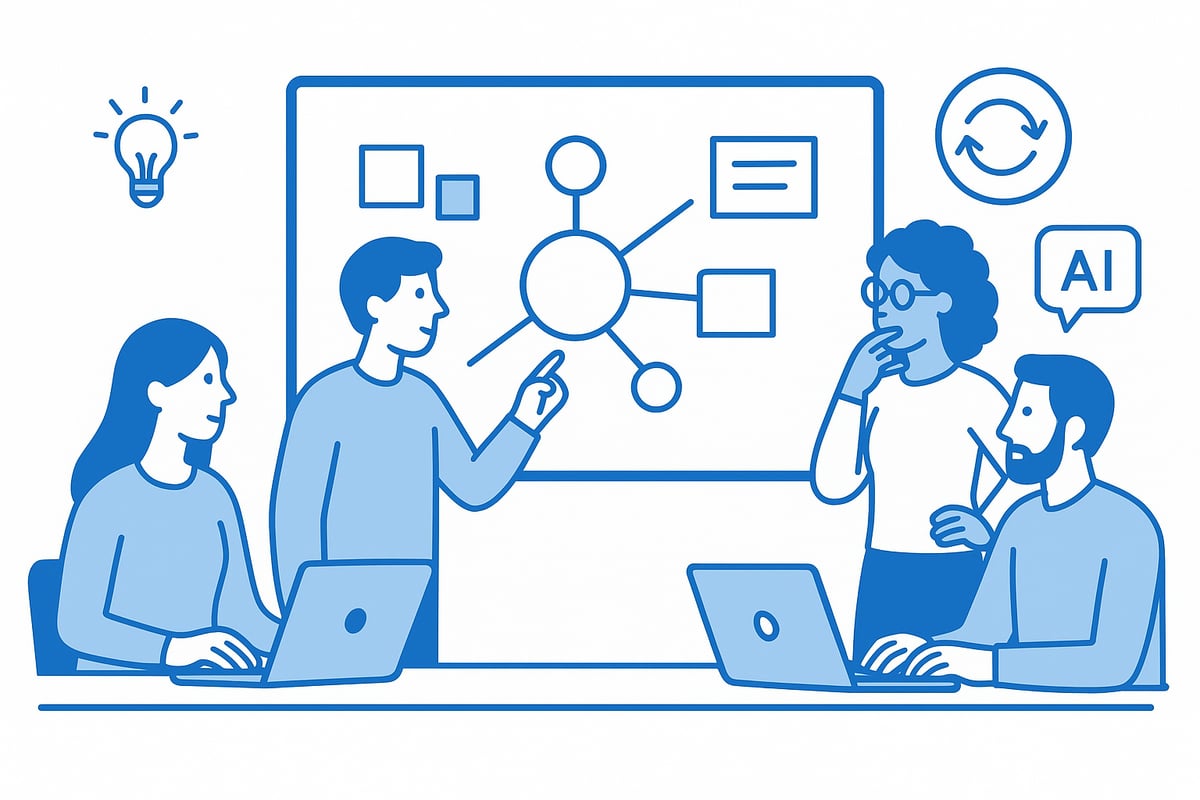
The foundation for creating an idea that stands out lies in using time-tested frameworks. Design Thinking focuses on empathy and iteration, while TRIZ uncovers inventive solutions by analyzing patterns. Six Thinking Hats encourages teams to view problems from multiple perspectives, and Brainwriting enables silent, independent ideation before group discussion.
| Framework | Strengths | Weaknesses |
|---|---|---|
| Design Thinking | User-focused, iterative | Can be time-consuming |
| TRIZ | Systematic, inventive | Requires technical expertise |
| Six Thinking Hats | Diverse perspectives | May feel artificial |
| Brainwriting | Reduces groupthink | Less spontaneous interaction |
IDEO’s design thinking process has driven product innovation for decades. Selecting the right framework is a crucial step in creating an idea with real impact.
Brainstorming Best Practices
Brainstorming is at the heart of creating an idea that resonates. Setting constraints, such as time limits or specific themes, can actually boost creativity by forcing teams to think differently. Techniques like rapid ideation, reverse brainstorming, and brain-netting (online brainstorming) ensure everyone’s voice is heard.
Pixar’s “plussing” method, where feedback must always add something positive or constructive, helps maintain momentum and enthusiasm. To maximize the output, alternate between structured sessions and free-form discussions. This balance leads to more robust and refined ideas.
Digital Tools for Idea Generation
In 2025, digital platforms play a pivotal role in creating an idea collaboratively. Tools like Miro, Notion, and MindMeister make it easy to map concepts visually, while AI-powered idea generators can suggest new angles based on trends and data.
To integrate these tools seamlessly, embed them into your team’s existing workflows. According to Gartner, 55 percent of teams now use collaborative digital whiteboards, which foster real-time co-creation regardless of location. These platforms accelerate the transition from inspiration to action.
Filtering and Prioritizing Ideas
Once you have a pool of possibilities, filtering and prioritizing is essential for creating an idea that is both feasible and valuable. Scoring matrices like ICE (Impact, Confidence, Ease), RICE (Reach, Impact, Confidence, Effort), and MoSCoW (Must-have, Should-have, Could-have, Won’t-have) help weigh options objectively.
Slack’s journey from a gaming company to a team communication giant involved pivoting based on such structured assessments. Not every concept must be entirely novel. In fact, great SaaS products and unique ideas often emerge from refining or iterating on what already exists.
Iterative Prototyping and Feedback Loops
Prototyping transforms abstract thoughts into tangible solutions. Start with low-fidelity prototypes or MVPs to test assumptions quickly and cheaply. Feedback loops are critical—gather user input early and often to refine your concept.
Figma’s early beta testing with design communities allowed for fast, targeted improvements. The secret to creating an idea that sticks is embracing iteration: launch, learn, and adapt before investing heavily in development.
Avoiding Common Pitfalls in Ideation
Even the best teams can stumble when creating an idea if they fall into classic traps. Groupthink, over-reliance on fleeting trends, and analysis paralysis can stall progress. Combat these pitfalls by assembling diverse teams, setting clear evaluation criteria, and time-boxing ideation sessions.
Remember, structured chaos often produces the most innovative solutions. The journey of creating an idea is rarely linear, but with discipline and flexibility, you can consistently generate concepts with real potential.
Step 3: Validating Your Idea Before Implementation
Turning inspiration into a successful project requires more than just creating an idea. Early validation is the bridge between concept and execution, saving time and resources. This step is where your concept faces reality, and actionable feedback guides your progress.

The Importance of Early Validation
Validating your concept is crucial when creating an idea that stands out in 2025. Without validation, even the most promising ideas risk failure due to lack of demand or misaligned value. Zappos famously validated its business model with a simple concierge MVP, testing if users would buy shoes online before building inventory.
Data shows that 42% of startups fail because there is no market need. This underscores why validation must happen before heavy investment. Creating an idea that solves a genuine problem is only possible when you seek real-world evidence, not just intuition. Early validation ensures you stay on the right path and avoid costly missteps.
Lean Validation Techniques
Lean validation is all about testing assumptions quickly and efficiently. When creating an idea, use methods like smoke tests, landing pages, pre-orders, and crowdfunding to measure interest with minimal resources. Buffer’s early landing page experiment is a classic example: they gauged demand for their social media tool before writing any code.
Real-world signals, such as sign-ups or pre-sales, are far more reliable than assumptions or wishful thinking. For a step-by-step approach to testing your SaaS concepts, check out these Proven steps to test your SaaS idea. These methods help reduce risk and maximize the chances of building a solution that truly resonates.
Customer Interviews and Feedback Gathering
Direct feedback is vital when creating an idea that meets actual needs. Structure interviews and surveys to go beyond surface-level responses. Asking open-ended questions lets you uncover pain points and real motivations.
Superhuman’s “product/market fit” email is a strong example, revealing not just what users liked, but what they would miss if the product disappeared. Distinguish between polite compliments and honest, sometimes critical, feedback. By iterating on this input, you refine your idea before full-scale implementation.
Metrics and KPIs for Idea Validation
Tracking the right metrics is essential in creating an idea that thrives. Focus on conversion rates, churn, early engagement, and willingness to pay. These KPIs provide clear signals about traction and potential.
| Metric | What it Reveals |
|---|---|
| Conversion Rate | User interest and relevance |
| Churn Rate | Long-term user satisfaction |
| Engagement | Product value and retention |
| Willingness to Pay | Monetization potential |
According to OpenView, 78% of SaaS founders monitor early sign-ups as a leading KPI. Interpreting these numbers helps you decide whether to proceed, pivot, or pause.
Pivoting or Persevering Based on Evidence
Not every concept will succeed as originally imagined. Creating an idea requires adaptability. Use collected data to determine if you should iterate, pivot, or abandon your approach. Instagram famously pivoted from Burbn, a location-based app, to its now-iconic photo sharing platform after user feedback.
Adaptability is a hallmark of innovators who create lasting impact. Let evidence, not ego, guide your next steps.
Common Validation Mistakes and How to Avoid Them
When creating an idea, avoid pitfalls like confirmation bias, building too much before testing, or ignoring negative data. Seek feedback from third-party testers and actively look for disconfirming evidence.
Quibi’s failure illustrates the danger of misreading user habits and not acting on early warning signs. Best practices include time-boxed experiments and a willingness to revise assumptions based on honest feedback. This discipline ensures your idea is robust before full-scale launch.
Step 4: From Idea to Action – Planning for Execution
Turning a concept into reality requires more than inspiration. Creating an idea is only the beginning; structured execution is where breakthroughs happen. By following a clear roadmap, allocating resources effectively, managing risks, and measuring success, you can move from ideation to impactful action.
Building a Roadmap and Setting Milestones
A practical roadmap transforms creativity into results. Start by breaking down your vision into actionable steps and clear milestones. Use tools like Gantt charts for visual timelines, OKRs to align team objectives, and Agile sprints for iterative progress.
Modern approaches to creating an idea benefit from frameworks that combine human insight with computational support. For example, a computational model for innovation can help structure planning and opportunity discovery, ensuring your roadmap is both strategic and adaptable.
Set milestones that are achievable, measurable, and aligned with your overall strategy. Regularly revisit these checkpoints to track progress and adjust as needed.
Resource Allocation and Team Formation
Success in creating an idea depends on assembling the right mix of talent and tools. Identify the critical skills required for each phase, from product development to marketing and customer support.
Build cross-functional teams that foster diverse perspectives, as this drives better problem-solving. Consider partnerships or external experts to fill any gaps. Allocate resources—time, budget, and technology—based on project priorities and deadlines.
Clearly define roles to avoid confusion and ensure accountability as you move from planning to action.
Risk Assessment and Contingency Planning
Every new venture faces uncertainty. Proactively identifying risks is essential when creating an idea that will stand the test of time. Begin by mapping out potential roadblocks, whether technical, financial, or market-related.
Use risk matrices to evaluate the likelihood and impact of each risk. Scenario planning helps your team prepare for best and worst-case outcomes. For example, companies like Netflix use structured risk management to adapt quickly to changing industry dynamics.
Build contingency plans with clear triggers and responses, so your project stays on track even when surprises arise.
Go-to-Market Strategies and Early Launches
Launching effectively is key to turning your plan into market traction. When creating an idea, consider phased rollouts such as beta programs or invite-only launches to gather feedback and build anticipation.
Leverage influencer outreach, targeted PR, and community engagement to generate buzz. Clubhouse’s invite-only launch is a great example of how exclusivity can drive interest. According to Product Coalition, 65 percent of products that use phased rollouts see higher success rates.
Monitor early adoption and adapt your approach based on real user insights.
Measuring Progress and Iterating Rapidly
Execution does not end at launch. Establish clear KPIs—such as adoption rates, feedback cycles, and retention metrics—to monitor performance. Use analytics to identify what is working and what needs improvement.
Creating an idea that thrives requires ongoing iteration. Schedule regular check-ins to review data, gather team input, and make necessary adjustments. Embrace continuous improvement, knowing that the best solutions evolve through feedback and rapid cycles.
In summary, planning for execution is the bridge between creating an idea and achieving tangible impact. By following these structured steps, you set the foundation for innovation that lasts.
Future-Proofing Your Ideas: Trends and Predictions for 2025
Staying ahead in 2025 means not just creating an idea but ensuring it will remain relevant as the world evolves. Understanding the key forces shaping the future of innovation will help you adapt, thrive, and continue to deliver value in a competitive landscape.
The Impact of AI, Automation, and Emerging Tech
Artificial intelligence and automation are fundamentally transforming how we approach creating an idea. In 2025, AI-powered platforms assist with everything from brainstorming to rapid prototyping, enabling faster iteration and more data-driven decision-making. Emerging technologies like GPT-based tools and machine learning algorithms are being used to spark inspiration and augment human creativity.
For example, many startups now use AI to generate new business concepts or predict market trends. According to PwC, 80% of businesses plan to increase AI investment this year. To see how AI is reshaping creativity, explore AI’s role in student creativity for insights into educational innovation.
Sustainability and Social Responsibility in Idea Creation
Sustainability is no longer optional when creating an idea that stands the test of time. Increasingly, entrepreneurs and organizations are embedding ethics and environmental responsibility into their innovation processes. Climate tech startups and companies focused on circular economies are gaining momentum as consumers demand more from brands.
A recent Deloitte report found that 70% of Gen Z prefer brands with a clear social mission. Integrating social responsibility into your ideation framework not only meets market expectations but also drives long-term loyalty. When creating an idea, consider how it impacts both people and the planet.
The Rise of Remote and Global Collaboration
Remote work is redefining how teams collaborate when creating an idea. With advanced digital platforms, global talent can now contribute seamlessly from anywhere, bringing fresh perspectives and diverse expertise to the table.
Platforms like GitHub exemplify open-source innovation, allowing contributors worldwide to co-create solutions. This expansion of the creative talent pool means that creating an idea is no longer limited by geography. Embracing remote and hybrid collaboration models accelerates the development and refinement of breakthrough concepts.
Lifelong Learning and Continuous Ideation
Adapting to future trends requires a mindset of lifelong learning. The process of creating an idea thrives when individuals and teams continually upskill and embrace new ways of thinking. Online learning platforms, mastermind groups, and peer coaching networks are essential resources for staying ahead.
LinkedIn reports that 94% of employees believe learning new skills directly boosts their ability to generate ideas. By prioritizing ongoing education, you ensure your approach to creating an idea remains fresh, relevant, and impactful in a rapidly evolving environment.