
The rise of saas based solutions is transforming how businesses operate, with the global SaaS market expected to surpass $350 billion by 2026. As organizations weigh the benefits of cloud-based platforms against traditional on-premises software, the debate intensifies.
This article delivers a data-driven comparison of saas based and traditional solutions, spotlighting key differences, benefits, and challenges. You will explore costs, security, scalability, and emerging trends that matter most for decision-makers.
Ready to gain clarity and confidence in your technology choices? Dive in for actionable insights to help your organization thrive in 2026.
Defining SaaS-Based and Traditional Solutions
In an era where digital transformation shapes every industry, understanding the distinction between saas based and traditional software is essential. Each model offers unique benefits and challenges, impacting how organizations operate, innovate, and compete.
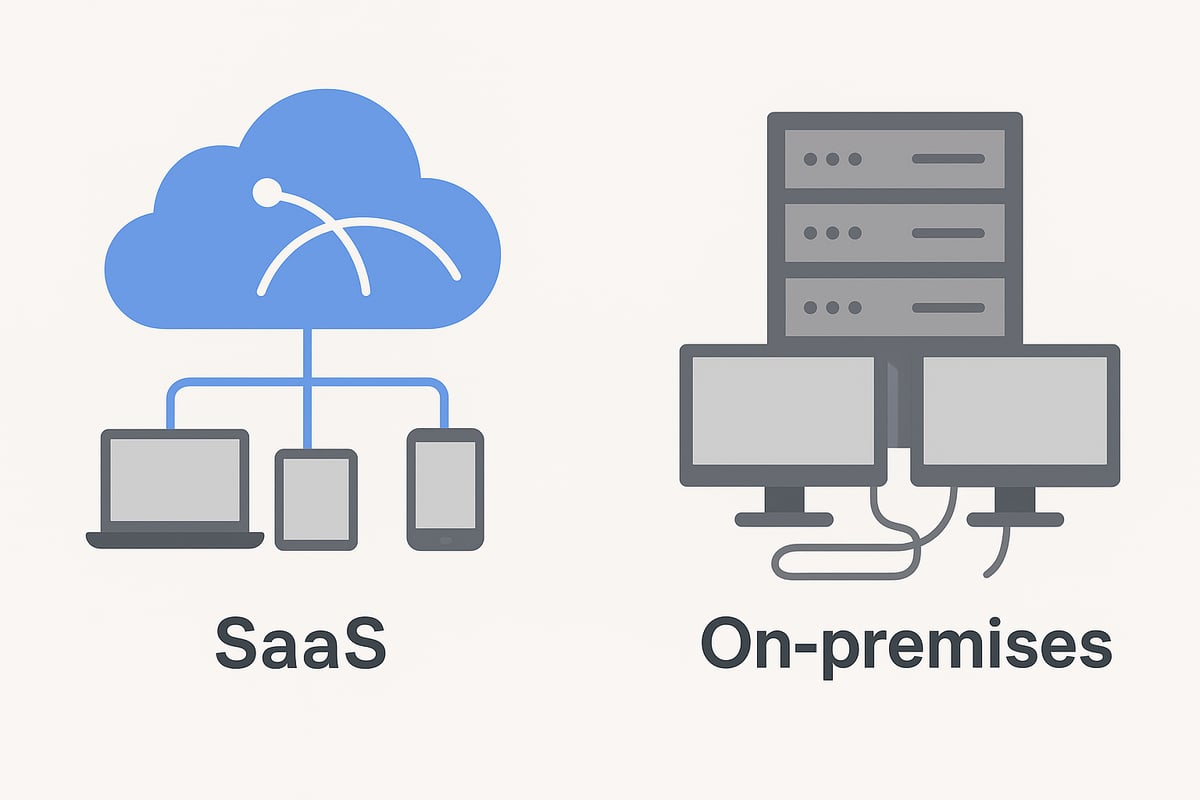
What Are SaaS-Based Solutions?
SaaS based solutions are software applications delivered over the internet, typically via a subscription model. Users access these services through web browsers, removing the need for local installation or complex setup. Well-known examples include Google Workspace, Salesforce, and Microsoft 365.
A key advantage of saas based platforms is multi-tenancy, where multiple customers share the same infrastructure but have isolated data. Automatic updates ensure users always have the latest features and security patches. Accessibility from any device with internet connectivity supports remote and mobile work environments.
The saas based market is experiencing rapid growth, with projections indicating it will exceed $350 billion by 2026. For more detailed statistics on this trend, see the Global SaaS Market Growth Projections. Common use cases in enterprises include customer relationship management, collaboration tools, and accounting platforms. This approach is ideal for businesses seeking agility and reduced IT overhead.
What Are Traditional Solutions?
Traditional software solutions are installed and managed on-premises, requiring dedicated infrastructure and local IT teams. These systems often use perpetual licensing, demanding significant upfront capital expenditure for both software and hardware.
A primary benefit of traditional setups is the ability to customize applications deeply and control every aspect of the IT environment. Examples include on-premises SAP ERP systems and legacy CRM platforms. While the market share for traditional models is declining, they remain common in highly regulated sectors like finance, government, and healthcare.
Organizations favor traditional solutions for mission-critical workflows, highly specialized processes, or where strict data security is essential. Despite the shift toward saas based models, many enterprises retain traditional systems to meet compliance and operational requirements.
Core Differences in Architecture and Delivery
The architecture and delivery methods of saas based and traditional software differ fundamentally.
| Aspect | SaaS-Based Solutions | Traditional Solutions |
|---|---|---|
| Deployment | Cloud-based, vendor-hosted | On-premises, client-managed |
| Maintenance | Managed by provider | In-house IT responsibility |
| Updates | Automatic, continuous | Manual, scheduled |
| Integration | API-driven, standardized | Custom, often complex |
| IT Resource Allocation | Lower internal burden | High internal involvement |
| Data Residency | Usually global, vendor policies | Full organizational control |
| Compliance | Shared with vendor | Fully internal responsibility |
With saas based models, deployment is rapid and IT teams can focus on strategic tasks rather than routine maintenance. Traditional solutions demand more internal resources, but offer greater control over data residency and compliance. Deciding between the two involves balancing flexibility, control, and resource allocation.
Cost Analysis: SaaS vs. Traditional Solutions
As organizations rethink their technology investments for 2026, cost remains a central factor in the debate between saas based and traditional software solutions. Businesses need to weigh not just the visible expenses, but the total cost of ownership, staffing, and scalability implications over time.
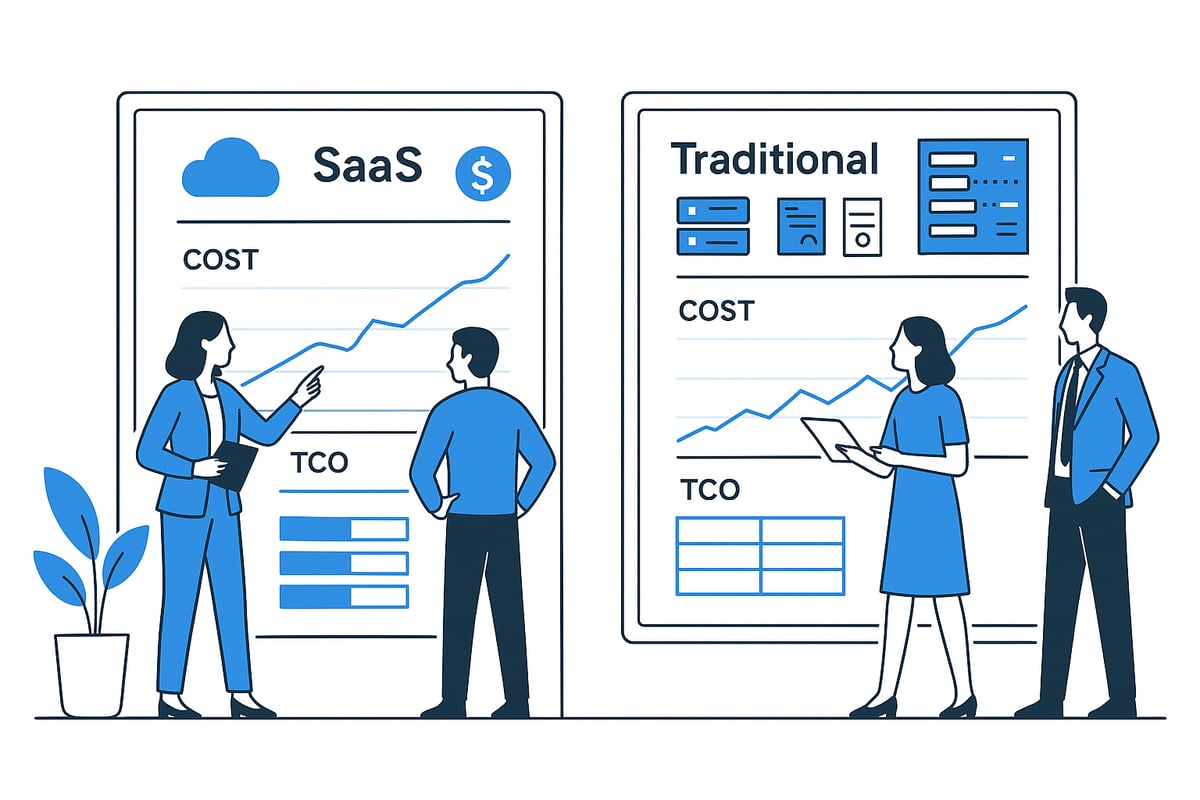
Upfront and Ongoing Costs
SaaS based solutions typically use a subscription model, allowing organizations to pay predictable monthly or annual fees. There is no need for heavy upfront capital, making it easier to get started. Maintenance, support, and updates are bundled into the subscription, reducing surprise expenses. By contrast, traditional solutions require significant upfront investment for licenses and on-premises hardware. Ongoing costs include periodic upgrades, support contracts, and hardware refresh cycles.
A side-by-side comparison makes the differences clearer:
| Cost Factor | SaaS Based | Traditional Solutions |
|---|---|---|
| Licensing | Subscription (Opex) | Perpetual (Capex) |
| Hardware | None required | Significant initial outlay |
| Maintenance | Included in subscription | Separate, often costly |
| Upgrades | Automatic, vendor-driven | Manual, scheduled, resource-intensive |
| Total Cost of Ownership | Lower over 3-5 years for SMBs | Higher, especially upfront |
For small and mid-sized businesses, saas based models can reduce upfront costs by up to 60 percent. Over a typical 3 to 5 year period, predictable expenses help with budgeting and cash flow. According to SaaS Market Size and Forecast, the global SaaS market is expanding rapidly, reflecting this shift in spending preferences.
Resource Allocation and IT Staffing
A major advantage of saas based solutions is the reduced burden on internal IT teams. Since maintenance, security, and updates are managed by the vendor, companies can operate with leaner IT staffing. This allows internal tech talent to focus on innovation and strategic initiatives, rather than routine upkeep.
Traditional solutions often require dedicated teams for support, troubleshooting, and security patching. The opportunity cost can be significant, as resources are diverted from transformation projects. In response, some enterprises have moved toward managed service models or outsourcing routine IT functions, yet the overhead remains higher compared to saas based platforms.
Key considerations for resource allocation include:
- Time spent on maintenance and upgrades
- Costs of hiring or training IT staff
- Ability to reassign staff to revenue-generating projects
Enterprises that adopt saas based solutions report a noticeable shift, with IT departments increasingly focusing on digital innovation and process improvements.
Flexibility and Cost Scalability
SaaS based platforms offer unmatched flexibility when it comes to scaling users, storage, or features. Businesses can adjust their subscriptions as needs change, paying only for what they use. This pay-as-you-go approach makes budgeting easier and supports rapid growth or seasonal fluctuations.
Traditional solutions, on the other hand, require new hardware or additional licenses to scale. This process can be costly and time-consuming, often involving complex procurement and deployment cycles. Forecasting long-term costs becomes challenging, especially for organizations experiencing unpredictable demand.
During periods of rapid expansion, such as a retail surge or global product launch, saas based solutions allow companies to scale up instantly and dial down when demand subsides. In fact, 72 percent of organizations cite scalability as a top reason for choosing saas based options.
By choosing the right model, businesses can align their IT spending with operational needs and market dynamics.
Performance, Reliability, and User Experience
Selecting the right platform in 2026 involves more than just cost or features. Organizations must evaluate how performance, reliability, and user experience shape productivity and satisfaction. In this section, we compare how SaaS based and traditional solutions meet these critical needs.
Accessibility and Mobility
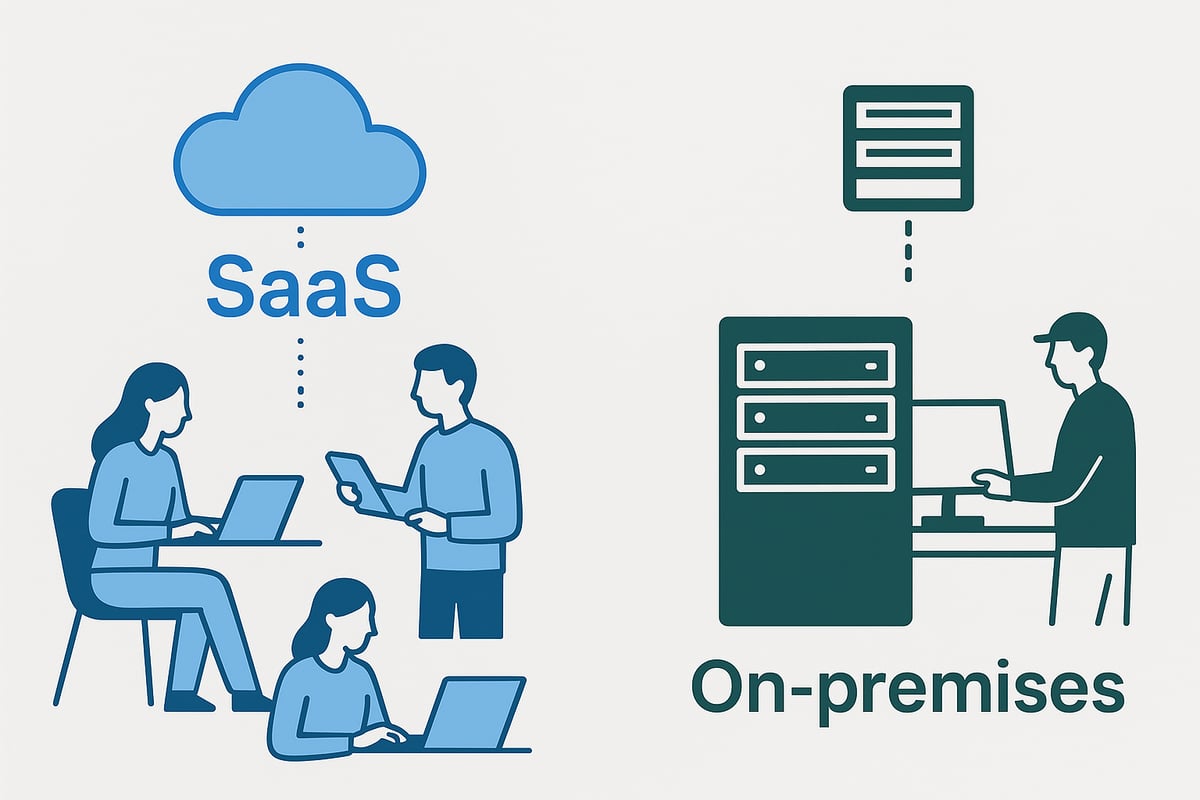
SaaS based solutions transform how teams access applications and data. Employees can connect from any device, anywhere with internet, supporting remote and hybrid work. This flexibility fuels collaboration across time zones and locations.
Traditional software, by contrast, often requires users to be on-site or connected via VPN. This restriction can slow workflows, especially for distributed teams. As modern workforces increasingly demand mobility, the ability to use SaaS based tools from any location becomes a strategic advantage.
A recent survey found that 80% of remote teams prefer SaaS based platforms for daily operations. These tools streamline communication and document sharing, making them indispensable in today's business landscape.
Reliability, Uptime, and Support
Reliability is central to both productivity and trust. SaaS based providers typically guarantee high uptime through vendor-managed SLAs and built-in redundancy. Most offer 99.9% or greater uptime, ensuring business continuity even when demand spikes.
In contrast, traditional solutions depend on the organization's internal infrastructure. This can lead to more frequent outages or downtime if IT resources are stretched thin. Disaster recovery is often manual, increasing recovery times during unexpected events.
SaaS based vendors usually provide 24/7 support, automated failover, and proactive monitoring. As companies grow, scaling your SaaS business ensures that performance and reliability keep pace with user demands. For many, this level of managed service frees up IT to focus on innovation rather than troubleshooting.
Customization and Integration
Customization needs vary greatly across organizations. SaaS based applications are designed for broad use, offering standardized features and user-friendly interfaces. While this streamlines onboarding, it can limit the level of deep customization some enterprises require.
Traditional solutions allow for extensive tailoring, but the process is often costly and time-consuming. Integrating with other systems may require bespoke development, increasing complexity.
SaaS based platforms often rely on APIs for integration, making it easier to connect with modern tools. However, 65% of IT leaders cite integration as a key challenge in SaaS based adoption. Balancing ease of use with flexibility remains a core consideration for businesses evaluating their options.
Security, Compliance, and Data Ownership
Security, compliance, and data ownership are critical factors for organizations deciding between saas based and traditional solutions. As businesses increase their reliance on digital platforms, understanding these differences is essential for risk management and strategic planning.
Security Models and Responsibilities
The security approach for saas based solutions differs significantly from traditional software. In the saas based model, security responsibilities are shared between the vendor and the customer. Vendors manage infrastructure security, application updates, and core data protection, while customers focus on user access and policy enforcement. This shared model reduces the internal burden on IT teams.
Traditional solutions, by contrast, assign full responsibility to the organization. Security controls, encryption, patch management, and monitoring all fall on internal IT staff. This can provide more direct control, but also increases complexity and risk if resources are limited.
| Security Aspect | SaaS-Based | Traditional |
|---|---|---|
| Infrastructure | Vendor-managed | Customer-managed |
| Updates | Automatic | Manual/scheduled |
| Monitoring | Vendor + Customer | Customer |
| Certifications | SOC2, ISO 27001 | Varies |
Many saas based vendors hold industry certifications such as SOC2 and ISO 27001, providing assurance of best practices. According to recent data, 58% of organizations trust saas based security as much as or more than on-premises approaches. This trend reflects growing confidence in vendor-managed protocols, especially for standard business applications.
Compliance and Regulatory Considerations
Compliance is a central concern for both saas based and traditional deployments. SaaS vendors often provide built-in adherence to regulations like GDPR, HIPAA, and PCI-DSS, making it easier for customers to meet requirements without extensive customization. Certifications can be verified, and audit trails are typically available as part of the service.
Traditional on-premises solutions require organizations to manage compliance independently. This means maintaining documentation, configuring systems for regulatory standards, and passing audits without vendor support. Data residency and sovereignty also become more complex, especially for multinational corporations.
Industries such as finance and healthcare often take a cautious approach to adopting saas based platforms. Nearly 45% of firms cite compliance requirements as a major barrier to SaaS adoption, although vendor offerings are evolving rapidly. For a deeper look at compliance in the saas based environment, see SaaS vs. GDPR compliance.
Key compliance standards to consider:
- GDPR (General Data Protection Regulation)
- HIPAA (Health Insurance Portability and Accountability Act)
- PCI-DSS (Payment Card Industry Data Security Standard)
- SOC2 and ISO 27001
Evaluating vendor certifications and data center locations is crucial when considering a saas based solution for regulated industries.
Data Ownership and Portability
Data ownership and portability are often decisive factors for organizations choosing between saas based and traditional solutions. With saas based, data is hosted on the vendor’s infrastructure, potentially creating lock-in risks if export options are limited. Vendors typically offer data export/import tools, but migration can still be challenging, especially for large or complex datasets.
Traditional solutions grant full control over data, including physical access and storage decisions. This can be advantageous for sensitive or proprietary information, but also increases the responsibility for backup, disaster recovery, and secure disposal.
Common concerns with saas based data include:
- Vendor lock-in and contract terms
- Data migration complexity
- API and export limitations
According to industry surveys, 36% of IT leaders express concern over saas based data portability. To mitigate these risks, organizations should review vendor SLAs, test export processes, and plan exit strategies before committing to any platform.
Balancing security, compliance, and data ownership is essential for organizations evaluating saas based versus traditional solutions. Each model offers unique benefits and challenges, so aligning these factors with business objectives is key to long-term success.
Scalability, Innovation, and Future-Readiness
As organizations look to the future, the question of scalability and innovation becomes central to the saas based versus traditional software debate. Rapid deployment, continuous improvement, and readiness for emerging trends are now business imperatives, not just technical aspirations.
Rapid Deployment and Scaling
SaaS based solutions offer instant provisioning and elastic scaling, enabling businesses to launch services and onboard users within minutes. Startups and global enterprises alike benefit from the ability to scale up or down without investing in additional hardware or lengthy configuration. For example, a startup can deploy a saas based platform to reach global markets, adjusting resources in real time as demand shifts.
Traditional software, by contrast, typically involves complex installation, manual configuration, and procurement of physical servers. Scaling up requires both time and significant capital outlay. Studies show that saas based approaches reduce average deployment time by 75 percent compared to on-premises setups.
| Factor | SaaS Based | Traditional Software |
|---|---|---|
| Provisioning | Instant, cloud-driven | Manual, hardware-bound |
| Scaling | Elastic, pay-as-you-go | Limited, costly |
| Deployment Time | Minutes to hours | Weeks to months |
This agility allows organizations to respond swiftly to market changes, making saas based platforms the preferred choice for businesses prioritizing speed and flexibility.
Innovation and Feature Updates
Continuous innovation is a hallmark of the saas based model. Providers deliver new features, security patches, and enhancements automatically, keeping organizations at the forefront of technology. Artificial intelligence, automation, and analytics are increasingly integrated into saas based offerings, giving users access to advanced capabilities without lengthy upgrade cycles.
Traditional software often lags behind, with infrequent updates and a higher risk of obsolescence. Businesses relying on legacy systems may struggle to adopt new technologies quickly, which can hinder productivity and competitiveness.
According to industry research, 68 percent of businesses choose saas based solutions for faster innovation. Platforms that harness AI for automation and analytics are especially popular. For a deeper look at how AI is transforming this landscape, see AI’s Impact on SaaS Industry, which explores the integration of smart technologies and their benefits across the sector.
Future Trends and Hybrid Approaches
Looking ahead, the rise of hybrid and multi-cloud strategies is reshaping how organizations approach software delivery. Many businesses are blending saas based and traditional systems, creating hybrid environments that combine flexibility with control. Edge computing is also converging with saas based models, supporting real-time data processing and industry-specific solutions.
Traditional vendors are adapting by offering cloud-native versions of their products, aiming to bridge legacy infrastructure with modern capabilities. This hybrid approach is especially valuable for enterprises undergoing digital transformation, where maintaining some on-premises control remains necessary.
As saas based innovation accelerates, companies must assess which mix of solutions best aligns with their goals, ensuring they remain agile and future-ready in a rapidly evolving tech landscape.
Key Use Cases and Industry Perspectives
Organizations across various industries are reevaluating their technology strategies as the saas based model becomes more prevalent in 2026. The adoption of saas based solutions is especially strong among small and midsize businesses, where agility and cost efficiency are crucial. According to recent studies, 92% of SMBs use at least one saas based application, highlighting the widespread appeal for businesses seeking rapid growth and operational flexibility.
Enterprises, while often tethered to legacy systems, are increasingly blending saas based tools with traditional infrastructure to balance innovation and control. Regulated sectors like healthcare and finance approach saas based options with caution due to compliance needs, yet even these industries are gradually embracing cloud services as vendors strengthen security and certification measures. In the Asia-Pacific region, for example, SaaS Market Expansion in APAC highlights how market growth is accelerating, driven by both startups and large enterprises adapting to digital transformation.
Business Size and Industry Fit
SaaS based platforms deliver clear benefits for SMBs, supporting quick setup, lower upfront costs, and the ability to scale with business needs. SMBs often lack the resources for large IT departments, so the reduced maintenance burden of saas based tools is a major advantage.
In contrast, enterprises may use a hybrid approach, integrating saas based solutions with existing on-premises systems to maintain control over critical data while gaining flexibility. Highly regulated industries, such as healthcare and finance, require robust compliance capabilities. These sectors typically conduct thorough vendor assessments before adopting any saas based platform, ensuring alignment with industry standards and data residency requirements.
A recent report on APAC markets found that regional regulations are shaping adoption patterns, with public sector and financial organizations leading the way in setting compliance benchmarks for saas based deployments.
Decision-Making Factors and Buyer Considerations
Selecting between saas based and traditional solutions involves weighing several factors. Business objectives such as cost reduction, speed of deployment, and the level of control required play a central role. Risk assessment is vital, especially in evaluating vendor stability, security protocols, and the potential for vendor lock-in.
Organizations must also consider their IT maturity and whether their infrastructure supports seamless integration with saas based platforms. For many, using a decision framework or consulting resources like SaaS validation strategies helps clarify which approach aligns with their digital transformation roadmap. In 2026, over half of CIOs report prioritizing saas based models to support innovation and agility.
Real-World Migration Stories and Lessons Learned
Many organizations have transitioned from traditional to saas based environments, often adopting a phased migration strategy. Common challenges include data migration complexities, change management hurdles, and the need for thorough user training.
Success metrics for these projects typically focus on ROI, productivity improvements, and customer satisfaction. For example, a large retailer reported a 30% cost saving after moving to a saas based platform, citing faster deployment and reduced IT overhead. Lessons learned stress the importance of stakeholder alignment, ongoing communication, and maintaining hybrid environments during the transition period.
A table summarizing key migration challenges and solutions:
| Challenge | Solution |
|---|---|
| Data migration | Detailed planning, tools |
| User adoption | Training, phased rollout |
| Compliance | Vendor certification review |
These real-world experiences demonstrate that with careful planning, the shift to saas based solutions delivers measurable business value.
SaaS Validation: Guiding Founders Through SaaS Success
Validating a saas based product idea is a critical first step for founders aiming to succeed in the evolving software market. With so many delivery models available, understanding whether a saas based approach aligns with your target customers and business strategy is essential. SaaS Validation is a dedicated platform offering in-depth guides, market research, and expert interviews to help entrepreneurs navigate these decisions with confidence.
Founders can access step-by-step validation processes, detailed tool comparisons, and community insights tailored to the 2026 saas based landscape. For those seeking practical solutions, explore the curated Tools for SaaS idea validation to streamline early-stage testing. By leveraging SaaS Validation, you can reduce risk, achieve product-market fit, and choose between saas based or traditional architectures with greater clarity. Visit SaaS Validation for actionable strategies and the latest resources on idea validation and go-to-market planning.