
The SaaS market is exploding, set to surpass $1 trillion in value by 2032, making competition fiercer than ever as we approach 2026. If you are ready for your own saas build, you need more than just ambition—you need a proven, expert-backed framework.
This guide delivers actionable steps and industry insights so you can validate your idea, plan your product, assemble the right team, and launch successfully. Discover the latest trends, strategies for validation, architectural choices, and post-launch growth tactics.
Ready to stand out in the crowded SaaS landscape? Dive in and avoid the costly mistakes that derail most new products.
Understanding the 2026 SaaS Landscape
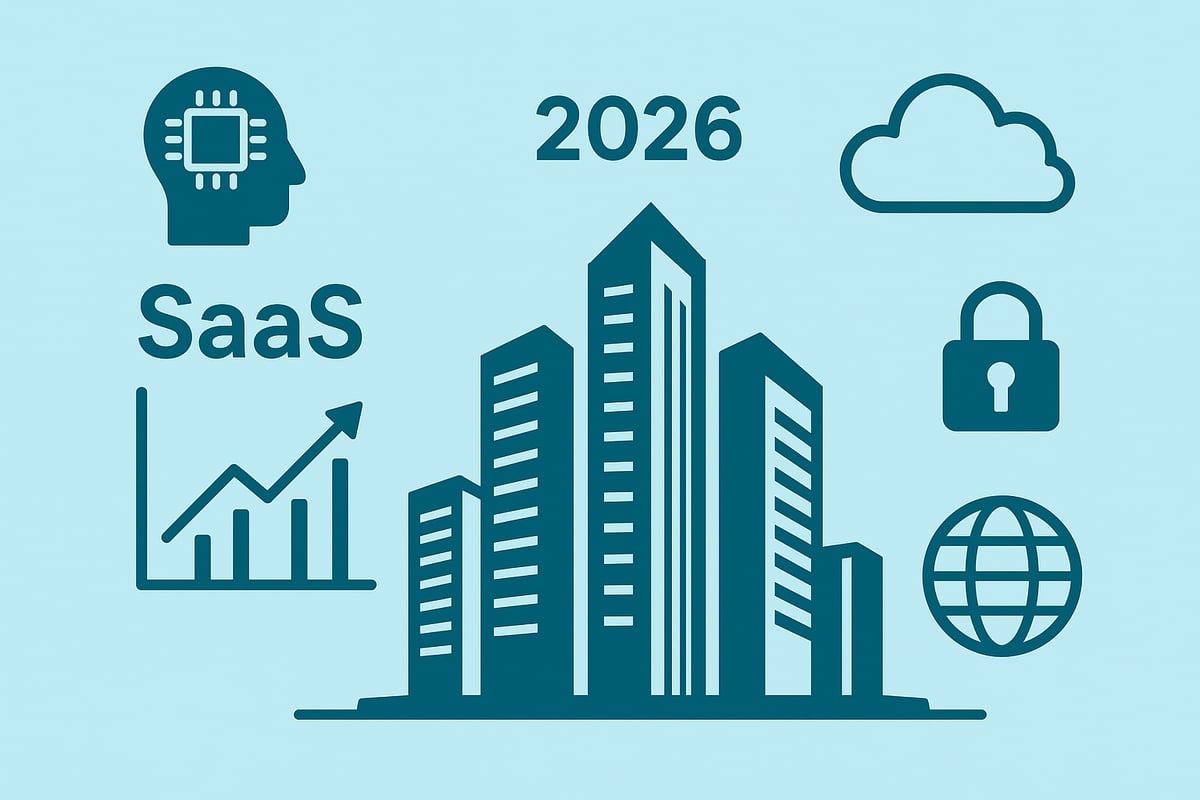
The SaaS landscape in 2026 is evolving rapidly, shaped by relentless innovation and global demand. The market is on track for remarkable growth, with projections estimating it will surpass $1 trillion by 2032. According to SaaS Market Growth Projections, annual growth rates are expected to reach 18 to 20 percent. This surge is fueled by trends such as the rise of vertical SaaS, increased AI and machine learning integration, and a growing emphasis on security and compliance. Subscription fatigue is also a notable challenge, pushing SaaS providers to create distinct value propositions. At the same time, low-code and no-code platforms are accelerating the saas build process, lowering barriers for new entrants.
Key SaaS Market Trends and Growth Projections
The saas build environment is being shaped by several dominant trends. Vertical SaaS, which provides industry-specific solutions, is gaining momentum as businesses seek tailored tools. AI and machine learning are now integrated into core SaaS functions, enabling smarter automation and real-time analytics. Organizations are prioritizing global accessibility, robust security, and compliance with regulations such as GDPR and CCPA.
However, as more SaaS solutions flood the market, users are experiencing subscription fatigue. Providers must differentiate by delivering unique value and seamless experiences. The rise of low-code and no-code platforms is transforming the saas build process, empowering teams to deliver products faster and more efficiently.
Types of SaaS Models and Architectures
When considering a saas build, founders must choose between multi-tenant and single-tenant architectures. Multi-tenant models, like those used by HubSpot, allow multiple customers to share resources, reducing costs and boosting scalability. Single-tenant setups offer each client a dedicated environment, enhancing security and customization, ideal for enterprise or regulated industries.
Emerging trends include serverless architectures, microservices, and API-first approaches. These enable modular development, rapid scaling, and easier integration with third-party services. Choosing the right architecture is crucial for a successful saas build, as it impacts cost, security, and long-term flexibility.
| Architecture Type | Cost | Scalability | Security | Use Case Example |
|---|---|---|---|---|
| Multi-Tenant | Lower | High | Moderate | HubSpot, Shopify |
| Single-Tenant | Higher | Moderate | High | Custom Enterprise SaaS |
| Serverless/Microservices | Variable | Very High | High | Modern SaaS Startups |
Competitive Landscape and Differentiation
The saas build ecosystem is crowded with solutions in CRM, CMS, ERP, project management, e-commerce, and collaboration. To stand out, new products must target niches and focus on customer-centric innovation. Vertical SaaS providers, such as Veeva in the pharmaceutical sector, are disrupting broader platforms by addressing specialized needs.
Niche targeting allows startups to compete against established players by offering deeper functionality or tailored workflows. Differentiation is no longer optional—it is essential for survival in the 2026 SaaS landscape.
Key Challenges Facing New SaaS Founders in 2026
Market saturation means users expect polished, feature-rich products from day one. Data privacy and compliance requirements are more complex, with regulations evolving globally. Security is a major concern, especially as SaaS products handle sensitive data.
Balancing rapid development with quality and scalability is a persistent challenge. Founders must also contend with rising costs and the need to continually innovate to keep pace with competitors.
Opportunities for New Entrants
Despite these challenges, there are significant opportunities for those embarking on a saas build in 2026. Gaps exist in underserved industries and workflows, offering room for specialized solutions. Leveraging AI and machine learning can help automate tasks and personalize user experiences, giving new products a competitive edge.
Global expansion is more accessible than ever, thanks to cloud infrastructure and localization tools. By focusing on emerging market needs and technological advancements, new entrants can find pathways to success in a dynamic and crowded market.
Step 1: Validating Your SaaS Idea
Validating your SaaS idea is the most important first step for any successful saas build. With competition at an all-time high in 2026, skipping validation can mean wasted time, lost investment, and missed opportunity. Over 90% of SaaS startups fail because they do not address a true market need or skip this critical phase.
A proper validation process secures product-market fit before significant resources are spent. The cost of building the wrong product is higher than ever. For a deeper dive into smart validation, review these SaaS Validation Strategies before progressing your saas build.
Why Validation is Critical in 2026
The SaaS market is evolving rapidly, and so are user expectations. A successful saas build starts with understanding real customer problems. Without early proof of demand, even the best-executed product risks joining the 90% that fail.
Validation helps you avoid building features nobody wants. It directs your focus to solving genuine pain points, ensuring every step in your saas build aligns with actual market needs. This reduces risk and sets a solid foundation for growth.
Market Research and Opportunity Analysis
Effective market research is the backbone of any saas build. Start by analyzing keyword trends, reviewing industry reports, and mapping competitors. Use tools like Google Trends, G2, and Capterra to measure market interest.
Look for patterns in user reviews and competitor gaps. For instance, a SaaS startup once pivoted after discovering through user interviews that their initial assumption missed the mark. This kind of insight is only possible with robust research at the start of your saas build.
Defining and Understanding Your Target Audience
Knowing your audience is essential for a focused saas build. Develop detailed buyer personas, including demographics, pain points, and workflows. Use surveys, interviews, and focus groups to validate that the problems you see are real and urgent.
HubSpot's early success came from targeting inbound marketers' specific struggles. By listening closely, your saas build can focus on what matters most to your future users.
Evaluating Existing Solutions and Unique Value Proposition (UVP)
Before you start your saas build, map out the strengths and weaknesses of current competitors. Identify where they fall short and where you can deliver unique value. Use frameworks like SWOT and Kano to prioritize what sets your product apart.
Ask: What does your product do better or differently? This clarity forms the core of your UVP, making your solution stand out in a crowded market.
MVP Scope and Feature Prioritization
A focused MVP is the hallmark of a strategic saas build. Use models like MoSCoW, RICE, and Kano to decide which features are essential and which can wait. Early versions of Trello, for example, launched with core functionality only, allowing for quick validation.
Here is a simple comparison table for feature prioritization models:
| Model | Focus | Best For |
|---|---|---|
| MoSCoW | Must/Should/Could/Won't | Broad prioritization |
| RICE | Reach, Impact, Confidence, Effort | Data-driven decisions |
| Kano | Basic vs. Delight | User satisfaction |
Metrics and Validation Signals
Track measurable signals throughout your saas build. Pre-signups, waitlists, and early adopter feedback are key indicators of real demand. Set goals like 100 beta signups or 10 customer interviews to validate progress.
Use these metrics to guide your next steps, ensuring each phase of your saas build is grounded in evidence, not guesswork.
Common Pitfalls in SaaS Validation
Watch out for common mistakes that can derail your saas build:
- Confirmation bias: seeing only what you want to see.
- Building for yourself instead of the market.
- Ignoring negative feedback from potential users.
- Relying too much on anecdotal evidence over data.
Stay objective and let the market guide your decisions. A disciplined validation process is the best insurance for your saas build.
Step 2: Planning Your SaaS Product for Success
Careful planning is the bedrock of any successful saas build. Laying out a clear vision, defining features, setting a business model, and considering compliance are all crucial steps. This section will walk you through the core elements that transform a simple idea into a scalable product.
Product Concept and Vision
Every effective saas build starts with a strong product vision. Begin by articulating the specific problem your software will solve and the audience it will serve. A clear vision helps guide all future decisions, from features to marketing.
For example, Notion’s modular design stemmed from their vision to empower flexible, all-in-one workspaces. Documenting your vision ensures your team stays aligned and focused. For a detailed walkthrough of early planning phases in a saas build, see How to Build a SaaS.
Feature Set Definition and Roadmap Creation
Translating your vision into actionable features is a vital step in the saas build process. Start by gathering user feedback and mapping out must-have, performance, and delight features. Prioritize using frameworks like the Kano model to balance need and innovation.
Create a phased development roadmap:
- Core features: Essential for MVP launch
- Performance features: Improve speed, reliability, or scalability
- Delight features: Add unique value and differentiation
A clear roadmap prevents scope creep and keeps your saas build on track.
Business Model and Monetization Strategies
Selecting the right business model can make or break your saas build. Common models include:
- Freemium: Attracts users but requires strong upgrade incentives
- Tiered pricing: Serves multiple segments, as Shopify demonstrates
- Usage-based: Aligns cost with value delivered
Evaluate each model’s pros and cons for your target market. Analyze competitors’ pricing to find gaps and opportunities for your saas build.
Go-to-Market Strategy and Positioning
A well-crafted go-to-market strategy is essential for a successful saas build launch. Define your unique selling proposition by highlighting what makes your product stand out. Identify initial target segments and select marketing channels that resonate with your audience.
Position your saas build against incumbents by emphasizing your strengths and unique features. Early differentiation is key to gaining traction in crowded markets.
Compliance, Security, and Data Privacy Considerations
From day one, plan for compliance and security in your saas build. Address regulations such as GDPR and CCPA, and consider industry-specific requirements if you target verticals.
Implement best practices:
- Role-based access controls
- Data encryption
- Secure authentication methods
Proactive compliance reduces risk and builds trust with enterprise clients.
Resource Planning and Budgeting
Budgeting is a critical element of any saas build. Estimate costs for development, infrastructure, marketing, and ongoing support. Allocate resources for each phase, from validation to full launch.
| Cost Area | Typical Range in 2026 |
|---|---|
| MVP Build | $50k–$200k |
| Cloud Hosting | $1k–$5k/month |
| Marketing | $5k–$50k launch |
| Support | $2k–$10k/month |
Accurate resource planning ensures your saas build stays on schedule and within budget.
Potential Pitfalls and Planning Mistakes
Avoid common planning errors in your saas build journey:
- Allowing scope creep without clear priorities
- Underestimating technical or compliance complexity
- Ignoring early user feedback
Practice agile planning and iterate based on real-world insights. Stay flexible, and always validate assumptions to guide your saas build towards sustainable success.
Step 3: Assembling the Right Team and Tech Stack
Assembling the right team and selecting a robust tech stack are pivotal for a successful saas build. Both decisions directly impact your product's scalability, maintainability, and speed to market. In this section, we break down essential roles, stack choices, architecture best practices, and operational strategies for a winning saas build in 2026.
Building a High-Performance SaaS Team
A successful saas build starts with assembling a balanced team. Core roles include a product manager, backend and frontend developers, UX/UI designer, QA engineer, DevOps specialist, and marketing lead.
- Startups often benefit from generalists who can wear multiple hats.
- Scale-ups require more specialized roles and domain expertise.
- Consider in-house, remote, or hybrid models, as well as outsourcing for flexibility and cost control.
Team structure should align with your product vision and growth stage, ensuring the saas build remains agile and efficient.
Selecting the Optimal Technology Stack
Choosing the right technology stack is foundational for your saas build. Popular choices include Node.js, Python, or Ruby on Rails for backend development, and React or Vue.js for the frontend. Cloud providers like AWS, Azure, or Google Cloud offer scalable infrastructure options.
Evaluate each stack for scalability, security, and developer familiarity. For a deeper dive into best practices and comparisons, see the SaaS Technology Stack Essentials guide.
Aligning your stack with your team’s expertise accelerates the saas build process and future-proofs your product.
SaaS Platform Architecture Best Practices
Modern saas build architecture emphasizes API-first design, modularity, and scalability. Multi-tenant setups generally offer cost efficiency and easier scaling, while single-tenant models prioritize data isolation.
Choose between SQL and NoSQL databases based on data complexity and scaling needs. Modular architectures, like those used by Jira, allow seamless feature expansion and maintenance.
A well-architected saas build minimizes technical debt and supports rapid iteration.
DevOps and Continuous Delivery
Implementing DevOps practices is essential for any contemporary saas build. Set up CI/CD pipelines to automate testing and deployment, reducing manual errors and accelerating release cycles.
Automated testing and monitoring ensure product quality and enable quick rollbacks in case of issues. Infrastructure as code simplifies provisioning and scaling, supporting a resilient saas build environment.
Continuous delivery keeps your team responsive to user feedback and market demands.
Security and Compliance by Design
Security is non-negotiable in any saas build. Incorporate authentication, role-based access, and encryption from day one. Use compliance automation tools to address requirements like SOC 2 and GDPR efficiently.
Proactive security measures protect user data and build customer trust. Regular security reviews and updates ensure your saas build meets evolving regulatory standards.
Building for Scalability and Performance
Scalability must be embedded in your saas build strategy. Leverage load balancing, caching, and CDNs to maintain performance as your user base grows.
Plan for global reach with distributed infrastructure and uptime monitoring. Optimize database queries and backend processes to handle traffic spikes.
These strategies ensure your saas build remains reliable and responsive, even under heavy load.
Common Tech Stack Mistakes to Avoid
Avoid overengineering your saas build with unnecessary complexity or premature optimization. Anticipate future scaling needs, but focus first on core functionality.
Neglecting security or choosing unfamiliar technologies can lead to costly setbacks. Prioritize maintainability and adaptability for long-term saas build success.
Step 4: Building, Testing, and Iterating Your SaaS Product
Building a winning saas build requires a disciplined, iterative approach. In this phase, you will bring your vision to life, test relentlessly, and refine your product based on real user feedback. Let us break down each critical step in the process so your saas build is ready for a successful launch.
Agile SaaS Development Lifecycle
Adopting an agile workflow is the cornerstone of a modern saas build. Agile development allows teams to break projects into manageable sprints, prioritize features, and adapt to feedback quickly.
Each sprint should have clear goals, defined deliverables, and regular reviews. Tools like Jira and Trello help manage tasks and visualize progress. By focusing on iterative releases, your team can quickly ship valuable features and respond to customer needs as they arise.
Agile encourages open communication, continuous improvement, and data-driven decisions. This ensures your saas build evolves in line with user expectations and market trends.
MVP Development and Rapid Prototyping
Launching with a minimum viable product (MVP) is essential for an efficient saas build. The MVP includes only core features needed to solve your users’ main pain points, enabling faster validation with minimal investment.
Use prototyping tools like Figma or InVision to visualize user flows and interfaces before coding. This step reduces rework and helps clarify requirements. During MVP development, prioritize features using frameworks like MoSCoW or RICE.
For actionable strategies, consult the SaaS MVP Development Guide, which offers best practices for this phase of the saas build. Early beta launches and feedback loops ensure you build only what users value most.
User Experience (UX) and Interface Design
A strong UX is vital for saas build success. Your product must be intuitive, visually appealing, and easy to navigate. Start by mapping the user journey to identify friction points.
Design onboarding flows that educate users and promote feature discovery. Use consistent design patterns, clear calls to action, and accessible layouts. Tools like Sketch and Adobe XD simplify interface design and prototyping.
Monitor user engagement with heatmaps and analytics to refine the experience. A seamless UX not only delights users but also drives retention and reduces support requests, setting your saas build apart.
Quality Assurance and Automated Testing
Quality assurance is non-negotiable for any saas build. Implement comprehensive testing strategies covering unit, integration, and end-to-end scenarios. Automated test suites help catch bugs early and support rapid releases.
Continuous integration and deployment (CI/CD) pipelines streamline the delivery process. Tools like Jenkins, CircleCI, and GitHub Actions automate builds and testing. Regular code reviews foster knowledge sharing and maintain standards.
Document your test cases and track issues in a centralized system. Reliable testing ensures your saas build remains stable and scalable as new features are added.
Security, Data Protection, and Compliance Testing
Security must be woven into every stage of the saas build. Begin with secure authentication, role-based access controls, and encryption for data in transit and at rest.
Conduct regular penetration testing and vulnerability scans to uncover potential risks. Compliance with regulations like GDPR and CCPA is crucial, especially for handling sensitive data.
Automated compliance tools can simplify audits and reporting. A robust security posture protects your users and builds trust, which is foundational for the long-term success of your saas build.
Gathering and Implementing User Feedback
User feedback is the lifeblood of an evolving saas build. Integrate in-app feedback tools and surveys to capture insights directly from your customers.
Analyze feedback to identify recurring issues and feature requests. Use analytics platforms to track user behavior and pain points. Prioritize actionable feedback and communicate updates to users, building loyalty and trust.
Iterate quickly by releasing improvements based on validated input. This feedback-driven approach ensures your saas build stays relevant and aligned with market needs.
Preparing for Scale and Performance Optimization
As your saas build gains traction, scalability and performance become top priorities. Conduct load and stress testing to ensure your application handles traffic spikes gracefully.
Implement caching, database optimization, and content delivery networks (CDNs) to boost speed. Monitor system health with tools like Datadog or New Relic for early detection of bottlenecks.
Plan infrastructure upgrades before they become critical. A scalable saas build supports growth and delivers a seamless experience to users worldwide, setting the stage for long-term success.
Step 5: Launching and Scaling Your SaaS in 2026
Launching your SaaS build in 2026 means navigating a fast-moving landscape. A successful launch depends on meticulous preparation, strategic execution, and agility in scaling. Each phase, from pre-launch to post-launch optimization, requires a blend of technical precision and market savvy.
Pre-Launch Preparation and Beta Testing
Before your SaaS build hits the market, invest in robust pre-launch strategies. Start by creating a waitlist and engaging early adopters, generating buzz around your upcoming product. Closed and open beta phases allow you to validate features, identify bugs, and gather real-world feedback.
Modern SaaS build teams prioritize security and modularity from the outset, in line with SaaS Product Development Trends 2025. This ensures compliance and scalability are core strengths at launch. Continuous feedback during beta testing will help refine your offering and align it with user expectations.
Go-to-Market Execution
A high-impact go-to-market strategy is essential for your SaaS build. Coordinate launch activities across marketing, sales, and support to ensure a unified message. Utilize PR, influencer partnerships, and content marketing to amplify reach.
Platforms like Product Hunt and AppSumo can provide early visibility and momentum. Consider targeting specific verticals or niches, leveraging insights on vertical SaaS expansion to differentiate your product. A clear value proposition and strategic positioning are critical to stand out among competitors.
Customer Onboarding and Support Systems
Effective onboarding is a cornerstone of SaaS build success. Design seamless sign-up flows, interactive tutorials, and in-app guidance to drive rapid user activation. Proactive onboarding reduces friction, increases retention, and helps users realize value quickly.
Support systems must scale with your user base. Implement live chat, knowledge bases, and in-app support to address user needs in real time. Benchmarking against leaders like Intercom can inspire best practices for engagement and satisfaction.
Pricing Strategy and Monetization Optimization
Choosing the right pricing model for your SaaS build can determine its financial trajectory. Test multiple pricing tiers, freemium options, or usage-based structures to identify what resonates with your audience.
Use analytics to monitor conversion rates and inform pricing adjustments post-launch. Reference industry benchmarks to stay competitive, and be ready to pivot if initial strategies underperform. Monetization is an ongoing process, not a one-time decision.
Growth Hacking and Early Traction Strategies
Rapid growth is often the difference between obscurity and market leadership for a SaaS build. Leverage referral programs, viral loops, and integrations to accelerate user acquisition.
AI-powered features, as discussed in AI Integration in SaaS Industry, can drive differentiation and automation, fueling early traction. Combine organic and paid channels, such as SEO and targeted ads, to maximize reach and build momentum.
Data-Driven Product Iteration
Continuous improvement is vital post-launch. Analyze key metrics like activation, churn, and feature adoption to guide product updates. A/B testing and user feedback loops ensure that your SaaS build evolves with user needs.
Actionable insights from analytics inform which features to enhance, remove, or prioritize. This iterative process keeps your product relevant and competitive, driving long-term engagement and loyalty.
Scaling Infrastructure and Operations
As your SaaS build grows, infrastructure and operations must scale seamlessly. Invest in cloud resources with autoscaling, robust monitoring, and global redundancy to maintain high uptime.
Expand your support, sales, and customer success teams to handle increased demand. Operational agility ensures you can respond quickly to user needs and market shifts, supporting sustainable growth.
Common Launch Mistakes and How to Avoid Them
Many SaaS build teams underestimate the complexity of launch. Common pitfalls include inadequate support, weak onboarding, and ignoring user feedback. These mistakes can erode trust and stunt growth.
Mitigate risks by planning for high support volumes, iterating onboarding based on feedback, and responding rapidly to issues. A proactive, data-driven approach helps your SaaS build avoid early missteps and positions it for long-term success.
Post-Launch Optimization and Long-Term SaaS Success
Achieving a successful saas build does not end at launch. The real challenge is maintaining growth, delighting users, and ensuring sustainability in a rapidly evolving market. This stage is where your strategy, adaptability, and commitment to excellence will determine your long-term success.
User Retention and Customer Success
Retaining users is critical for any saas build. High churn rates can limit growth and hurt your reputation. Building a customer success team is essential. These teams proactively engage users, answer questions, and resolve issues.
Use NPS surveys to measure satisfaction. Analyze churn data to spot patterns and launch win-back campaigns for at-risk accounts. HubSpot’s approach to customer success shows how investing in relationships leads to higher retention and stronger advocacy.
Continuous Product Improvement and Feature Expansion
Continuous improvement is the heartbeat of a thriving saas build. Use analytics, user feedback, and support tickets to guide your product roadmap. Roll out new features incrementally, ensuring you do not disrupt existing workflows.
Jira’s incremental releases set a great example. Prioritize updates based on user impact and align them with your business goals. This approach keeps your platform relevant and valuable in the eyes of your customers.
Advanced Security, Compliance, and Data Privacy
Security and compliance are non-negotiable for every saas build. Conduct regular security audits and update compliance procedures to match evolving regulations. Stay ahead of privacy laws, especially as 2026 brings new standards.
Perform penetration tests, monitor vulnerabilities, and educate your team on best practices. SaaS leaders respond to new privacy laws by adapting quickly and maintaining user trust. Your diligence here protects both your brand and your users.
Scaling SaaS Operations Globally
Expanding your saas build globally opens doors to new markets. Focus on localization, multi-currency support, and compliance with regional laws. Building distributed teams and offering 24/7 support ensures smooth operations across time zones.
For industry-specific strategies and expansion tactics, review these Vertical SaaS Expansion Insights. Industry-focused SaaS companies can gain a competitive edge by tailoring features to local needs and regulations.
Revenue Optimization and Expansion
A smart saas build requires ongoing revenue optimization. Use upselling, cross-selling, and account expansion to grow your customer base. As you scale, consider implementing usage-based or value-based pricing models.
Salesforce’s approach to revenue expansion involves offering advanced features and personalized plans. Regularly review your pricing strategy and adjust it to maximize customer lifetime value and profitability.
Leveraging AI and Automation for SaaS Growth
AI and automation are changing the landscape for every saas build. Integrate AI to deliver smarter automation, personalize user experiences, and streamline support. AI-powered features can boost engagement, reduce costs, and set your product apart.
Look to leading SaaS products for inspiration. They use AI to automate repetitive tasks, provide predictive insights, and offer real-time support, driving user satisfaction and operational efficiency.
Monitoring KPIs and SaaS Metrics for Long-Term Health
Tracking the right metrics is vital for a sustainable saas build. Monitor MRR, ARR, CAC, LTV, churn, and activation rates. Use dashboards to visualize trends and inform decision-making.
Benchmark your performance against industry standards for 2026. Data-driven insights help you spot issues early and guide your growth strategy.
Common Post-Launch Pitfalls and How to Overcome Them
Beware of feature bloat, neglecting core users, and accumulating technical debt. Stay focused on your core value proposition and avoid overcomplicating your platform.
Adopt agile processes for continuous improvement. Prioritize customer feedback and maintain a clear product vision to ensure sustainable growth for your saas build.