
The SaaS industry is experiencing a surge, transforming how businesses operate and compete on a global scale. As innovation accelerates, understanding the latest saas market statistics is crucial for founders, investors, and IT leaders seeking to stay ahead.
In 2026, new benchmarks around growth, adoption, spending, and AI integration are redefining what’s possible. Staying updated on these trends empowers better decisions and sharper strategies.
Ready to unlock the most important insights? Dive into seven essential saas market statistics you cannot afford to miss this year.
The State of the SaaS Market in 2026
As we look toward 2026, the momentum in the SaaS industry is unmistakable. Businesses worldwide are rapidly shifting to cloud-first models, and new saas market statistics reveal just how fast this transformation is accelerating. Understanding these numbers is critical for anyone invested in the future of software delivery.
Global SaaS Market Size and Growth
The global SaaS market is expected to surpass $250 billion in value by 2026, with a projected CAGR of over 18 percent from 2024 to 2026. North America continues to dominate, accounting for nearly half of the total market share, while APAC is emerging as the fastest-growing region. Europe maintains steady growth, driven by digital transformation and regulatory changes.
Key factors fueling this expansion include increased cloud adoption, widespread digital transformation initiatives, and the normalization of remote and hybrid work models. For a detailed regional breakdown and in-depth analysis, you can review recent SaaS market size and demand analysis by 2035. These saas market statistics demonstrate that SaaS is not only outpacing traditional software models but is also reshaping global business priorities.
SaaS Adoption and Usage Trends
By 2026, over 90 percent of organizations will use at least one SaaS solution, and the average company will deploy more than 100 SaaS applications. This growth in usage is driven by the need for scalable, flexible tools that support remote collaboration and digital workflows.
SaaS consolidation is becoming a strategic focus, with companies seeking integrated platforms to reduce complexity. Automation through SaaS is now commonplace, enabling enterprises to streamline operations and boost productivity. These saas market statistics underscore how deeply SaaS has become embedded in core business processes for organizations of all sizes.
SaaS Spending and Financial Trends
Global SaaS spending is forecast to exceed $350 billion in 2026, making up a growing share of overall IT budgets. Companies are now spending an average of $3,000 per employee annually on SaaS tools, with financial services, healthcare, and education leading investment.
Cost optimization is a top priority. Businesses are reducing redundant subscriptions and consolidating vendors to maximize ROI. These spending-focused saas market statistics reveal a shift toward smarter procurement, where organizations balance innovation with fiscal discipline.
AI and Emerging Tech in SaaS
By 2026, nearly every leading SaaS platform will integrate AI in some form. Over 90 percent of enterprise SaaS solutions will leverage AI for automation, analytics, and personalized user experiences. Generative AI is transforming support, analytics, and workflow automation, making SaaS offerings more valuable.
However, this rapid evolution brings new challenges, including security, data privacy, and the risk of shadow IT. The latest saas market statistics confirm that AI is now a core differentiator for SaaS providers, shaping the next wave of industry innovation.
7 Essential SaaS Market Statistics To Know In 2026
Understanding the latest saas market statistics is crucial for founders, investors, and IT leaders looking to navigate the competitive landscape in 2026. The SaaS industry is evolving rapidly, with seven key statistics defining growth, adoption, automation, spending, AI integration, churn, and sector-specific expansion. Let’s dive into the numbers that will shape your strategy this year.
1. SaaS Market Size Will Surpass $250 Billion Globally
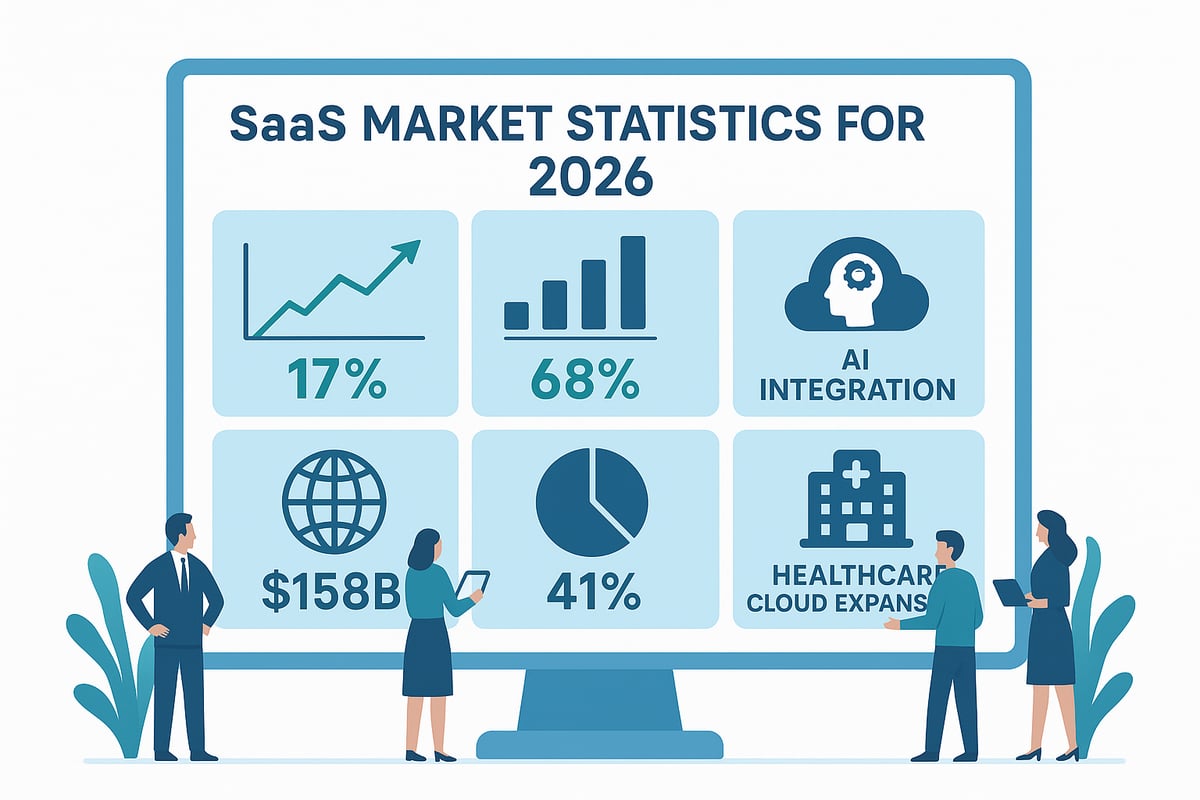
By 2026, the global SaaS market is projected to exceed $250 billion in value, cementing its dominance over traditional software delivery models. This surge reflects a compound annual growth rate (CAGR) of around 18 percent from 2024 to 2026, outpacing many other technology segments. According to recent SaaS market statistics, North America remains the largest regional market, but Asia-Pacific is closing the gap with double-digit growth.
When breaking down the segments, B2B SaaS continues to lead in revenue, while vertical SaaS (solutions tailored to specific industries) is growing at a remarkable pace. B2C SaaS, though smaller, is expanding as consumer demand for cloud-based tools rises. The main drivers for this growth include rapid cloud adoption, digital transformation initiatives, and the normalization of remote work.
| Region | Market Share (%) | CAGR (2024–2026) |
|---|---|---|
| North America | 45 | 15 |
| Europe | 28 | 13 |
| APAC | 22 | 22 |
For founders and investors, these saas market statistics signal vast opportunities for expansion and increased competition. Understanding these figures helps stakeholders prioritize regions and verticals with the highest potential for returns.
2. Companies Will Use an Average of 110 SaaS Applications Each
In 2026, organizations will manage an average of 110 SaaS applications, up from 92 in 2024 and 102 in 2025. This increase highlights the growing reliance on cloud-based solutions across every business function. The rise in app adoption is fueled by the need for specialized tools, remote collaboration, and the ease of deployment that SaaS platforms offer.
However, this proliferation introduces challenges. IT teams face growing complexity in integration, security, and data privacy. Enterprises, with hundreds of apps in their stack, must contend with app sprawl and shadow IT. In contrast, mid-market companies are focusing on consolidating their SaaS portfolios to optimize costs and improve oversight.
Key trends shaping these saas market statistics include:
- Platformization, where vendors bundle multiple solutions into unified offerings.
- Increased use of SaaS management platforms to monitor usage and control expenses.
- The drive toward automation and workflow integration across departments.
With the average number of SaaS apps per company continuing to climb, effective management of the SaaS stack is now a board-level concern.
3. 85% of Organizations Will Automate Key Processes Using SaaS
By 2026, 85 percent of organizations will automate at least one core business process through SaaS platforms. This widespread adoption of automation reflects the maturity of SaaS offerings in areas like HR, finance, sales, and customer support. Companies are leveraging automation to boost efficiency, minimize errors, and free teams for higher-value work.
Commonly automated processes include:
- Employee onboarding and offboarding
- Invoice processing and expense management
- Lead scoring and CRM updates
- Customer ticket routing and self-service support
Consider a mid-sized business automating its invoicing through a SaaS platform. This shift not only reduces manual effort but also accelerates cash flow and improves data accuracy. The return on investment is evident in reduced costs and improved productivity.
These saas market statistics demonstrate that automation is no longer optional. It is a strategic lever for organizations aiming to remain agile and competitive.
4. Global SaaS Spending Will Exceed $350 Billion
Global SaaS spending is set to surpass $350 billion in 2026, representing a significant portion of overall IT budgets. SaaS now accounts for up to 40 percent of enterprise IT spend, reflecting its central role in digital transformation. The healthcare, finance, and education sectors are leading the charge, with each increasing their SaaS investments to drive innovation and efficiency.
Average SaaS spend per employee is expected to reach $2,400 annually, as organizations continue to invest in productivity and collaboration tools. However, financial pressures are prompting companies to scrutinize their SaaS expenses. Many are consolidating vendors, renegotiating contracts, and eliminating redundant subscriptions to maximize ROI.
| Industry | Avg. SaaS Spend per Employee | Growth (YoY) |
|---|---|---|
| Healthcare | $2,800 | 21% |
| Finance | $2,700 | 19% |
| Education | $1,900 | 15% |
These saas market statistics indicate that while spending is growing, organizations are becoming more strategic about procurement and renewal decisions.
5. AI-Powered SaaS Will Reach 97% Adoption in Enterprises
The integration of AI into SaaS platforms will reach an astonishing 97 percent adoption rate among enterprises in 2026. AI is now a core differentiator, enabling SaaS vendors to deliver advanced analytics, automation, and personalized user experiences. Use cases range from AI-driven customer support bots to intelligent marketing automation and predictive analytics.
AI in SaaS is being deployed across:
- Workflow automation (e.g., scheduling, approvals)
- Data analytics and forecasting
- Personalized recommendations
- Natural language processing for support and engagement
Business benefits include faster decision-making, cost savings, and improved user satisfaction. However, challenges remain, such as ensuring data privacy, managing compliance, and building trust in AI-driven outputs.
These saas market statistics highlight that AI is no longer a nice-to-have. It is an essential component of any competitive SaaS solution in 2026.
6. Churn Rate for B2B SaaS Will Stabilize at 3.3%
Churn rates for B2B SaaS companies are projected to stabilize at 3.3 percent in 2026. This marks a slight improvement from the average of 3.7 percent in 2024, reflecting the industry’s focus on customer success and product fit. Lower churn means higher customer lifetime value and more predictable revenue streams.
Factors influencing churn include:
- Quality of onboarding and support
- Continuous product innovation
- Strength of customer relationships
- Competitive landscape
Top-performing SaaS companies are investing in proactive retention strategies, such as in-app guidance, dedicated customer success teams, and regular feedback loops. These actions help reduce churn and drive sustainable growth.
Tracking churn is vital for interpreting saas market statistics, as it directly impacts company valuation and investor confidence.
7. Health Cloud SaaS Market Will Hit $480 Billion
The health cloud SaaS segment is on track to reach $480 billion in value by 2026, making it one of the fastest-growing verticals in the industry. This growth is driven by the adoption of telemedicine, digital health records, and AI-powered diagnostics. Healthcare providers and insurers are increasingly turning to SaaS platforms to improve patient care and streamline operations.
Leading platforms in this space offer secure, compliant solutions for patient data management, appointment scheduling, and remote monitoring. Regulatory frameworks, such as HIPAA in the US and GDPR in Europe, remain top of mind, shaping product development and vendor selection.
The impact of these saas market statistics is clear: healthcare organizations are prioritizing cloud adoption to achieve better outcomes and operational efficiency.
Regional and Industry Breakdowns
The global SaaS market statistics reveal that while SaaS adoption is booming everywhere, growth patterns and priorities differ dramatically by region and industry. Understanding these differences is essential for founders and investors aiming to capitalize on emerging opportunities and anticipate shifting demands.
SaaS Growth by Region
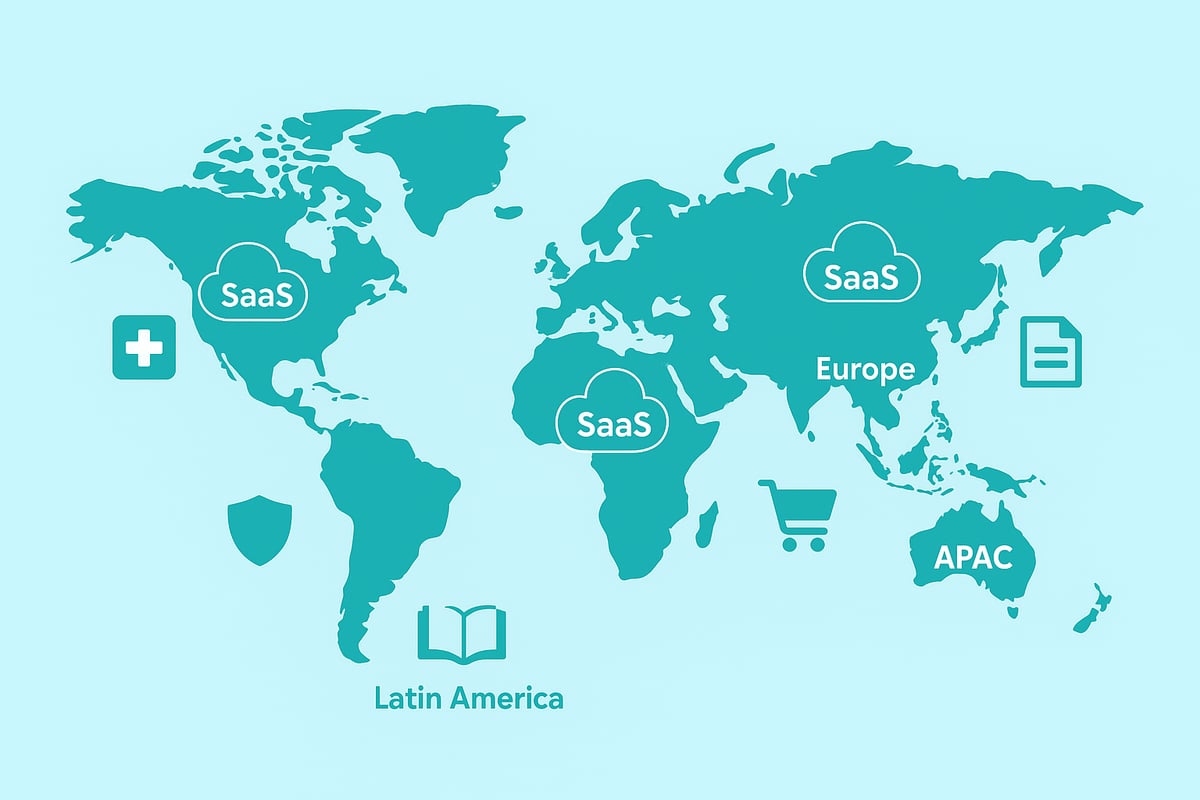
SaaS market statistics for 2026 show that North America remains the largest SaaS market, accounting for the highest share of global revenues. Europe is steadily increasing its adoption, especially in data-driven sectors, while APAC is emerging as the fastest-growing region.
| Region | Market Size (2026) | Growth Rate | Key Drivers |
|---|---|---|---|
| North America | Largest | Moderate | Cloud maturity, investment |
| Europe | Growing | Steady | Digital transformation, GDPR |
| APAC | Fastest-growing | High | Mobile SaaS, SMB digitalization |
| Latin America | Emerging | Moderate | Startup ecosystem, e-commerce |
New SaaS hubs are emerging in APAC cities, attracting both startups and investors. These regional trends highlight the importance of tailoring strategies to local needs when analyzing saas market statistics.
Industry-Specific SaaS Trends
Different industries are reshaping their operations through SaaS, with healthcare, finance, retail, and education leading the way. Healthcare is investing in patient management and telemedicine platforms, while finance prioritizes compliance and security tools.
Retailers are leveraging SaaS for omnichannel experiences, and education institutions are adopting digital learning solutions. Vertical SaaS is gaining momentum because it addresses sector-specific challenges with customized features. For founders looking to validate ideas in these markets, following vertical SaaS validation steps can increase their odds of success. These industry trends underline why monitoring saas market statistics is vital for competitive strategy.
The Rise of Micro SaaS and Niche Solutions
Micro SaaS startups are flourishing, focusing on highly specialized solutions for niche markets. These platforms typically require lower capital to launch and can achieve strong profit margins by solving specific pain points.
Examples include SaaS tools for local law firms, fitness studios, or boutique e-commerce. Barriers to entry are lower, and founders can quickly pivot based on market feedback. The rise of micro SaaS is reflected in current saas market statistics, showing increased diversity in the ecosystem and more opportunities for targeted innovation.
SaaS Security and Compliance in 2026
Security and compliance remain top concerns for SaaS buyers in every region and industry. Regulatory requirements like GDPR and HIPAA are evolving, making compliance a moving target for SaaS providers.
Companies now demand robust data protection, transparent privacy policies, and proactive risk management. To stay competitive, SaaS platforms must embed compliance into their product design and operations. For a deeper dive into best practices, review this SaaS compliance and GDPR guide. As regulations shift, keeping up with saas market statistics on compliance trends is crucial for building trust and avoiding costly penalties.
Future Outlook: What’s Next for SaaS?
The future of SaaS is packed with innovation, disruption, and new opportunities. As the industry matures, understanding saas market statistics becomes essential for navigating the evolving landscape. Let’s explore the key directions shaping SaaS in 2026 and beyond.
Consolidation and Platformization
SaaS companies are rapidly moving toward larger, more integrated platforms. This wave of consolidation is driven by customer demand for seamless workflows and fewer vendor relationships. The trend is clearly reflected in saas market statistics, as mergers and acquisitions hit record highs.
Customers now prefer unified ecosystems over fragmented toolsets, prompting leading SaaS providers to acquire niche players. This push for platformization is reshaping the competitive landscape, giving rise to all-in-one solutions.
For businesses, this means greater efficiency and potentially lower costs. However, it also requires careful evaluation of vendor lock-in and interoperability when reviewing new SaaS offerings.
The Evolution of SaaS Pricing Models
Pricing innovation is changing how SaaS products are sold and consumed. Traditional seat-based pricing is losing ground to usage-based and value-based models. According to recent saas market statistics, more providers are experimenting with hybrid approaches to better align with customer needs.
This evolution benefits both vendors and buyers. Customers gain flexibility, while SaaS companies can optimize revenue streams. For example, usage-based pricing allows scaling costs with actual consumption, helping organizations control budgets.
Hybrid pricing models are also emerging, blending flat fees with variable charges. This shift encourages transparency and makes SaaS more accessible to a broader range of businesses.
AI and Automation: The Next Frontier
AI is set to revolutionize the SaaS industry in the coming years. Current saas market statistics show a dramatic rise in AI-powered features across platforms. By 2026, nearly all enterprise SaaS solutions are expected to include some form of automation or intelligent analytics.
Generative AI will drive new capabilities, from predictive forecasting to autonomous workflows. As highlighted in AI integration in SaaS platforms by 2026, the commoditization of AI is accelerating innovation and market expansion.
While AI offers significant business benefits, it also introduces challenges around data privacy and compliance. Staying ahead means investing in secure, transparent, and ethical AI practices.
Opportunities for SaaS Founders in 2026
For founders, the next wave of SaaS growth brings both opportunity and responsibility. Success will depend on rigorous market validation, customer research, and adaptability. Leveraging saas market statistics, founders can identify gaps, test ideas, and target underserved segments.
Building community, producing educational content, and embracing feedback are vital strategies. As explained in SaaS market research strategies, thorough research is crucial for validating product-market fit and scaling effectively.
Founders who prioritize learning and rapid iteration will be best positioned to thrive in the dynamic SaaS environment of 2026.