
The saas market is on the brink of explosive transformation, projected to soar past $819 billion by 2030. Businesses everywhere are rapidly moving from traditional on-premises tools to flexible cloud-based solutions, seeking greater scalability and cost efficiency.
This guide explores every angle of the 2026 saas market, from growth projections and technology trends to market segmentation, regional dynamics, and actionable strategies. Discover how innovations like generative AI, micro-SaaS, and hybrid cloud deployments are reshaping the industry. Use these insights to make informed decisions and seize new opportunities in the evolving world of SaaS.
SaaS Market Overview and Growth Projections for 2026
Software as a Service (SaaS) has redefined how organizations consume technology. Instead of investing in costly infrastructure and managing on-premises software, businesses now access applications through the cloud, paying only for what they use. The core value of SaaS lies in its ability to offer flexibility, rapid deployment, and lower total cost of ownership compared to traditional models. For many, this shift is not just about technology, but about unlocking new ways of working and scaling with ease.
The saas market is experiencing unprecedented growth, with a projected value of $375.57 billion by 2026 according to Fortune Business Insights. Looking ahead, estimates suggest the saas market could soar to $819.23 billion by 2030, reflecting a compound annual growth rate (CAGR) between 12 and 18.7 percent from 2025 to 2030. These projections are echoed by multiple industry analyses, including the latest SaaS Market Statistics and Growth, which highlights not only the scale but also the accelerating pace of SaaS adoption across sectors.
Several factors are fueling this expansion. Cost efficiency remains a central driver, as SaaS enables businesses to reduce upfront investments and ongoing maintenance expenses. Scalability is another key benefit, allowing organizations to adjust resources on demand as business needs evolve. The rise of remote work, accelerated by global events, has pushed companies to seek cloud-based solutions that support distributed teams and real-time collaboration. Digital transformation initiatives, aimed at modernizing legacy systems and enabling agility, further amplify the momentum behind the saas market.
North America stands out as the dominant region, capturing over 43 percent of global revenue in 2024. This leadership is attributed to mature cloud infrastructure, strong enterprise adoption, and a vibrant ecosystem of SaaS vendors. The United States, in particular, continues to invest heavily in cloud innovation, security, and artificial intelligence—strengthening its position at the forefront of the global saas market.
The COVID-19 pandemic played a pivotal role as a catalyst for SaaS adoption. As organizations shifted rapidly to remote work, education, and digital commerce, cloud-based applications became essential. A notable example is the surge in Microsoft Office 365 usage, as businesses and schools sought reliable platforms for collaboration and productivity during lockdowns. This shift not only drove immediate demand but also changed long-term attitudes toward cloud adoption.
Key industry verticals propelling the saas market include banking, financial services and insurance (BFSI), IT and telecom, retail, healthcare, and manufacturing. Each sector leverages SaaS in unique ways, from digital banking and telemedicine to supply chain automation and omnichannel retail. These verticals are expected to maintain robust demand, shaping the trajectory of the market in 2026 and beyond.
Deployment models also play a critical role in the evolution of the saas market. Public cloud remains the most widely adopted approach, favored for its scalability and cost advantages. Private cloud is often chosen by organizations with stringent security, customization, or compliance requirements, and currently commands the largest share of SaaS revenue. Hybrid cloud models, which blend on-premise and cloud resources, are gaining traction as enterprises seek to balance control with agility.
In summary, the saas market is on a remarkable growth path, driven by innovation, changing work patterns, and the quest for efficiency. With its expanding footprint across regions and industries, SaaS is poised to remain a cornerstone of digital business strategy through 2026 and well into the future.

Top Trends Shaping the SaaS Market in 2026
The saas market is entering a phase of rapid transformation, driven by a convergence of cutting-edge technologies and shifting business needs. As we approach 2026, several trends are not only shaping competitive dynamics but also redefining how value is delivered to customers. From generative AI to micro-SaaS, the future of the saas market is both dynamic and full of opportunity.

The Rise of Generative AI and Automation
Generative AI is revolutionizing the saas market by automating complex workflows, tailoring customer experiences, and enabling predictive decision-making. By 2026, an estimated 75 percent of SaaS providers will incorporate AI-driven automation into their platforms, speeding up development cycles and reducing manual labor.
Companies like Jasper and Writesonic are illustrating the power of AI in marketing content creation, while GitHub Copilot is transforming code generation for developers. SaaS solutions are now leveraging AI to deliver personalized dashboards, tailored recommendations, and responsive customer support.
A recent Salesforce study found that 70 percent of customers expect personalized interactions, making AI not just a differentiator but a necessity for retaining users. Predictive analytics, powered by machine learning, is helping organizations anticipate customer needs and optimize operations.
AI-driven automation is also boosting scalability within the saas market. SaaS products can now handle larger user bases and more data without sacrificing performance. As these technologies mature, AI will remain at the center of innovation, driving the next wave of growth in the saas market. For a deeper dive into these emerging trends, explore the Global SaaS Market & Trends 2026.
Micro-SaaS and Niche Solutions
The rise of micro-SaaS is a defining trend in the evolving saas market. Micro-SaaS businesses are small, focused, and often run by lean teams or solo founders. They target niche pain points with high-margin, subscription-based solutions, offering agility and rapid product iteration.
In 2023, 41 percent of SaaS startups built products for highly specific markets. This focus allows for quick development, lower operational costs, and high customer retention. Many micro-SaaS companies report profit margins of 70 to 80 percent, according to the 2023 SaaS Metrics Report.
Acquisition activity is heating up as larger SaaS vendors seek to tap into niche expertise and steady revenue streams. Tools like Zapier help micro-SaaS businesses automate essential tasks, maximizing efficiency and freeing up resources for innovation.
High-touch customer support and rapid response to user feedback give micro-SaaS providers a unique edge in the saas market. As organizations demand more specialized solutions, the micro-SaaS approach is set to become even more prominent.
Multi-Cloud and Hybrid Cloud Strategies
Organizations in the saas market are increasingly adopting multi-cloud and hybrid cloud strategies to enhance flexibility and minimize vendor lock-in. By leveraging services from AWS, Azure, and Google Cloud, enterprises can optimize performance and ensure redundancy across platforms.
Hybrid cloud models combine on-premise infrastructure with public and private cloud resources. This approach allows companies to keep sensitive workloads secure while benefiting from the scalability and cost savings of the cloud. Seamless integration between platforms is now a key differentiator among SaaS vendors.
Security, compliance, and business continuity are major drivers of hybrid adoption within the saas market. Enterprises in regulated industries, such as finance and healthcare, are leveraging hybrid environments to meet strict compliance requirements while maintaining agility.
The ability to orchestrate workloads across multiple clouds enables organizations to take advantage of best-in-class solutions and avoid single points of failure. As the saas market matures, multi-cloud and hybrid strategies will be essential for future-proofing operations.
Mobile-First and Ubiquitous Access
The global shift toward mobile devices is accelerating SaaS adoption and shaping user expectations within the saas market. Modern smartphones and tablets have evolved into powerful endpoints for SaaS applications, enabling real-time collaboration and productivity on the go.
Mobile-first SaaS solutions are designed for accessibility, allowing users to manage tasks, communicate, and analyze data from anywhere. Popular examples include mobile CRM platforms, HR management tools, and document management apps.
The proliferation of mobile SaaS is breaking down geographic barriers, making the saas market more accessible to users in emerging regions. As mobile technology advances, ubiquitous access will continue to fuel global market growth and user engagement.
Security, Privacy, and Compliance Challenges
Security remains a top concern as the saas market expands. Misconfigurations in SaaS environments accounted for up to 63 percent of security incidents in 2022, according to the Cloud Security Alliance. Data privacy challenges are intensifying with the rise of public cloud adoption and cross-border data transfers.
Regulatory frameworks such as GDPR and CCPA are raising the bar for compliance. SaaS providers must invest in robust security controls, encryption, and continuous monitoring to protect customer data and maintain trust in the saas market.
Enterprises are increasingly investing in managed security and compliance services to address evolving threats. As the regulatory landscape shifts, proactive risk management and transparent data practices will be critical for success in the saas market.
SaaS Market Segmentation: Verticals, Applications, and Deployment Models
Understanding the segmentation of the saas market is essential for grasping its rapid expansion and strategic opportunities. The market is shaped by industry verticals, diverse application areas, and a range of deployment models that support business needs across the globe.
Industry Verticals Driving SaaS Adoption
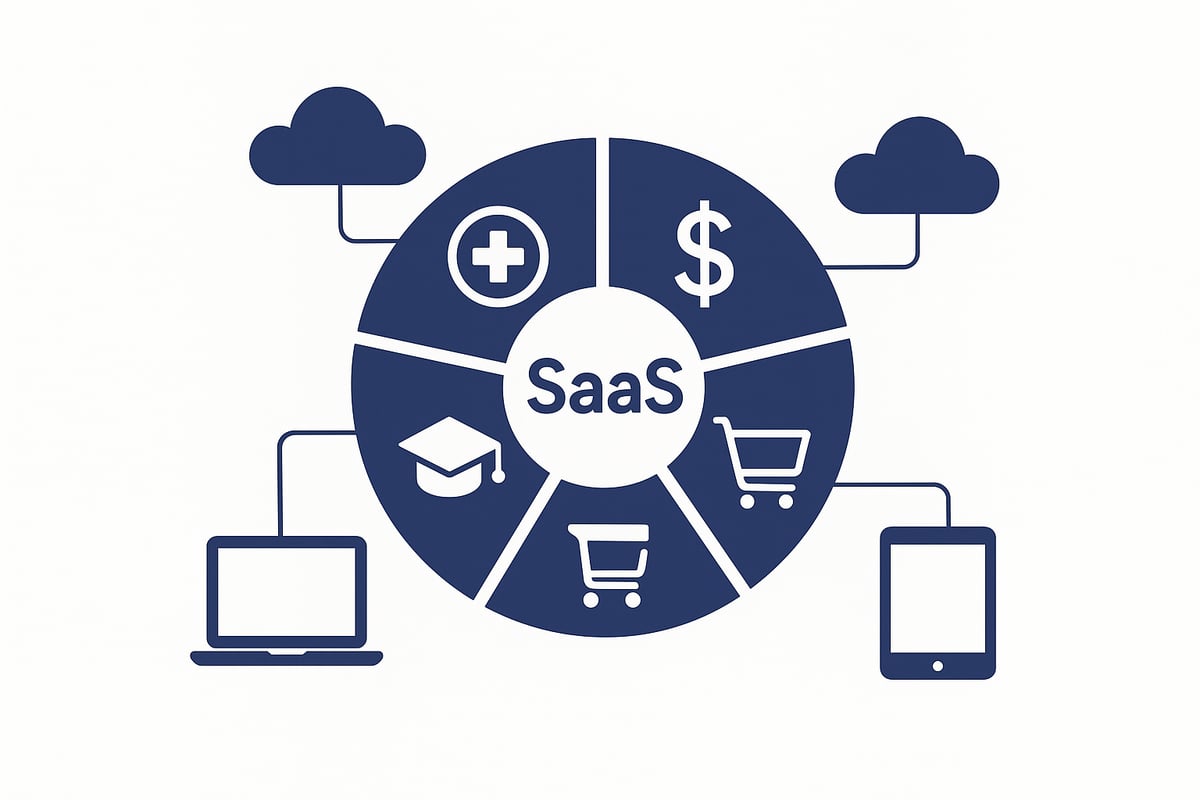
The saas market is driven by a variety of industry verticals, each with unique requirements and growth dynamics. Financial services (BFSI) are investing heavily in digital banking, online payments, and customer engagement platforms. In IT and Telecom, SaaS solutions support network management, collaboration, and advanced analytics.
Healthcare is accelerating adoption through telemedicine, patient management, and compliance-focused platforms. Retail and consumer goods leverage SaaS for e-commerce, supply chain optimization, and omnichannel marketing. Manufacturing integrates SaaS for ERP, supply chain automation, and IoT connections, while education institutions deploy digital classrooms and e-learning platforms.
| Industry Vertical | Key SaaS Applications |
|---|---|
| BFSI | Digital banking, payments, CRM |
| IT & Telecom | Network management, analytics |
| Healthcare | Telemedicine, patient management |
| Retail & Consumer | E-commerce, supply chain, marketing |
| Manufacturing | ERP, IoT integration |
| Education | E-learning, digital classrooms |
CRM SaaS solutions stand out as the largest application segment in 2024, reflecting the strong demand for customer-centric platforms. For a deeper dive into these verticals, explore Understanding SaaS Industry Verticals.
Key SaaS Application Areas
The saas market is defined by its wide array of application areas that enhance business operations. Customer Relationship Management (CRM) holds the largest revenue share in 2024, helping organizations manage interactions and boost customer loyalty. Enterprise Resource Planning (ERP) streamlines core functions like finance, operations, and supply chain management.
Content, collaboration, and communication tools—such as video conferencing and document management—enable real-time teamwork across locations. Business Intelligence (BI) and analytics platforms empower organizations with data-driven insights for better decision-making. Human Capital Management (HCM) automates HR, payroll, and recruitment processes, improving efficiency.
A growing trend is the integration of AI into CRM and marketing automation, which further propels the saas market by offering smarter, more personalized tools. These applications are central to digital transformation strategies in every sector.
Deployment Models: Public, Private, and Hybrid Cloud
Deployment models are a critical factor in the saas market, influencing scalability, security, and compliance. Public cloud deployments are the most widely adopted, delivering flexibility and cost benefits for organizations of all sizes. Private cloud is preferred by enterprises that require enhanced security, customization, and regulatory compliance, and it currently holds the largest share of SaaS revenue.
Hybrid cloud models blend the benefits of public and private clouds, supporting sensitive workloads while maintaining operational flexibility. Multi-cloud strategies are also gaining momentum, allowing organizations to avoid vendor lock-in and select best-of-breed solutions.
Many enterprises integrate SaaS with on-premise systems, creating robust hybrid environments that ensure business continuity. This approach allows the saas market to address diverse technological and regulatory requirements, making it a foundation for future-ready IT infrastructure.
Regional Analysis: Global SaaS Market by Geography
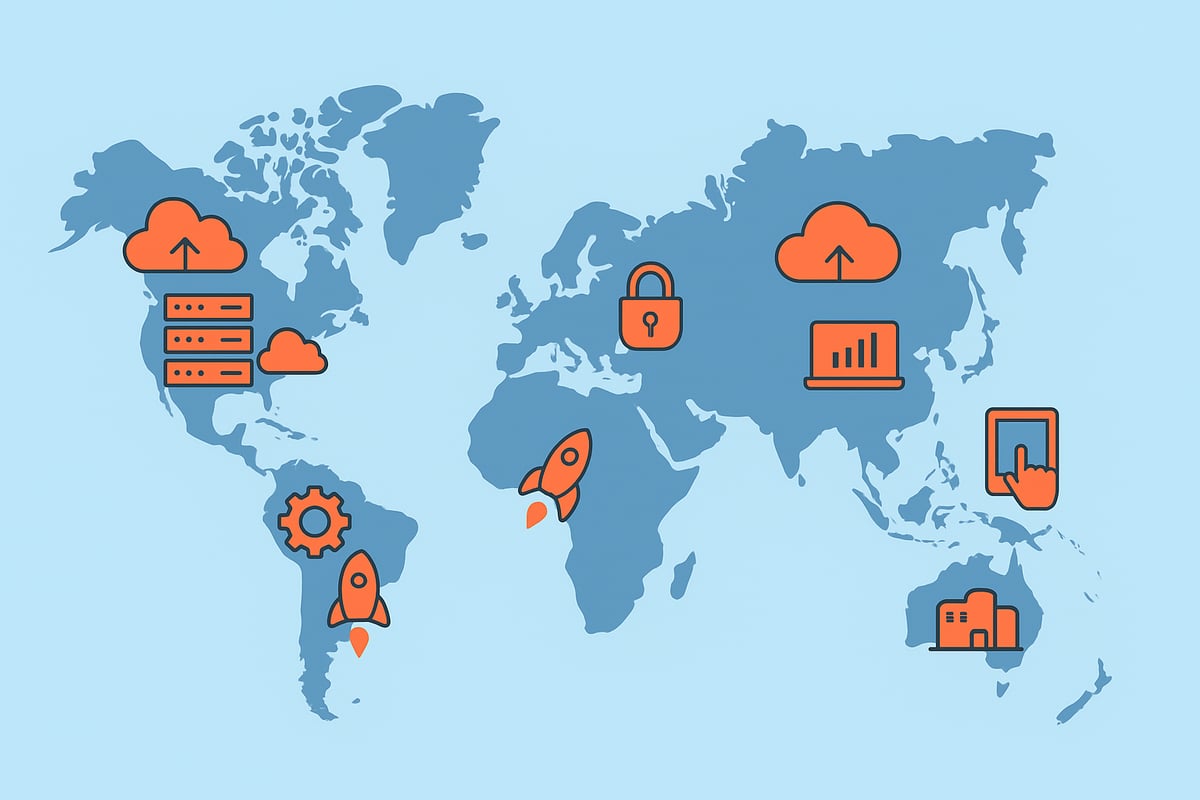
The global saas market continues to expand rapidly, but growth patterns vary by region. Understanding these regional dynamics is key for stakeholders planning international strategies or seeking new opportunities in 2026.
North America: Market Leader and Innovation Hub
North America remains the largest contributor to the saas market, accounting for approximately 46.9% of global revenue in 2025. The United States stands out as a leader due to its mature cloud infrastructure, robust enterprise adoption, and significant investments in AI and cybersecurity.
Large enterprises and SMEs alike continue to migrate to SaaS for flexibility and scalability. Local tech giants and a vibrant startup ecosystem fuel ongoing innovation. The region's regulatory environment also supports cloud adoption, making North America a critical driver of the global saas market.
Europe: Compliance-Driven Growth
Europe is experiencing rapid growth in the saas market, with the United Kingdom, Germany, and France leading adoption. Data privacy regulations such as GDPR shape how SaaS vendors operate, emphasizing compliance, security, and data localization.
European organizations prioritize choosing providers who can meet strict regional requirements. This focus on privacy and compliance is influencing product design and service delivery throughout the saas market. For more in-depth regional insights, see the Software As A Service Market Analysis by Mordor Intelligence.
Asia Pacific: Fastest-Growing Region
Asia Pacific is the fastest-growing area in the global saas market. Countries like China, India, and Japan are leading digital transformation efforts, especially in small to medium-sized enterprises and large corporations.
The demand for cloud-based solutions is driven by the region's rapid economic development, expanding internet penetration, and government initiatives promoting digital infrastructure. Localization, language support, and mobile-first strategies are essential for success in this diverse market. Asia Pacific's growth is expected to outpace all other regions through 2026.
Latin America, Middle East, and Africa: Emerging Markets
Latin America, the Middle East, and Africa are emerging players in the global saas market. Adoption rates are increasing as investments in cloud infrastructure rise and more startups enter the market.
Countries such as Brazil, Mexico, the UAE, and South Africa are seeing a surge in SaaS uptake across sectors like e-commerce, banking, and education. Local economic conditions, government policies, and access to reliable internet infrastructure will shape future growth in these regions.
Regional Trends and Strategic Takeaways
Regional trends across the saas market reflect the need for localization, regulatory adaptation, and strategic placement of local data centers. SaaS vendors are expanding data center footprints to comply with data sovereignty laws and enhance performance.
The table below summarizes the main characteristics of each region:
| Region | Growth Drivers | Key Challenges | Leading Countries |
|---|---|---|---|
| North America | Innovation, investment, mature infrastructure | Competition, security | United States, Canada |
| Europe | Compliance, privacy, localization | Regulatory complexity | UK, Germany, France |
| Asia Pacific | Digital transformation, SME adoption | Diverse markets, localization | China, India, Japan |
| LatAm, MEA | Startup activity, infrastructure investment | Economic conditions, connectivity | Brazil, UAE, South Africa |
Local government digital initiatives and economic trends play a significant role in shaping the future of the saas market. As stakeholders plan for 2026, understanding these regional nuances is essential for effective market entry and sustained growth.
Technology Innovations and the Future of SaaS
The future of the saas market is defined by rapid advances in technology, transforming how solutions are developed, delivered, and consumed. As the industry evolves, innovations such as AI, automation, and new development paradigms are reshaping competitive dynamics. Let us explore the five most impactful trends shaping the next era of SaaS.
AI, Machine Learning, and Predictive Analytics
Artificial intelligence and machine learning are revolutionizing the saas market. These technologies drive automation, enhance personalization, and enable real-time decision-making across verticals.
SaaS providers now integrate AI-powered features such as chatbots, recommendation engines, and predictive analytics into their platforms. For example, AI-driven chatbots can handle customer support queries instantly, improving user satisfaction and operational efficiency.
Predictive analytics is another game-changer. SaaS platforms leverage customer data to forecast behavior, identify churn risks, and optimize business outcomes. By using machine learning, companies can anticipate trends and make smarter decisions.
According to recent research, the adoption of AI in SaaS platforms is accelerating, with most leading vendors embedding intelligence into their core offerings. To learn more about how AI is transforming SaaS, see AI in SaaS Platforms.
Low-Code/No-Code Platforms and Developer Enablement
Low-code and no-code platforms are democratizing access to the saas market. These tools empower business users and non-technical staff to build, customize, and deploy applications with minimal coding knowledge.
With intuitive drag-and-drop interfaces, organizations can rapidly prototype new workflows or automate manual tasks. This reduces development time, lowers costs, and accelerates digital transformation.
For example, many companies now use low-code platforms to streamline internal processes or launch new SaaS features quickly. This trend is making the saas market more accessible and agile, enabling faster innovation cycles.
API Ecosystems and SaaS Integration
Open APIs are the backbone of modern saas market integration. As businesses adopt more SaaS solutions, seamless interoperability across platforms becomes essential.
API ecosystems allow companies to connect CRM, ERP, marketing, and analytics tools, creating unified workflows and centralized data views. SaaS marketplaces are thriving with plug-and-play integrations, enabling organizations to tailor solutions to their exact needs.
For example, a company might use APIs to synchronize data between its sales, marketing, and finance platforms. This flexibility supports best-of-breed strategies and enhances productivity within the saas market.
Vertical SaaS and Industry-Specific Solutions
Vertical SaaS is gaining momentum as vendors target niche industries with tailored solutions. These platforms focus on specific sectors such as healthcare, legal, or real estate, offering deep domain expertise and compliance features.
The saas market benefits from vertical SaaS by delivering faster time-to-value, regulatory alignment, and specialized capabilities. For instance, telemedicine SaaS solutions address unique healthcare requirements, while legal case management platforms streamline law firm operations.
Industry-focused SaaS is expected to grow rapidly as businesses seek solutions that address their unique challenges and compliance needs.
Sustainability and Green SaaS
Sustainability is emerging as a key differentiator in the saas market. Vendors are adopting energy-efficient cloud infrastructure and green data centers to reduce their carbon footprint.
Many providers now highlight eco-friendly practices as part of their value proposition. By prioritizing sustainability, the saas market aligns with global efforts to build a greener, more responsible digital future.
Strategic Recommendations for SaaS Stakeholders in 2026
Strategic decisions in the saas market are more critical than ever as competition intensifies and customer expectations evolve. Each stakeholder group—vendors, enterprises, investors, and entrepreneurs—faces unique challenges and opportunities. The following recommendations are tailored to help every player navigate the saas market in 2026 and position themselves for sustainable growth.
For SaaS Providers and Vendors
To thrive in the saas market, providers and vendors must focus on innovation, differentiation, and trust. The rapid adoption of AI and automation is transforming every layer of SaaS delivery, while security and compliance remain top priorities.
- Invest in AI, automation, and advanced analytics to enhance product capabilities and stand out in the crowded saas market.
- Expand into vertical SaaS and micro-SaaS niches to address specific industry pain points and unlock new revenue streams.
- Ensure seamless integration across multi-cloud and hybrid environments, reducing friction for enterprise customers.
- Enhance customer support with personalized experiences and proactive engagement.
- Build robust compliance and data privacy features into products, leveraging best practices outlined in SaaS Compliance and GDPR Strategies.
By executing these strategies, vendors can strengthen their competitive position and build lasting customer loyalty in the evolving saas market.
For Enterprises and SaaS Buyers
Enterprises adopting SaaS must carefully assess solutions to maximize ROI and maintain operational resilience. With the saas market expanding rapidly, buyers need a structured approach to selection, integration, and ongoing management.
- Evaluate SaaS solutions for scalability, integration capabilities, and robust security controls.
- Leverage hybrid and multi-cloud strategies to optimize costs and ensure business continuity.
- Invest in employee training to boost adoption and manage organizational change effectively.
- Assess vendor compliance with regional regulations, especially in light of growing privacy requirements. Utilize resources like SaaS Compliance and GDPR Strategies to guide decision-making.
- Monitor usage patterns and measure ROI to drive continuous digital transformation.
These actions help enterprises realize the full value of the saas market while minimizing risk and ensuring long-term success.
For Investors and Market Analysts
The saas market presents significant opportunities for investors and analysts seeking robust returns and market insights. A data-driven approach is essential for identifying winners and mitigating risks.
- Target high-growth verticals such as healthcare, retail, and education, where SaaS adoption is accelerating.
- Identify micro-SaaS and niche players with strong retention and profitability.
- Track AI and machine learning adoption as key differentiators among market leaders.
- Analyze regional dynamics and regulatory shifts using Software as a Service (SaaS) Market Size & Forecasts 2026-2035 for deep sector insights.
- Use metrics like ARR, churn rate, and CAC to inform investment decisions.
With disciplined research, investors can capitalize on the saas market's growth and evolving landscape.
For SaaS Entrepreneurs and Startups
Entrepreneurs in the saas market must move quickly and validate ideas before scaling. A focus on underserved niches, rapid prototyping, and compliance will increase the odds of success.
- Rapidly validate SaaS concepts through customer interviews, MVPs, and pilot programs.
- Target micro-SaaS opportunities in underserved or emerging market segments.
- Use low-code and no-code tools to accelerate development and iteration.
- Prioritize security and compliance from day one to build trust and meet regulatory requirements.
- Forge partnerships and integrations with established platforms to expand reach and speed up go-to-market.
By following these steps, startups can carve out a sustainable position within the competitive saas market.
The Importance of SaaS Idea Validation
Validating ideas early is vital for success in the saas market. Early validation helps entrepreneurs test demand, refine concepts, and avoid costly missteps.
Simple tactics like customer interviews, landing page tests, and pilot programs can ensure product-market fit before scaling. This disciplined approach increases the probability of launching a SaaS product that resonates with real market needs.