
The SaaS industry in 2026 is transforming at a record pace, setting new standards for innovation and customer expectations. Every SaaS business now faces relentless competition and the ongoing challenge of adapting to rapid technology shifts, requiring a sharper focus on differentiation.
Traditional tactics no longer guarantee growth. If your saas product marketing strategy relies on legacy methods, you risk falling behind more agile competitors who embrace data-driven and adaptive approaches.
To succeed, you need a proven roadmap. This guide delivers actionable steps and frameworks designed for the realities of 2026, helping you build a resilient saas product marketing strategy that stands out.
Inside, you’ll find everything you need, from deep market research and precise positioning to GTM planning, AI-powered tactics, customer engagement, metrics, and futureproofing. Let’s get started on your path to SaaS success in 2026.
Understanding the 2026 SaaS Market Landscape
The SaaS market in 2026 is transforming at an unprecedented pace. Companies must rethink every aspect of their saas product marketing strategy to remain competitive. This section explores the trends, buyer behaviors, competitive landscape, and regulatory forces shaping the path forward.
Key SaaS Industry Trends in 2026
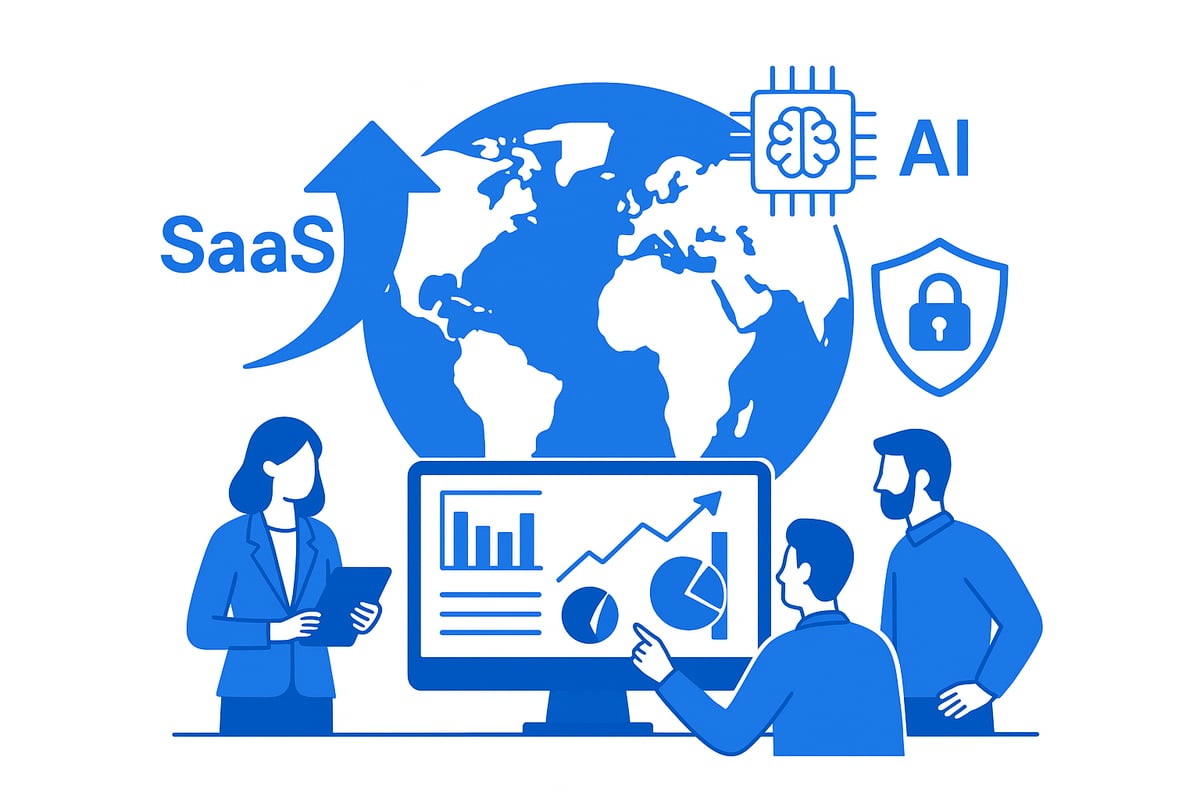
The SaaS landscape in 2026 is defined by several powerful shifts. Vertical SaaS solutions are surging, with platforms tailored to specific industries gaining traction. AI and automation are now embedded in both product functionality and marketing, driving smarter campaigns and predictive analytics. Privacy, security, and compliance are non negotiable, as regulations like GDPR and CCPA expand globally. Product-led growth and seamless self serve onboarding are the norm, not the exception. Global markets, especially Asia and Latin America, are fueling expansion. The SaaS market is projected to exceed $400B by 2026, underlining the urgency for a robust saas product marketing strategy. AI powered platforms like Salesforce Einstein are setting the pace for innovation and differentiation.
Shifts in Buyer Behavior and Expectations
Buyers in 2026 are more discerning than ever, demanding rapid ROI and clear value. They are skeptical of generic claims and expect transparent pricing, flexible contracts, and detailed information before making decisions. Customer advocacy now plays a critical role, with peer reviews on platforms such as G2 and Capterra often tipping the scales. In fact, 92% of B2B buyers are more likely to purchase after reading trusted reviews. These shifts mean that a successful saas product marketing strategy must prioritize authenticity, clarity, and social proof at every customer touchpoint.
Competitive Analysis: Standing Out in a Crowded Field
Intense competition defines the SaaS sector, making it vital to map both direct and indirect competitors. Identifying white space and underserved segments allows brands to differentiate and capture new opportunities. Successful companies leverage competitor weaknesses in messaging and offer unique value. For example, Notion stands out due to its flexibility and seamless integrations, appealing to a wide user base. Ongoing market research, supported by specialized tools, ensures that your saas product marketing strategy remains agile and informed as new entrants and disruptors emerge.
Regulatory and Technological Forces Shaping SaaS Marketing
Data privacy laws now shape every aspect of SaaS marketing, from channel selection to data collection practices. AI driven personalization and content creation tools are essential for reaching and engaging customers at scale. The emergence of Web3 and decentralized technologies is opening new avenues for secure transactions, with SaaS companies already leveraging blockchain for added trust. These forces demand that marketing teams remain agile, adapt quickly, and continuously refine their saas product marketing strategy to stay ahead of regulatory and technological change.
Step 1: Strategic SaaS Market Research and Segmentation
Strategic market research and segmentation form the backbone of any effective saas product marketing strategy. Understanding your audience, validating demand, and refining your approach are essential steps for SaaS companies aiming to thrive in 2026’s dynamic landscape.
Defining and Validating Your Target Market
A robust saas product marketing strategy always begins with deep market research. Before building features, founders must identify and validate their target market to ensure there is genuine demand. Proven methods include surveys, one-on-one interviews, and competitor analysis.
Utilize frameworks such as TAM (Total Addressable Market), SAM (Serviceable Available Market), and SOM (Serviceable Obtainable Market) to size your opportunity. For example, Slack initially focused on internal team communication within tech companies, allowing them to grow within a defined niche. According to industry data, 42% of SaaS startups fail due to lack of market need, highlighting the importance of thorough research.
If you want to dive deeper into why this matters, SaaS market research importance offers a detailed explanation of how research shapes an effective saas product marketing strategy.
Building and Refining Customer Personas
Developing accurate customer personas is another crucial pillar of a successful saas product marketing strategy. Gather both qualitative and quantitative data by interviewing customers, analyzing usage patterns, and collecting feedback from sales teams.
Segmentation by industry, company size, pain points, and buyer roles helps you create detailed profiles. Map out the typical customer journey and decision-making criteria to refine your personas further. HubSpot, for example, uses persona-driven content to address specific needs at each stage of the funnel, ensuring relevance and resonance.
By continuously updating personas, your saas product marketing strategy stays aligned with evolving market needs and buyer expectations.
Segmentation for Hyper-Personalized Marketing
Effective segmentation enables hyper-personalized campaigns, a hallmark of a modern saas product marketing strategy. Break down your audience into micro-segments based on behaviors, preferences, and industry.
Leverage AI and analytics tools to dynamically adjust segments and deliver targeted messaging. Intercom’s personalized onboarding flows are a great example, increasing engagement and conversion rates by tailoring experiences to each user segment.
Benefits of this approach include:
- Higher engagement rates
- Improved conversion metrics
- Enhanced customer satisfaction
A data-driven segmentation process ensures your saas product marketing strategy delivers maximum impact.
Validating Product-Market Fit Before Scaling
Achieving product-market fit is a non-negotiable milestone in any saas product marketing strategy. Use continuous feedback loops with early adopters to refine your offering. Minimum Viable Products (MVPs) and beta programs allow rapid iteration based on real user input.
Track key metrics such as Net Promoter Score (NPS), retention rates, and churn analysis to measure progress. Dropbox famously used a referral-driven validation phase to confirm demand and scale with confidence.
By prioritizing validation, your saas product marketing strategy reduces risk and positions your product for sustainable growth.
How SaaS Validation Empowers Founders to Build Winning Strategies
SaaS Validation equips founders with essential resources for market research, validation, and strategic planning. Their step-by-step frameworks help assess true market demand before heavy investment, a vital part of a winning saas product marketing strategy.
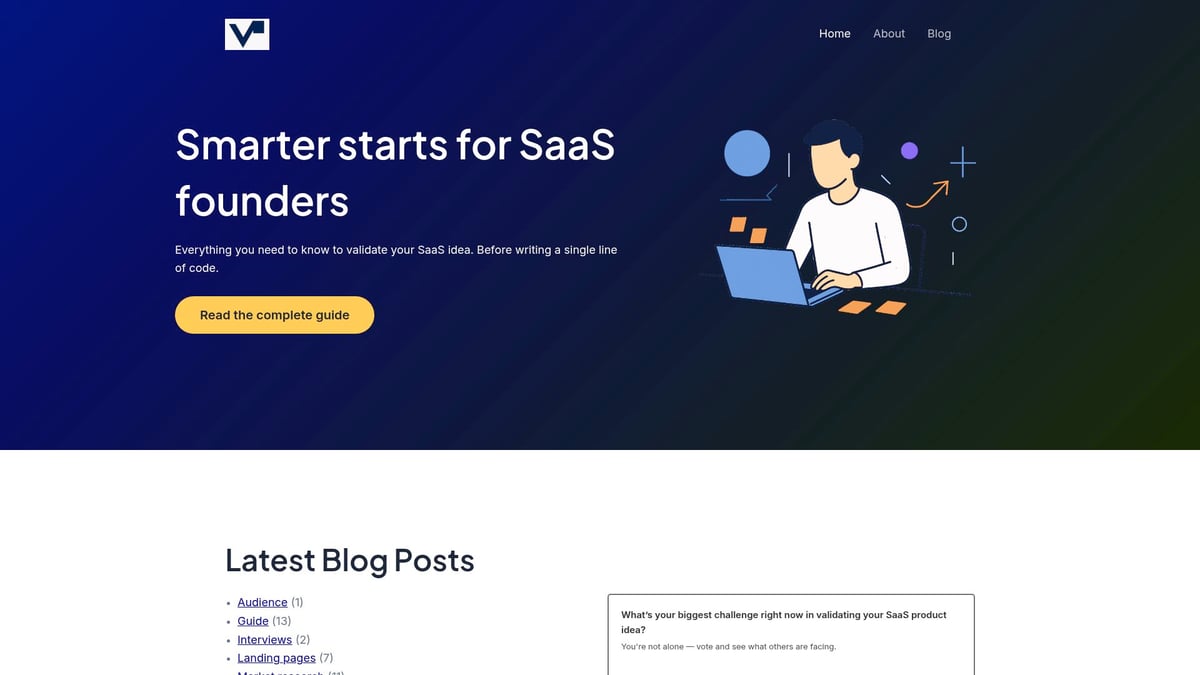
You gain actionable templates for building landing pages, testing customer interest, and collecting feedback. The platform’s community and expert insights further refine your SaaS concept, reducing risk and accelerating your path to product-market fit.
By leveraging SaaS Validation, founders can confidently build a saas product marketing strategy that resonates with real customer needs.
Step 2: Positioning, Messaging, and Differentiation for SaaS Success
A strong saas product marketing strategy is the backbone of lasting SaaS growth. In 2026’s crowded digital marketplace, positioning, messaging, and differentiation are the pillars that separate thriving platforms from those lost in the noise. This step explores proven methods to carve out your niche, win customer trust, and maintain a consistent voice across every channel.
Crafting a Unique Value Proposition
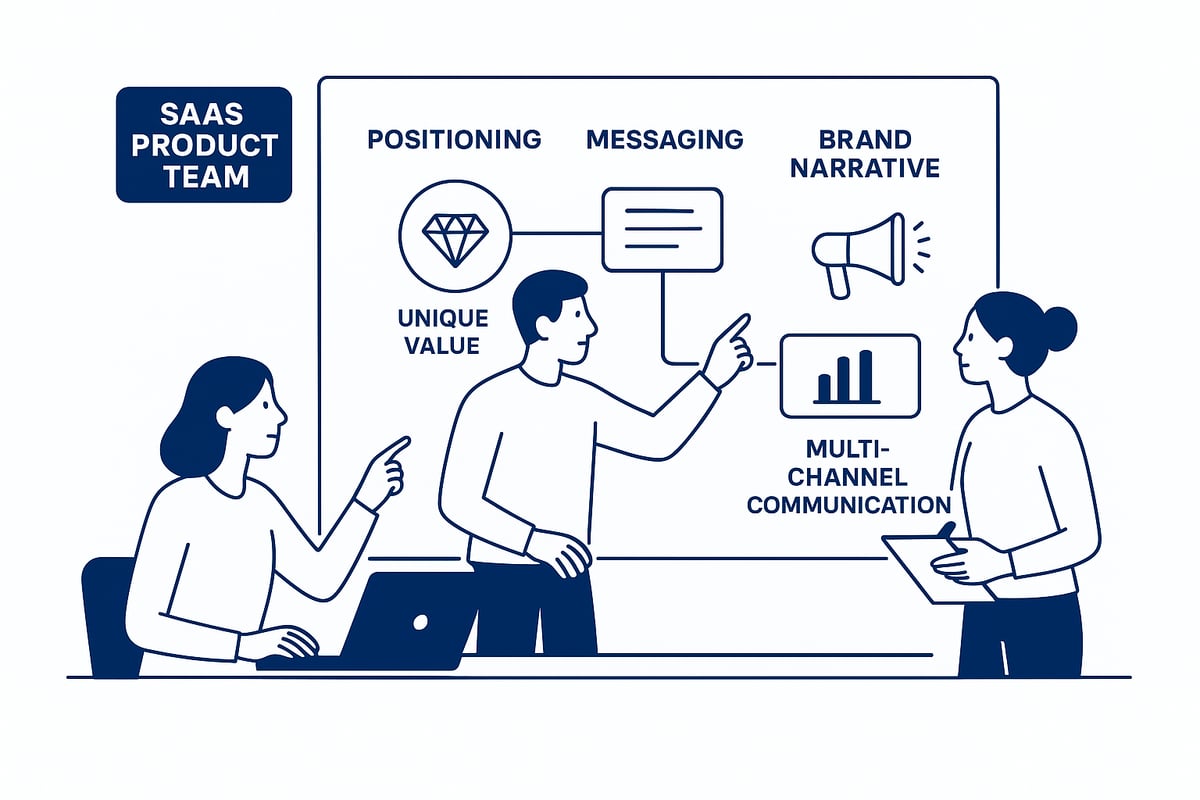
Every successful saas product marketing strategy begins with a crystal-clear value proposition. Your value proposition must highlight the tangible outcomes your product delivers, not just its features. Start by identifying the core pain points your target customers face and outline how your SaaS solution addresses them better than anyone else.
For example, Zoom’s “Meet Happy” message resonates with remote teams seeking seamless connections. Avoid jargon and focus on clarity. If you need a deeper dive into building your foundation, check out the SaaS product marketing essentials resource for actionable frameworks and examples.
Competitive Positioning Frameworks for SaaS
With hundreds of SaaS products emerging each year, competitive positioning is vital. A robust saas product marketing strategy leverages positioning maps and competitor matrices to visualize the landscape. This approach helps you spot white space and underserved segments where your product can stand out.
Consider Monday.com’s position as a flexible work OS, which allowed them to dominate a unique space. Well-positioned brands often grow twice as fast as competitors. Use tools like SWOT analysis or perceptual mapping to clarify your market stance and guide your messaging.
Messaging That Resonates in 2026
Messaging is more than clever slogans. In 2026, your saas product marketing strategy must adapt to evolving buyer personas and shifting expectations. Buyers crave authenticity, social proof, and proof of value.
Incorporate customer success stories, testimonials, and data points into your campaigns. Asana, for example, highlights real customer outcomes in its messaging to build credibility. Test your messaging across channels and iterate regularly to ensure it continues to resonate and drive results.
Storytelling and Brand Narrative Development
Storytelling is a powerful tool in any modern saas product marketing strategy. By building authentic stories that align with your mission and vision, you foster emotional connections with your audience. Share your founding journey, showcase how your product changes lives, and involve your community in your narrative.
Salesforce’s “Trailblazer” branding is a masterclass in rallying users around a shared story. Use consistent themes and visual elements to reinforce your brand’s identity and make your message unforgettable.
Multi-Channel Messaging Consistency
Consistency is non-negotiable in a high-performing saas product marketing strategy. Every touchpoint, from your website to email campaigns and social media, must reflect your brand’s voice and core promise. Implement clear brand guidelines and audit messaging frequently to maintain alignment.
Canva’s global presence showcases the power of unified messaging. Use project management tools to track assets and ensure every team member is on the same page. Consistent, reliable communication builds trust and helps your SaaS brand scale confidently.
Step 3: Go-to-Market (GTM) Strategy and Launch Planning
A robust go-to-market plan is the backbone of any successful saas product marketing strategy. In 2026, the GTM process is more dynamic than ever, demanding agile planning and cross-functional coordination. To accelerate growth and minimize risk, SaaS teams must align their approach with evolving buyer expectations, market trends, and proven frameworks. For a deeper dive into best practices and GTM frameworks, explore Go-to-market strategies for SaaS as you build your launch roadmap.

Choosing the Right GTM Model for Your SaaS
Selecting the right GTM model is foundational to your saas product marketing strategy. In 2026, SaaS companies must choose between product-led, sales-led, or hybrid models based on their product complexity and buyer journey length.
A product-led approach works well for self-serve tools, enabling users to onboard without sales intervention. Sales-led is better for enterprise solutions with longer cycles. Hybrid models combine both for flexibility. Atlassian, for instance, thrives with a product-led, no-sales strategy, allowing users to experience value before purchase.
Evaluating your audience’s needs and journey ensures your GTM model directly supports your growth objectives. The right choice will drive efficient acquisition and long-term retention.
Pricing Strategy and Monetization Models
Pricing is a critical lever in any saas product marketing strategy. In 2026, leading SaaS brands experiment with freemium, tiered, usage-based, and enterprise pricing to address diverse customer segments.
A/B testing pricing pages helps optimize conversion rates and uncover customer willingness to pay. Transparent, value-based pricing is now expected, building trust and lowering barriers to entry. For example, Zoom’s freemium-to-paid funnel has proven highly effective in scaling user adoption.
Be clear about upgrade paths and provide flexible options. Regularly review your pricing strategy against market benchmarks and customer feedback to stay competitive and maximize revenue.
Channel and Partnership Development
Strategic partnerships are vital to a winning saas product marketing strategy. In 2026, SaaS companies expand reach through referral programs, reseller relationships, and integration partnerships.
Marketplaces like Salesforce AppExchange offer broad exposure and credibility. Building a robust partner ecosystem unlocks access to new customer bases and enhances product value. Slack’s success is fueled by its rich ecosystem of third-party app integrations, which extend platform utility and foster user loyalty.
Identify the channels and partners most relevant to your ideal customer profile. Cultivate relationships that provide mutual benefit and support your long-term growth vision.
Launch Planning and Cross-Functional Alignment
Effective launch planning is central to a high-impact saas product marketing strategy. Begin with detailed checklists, clear timelines, and transparent roles for every team involved.
Cross-functional alignment between product, marketing, and sales ensures a unified go-to-market message. Notion’s phased launch, which included strong community engagement, exemplifies how coordinated efforts drive momentum and excitement.
Set clear KPIs for launch success, such as user sign-ups, activation rates, and feedback scores. Regularly review progress and be ready to adapt quickly based on early results.
Early Customer Acquisition and Onboarding
Securing early adopters is essential for validating your saas product marketing strategy. Target influencers and power users who can provide feedback and champion your solution.
Design onboarding experiences that are frictionless and tailored. Calendly’s viral loop, leveraging user invites, demonstrates how seamless onboarding can accelerate user growth and engagement.
Measure activation rates and monitor onboarding performance. Continuous improvement in these areas lays the foundation for retention, advocacy, and sustainable scaling.
Step 4: Leveraging AI, Automation, and Data-Driven Tactics
Harnessing AI, automation, and data-driven tactics is now at the heart of any robust saas product marketing strategy. In 2026, these tools are not just optional add-ons, but essential for scaling growth, personalizing experiences, and staying ahead of the competition.
AI-Driven Personalization and Predictive Analytics
AI is redefining how brands approach saas product marketing strategy by enabling hyper-personalized customer experiences. Advanced algorithms now analyze user behavior in real time, tailoring content, product recommendations, and offers to individual needs.
Predictive analytics can score leads, anticipate churn, and help teams allocate resources where they matter most. For example, HubSpot’s AI-powered recommendations boost engagement by showing users what matters to them. Interested in using AI for your SaaS marketing? Explore Using AI for SaaS marketing for actionable insights and tools to get started.
Marketing Automation for SaaS Growth
Automation underpins a modern saas product marketing strategy by streamlining repetitive tasks and scaling outreach efficiently. With integrated CRM and product analytics, teams can automate lead nurturing, scoring, and follow-up sequences.
Platforms like Marketo trigger campaigns based on user activity, ensuring prospects receive timely, relevant messages. Benefits include increased conversion rates, reduced manual workload, and a consistently high-quality customer journey.
- Automated onboarding emails
- Dynamic lead scoring
- Personalized follow-ups based on user engagement
A well-implemented automation stack empowers teams to focus on strategy and creative problem-solving.
Content Marketing and SEO Strategies for 2026
Content remains a cornerstone of any saas product marketing strategy, but tactics have evolved. In 2026, data-driven content, pillar pages, and topic clusters drive authority and organic growth.
Optimizing for voice search and AI-powered engines is now critical. Brands like Ahrefs are setting the standard with SEO-focused, authoritative content that ranks across multiple channels.
| Strategy | Impact |
|---|---|
| Pillar Pages | Boost topical authority |
| Voice Search | Capture new search behaviors |
| Topic Clusters | Improve internal linking |
Frequent optimization and content audits ensure your strategy stays futureproof.
Paid Acquisition and Retargeting in a Cookieless World
Privacy regulations have transformed paid acquisition, making first-party data vital for any effective saas product marketing strategy. With third-party cookies disappearing, marketers must adapt to contextual targeting and platforms like LinkedIn for precise B2B outreach.
Retargeting now relies on engagement signals and CRM data. Measuring CAC and ROAS requires new attribution models that reflect the changing landscape.
- Use first-party data for audience building
- Test contextual ad placements
- Monitor performance with updated analytics tools
Success means staying agile and compliant while maintaining acquisition efficiency.
Experimentation, A/B Testing, and Growth Loops
Ongoing experimentation is the lifeblood of a high-performing saas product marketing strategy. Teams implement rapid A/B tests for messaging, onboarding, and pricing, learning from real user data.
Viral loops, such as referral programs, accelerate growth by leveraging user networks. Dropbox’s referral system remains a benchmark for scalable, organic expansion.
- Test new onboarding flows
- Measure activation rates
- Refine offers based on user feedback
Continuous optimization ensures your strategy evolves with customer needs and market shifts.
Step 5: Customer Success, Retention, and Advocacy
Retaining customers and turning them into advocates is the cornerstone of any successful saas product marketing strategy. In 2026, SaaS leaders know that long-term growth hinges not just on acquisition but on building deep, trust-based relationships with users. This section explores how to create a customer-centric culture, deliver proactive support, minimize churn, drive expansion, and foster advocacy, all while leveraging the latest technology and best practices.
Building a Customer-Centric SaaS Organization
A thriving saas product marketing strategy starts with aligning every team around customer outcomes. In 2026, leading SaaS companies design their processes, products, and communications to prioritize user needs at every touchpoint.
Product, marketing, and support teams must work together, sharing data and insights to improve the customer journey. Companies like Zendesk have proven that a customer-first mindset not only boosts satisfaction but also drives profitability.
To foster this culture:
- Empower teams to make decisions based on customer feedback.
- Regularly review customer journey maps and pain points.
- Celebrate customer success stories company-wide.
Customer-centric organizations are 60% more profitable than their peers, making this approach a non-negotiable pillar of any modern saas product marketing strategy.
Proactive Onboarding and Support Strategies
Effective onboarding is essential for driving adoption and reducing early churn. Modern SaaS companies use AI-driven SaaS solutions to enhance operational efficiency, personalize onboarding flows, and predict user needs before they become issues. AI-driven SaaS solutions enhance operational efficiency by enabling tailored support and intelligent automation.
To succeed with your saas product marketing strategy, consider:
- Designing segmented onboarding journeys for different user roles.
- Providing in-app guides, tooltips, and self-serve knowledge bases.
- Offering proactive chat support and community forums.
This proactive approach ensures users realize value quickly, increasing the likelihood of long-term retention and advocacy.
Measuring and Reducing Churn
Minimizing churn is a critical metric for any saas product marketing strategy. By leveraging product analytics, SaaS teams can identify at-risk users and intervene before they leave.
Key steps include:
- Monitoring usage patterns to spot disengagement.
- Segmenting users based on activity and satisfaction.
- Implementing win-back campaigns and re-engagement emails.
Reducing churn by just 5% can increase profits by 25% to 95%. Focus on continuous feedback loops and adapt your support strategies to keep customers satisfied and loyal.
Driving Expansion Revenue and Upsells
Expanding revenue from your existing customer base is often more cost-effective than acquiring new users. An effective saas product marketing strategy includes account-based marketing, cross-sell, and upsell tactics.
Use product usage data to identify customers who are ready for premium features or additional products. Strategies for driving expansion revenue:
- Personalized recommendations based on user behavior.
- Automated alerts for plan upgrades when usage limits are reached.
- Engaging nurture campaigns for feature adoption.
Salesforce exemplifies this with its land-and-expand model, turning satisfied users into multi-product, long-term clients.
Building Customer Advocacy and Community
Turning customers into advocates is the final step in a world-class saas product marketing strategy. Advocacy drives organic growth through referrals, testimonials, and peer influence.
To build advocacy:
- Launch referral and ambassador programs with clear incentives.
- Highlight customer success stories and case studies.
- Foster community engagement through events and forums.
HubSpot’s inbound community is a prime example, transforming loyal users into brand evangelists. A strong advocacy program amplifies your reach and strengthens your reputation in a competitive SaaS landscape.
Step 6: Metrics, Analytics, and Futureproofing Your SaaS Marketing
Adopting the right metrics and future-oriented mindset is essential for any saas product marketing strategy aiming for long-term growth in 2026. As the SaaS landscape continues to evolve, companies must measure what matters, build data-driven teams, and stay ahead of emerging technologies.
Essential SaaS Marketing KPIs for 2026
Measuring the right KPIs is the foundation of a high-performing saas product marketing strategy. In 2026, teams rely on metrics like CAC (Customer Acquisition Cost), LTV (Lifetime Value), MRR (Monthly Recurring Revenue), ARR (Annual Recurring Revenue), activation rates, and NPS (Net Promoter Score).
Tracking full-funnel performance is crucial. Real-time dashboards, like those used by Segment, help teams monitor attribution and quickly identify bottlenecks. Consistent measurement enables marketers to optimize campaigns and understand ROI.
A well-defined set of KPIs provides the clarity needed to align marketing and sales, drive growth, and adapt the saas product marketing strategy as markets shift.
Building a Data-Driven Marketing Culture
A successful saas product marketing strategy thrives on a strong data-driven culture. Empowering teams with analytics tools and regular training encourages experimentation and informed decision-making.
Organizations should establish clear processes for sharing data and insights across marketing, product, and sales. This transparency fosters collaboration and accountability. At Shopify, a culture of data-driven decisions has led to more effective campaigns and rapid market adaptation.
Investing in analytics upskilling ensures every stakeholder can contribute to the saas product marketing strategy, helping companies stay agile and competitive.
Adapting to Emerging Technologies and Market Shifts
Staying ahead in SaaS demands a proactive approach to technology and market changes. Regular reviews of competitors and market trends help companies anticipate disruption.
Preparing for new channels, such as AR, VR, and Web3, ensures your saas product marketing strategy remains relevant. AI is especially transformative, with AI integration in SaaS accelerating rapidly, as 76% of SaaS companies now use or test AI in their products. Leveraging AI for personalization and automation gives marketers a clear edge.
Agile teams that embrace technological shifts can futureproof their strategy and seize new opportunities.
Continuous Learning and Skill Development
Continuous learning is at the heart of a resilient saas product marketing strategy. Teams that invest in upskilling, certifications, and industry events stay ahead of best practices and technology trends.
Engaging with communities like Product Marketing Alliance provides access to workshops, resources, and peer support. This commitment to growth ensures marketers can adapt to new challenges, drive innovation, and maintain market leadership.
By fostering ongoing education, companies build teams ready to futureproof their saas product marketing strategy for years to come.