
In the rapidly shifting landscape of 2026, having the product concept nailed down is no longer just an advantage, it is essential for survival. With competition intensifying and customer expectations rising, only those who understand and master the product concept will stand out and thrive.
This guide will demystify the product concept, giving innovators, founders, and product leaders the essentials to create, validate, and refine ideas that drive market success. You will discover the core theory, see real-world examples, and learn why your approach must adapt to stay relevant.
Inside, explore proven frameworks, step-by-step processes, and design best practices tailored for today’s fast-moving environment. Ready to gain a competitive edge? Read on and equip yourself for the future.
Understanding the Product Concept: Foundations and Theory
In today’s dynamic market, understanding the product concept is crucial for any organization aiming to launch successful offerings. This section breaks down the definition, theory, and practical examples that illustrate why the product concept remains the backbone of innovation and growth.
Defining the Product Concept
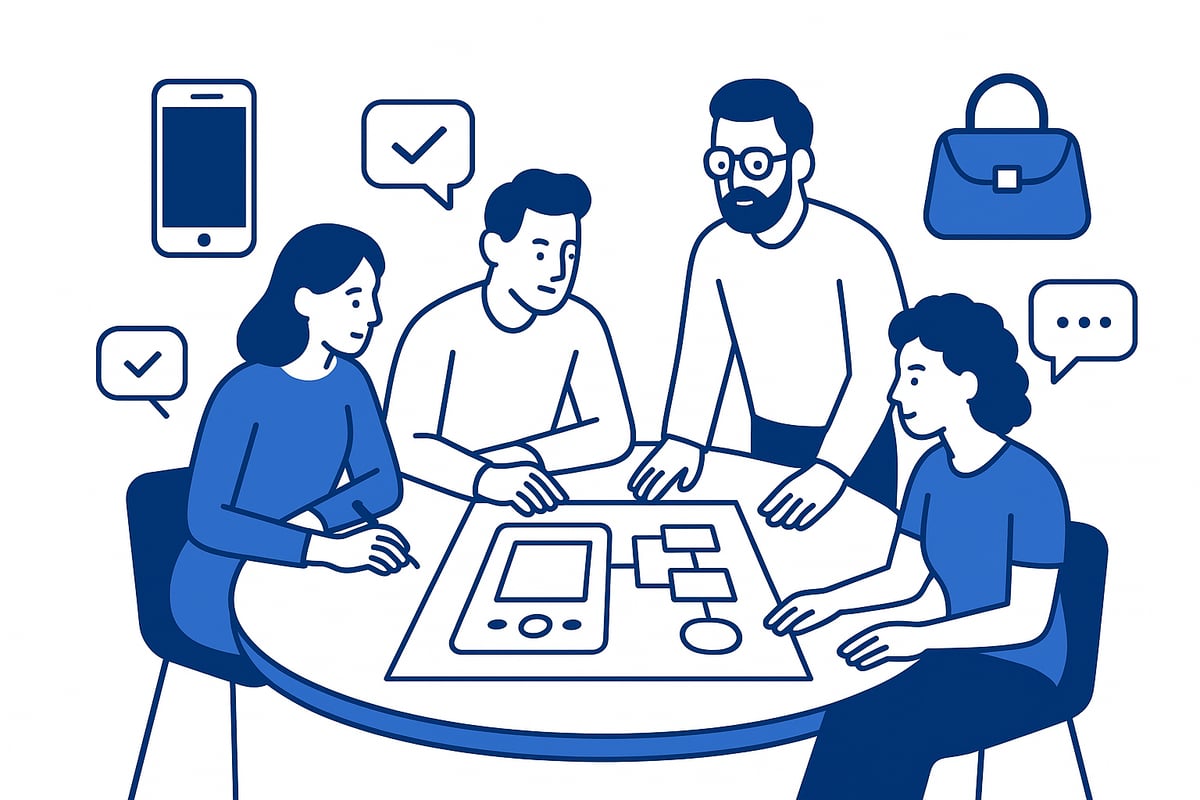
At its core, the product concept is a clear, actionable description of what a product is, who it serves, and how it addresses user needs. Unlike a product idea, which may be a rough thought or inspiration, the product concept outlines specifics, such as target audience, key features, and the value proposition.
It is important to distinguish the product concept from a product vision. While a vision paints a broad, aspirational picture of the future, the product concept provides a focused blueprint that guides design, development, and marketing. According to ChiselLabs, “A product concept is the initial idea that leads to developing a new product.” This definition highlights the concept’s role as the starting point of the product lifecycle.
The product concept is more than just an idea; it combines customer needs with business goals, ensuring both market fit and organizational alignment. Early in the process, teams must also consider security and risk analysis, as these factors can shape feasibility and long-term success. For a deeper dive into foundational principles, see Understanding the Product Concept.
A good product concept drives decisions about materials, features, and positioning. It sets the stage for differentiation and innovation in crowded markets.
Comparison Table: Idea, Concept, Vision
| Aspect | Product Idea | Product Concept | Product Vision |
|---|---|---|---|
| Definition | Initial thought or spark | Clear, detailed, actionable plan | Broad, aspirational |
| Focus | Creativity | User needs & business goals | Long-term direction |
| Level of Detail | Low | High | Medium |
| Role in Lifecycle | Inspiration | Foundation for development | Guides overall strategy |
Theoretical Underpinnings
The product concept theory suggests that consumers gravitate toward products offering superior quality, performance, and features. This theory is fundamental to why brands like Apple prioritize design and seamless usability in their products.
A critical distinction exists between the product concept and the marketing concept. The former centers around creating the best possible product, while the latter focuses on identifying and satisfying customer needs through targeted marketing. As ChiselLabs notes, “Product concept is often called a brand definition,” underscoring its importance in shaping both product and brand identity.
The debate between product concepts and product ideas often centers on the value of clarity and detail. A well-articulated product concept provides teams with a shared understanding, reducing ambiguity and ensuring that every stage of development aligns with the original intent.
Furthermore, the product concept influences key decisions about design, materials, and go-to-market strategies. It acts as a bridge between what customers want and what businesses can deliver, balancing innovation with practical constraints.
Teams must also conduct early security and risk assessments. These steps help identify potential obstacles and guide resource allocation, making the product concept a critical checkpoint before significant investment.
Real-World Examples
Leading brands illustrate the power of the product concept. The Apple iPhone is a prime example: it revolutionized the smartphone industry by integrating design, usability, and a cohesive ecosystem. Customers are drawn to Apple’s products, creating a natural marketing pull that extends beyond technical specifications.
Tesla electric vehicles disrupted the automotive market by emphasizing sustainability and high performance as core elements of the product concept. This approach resonated with consumers seeking both innovation and environmental responsibility.
Luxury brands such as Louis Vuitton and Gucci use the product concept to drive desirability and premium pricing. Their focus on craftsmanship, exclusivity, and status creates a strong emotional connection with customers.
Data from ChiselLabs highlights that “customers get attracted to Apple’s products, which creates a marketing pull.” This effect is not accidental; it is the result of carefully crafting the product concept to align with both functional needs and aspirational desires.
These examples show how the product concept can transform industries, build brand loyalty, and generate sustained market success. By focusing on both user needs and business strategy, organizations can develop concepts that stand the test of time.
The Strategic Importance of Product Concepts in 2026
In 2026, the product concept is not just a strategic tool, it is the heartbeat of every successful product launch. As competition intensifies and customer expectations evolve, organizations must anchor their innovation efforts around a robust product concept. Without this foundation, even the most creative ideas risk missing their mark or failing to resonate in the marketplace.

A well-defined product concept serves as the backbone for all product development and marketing activities. It shapes the direction of design, influences the choice of materials, and sets the tone for messaging. By clearly articulating what the product is, who it serves, and why it matters, the product concept helps teams focus on differentiation and long-term positioning. As LaunchNotes highlights, “Product concepts serve as the backbone of successful product development and marketing strategies.” This clarity is essential for standing out in saturated markets.
Beyond guiding development, the product concept plays a critical role in reducing risk and maximizing value. When investment decisions are based on a strong, validated concept, organizations can avoid costly missteps and allocate resources more effectively. Exploring product potential early allows teams to identify pitfalls before they escalate. According to ChiselLabs, “The product concept helps you minimize risk,” making it an essential safeguard in today’s high-stakes environment.
Alignment across teams and throughout the product lifecycle is another major benefit of the product concept. It ensures that design, engineering, marketing, and leadership are all working toward the same vision. This unified direction reduces friction and miscommunication, supporting a cohesive customer experience. Companies that prioritize alignment see stronger brand loyalty and more consistent results. For SaaS teams, following a Guide to SaaS Product Development can further streamline cross-functional collaboration and reinforce the product concept at every stage.
The product concept is not static; it must adapt to shifting market trends, emerging technologies, and evolving customer needs. Regularly reevaluating and refining the concept ensures it remains relevant and competitive. As LaunchNotes notes, “Product concepts are not static entities but evolve in response to market trends.” This agility is especially important in 2026, when innovation cycles are faster than ever.
Data and real-world insights underscore the strategic importance of the product concept. Innovating with a strong concept delivers both functional and added value, driving customer attraction and retention. Conversely, companies that neglect this process often struggle. Consider the following examples:
| Company | Outcome | Reason |
|---|---|---|
| Apple | Success | Clear, evolving product concept |
| Tesla | Success | Strong alignment with market trends |
| Kodak | Failure | Weak adaptation of product concept |
| Blockbuster | Failure | Misaligned with changing customer needs |
The product concept is the linchpin of modern innovation. By grounding every initiative in a clear, validated, and adaptable concept, organizations can reduce risk, foster alignment, and stay ahead in the dynamic 2026 market.
Types and Frameworks of Product Concepts
Understanding the different types and frameworks of the product concept is essential for building products that resonate in today’s market. Each approach offers unique advantages, from functional utility to emotional appeal, and can determine a product’s place in the competitive landscape.
Comparing Product Concept Types
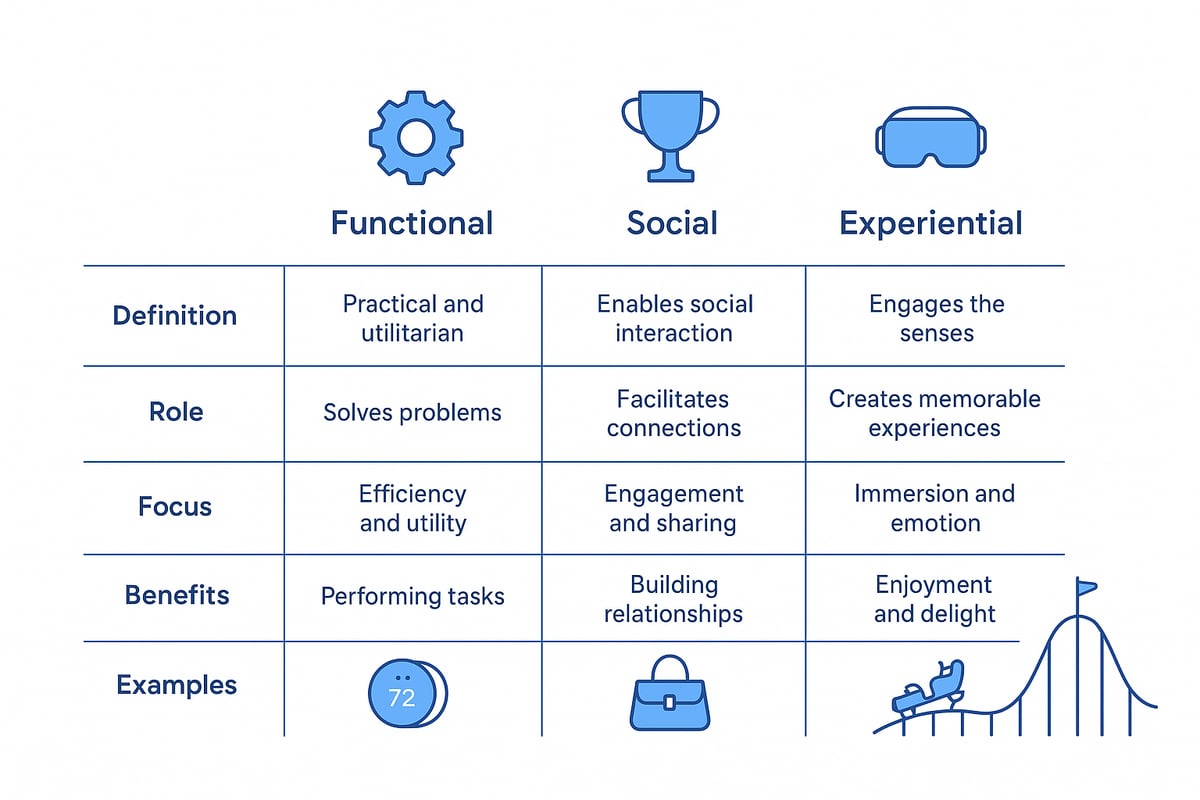
The product concept can be grouped into three main types: Functional, Social, and Experiential. Each type plays a distinct role in how products are designed and perceived. The table below summarizes their core attributes:
| Type | Definition | Role | Focus | Benefits | Example |
|---|---|---|---|---|---|
| Functional | Solves practical needs with features | Utility | Performance, Features | Efficiency, Reliability | Smart thermostat |
| Social | Boosts status or emotional connection | Identity | Status, Appeal | Prestige, Community | Luxury handbag |
| Experiential | Delivers immersive or memorable experiences | Engagement | Experience, Emotion | Loyalty, Differentiation | Theme park ride |
By clarifying which type of the product concept you pursue, you can align teams and resources more effectively. This clarity ensures every stage of development supports the desired outcome, whether that is utility, status, or experience.
The Three Main Product Concept Types
Focusing on the three primary types, the product concept can take several forms:
- Functional: This type centers on addressing concrete problems. For instance, a smart thermostat leverages technology to improve energy efficiency and ease of use.
- Social: Products like luxury handbags serve as symbols of status and belonging, making the product concept about emotional and social value.
- Experiential: Here, the focus is on creating memorable interactions, such as the immersive rides found in major theme parks.
The product concept, as described by ChiselLabs, is a marketing strategy built on delivering quality, performance, and features that consumers value most. Understanding why customers choose a product often involves frameworks like the Jobs to Be Done Theory, which helps teams identify the real needs that drive purchase decisions.
Additional Frameworks
Beyond the basic types, there are several frameworks for structuring the product concept:
- Original Product Concept: Prioritizes innovation and high quality from the outset.
- Augmented Product Concept: Adds value through services, warranties, or support.
- Potential Product Concept: Focuses on intangible benefits, such as future upgrades or brand prestige.
- Customer Experience Concept: Emphasizes improving the end-to-end user journey over simply adding features.
- Process Concept: Targets manufacturing or operational efficiency to enhance quality and lower costs.
Each framework allows teams to tailor the product concept to specific strategic goals, ensuring alignment with both customer needs and business objectives.
Examples and Use Cases
Consider Apple’s approach: the product concept is woven into every device, focusing on seamless integration and user experience. Toyota, on the other hand, uses process innovation to continually improve manufacturing, which supports reliability and cost-effectiveness.
Companies may adopt process concepts to reduce costs and improve quality, as highlighted by ChiselLabs. By selecting the right framework or type, organizations can create products that stand out and deliver lasting value.
Step-by-Step Process: Selecting and Refining the Right Product Concept
Selecting and refining the product concept is a disciplined process that transforms raw ideas into actionable solutions. Following a clear, structured approach ensures alignment, reduces risk, and increases the odds of market success. Let’s walk through each critical step to ensure your product concept stands out in 2026.
Step 1: Identifying Market Needs
The journey begins with understanding the landscape your product will enter. Start by researching market trends, customer pain points, and unmet needs. Use surveys, interviews, and competitor analysis to collect valuable insights.
- Conduct customer interviews to uncover frustrations.
- Analyze competitor offerings for gaps.
- Review industry reports for emerging trends.
This foundation ensures the product concept is grounded in real-world demand, not just assumptions. A well-researched understanding of needs sets the stage for informed ideation.
Step 2: Idea Generation
Once you know the market’s needs, gather your team for focused brainstorming. Encourage creativity and open-mindedness, drawing on diverse perspectives. Use tools like mind mapping, design sprints, or digital platforms to capture every idea.
- Organize ideation workshops with cross-functional teams.
- Leverage frameworks such as SCAMPER or “How Might We” questions.
- Collect all suggestions, no matter how unconventional.
By casting a wide net, you increase the odds of landing on a breakthrough for the product concept that truly resonates with users.
Step 3: Evaluation and Prioritization
With a pool of ideas in hand, it’s time to separate the promising from the impractical. Create a scoring matrix to objectively assess each idea. Criteria may include feasibility, market potential, alignment with business strategy, and resource requirements.
| Criteria | Weight | Score Example |
|---|---|---|
| Feasibility | 30% | 8/10 |
| Market Potential | 40% | 7/10 |
| Strategic Fit | 20% | 9/10 |
| Resources Needed | 10% | 6/10 |
Rank ideas based on total scores. This structured evaluation ensures the product concept aligns with both customer needs and organizational capabilities.
Step 4: Refinement and Testing
Refinement transforms a promising idea into a viable product concept. Develop prototypes or minimum viable products (MVPs) to visualize and test your concept. Gather user feedback through usability tests, focus groups, or early beta launches.
- Build simple prototypes for rapid feedback.
- Use A/B testing to compare features.
- Iterate based on real user insights.
For further guidance on validating and refining your ideas, explore Creating and Validating Ideas. This approach helps ensure the product concept meets user expectations and reduces the risk of costly missteps.
Step 5: Decision and Implementation
After testing, bring the team together to discuss results and finalize the product concept. Use voting, ranking, or weighted decision matrices to select the concept with the strongest support and data.
- Facilitate group discussions to surface concerns.
- Combine or adapt ideas for greater impact.
- Assign responsibilities for next development stages.
A clear decision at this stage streamlines progress and ensures everyone is aligned around the chosen direction for the product concept.
Step 6: Continuous Improvement
The market never stands still, and neither should the product concept. Regularly revisit your concept, gathering feedback from customers and internal teams. Monitor performance metrics and stay alert to evolving trends.
- Schedule periodic reviews of the product concept.
- Adapt to new technologies or shifting customer needs.
- Use analytics to inform refinements.
Continuous improvement helps keep the product concept relevant, competitive, and primed for long-term success.
Example Workflow
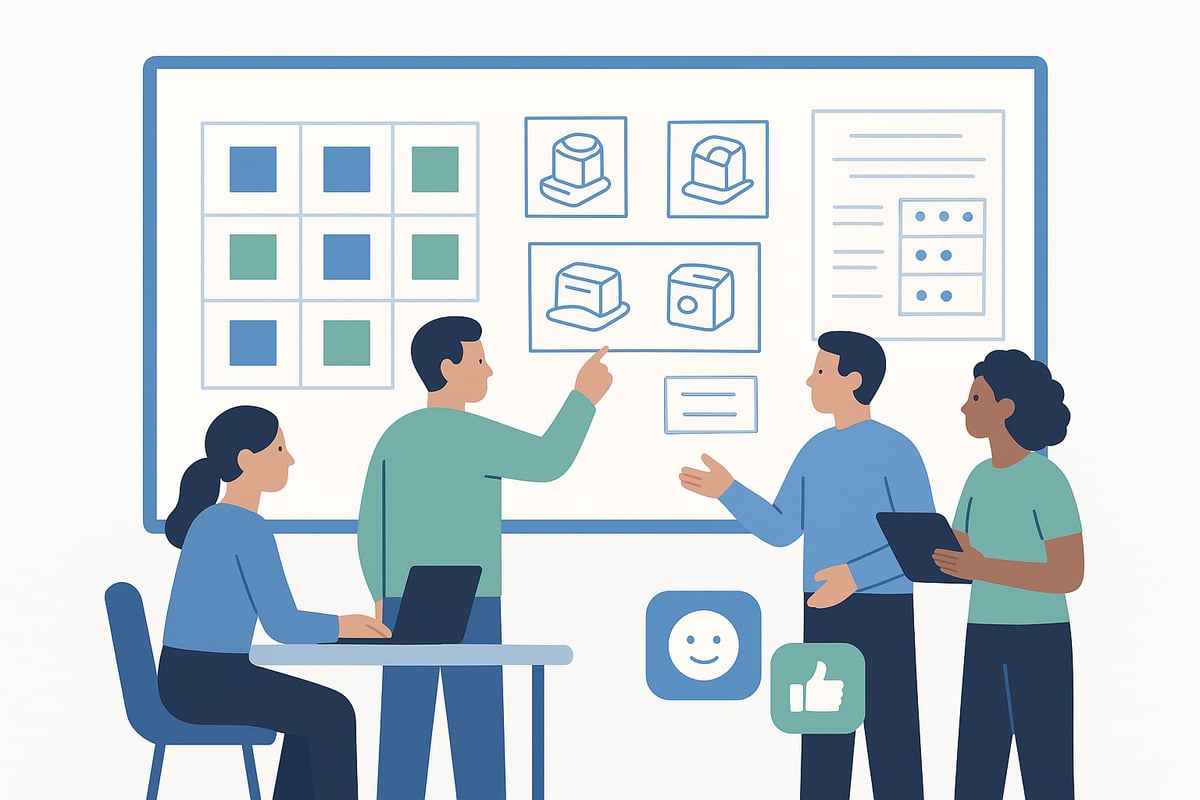
Consider a SaaS company seeking its next flagship feature. The team interviews users, discovering a major pain point in onboarding. They hold a brainstorming session, generating ten possible solutions. Each is scored using a matrix, with three ideas moving forward to prototype. User feedback highlights one clear favorite, which is further refined and tested. Team members print rankings on a whiteboard, discuss the pros and cons, and select the final product concept for full development.
Following this process ensures the product concept is not left to chance but is shaped by data, collaboration, and strategic alignment. By embracing each step, you maximize your chances of delivering a product that truly succeeds in the market.
Weighing the Pros and Cons of Product Concepts
Understanding the product concept is crucial for any organization aiming for sustained growth. A well-crafted concept provides clear direction, but it also comes with risks and challenges. By weighing the pros and cons, teams can make informed decisions that increase their chances of long-term success.
Key Advantages
The product concept offers several distinct advantages for organizations. First, it provides a clear direction for development, ensuring all teams move toward a common goal. This alignment reduces confusion and speeds up decision-making.
A strong product concept also helps differentiate offerings in crowded markets. By focusing resources on unique features or experiences, companies can carve out a niche. Forecasting costs and timelines becomes easier, which supports better planning and budgeting.
Another benefit is the ability to deliver a unique value proposition. When the product concept is well-defined, it builds customer loyalty and supports brand growth. Finally, it allows for more focused resource allocation, so teams avoid spreading themselves too thin.
Potential Drawbacks
Despite its strengths, the product concept can present challenges if not handled carefully. One significant risk is launching a concept that is poorly validated or misaligned with market needs. This can lead to wasted resources and missed opportunities.
Budget and resource constraints can also limit how fully the product concept is executed. Teams may struggle to source unique features or deliver on ambitious promises. There is a danger of focusing too much on features, rather than solving real customer problems.
Competition adds another layer of complexity. Even successful concepts are quickly imitated, so ongoing innovation is essential. If the product concept is not adaptable, companies may fall behind industry trends.
Insights and Data
Industry data shows that the product concept is instrumental in minimizing risk, but poor execution can hinder sales and growth. According to ChiselLabs, a clear concept improves forecasting and team focus, but weak ideas can make products hard to sell.
Validation emerges as a critical step. Companies benefit from rigorous testing before committing significant resources. For practical illustrations of how concept validation can determine success or failure, see these Concept Testing Examples.
Balancing innovation with feasibility is crucial. Teams that use data-driven insights and regular feedback loops are more likely to avoid costly mistakes.
Real-World Examples
There are many examples of both success and failure driven by the product concept. Apple’s early focus on simplicity and user experience helped it stand out in the smartphone market. This clear direction allowed Apple to lead with confidence and foster lasting loyalty.
On the other hand, products that failed to match market needs, such as the launch of New Coke or Google Glass, demonstrate the risks of a misaligned concept. These examples show that even the most innovative companies must carefully validate and refine the product concept to ensure a strong fit.
By learning from these cases, organizations can better manage the balance between vision and practicality.
Best Practices for Product Concept Design and Innovation in 2026
Designing and innovating with the product concept in 2026 requires more than just creativity. It demands a structured, user-centric, and data-driven approach to stay ahead in a competitive landscape. Adopting best practices ensures your team translates vision into real-world impact.
Principles of Effective Product Concept Design
The foundation of the product concept design lies in translating ideas into tangible features, specifications, and visuals. Collaboration between design, engineering, and business teams is essential for alignment. Prioritizing user experience, usability, and aesthetics leads to products that resonate with real users.
Incorporating a User-Centered Design Framework ensures that the product concept remains focused on genuine user needs. Teams should:
- Develop clear, actionable specifications
- Visualize concepts with sketches or mockups
- Align on goals and success metrics from the start
This approach keeps the product concept grounded and relevant.
Prototyping and Testing
Building prototypes, both physical and digital, is crucial for validating the product concept early. Rapid prototyping allows teams to:
- Test different design solutions quickly
- Gather user feedback before full-scale development
- Refine the product concept iteratively
Iterative testing helps uncover usability issues and ensures the product concept meets expectations. Teams should adopt cycles of build, measure, and learn, always keeping the core concept at the center.
Leveraging Data and User Insights
Data-driven decision-making is central to refining the product concept. Teams should collect analytics, customer feedback, and market data at every stage. This information guides:
- Prioritization of features based on demand
- Identification of design improvements
- Adaptation to market trends like AI or sustainability
By integrating insights, the product concept evolves to meet changing user needs. This continuous loop of feedback and improvement builds stronger products.
Future-Focused Strategies
Innovation in 2026 relies on agile, cross-functional teams and a culture of experimentation. The product concept should be revisited and adapted regularly as new technologies emerge. Embracing approaches like the Advanced Innovation Design Approach helps teams enhance creativity and problem-solving.
Encourage learning from case studies, such as Apple’s iterative concept design or Toyota’s process innovation. Foster an environment where new ideas are tested, refined, and scaled—ensuring the product concept stays ahead of the curve.
Innovating and Generating Product Concepts for Future Success
Innovation is the heartbeat of future-ready businesses, and the product concept sits at the center of this transformation. In a market where disruption is constant, organizations must proactively generate and refine concepts to stay ahead. How can you ensure your team is always moving forward?
Structured Innovation Processes
To consistently produce winning ideas, teams should embrace structured processes for the product concept. Methods like design sprints, TRIZ, or blue ocean strategy guide teams through ideation, evaluation, and selection. These frameworks encourage creative thinking while ensuring ideas remain actionable and aligned with business goals.
A structured approach helps teams move from scattered brainstorming to focused problem-solving. Using systematic tools, organizations can identify gaps, challenge assumptions, and generate a wide range of possibilities.
Recognizing and Solving Real Problems
Every strong product starts with a clear understanding of the user’s pain points. The product concept must address real needs, not just hypothetical scenarios. Teams should prioritize customer research, including interviews and surveys, to uncover what truly matters to users.
Validating ideas early reduces the risk of wasted resources. By gathering feedback before full-scale development, companies ensure their concepts solve genuine problems and deliver measurable value.
Adapting to Emerging Trends
The business landscape evolves rapidly, and so should the product concept. Teams need to monitor trends like AI, IoT, sustainability, and personalization. Adapting concepts to reflect these shifts ensures relevance and future-proofing.
Staying ahead requires ongoing learning and flexibility. Companies that incorporate new technologies and changing customer expectations into their product concepts are better positioned for long-term success.
Building a Culture of Continuous Concept Generation
Innovation thrives in organizations where everyone feels empowered to contribute. The product concept should not be a one-time activity, but a continuous cycle of ideation, testing, and refinement.
Encourage regular idea sharing through digital platforms, collaborative workshops, or internal hackathons. When teams know their input is valued, they are more likely to propose breakthrough concepts that drive competitive advantage.
Example: SaaS and Digital Products
SaaS companies excel at rapid concept validation. By leveraging MVPs, user interviews, and quick iterations, they test the product concept in real-world settings. Tools like Chisel’s Ideabox help streamline idea capture and prioritization.
For teams seeking best practices, resources on SaaS Validation Strategies offer actionable frameworks for testing and refining SaaS product concepts, ensuring each idea is robust before scaling.
Metrics for Success and Real-World Insights
Success in the product concept innovation is measured by tracking the innovation pipeline, concept-to-launch time, and hit rates for new launches. High-performing companies regularly disrupt their industries by iterating on concepts and learning from market feedback.
By embedding these practices, organizations set the stage for continuous growth and market leadership. The product concept remains the foundation for every breakthrough, guiding teams from inspiration to impact.