
By 2026, over 80% of enterprises are expected to deploy ai powered saas solutions, reshaping industries at an astonishing speed. This surge is not just a trend—it is a revolution that is unlocking new efficiencies and business models across every sector.
In this guide, you will discover how ai powered saas is evolving, the core technologies behind it, and practical steps for building and scaling successful products. We will explore real-world examples, highlight the benefits for founders and users, and break down the challenges and strategies for long-term success.
Whether you are a business leader or a SaaS founder, this comprehensive guide provides the insights and actions needed to thrive in the era of intelligent software.
The Evolution of AI-Powered SaaS: From 2020 to 2026
The journey of AI-powered SaaS from 2020 to 2026 is marked by rapid transformation, innovation, and industry-wide adoption. As technology matured, new capabilities emerged, propelling businesses to new levels of intelligence and automation.
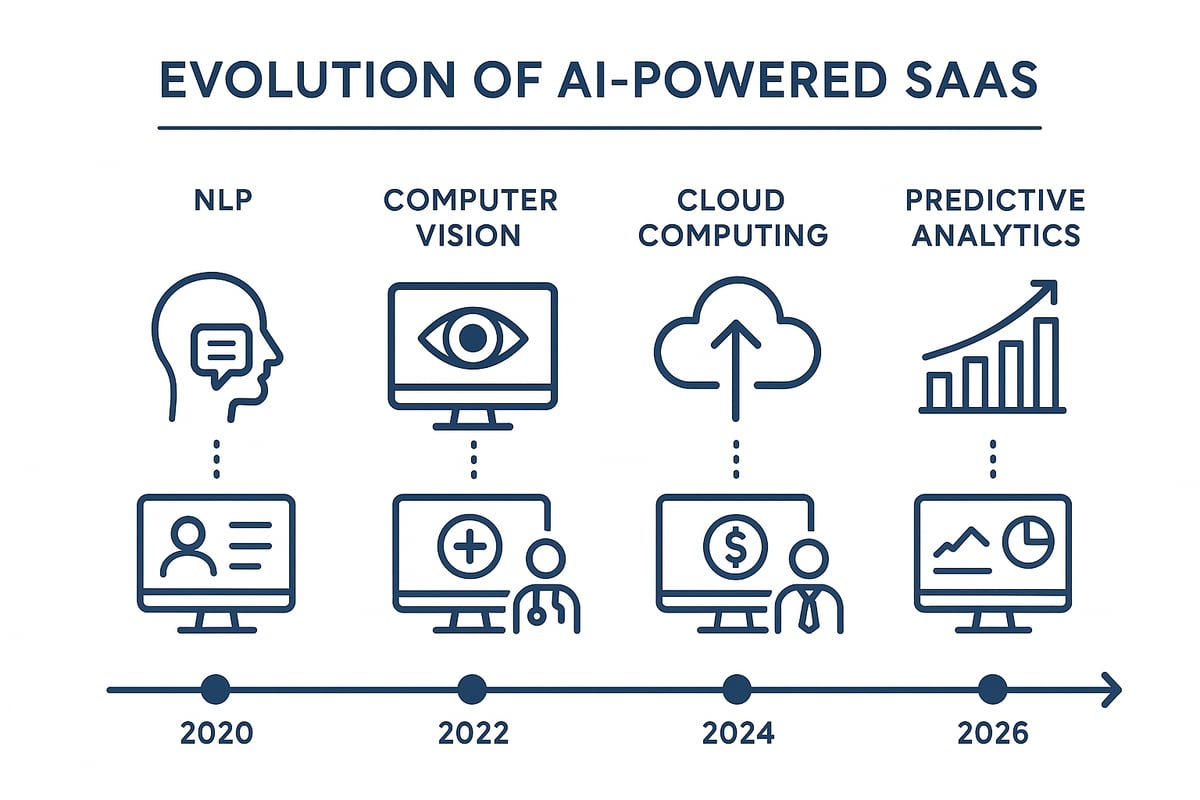
Key Milestones in AI SaaS Adoption
From 2020 onward, AI-powered SaaS began with simple automation, such as workflow triggers and basic chatbots. By 2022, breakthroughs in natural language processing and computer vision made these platforms smarter and more adaptive.
Gartner’s prediction that over 80% of enterprises will use generative AI-enabled SaaS by 2026 reflects this momentum. The shift from rule-based automation to self-learning, adaptive applications marked a new era. Now, ai powered saas platforms can analyze, predict, and act in real time, revolutionizing business operations.
- Early automation to advanced intelligence
- NLP, computer vision, and predictive analytics mainstream
- Adaptive, self-learning SaaS applications
Driving Forces Behind AI SaaS Growth
Several factors fueled the rapid growth of ai powered saas. The explosion of available data combined with affordable cloud computing gave companies the resources to deploy powerful AI models at scale.
Demand for hyper-personalization and real-time insights pushed vendors to innovate. Businesses sought cost-savings and operational efficiency, making AI a strategic priority. As these forces combined, adoption accelerated across all company sizes.
- Data availability and cloud power
- Need for personalization and instant insights
- Cost efficiency as a top driver
Industry Impact and Market Expansion
AI-powered SaaS has expanded into nearly every industry, including HR, finance, healthcare, retail, and customer service. The rise of vertical and industry-specific solutions has led to specialized platforms like Phenom and Vonage, which have won awards for measurable business impact.
Notably, the ai powered saas market is projected to reach $367.6 billion by 2034, underscoring the scale of this transformation. According to AI SaaS market projected to reach $367.6 billion by 2034, industry-wide adoption continues to accelerate as AI delivers real-world results.
- HR: talent acquisition and workforce intelligence
- Healthcare: diagnostics and personalized care
- Retail: smart inventory and customer insights
| Sector | AI SaaS Application | Impact Example |
|---|---|---|
| HR | Talent Acquisition | Faster hiring |
| Healthcare | Predictive Diagnostics | Improved patient care |
| Finance | Fraud Detection | Reduced risk |
SaaS Business Model Transformation
The business model for SaaS has shifted dramatically. Subscription models, once a differentiator, are now enhanced by AI-driven value delivery. AI capabilities have become essential for standing out in a crowded market.
For startups and established vendors alike, ai powered saas is now a primary driver of innovation and competitive advantage. New opportunities abound for those who can deliver specialized, intelligent solutions to targeted industries.
- AI-powered differentiation
- Enhanced subscription offerings
- New startup opportunities
Challenges Overcome and Lessons Learned
Early in the evolution, organizations faced challenges around data quality, integration, and user adoption. Training AI models required clean, well-labeled data, which was not always available.
Over time, the maturation of MLOps practices and AI governance improved reliability and trust in ai powered saas. Regulatory shifts and a growing focus on privacy led to better compliance and transparency. Lessons learned during this period now guide best practices for future SaaS development.
- Data quality and integration issues addressed
- Improved AI operations and governance
- Stronger privacy and regulatory compliance
Core Technologies Powering AI SaaS in 2026
The foundation of every successful ai powered saas platform lies in the synergy of advanced technologies. By 2026, the convergence of machine learning, natural language processing, computer vision, predictive analytics, robust cloud infrastructure, and stringent security protocols will define the next generation of SaaS solutions. Let us explore each technology and its role in shaping the future of ai powered saas.
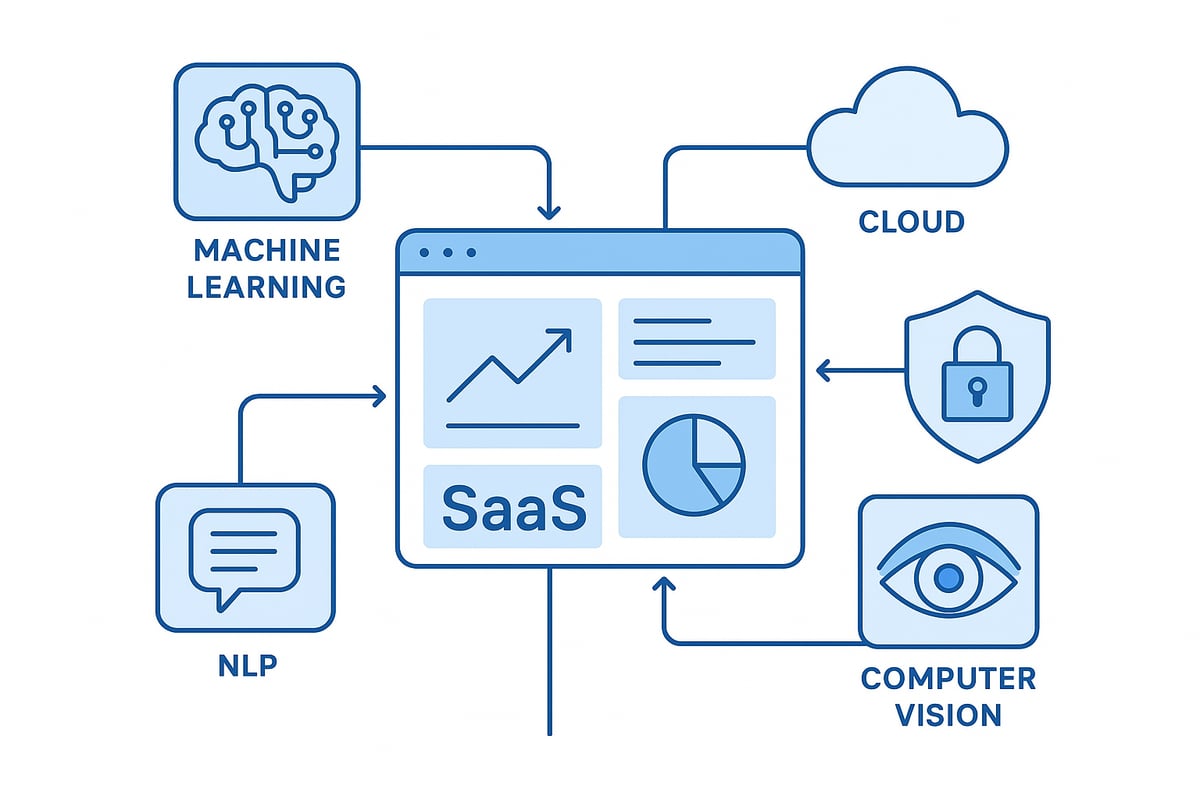
Machine Learning & Deep Learning Foundations
Machine learning and deep learning are at the core of ai powered saas innovation. In 2026, SaaS platforms will leverage supervised, unsupervised, and reinforcement learning to extract actionable insights from vast datasets. Each learning type serves a unique purpose:
| Learning Type | Use Case Example |
|---|---|
| Supervised | Customer churn prediction |
| Unsupervised | User segmentation |
| Reinforcement | Dynamic pricing optimization |
Deep learning models, such as neural networks, identify complex patterns in user behavior and automate decisions. These advancements enable ai powered saas products to predict trends, optimize workflows, and deliver tailored experiences. The modularity of modern AI models also allows for seamless updates and continuous improvements.
Natural Language Processing (NLP) and NLU
Natural language processing (NLP) and natural language understanding (NLU) are transforming how users interact with ai powered saas platforms. Chatbots, virtual assistants, and automated support systems now understand and respond to queries with remarkable accuracy. This is driven by advanced NLU, which allows platforms to interpret context, intent, and sentiment.
For instance, ai powered saas chatbots can resolve customer issues instantly, reducing response times and elevating satisfaction. NLP is also being used for intelligent document analysis, content generation, and real-time language translation, making SaaS platforms more accessible on a global scale.
Computer Vision and Image Processing
Computer vision technology is a powerful driver in ai powered saas applications across multiple industries. In healthcare, it supports diagnostic imaging and patient monitoring. In retail, it automates inventory tracking and visual search. Security-focused SaaS platforms use facial recognition and object detection to enhance access control.
An emerging trend is AI-driven document processing, where computer vision extracts data from scanned documents or receipts, streamlining workflows and reducing manual input. This capability not only improves accuracy but also accelerates business operations, making ai powered saas solutions indispensable for data-heavy sectors.
Predictive Analytics & Prescriptive Intelligence
Predictive analytics is central to delivering value in ai powered saas products. By analyzing historical and real-time data, predictive models forecast sales, detect anomalies, and anticipate customer churn. Prescriptive intelligence takes this further by suggesting optimal actions based on model outputs.
Consider an ai powered saas platform for sales teams: predictive analytics identifies high-potential leads, while prescriptive recommendations guide follow-up strategies. This level of insight transforms decision-making, helping businesses anticipate challenges and seize opportunities with confidence.
Cloud Infrastructure and Edge AI
Scalable cloud infrastructure is essential for deploying and maintaining ai powered saas at scale. Managed services from AWS, Azure, and Google Cloud Platform provide the computational power needed to train complex models and deliver low-latency experiences. Edge AI is gaining traction, enabling processing directly on devices for real-time analytics and privacy-sensitive applications.
By leveraging containerization and microservices, SaaS vendors can deploy updates rapidly and ensure high availability. This flexibility is crucial as ai powered saas platforms must adapt quickly to evolving user needs and technological advances.
Security, Privacy, and Compliance Technologies
Security remains a top concern for ai powered saas providers. AI-driven cybersecurity tools now offer behavioral analysis, anomaly detection, and anti-fraud mechanisms to protect sensitive data. Privacy-preserving techniques, including differential privacy and federated learning, ensure compliance with regulations like GDPR and HIPAA.
Best practices for AI validation and monitoring are becoming standard. For a deeper look at validation, see AI validation strategies for SaaS. Regular audits and explainable AI frameworks further build user trust, allowing organizations to innovate responsibly while safeguarding data and meeting compliance standards.
Key Use Cases and Industry Applications of AI-Powered SaaS
AI powered saas is redefining how organizations operate, interact with customers, and drive innovation. The following use cases highlight the breadth and depth of impact across industries, showcasing why ai powered saas is at the forefront of digital transformation.
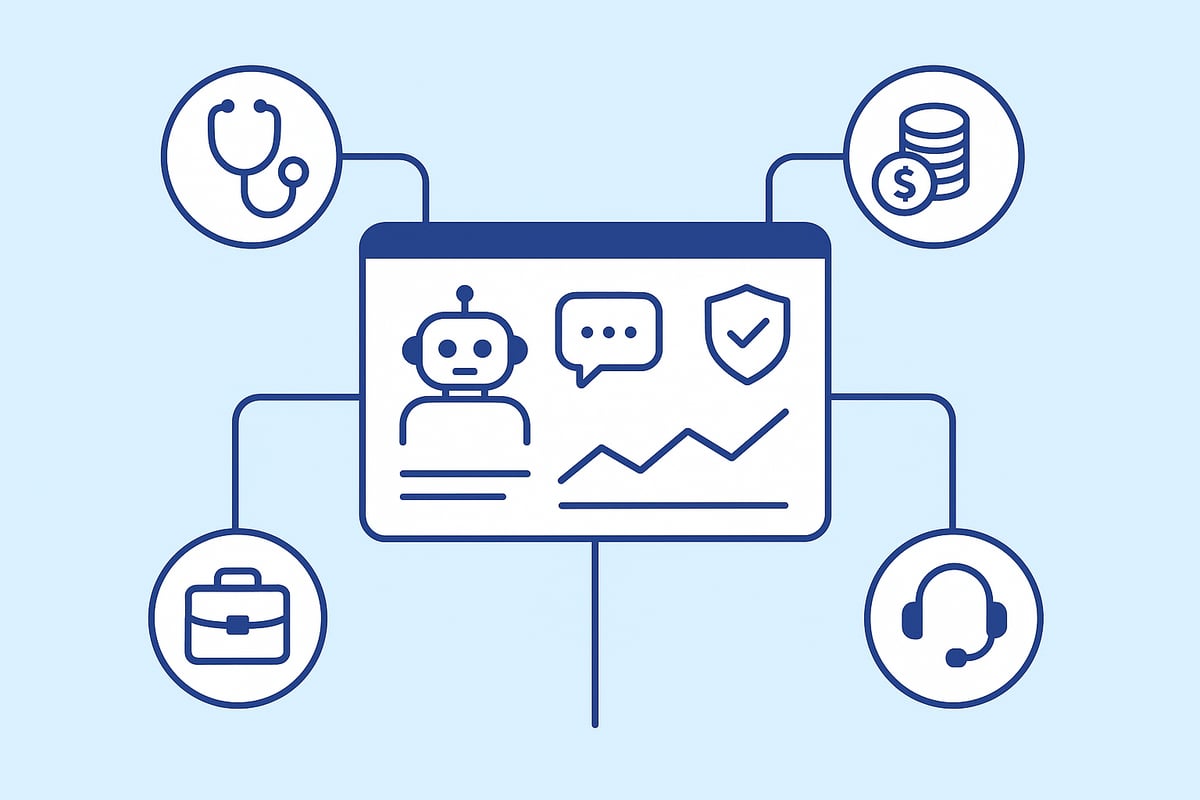
Intelligent Automation Across Business Functions
Intelligent automation is a leading application of ai powered saas. Businesses use AI-driven workflow tools to streamline repetitive tasks, accelerate processes, and reduce costs. From marketing automation to content creation and proactive customer support, companies can allocate resources more efficiently.
For example, AI-driven workflow automation has enabled organizations to cut manual workloads by up to 40%. Marketing teams leverage AI marketing tools to segment audiences, personalize campaigns, and analyze performance, as detailed in Using AI marketing tools in SaaS. This level of automation helps businesses scale rapidly while maintaining quality and agility.
Personalization and User Experience Enhancement
Personalization is a critical differentiator for ai powered saas platforms. Machine learning models analyze user behavior and preferences in real time, delivering tailored recommendations for eCommerce, entertainment, and finance.
Personalized dashboards, product suggestions, and dynamic content keep users engaged and satisfied. For instance, financial platforms use predictive analytics to offer custom investment advice, while streaming services suggest content based on viewing habits. This targeted approach boosts engagement and retention, making ai powered saas essential for modern digital experiences.
Advanced Cybersecurity and Fraud Detection
Security is paramount in the era of ai powered saas. AI algorithms monitor activity patterns to detect threats and prevent fraud in real time. Companies deploy behavioral analysis and anomaly detection to identify suspicious behavior before it leads to data breaches or financial loss.
AI powered saas solutions block malicious activities, analyze login attempts, and adapt to new attack vectors quickly. This proactive defense is crucial for safeguarding sensitive data and maintaining user trust, especially as cyber threats continue to evolve.
Predictive Analytics and Business Intelligence
Predictive analytics is transforming decision-making through ai powered saas. Business intelligence tools powered by AI offer automated insights, sales forecasting, churn prediction, and resource optimization.
Users benefit from natural language queries and prescriptive recommendations, enabling faster, data-driven decisions. For example, managers receive alerts about potential risks or opportunities, allowing them to act promptly. This level of intelligence helps organizations stay agile and competitive in dynamic markets.
AI-Driven Customer Support and Engagement
AI powered saas is revolutionizing customer support with natural language understanding. Chatbots and virtual assistants handle inquiries instantly, providing context-aware responses and escalating complex cases to human agents when needed.
Case studies show that AI-powered chatbots improve first-response times and customer satisfaction significantly. Automated ticket routing, personalized replies, and sentiment analysis ensure users feel heard and valued, setting a new standard for customer engagement.
Vertical and Industry-Specific Solutions
Industry-specific ai powered saas platforms are gaining traction in sectors like HR, healthcare, and finance. In HR, AI streamlines talent acquisition, internal mobility, and workforce planning. Phenom, for example, uses AI to match candidates with roles and identify upskilling opportunities.
Healthcare SaaS platforms leverage AI for predictive diagnostics and personalized care, while financial services deploy AI for risk assessment and compliance automation. These tailored solutions address unique industry challenges, driving adoption and measurable results.
Quantifiable Business Impact
The business impact of ai powered saas is clear and measurable. Efficiency gains, cost reductions, and improved satisfaction are common outcomes. Award-winning platforms have demonstrated a 50% reduction in time-to-hire and a 30% increase in internal mobility.
Organizations also report faster onboarding, reduced error rates, and higher customer loyalty. These results underscore the transformative potential of ai powered saas across industries, making it a strategic investment for the future.
Step-by-Step Guide to Building an AI-Powered SaaS Product in 2026
Building a successful ai powered saas product in 2026 requires a strategic and disciplined approach. With rapid advancements in AI, founders and product teams must balance innovation with robust engineering and compliance. This step-by-step guide breaks down the essential stages, offering practical advice to help you design, validate, and scale your ai powered saas solution for maximum impact.
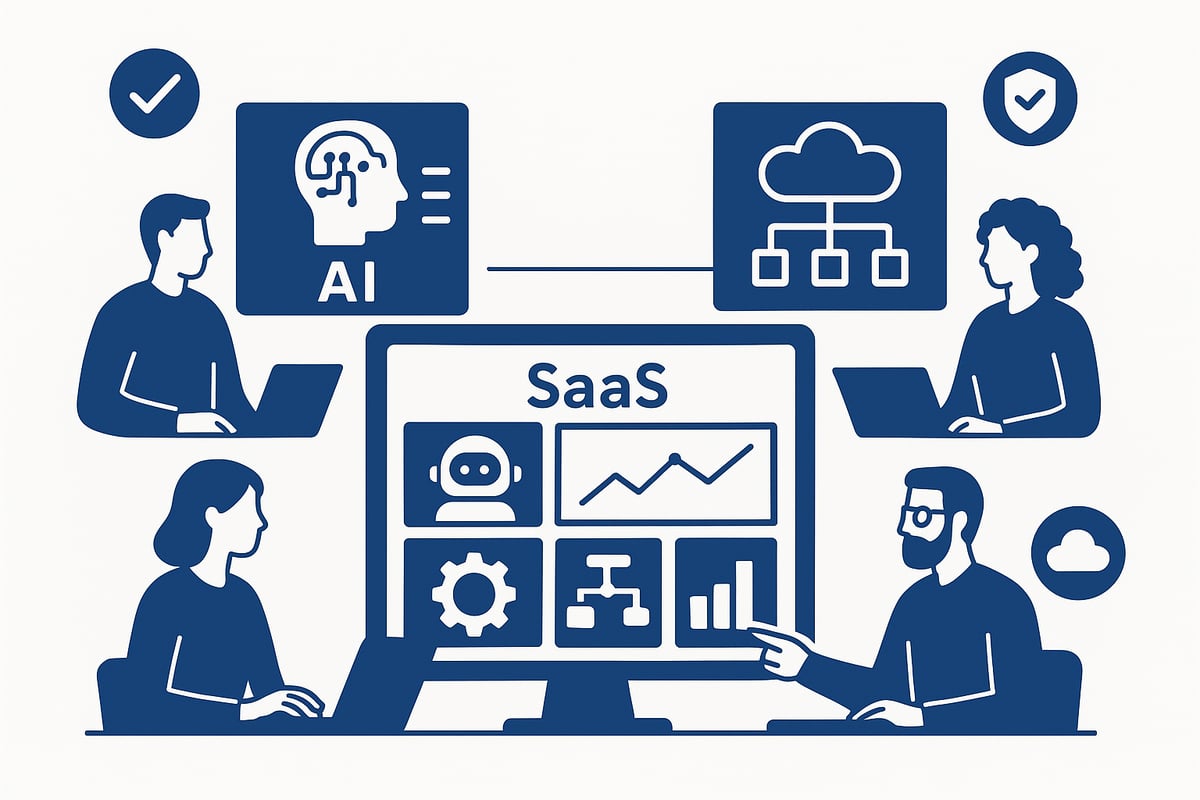
Step 1: Identify High-Impact Problems and Validate Market Need
Every successful ai powered saas product begins by addressing a real, validated business problem. Start by engaging with potential users through interviews, surveys, and workflow analysis. Map out operational bottlenecks and pain points that AI could solve, such as automating ticket routing or generating insights from unstructured data.
Discovery sprints and early prototyping are crucial. Avoid the trap of building features for technology's sake. Instead, focus on solutions that offer measurable value, like reducing manual tasks or boosting user engagement. For inspiration on market gaps and unique opportunities, explore resources like AI SaaS business ideas inspiration.
Collect early feedback and iterate, ensuring your ai powered saas aligns with genuine user needs.
Step 2: Source and Prepare High-Quality, Compliant Data
The foundation of any ai powered saas product is data. Identify and aggregate data from relevant sources: user logs, public datasets, CRM systems, or transactional records. Prioritize data that is recent, well-labeled, and structured to train robust AI models.
Data quality is non-negotiable. Clean, label, and standardize information to eliminate inconsistencies. Address gaps or silos early to avoid downstream issues. Always ensure compliance with privacy regulations such as GDPR and HIPAA, especially when handling sensitive or personal information.
Establish ongoing data collection processes so your ai powered saas can continuously learn and adapt.
Step 3: Design a Scalable, Modular SaaS Architecture
A modern ai powered saas product demands a flexible and scalable architecture. Begin with a user-friendly frontend, offering real-time dashboards and actionable insights. On the backend, leverage scalable APIs and integrate with cloud-based AI services for elasticity.
Structure AI models as microservices. This modular approach allows for independent updates and rapid experimentation. Use managed cloud infrastructure for cost-effective scaling and GPU access when training complex models.
Below is a sample architectural stack for reference:
| Layer | Key Technologies |
|---|---|
| Frontend | React, Vue, Angular |
| Backend | Node.js, Python, Go |
| AI/ML Services | TensorFlow, PyTorch |
| Cloud | AWS, Azure, GCP |
| Database | PostgreSQL, MongoDB |
A well-designed architecture supports seamless growth for your ai powered saas.
Step 4: Select and Train the Right AI/ML Models
Choosing the right models is vital for an effective ai powered saas product. Match model types to business needs, such as classification for spam detection, regression for sales forecasting, or clustering for customer segmentation.
Begin with baseline models and use A/B testing to compare their performance. Prioritize speed, accuracy, and maintainability. Automated model selection tools and hyperparameter tuning can accelerate development and improve results.
Document model assumptions and monitor for bias. Transparent and explainable models build trust with users of your ai powered saas.
Step 5: Integrate AI Seamlessly Into SaaS Features
AI should be woven naturally into the user experience of your ai powered saas. Embed intelligence in onboarding flows, analytics dashboards, real-time alerts, and integrations. Strive for usability and transparency, using explainability frameworks such as LIME or SHAP to help users understand AI-driven decisions.
Conduct usability tests with real users. Gather feedback on AI-powered features and refine them based on real-world usage. Avoid overcomplicating workflows; simplicity increases adoption and satisfaction.
Thoughtful integration ensures your ai powered saas delivers genuine value without overwhelming users.
Step 6: Implement MLOps for Continuous Monitoring and Improvement
Long-term success for any ai powered saas solution hinges on robust MLOps practices. Set up automated pipelines to monitor model performance, detect data drift, and track system latency. Schedule regular audits and retraining cycles to maintain accuracy as real-world data evolves.
Deploy alerting systems for threshold breaches to catch issues before they impact users. Maintain comprehensive logs for auditability and compliance. According to McKinsey, 90 percent of machine learning models fail without ongoing monitoring and productization.
A strong MLOps culture enables your ai powered saas to adapt, improve, and scale reliably.
Step 7: Ensure Security, Privacy, and Compliance from Day One
Security and privacy are paramount in modern ai powered saas products. Encrypt all sensitive data, enforce strict identity and access management, and secure model endpoints against unauthorized access. Regularly audit your systems for vulnerabilities and compliance gaps.
Implement privacy-preserving AI techniques like differential privacy or federated learning for sensitive use cases. Stay informed on evolving regulations and adjust processes as needed. Proactive security measures not only protect your users but also build trust in your ai powered saas offering.
By following these steps, founders and teams can build ai powered saas solutions that are innovative, reliable, and ready for the demands of 2026.
Challenges and Best Practices for AI SaaS Success in 2026
Navigating the evolving landscape of ai powered saas requires founders and teams to master both technical and operational challenges. As adoption accelerates, success is determined not just by innovation, but by the ability to address real-world hurdles and implement proven best practices.
Overcoming Data Quality and Integration Hurdles
Data is the foundation of every ai powered saas product. Yet, inconsistent, incomplete, or siloed data can cripple even the most advanced AI models. Teams must prioritize data cleaning, labeling, and normalization to ensure reliable results.
Integrating data from multiple sources—CRMs, ERPs, third-party APIs—often presents compatibility and standardization issues. Adopting robust ETL pipelines and automated validation routines allows seamless data flow across the ai powered saas ecosystem.
Best practices include:
- Establishing clear data governance policies.
- Automating data validation at ingestion.
- Regular audits for data drift and quality issues.
Reliable data integration sets the stage for scalable, insightful AI features.
Managing Complexity and Scalability
As ai powered saas solutions grow, so does architectural complexity. Microservices, containerization, and cloud-native deployments are critical for maintaining performance under increasing loads.
Balancing advanced model sophistication with manageable infrastructure is key. Overly complex models can introduce latency, while underpowered systems cannot deliver real-time insights. Teams should modularize AI components, enabling independent scaling and updates.
Scalability best practices:
- Use Kubernetes or similar orchestration for dynamic scaling.
- Monitor system performance and automate scaling triggers.
- Refactor legacy components to support distributed processing.
A scalable foundation ensures ai powered saas can handle future growth and market demands.
Ensuring User Adoption and Trust
For ai powered saas to deliver value, users must trust and embrace AI-driven features. Explainable AI is essential—clear visualizations, transparent recommendations, and user education foster understanding and confidence.
Gathering user feedback through surveys and in-app analytics uncovers pain points and areas for improvement. Iterating on the user experience based on real customer input drives higher adoption rates.
Best practices for user trust:
- Provide clear explanations for AI decisions.
- Offer opt-in and customization options.
- Regularly communicate product updates and improvements.
User-centric design transforms ai powered saas from a black box into a trusted business partner.
Regulatory and Ethical Considerations
Compliance with data privacy laws like GDPR and HIPAA is non-negotiable for ai powered saas providers. Regularly reviewing regulatory updates and adapting workflows is critical to avoid costly penalties.
Ethical AI requires addressing algorithmic bias, ensuring fairness, and documenting model decisions. Teams must build governance frameworks that oversee data usage, access controls, and audit trails.
Key practices include:
- Implementing privacy-by-design principles.
- Conducting regular bias assessments.
- Maintaining transparent compliance documentation.
These steps build credibility for ai powered saas in regulated industries.
Security and Privacy Best Practices
Security is a top concern for ai powered saas, especially as threat actors target SaaS credentials and data pipelines. According to TechRadar, 75% of SaaS-related incidents stemmed from compromised credentials, highlighting the need for robust identity and access management.
Best practices for safeguarding ai powered saas:
- Enforce strong authentication and least-privilege access.
- Encrypt data in transit and at rest.
- Monitor for anomalies and automate incident response.
Regular security audits and proactive threat detection are essential to maintain user trust and meet compliance standards.
Measuring and Communicating Business Impact
Quantifying the value of ai powered saas is vital for stakeholder buy-in and strategic growth. Defining KPIs—such as efficiency gains, cost savings, and user satisfaction—helps demonstrate ROI.
Recent research shows that 42% of SaaS companies use AI for internal processes, underlining the widespread impact of AI integration. Teams should collect before-and-after metrics, user testimonials, and case studies to communicate tangible outcomes.
Table: Sample KPIs for AI Powered SaaS
| KPI | Pre-AI Baseline | Post-AI Result | Improvement |
|---|---|---|---|
| Manual Processing | 10 hours/week | 4 hours/week | 60% less |
| Customer Churn Rate | 8% | 5% | 37.5% drop |
| First Response Time | 2 hours | 15 minutes | 87.5% faster |
Clear communication of results accelerates ai powered saas adoption and market growth.
Staying Ahead: Continuous Learning and Innovation
The ai powered saas landscape evolves rapidly. Continuous learning—through ongoing model retraining, process automation, and adoption of new frameworks—ensures sustained competitiveness.
Teams should invest in upskilling, attend industry conferences, and monitor emerging trends. Building a culture of experimentation and rapid iteration allows quick adaptation to user needs and regulatory changes.
Best practices for innovation:
- Schedule regular knowledge-sharing sessions.
- Encourage experimentation with new AI tools.
- Partner with industry experts for fresh perspectives.
Staying agile keeps ai powered saas products at the forefront of industry transformation.
Future Trends: What’s Next for AI-Powered SaaS?
The pace of innovation in ai powered saas is accelerating, with 2026 set to introduce groundbreaking changes. From generative AI to hyper personalization, these trends will reshape how businesses deliver value, improve user experiences, and achieve operational excellence.
Generative AI and Autonomous SaaS Applications
Generative AI is revolutionizing the ai powered saas landscape by enabling content, code, and workflow automation at scale. Platforms are integrating language models and diffusion networks to generate reports, emails, and even software modules. The next step is autonomous SaaS, where AI agents handle tasks, optimize processes, and adapt to user needs without manual intervention. According to AI agents to transform SaaS business models by 2026, these agents will redefine SaaS business models, improving efficiency and user engagement.
AI Democratization and No-Code/Low-Code AI SaaS
By 2026, ai powered saas will be accessible to a wider audience thanks to no code and low code platforms. These tools allow non technical users to build, deploy, and customize AI driven workflows without writing a single line of code. This democratization accelerates innovation, reduces development bottlenecks, and empowers teams to respond rapidly to market shifts. Businesses can now prototype and launch AI features in days rather than months.
Hyper-Personalization and Contextual Intelligence
Hyper personalization is becoming a core feature of ai powered saas, with platforms leveraging contextual intelligence to deliver real time, tailored experiences. AI analyzes user behavior, preferences, and context to recommend actions, content, or products. This creates a dynamic, adaptive interface that evolves with each interaction. The result is higher engagement, retention, and customer satisfaction across industries.
Edge AI and Real-Time Processing
Edge AI is pushing the boundaries of ai powered saas by bringing intelligence closer to data sources. SaaS applications are deploying models on devices and local servers, enabling real time analytics, decision making, and automation. This is crucial for IoT, manufacturing, and remote operations where low latency and offline capabilities are essential. Edge AI reduces costs and enhances privacy by minimizing data transfer to the cloud.
Responsible AI, Ethics, and Regulation
As ai powered saas expands, responsible AI practices are in the spotlight. Organizations are adopting explainable AI, fairness audits, and governance frameworks to ensure ethical outcomes. Anticipated regulations will require transparency in AI decision making and stricter data privacy controls. Companies must balance innovation with accountability, building trust with users and regulators alike.
The Next Generation of AI SaaS Startups
New opportunities are emerging for founders in the ai powered saas market, especially in untapped verticals and regions. Success factors include rapid validation, user centric design, and continuous learning. For those exploring vertical SaaS, following Vertical SaaS validation steps ensures effective market entry and product fit. Startups that prioritize agility and measurable impact will lead the next wave of innovation.
Lessons from Award-Winning AI SaaS Platforms
Award winning ai powered saas platforms offer valuable lessons. Their success is built on three pillars:
- Innovation: Leveraging the latest AI technologies for real world impact.
- Measurable Results: Demonstrating efficiency gains, cost savings, and user satisfaction.
- User Centricity: Prioritizing transparency, usability, and continuous improvement.
As the market matures, these qualities will distinguish leaders from the rest.