In 2026, landing websites have become the cornerstone for turning digital traffic into measurable outcomes. As competition intensifies across every industry, the ability to create standout landing websites is essential for launching products, building SaaS brands, or validating new business ideas.
This comprehensive guide will show you everything you need to know to design high-converting landing websites, tailored for the demands of 2026. Discover the latest trends, must-have features, builder comparisons, step-by-step creation strategies, optimization techniques, and ready-to-use templates.
Leverage expert insights and actionable steps to maximize your conversions and achieve your goals in a crowded online landscape.
The Evolution of Landing Websites: Trends and Technologies in 2026
Landing websites in 2026 have undergone a remarkable transformation. What once were static, single-purpose pages have evolved into dynamic, interactive experiences. Today, building a high-performing landing website means embracing new technologies that enhance engagement and drive conversions.

From Static to Dynamic: The New Standard
In recent years, landing websites have shifted from simple informational layouts to rich, interactive experiences. Dynamic content powered by AI adapts in real time to user behavior, making each visit unique. This shift boosts engagement, as visitors now expect more than just a form and a headline—they want tailored journeys that respond to their needs.
The Rise of No-Code and Mobile-First Design
The popularity of no-code and low-code platforms has made landing websites accessible to everyone, regardless of technical skill. These tools enable rapid deployment and easy updates, which is essential in a fast-paced market.
Mobile-first and responsive design have become non-negotiable. Data shows that over 70% of ad engagement now happens on mobile devices, so landing websites must look great and load quickly on any screen. Builders like Wix, Squarespace, and Google Sites offer responsive templates as a standard, ensuring seamless experiences on phones and tablets.
AI Integration and Real-Time Personalization
AI has become a game-changer for landing websites. Features like chatbots provide instant support, while personalization engines adjust messaging, offers, and visuals based on the visitor’s location, device, or past behavior. Real-time analytics allow marketers to adapt campaigns on the fly, improving conversion rates with every iteration.
Landing websites now leverage machine learning to recommend products, answer questions, and even predict user intent. This level of automation not only saves time but also creates a more engaging experience for every visitor.
Privacy, Compliance, and Conversion Rates
With stricter privacy regulations like GDPR and updated CCPA requirements, transparency is critical. Modern landing websites must include clear privacy policies, cookie consent banners, and secure data handling practices. Visitors are more likely to convert when they trust that their information is safe.
Recent studies highlight the advantage of modern landing websites:
| Type | Avg. Conversion Rate |
|---|---|
| Traditional Web Pages | 2.3% |
| Modern Landing Websites | 6.1% |
This difference shows how new technologies and trust signals can triple results.
Innovation, Speed, and Minimalism
Landing websites in 2026 are pushing creative boundaries. Many now feature VR and AR elements, interactive forms, and immersive video backgrounds. These innovations capture attention and encourage action.
Speed remains a top priority. Minimalist designs, optimized images, and streamlined code ensure that landing websites load almost instantly. Every extra second of load time can increase bounce rates, so fast, distraction-free pages are now the gold standard.
To see how these trends are shaping the industry, check out the latest AI-powered landing page trends 2025, which explores how new technologies like augmented reality and neural interfaces are redefining user engagement.
In summary, landing websites in 2026 are smarter, faster, and more interactive than ever. By staying ahead of these trends, you can build experiences that not only attract attention but convert visitors into loyal customers.
Key Elements of High-Converting Landing Websites
Creating high-converting landing websites in 2026 means mastering the art and science of user engagement. Each element, from the call to action to dynamic personalization, plays a critical role in turning visitors into loyal customers. Let us break down the core ingredients you need to optimize your landing websites for top-tier performance.
Crafting a Compelling Call to Action (CTA)
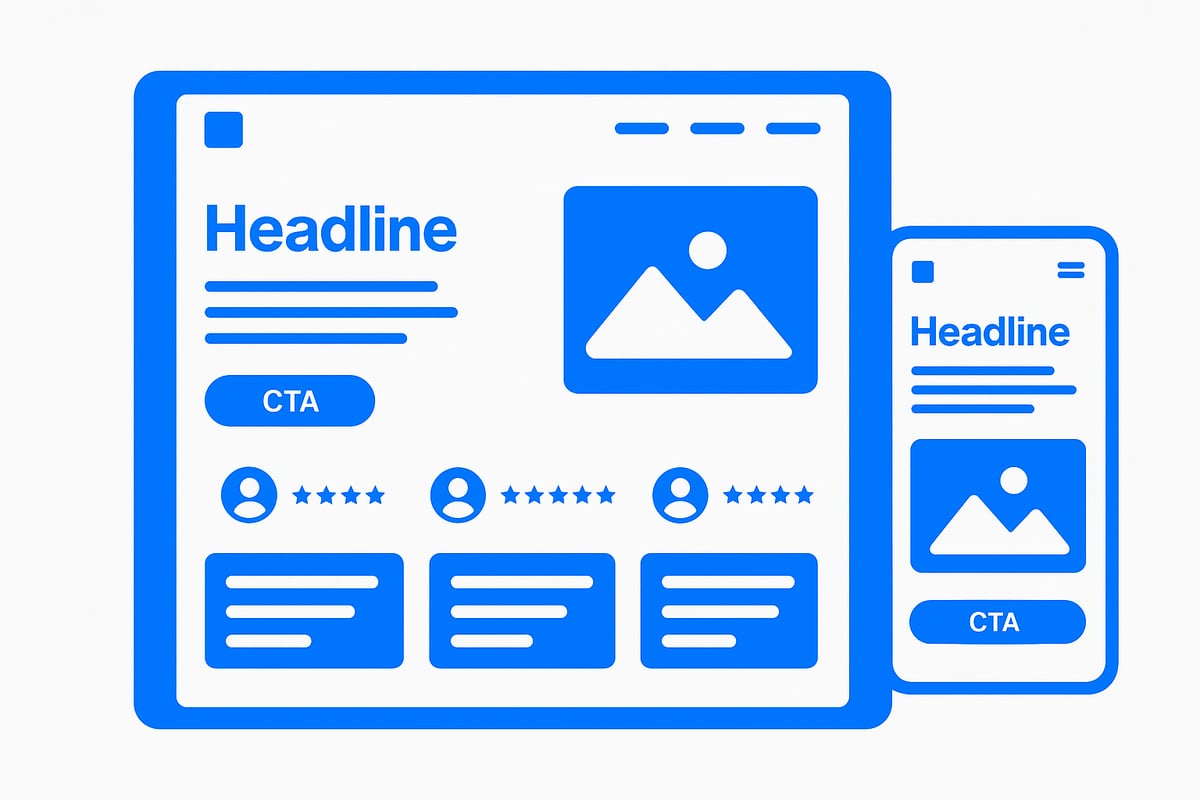
The call to action is the heartbeat of all successful landing websites. A prominent, sticky CTA ensures your offer remains visible as users scroll, keeping conversion top of mind.
Effective CTAs range from lead magnets and newsletter signups to direct purchase buttons or affiliate links. Data from 2026 shows that sticky CTAs can lift conversions by up to 30 percent compared to static placements. Try A/B testing different CTA texts, button colors, and positions to see what works best for your audience.
Remember, clarity is crucial. Use action-oriented language and promise a clear benefit. For example, "Get Early Access" or "Download the Free Guide" outperforms generic phrases. Place your CTA above the fold and repeat it after key sections to reinforce the desired action throughout your landing websites.
Visual Hierarchy and Above-the-Fold Content
Users scan landing websites from top to bottom and left to right, with eye-tracking studies confirming that the first few seconds are decisive. Place your headline, main benefit, and primary CTA above the fold to capture attention instantly.
Bold headlines, benefit-driven subcopy, and a clear value proposition guide the visitor’s journey. Real-world examples, such as those highlighted in Best SaaS Landing Pages Examples, show how hero sections, contrasting buttons, and concise bullet points drive engagement.
Structure your landing websites so that essential content is immediately visible on all devices. Use whitespace and visual cues, like arrows or icons, to direct attention. This approach not only improves user experience but also boosts conversion rates by minimizing friction.
Trust Signals and Social Proof
Trust is a non-negotiable element for high-performing landing websites. Displaying testimonials, client logos, and genuine user reviews reassures visitors that your offer is credible. Include privacy policy links and data protection statements as standard practice.
Visual cues, such as badges, guarantees, and security seals, further enhance trust. Statistics reveal that adding social proof can increase conversions by 20 percent or more. Consider a dedicated section for reviews or a carousel of client feedback.
Make sure your landing websites link to active social media profiles and provide transparent contact information. This openness fosters confidence and reduces hesitation for first-time visitors considering your offer.
Minimalism, Responsiveness, and Speed
Clutter-free design is essential for landing websites aiming for high conversion. Limit the use of heavy videos or oversized images, which can slow load times and frustrate users. Instead, focus on crisp visuals and concise messaging.
Responsive layouts ensure your landing websites look and function perfectly on any device, from smartphones to desktops. Speed matters: pages that load in under two seconds enjoy significantly lower bounce rates. Use tools like Google PageSpeed Insights or WebPageTest to monitor and optimize load times.
A minimalist approach not only improves aesthetics but also directs focus toward your CTA. Remember, every second counts when users decide whether to stay or leave your landing websites.
Personalization and Dynamic Content
Modern landing websites leverage AI and dynamic content to deliver tailored experiences. Personalization engines adjust copy, offers, or visuals in real time based on user behavior, source, or location.
For example, returning visitors might see a different headline or a special discount. Dynamic sections can recommend relevant products or resources, increasing engagement and time on site. Balance personalization with privacy compliance, always being transparent about data usage.
As technology evolves, landing websites that adapt to each visitor’s needs will consistently outperform static pages. Personalization is not just a trend, it is a conversion driver that sets your site apart in 2026.
Comparing the Top Landing Website Builders for 2026
The landscape of landing websites has evolved rapidly, with a diverse range of platforms empowering businesses to create high-converting pages without deep technical skills. In 2026, selecting the right builder is crucial for standing out in a crowded digital space. Each platform offers unique strengths, making it essential to match your choice to your business needs.
Overview of Leading Platforms
The top landing website builders in 2026 include Google Sites, Wix, Squarespace, Shopify, Figma, Canva, and emerging AI-driven platforms. Each suits different use cases, from SaaS validation to e-commerce and portfolios.
| Builder | Strengths | Weaknesses | Best For |
|---|---|---|---|
| Google Sites | Free, simple, no-code | Limited customization | Fast deployment |
| Wix | Rich features, templates | Subscription cost | SMBs, creatives |
| Squarespace | Elegant design, integrations | Advanced features locked | Portfolios, blogs |
| Shopify | E-commerce, scalability | Higher fees | Online stores |
| Figma, Canva | Custom visual design | Requires external hosting | Designers |
Choosing among these landing websites depends on your technical skills, budget, and campaign goals.
Google Sites: Simplicity and Accessibility
Google Sites stands out for its straightforward approach to landing websites. With a drag-and-drop interface, anyone can launch a clean, functional page in minutes.
Benefits include free hosting, no billing headaches, and automatic updates. For teams running multiple campaigns, template duplication is a breeze. However, Google Sites offers fewer advanced widgets and limited visual customization. For basic landing websites, it remains a top choice.
Paid Builders: Wix, Squarespace, Shopify
Paid solutions like Wix, Squarespace, and Shopify bring advanced features to landing websites, such as built-in analytics, e-commerce capabilities, and flexible integrations.
While these platforms offer visually stunning templates and powerful tools, they come with monthly fees. Free plans may display ads or restrict customization. For businesses needing robust landing websites with expanded capabilities, these builders provide scalability and professional polish.
Design Tools as Builders: Figma, Canva
Design-first platforms like Figma and Canva appeal to those prioritizing custom visuals for landing websites. These tools allow for pixel-perfect layouts and unique branding elements.
However, publishing requires exporting designs and hosting externally. Compared to dedicated landing website builders, this workflow may take extra steps. Still, for designers seeking creative freedom, these tools deliver unmatched control over the look and feel of landing websites.
Choosing the Right Builder for Your Needs
Selecting the ideal platform for landing websites in 2026 comes down to your goals, budget, and technical expertise. Consider these criteria:
- Budget: Free vs subscription-based platforms
- Technical skills: No-code, low-code, or design-heavy options
- Scalability: Ability to grow with your campaigns
- Integrations: CRM, analytics, e-commerce support
- AI and automation: Future-proof features
Use a decision matrix to weigh these factors. For those seeking a streamlined approach, explore Tools for Landing Page Validation to see which platforms and features align with your specific needs. The right builder will empower you to launch landing websites that convert and adapt to the evolving digital landscape.
Step-by-Step: How to Build a Landing Website in 2026
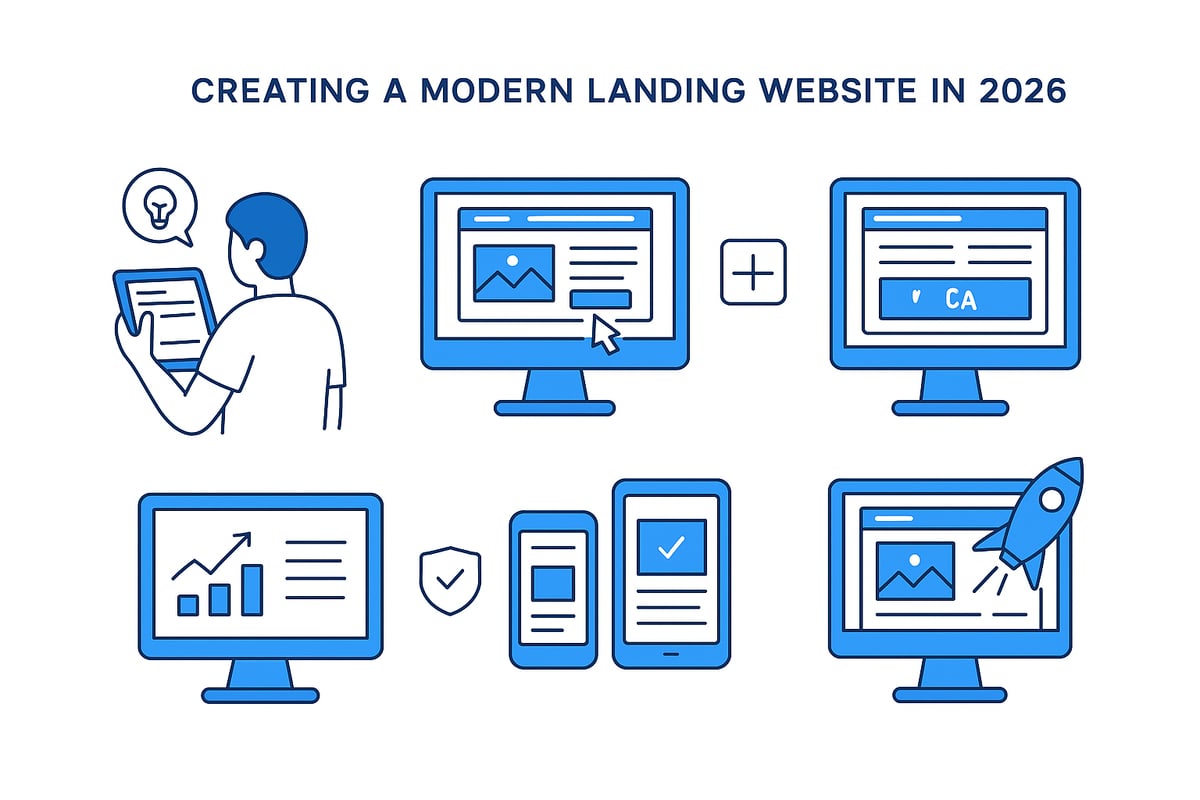
Building effective landing websites in 2026 requires a structured approach, blending strategy, technology, and compliance. Below, you will find each step broken down to help you deliver high-performing landing websites that stand out in a competitive digital world.
Planning and Goal Setting
Every successful landing website starts with careful planning. Define your campaign's purpose by asking, "What action do I want visitors to take?" Identify your target audience in detail, considering user personas and pain points.
Set measurable goals such as lead captures, product sales, or newsletter signups. Analyze competitor landing websites for inspiration. Take note of their layouts, copy, and conversion elements.
Outline essential content and features required for your landing websites. This includes hero sections, testimonials, and clear calls to action. Building a solid foundation here ensures your landing websites are focused and conversion-driven.
Selecting Your Platform and Template
Choosing the right platform is crucial for launching effective landing websites. Assess your budget, technical ability, and scalability requirements before making a decision.
Evaluate popular builders like Google Sites for simplicity, or explore paid options such as Wix and Squarespace for advanced integrations. Select a template that aligns with your goals and reflects your brand identity.
Customize the layout, color scheme, and logo. Always verify that your chosen template is fully responsive, so your landing websites perform flawlessly on every device.
Adding Content and Conversion Elements
Content is the engine that powers landing websites. Write concise, benefit-driven headlines that immediately capture attention. Use short, compelling paragraphs and bullet points to communicate value.
Integrate high-impact visuals and short explainer videos to increase engagement. Place your calls to action where visitors can easily see and interact with them.
Embed lead forms, payment buttons, or download links to convert interest into results. Remember, every element on your landing websites should guide users toward your primary objective.
Optimizing for Privacy, Trust, and Compliance
Trust is essential for converting visitors on landing websites. Add a privacy policy, terms of service, and cookie consent banners to demonstrate transparency. Ensure GDPR and CCPA compliance for all user data collected.
Incorporate testimonials, client logos, and trust badges for added credibility. For a deeper dive into legal requirements, review GDPR Compliance for SaaS Landing Pages.
Link your landing websites to active social media profiles to further build trust and establish brand legitimacy.
Connecting Analytics and Tracking
Measuring performance is a must for landing websites. Set up Google Analytics, Facebook Pixel, or similar tracking tools before launch. Generate UTM codes for each marketing campaign and append them to your URLs for precise attribution.
Monitor real-time performance such as traffic sources and conversion rates. Use heatmaps and session recordings for deeper insights into user behavior.
Regularly review your analytics dashboard to identify strengths and opportunities for your landing websites.
Publishing and Launching Your Landing Website
Before publishing, preview your landing websites on multiple devices and browsers to ensure consistency. Connect a custom domain to reinforce your brand and build credibility.
Publish your site and confirm that all elements function as intended. Add your landing websites' URLs to ad campaigns, email sequences, and social profiles for a unified launch.
Test every link, form, and CTA to guarantee a smooth user experience from the moment your landing websites go live.
Monitoring and Iterating Post-Launch
Launching is just the beginning for landing websites. Review analytics dashboards regularly to track traffic and conversions. Run A/B tests on headlines, CTAs, and visuals to identify what resonates best.
Gather feedback from users and stakeholders to uncover areas for improvement. Make small, data-driven changes to optimize performance over time.
Continuous iteration ensures your landing websites stay effective and relevant as user expectations and trends evolve.
Proven Landing Website Formats and Templates for 2026
The landscape of landing websites in 2026 is defined by versatility and strategic design. Marketers and founders have access to a variety of proven formats, each tailored to specific goals and audiences. Choosing the right format is crucial for maximizing engagement and conversion rates.
Effective Landing Website Formats
Popular landing websites in 2026 include formats such as lead generation pages, product launch announcements, webinar signups, SaaS validation, and affiliate marketing. Each serves a unique purpose, but all share a focus on driving a single, measurable action.
For SaaS founders, landing websites are essential for testing new ideas before committing resources. Leveraging Landing Page Validation Strategies helps teams quickly assess demand and collect early feedback. Similarly, webinar and event pages use time-sensitive CTAs to boost signups, while affiliate landing websites optimize for quick conversions through tailored offers.
Key Structural Elements and Best Practices
High-performing landing websites follow a clear structure that guides visitors toward conversion. The core elements include:
- Hero section with a compelling headline and value proposition.
- Benefits and pain points displayed prominently, often in bullet lists or infographics.
- Social proof such as testimonials, client logos, and trust badges.
- FAQ section addressing common objections.
- Clear CTA placed above the fold and repeated as needed.
A well-organized layout ensures visitors immediately understand the offer and next steps. Mobile-first design remains essential, as most traffic now comes from smartphones. Modular sections allow for easy customization and rapid iteration.
Modern Templates and Customization
Template libraries in 2026 offer an array of landing websites tailored for different industries and goals. Modern templates emphasize modularity, speed, and AI-driven personalization. Builders like Google Sites, Wix, and Canva provide drag-and-drop customization, letting users adapt fonts, colors, and layouts without coding.
AI-powered tools can dynamically personalize content based on user data or traffic source. For more on how AI enhances engagement and conversions, see this guide on AI-driven personalization in marketing. When choosing a template, prioritize fast load times, accessibility, and compliance with privacy standards.
Case Studies and Balancing Uniqueness
Successful campaigns in 2026 often blend tried-and-true structures with unique branding elements. Case studies reveal that landing websites with video backgrounds, interactive forms, and real-time chat see higher engagement. However, too much novelty can distract from the main CTA.
The key is to customize proven templates to fit your brand’s voice and campaign objectives, while retaining the recognizable flow that users expect from high-converting landing websites. Download updated templates from your preferred builder’s library, then iterate based on analytics and feedback to achieve optimal results.
Advanced Optimization Strategies for Maximum Conversions
Optimizing landing websites in 2026 is a strategic process that blends data-driven experimentation, AI-powered personalization, and airtight compliance. Modern users expect fast, relevant experiences, so continuous improvement is non-negotiable. Let’s break down the advanced strategies that set high-performing landing websites apart.
A/B Testing and Conversion Rate Optimization (CRO)
A/B testing is essential for fine-tuning landing websites. By comparing different versions of headlines, CTAs, images, and layouts, you can identify what resonates most with your audience.
Modern CRO tools in 2026 simplify this process:
- Built-in split testing in leading landing website builders
- Third-party platforms like Optimizely, Google Optimize, or VWO NextGen
- Automated analysis for statistical significance
Run tests on one element at a time for reliable results. Landing websites that consistently use A/B testing see conversion lifts as high as 30%. Review analytics, implement winning variants, and repeat the process to keep your landing websites ahead of the competition.
Personalization and AI-Driven Enhancements
Personalization transforms static landing websites into dynamic, user-centric experiences. AI tailors content, offers, and messaging in real time based on user behavior, source, and device.
Key AI-driven enhancements include:
- Dynamic sections that adapt to user intent
- AI-powered chatbots for instant support
- Recommendation engines suggesting relevant products or actions
According to AI in digital marketing predictions, adaptive personalization is crucial for staying competitive as user expectations evolve. Balance automation with authenticity to maintain trust and engagement on your landing websites.
SEO for Landing Websites
Effective SEO ensures your landing websites attract and convert organic visitors. Focus on on-page essentials: use descriptive meta tags, clear headings, and strategic keyword placement.
In 2026, optimize for featured snippets and voice search by writing concise, question-based content. Mobile-first, fast-loading landing websites rank higher. Link-building remains vital, especially for standalone landing websites.
Stay updated on how AI’s impact on search and marketing is shifting search behaviors. Integrate schema markup and use analytics to monitor your SEO efforts.
Integrations and Automation
Integrations streamline your marketing stack and supercharge landing websites. Connect with CRM, email marketing, and ad platforms to automate workflows.
Popular integrations for 2026:
- Embedded forms that sync leads directly to your CRM
- Automated email sequences for nurturing signups
- Payment gateways for instant transactions
Automation tools trigger follow-ups based on user actions, maximizing conversions. Choose landing websites with seamless integration options to boost campaign ROI.
Security, Accessibility, and Legal Compliance
Trust is foundational for landing websites. Secure your site with SSL certificates and use reputable hosting. Ensure accessibility by following WCAG 2.2 standards, making your landing websites usable for everyone.
Regularly audit for privacy compliance, including GDPR and CCPA updates. Add clear privacy policies, cookie banners, and trust badges. Transparent data handling builds credibility and encourages users to convert on your landing websites.