Did you know that 70% of startups still fail because they skip proper mvp validation? In 2026, the stakes are higher than ever, and success demands a smarter approach.
This guide delivers a proven, step-by-step roadmap to mvp validation, helping SaaS and tech founders ensure their ideas solve real problems before building anything.
Inside, you will find the latest frameworks, actionable strategies, and expert tips on research, feature prioritization, smart tech choices, and go-to-market tactics for 2026.
If you want to avoid costly mistakes and outpace the competition, this is the only mvp validation guide you will need.
Understanding MVP Validation in 2026
Validating your Minimum Viable Product is no longer optional in the modern tech landscape. MVP validation is the process of proving that your product concept addresses a real market need before you invest heavily in development. In 2026, with SaaS and HealthTech markets more crowded than ever, this step is critical for survival.
Recent data reveals that 42% of startups fail because they misjudge market demand. On the other hand, 91.3% of companies that embrace mvp validation succeed as they align their offerings with user needs. The difference between simply launching a product and validating it first is significant. Validation reduces risk, ensures better resource allocation, and helps teams prioritize features that matter most.
Consider a HealthTech platform using AI for patient monitoring. Without mvp validation, the team might build complex features that users never wanted, leading to wasted resources. In contrast, SaaS companies that validate early can focus on compliance-heavy requirements, such as GDPR or HIPAA, ensuring a faster and safer go-to-market. The rise of rapid prototyping, AI-driven insights, and stricter regulations has made mvp validation even more essential for tech founders in 2026.
The Evolving Role of MVPs in Product Success
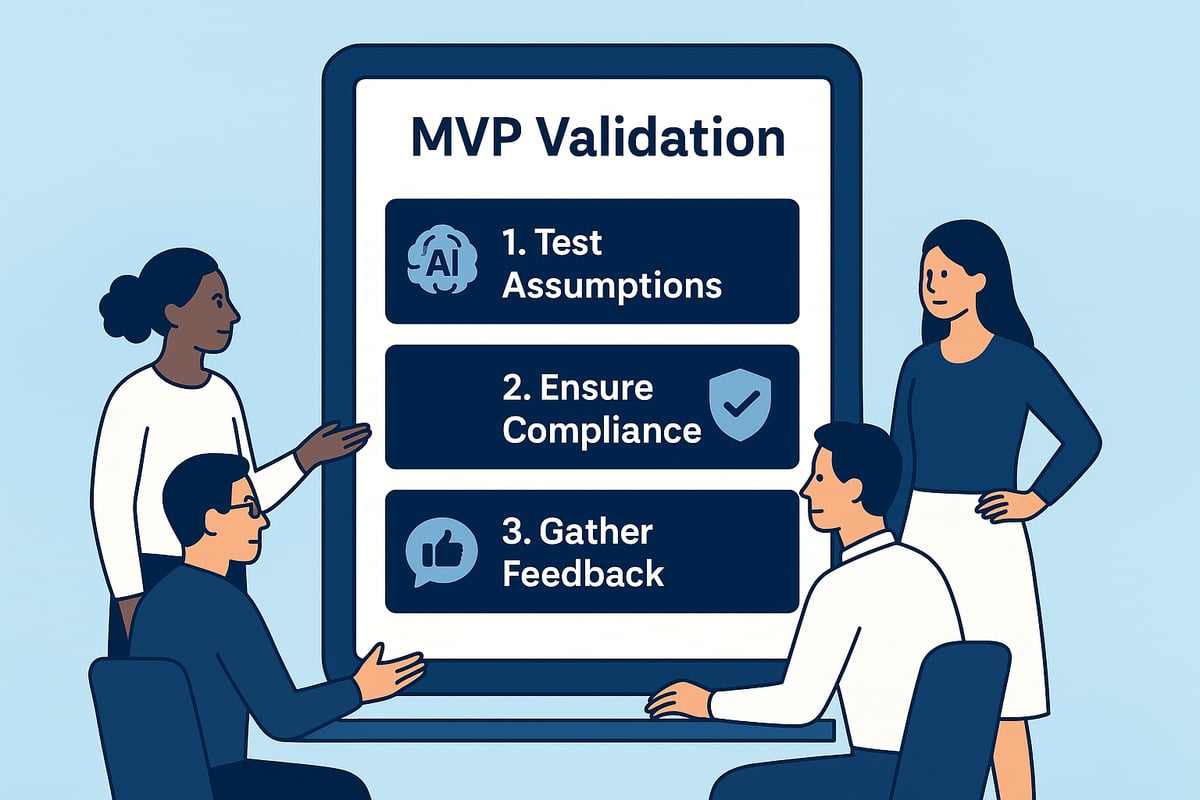
The MVP, or Minimum Viable Product, is designed to test assumptions with the least effort and maximum learning. In today’s fast-paced environment, mvp validation acts as a shield against costly missteps. Rather than launching a fully built product and hoping for adoption, founders use validation to spot real pain points and prioritize what users truly need.
Startups in SaaS and HealthTech must now address not just user problems but also compliance and security from the outset. For example, an AI-powered SaaS tool must validate both its core functionality and data privacy measures before scaling. By focusing on mvp validation, teams can quickly adapt to market feedback, avoid feature bloat, and create products that have a genuine impact.
Emerging trends, such as AI integration and low-code prototyping, have transformed how validation is approached. Teams iterate faster, gather actionable feedback, and ensure readiness for regulatory scrutiny. Ultimately, mvp validation supports smarter decisions, faster pivots, and higher chances of product-market fit.
Essential Elements of a Modern MVP Validation Framework
A modern mvp validation framework is structured around three core steps: problem validation, solution validation, and market validation. Each step is designed to de-risk your product journey and maximize learning before scaling.
| Validation Step | Purpose | Example Action |
|---|---|---|
| Problem Validation | Identify real user pain points | Conduct interviews, surveys |
| Solution Validation | Test if your solution meets the need | Prototyping, PoCs, user testing |
| Market Validation | Ensure the product fits the target market | Beta launch, pilot programs |
Given the complexity of SaaS and HealthTech, regulatory and security checks are now essential at every stage. Methods like the MoSCoW model help teams distinguish must-have features from nice-to-have ones, avoiding costly overengineering. Integrating user feedback early, through interviews or usability tests, ensures you do not miss critical insights.
Ignoring user input can be fatal. Several HealthTech MVPs failed after skipping user validation, resulting in features that did not solve real problems. For SaaS founders looking for detailed strategies, SaaS MVP Validation Strategies provides actionable frameworks for each validation phase.
Modern mvp validation is about continuous learning, regulatory awareness, and user-centric development. By following a structured approach, founders can confidently move from idea to launch, knowing each step is grounded in real-world evidence.
Step 1: Validating the Problem—Do Users Really Need This?
Pinpointing the real problem is the foundation of robust mvp validation. Before writing code, you must ensure your product solves an actual pain point for users. Many startups skip this step and pay the price—wasted resources, feature bloat, and failed launches. In mvp validation, validating the problem early can save time and money while increasing your product’s chance of success.
Conducting Deep Market and User Research
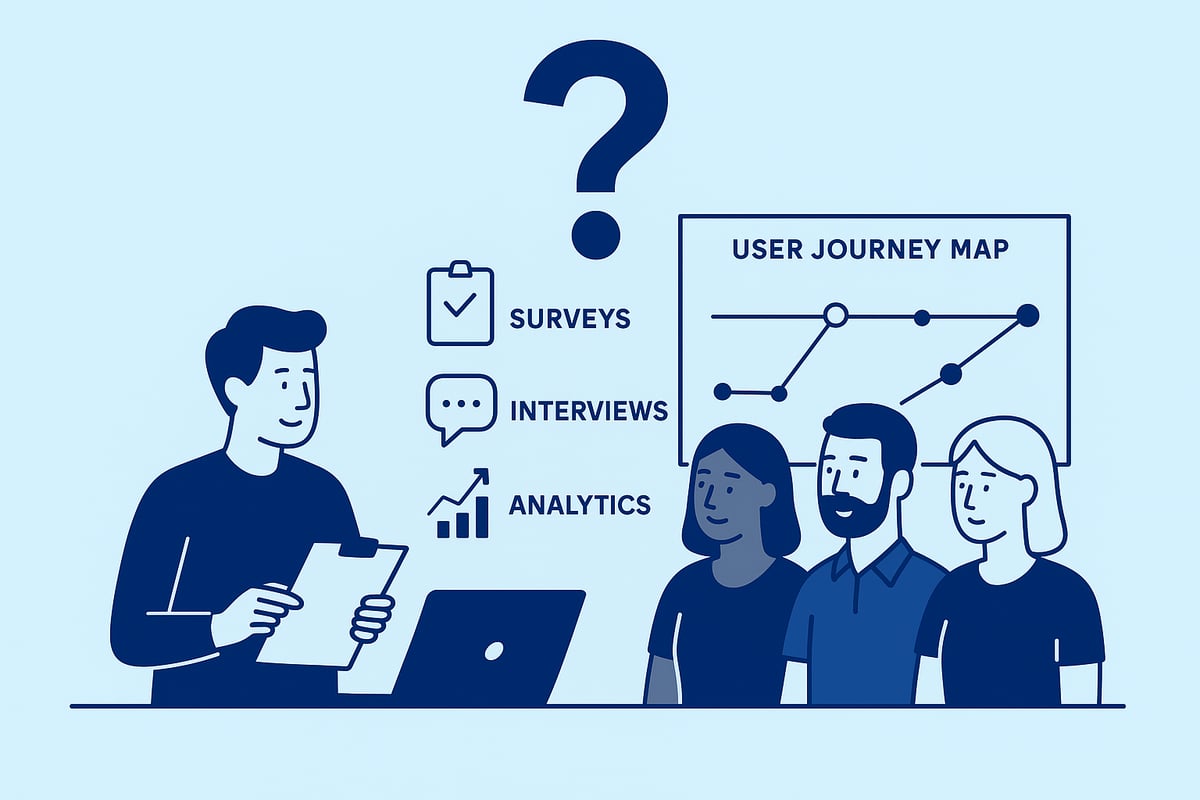
Effective mvp validation starts with understanding your target market and users in depth. Use both qualitative and quantitative research methods to avoid relying on assumptions. Qualitative research includes in-depth interviews, focus groups, and open-ended surveys. These methods uncover nuanced pain points, motivations, and user behaviors.
Quantitative research provides measurable insights. Use structured surveys, competitor analysis, and market reports to identify trends and validate the size of your opportunity. For example, analyzing market data can reveal if your problem truly exists at scale.
Building detailed user personas is essential for mvp validation. Create profiles that capture demographics, goals, frustrations, and buying triggers. Next, map the user journey to visualize how users experience the problem and where your solution can fit.
Consider this: 70% of HealthTech startups fail because they build products nobody needs. Skipping this step exposes you to the same risks. Use structured templates for customer interviews and pain point mapping to ensure you gather actionable data. Always document findings and revisit them as you refine your product idea.
Remember, mvp validation at this stage is about facts, not gut feelings. The more rigorously you research, the more likely you are to build something users actually want.
Testing Problem Hypotheses with Real Users
Once you have identified the problem, it is time to test your hypotheses with real users. This is a critical phase of mvp validation where assumptions meet reality. Start with landing page tests—build a simple page outlining your value proposition and measure interest through clicks, signups, or downloads.
Smoke tests are another powerful approach. Offer a feature or product that does not yet exist, and track if users try to access it. Pre-signup campaigns and waitlists can also signal genuine demand before investing in development.
No-code tools make these techniques accessible even without technical resources. Platforms like Carrd, Webflow, and Typeform let you launch validation experiments in hours. For practical examples and best practices on landing page validation, refer to Landing Page Validation Techniques.
Consider a SaaS founder who built a waitlist landing page before development. Early signups and feedback revealed a different core pain point than initially assumed, leading to a strategic pivot that saved months of effort.
To interpret early metrics, focus on click-through rates, signups, and engagement. High engagement suggests your problem resonates; low engagement means you may need to revisit your research. This data-driven approach ensures your mvp validation is grounded in user reality, not wishful thinking.
Step 2: Validating the Solution—Prototyping, PoCs, and Iteration
Validating your solution is the heart of effective mvp validation. Once you have confirmed the problem, the next step is to prove your solution works, is usable, and meets real user needs. This phase relies on prototyping, proofs of concept (PoCs), and rigorous iteration, laying the groundwork for a product that can win in 2026's fast-moving SaaS and HealthTech markets.
Building and Testing Prototypes and Proofs of Concept
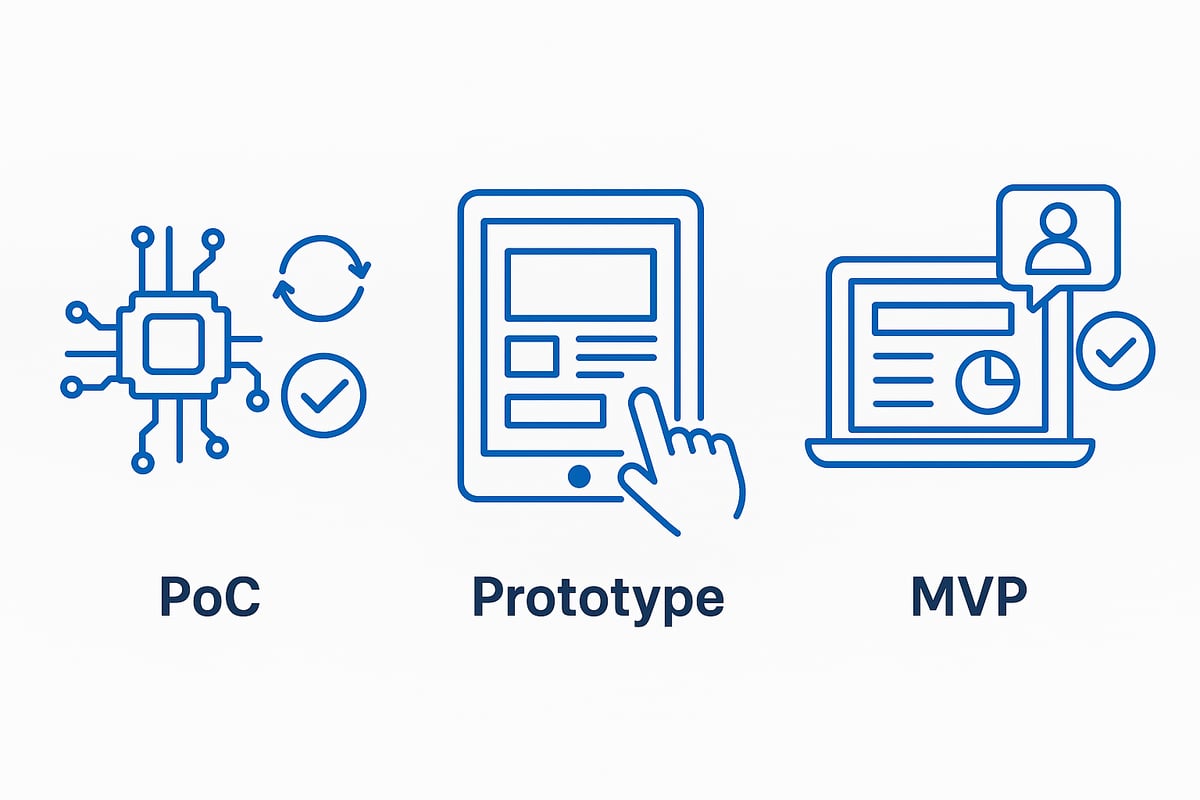
A robust mvp validation process distinguishes between a proof of concept, a prototype, and an MVP. Each serves a unique purpose:
| Stage | Goal | Timeline | Typical Use Case |
|---|---|---|---|
| PoC | Prove technical feasibility | Days to weeks | AI integration in SaaS |
| Prototype | Test usability and flow | Weeks to months | Clickable HealthTech UI |
| MVP | Test market fit | Months | Core SaaS product |
Begin with a PoC to ensure your core technology can work. For example, an AI-powered SaaS app might start here to confirm data processing capabilities. Next, shift to a prototype—a clickable, non-functional version—to validate usability with real users. In HealthTech, this could mean testing patient onboarding flows before any backend is built.
Finally, create an MVP with only essential features, focusing on value delivery. Rapid iteration is crucial at every stage. According to MVP Software Development: 5 Success Case Studies, startups that iterate through PoC, prototype, and MVP stages reduce risk and accelerate product-market fit.
Collecting and Integrating User Feedback
No mvp validation effort succeeds without user input. Early and frequent user testing uncovers hidden issues, sharpens usability, and drives real improvement. Use a mix of methods:
- Usability sessions with clickable prototypes
- A/B testing for feature comparison
- Surveys and interviews for qualitative insights
Collect feedback at each iteration. For example, a SaaS startup might refine its onboarding process after observing where users struggle during prototype testing. Use analytics to spot friction points and measure engagement.
Involve cross-functional teams—design, development, marketing—to interpret feedback holistically. Prioritize changes that align with your MVP's core value, not just user wishes. This focused approach keeps your mvp validation on track and prevents distractions.
Avoiding Common Pitfalls in Solution Validation
Many teams fall into the trap of overengineering during mvp validation. Avoid building features that are "nice to have" but not essential. The MoSCoW method helps here:
- Must-have: Core features for value delivery
- Should-have: Important, but not critical now
- Could-have: Useful, but only if time allows
- Won’t-have: Out of scope for MVP
Say no to feature creep. One HealthTech MVP famously wasted $200K by adding advanced modules before confirming user demand, only to discover most were unused.
Never neglect compliance and regulatory checks at the prototype stage. For SaaS and HealthTech, integrating security and privacy requirements into early prototypes saves time and costly rebuilds later.
Effective mvp validation requires discipline, focus, and a willingness to learn from real users. By following these steps, you dramatically improve your odds of building a solution the market truly wants.
Step 3: Market Validation—Testing Your MVP in the Real World
Testing your MVP in the real world is where theory meets reality. At this stage, mvp validation means putting your product in front of actual users, collecting actionable data, and learning what works. This process is essential for ensuring your MVP not only functions but also resonates with your target market. Without effective mvp validation, even the best ideas can fall flat.
Launching the MVP: Strategies and Best Practices
Launching your MVP is more than just flipping a switch. True mvp validation begins with defining the core features that deliver real value to users. Keep your product minimal, yet functional, to avoid unnecessary complexity. Focus on delivering a solution that users can interact with and provide feedback on.
Choose a go-to-market strategy that matches your audience and resources. Some effective approaches include beta launches, pilot programs, and invite-only rollouts. These methods allow you to control the user base, gather targeted insights, and adjust quickly as needed.
Consider this: 53.4% of surveyed founders use MVPs to attract investors, proving the importance of a well-executed launch. For example, a SaaS startup secured funding after a successful beta test demonstrated genuine user interest and retention.
Analytics play a crucial role in mvp validation. Key metrics to track include activation, retention, churn, and qualitative feedback. Use A/B testing and cohort analysis to refine your MVP for better performance.
| Metric | Purpose | What to Watch For |
|---|---|---|
| Activation | Initial engagement | % of users completing key actions |
| Retention | Ongoing user value | % of users returning |
| Churn | Loss of users | % of users lost over time |
| Feedback | Qualitative insight | User quotes, survey ratings |
| Conversion | Business impact | % of users upgrading or paying |
A robust launch strategy lays the foundation for meaningful mvp validation and future growth.
Gathering and Interpreting Market Feedback
Once your MVP is in users' hands, feedback becomes your compass. Start by collecting input from early adopters using in-app surveys, interviews, and analytics tools. These insights provide a clear picture of what users value and where the product falls short, directly impacting mvp validation outcomes.
Rapid iteration is key. Analyze real-world usage data to identify patterns, pain points, and opportunities for improvement. For example, some SaaS founders pivoted onboarding flows after discovering barriers during user testing, which boosted retention rates.
Validating product-market fit relies on measurable metrics. Focus on Net Promoter Score (NPS), retention rates, and conversion rates to assess if your MVP meets customer needs. High NPS and strong retention signal positive mvp validation, while low scores may indicate the need for a pivot.
For a deeper dive into actionable frameworks and market research strategies, explore this MVP Validation Framework: US Market Research Guide 2025, which offers proven methodologies for market testing.
Remember, the goal is to turn feedback into actionable changes, strengthening your product with every iteration.
Scaling or Pivoting Based on Validation Results
After collecting feedback and analyzing metrics, it is time to make critical decisions. Use clear frameworks to determine whether to scale, iterate, or pivot your MVP. Strong mvp validation signals include high engagement, positive feedback, and growing user numbers.
Weak mvp validation, such as low retention or negative feedback, suggests a need for further iteration or even a strategic pivot. For instance, a HealthTech MVP adjusted its core features after market feedback revealed compliance concerns and usability issues, ultimately leading to greater adoption.
Ignoring negative signals can be costly. Teams that overlook feedback risk wasted resources and missed market opportunities. Instead, treat every insight as a stepping stone toward a more refined and successful product.
By responding to validation results with agility, your team can maximize the potential of your MVP and position your product for long-term success.
Feature Prioritization and Tech Stack Selection for 2026 MVPs
Building a successful product in 2026 demands a sharp focus on both feature prioritization and tech stack selection. Every decision you make during mvp validation shapes your timeline, costs, and future scalability. Let’s break down the strategies modern SaaS and HealthTech founders are using to ensure their MVPs stand out in a crowded market.
Ruthless Feature Prioritization for Modern MVPs
Feature prioritization is the backbone of effective mvp validation. The MoSCoW method remains the gold standard for founders seeking clarity and discipline. Here’s how it works:
- Must Have: Features critical to your MVP’s core value. Without these, the product cannot function.
- Should Have: Important, but not vital. Their absence may be inconvenient, not catastrophic.
- Could Have: Nice additions that delight users but are not essential.
- Won’t Have (for now): Features intentionally excluded from the first release.
Applying this approach, SaaS and HealthTech teams avoid feature bloat and keep the focus on solving the primary user pain point. For example, a HealthTech startup succeeded by delivering only secure patient data sharing, deferring analytics and integrations until after launch. They used mvp validation to confirm that this single feature addressed the most urgent customer need.
Balancing user needs, technical resources, and compliance requirements is crucial. Early feedback loops, rapid prototyping, and clear alignment between stakeholders sharpen your priorities. By mapping features against regulatory and user impact, founders can confidently say “no” to distractions.
Choosing the Right Technology Stack
Your technology stack can make or break your mvp validation process. In 2026, founders must consider scalability, security, compliance, and the ability to integrate emerging technologies. Here’s a quick comparison of popular stacks:
| Stack | Best For | Key Benefits | Drawbacks |
|---|---|---|---|
| Node.js + React | SaaS, Web Apps | Fast prototyping, huge ecosystem | May need tuning for scale |
| Python + Django | HealthTech, AI | Rapid dev, strong security | Slower for real-time |
| .NET Core | Enterprise SaaS | Robust, compliance-ready | Licensing costs |
| Serverless (AWS Lambda, Azure) | MVPs, rapid launch | Cost-effective, easy scaling | Vendor lock-in |
The right stack should let you build fast and adapt quickly. Many startups now save up to 40% on costs by leveraging third-party APIs and automation, rather than custom-building every feature. AI and automation are now essential, streamlining onboarding and analytics from day one. For a deeper dive into how AI trends are shaping MVP development, see the Top Trends in AI‑Driven MVP Development for Startups in 2026.
Avoid expensive rebuilds by ensuring your initial choices support compliance and scaling. Early mvp validation with tech leads and security teams helps prevent technical debt and future headaches.
Regulatory and Security Considerations
Compliance is no longer optional in mvp validation, especially for SaaS and HealthTech products. Key standards include GDPR for European data, HIPAA for U.S. healthcare, and SOC2 for SaaS security. Integrating these requirements from day one protects you from legal risks and builds user trust.
Best practices include:
- Embedding encryption and access controls in your architecture.
- Running regular security audits during development.
- Using compliance-ready cloud platforms to reduce manual overhead.
A real-world example: One HealthTech MVP failed after launch due to ignoring HIPAA requirements, resulting in a costly rebuild and loss of investor confidence. By making compliance a core part of mvp validation, founders avoid these pitfalls and position their product for long-term success.
MVP Validation Tools, Resources, and Real-World Examples
Selecting the right tools and resources is crucial for effective mvp validation in 2026. With rapid market shifts and rising user expectations, founders need to streamline research, prototyping, and feedback collection. Leveraging advanced solutions can help teams validate assumptions faster and avoid costly mistakes.
Essential Tools for MVP Validation
A robust mvp validation process relies on the right mix of market research, prototyping, and analytics tools. Leading teams use survey platforms, user testing suites, and analytics dashboards to gather actionable data. No-code and low-code platforms, such as landing page builders and interactive prototype tools, allow rapid iteration and real user testing before major investments.
AI-powered analytics now play a pivotal role, providing real-time insights into user engagement and feature adoption. For founders seeking a comprehensive overview, this List of MVP Validation Tools offers curated solutions for every validation stage, from idea testing to post-launch feedback.
By integrating these tools into daily workflows, teams can accelerate decision-making, reduce guesswork, and improve market fit.
Real-World Case Studies and Success Stories
Successful mvp validation is more than theory; real startups have achieved impressive results. For example, a SaaS company cut development costs by 50 percent by using no-code tools to test their value proposition before building a full product. They captured 1,000+ early signups with a simple landing page, then refined features based on user feedback.
In HealthTech, a startup launched a clickable prototype to validate compliance workflows with clinicians. Early feedback highlighted workflow gaps, allowing the team to pivot fast and secure their first enterprise customer within three months. These stories show how mvp validation can drive faster time-to-market, cost savings, and sustainable growth.
Ignoring validation leads to pitfalls like feature bloat and wasted resources, as seen in startups that skipped user feedback and later faced costly rebuilds.
Frameworks and Templates for Founders
Founders benefit from actionable mvp validation frameworks and ready-to-use templates. Checklists help track progress through each validation stage, while interview scripts ensure consistent, high-quality user research. Feature prioritization templates, such as MoSCoW matrices, support clear decision-making and reduce scope creep.
For those focused on capturing authentic user insights, the Tools for SaaS Validation Interviews guide provides practical resources to streamline discovery calls. Additionally, referencing competitor playbooks and industry checklists can help teams benchmark their process and avoid common mistakes.
Using these resources, founders can navigate the complexities of mvp validation with confidence and clarity.
SaaS Validation: Your Guide to SaaS MVP Validation
Launching a SaaS product in 2026 requires more than a good idea; it demands a proven approach to mvp validation. SaaS Validation has become the essential destination for founders who want to test, refine, and launch products with confidence. Instead of risking time and capital, founders use this platform to ensure every step, from research to rollout, is data-driven and market-aligned.
SaaS Validation offers a comprehensive suite of resources tailored for modern mvp validation. Founders can access step-by-step guides, interactive checklists, and feature prioritization frameworks designed for SaaS environments. The platform also includes real-world case studies, illustrating how industry leaders succeeded by validating early and iterating quickly.
Key benefits for SaaS founders:
- Market research tools for pinpointing true user needs
- Feature prioritization frameworks, including MoSCoW and other proven models
- Real-world SaaS case studies with actionable insights
- Compliance and security guidance for GDPR, HIPAA, and SOC2
- Community support for peer learning and expert advice
SaaS Validation stays ahead of the curve, addressing 2026’s top concerns like AI integration, automation, and evolving compliance requirements. By leveraging these resources, founders can avoid common pitfalls and focus on building the right product for the right market.
For those eager to dive even deeper into modern MVP frameworks, exploring options like 9 ‘Minimum’ Product Frameworks for 2026 Explained can offer additional perspective on nuanced strategies.
Ready to future-proof your SaaS venture? Visit SaaS Validation to access expert mvp validation strategies, connect with a thriving founder community, and gain the clarity needed for successful product launches in 2026.