In 2026, the difference between a thriving digital product and one that fades away often comes down to a single factor: understanding the real user. Companies that tap into authentic user insights gain a competitive edge, while others risk missing the mark.
This guide reveals why real user data is critical for smarter business decisions. You will learn what real user insights are, the best ways to gather them, and the latest tools and methods for analysis.
We will also explore common pitfalls, how to avoid them, and strategies to turn these insights into sustainable growth. Ready to unlock the full power of real user understanding? Let us begin.
What Are Authentic User Insights?
Understanding how people actually use your product is crucial in 2026. Real user insights cut through assumptions and reveal the truth behind every click, tap, or drop-off. These insights form the backbone of smart decision-making, helping teams build experiences that matter.
Defining Real User Insights
At the core, real user insights are the information you gather directly from people engaging with your digital product in the real world. Unlike synthetic or test data, which comes from simulations or controlled environments, real user data captures genuine behaviors and reactions.
Key characteristics of real user insights:
- Accuracy: Reflects what users truly do, not just what they say.
- Context: Includes when, where, and how users interact.
- Behavioral depth: Goes beyond surface metrics to reveal motivations and pain points.
Examples of real user data include:
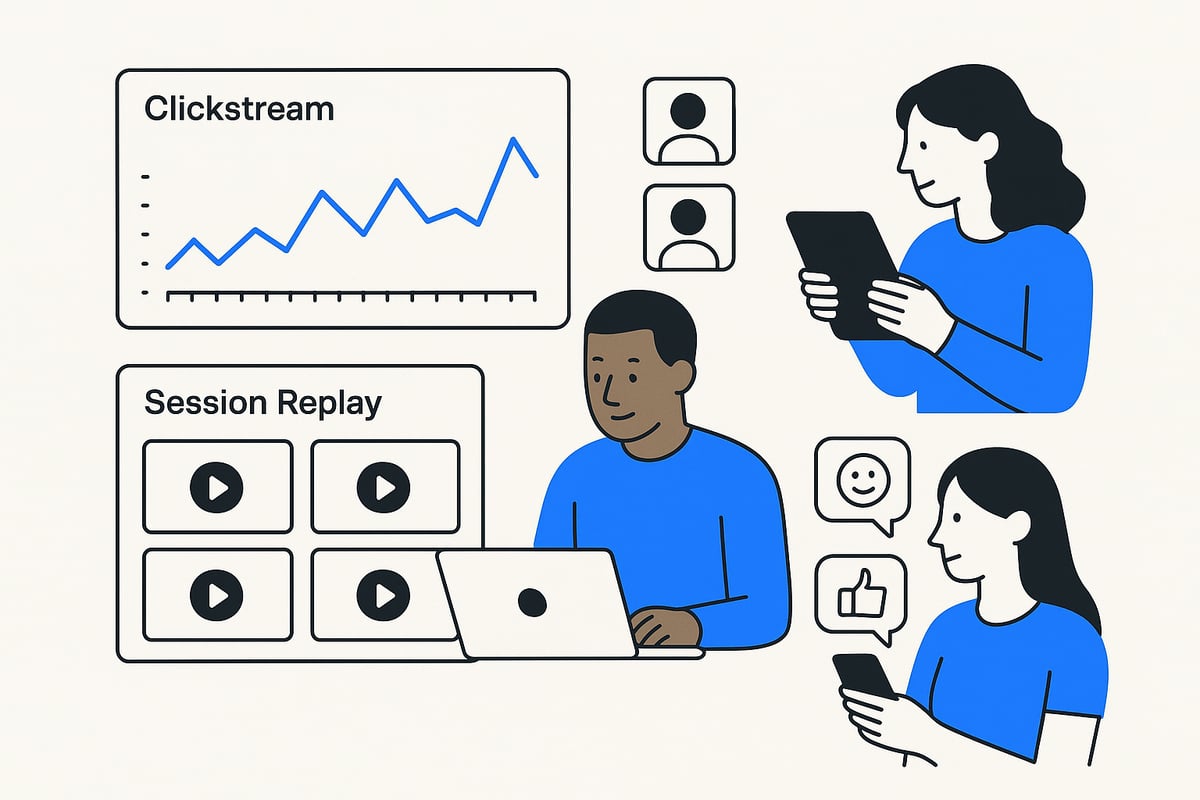
- Clickstream analytics showing navigation paths.
- Session replays that capture user journeys.
- Direct feedback from surveys, in-app prompts, or support tickets.
These insights are vital in product development, user experience (UX) design, and customer support. They inform teams about what works, what frustrates users, and where opportunities lie.
| Data Type | Description | Examples |
|---|---|---|
| Quantitative | Numeric metrics that show usage patterns | Page views, conversion rate |
| Qualitative | Comments and recordings revealing motivations | Survey answers, recordings |
In 2026’s competitive environment, using real user insights gives companies an edge. When competitors guess, you know. For SaaS products, for example, teams often use real user data to iterate features. Consider a SaaS platform that noticed a spike in support tickets tied to a specific workflow. By analyzing session replays and user comments, they pinpointed confusing navigation, made adjustments, and saw satisfaction scores rise.
Real user insights are not just numbers—they are the stories behind every interaction. They guide product teams to create features users love and prevent costly missteps.
The Evolution of User Insight Collection
The journey of collecting real user insights has shifted dramatically over the years. Early methods relied on lab-based usability studies, where participants tested features under observation. While useful, these studies lacked the messy, unpredictable context of real-world use.
Privacy regulations such as GDPR and CCPA have transformed how companies handle real user data. There is now a greater emphasis on anonymization and explicit consent, ensuring ethical and legal compliance.
Today, omnichannel and cross-device tracking allow businesses to follow a real user across web, mobile, and even IoT devices. This comprehensive view uncovers patterns that single-channel analysis misses.
AI and machine learning have revolutionized how we interpret real user insights. These technologies can quickly spot anomalies, predict churn, and surface hidden trends that inform smarter product decisions.
Adoption of real user monitoring tools continues to surge. According to recent reports, the application performance and real user monitoring market is expected to reach over $25 billion by 2033, driven by digital transformation and cloud-native complexity. For more on this trend, see the Real User Monitoring Market Growth.
As the tools and regulatory landscape evolve, the ability to collect and act on real user insights has become a defining capability for digital businesses. Adapting to these changes is non-negotiable for success.
Methods for Gathering Real User Data
Collecting authentic insights starts with choosing the right approach for real user data. In 2026, organizations have more options than ever before, but understanding each method's strengths and limitations is essential. Let us explore how you can gather real user information efficiently and ethically.
Passive vs. Active Data Collection
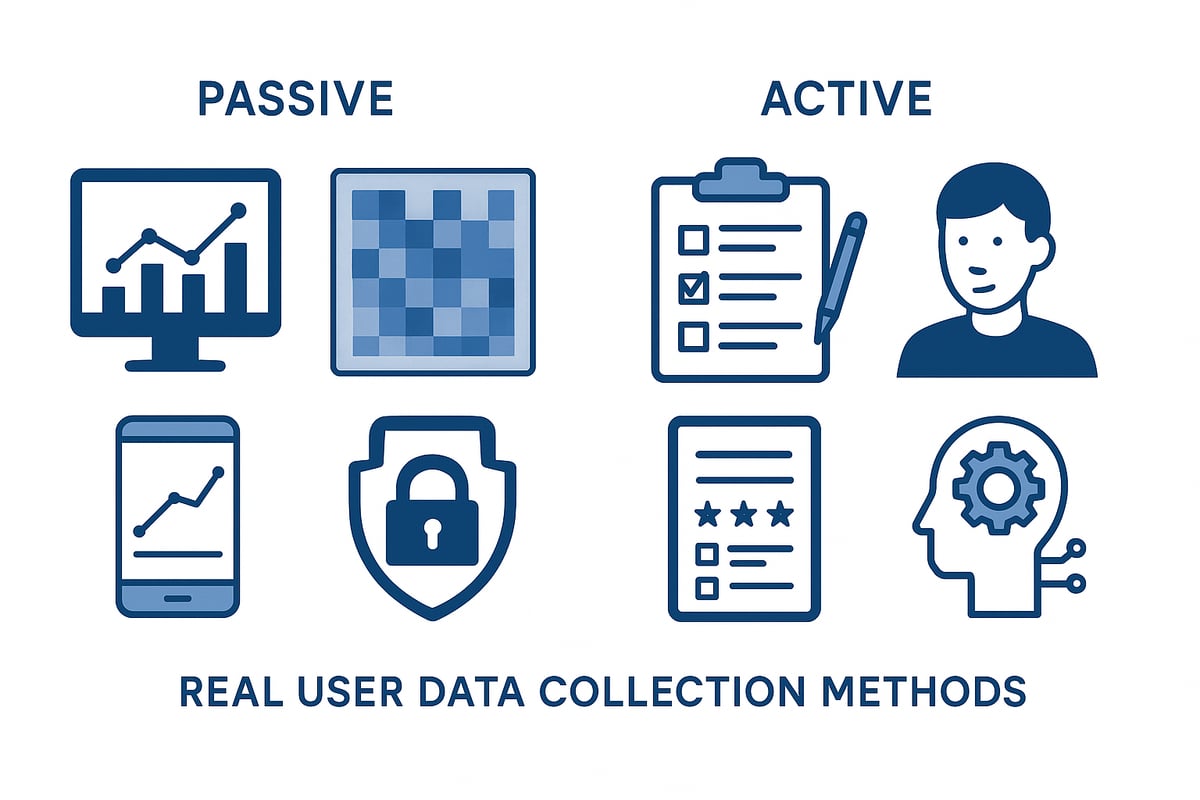
There are two main approaches for collecting real user data: passive and active. Each serves a unique purpose, and the best insights often come from combining both.
Passive collection involves monitoring real user interactions without direct engagement. This includes analytics, Real User Monitoring (RUM), heatmaps, and performance metrics. These methods capture how users actually behave within your product or website.
Active collection, on the other hand, requires direct input from the real user. Common techniques are surveys, in-app feedback forms, usability testing, and interviews. These strategies allow you to ask users about their needs and pain points directly.
Pros and Cons Table:
| Method | Pros | Cons |
|---|---|---|
| Passive | Scalable, unbiased, continuous, context-rich | May miss user intent, less qualitative |
| Active | In-depth feedback, clarifies intent, flexible | Time-consuming, bias risk, lower scale |
For a holistic view, many teams blend passive and active methods. For example, passive analytics might show a high drop-off rate on a signup page, prompting targeted interviews to uncover underlying causes. If you are looking for tools to streamline active feedback, review this guide on Tools for SaaS validation interviews, which highlights top solutions for gathering real user input efficiently.
Combining both approaches gives you a 360-degree understanding of the real user journey, enabling more strategic decisions.
Key Tools and Technologies in 2026
The landscape for real user data collection tools has evolved rapidly. Today, teams have access to advanced platforms that support both passive and active methods.
Leading RUM Platforms:
- Datadog
- Google Analytics
- Proprietary enterprise solutions
These platforms deliver real user monitoring at scale, tracking performance and user journeys across devices.
Session Replay and Heatmap Solutions:
- Record real user sessions for playback
- Visualize where users click, scroll, or hesitate
Mobile and Web Monitoring:
- Unified dashboards for cross-platform insights
- Enhanced error tracking and user experience metrics
CI/CD and DevOps Integration:
- Real user data feeds directly into release cycles
- Automated alerts for performance regressions
AI-Powered Automation:
- Machine learning algorithms identify patterns and anomalies in real user behavior
- Automated insight extraction reduces manual analysis time
Here is a quick overview:
| Tool Type | Example Platforms | Primary Use Case |
|---|---|---|
| RUM | Datadog, Google Analytics | Performance, behavior analytics |
| Session Replay | Hotjar, FullStory | UX review, bug diagnosis |
| Heatmaps | Crazy Egg, Mouseflow | UI optimization, engagement |
| Feedback Management | UserVoice, Typeform | Collecting real user opinions |
Selecting the right mix of tools ensures your team can capture, analyze, and act on real user data effectively.
Ensuring Data Quality and Privacy
With the expansion of real user data collection, privacy and data quality have never been more critical. Ethical handling of user information is not just a legal requirement, but a strategic advantage.
Best Practices for Data Security:
- Anonymize real user data before analysis
- Encrypt data at rest and in transit
- Limit access to sensitive information
Compliance with Privacy Laws:
- Stay updated with GDPR, CCPA, and evolving global regulations
- Obtain explicit consent from the real user for data collection
- Regularly audit your data flows and storage processes
Balancing Insight and Ethics:
- Only collect data essential for your objectives
- Design data collection with privacy-first principles in mind
- Communicate transparently with users about how their data is used
A privacy-first approach fosters trust and enables sustainable access to real user insights. For instance, companies that prioritize anonymization and user consent often find higher participation rates and more reliable data.
By focusing on both data quality and privacy, you ensure that your real user insights are accurate, actionable, and ethically sound.
Analyzing and Interpreting Authentic User Insights
Unlocking the value of real user data requires more than just collection—it demands careful analysis, context-driven interpretation, and a commitment to accuracy. By transforming raw inputs into actionable intelligence, businesses can make smarter decisions, improve user experiences, and drive growth. Let’s break down the steps and best practices for analyzing and interpreting authentic insights.
Turning Raw Data into Actionable Intelligence
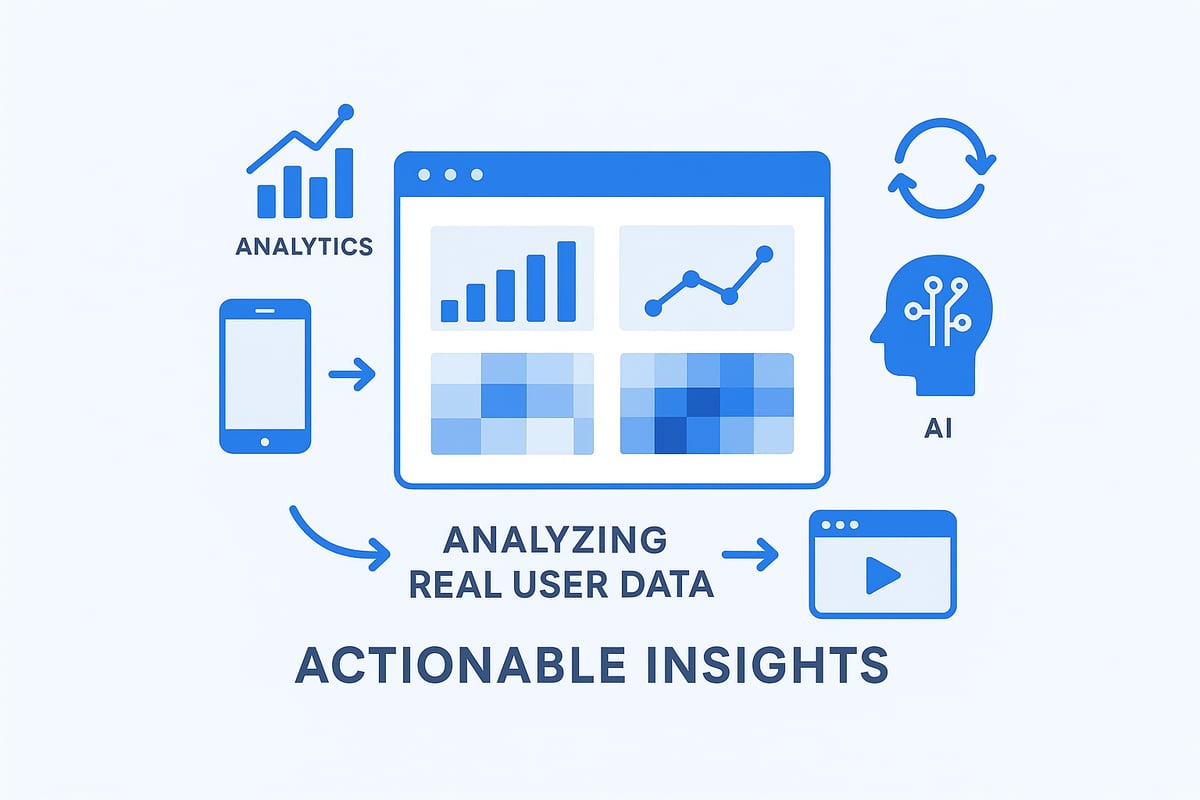
The journey from raw real user data to meaningful insights starts with data cleaning and normalization. This process removes duplicates, corrects errors, and ensures consistency across sources. Clean data is the foundation for reliable analysis, reducing the risk of misleading results.
Once your real user dataset is ready, use visualization tools and dashboards to highlight key trends. Dashboards allow teams to spot anomalies, track user flows, and drill down into specific behaviors. For instance, session replay tools let you watch real user interactions, revealing friction points that analytics alone might miss.
Common steps for translating real user data into action:
- Clean and normalize all incoming data streams.
- Use dashboards to monitor metrics in real time.
- Identify patterns, such as frequent drop-offs or repeated errors.
- Translate findings into concrete UX improvements.
For example, a team might discover through session replays that users abandon a signup form at a particular field. By simplifying that field, they can reduce friction and boost conversions. This cycle of observation, analysis, and action is at the heart of leveraging real user insights effectively.
Advanced Analytical Methods
To fully understand real user behavior, advanced analytical techniques are essential. Segmentation divides users by device, location, cohort, or behavior, revealing differences that aggregate data can hide. Funnel analysis identifies where users drop off in multi-step processes, guiding targeted improvements.
Correlating performance metrics, such as load time, with user satisfaction scores, uncovers relationships between technical and experiential factors. Predictive analytics, powered by machine learning, anticipates what real user groups might need next, allowing proactive optimizations.
Here’s a table summarizing segmentation methods:
| Segmentation Type | Example Use Case | Value |
|---|---|---|
| Device | Mobile vs. desktop behavior | Tailored UI for each platform |
| Cohort | Onboarding month | Track feature adoption over time |
| Geography | Country-specific preferences | Regional content or offers |
| Behavior | Power users vs. new users | Personalize experience, support |
Despite advances in AI, human expertise remains critical. Algorithms can surface trends, but nuanced interpretation of real user data ensures decisions are contextually sound. However, the growing use of AI introduces new challenges: as highlighted in recent reports, the surge in generative AI has led to more data policy violations, making it essential to balance automation with oversight. For further insights, see AI’s Impact on User Data Interpretation.
Avoiding Common Pitfalls in Interpretation
Analyzing real user insights is not without risks. One frequent pitfall is confirmation bias—interpreting data to support preconceived ideas rather than following the evidence. It is also easy to mistake correlation for causality, leading to misguided product changes.
Relying solely on quantitative data means missing the “why” behind real user actions. Qualitative feedback, such as open-ended comments or usability interviews, adds depth and context. Ignoring edge cases or minority groups can leave blind spots, especially if their needs differ from the majority.
Consider this example: a SaaS company noticed a decline in engagement and, based on aggregate real user metrics, decided to overhaul their dashboard. However, deeper analysis revealed the drop was isolated to a specific browser version. The costly redesign could have been avoided with more granular segmentation and attention to all user segments.
To avoid these mistakes:
- Regularly review both quantitative and qualitative data.
- Question assumptions and seek diverse perspectives.
- Validate findings with real user feedback before major changes.
By combining careful analysis with a holistic view, organizations can turn real user insights into meaningful improvements, while minimizing costly errors.
Applying User Insights for Product and Business Growth
Unlocking the power of real user insights is the catalyst for sustainable product and business growth in 2026. Modern organizations are leveraging data from authentic user interactions to drive improvements, enhance retention, and inform strategic decisions. Understanding how to harness real user data transforms guesswork into measurable impact.
Driving Continuous Product Improvement
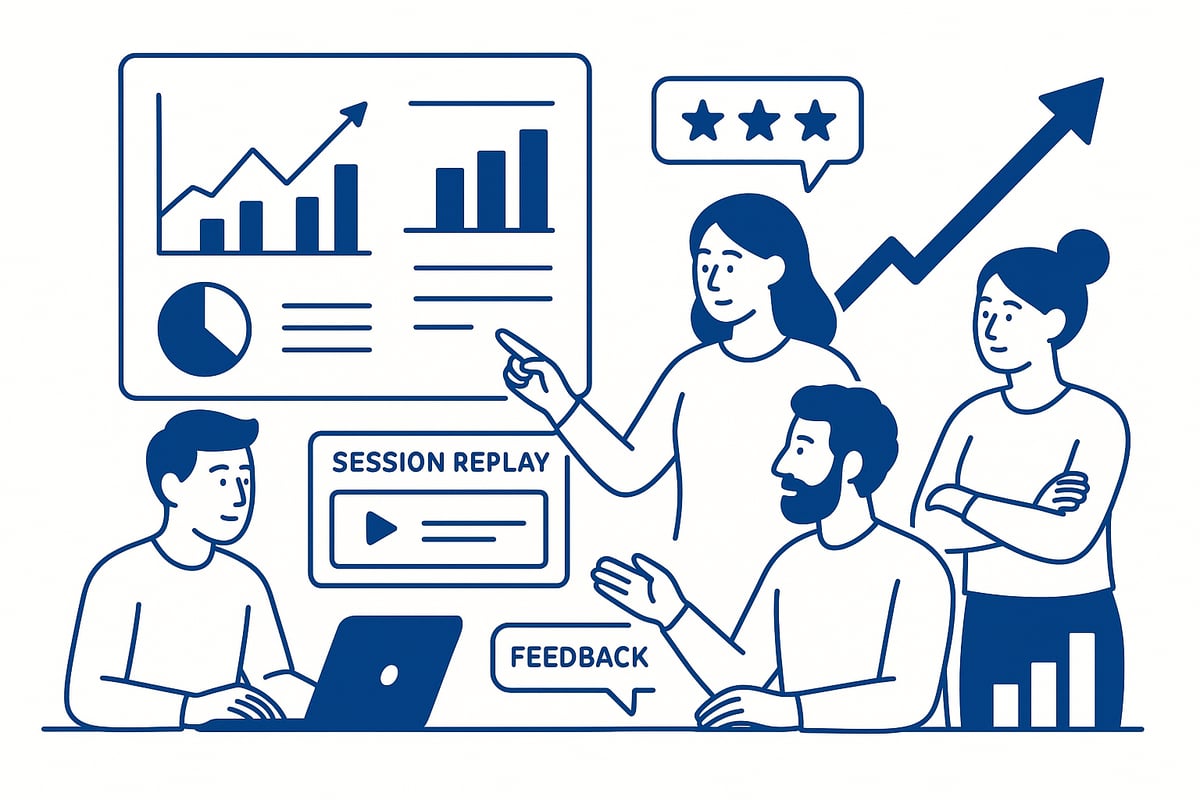
Continuous improvement is at the heart of digital product success. By integrating real user insights into every development cycle, teams ensure their solutions evolve in step with customer needs. Real user data highlights which features are used most, where users encounter friction, and how workflows can be streamlined.
For example, a SaaS platform may deploy session replay tools to observe real user navigation patterns. These insights reveal confusing interface elements or repeated drop-off points. Acting on this information, the team can make targeted UX tweaks, such as simplifying onboarding steps or clarifying button labels.
Consider the following table summarizing the impact of real user monitoring on product KPIs:
| Metric | Before Insights | After Real User Improvements |
|---|---|---|
| Onboarding completion | 62% | 83% |
| Feature adoption rate | 45% | 70% |
| Support tickets/month | 120 | 65 |
By embedding real user feedback loops into sprints, organizations prioritize the changes that matter most. This approach accelerates iteration cycles and ensures that updates are grounded in what users truly experience. Ultimately, real user insights turn product development from a guessing game into a science.
Enhancing Customer Experience and Retention
Retaining customers in 2026 depends on delivering seamless, personalized experiences. Real user insights provide the granular visibility needed to identify and resolve pain points before they escalate. Teams can analyze clickstream data, heatmaps, and in-app feedback to surface friction areas that impact satisfaction.
For instance, if real user analytics reveal that users consistently abandon a checkout process at a specific step, product teams can investigate and redesign that interaction. Small adjustments, such as reducing form fields or adding contextual help, often lead to significant increases in conversion rates.
Personalization also benefits from real user data. By segmenting users based on behavior, preferences, and engagement, businesses can tailor recommendations and communication. This individual approach not only increases retention but also drives upsell opportunities.
Recent studies show that companies leveraging real user insights reduce churn rates by up to 25%. Proactive support, informed by authentic user signals, creates a sense of trust and loyalty. In a crowded market, understanding the real user journey is the difference between short-term use and lifelong advocacy.
Informing Strategic Business Decisions
Effective strategy relies on more than intuition. Real user insights equip leaders with the evidence needed to validate market fit, discover expansion opportunities, and mitigate risk. By analyzing behavioral metrics and feedback, organizations can pivot or double down with confidence.
SaaS founders, for example, use real user data to test assumptions before committing to full-scale development. Tracking how early adopters interact with MVPs, and integrating feedback loops, reveals whether the product truly addresses market needs. This approach minimizes costly missteps and accelerates time-to-value.
For those seeking actionable frameworks, SaaS validation strategies with real user data offers comprehensive guides for turning insights into growth. These resources empower founders to leverage real user evidence, ensuring that every strategic move is grounded in reality.
Ultimately, organizations that champion real user insight-driven decision making adapt faster, invest wiser, and unlock new avenues for growth. By embedding real user data into every level of business planning, companies transform uncertainty into opportunity.
The Future of Real User Insights: Trends and Predictions for 2026
Understanding the future of real user insights is essential for any organization aiming to stay ahead in the digital landscape. As technology rapidly evolves, the methods for gathering and leveraging real user data are shifting, opening new opportunities and presenting unique challenges. Let’s explore what lies ahead for real user strategies in 2026.
Emerging Technologies Shaping User Insight Collection
By 2026, real user insight collection is being transformed by several groundbreaking technologies. AI-driven behavioral analytics platforms are now capable of processing vast streams of real user data in real time, detecting subtle patterns that humans might miss. These tools not only surface trends but also help predict future behaviors, giving businesses a crucial advantage in product development.
Privacy-preserving data techniques like federated learning and edge analytics are gaining adoption. These methods allow real user information to be analyzed locally on user devices, reducing risks associated with centralized storage and ensuring compliance with stricter privacy regulations.
The integration of real-time, in-app experience optimization is also changing how teams respond to user needs. For example, user interfaces can now adapt instantly based on live real user feedback, enhancing engagement and reducing friction. Additionally, the growing use of voice, AR/VR, and IoT devices is expanding the scope of real user insight, requiring platforms to interpret more complex interaction data.
One emerging area is the use of AI systems with advanced memory, which enables context-aware user interactions and richer insights. For an in-depth look at how this technology will shape experiences, see Long-Term Memory in AI User Experiences.
Challenges and Opportunities Ahead
As real user insights become more powerful, organizations face significant challenges. First, navigating rising data privacy demands is a top priority. New regulations require ongoing investment in secure data collection and transparent user consent processes. Balancing the depth of real user insight with ethical considerations will continue to be a delicate task.
Scaling real user insight across complex product ecosystems presents another hurdle. As companies launch more features and expand across platforms, synthesizing data from multiple sources becomes increasingly difficult. There is a growing need for unified dashboards and smarter automation to manage these expanding data sets efficiently.
On the opportunity side, democratizing access to real user insights within organizations is gaining momentum. Companies are investing in tools that make data understandable and actionable for teams beyond analytics or engineering. This shift enables faster decision-making and empowers every department to leverage real user findings for innovation.
To summarize, while the future brings more complexity, it also unlocks unprecedented potential for those who can harness and protect real user data effectively.
Preparing Your Business for the Next Generation of User Insights
Organizations preparing for the next wave of real user insights must focus on building a strong culture of data-driven decision making. This starts by fostering collaboration between UX, product, engineering, and analytics teams, ensuring that real user data informs every stage of the product lifecycle.
Investing in cross-functional teams is essential. These groups can quickly interpret real user information, translate findings into action, and close the loop with continuous feedback. Training staff to use emerging tools and understand evolving privacy requirements will be crucial for sustainable success.
Leading companies are already developing strategies to future-proof their real user insight practices. For instance, they are piloting AI-driven platforms, integrating privacy-first design principles, and creating clear policies for data governance. These steps ensure that real user insights remain accurate, secure, and actionable as technology and regulations evolve.
By prioritizing adaptability, education, and transparency, your business can confidently navigate the future and turn real user insights into a lasting competitive advantage.
Real User Insights for SaaS Validation
SaaS founders in 2026 face a fast-paced, competitive environment where assumptions alone can lead to costly missteps. Harnessing real user data allows teams to validate ideas before committing resources, ensuring that every feature or pivot aligns with actual market demand and user needs.
Why Use Real User Data for SaaS Validation?
Real user insights provide actionable evidence of what your audience wants, replacing guesswork with clear signals. By tracking behavioral metrics such as trial signups, onboarding completion rates, and feature engagement, SaaS founders can spot patterns that reveal true demand. This data-driven approach supports smarter decisions about which ideas to pursue or pivot away from.
Understanding the value of authentic user insights and thorough market research is essential for SaaS validation. For a deeper dive, explore Why market research is crucial for SaaS idea validation, which covers strategies to minimize risk and maximize fit.
Integrating Feedback Loops Early
Incorporating real user feedback from the start reduces the risk of building unwanted features. Early feedback loops enable teams to:
- Identify pain points and friction in onboarding.
- Refine the product roadmap based on actual behavior.
- Validate hypotheses with minimal investment.
By acting on real user responses, founders can quickly adjust direction, saving both time and capital.
Tools and Frameworks for SaaS Validation
Selecting the right frameworks helps founders capture and analyze real user insights efficiently. Common tools include:
| Tool/Framework | Purpose | Example Use Case |
|---|---|---|
| MVP Analytics | Track core feature adoption | Measure which features users try first |
| Onboarding Analysis | Identify drop-off points | Improve user activation rates |
| In-app Feedback | Gather qualitative data | Collect suggestions for new features |
Combining these tools creates a feedback-rich environment where every decision is backed by real user evidence.
Real-World Successes and the Importance of Validation
Many SaaS startups have pivoted or succeeded by listening to real user signals. For example, a founder might notice unexpected usage patterns, leading to a feature overhaul that dramatically improves retention. Others catch early signs of poor product-market fit, enabling a strategic pivot before resources are exhausted.
In the 2026 SaaS landscape, validating with real user data before development is not optional. It is the foundation for building products that resonate, drive growth, and outpace competitors.
Best Practices and Actionable Steps for Implementing Real User Insight Strategies
Implementing a robust real user insight strategy is essential for digital product teams in 2026. To maximize value and minimize risk, follow a structured, step-by-step approach that integrates real user data at every stage of your workflow.
Step 1: Define Clear Objectives and KPIs
Start by aligning your real user data collection with specific business and product goals. Set measurable KPIs that reflect real user behavior, such as reducing onboarding drop-off or increasing feature adoption.
For example, if your objective is to streamline onboarding, define a target completion rate and time to first success. These clear benchmarks ensure that insights from real user interactions translate into actionable improvements.
By focusing on outcomes that directly connect to real user experience, your team can prioritize efforts and track progress with confidence.
Step 2: Select the Right Tools and Methods
Selecting the right mix of tools is crucial for capturing a full picture of real user interactions. Evaluate solutions according to your product type, scale, and privacy requirements.
Combine passive data sources like analytics and heatmaps with active methods such as surveys and interviews. This hybrid approach provides depth and context, revealing not just what users do, but also why they do it.
Consider the integration capabilities of your tools with existing workflows to ensure real user insights are accessible and actionable for cross-functional teams.
Step 3: Collect and Secure Data Responsibly
Responsible data collection is non-negotiable in today’s privacy-focused environment. Anonymize and encrypt all real user data, and always obtain explicit user consent.
Stay current with privacy laws and implement privacy-first practices. For SaaS and digital products, learn how to Turn GDPR compliance into a competitive advantage by using compliance as a trust signal and differentiator.
Regularly audit your data collection processes to ensure the security and integrity of real user information, building long-term user trust.
Step 4: Analyze, Interpret, and Share Findings
Transform raw real user data into actionable intelligence through systematic analysis. Clean and normalize datasets, then use dashboards and visualizations to spot patterns and insights.
Schedule regular review cycles with your UX, product, and engineering teams. Communicate findings through compelling storytelling, making insights accessible and motivating for decision-makers.
Prioritize transparency and ethical data sharing, especially when leveraging AI-driven analysis, to maintain the trust of your real user base.
Step 5: Iterate and Optimize Continuously
Continuous improvement is the hallmark of mature real user insight strategies. Build feedback loops into every product development sprint, incorporating new findings into your roadmap.
Monitor the impact of each change on real user behavior. Refine features and workflows based on data, not just intuition.
This iterative approach ensures your product evolves in step with real user needs, driving sustained engagement and satisfaction.
Common Mistakes to Avoid
Avoid these pitfalls when implementing real user insight strategies:
- Overlooking minority or edge case experiences
- Failing to act promptly on collected insights
- Overcomplicating data collection or analysis processes
- Ignoring privacy and compliance requirements
- Relying only on quantitative data without real user feedback
Example Implementation Roadmap
| Phase | Key Activities | Success Metrics |
|---|---|---|
| Setup | Define KPIs, select tools, configure privacy | KPIs set, tools operational |
| Data Collection | Launch passive and active data gathering | Data completeness, user consent |
| Analysis | Clean/visualize data, share findings | Insights delivered, patterns found |
| Optimization | Implement changes, monitor results | Engagement, retention improved |
| Review & Iterate | Schedule review, refine strategy | KPIs met or adjusted |
By following these best practices, your team will unlock the full value of real user insights, ensuring data-driven decisions and continuous business growth.