Imagine building, scaling, and optimizing your SaaS business in 2026 with a level of AI-powered efficiency that was once unimaginable. The rapid evolution of saas ai is fundamentally reshaping the landscape, pushing founders, product managers, and entrepreneurs to rethink every aspect of their strategy.
AI is no longer optional—it is critical for success in SaaS, transforming product development, customer support, and business growth. With the right approach, AI becomes your competitive edge, enabling faster innovation and deeper customer engagement.
This definitive guide will equip you with actionable insights, proven frameworks, and real-world examples to help you leverage saas ai effectively. You will discover the latest trends, essential technologies, step-by-step implementation strategies, and expert guidance on validation and future-proofing.
Ready to harness the full potential of saas ai for sustainable growth and innovation in 2026 and beyond? Let’s get started.
The 2026 SaaS AI Landscape: Trends and Opportunities
The landscape for saas ai in 2026 is transforming faster than ever. AI is reshaping how SaaS products are designed, built, and scaled, unlocking new levels of efficiency and innovation. As we look at this dynamic environment, it is clear that understanding the trends, opportunities, and challenges is crucial for anyone aiming to succeed in the world of saas ai.

The Evolution of AI in SaaS
Since 2020, saas ai has undergone a dramatic transformation. Early AI adoption focused on simple automations, but by 2026, advanced AI-driven UI/UX, intelligent integrations, and fully automated workflows have become the norm. Over 70% of SaaS companies now embed AI features, dramatically increasing product velocity and enhancing customer experiences.
For example, many SaaS platforms now leverage AI to personalize dashboards, automate repetitive tasks, and suggest next-best actions for users. This evolution has also democratized app building, allowing non-technical founders to launch competitive products thanks to no-code AI tools.
Today, even small teams can leverage saas ai to compete with industry giants. The barriers to entry are lower, and the pace of innovation is accelerating. For a deeper dive into how these changes are shaping the industry, see AI in SaaS: Trends and Impact.
Major AI-Driven Trends Shaping SaaS
Several major trends define saas ai in 2026. No-code and low-code AI platforms, like Bolt.new, empower founders to create and iterate on SaaS apps in a matter of hours. Hyper-personalization, powered by AI analytics and recommendation engines, delivers tailored experiences to every user.
Automated customer support and onboarding have become standard, with AI agents now handling the majority of Tier 1 queries. Enhanced security and compliance are achieved through real-time AI monitoring and anomaly detection. Predictive analytics help SaaS teams anticipate user behavior and reduce churn.
A striking example: some SaaS products are now built in under five hours using AI-driven tools, a feat unimaginable just a few years ago. Industry data projects AI-based SaaS solutions to grow by 30% year over year through 2026, highlighting the explosive momentum of saas ai.
Opportunities for SaaS Founders and Innovators
This new era of saas ai unlocks unprecedented opportunities for founders and innovators. Lower technical barriers make it easier than ever to launch new SaaS startups, while rapid MVP development accelerates iteration cycles. AI serves as a powerful differentiator in crowded markets.
New business models are emerging, including subscription, usage-based, and hybrid approaches, all enabled by AI-driven insights. Global expansion is more accessible, thanks to AI-powered localization and translation tools. Investor interest is surging for AI-first SaaS startups, as seen in recent case studies where club membership platforms were built in record time.
For SaaS founders, embracing saas ai means tapping into a toolkit that drives both speed and scale. The opportunity to innovate and disrupt has never been greater.
Challenges and Considerations
Despite the promise of saas ai, founders must navigate several challenges. Data privacy and ethical AI concerns are top priorities, requiring robust governance and transparent practices. Managing AI-related costs, such as token usage and infrastructure, demands careful planning.
Ensuring AI transparency and explainability is essential for building user trust. There is also a growing need for AI literacy among founders and teams to bridge skill gaps. Finally, balancing automation with human oversight remains a critical factor for long-term success in the evolving saas ai landscape.
Core AI Technologies Powering SaaS in 2026
The rapid evolution of saas ai is transforming the foundation of modern software businesses. In 2026, a new generation of AI-powered capabilities is driving innovation, efficiency, and differentiation for SaaS products. Let us explore the crucial technologies that define this landscape and see how leading platforms are leveraging them to deliver value. For real-world inspiration, see how pioneers have implemented AI-powered SaaS examples to solve practical challenges.
Natural Language Processing (NLP) and Conversational AI
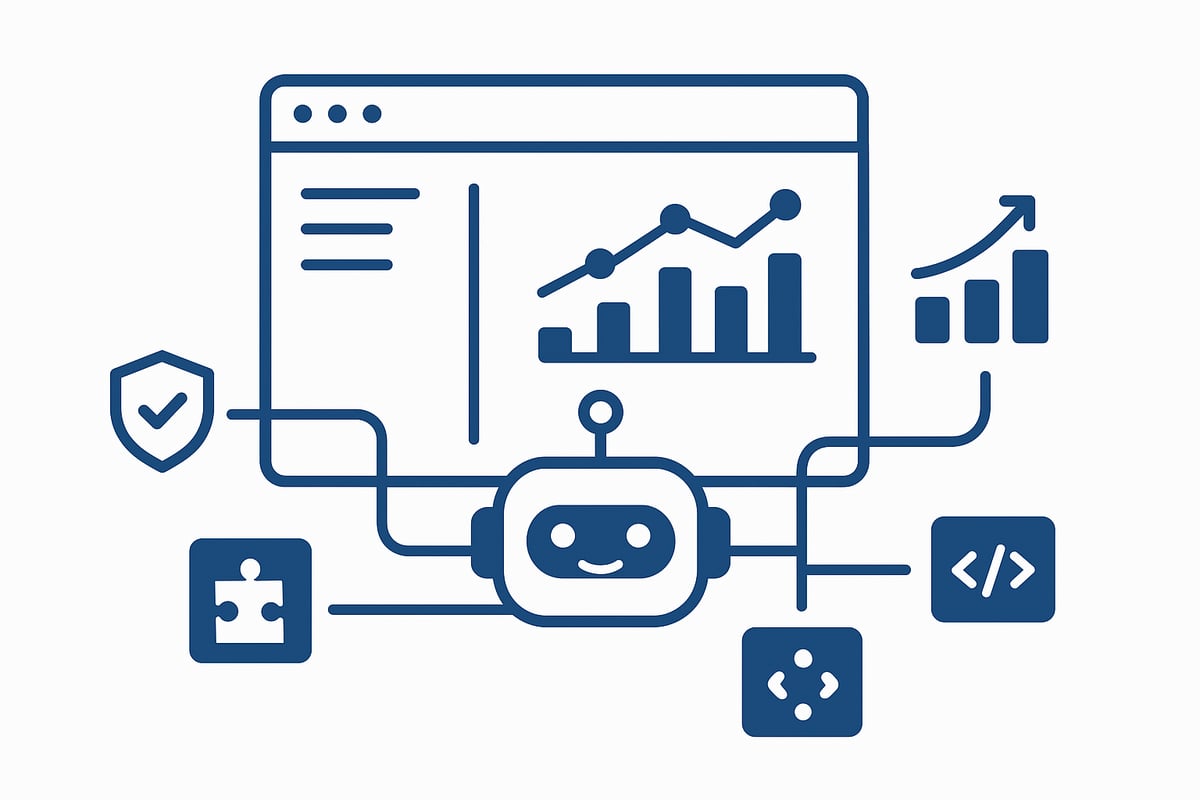
NLP stands at the forefront of saas ai, enabling seamless communication between users and software. In 2026, SaaS platforms leverage NLP to power chatbots, virtual assistants, and advanced support systems. These AI-driven agents can handle over 80 percent of Tier 1 support queries, freeing human teams for more complex tasks.
- Personalized onboarding flows
- Proactive customer engagement
- Integration with SaaS dashboards and user portals
By embedding conversational experiences, saas ai platforms deliver intuitive, responsive, and efficient support to users.
Machine Learning and Predictive Analytics
Machine learning is now essential for extracting actionable insights from user data in saas ai. Modern SaaS products use predictive analytics to anticipate customer needs, forecast churn, and uncover upsell opportunities.
- Automated segmentation and targeting
- Real-time behavior analytics
- Data-driven product optimization
According to industry reports, SaaS companies using machine learning see a 25 percent higher retention rate. This empowers teams to make informed decisions and adapt quickly to market demands with saas ai.
Computer Vision and Automation
Computer vision is unlocking new possibilities in saas ai, especially for products in design, healthcare, and security. AI-powered image recognition automates visual QA, asset management, and content moderation.
- Design tools that process screenshots instantly
- Healthcare platforms for medical image analysis
- Security apps for anomaly detection
By integrating computer vision, saas ai solutions increase accuracy, reduce manual effort, and enable faster innovation.
AI-Enhanced Security and Compliance
Security is a top priority for every saas ai platform in 2026. AI-driven tools now monitor for anomalies, prevent fraud, and automate compliance checks to meet regulations like GDPR and CCPA.
- Automated incident response and risk scoring
- Continuous compliance audits
- Real-time threat detection
With these capabilities, saas ai businesses build trust and ensure robust protection for user data, minimizing risks and maintaining regulatory standards.
Integration Platforms and No-Code AI Builders
The rise of no-code and low-code platforms is democratizing saas ai development. Tools like Bolt.new allow non-technical founders to prototype and launch SaaS applications with drag-and-drop AI features in hours.
- Rapid app creation with minimal coding
- Token-based pricing models
- Modular, scalable AI components
Saas ai is now accessible to a wider audience, empowering innovators to experiment, iterate, and scale faster than ever before. These integration platforms ensure that businesses of all sizes can harness the power of AI for sustainable growth.
Step-by-Step Guide: Implementing AI in Your SaaS Business
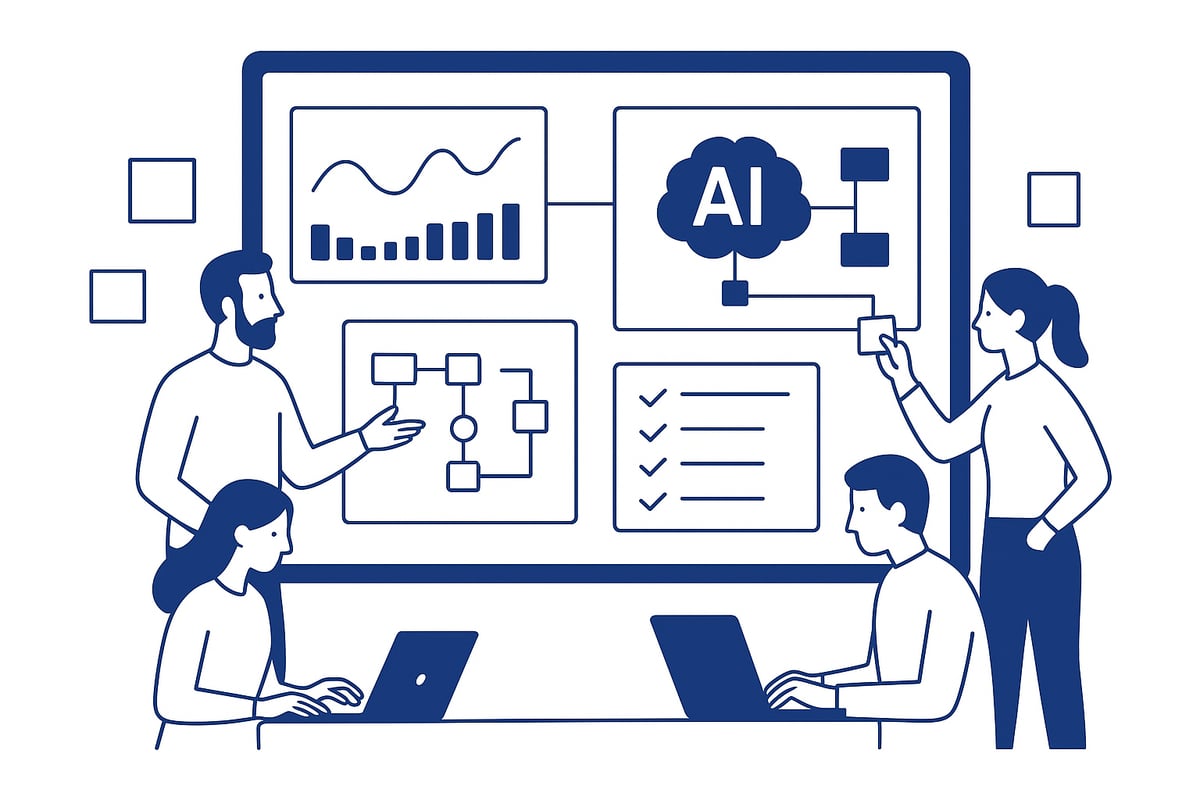
Implementing SaaS AI in 2026 requires a structured, actionable approach. Below, you will find a proven seven-step process designed for founders, product managers, and SaaS teams eager to leverage AI for growth, innovation, and operational efficiency.
Step 1: Assessing AI Readiness and Setting Goals
Before diving into saas ai, assess your product's current state and technical capabilities. Review your tech stack to determine if it supports AI integration, and analyze your data infrastructure for scalability.
Define clear business objectives for adopting saas ai. Are you seeking to automate manual tasks, boost retention, or unlock new revenue streams? Align these goals with your available resources, including data quality, in-house talent, and budget.
Many SaaS founders are now shifting from traditional development toward an AI-first mindset, recognizing that readiness is essential for successful implementation.
Step 2: Selecting the Right AI Technologies and Tools
Choosing the best AI technology is vital for a successful saas ai journey. Consider the scalability, integration, and support offered by different platforms. Compare custom-built AI solutions with off-the-shelf or no-code AI builders to find the right fit.
| Option | Pros | Cons |
|---|---|---|
| Custom AI Development | Tailored, flexible | Expensive, slower |
| No-Code AI Builders | Fast, low technical barrier | Less control, limited scope |
Evaluate integration with your current SaaS architecture. For practical insights, explore resources on Using AI Marketing Tools for SaaS, which details tool selection and real-world workflows for saas ai.
Step 3: Data Strategy and Preparation
Quality data is the fuel for effective saas ai. Begin by collecting and cleaning your datasets, ensuring they are accurate, relevant, and labeled. Address privacy and compliance from the start.
Leverage user behavior analytics and feedback to refine your data pool. For example, analyze support tickets using saas ai tools to uncover patterns and feature ideas.
Data-driven decision-making is crucial, so establish processes for ongoing data enrichment and validation as your AI models evolve.
Step 4: Building and Training AI Models
When building saas ai models, decide whether to use pre-trained models or develop custom ones. Pre-trained models offer speed, while custom models provide specificity for unique business needs.
Work in iterative cycles. Develop a prototype, test it, gather feedback, and refine. Collaboration between AI engineers and product teams accelerates this process.
# Pseudo-code for training a simple model
model = train_model(cleaned_data)
evaluate(model, test_data)
deploy(model)
Rapid prototyping tools like Bolt.new enable SaaS teams to build and test AI features in hours, not weeks.
Step 5: Integrating AI into SaaS Workflows
Embedding saas ai features into existing workflows requires careful planning. Focus on seamless UX by integrating AI into both user-facing and backend processes.
Monitor the performance and impact of each AI feature. For example, implementing AI-driven onboarding flows can significantly reduce churn and improve user satisfaction.
Ensure that automation supports, rather than disrupts, your product’s core experience.
Step 6: Testing, Validation, and Continuous Improvement
Robust quality assurance is essential for saas ai. Use A/B testing and gather user feedback to validate the impact of new AI features.
Track key performance indicators and iterate based on real-world data. Continuous monitoring helps catch issues early, enabling rapid adjustments for better results.
Encourage teams to treat AI as an evolving asset that requires ongoing refinement and learning.
Step 7: Scaling and Optimizing AI in SaaS
As your user base grows, scaling saas ai becomes critical. Implement modular AI components to allow for rapid updates and flexible expansion.
Manage costs by monitoring compute usage, token consumption, and infrastructure expenses. Use dashboards to track model performance and detect drift over time.
A scalable approach ensures that your SaaS AI continues to deliver value as your business evolves, keeping you ahead in a dynamic market.
Validating Your SaaS AI Product for Market Fit
Bringing a saas ai product to market in 2026 is riskier than ever, as AI-driven solutions can quickly become commoditized or miss their target audience. Validation is not just a checkbox, it is a core discipline that separates sustainable growth from costly missteps. With rapid innovation cycles, skipping validation often leads to wasted resources and features that do not solve real user problems.
The Critical Role of Validation in SaaS AI Success
In 2026, saas ai startups face a landscape where user needs shift rapidly and expectations for AI are sky-high. Validation is pivotal, as it ensures you are building features people actually want. Many founders underestimate the risks of launching unvalidated AI capabilities, resulting in high churn rates and lost market opportunities.
According to industry reports, 80 percent of saas ai failures can be traced back to poor validation processes. Early feedback loops help founders save on development costs and pivot before significant investments are lost. Prioritizing validation allows your team to iterate confidently, secure investor trust, and avoid building solutions in search of a problem.
Proven Frameworks and Strategies for SaaS AI Validation
Effective validation strategies for saas ai products start with deeply understanding your target user. Conduct interviews to uncover pain points specific to AI-driven experiences and build personas that reflect real market segments. Next, develop a minimum viable product (MVP) that showcases your core AI feature set.
Test this MVP with early adopters through landing pages, waitlists, and in-app analytics. Monitor engagement metrics closely to measure interest and retention. Iterative validation, where you refine based on user input, reduces the risk of misalignment and accelerates product-market fit. Use clear frameworks to document assumptions and learnings at every stage.
Tools and Resources for Effective SaaS Validation
Choosing the right tools can streamline your saas ai validation efforts. User research platforms make it easy to collect targeted feedback on new AI features. A/B testing suites allow you to compare different AI-driven experiences and measure which resonates best with your audience.
Community forums and early adopter programs can surface valuable insights and uncover hidden needs. For founders seeking structured guidance, resources like AI SaaS Idea Validation offer step-by-step frameworks, peer discussions, and curated tool recommendations tailored for validating saas ai products.
How SaaS Validation Empowers AI-Driven SaaS Founders
SaaS Validation is becoming a go-to resource for founders building in the saas ai space. The platform provides actionable guides on market research, MVP validation, and audience building, all tailored for the unique challenges of AI-powered SaaS. Its community-driven approach helps founders avoid the most common pitfalls, such as overengineering or misreading early signals.
By leveraging up-to-date strategies and affiliate tool recommendations, SaaS Validation enables you to confidently navigate the saas ai validation journey. With free access to frameworks and real-world insights, founders can build products that delight users and stand out in an increasingly competitive market.
Future-Proofing Your SaaS Business with AI: Best Practices for 2026 and Beyond
Staying ahead in saas ai requires more than just adopting new tools. To sustain growth, founders must build agile teams, establish ethical frameworks, and embrace continuous innovation. The following best practices will help your SaaS business stay resilient and competitive in 2026 and beyond.
Building AI-First SaaS Teams and Culture
To maximize saas ai potential, cultivate a culture of learning and adaptability. Cross-functional collaboration between product, engineering, and data teams is essential. Upskill your workforce by investing in AI literacy programs and regular workshops.
SaaS companies are increasingly hiring AI product managers and prompt engineers to bridge technical and business goals. According to the AI integration in SaaS products report, 40 percent of SaaS organizations integrated AI into their products by 2025, reflecting a shift toward AI-first mindsets. Prioritizing these roles ensures your team remains agile and ready for ongoing change.
Ethical AI, Compliance, and Trust-Building
Responsible use of saas ai is critical for long-term trust. Implement transparent AI decision-making processes and regularly review models for bias or unfair outcomes. Document each model’s purpose and ensure your team can explain outputs to stakeholders.
Stay compliant with regulations such as GDPR and CCPA by employing automated audit tools and maintaining clear data governance policies. Build customer trust by openly communicating your AI systems’ intent and limitations. Ethical practices not only reduce risk but also enhance your brand’s reputation.
Monetization and Business Model Innovation with AI
AI is unlocking fresh monetization opportunities for SaaS. Usage-based pricing, outcome-driven models, and AI-powered upsell strategies are now feasible at scale. Leverage saas ai to personalize offers and automate premium feature recommendations.
For example, dynamic pricing powered by real-time analytics can increase conversion rates. Freemium models benefit from AI-driven onboarding that nudges users toward paid plans. Innovate your business model by integrating AI insights into every customer touchpoint.
Measuring ROI and AI Performance in SaaS
Evaluating the impact of saas ai is essential for sustainable growth. Key metrics include AI-driven revenue growth, reduced churn, and support cost savings. Use dashboards to monitor AI feature adoption, user engagement, and performance trends.
According to recent industry analyses, SaaS companies embedding AI are seeing double the annual recurring revenue growth compared to peers. Regularly review these KPIs, and refine your AI investments to maximize ROI. Transparent measurement builds internal alignment and guides future resource allocation.
Anticipating the Next Wave: Emerging AI Innovations in SaaS
Innovation in saas ai is accelerating rapidly. AI agents are beginning to automate entire SaaS operations, from customer support to internal workflows. Generative AI is creating new possibilities in content, code, and design within SaaS platforms.
The AI-driven trends in SaaS highlight the rise of agent experience (AX) as a frontier for user engagement. Prepare for continual disruption by monitoring emerging technologies and fostering a culture of experimentation. Staying nimble will help you capitalize on new opportunities as they arise.
Actionable Checklist: Your 2026 SaaS AI Success Plan
Use this actionable checklist to future-proof your saas ai strategy:
| Step | Key Action |
|---|---|
| Build AI-first teams | Hire and upskill for AI roles |
| Prioritize ethics and compliance | Implement transparent, fair AI processes |
| Innovate business models | Test AI-enabled pricing and personalization |
| Measure and refine AI ROI | Track KPIs, user feedback, and performance |
| Embrace ongoing innovation | Monitor trends and iterate continuously |
Consistently reviewing this checklist will keep your SaaS business agile, compliant, and primed for growth in the evolving AI landscape.