In 2026, the SaaS industry is transforming at breakneck speed, making it essential to have a clear strategy to stand out. Only the most adaptable and strategic saas based product can hope to thrive in this competitive environment.
This expert guide is designed to help founders, product managers, and SaaS teams navigate the challenges ahead. You will discover proven frameworks, actionable steps, and future-focused strategies that are necessary for lasting success.
We will explore the latest SaaS market trends, product validation, development best practices, growth tactics, customer retention, and the impact of emerging technologies. By mastering these steps, you can achieve sustainable growth and ensure your saas based product excels in 2026.
Ready to implement these strategies and lead your team to success? Let’s get started.
Understanding the SaaS Landscape in 2026
The SaaS landscape in 2026 is rapidly transforming. Market forces, evolving customer expectations, and technology advancements are shaping how every saas based product is built, launched, and scaled. For founders and product teams, understanding these shifts is the first step toward success.
Key SaaS Market Trends and Growth Projections
By 2026, the global SaaS market is projected to exceed $400 billion, reflecting unprecedented momentum. The most lucrative areas are fintech, healthtech, and AI-powered solutions. Vertical SaaS, which targets specific industries, is gaining traction due to its tailored value. For instance, AI-driven SaaS for healthcare is streamlining diagnostics and patient care.
Low-code and no-code platforms are empowering more teams to launch a saas based product with fewer technical barriers. At the same time, regulatory compliance and data privacy remain top priorities. For the latest data, explore the SaaS Market Trends and Statistics resource.
Evolving Customer Expectations and Buyer Behavior
Today's customers expect instant value and frictionless onboarding from any saas based product. Seamless self-serve models, like those championed by Slack, have become the norm for viral adoption. However, high-touch enterprise sales still dominate in complex markets.
Integration with existing workflows is now a baseline expectation. Companies are also differentiating through advanced personalization, using data-driven insights to tailor experiences. This shift means a winning saas based product must prioritize both user empowerment and adaptability.
Competitive Pressures and Barriers to Entry
Although technical barriers are lower than ever, expectations for user experience and support are higher. The average company now manages over 130 SaaS apps, intensifying competition for attention and retention. To stand out, a saas based product must deliver exceptional UX and responsive support.
Building brand trust is critical. Social proof, particularly through platforms like G2 and Capterra, directly influences purchase decisions. Reviews and testimonials have become powerful tools in a crowded market, shaping the fate of every new saas based product.
Regulatory and Security Considerations
With regulations like GDPR, CCPA, and new 2026 data privacy laws, compliance is a non-negotiable for any saas based product. Security is now a selling point, with vendors adopting zero-trust architectures and earning certifications such as SOC 2 and ISO 27001.
Rapid responses to security demands, as seen in Zoom’s end-to-end encryption rollout, build customer confidence. Proactively addressing regulatory challenges ensures a saas based product can operate in international markets and gain trust from enterprise clients.
The Rise of AI, Automation, and Integration Ecosystems
AI and machine learning are now table stakes for any modern saas based product. Automated workflows, predictive analytics, and open APIs are driving new efficiencies and deeper insights. Integration ecosystems, like Zapier’s, allow products to connect seamlessly with major platforms.
This focus on automation and integration not only enhances user value but also accelerates adoption. For a saas based product, leveraging these technologies is essential to remain competitive in 2026 and beyond.
Validating and Achieving Market Fit for SaaS Products
Launching a successful saas based product starts with rigorous validation. Most founders are surprised to learn that nearly 90% of SaaS startups fail, with the primary cause being lack of market need. Before writing a single line of code, it is essential to confirm real demand. Validation not only saves time and resources, but also accelerates the path to product-market fit. For example, Buffer famously used a simple landing page to gauge interest before building their platform. By prioritizing validation, teams can avoid costly missteps and focus on creating a saas based product that truly solves user problems.
The Importance of Validation Before Development
The foundation of any successful saas based product is understanding the problem you are solving. Validation means engaging with potential users, learning about their pain points, and confirming that your solution addresses a genuine need. This process reduces the risk of building features that no one wants.
A classic example is Buffer, which tested demand with a pre-launch landing page and email signups. This approach allowed them to validate their idea before investing heavily in development. Early validation sets the stage for a focused and efficient go-to-market strategy.
Proven Validation Frameworks and Strategies
Effective validation requires a structured approach. Founders often start with customer interviews to uncover unmet needs and refine their value proposition. Smoke tests, such as pre-sales or landing pages, help measure real interest. Building a minimum viable product (MVP) allows for fast feedback and iterative improvement.
Other strategies include surveys, waitlists, and pilot programs to gather quantitative and qualitative data. Dropbox, for example, used an MVP explainer video to test interest and collect early feedback. By applying these frameworks, you ensure your saas based product is grounded in real-world demand.
Metrics and Signals of True Market Fit
Determining whether your saas based product has achieved market fit requires tracking the right metrics. High retention rates and low churn are strong indicators that users find value in your offering. Net Promoter Score (NPS) measures customer satisfaction and likelihood to recommend your product.
Product usage patterns, such as frequent logins or increased feature adoption, signal engagement. Superhuman, for instance, used a “product-market fit survey” to ask users how disappointed they would be if the product disappeared. Only when a significant portion of users say they would be very disappointed can you be confident in your market fit.
Common Validation Pitfalls and How to Avoid Them
Even experienced teams can fall into common traps during validation. One major pitfall is confirmation bias, where founders seek feedback that supports their assumptions rather than challenging them. Overreliance on vanity metrics, such as website visits, can give a false sense of progress.
Ignoring negative feedback from early adopters is another risk. Quibi serves as a cautionary tale, having spent heavily on development without sufficient market validation, ultimately leading to its downfall. To build a successful saas based product, founders must remain objective, seek honest feedback, and iterate based on real user data.
How SaaS Validation Empowers Founders to Succeed
Leveraging specialized resources can dramatically improve your validation process. Validating Your SaaS Idea offers step-by-step guides for market research, idea testing, and MVP building. Founders gain access to expert insights, curated tools, and real-world case studies tailored for saas based product success.
Community-driven polls and benchmarking help you avoid common mistakes and compare your progress with peers. By following proven validation strategies, you reduce risk and increase your chances of launching a winning saas based product before writing any code.
Building and Launching a High-Performing SaaS Product in 2026
Launching a high-performing saas based product in 2026 requires a blend of technical innovation, user empathy, and operational excellence. The landscape is rapidly changing, and only teams that master scalability, compliance, AI, and customer-first design will stand out.
Below, we break down the essential building blocks for success, each critical to transforming your vision into a market-ready saas based product.
Designing for Scalability, Security, and Compliance
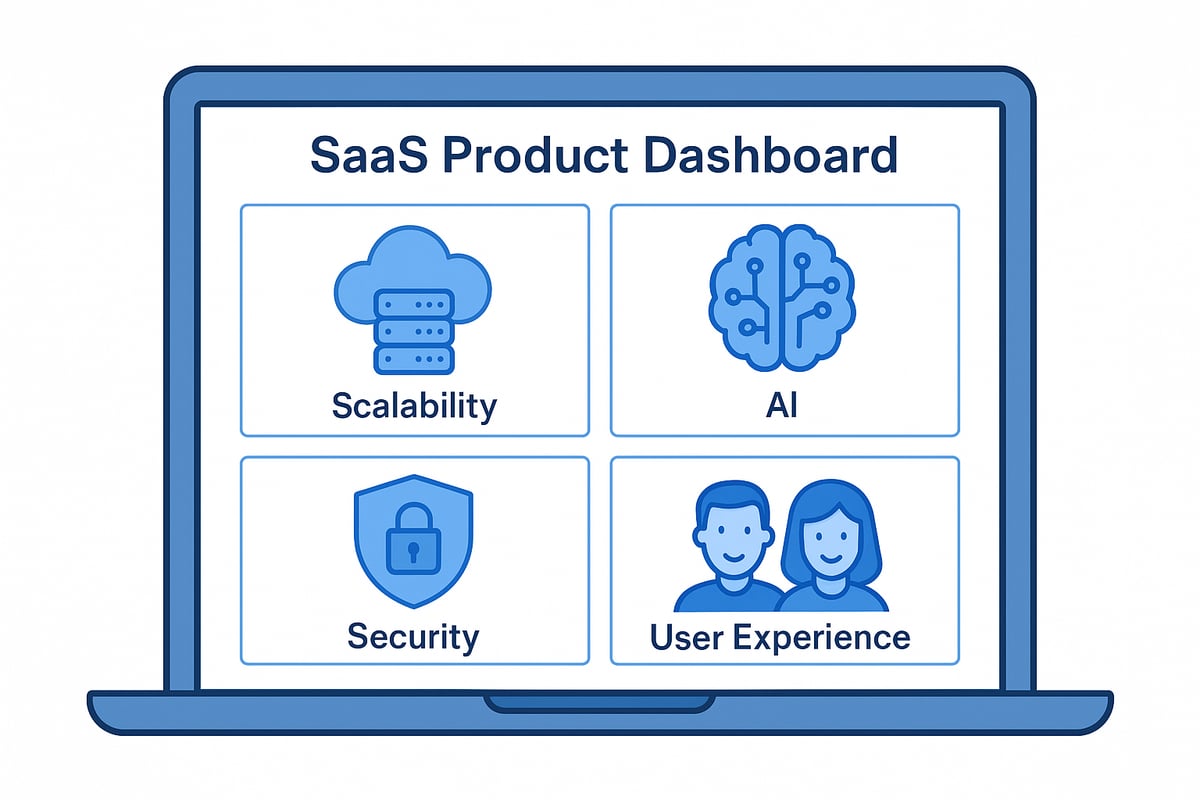
A saas based product must be architected for rapid growth and global reach. Cloud-native architectures, such as microservices, allow seamless scaling as user demand increases. Security is foundational—adopting zero-trust principles and pursuing certifications like SOC 2 or ISO 27001 builds customer trust.
Compliance is now a product feature, not an afterthought. Integrate GDPR and CCPA requirements from day one. Leading products, like Atlassian, show that scalable, secure platforms win market share. Prioritize infrastructure that adapts to new regulations and traffic spikes.
User Experience (UX) and Customer-Centric Design
Success in the saas based product space hinges on delivering intuitive, frictionless experiences. Onboarding should be effortless, guiding users to value within minutes. Design interfaces for accessibility and inclusivity, ensuring everyone can benefit.
Customizable workflows empower users to tailor the product to their needs. Products like Notion exemplify this customer-centric approach, offering flexibility without complexity. Focus on listening to user feedback and iterating quickly to keep your UX ahead of the curve.
Agile Development and Continuous Delivery
Building a saas based product in 2026 means embracing agility. Use short, iterative sprints to prototype, gather feedback, and refine features. Continuous integration and delivery (CI/CD) pipelines enable rapid, reliable updates without downtime.
Teams like GitLab have shown the power of DevOps practices in delivering value faster. Adopt automated testing and deployment from the start. For a detailed process, consider the Building a SaaS Product Step-by-Step guide to streamline your development lifecycle.
Leveraging AI and Automation in Product Features
Modern users expect AI-driven intelligence in every saas based product. Integrate personalized recommendations, smart chatbots, and predictive analytics to deliver proactive value. Automation reduces manual tasks, freeing users to focus on what matters.
Salesforce Einstein illustrates how AI insights can transform decision-making. Prioritize AI features that solve real customer pain points and offer a clear competitive advantage. Keep your product ahead by constantly evaluating new automation opportunities.
Testing, QA, and Launch Best Practices
A high-performing saas based product is defined by reliability and quality. Implement automated testing suites to catch issues early. Launch with beta programs and phased rollouts, using feature flags to manage risk.
Zoom’s staged releases offer a model for smooth product launches. Gather feedback from early users and iterate rapidly. Document all test cases and ensure coverage for both core and edge scenarios to build user trust from day one.
Pricing Models and Monetization Strategies
Selecting the right pricing model is crucial for every saas based product. Popular approaches include usage-based, freemium, and tiered pricing. Experiment with value-based strategies to align price with perceived benefit.
HubSpot’s tiered pricing model demonstrates how flexible options attract a broad customer base. Regularly review pricing data and competitor benchmarks. Transparent, customer-friendly pricing builds loyalty and supports long-term growth.
Growth Strategies for SaaS Success in 2026
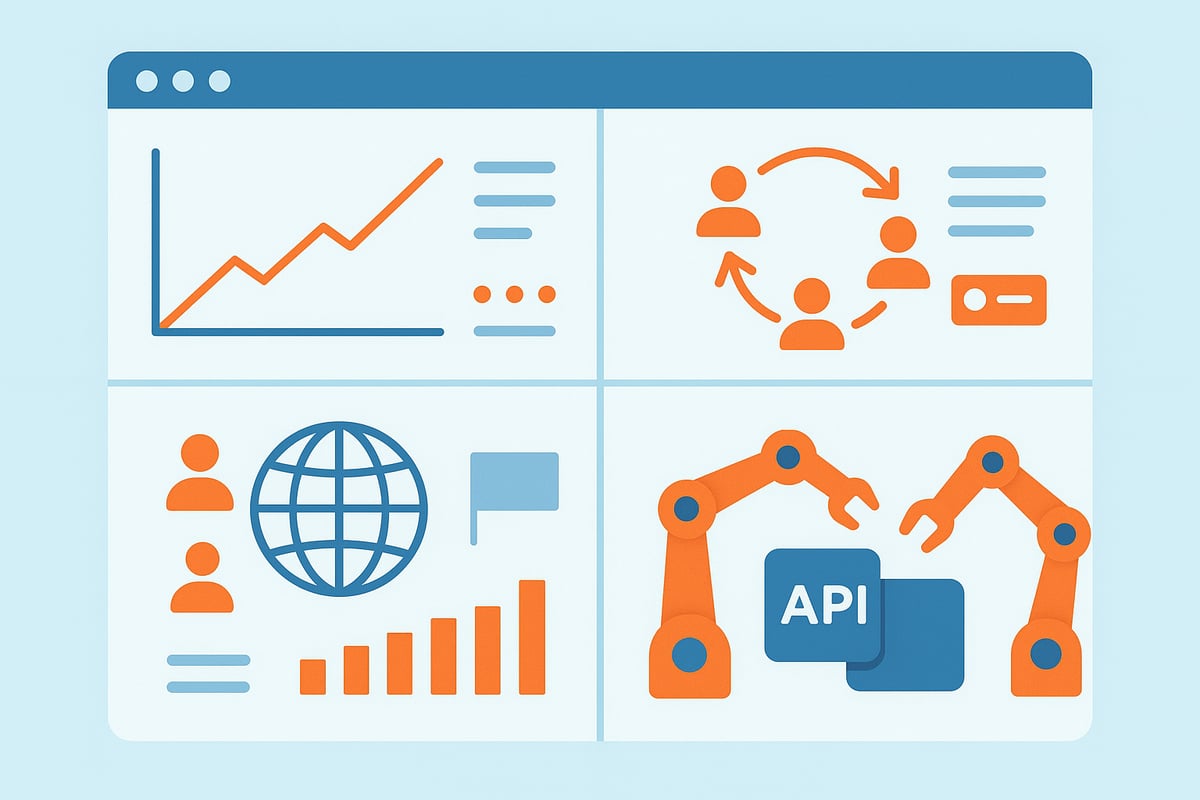
Achieving sustainable growth for your saas based product in 2026 requires a strategic blend of proven tactics and forward-thinking innovation. The market is crowded, but with the right approach, your product can stand out, scale quickly, and retain loyal users. Explore the following growth strategies to maximize your product’s potential.
Product-Led Growth and Viral Loops
A saas based product that prioritizes product-led growth puts the user experience at the center of its strategy. This approach relies on the product itself to drive adoption, often through features that encourage sharing, referrals, and organic expansion.
- Embed referral loops, such as invite-a-friend or network effects.
- Build viral features that make sharing effortless.
- Focus on seamless onboarding to reduce friction.
Calendly’s viral sharing capability exemplifies how a well-designed product can spread rapidly. By enabling users to invite others with a simple link, the product becomes a growth engine. Track activation, expansion, and virality rates to measure impact.
Data-Driven Customer Acquisition and Retention
For a saas based product, data-driven strategies are essential for acquiring and retaining customers efficiently. Leverage multi-channel acquisition, including SEO, targeted content, paid campaigns, and partnerships. Retargeting and lifecycle marketing help keep your brand top of mind.
To dive deeper into effective marketing techniques, review the SaaS Product Marketing Strategy guide for actionable frameworks tailored to growth and retention.
Monitor user behavior with analytics tools. Use segmentation to personalize outreach and retention tactics. Intercom’s content-led acquisition showcases the power of educational resources in attracting and nurturing leads.
Building a Brand and Community Around Your SaaS
Establishing a strong brand and community is vital for any saas based product seeking long-term growth. Thought leadership, webinars, and active user communities foster engagement and trust.
- Host webinars and AMAs to connect with users.
- Encourage reviews and testimonials to build social proof.
- Support user-generated content and forums.
Figma’s design community is a prime example of how shared knowledge and collaboration can fuel product adoption. A thriving community also provides valuable feedback and advocacy.
Internationalization and Localization for Global Growth
Expanding a saas based product globally means tailoring the experience for diverse markets. Adapt your product, user interface, and support resources to local languages and cultures.
- Implement local payment solutions and currencies.
- Adjust compliance and privacy settings for each region.
- Offer multilingual support and documentation.
Shopify’s global expansion demonstrates the importance of localizing both product and customer support. Addressing regional needs not only increases adoption but also builds credibility across borders.
Partnerships, Integrations, and Ecosystem Building
Growth for a saas based product often accelerates through partnerships and integrations. Strategic alliances with other SaaS providers can open new distribution channels and add value for users.
- Develop open APIs to support integrations.
- Join or create API marketplaces and integration directories.
- Collaborate with complementary tools to enhance your ecosystem.
Slack’s app directory is a clear example of how an integration-rich environment can drive user engagement and retention. An open, extensible ecosystem increases switching costs and deepens customer loyalty.
Metrics and KPIs for Measuring SaaS Growth
Measuring the right metrics is crucial for optimizing growth strategies for your saas based product. Track key performance indicators (KPIs) to evaluate success and guide decision-making.
| Metric | Description | Benchmark (2026) |
|---|---|---|
| ARR/MRR | Recurring revenue | Growing YoY |
| CAC | Cost per new customer | Minimized over time |
| LTV | Customer lifetime value | 3x CAC or higher |
| Churn Rate | Percentage of lost customers | <5% monthly |
| NRR | Net Revenue Retention | >120% for hypergrowth |
Benchmark against industry standards to identify areas for improvement. Use these insights to refine your strategies and maintain a competitive edge.
Customer Success, Retention, and Expansion
Delivering customer success is non-negotiable for any saas based product aiming for sustainable growth in 2026. With competition fierce and user expectations at an all-time high, your product’s long-term viability depends on delighting customers from day one and continually adding value throughout their journey.
Onboarding and Activation Strategies
A seamless onboarding experience sets the tone for long-term engagement with your saas based product. The goal is to help users realize value quickly, reducing friction and confusion.
Effective onboarding strategies include:
- Personalized welcome flows tailored to user roles
- Interactive product tours that guide users to key features
- Milestone-based activation emails nudging users to complete crucial steps
For example, Asana’s interactive onboarding walks teams through their first project, making it easy to adopt the platform. Use progress bars, checklists, or in-app tips to ensure every user feels supported. When onboarding is successful, users are more likely to achieve early wins and become long-term advocates for your saas based product.
Proactive Customer Support and Success Teams
In 2026, proactive support is a competitive differentiator for any saas based product. Customers expect instant access to help through channels like in-app chat, AI-powered bots, and comprehensive knowledge bases.
Key elements of a high-performing support team:
- Omnichannel support (chat, email, phone, self-service)
- Customer success managers for high-value or enterprise accounts
- Regular check-ins and health monitoring for at-risk users
Zendesk’s approach combines real-time chat with self-service resources, empowering users to resolve issues quickly. Investing in a skilled and empathetic support team helps your customers feel valued and builds lasting trust in your saas based product.
Reducing Churn and Increasing Retention
Retaining users is more cost-effective than acquiring new ones, making churn reduction a top priority for any saas based product. Early warning systems can identify at-risk users by tracking engagement signals and usage drop-offs.
Retention strategies include:
- Personalized win-back campaigns for inactive users
- Loyalty programs rewarding long-term customers
- Regular value reminders showcasing new features
According to SaaS market trends 2026, the average organization now relies on 130+ SaaS apps, making retention harder than ever. Successful companies like Dropbox use targeted re-engagement emails to bring users back and keep their saas based product top of mind.
Upselling, Cross-Selling, and Expansion Revenue
Growth does not stop at initial acquisition. For a saas based product to thrive, focus on expanding revenue from your existing customer base through upselling and cross-selling.
Best practices:
- Contextual prompts for premium features when users reach usage limits
- Bundling complementary products or services
- Account-based marketing for enterprise clients
HubSpot excels at cross-selling by offering a suite of tools that integrate seamlessly. By understanding customer needs and usage patterns, you can time upsell offers for maximum impact, increasing the lifetime value of every saas based product customer.
Leveraging Customer Feedback and NPS
Continuous improvement is powered by listening to your users. Regular NPS (Net Promoter Score) surveys and feedback loops provide actionable insights for your saas based product roadmap.
Key steps:
- Schedule quarterly NPS surveys to gauge satisfaction
- Analyze feedback trends to prioritize features or fixes
- Close the loop by communicating changes driven by user input
Superhuman’s iterative approach to product development relies on NPS data, ensuring every update addresses real customer needs. By making customer feedback central to your process, your saas based product can adapt, improve, and remain indispensable.
The Future of SaaS: Emerging Technologies and Opportunities
The future of the saas based product sector is defined by rapid evolution and disruptive innovation. As we look ahead to 2026, founders and product teams face a landscape shaped by breakthrough technologies, changing customer needs, and new business models. To stay competitive, understanding the trends below is essential.
AI, Machine Learning, and Predictive Analytics
Artificial intelligence and machine learning are now core to any saas based product aiming for market leadership. In 2026, users expect AI-powered features like smart recommendations, automated workflows, and predictive analytics as standard. SaaS platforms leverage these capabilities to personalize experiences, boost productivity, and reduce manual tasks.
For example, Grammarly’s real-time AI writing suggestions have set a new bar for intelligent SaaS. As highlighted in AI integration in SaaS products, AI is not just a differentiator, it is a necessity for future-ready SaaS.
Web3, Blockchain, and Decentralized SaaS
Web3 and blockchain are introducing new paradigms for data ownership and trust in the saas based product landscape. Decentralized SaaS models use blockchain for secure identity management, smart contracts, and tamper-proof data storage.
These advancements offer customers greater transparency and control. For example, blockchain-based identity management tools allow for seamless authentication without compromising privacy. As regulations tighten, decentralized models are positioned to address compliance and security concerns for modern SaaS users.
Low-Code/No-Code Platforms and Citizen Development
The rise of low-code and no-code solutions is democratizing the saas based product development process. These platforms empower non-developers, or "citizen developers," to build workflows, apps, and integrations without writing traditional code.
Airtable is a leading example, enabling teams to customize solutions quickly and adapt to changing needs. This shift accelerates innovation cycles and reduces time to market, making SaaS more accessible and adaptable for organizations of any size.
Vertical SaaS and Industry-Specific Solutions
Vertical SaaS is transforming how a saas based product addresses unique industry challenges. Rather than generic, horizontal tools, vertical solutions are tailored for sectors like healthcare, legal, and education. This focus delivers deeper functionality, compliance, and domain expertise.
According to Vertical SaaS growth projections, industry-specific SaaS is expected to reach $157.4 billion by 2025, powered by a 23.9% CAGR. Examples like Veeva Systems in life sciences show how vertical SaaS can unlock new value and growth opportunities.
Sustainability and Green SaaS Initiatives
Sustainability is becoming a core pillar for every saas based product. Customers and regulators increasingly demand carbon-neutral hosting, efficient data centers, and transparent environmental reporting.
Salesforce’s Sustainability Cloud is a leading example, helping organizations track and reduce their carbon footprint. Green SaaS initiatives not only appeal to eco-conscious buyers but also drive long-term operational efficiencies and compliance.
The Role of AR/VR and Immersive Experiences
AR and VR are shaping the next generation of the saas based product. Immersive technologies enable new forms of collaboration, training, and remote support that were previously impossible.
Platforms like Spatial deliver VR-based collaboration tools, making virtual meetings more engaging and interactive. As hardware becomes more accessible, expect AR/VR features to become integral to SaaS products across industries, improving user engagement and productivity.