
Imagine a world where digital transformation is not just a buzzword but a reality powered by innovative solutions. In 2026, saas enterprises are at the forefront, serving as the backbone for progress across industries.
This essential guide explores the trends, challenges, and strategies shaping saas enterprises in the year ahead. Our goal is to equip founders, business leaders, and innovators with practical insights to navigate this dynamic landscape.
You will discover projections about SaaS market growth, emerging technologies, new go-to-market strategies, compliance requirements, and tips for future-proofing your business.
Ready to unlock the full potential of your SaaS journey? Let’s dive in.
The Evolving SaaS Landscape in 2026
The world of saas enterprises is rapidly changing as we look toward 2026. Several powerful trends are driving growth, influencing customer demands, and shaping how businesses operate. To thrive in this environment, understanding these shifts is essential for every saas enterprise leader.
Market Growth and Projections
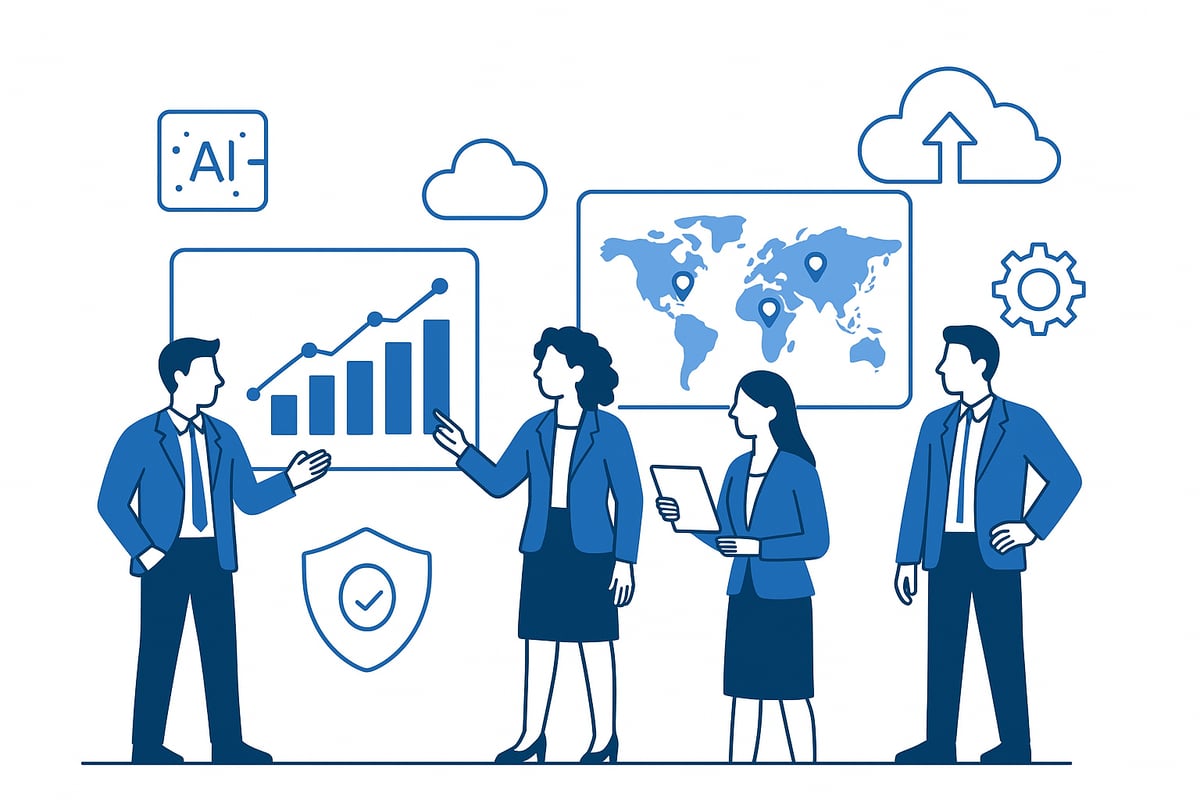
Saas enterprises are set to experience significant growth by 2026, with the global SaaS market expected to surpass $400 billion. This expansion is fueled by rising remote work, accelerated cloud adoption, and digital transformation across industries.
New sectors, such as manufacturing, healthcare, and logistics, are embracing saas enterprises for operational efficiency. However, the market is also becoming more saturated, requiring firms to differentiate. For more details on these projections, see the Global SaaS Market Projections.
Companies like Salesforce are expanding into healthcare, while vertical SaaS solutions are gaining traction, highlighting the evolving market landscape.
Shifting Customer Expectations
Customers now expect saas enterprises to deliver hyper-personalized experiences and seamless integrations with their existing tools. The desire for self-service onboarding and no-code customization is higher than ever.
Additionally, subscription fatigue is driving the need for flexible pricing models. SaaS businesses that adapt to these expectations stand out in a crowded market. For instance, Slack frequently updates its product based on direct customer feedback, enhancing user satisfaction and loyalty.
SaaS Business Model Innovations
Innovation in business models is key for saas enterprises in 2026. Usage-based and value-based pricing models are becoming more common, offering customers flexibility and aligning cost with value received.
Freemium models, combined with effective premium conversion strategies, help attract and retain users. Micro-SaaS and modular product offerings allow businesses to focus on niche needs. Canva, for example, provides modular design tools that cater to a wide range of users, illustrating the value of adaptable solutions.
Key Challenges Facing SaaS Enterprises
Despite growth, saas enterprises face notable challenges. High churn rates and difficulties with customer retention require constant attention. Data privacy and compliance are increasingly complex, with regulations varying across regions.
Intense competition from both global giants and niche players puts pressure on innovation. Furthermore, there is a shortage of talent in key areas like AI, cybersecurity, and product management, making recruitment and retention critical for ongoing success.
Geographic Expansion and Localization
Saas enterprises are expanding rapidly in regions such as APAC, LATAM, and Africa. Success in these markets depends on understanding local regulations, language needs, and cultural preferences.
Localization is not just about translation; it involves adapting pricing, compliance, and user experience to each region. HubSpot, for example, customizes its solutions for EMEA markets, ensuring relevance and compliance. Studies show that effective localization leads to a measurable increase in ROI for SaaS providers.
Emerging Technologies Transforming SaaS
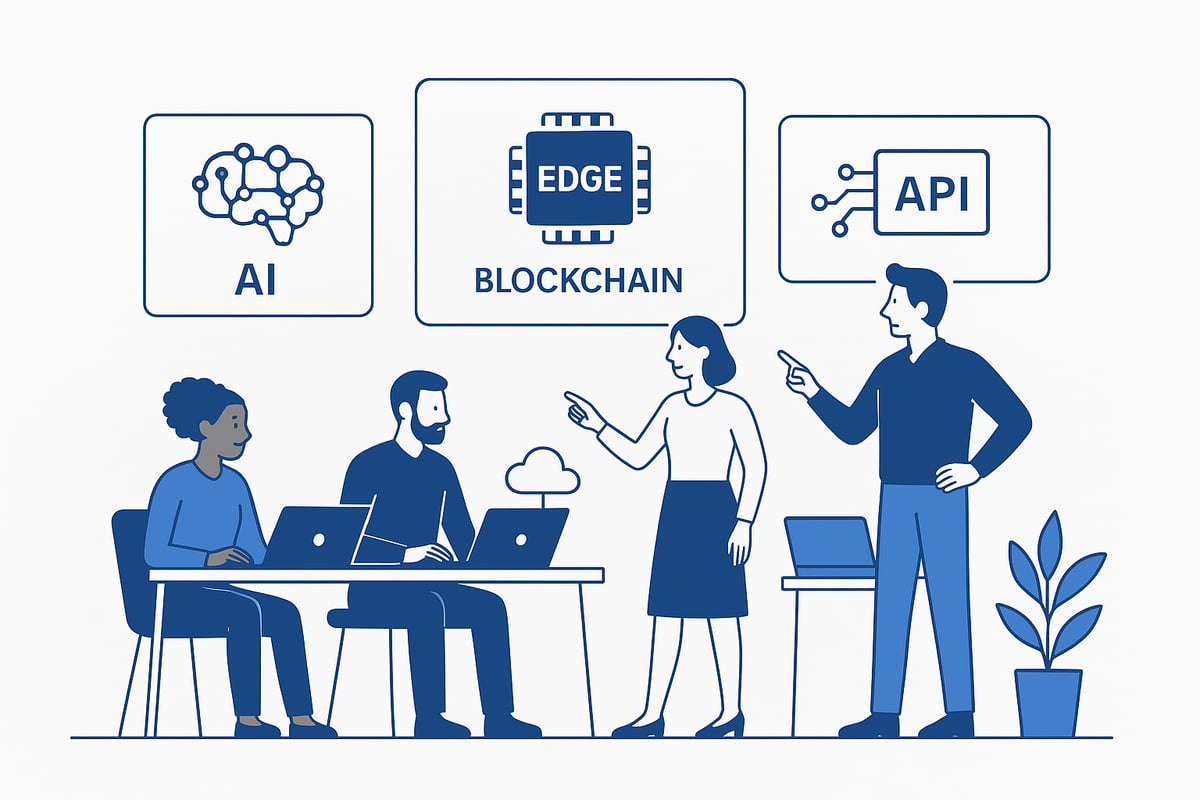
The landscape for saas enterprises in 2026 is being shaped by rapid advancements in technology. From artificial intelligence to blockchain, these innovations are unlocking new possibilities and redefining what is possible for modern SaaS solutions. Staying ahead means understanding not just what these technologies are, but how they are transforming the way saas enterprises operate, compete, and deliver value to customers.
Artificial Intelligence and Machine Learning
Artificial intelligence and machine learning are at the heart of the transformation for saas enterprises. These technologies drive automation, power predictive analytics, and enable hyper-personalized experiences across platforms. AI-powered automation is streamlining workflows, while machine learning models are helping teams anticipate customer needs and reduce churn rates.
A great example is Zendesk’s AI-driven support, which enhances customer interactions and resolves issues faster. For saas enterprises seeking to boost growth and efficiency, exploring AI marketing tools for SaaS growth can offer a competitive edge. As AI adoption deepens, it becomes essential for businesses to harness these tools to remain agile and customer-focused.
Low-Code and No-Code Platforms
Low-code and no-code platforms are democratizing the ability to create and customize software. For saas enterprises, this means non-technical users can build applications, automate processes, and adapt workflows without needing expert developers. These platforms speed up innovation cycles and reduce costs, making it easier for businesses to experiment and iterate.
Airtable's drag-and-drop builder is a leading example, allowing teams to design custom apps effortlessly. The market for these platforms is growing rapidly, as more organizations recognize the value of empowering their teams. For saas enterprises, embracing low-code solutions can significantly enhance agility and responsiveness.
API-First and Composable SaaS Architectures
API-first development is reshaping how saas enterprises build and integrate software. By prioritizing robust, well-documented APIs, companies enable seamless connections between different systems and services. Composable SaaS architectures take this further, allowing businesses to assemble modular, scalable solutions tailored to their needs.
Shopify’s API ecosystem demonstrates the power of this approach, supporting countless integrations and extensions. For saas enterprises, adopting API-first strategies ensures flexibility and future-proofing. This modular mindset helps organizations quickly respond to new opportunities and challenges in the digital landscape.
Edge Computing and SaaS
Edge computing is opening new frontiers for saas enterprises, particularly those operating in real-time environments. By processing data closer to the source, edge computing reduces latency and enables faster decision-making. This is especially valuable for industries like IoT, logistics, and manufacturing, where speed and reliability are critical.
Cloudflare’s edge-enabled SaaS services illustrate how edge technology can empower organizations to deliver responsive, efficient applications. For saas enterprises, leveraging edge computing means offering customers enhanced performance and new capabilities, setting themselves apart in demanding markets.
Security and Zero Trust Models
As cyber threats evolve, security becomes a top priority for saas enterprises. The zero trust model is gaining traction, emphasizing the need to verify every user and device before granting access. SaaS providers are integrating advanced encryption, compliance features, and regular security audits to ensure data protection.
Okta’s identity management solutions showcase how zero trust principles can be embedded within SaaS offerings. For saas enterprises, adopting these security frameworks builds trust with customers and helps navigate complex regulatory requirements. Staying proactive on security is essential for long-term growth.
Blockchain and Decentralized SaaS
Blockchain technology is enabling new possibilities for saas enterprises, especially in areas requiring transparency and data integrity. By leveraging distributed ledgers, companies can automate processes with smart contracts and ensure records are tamper-proof. Decentralized SaaS models promote trust and reduce reliance on central authorities.
SaaS platforms in supply chain management are already using blockchain to track goods and verify transactions. For saas enterprises, incorporating blockchain can drive innovation in sectors where security and transparency are paramount. This approach opens doors to new business models and partnerships.
Building a Future-Ready SaaS Enterprise: Strategies for 2026
Preparing saas enterprises for success in 2026 requires a deliberate, future-focused approach. The landscape is evolving, and leaders must adopt strategic frameworks that address validation, development, growth, scaling, and team management. Let us explore the essential strategies that will help saas enterprises remain agile and competitive.

Product Validation and Market Fit
For saas enterprises, validating your product concept before scaling is non-negotiable. Engaging with real users early on helps uncover market needs and ensures your solution addresses genuine pain points. Many founders leverage lean startup principles, such as minimum viable product (MVP) launches and rapid iteration cycles.
Adopting proven validation frameworks, such as those detailed in SaaS validation strategies for founders, provides actionable steps to de-risk product launches. These approaches help saas enterprises gauge demand, refine features, and build a foundation for sustainable growth.
Customer-Centric Product Development
Saas enterprises thrive when they prioritize the customer experience throughout the product development lifecycle. Continuous feedback loops, through surveys, in-app feedback, and analytics, enable teams to iterate quickly and align offerings with evolving user needs.
Building robust onboarding processes and scalable support systems is crucial. By focusing on user-driven design and seamless customer journeys, saas enterprises can enhance satisfaction and reduce churn. This customer-centric mindset drives loyalty and long-term value.
Go-to-Market Strategies for 2026
The go-to-market landscape is shifting for saas enterprises. Product-led growth (PLG) is emerging as a dominant strategy, where the product itself becomes the main driver of acquisition and retention. Community-driven marketing, strategic partnerships, and channel sales are also gaining traction.
Consider these effective go-to-market tactics for saas enterprises:
- Leverage freemium models to attract new users
- Build engaged user communities for organic advocacy
- Partner with complementary platforms for broader reach
A diversified approach increases visibility and accelerates growth.
Pricing and Monetization Trends
Saas enterprises must adapt to dynamic pricing trends to remain competitive. Usage-based and value-based pricing models are on the rise, allowing customers to pay for what they use or the value they receive. Microtransactions and granular billing appeal to customers seeking flexibility.
Bundling and cross-selling complementary services can boost revenue per customer. Leaders in saas enterprises analyze customer usage patterns to optimize pricing strategies and maximize lifetime value. Clear, transparent pricing builds trust and supports sustainable scaling.
Scaling Operations and Infrastructure
Scalability is a core requirement for modern saas enterprises. Embracing cloud-native architectures and multi-cloud strategies ensures resilience and flexibility. Automation in DevOps, deployment pipelines, and customer support reduces operational overhead and enhances service reliability.
A table to illustrate scaling priorities:
| Priority | Benefit |
|---|---|
| Cloud-native deployment | Flexible scaling |
| Automation | Reduced manual workload |
| Multi-region hosting | Improved global access |
Saas enterprises that invest in scalable infrastructure are better positioned to handle rapid growth and market fluctuations.
Talent Acquisition and Remote Teams
The talent landscape is evolving as saas enterprises expand globally. Remote work opens up access to a diverse talent pool, enabling companies to source expertise from anywhere. Investing in upskilling, especially in AI, cybersecurity, and SaaS management, is essential to stay competitive.
Successful saas enterprises foster inclusive, collaborative cultures. They implement robust remote communication tools and prioritize continuous learning. Attracting and retaining top talent ensures innovation and adaptability, which are critical for navigating the future.
Regulatory Compliance and Data Privacy in SaaS
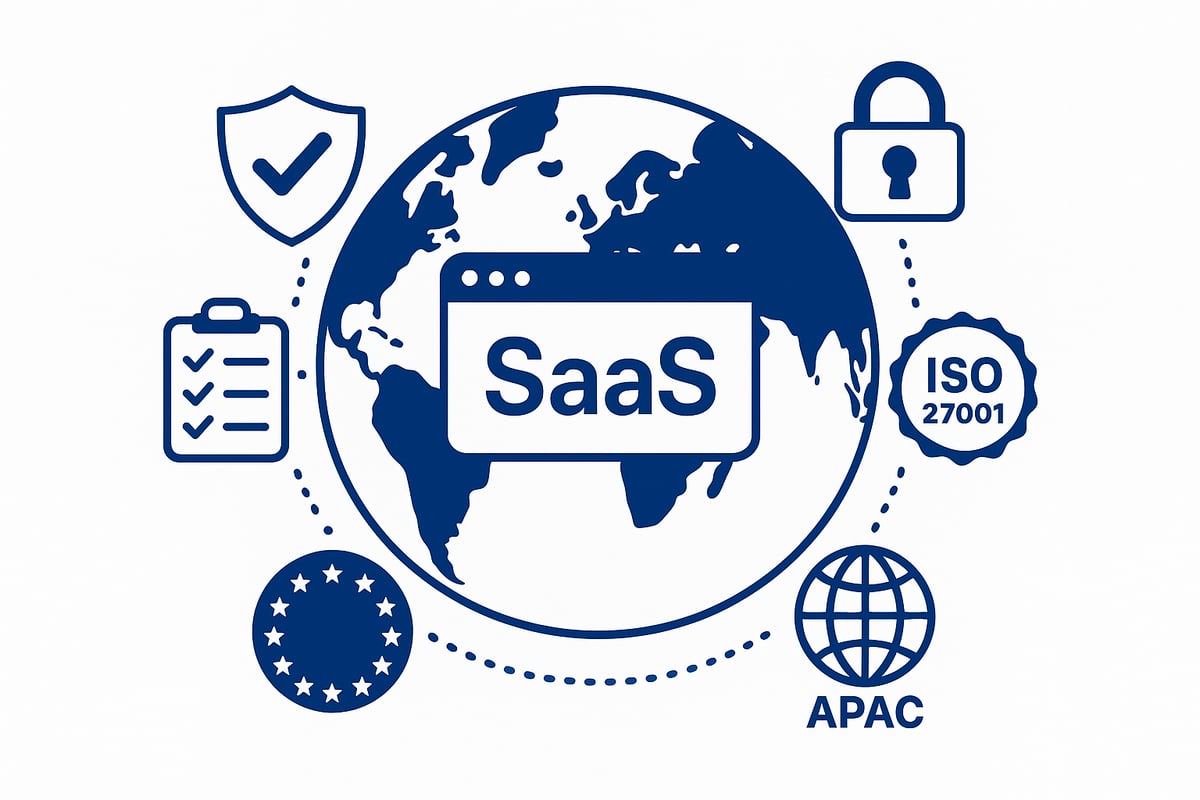
Navigating regulatory compliance is now a core priority for all saas enterprises. By 2026, new data protection laws are reshaping how companies operate globally. Regions like the EU and APAC require tailored compliance strategies due to differing standards. GDPR and CCPA continue to influence product design, but new 2026 mandates add layers of complexity. Enterprises must invest in robust frameworks to stay ahead. For a deeper dive into turning regulation into opportunity, see this GDPR compliance for SaaS businesses article. Staying proactive with compliance is not just about avoiding fines, it is about building a trusted global brand.
Evolving Global Regulations
SaaS enterprises face a dynamic regulatory landscape as global data privacy laws evolve. GDPR and CCPA remain foundational, but 2026 brings additional standards impacting cross-border data flows. Regional differences demand that saas enterprises adapt compliance programs for each market. For instance, the EU enforces stricter consent and data residency, while APAC markets focus on local storage requirements. Companies must continuously monitor legislative changes to mitigate risk. Strategic compliance not only protects users, but also unlocks market opportunities for saas enterprises. Staying informed on global regulations is essential for sustainable growth in 2026.
Security Best Practices for SaaS
Security is the backbone of trust for saas enterprises in 2026. End-to-end encryption and secure data storage are now baseline requirements. Regular security audits and vulnerability assessments help identify and address weaknesses before they become threats. Proactive measures such as multi-factor authentication and automated incident response are standard best practices. Saas enterprises should foster a culture of security awareness among all teams. By prioritizing robust security frameworks, companies reduce breach risks while maintaining customer confidence. In an era of rising cyber threats, a comprehensive security strategy is non-negotiable for all saas enterprises.
Building Trust Through Transparency
Transparency is a differentiator for saas enterprises seeking to earn customer loyalty. Clear data usage policies, accessible privacy statements, and regular communication establish trust. Many leading companies display third-party certifications, like SOC 2 and ISO 27001, to validate their security posture. Public security dashboards are gaining popularity, allowing customers to monitor system health in real time.
| Certification | Purpose |
|---|---|
| SOC 2 | Service security |
| ISO 27001 | Data management |
By openly sharing security practices, saas enterprises reassure clients and partners. Building trust through transparency is essential in a crowded market.
Compliance Automation and Tools
Automation is revolutionizing compliance for saas enterprises. Automated monitoring tools now track regulatory updates and flag risks in real time. Integration with existing legal and IT workflows streamlines reporting and simplifies audit preparations. Modern compliance platforms enable teams to generate reports for GDPR, CCPA, and other standards at the click of a button. This reduces manual workload and minimizes human error. Saas enterprises adopting these tools can quickly adapt to new regulations. In a fast-changing legal environment, automation ensures ongoing compliance and positions companies for long-term success.
Future-Proofing Your SaaS Business: Trends and Opportunities
The landscape for saas enterprises in 2026 demands agility, foresight, and a willingness to embrace new trends. As we look ahead, future-proofing means anticipating shifts, acting on emerging opportunities, and ensuring your organization remains resilient in a rapidly evolving market.
Vertical SaaS and Industry Specialization
SaaS enterprises are increasingly tailoring solutions to the nuanced needs of specific industries. Vertical SaaS focuses on sectors such as healthcare, legal, and construction, delivering specialized features and compliance support.
Key growth factors for vertical SaaS include:
- Deep industry integration requirements
- Regulatory complexity
- Demand for best-practice workflows
According to Gartner, vertical SaaS is capturing a growing share of the market, with legal and healthcare leading the way. For founders, validating vertical SaaS ideas early is crucial. The Vertical SaaS validation guide offers a step-by-step approach to reduce risk and speed up product-market fit. In 2026, saas enterprises that prioritize industry focus are likely to gain a competitive edge.
Sustainability and Green SaaS
Sustainability is a core expectation for modern saas enterprises. Businesses and customers alike demand eco-friendly operations, from green data centers to energy-efficient software design.
Key sustainability trends include:
- Adoption of carbon-neutral cloud providers
- Powering operations with renewable energy
- SaaS tools supporting ESG compliance
Green SaaS not only reduces environmental impact but also creates new market opportunities. Enterprises that invest in sustainable infrastructure can enhance brand reputation and meet evolving regulatory standards. For saas enterprises, building sustainability into both product and process is a smart long-term strategy.
AI-Driven Personalization and Automation
Artificial intelligence is transforming how saas enterprises deliver value. Hyper-personalized user experiences, powered by machine learning, are now expected across onboarding, support, and upselling.
Examples of AI-driven automation include:
- Chatbots providing 24/7 support
- Predictive analytics for customer retention
- Automated workflow optimization
As highlighted in AI’s Impact on SaaS Industry, AI will be a defining force in the coming years. SaaS enterprises that invest in robust AI capabilities can boost efficiency, drive engagement, and scale personalization without increasing manual workload.
Globalization and Localization Strategies
SaaS enterprises are scaling across borders, unlocking growth in APAC, LATAM, and Africa. Successful globalization requires more than just translation—it means respecting local regulations, payment norms, and user behavior.
Key localization strategies include:
- Multilingual support for diverse markets
- Regional pricing models
- Integration with local payment gateways
Data shows that localized SaaS solutions see higher adoption and retention rates. For saas enterprises, a thoughtful localization approach can open new revenue streams and strengthen brand loyalty in emerging economies.
Integration Ecosystems and Open Platforms
Modern saas enterprises thrive by building robust integration ecosystems. Open APIs and developer marketplaces empower partners and customers to extend platform functionality.
Benefits of open platforms:
- Faster innovation through third-party contributions
- Enhanced stickiness via deep integrations
- Broader reach through app marketplaces
For saas enterprises, fostering an open ecosystem is not just a technical decision but a strategic move to future-proof the business. Collaborating with partners and enabling custom workflows helps meet evolving customer needs.
Preparing for the Next Wave: Quantum Computing and Beyond
Quantum computing is on the horizon and could disrupt how saas enterprises approach security and computation. Early adopters are already exploring quantum-safe encryption and new algorithms.
Key opportunities for future readiness:
- Investing in R&D for quantum-resistant technologies
- Monitoring advancements in quantum hardware
- Educating teams on potential impacts
While quantum computing is still emerging, proactive saas enterprises will position themselves to capitalize on breakthroughs. Staying informed and adaptable ensures resilience as new technologies reshape the industry landscape.