
Is your SaaS strategy ready for the challenges of 2026? The world of software as a service is evolving at lightning speed, and staying ahead means using the right tools from the start.
Selecting a powerful saas framework is key to building applications that scale, stay secure, and deliver high performance in a crowded market. The frameworks you choose can make or break your project’s future.
In this article, discover eight essential tools that will empower founders, developers, and businesses to thrive. Learn about each framework’s features, pricing, and ideal use cases so you can future-proof your SaaS success.
Why the Right SaaS Framework Matters in 2026
The Acceleration of SaaS Adoption
The SaaS market is experiencing explosive growth, with projections indicating continued expansion through 2026 and beyond. This surge means that both startups and enterprises face intense competition, making it essential to choose a saas framework that supports rapid product launches and ongoing innovation.
Security and compliance are now front and center, especially as regulations tighten and customers demand transparency. Selecting a saas framework with robust security features and compliance support can be the difference between scaling smoothly and facing costly setbacks.
Scalability is another critical concern. As multi-tenant architectures become the norm, your chosen saas framework must handle surges in users and data without sacrificing performance. The integration of AI, machine learning, and analytics into SaaS products further increases the need for frameworks that offer built-in support for these advanced technologies.
Developer experience is more important than ever. With skilled talent in high demand, a saas framework that streamlines workflows, offers clear documentation, and accelerates development can provide a significant edge. For a deeper dive into modern strategies for selecting and leveraging the best frameworks, explore SaaS framework strategies.
A real-world example: A leading SaaS provider recently switched to a modern saas framework, reducing operational costs while boosting app performance and customer satisfaction. This demonstrates how the right foundation can future-proof your product in a dynamic market.
Key Criteria for Evaluating SaaS Framework Tools
Choosing the best saas framework for your project involves careful evaluation across several dimensions. The right tool must balance technical capabilities, cost, and community support to ensure long-term success.
Here are the essential criteria to consider:
- Scalability: Can the saas framework handle growth from MVP to enterprise scale?
- Security: Does it include built-in protections and compliance features?
- Extensibility: Are plugins, modules, and integrations readily available?
- Maintainability: How easy is it to update and manage code over time?
- Rapid Prototyping: Does the saas framework support fast MVP launches?
- Ecosystem Maturity: Is there a strong community, ample documentation, and robust plugin availability?
- Cost: Consider licensing, hosting, and long-term support implications.
- DevOps Compatibility: Does the saas framework integrate with modern CI/CD pipelines?
- Integration Support: Are APIs, payment gateways, and analytics tools easy to connect?
Below is a table summarizing key criteria for framework evaluation:
| Criteria | Importance | Example Frameworks |
|---|---|---|
| Scalability | Handle user/data growth | Next.js, Node.js |
| Security | Built-in protections | Django, Laravel |
| Extensibility | Plugins, modules, APIs | Symfony, React |
| Maintainability | Easy code management | Angular, Vue.js |
Frameworks like Next.js and Django are frequently praised for their productivity and security, making them popular choices for SaaS development. Ultimately, aligning your selection with your team’s skills, product goals, and long-term vision will help you build a SaaS platform that stands out in 2026.
8 Must-Know SaaS Framework Tools for 2026 Success
Choosing the right saas framework can make or break your SaaS product’s future. The frameworks highlighted here are tailored to address the critical needs of scalability, security, and rapid development for 2026. If you want a broader perspective on which frameworks are predicted to dominate, Top web development frameworks for 2026 offers valuable insights into upcoming trends and innovations.
Next.js
Next.js has become a powerhouse saas framework for both startups and enterprises seeking scalability and outstanding performance. Its core strengths lie in hybrid static and server rendering, a robust App Router, and seamless database integration. These features enable rapid development and allow teams to iterate quickly.
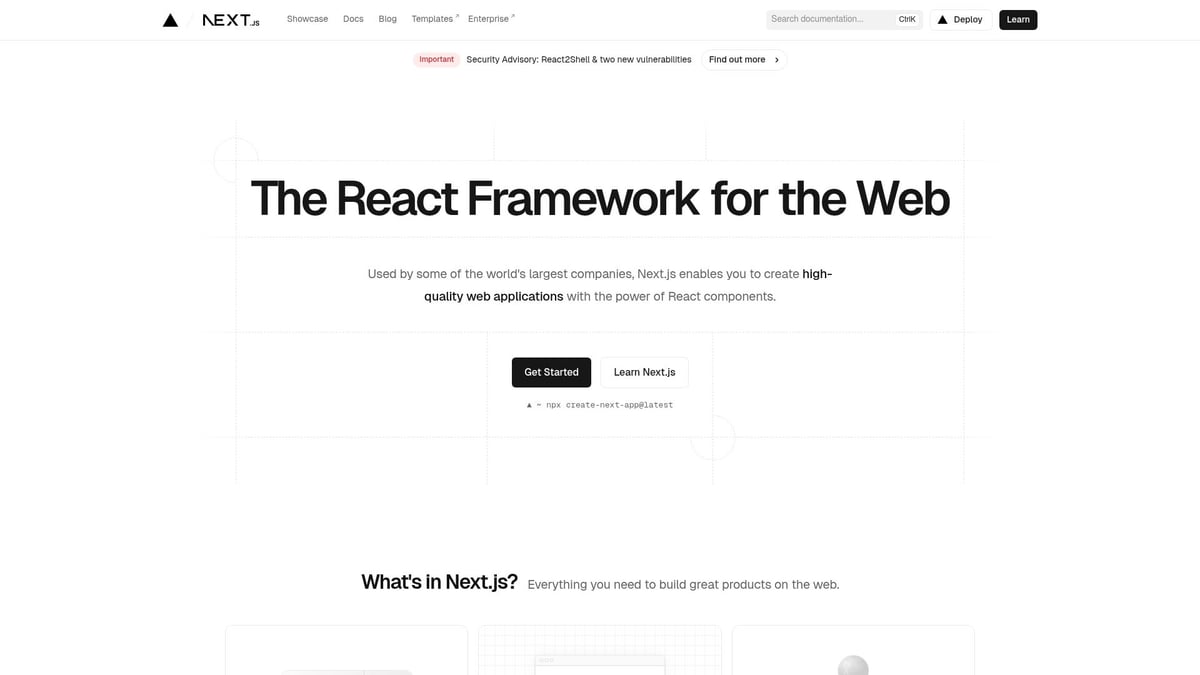
Pricing is open-source, with commercial options via Vercel for advanced hosting and features. Key benefits include SEO optimization, flexible deployment, and an active community that continuously enhances the framework.
- Core Features:
- Hybrid static & server rendering
- API routes and server components
- Built-in authentication
- Seamless integration with modern databases
The target audience includes teams building interactive SaaS products, especially those needing server-side rendering or static site generation. Pros are rapid development capabilities, strong documentation, and flexible deployment options. Cons involve a learning curve for advanced features and reliance on the JavaScript or TypeScript stack.
A real-world example: Leading SaaS platforms use Next.js to deliver complex user interfaces with lightning-fast load times, proving the value of this saas framework in demanding environments.
Django
Django stands out as a mature, Python-based saas framework ideal for rapid backend development and data-centric SaaS products. It offers a robust admin interface, ORM, and built-in security, making it a top choice for compliance-heavy industries like fintech and healthcare.
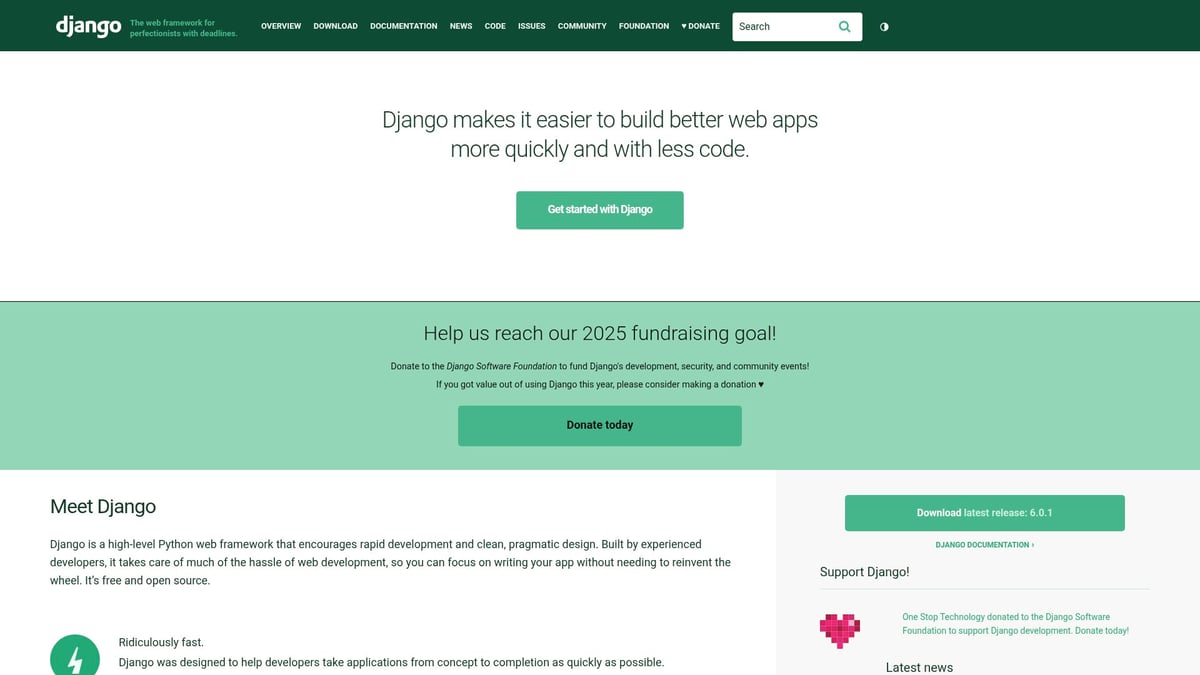
Pricing is free and open-source. Django’s key features include scalability, REST API support through Django REST Framework, and secure defaults. This makes it an excellent fit for SaaS founders needing to launch MVPs quickly without compromising on security.
- Core Features:
- Robust admin interface
- Built-in security features
- Scalable architecture
- REST API support
The target audience ranges from startups to enterprises that prioritize data integrity and regulatory compliance. Pros are its mature ecosystem, reusable apps, and strong security posture. Cons include its heavyweight nature for smaller projects and less flexibility on the front end.
Django powers many SaaS apps with complex data models, showing how the right saas framework can streamline compliance and accelerate time to market.
Laravel
Laravel is a PHP-based saas framework known for its elegant MVC architecture and developer-friendly syntax. It’s open-source, with optional paid services like Laravel Forge and Vapor for deployment and management.
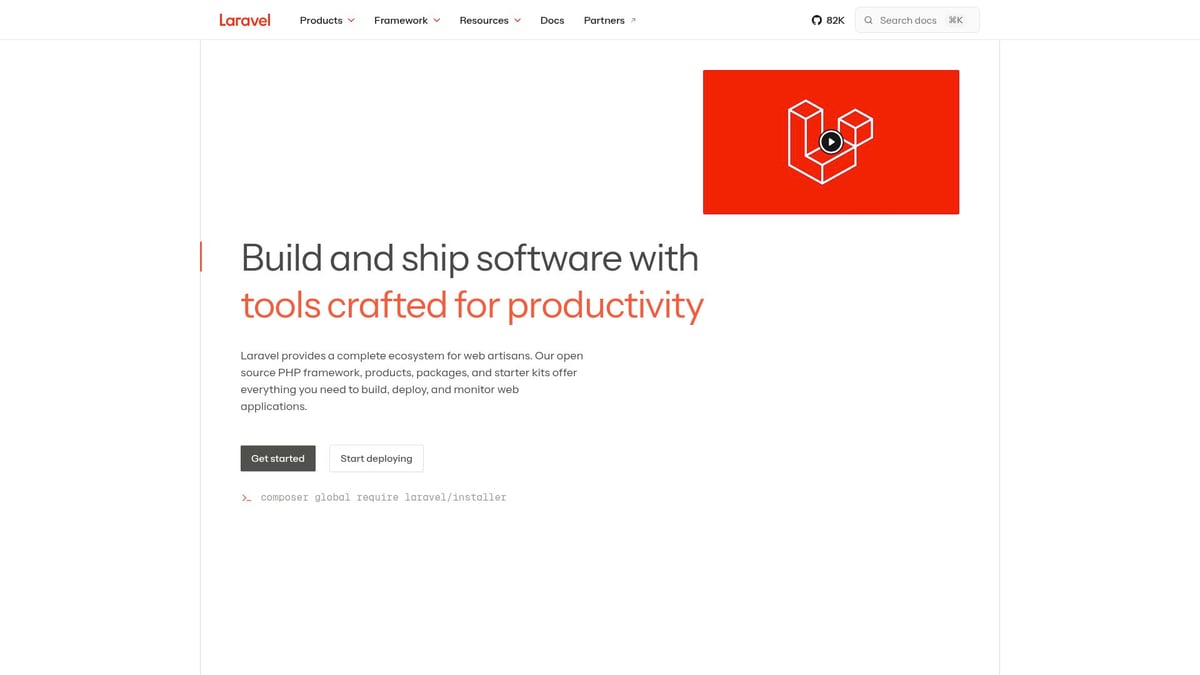
Laravel’s core features include Eloquent ORM, built-in authentication, queue management, and out-of-the-box API scaffolding. Its vast package ecosystem and clear documentation make it an ideal choice for rapid prototyping.
- Core Features:
- Elegant MVC structure
- Built-in authentication
- Queue and job management
- Robust API scaffolding
The target audience includes PHP teams, startups, and agencies building custom SaaS solutions. Laravel’s pros are its approachable learning curve, active community, and strong security practices. Cons involve PHP dependency and extra setup for scaling larger SaaS applications.
Many SaaS platforms leverage Laravel to achieve fast development cycles and robust backends, illustrating how an effective saas framework can accelerate innovation.
Vue.js
Vue.js is a lightweight, approachable saas framework for developers who value simplicity and flexibility in building dynamic SaaS interfaces. Vue.js is free and open-source, with a thriving ecosystem of plugins and tools.
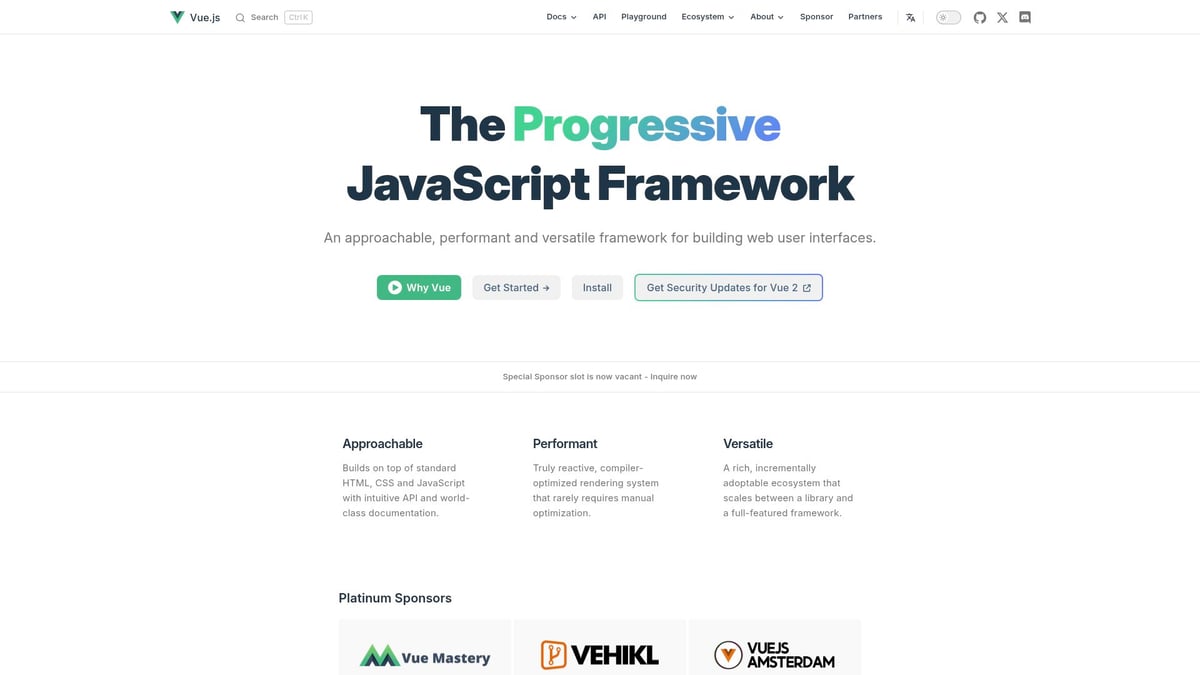
Core features include reactive components, CLI tooling, and ecosystem plugins like Vue Router and Vuex for state management. Vue.js excels in projects that require fast rendering and a gentle learning curve for new developers.
- Core Features:
- Reactive component system
- Flexible state management
- CLI tooling for project scaffolding
- Ecosystem plugins (Vue Router, Vuex)
Targeted at teams wanting to build interactive dashboards or single-page applications, Vue.js offers strong community support and easy integration. Pros are its fast rendering and approachable syntax. Cons include smaller enterprise adoption compared to React or Angular and limited official corporate backing.
SaaS startups often choose Vue.js for building highly interactive dashboards, making it a preferred saas framework for fast-moving teams.
Node.js
Node.js is a high-performance saas framework designed for real-time SaaS applications. Its event-driven, non-blocking I/O model supports scalable microservices and efficient API development.
Node.js is free and open-source, with an extensive npm library ecosystem. Core features include support for serverless architectures and rapid API development, making it ideal for chat, collaboration, or streaming SaaS solutions.
- Core Features:
- Event-driven, non-blocking I/O
- Massive npm library ecosystem
- Scalable microservices support
- Serverless architecture readiness
The target audience is development teams building real-time, scalable SaaS products. Node.js offers fast execution and a unified JavaScript stack. Pros include a large ecosystem and support for modern architectures, while cons involve callback complexity and less opinionated structure, which can lead to inconsistent codebases.
SaaS products requiring real-time updates and scalable backends often turn to Node.js as their primary saas framework.
Angular
Angular is a robust, enterprise-grade saas framework maintained by Google. It features a component-based architecture, TypeScript support, and comprehensive tooling for building large-scale SaaS platforms.
Angular is free and open-source. Its core features include two-way data binding, a powerful CLI, and RxJS integration for reactive programming. These strengths make Angular an excellent choice for teams managing complex SaaS projects.
- Core Features:
- Component-based architecture
- TypeScript and RxJS integration
- Two-way data binding
- Powerful CLI and testing utilities
Angular’s target audience is enterprises and large teams seeking modular, maintainable frontends. Pros are strong typing, built-in testing, and Google’s backing. Cons include a steeper learning curve and heavier footprint compared to alternatives.
Many SaaS companies adopt Angular for modular, scalable, and maintainable frontends, leveraging the saas framework’s enterprise focus.
Symfony
Symfony is a highly customizable PHP-based saas framework, ideal for complex SaaS logic and B2B workflows. It’s free and open-source, offering reusable PHP components and robust routing features.
The core features of Symfony include flexible configuration, strong API readiness, and extensive security options. Its modular nature allows experienced PHP teams to tailor solutions for unique business needs.
- Core Features:
- Reusable PHP components
- Advanced routing and configuration
- Enterprise-grade security features
- Strong API support
Symfony targets experienced PHP teams building SaaS with custom workflows. Pros are its modular structure, excellent documentation, and long-term support. Cons involve a steeper learning curve and verbosity for smaller apps.
SaaS providers needing enterprise-level extensibility and reliability often select Symfony as their saas framework of choice.
React
React is a declarative, component-based saas framework with a massive ecosystem and talent pool. It’s free and open-source, maintained by Meta, and excels at building customizable, high-performance SaaS frontends.
Core features include reusable components, hooks, and seamless integration with libraries like Redux and React Router. React is suited for startups to Fortune 500 companies aiming for engaging user experiences.
- Core Features:
- Declarative UI and component architecture
- Hooks for state and lifecycle management
- Integration with Redux, React Router, and more
- Vast ecosystem of libraries and tools
Target audiences are teams wanting flexibility and high performance in their SaaS frontends. Pros are its immense community, reusable components, and suitability for SPAs and PWAs. Cons include reliance on additional libraries for full-stack solutions and frequent updates that can be challenging to manage.
React powers SaaS applications with interactive, engaging user experiences, making it a go-to saas framework for modern development.
How to Choose the Best SaaS Framework for Your Project
Selecting the right saas framework is a foundational step for any SaaS venture. The process involves much more than comparing feature lists. You need to align your technical choices with your team's strengths, your product's unique requirements, and your long-term business strategy.
Assessing Your SaaS Product Needs
The first step in choosing a saas framework is to evaluate your product’s specific needs. Start by mapping your core features against the capabilities of each framework. For example, does your SaaS require real-time data processing, robust compliance, or advanced analytics?
Consider your team's existing expertise. If your developers are highly skilled in Python, frameworks like Django may accelerate your MVP. If your team is more experienced with JavaScript, Next.js or Node.js could provide a smoother ramp-up.
Scalability is another vital factor. Will your saas framework support you from MVP through to enterprise scale? Look for frameworks known for handling high growth and multi-tenancy efficiently.
Rapid prototyping can give your team a competitive edge. Choose a framework that enables fast iteration and testing. Evaluate the ecosystem: does it offer plugins, integrations, and a supportive community?
Cost is also crucial. Open-source frameworks can reduce upfront expenses, but consider the total cost of ownership, including hosting and ongoing maintenance. For an in-depth look at aligning framework selection with your SaaS roadmap, see Building a SaaS product.
Checklist for Evaluation:
- Product requirements: real-time, compliance, analytics
- Team skills: language and framework familiarity
- Scalability: multi-tenancy, future growth
- Prototyping speed: MVP to production
- Ecosystem: plugins, integrations, support
- Cost: licensing, hosting, maintenance
A startup recently pivoted faster by leveraging a saas framework that offered rapid prototyping, allowing them to test new features and capture market feedback quickly.
Common SaaS Architecture Patterns in 2026
Understanding the architecture patterns shaping 2026 will help you future-proof your saas framework choice. Multi-tenancy is a must-have for modern SaaS products, enabling resource sharing and efficient scaling.
Decide between microservices and monolithic architectures. Some frameworks excel at modular microservices, while others provide a unified monolith, each with distinct trade-offs.
AI and machine learning integration is increasingly essential. Select a saas framework that offers built-in support for analytics and automation, allowing you to harness emerging trends without heavy customization.
Security and compliance should be non-negotiable. Frameworks with built-in protections and support for third-party security integrations will help you meet regulatory demands.
Recent SaaS technology trends highlight a shift toward serverless and modular architectures, making flexibility a top priority.
Key Architecture Considerations:
- Multi-tenancy support
- Microservices vs. monolith compatibility
- AI/ML and analytics integrations
- Security and compliance features
- Serverless and modular capabilities
By understanding these patterns, you'll ensure your saas framework supports innovation and scalability as the SaaS landscape evolves.
Future Trends in SaaS Frameworks: What to Watch For
As we look ahead to 2026, the saas framework landscape is evolving rapidly, shaped by emerging technologies and shifting business needs. Staying informed about these future trends is essential for anyone building or scaling cloud applications.
AI and Automation in SaaS Frameworks
Artificial intelligence and automation are becoming core elements of every leading saas framework. Modern frameworks are beginning to offer integrated AI and analytics features out-of-the-box, making it easier for SaaS teams to harness machine learning, predictive analytics, and intelligent automation without starting from scratch.
The rise of low-code and no-code development is also reshaping how SaaS products are built. Platforms highlighted in No-code SaaS tools revolutionizing 2026 are enabling non-developers to launch MVPs at unprecedented speeds, reducing the barrier to entry for new SaaS founders.
Serverless and edge computing are now influencing saas framework design, making deployments more scalable, cost-efficient, and globally distributed. Security is also a growing priority, with frameworks introducing security-first features to counter increasing cyber threats.
Developer experience is advancing with smarter CLI tools, instant live reloading, and automated code generation. According to AI’s impact on SaaS industry in 2026, frameworks like Next.js and Node.js are leading the way in AI-driven, serverless SaaS deployments. These advancements mean that choosing a future-ready saas framework is more critical than ever.
The Role of Community and Ecosystem Support
The strength of a saas framework often depends on its community and ecosystem. Active communities drive innovation, contribute plugins, and keep frameworks relevant, ensuring long-term viability for SaaS products. The presence of strong corporate backers, such as Google, Meta, or Vercel, can also provide added confidence in a framework's stability and future roadmap.
Comprehensive documentation, tutorials, and a rich library of third-party integrations are now must-haves for any leading saas framework. Developer surveys show that adoption and satisfaction rates are consistently higher for frameworks with robust ecosystem support.
As the SaaS market becomes more competitive, staying agile is vital. Adopting a saas framework with a vibrant community and extensive ecosystem will help your team respond quickly to changing trends and requirements. The ability to leverage shared knowledge, tools, and integrations can be the difference between stagnation and rapid growth.