
The SaaS landscape is transforming faster than ever, and by 2026, embracing a saas first approach will separate thriving businesses from those left behind. This guide is designed for founders, entrepreneurs, and leaders who want a clear, actionable path to SaaS success.
Discover how to validate your ideas, build customer-centric solutions, leverage AI-driven support, optimize pricing, and scale using analytics. Future-focused trends, proven strategies, and practical steps await—your journey to saas first success starts here.
Understanding the SaaS First Approach in 2026
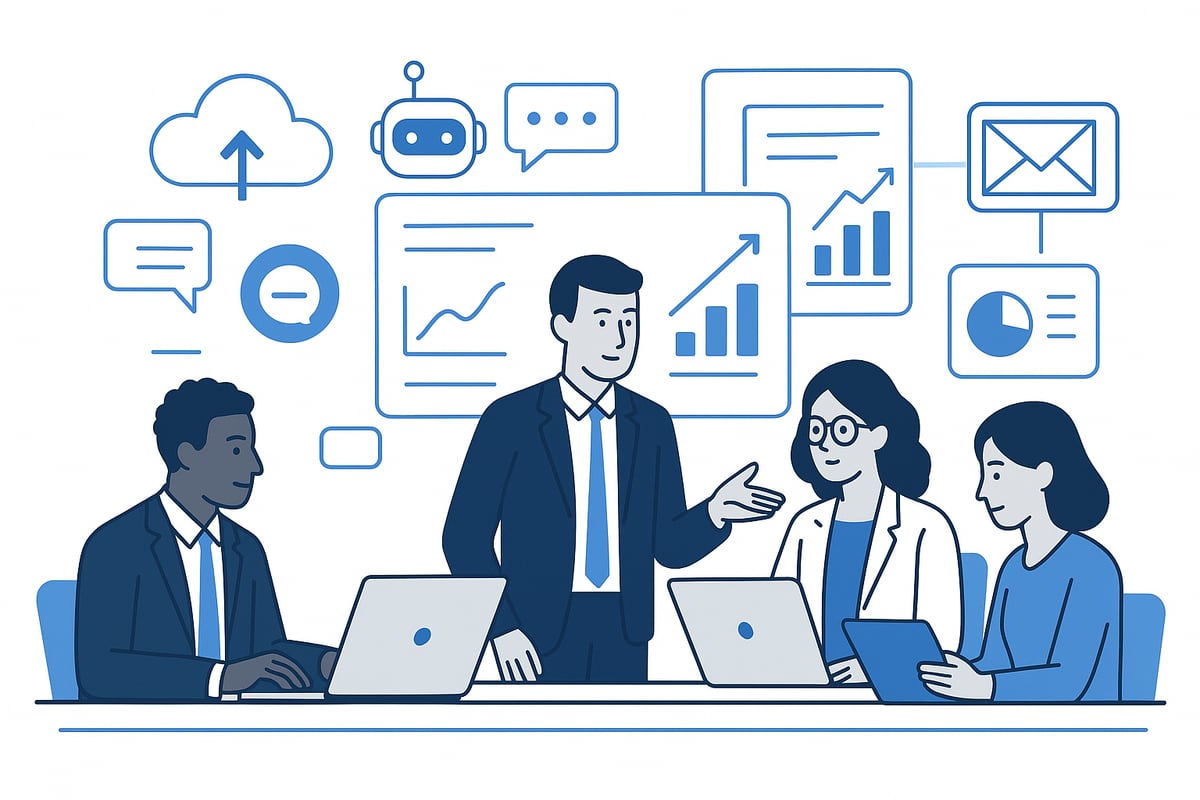
The saas first mindset is transforming how organizations approach technology in 2026. By putting cloud-based, subscription-driven solutions at the forefront, businesses can stay agile, scalable, and customer-focused. Adopting a saas first strategy is no longer optional for those seeking to lead in a rapidly changing digital world.
Defining “SaaS First” and Its Strategic Importance
In 2026, “saas first” means prioritizing cloud software for every business process, from customer support to marketing and operations. Instead of relying on traditional software models, organizations choose scalable, flexible solutions that deliver ongoing value through regular updates and subscriptions.
A core difference between legacy and saas first models lies in their approach to growth. SaaS platforms offer instant scalability, lower upfront costs, and faster deployment. These qualities allow teams to respond quickly to shifting market needs and customer expectations.
| Traditional Software | SaaS First Approach |
|---|---|
| One-time purchase | Subscription-based |
| Manual updates | Continuous improvement |
| On-premise setup | Cloud-native access |
| Limited scalability | Instant scalability |
| Higher upfront costs | Lower initial expense |
Organizations are shifting to saas first for several reasons. Not only does this approach reduce initial investment, but it also streamlines onboarding and improves the customer experience. For example, AI-driven chatbots like Milly and built-in omnichannel inboxes have become standard, allowing companies to offer seamless, 24/7 service.
More than 1 million businesses have already adopted saas first strategies, reflecting a broad industry shift. This transformation impacts every department, from automating support tickets to enabling data-driven marketing and efficient operations.
Saas first is also crucial for digital transformation. By embracing continuous innovation and leveraging real-time data insights, companies can differentiate themselves and future-proof their operations. The result is a resilient, competitive organization ready to thrive in the years ahead.
2026 SaaS Market Trends and Opportunities
The saas first movement is fueling rapid innovation across the technology landscape. In 2026, several trends are shaping the SaaS ecosystem:
- Proliferation of AI-powered tools, including chatbots, analytics, and marketing automation.
- Expansion of multi-channel and multi-language support for global reach.
- Rising customer expectations for instant, always-on solutions.
- Seamless integrations and customizable branding as baseline features.
- Growth in self-service portals and knowledge bases.
SaaS platforms that integrate AI assistants and deliver real-time analytics consistently achieve higher user satisfaction, often scoring 4.2 to 5.0 on Trustpilot. Security, compliance, and data privacy are also top priorities, as businesses must protect sensitive information in the cloud.
Startups have significant opportunities to carve out niche verticals, build integration services, and create customer engagement platforms. The demand for specialized solutions continues to expand as more companies embrace the saas first approach.
Recent statistics show that the SaaS market is projected for robust growth well beyond 2026, with adoption rates and market size increasing globally. For a deeper dive into these trends and forecasts, explore the SaaS Market Growth Projections, which highlight the scale and potential of the saas first revolution.
With innovation accelerating, organizations that commit to saas first will be well-positioned to capture new markets, deliver superior experiences, and adapt to future demands.
Step 1: Validating Your SaaS Idea Before Development
Validating your idea is the cornerstone of building a successful saas first business. In the fast-paced world of cloud-based products, skipping validation can lead to wasted resources and missed opportunities. Early validation not only helps founders avoid costly mistakes but also sets the stage for scalable growth.

Why Validation Is Critical for SaaS Success
SaaS first startups often face high failure rates, especially when they skip the validation phase. By making validation a priority, you reduce the risk of building a product no one needs. This approach saves both time and capital while keeping your focus on solving real customer pain points.
Consider that early validation can increase your chance of SaaS first success by up to 50 percent, according to industry averages. Founders who start with surveys, interviews, and quick feedback loops can refine their ideas before investing heavily in development.
The minimum viable product (MVP) is a powerful tool in the saas first playbook. Launching an MVP allows you to test assumptions, measure demand, and gauge user reactions with minimal investment. Avoiding feature bloat at this stage is crucial, as adding too many features before validation can dilute your value proposition.
Common pitfalls include building without validation, ignoring genuine user feedback, or misjudging market demand. When you validate early, you set the foundation for long-term scalability and sustainable growth.
Table: Validation Benefits for SaaS First Startups
| Validation Step | Benefit |
|---|---|
| MVP Launch | Lower cost, fast feedback |
| Surveys & Interviews | Real user insights |
| Analytics Review | Data-driven decisions |
| Competitor Analysis | Identify opportunities |
Step-by-Step SaaS Idea Validation Process
A structured validation process is essential for any saas first founder. Start by clearly identifying your target audience and their specific pain points. Use market research and competitor analysis to understand existing solutions and gaps. Platforms like SaaS First, Zendesk, and Freshdesk offer inspiration for benchmarking and identifying differentiation.
Next, build a simple MVP using no-code or low-code tools. This lets you test your concept quickly and gather actionable feedback from early users. Collect feedback through surveys, live chat, and community forums to uncover what resonates and what needs improvement.
Here is a concise validation workflow:
- Define your audience and their needs.
- Research competitors and analyze SaaS first trends.
- Build and launch a basic MVP.
- Gather feedback via multiple channels.
- Analyze user data and adjust your product.
- Use industry benchmarks (e.g., SW Score, Trustpilot) for comparison.
- Decide to pivot, persevere, or abandon the idea based on evidence.
Modern founders often use AI chatbots to collect and analyze early user queries, providing even deeper insights for their saas first journey. Ongoing iteration and honest assessment at each stage keep your vision aligned with real demand.
Leveraging SaaS Validation Resources
Leveraging the right resources can make the saas first validation process more efficient and effective. Utilize guides, templates, and checklists to add structure and avoid missing critical steps. Engaging with validation communities and seeking expert insights accelerates your learning curve.
Reviewing case studies from successful SaaS founders can reveal strategies that worked in real-world scenarios. Tracking validation metrics and KPIs with dedicated tools ensures you stay on course and measure progress accurately.
Ongoing validation after launch is equally important. As your saas first product matures, continuous feedback and data analysis help you adapt to changing market needs. For a deeper dive into proven methods, consider reviewing SaaS Validation Strategies to strengthen your approach.
Building a culture that prioritizes validation at every stage gives your SaaS first business a significant edge, supporting growth, innovation, and customer satisfaction.
Step 2: Building a Customer-Centric SaaS Product
Creating a customer-centric product is the foundation of the saas first approach. In 2026, customers expect seamless experiences, fast onboarding, and responsive support. To stand out, your SaaS must prioritize user needs at every stage, from interface design to ongoing engagement.
Designing for User Experience and Engagement
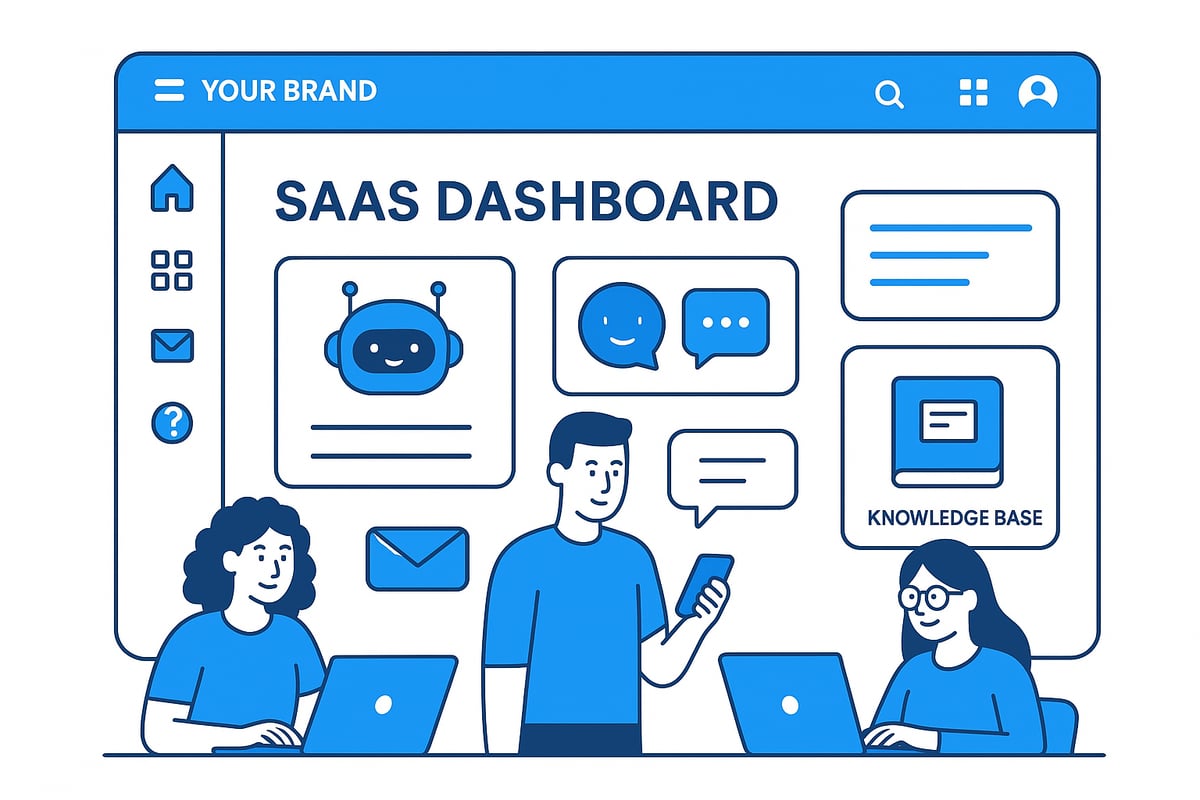
A modern saas first product starts with intuitive design. Users want to log in and immediately understand how to navigate your platform. Prioritize clean layouts, straightforward workflows, and clear calls to action. Seamless onboarding is critical; a guided tour or interactive walkthrough can reduce friction for new users.
Customer feedback should drive every development cycle. Use in-app surveys, NPS prompts, and live chat to gather insights. Many SaaS leaders embed feedback widgets directly into their dashboards, making it easy for users to share thoughts in real time.
Customization is no longer optional. Allow users to apply their branding, adjust notifications, and choose preferred communication channels. Multi-channel support, including email, chat, and social, ensures customers can reach you where they are most comfortable. AI-driven assistants, such as Milly, can proactively answer questions and guide users through common workflows.
Live chat and self-service portals are now standard in the saas first landscape. A robust knowledge base empowers users to solve problems independently, reducing support loads and boosting satisfaction. According to recent data, SaaS products with ease-of-use ratings above 3.0 retain significantly more customers, highlighting the value of thoughtful UX.
Accessibility and multi-language support are essential for global reach. Ensure your interfaces are usable for all customers, regardless of device or ability. For a step-by-step framework on creating customer-centric SaaS products, see Building a Successful SaaS Product.
Integrating Customer Support and Success Features
Embedding advanced support features is vital for any saas first solution. Start with an omnichannel inbox, so every customer message, whether from email, chat, or social, arrives in one unified space. Automated ticket routing ensures queries reach the right team members quickly, reducing wait times and improving resolution rates.
Integrating your SaaS with a CRM unlocks personalized interactions. Agents can instantly access customer histories, preferences, and previous issues, leading to more effective support. AI-powered help desks, like those found on SaaS First platforms, use real-time analytics to spot trends and address recurring issues before they escalate.
Effective feedback loops are crucial. Use post-interaction surveys, community forums, and macros to streamline repetitive responses. Analytics help identify common pain points, so your team can prioritize fixes that have the highest impact.
A comprehensive knowledge base lets customers find answers any time, which cuts down on support tickets and empowers users. Community forums foster peer-to-peer help, creating a sense of belonging and loyalty. Collaborative features, such as shared inboxes and internal notes, ensure teams stay aligned on customer needs.
Proactive engagement is key to retaining customers in a saas first environment. Reach out with helpful tips, product updates, and targeted support before issues arise. Data shows that SaaS platforms with strong support and active communities enjoy higher satisfaction and lower churn.
By integrating these support and success features, your saas first product will not only meet but exceed modern customer expectations, paving the way for sustainable growth.
Step 3: Leveraging AI and Automation for SaaS Growth
AI and automation are transforming the path to scalable growth for any saas first organization. As we look toward 2026, integrating intelligent tools is no longer optional — it’s a competitive necessity. Adopting a saas first approach means placing automation and artificial intelligence at the heart of your product, support, and operational strategies.
Implementing AI-Driven Chatbots and Assistants
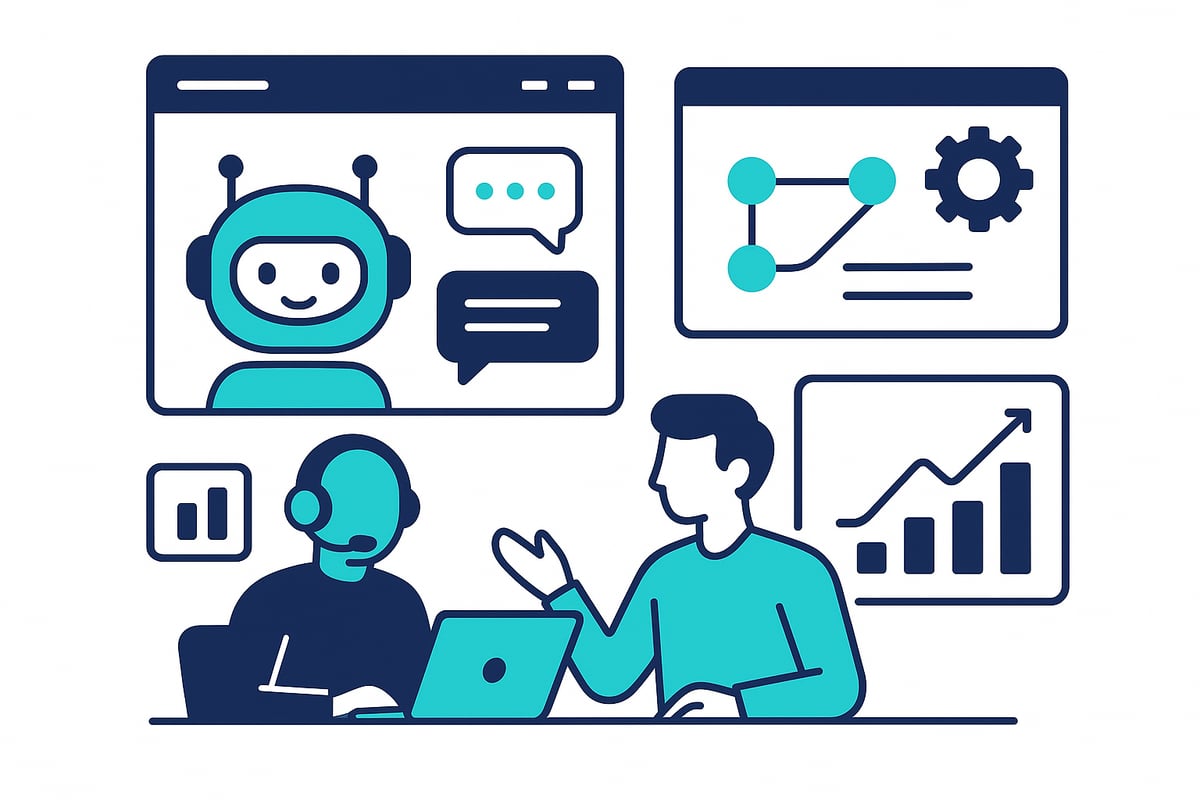
For a modern saas first company, deploying AI-driven chatbots and virtual assistants is foundational to delivering rapid, round-the-clock support. AI chatbots, like Milly, can instantly resolve common customer queries by drawing on help center knowledge and customized snippets. This approach ensures that users receive precise answers at any hour, reducing wait times and agent workload.
Consider the following comparison:
| Feature | AI Chatbot | Human Agent |
|---|---|---|
| Availability | 24/7 | Business hours |
| Response Time | Instant | Varies |
| Scalability | High | Limited |
| Handling Complex Issues | Limited | Strong |
The best saas first teams use AI to handle routine interactions and seamlessly transfer more complex cases to human agents. This hybrid model increases efficiency and customer satisfaction, with platforms reporting user ratings as high as 5.0 after integrating AI assistants.
Customization is essential. Training your chatbot with business-specific FAQs, tone, and workflows ensures it aligns with your brand. As your company grows, AI-powered support scales effortlessly, adapting to increased demand without compromising quality.
By focusing on these capabilities, saas first organizations future-proof their support systems and create memorable customer experiences.
Automating Marketing, Analytics, and Operations
Automation extends beyond support in a saas first environment. AI can drive marketing campaigns, segment audiences, and analyze performance data in real time. For example, automated drip campaigns boost engagement, while event tracking and performance dashboards deliver actionable insights for decision-makers.
Here are key automation opportunities for saas first teams:
- Automated ticket routing and escalation for faster resolutions
- Real-time alerts for performance monitoring
- Integration with third-party tools to expand functionality
A simple automation workflow might look like this:
if ticket.priority == "high":
    notify_team()
    escalate_to_manager()
else:
    assign_to_available_agent()
SaaS companies leveraging automation see measurable gains in productivity and customer engagement. Real-time reporting optimizes marketing spend, while AI-driven analytics uncover trends and opportunities for growth.
For actionable ideas on integrating AI and automation into your saas first strategy, explore AI Tools for SaaS Founders. These resources can help your team stay ahead as the landscape evolves.
The combination of AI and automation empowers saas first organizations to operate smarter, respond faster, and scale efficiently, setting the stage for sustained growth.
Step 4: Pricing, Monetization, and Scaling Strategies
Navigating the competitive landscape in 2026 requires a strategic approach to pricing, monetization, and growth. Adopting a saas first mindset is essential for founders who want to capture market share and deliver sustained value. This step explores how to design flexible pricing models and scale operations for long-term success.
Crafting Competitive and Flexible Pricing Models
A winning saas first strategy begins with a pricing model that aligns with customer expectations and business goals. In 2026, the most successful SaaS companies offer a mix of subscription-based and usage-based options. Each model has unique strengths:
| Pricing Model | Pros | Cons |
|---|---|---|
| Subscription | Predictable revenue, easy budgeting | May deter low-usage customers |
| Usage-Based | Scales with customer value, flexibility | Harder to forecast revenue |
| Hybrid | Combines best of both | Complex to implement and communicate |
SaaS First’s approach—offering flat-rate pricing at $9 per month alongside usage-based add-ons at $0.09 per event—illustrates the value of flexibility. This dual model captures a broad audience, from startups to enterprises.
Transparent pricing, free trials, and freemium tiers are now standard. Research shows that free trials can boost user acquisition rates by up to 30 percent. For a saas first business, these tactics lower barriers to entry and quickly demonstrate value.
Monitoring competitors like Zendesk, Zoho Desk, and Freshdesk helps ensure your pricing remains competitive. As your product evolves, adjust your pricing to reflect new features and increased value. Always communicate pricing changes clearly, outlining the benefits to reinforce trust and customer satisfaction.
Scaling Operations and Customer Acquisition
Scaling a saas first business means more than just adding users. It requires robust systems, analytics, and a customer-centric approach. Start by leveraging analytics to identify high-performing channels and optimize acquisition campaigns.
Expanding into new markets? Multi-language and multi-brand support are essential for global reach. Integration with popular platforms and building partnerships can drive exponential growth. SaaS First’s support for multi-channel communication and seamless integrations sets a powerful example for scaling efficiently.
Consider these proven scaling tactics:
- Use real-time analytics to spot trends and opportunities
- Invest in self-service support, knowledge bases, and AI-driven engagement
- Encourage customer reviews and leverage feedback for continuous improvement
- Retain customers with proactive outreach and tailored support
Strong online reviews (4.2 to 5.0 ratings) directly impact growth, drawing in new users who value reliability and support. Planning for infrastructure scalability ensures you can handle increased demand without sacrificing service quality.
For detailed strategies on scaling efficiently and sustainably, explore Scaling Your SaaS Business, which offers actionable insights tailored to the saas first model.
Building a resilient, scalable operation is the cornerstone of saas first success, ensuring your business thrives in an ever-evolving market.
Step 5: Measuring Success and Continuous Improvement
Measuring success is more crucial than ever for any saas first business. In 2026, thriving SaaS leaders rely on data-driven decisions, continual feedback, and a culture of innovation to stay ahead. By focusing on the right metrics and fostering agility, you can ensure your saas first strategy delivers consistent growth and customer satisfaction.
Key Metrics and Analytics for SaaS Performance
Tracking the right metrics is the backbone of a successful saas first approach. Start with customer-centric data such as Net Promoter Score (NPS), Customer Satisfaction (CSAT), and retention rates. These indicators reveal how well your saas first product resonates with users.
Monitor product usage, feature adoption, and churn rates to understand which aspects drive engagement and where users drop off. Use analytics dashboards for real-time campaign tracking and support metrics:
- Ticket resolution time
- First response rates
- Feature adoption percentages
- Active user counts
Benchmark your performance against industry averages and competitor scores. For example, platforms leveraging AI show improved customer engagement and lower churn, as highlighted in AI in SaaS Industry Statistics. This data-driven approach helps identify bottlenecks in customer journeys so you can act quickly.
A simple metrics summary table:
| Metric | Why It Matters | saas first Impact |
|---|---|---|
| NPS & CSAT | Measure satisfaction | Drives loyalty |
| Churn Rate | Tracks user loss | Reveals pain points |
| Feature Adoption | Gauges product fit | Informs roadmap |
| Support Metrics | Monitors service quality | Enhances experience |
Leverage feedback loops from surveys and forums to inform product improvements. Continuous analysis ensures your saas first business adapts to evolving user needs.
Fostering a Culture of Innovation and Agility
True saas first success depends on more than just metrics. It requires a culture that values experimentation, rapid iteration, and cross-functional teamwork. Encourage your teams to test new ideas, gather real user feedback, and iterate quickly.
Practical ways to nurture innovation within your saas first company:
- Build agile, cross-functional teams for faster solutions
- Integrate feedback loops into every development cycle
- Stay updated on trends like AI, automation, security, and compliance
- Invest in training and upskilling team members
- Validate new features and ideas continuously
Embrace change by adapting to market shifts and evolving customer needs. SaaS companies that prioritize agility and continuous learning consistently outperform competitors, leveraging insights and technology to future-proof their operations. The most resilient saas first organizations are those that never stop improving and are always ready to seize new opportunities.