In a digital world overflowing with information, trust is the new currency for tech companies in 2026. Customers and businesses alike crave transparency and authenticity from the brands they engage with.
Tech validate offers a groundbreaking approach to building trust in the technology sector. By transforming raw data into credible proof, tech validate sets a new gold standard for marketing integrity.
This guide reveals how tech validate methodologies help organizations earn loyalty, drive growth, and stand out in a competitive landscape. You’ll discover the evolution of trust in tech, practical steps for implementation, real-world examples, and what the future holds.
The Evolution of Trust in the Tech Industry
In recent years, trust has emerged as the cornerstone of success for technology companies. As data breaches and misinformation have become more frequent, both businesses and consumers are scrutinizing claims with greater intensity. The evolution of trust in the tech sector is not just a trend but a fundamental shift that influences every aspect of business performance.

The Trust Deficit: Why It Matters More Than Ever
Skepticism among customers is at an all-time high. High-profile data breaches and persistent misinformation have created a trust deficit that tech companies cannot ignore. Regulations like GDPR and CCPA have redefined privacy standards, making transparency a legal and ethical necessity.
Today, customers demand concrete proof rather than marketing promises. SurveyMonkey Trends 2026 reveals that trust is now a top decision factor for both B2B and B2C buyers. A single tech scandal can erode years of brand equity overnight. As a result, organizations are turning to tech validate platforms to substantiate their claims and rebuild confidence.
- Growing data privacy concerns
- Demand for transparency in marketing
- Influence of global privacy regulations
This shift toward proof-based marketing signals a new era where trust is earned, not assumed.
The Impact of Trust on Business Performance
Trust is more than a buzzword, it is a measurable driver of business outcomes. Companies that invest in trust validation tools see significant improvements in customer retention, advocacy, and overall growth. For instance, organizations with high trust scores report up to a 30% increase in customer loyalty.
Verified testimonials, third-party reviews, and data-driven validation have become essential in the buyer's journey. According to PwC’s 2024 Trust Survey, 93% of executives agree that building and maintaining trust directly improves the bottom line. Nearly all Fortune 500 companies now leverage some form of trust validation, often integrating tech validate methodologies into their marketing strategy.
Key benefits include:
- Higher conversion rates
- Increased brand loyalty
- Enhanced reputation
Trust is no longer optional; it is a strategic asset that sets industry leaders apart.
The Need for Systematic Validation
As organizations grow, maintaining consistent and scalable trust-building efforts becomes a challenge. Traditional testimonials and unverified content can no longer keep pace with market expectations. Manual approaches are resource-intensive and often lack credibility.
Tech validate platforms address these limitations by automating the collection, verification, and publication of customer experience data. This systematic approach ensures that every claim is backed by real, survey-based evidence. Large enterprises can now generate validated content at scale, reinforcing trust across all customer touchpoints.
By adopting tech validate solutions, companies not only meet compliance standards but also position themselves as transparent and trustworthy partners in the digital economy.
Understanding Tech Validate: Principles, Process, and Platform
In a landscape where credibility is paramount, tech validate has emerged as a transformative solution for organizations seeking to prove their value with real data. By automating the collection and presentation of customer experiences, tech validate addresses the rising demand for authenticity in marketing. Let’s break down what makes this platform a gold standard in trust validation.
What is Tech Validate?
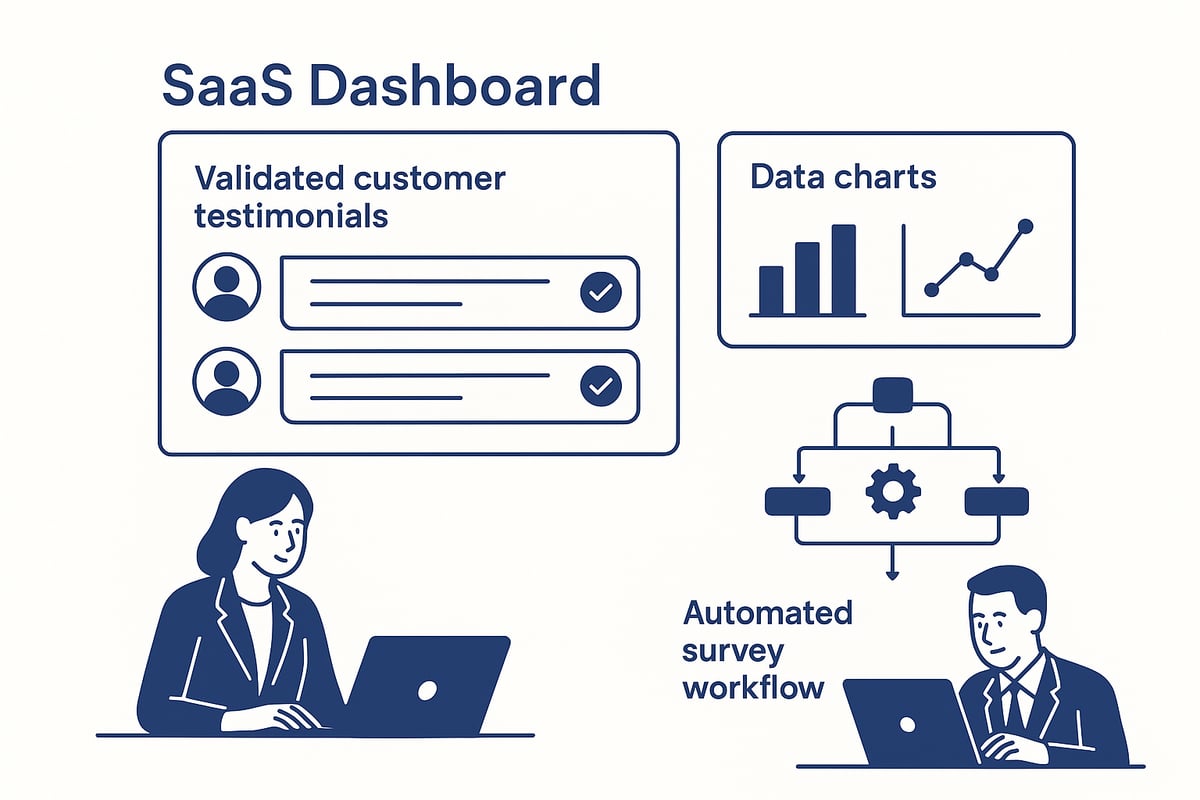
Tech validate is an automated platform designed to transform customer feedback into trustworthy marketing assets. Launched in 2007 and later acquired by SurveyMonkey in 2015, it stands out for converting raw survey data into verified case studies, ROI analyses, and testimonials—all at scale.
This platform is tailored for organizations across technology, healthcare, finance, and more. Unlike traditional testimonial gathering, tech validate ensures every claim is substantiated by real survey responses. This approach not only shortens the gap between customer experience and marketing content, but also enhances credibility in the eyes of potential buyers.
One of the unique strengths of tech validate is its ability to automate the entire validation process. From collecting feedback to publishing assets, it streamlines workflows for over 300 customers worldwide. For those interested in broader validation methodologies, SaaS Validation Strategies offers additional insights into how systematic approaches underpin trust in SaaS and tech sectors.
Core Principles of Tech Validate
At the heart of tech validate are four guiding principles: data authenticity, automation, scalability, and compliance. Each principle is vital for organizations aiming to build and maintain trust in a crowded digital marketplace.
| Principle | Description |
|---|---|
| Authenticity | Every piece of content is backed by real, survey-based data. |
| Automation | The platform automates data collection and content generation. |
| Scalability | Enables the creation of large volumes of validated assets quickly. |
| Compliance | Adheres strictly to privacy and data protection regulations. |
Data authenticity means that tech validate does not allow for unverified claims—every published asset must be linked to actual customer responses. Automation frees up marketing teams to focus on strategy, while scalability ensures even global enterprises can maintain consistent validation. Compliance remains a top priority, with the platform aligning to international standards such as GDPR.
How the Tech Validate Platform Works
The tech validate process begins with creating and distributing surveys to verified customers. This step is crucial for gathering candid, unbiased feedback. Responses are then collected and analyzed automatically, allowing organizations to quickly synthesize insights.
Once data is validated, tech validate generates a range of marketing assets including case studies, infographics, and ROI reports. These assets are ready for use across digital channels, sales enablement, and public relations. Integration with CRM and marketing systems ensures a seamless workflow and maximizes the impact of validated content.
For example, Hitachi Data Systems leveraged tech validate to increase their content velocity while enhancing trust. By embedding validated insights into their campaigns, they reached audiences more effectively and with greater credibility.
In summary, tech validate empowers organizations to deliver proof over promises. By adhering to core principles and leveraging automation, it offers a scalable, compliant, and highly effective approach to trust validation.
Step-by-Step Guide: Implementing Tech Validate for Maximum Trust
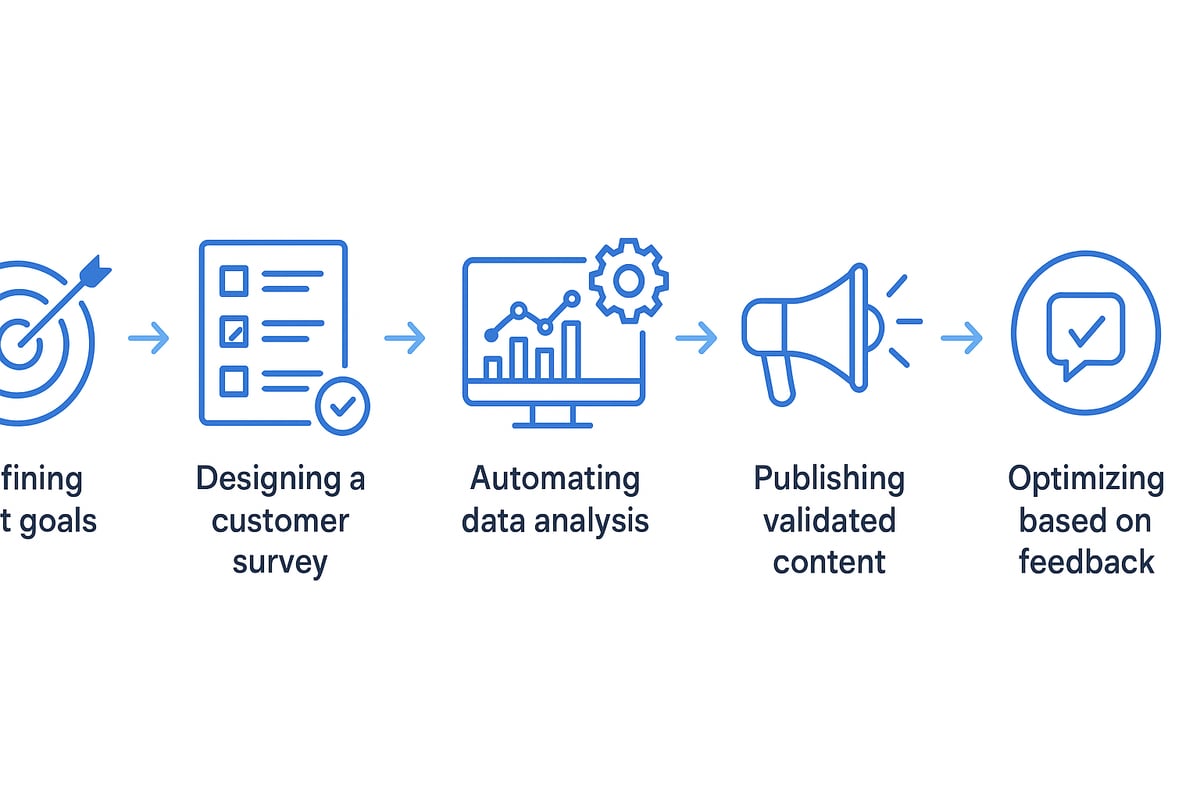
Building trust in today’s tech landscape requires a strategic, systematic approach. Implementing tech validate is not just about adopting new tools, but about embedding trust validation into every stage of your marketing and sales process. Here is a practical, step-by-step guide to help you maximize trust using tech validate methodologies.
Step 1: Define Trust Objectives and Key Metrics
Begin your tech validate journey by aligning trust-building efforts with business goals. What are you aiming to achieve? Whether it’s boosting lead generation, improving customer retention, or increasing sales conversions, clarity is essential.
Identify the key performance indicators (KPIs) that will measure your success. Common trust metrics include content engagement rates, customer advocacy levels, and uplift in sales conversions. Many organizations track Net Promoter Score (NPS) alongside tech validate metrics to gauge both satisfaction and validation impact.
Example KPIs table:
| Objective | KPI Example |
|---|---|
| Increase leads | Content downloads |
| Improve advocacy | NPS, testimonial volume |
| Drive conversions | Sales conversion rates |
By making these objectives visible across teams, you ensure everyone is aligned on the value of tech validate and set a foundation for measurable growth.
Step 2: Design and Launch Customer Surveys
Next, craft surveys that gather authentic, unbiased feedback. Tech validate platforms thrive on high-quality data, so your questions should be clear, concise, and free from leading language.
To maximize response rates, segment your audience and tailor survey invitations. Use a mix of open and closed questions to capture both quantitative and qualitative insights. Leveraging AI-powered survey tools can streamline deployment and analysis, especially when working with large customer bases.
SurveyMonkey reports over 3 million survey responses daily, providing a vast pool for tech validate to draw from. This scale ensures your validation efforts reflect diverse perspectives, enhancing credibility. Remember, the more representative your data, the stronger your trust signal.
Step 3: Automate Data Analysis and Content Creation
With responses in hand, use tech validate to automate data synthesis and asset creation. The platform transforms raw survey data into verified case studies, infographics, and ROI reports, ensuring every claim is backed by real-world evidence.
Automation is critical for both speed and compliance. The right tech validate tools help maintain data integrity, adhere to privacy regulations, and scale content creation across markets. For a deeper dive into available solutions, see this comprehensive overview of Validation Tools for SaaS.
A case in point: Dell Software streamlined its customer validation process with tech validate, saving significant time while increasing the credibility of its marketing assets.
Step 4: Publish and Distribute Validated Content
After generating validated content, the next step is strategic distribution. Select the most impactful channels for your audience, such as your website, social media platforms, PR outlets, or sales enablement tools.
Integrate tech validate assets into your marketing and sales workflows to support every stage of the buyer journey. Use analytics tools to measure reach and engagement, so you can assess which content formats and channels drive the most trust.
A multi-channel approach ensures your tech validate stories reach prospects where they are, reinforcing credibility and supporting conversion at every touchpoint.
Step 5: Iterate and Optimize
Continuous improvement is at the heart of the tech validate methodology. Collect feedback from both internal teams and external audiences to identify what resonates and where gaps exist.
Experiment with A/B testing of different content formats and messages. Refine your surveys, targeting, and distribution strategies based on performance data. This iterative process ensures your tech validate strategy remains effective as market expectations evolve.
By regularly optimizing your approach, you build a self-reinforcing cycle of trust, engagement, and business growth.
Real-World Success Stories: Tech Validate in Action
Building trust in the digital era requires more than just promises. Leading organizations have embraced tech validate to create a foundation of credibility and transparency. By transforming customer feedback into validated content, these companies demonstrate measurable results and set new benchmarks for trust.

Enterprise Case Studies
Several global enterprises have leveraged tech validate to accelerate their content marketing and boost credibility.
-
Hitachi Data Systems utilized tech validate to gather authentic customer stories across continents. With automated survey distribution and content creation, their teams produced verified testimonials and case studies in record time. This not only enhanced their storytelling but also made their marketing assets more persuasive.
-
Dell Software adopted tech validate to streamline customer validation. By automating data collection and analysis, Dell reduced manual workload and delivered evidence-based content that resonated with buyers. Their sales enablement materials became more trusted, helping sales teams close deals faster.
Both organizations saw a transformation in how quickly they could publish validated content, ensuring every claim was supported by real customer insights. As a result, their brand reputation and market influence grew significantly.
Industry-Wide Adoption
The adoption of tech validate extends far beyond individual case studies. Today, over 300 companies, from agile startups to Fortune 500 leaders, rely on this platform to power their trust-building strategies.
Industries embracing tech validate include:
- Technology
- Healthcare
- Financial services
- Life sciences
- Telecommunications
These sectors face intense scrutiny and complex regulations. By integrating tech validate into their workflows, organizations ensure every marketing claim meets high standards of authenticity. Verified case studies and ROI analyses produced through tech validate have become essential tools for increasing conversion rates and building lasting customer relationships.
This wide adoption highlights how tech validate has become synonymous with trustworthy, data-driven marketing in high-stakes industries.
Key Outcomes and Metrics
Organizations using tech validate report dramatic improvements in both efficiency and credibility. Key metrics include:
- Up to 30% increase in customer trust and engagement
- Content creation time reduced by as much as 50%
- Enhanced brand reputation and clear market differentiation
These gains are not just anecdotal. Companies with high-trust scores consistently outperform their peers, enjoying greater loyalty and improved performance. According to research on high-trust companies’ impact on productivity & profits, such organizations experience significantly lower turnover rates and higher profits, further validating the ROI of trust initiatives.
By adopting tech validate, businesses position themselves as industry leaders in credibility, transparency, and customer advocacy.
The Future of Trust Validation: Trends and Predictions for 2026
In 2026, trust validation is rapidly evolving, shaped by innovation and rising customer expectations. Organizations leveraging tech validate are poised to lead, as new trends redefine how brands establish credibility. Let us explore what the future holds and how companies can stay ahead.
AI and Automation in Trust Validation
Artificial intelligence is transforming how tech validate processes are delivered. Automated survey design and real-time data analysis help companies uncover trust signals faster than ever before. These technologies streamline the creation of validated assets, reducing manual effort and human bias. For instance, AI-powered content generation turns raw feedback into polished case studies in minutes.
To dive deeper into the impact of automation, see Using AI Marketing Tools, which highlights how AI is reshaping trust-building in SaaS. As AI matures, tech validate becomes more agile, predictive, and scalable.
The Rise of Interactive and Personalized Validation Content
Static reports are giving way to interactive dashboards and tailored testimonials. Customers now expect validation content that is both engaging and relevant to their specific needs. With tech validate, brands can present real-time survey results, ROI calculators, and dynamic case studies that adapt to different audiences.
Personalized experiences increase transparency and foster deeper trust. When prospects see content that speaks directly to their pain points, conversion rates improve. Interactive validation is now a key differentiator in crowded digital markets.
Integration with Broader Trust Ecosystems
Tech validate is no longer limited to standalone marketing efforts. In 2026, companies are integrating trust validation with third-party review platforms, compliance tools, and digital trust badges. This creates a unified trust ecosystem that supports buyers at every touchpoint.
For example, validated testimonials can be embedded in product pages, while compliance badges offer instant reassurance. Integration ensures trust signals are consistent across channels, making tech validate an indispensable part of the customer journey.
Evolving Standards and Compliance
Stricter data privacy regulations are reshaping trust validation practices worldwide. Organizations must ensure tech validate processes adhere to evolving laws and transparent opt-in policies. Compliance is not just a legal requirement, but a competitive advantage.
For guidance on staying ahead, explore GDPR Compliance for SaaS. By prioritizing privacy, companies build trust and avoid costly penalties. Continuous monitoring and adaptation are essential as standards change.
Strategic Implications for Tech Companies
Trust validation is now a strategic imperative for tech companies. Those adopting advanced tech validate solutions are set to outperform competitors in customer acquisition and retention. Early movers establish themselves as industry leaders, while laggards risk losing credibility.
Ongoing education, investment in validation tools, and a commitment to transparency will define the winners in 2026. The future belongs to organizations that make trust their core value and operational priority.